
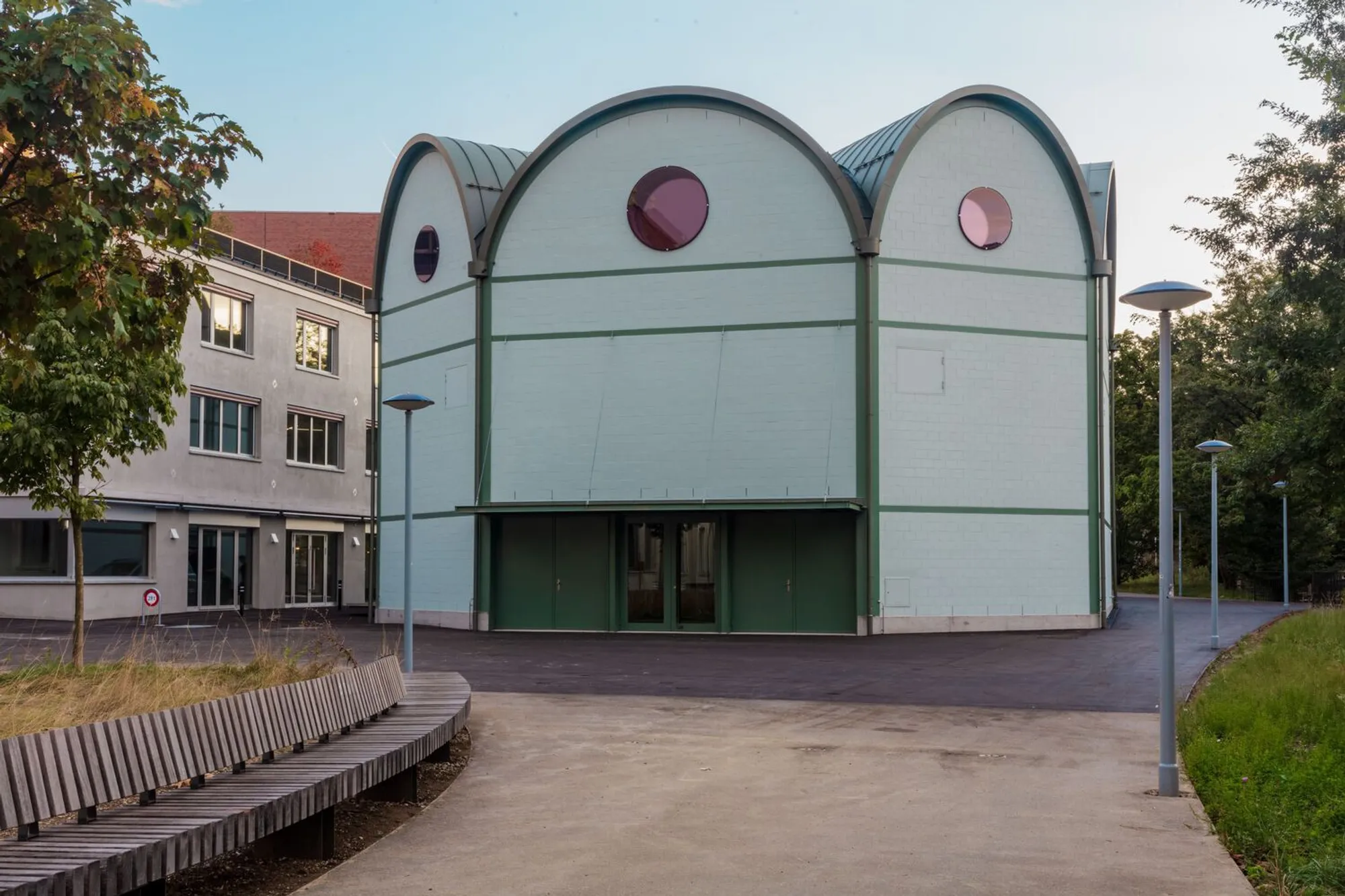
“Kuppel Basel Concert Venue: Iconic Dome Architecture for Basel’s Vibrant Pop Music Scene”
Kuppel Basel is a striking octagonal concert venue by Vécsey Schmidt, combining vaulted architecture, superior acoustics, and vibrant pop music culture.


Nestled in the heart of Basel, Switzerland, the Kuppel Basel Concert Venue by Vécsey Schmidt Architekten redefines the city’s cultural landscape. Completed in 2024, this 2,409 m² music hub provides a permanent home for Basel’s vibrant pop music scene, offering an immersive experience for audiences while preserving the spirit of its legendary predecessor.
From Temporary Tent to Permanent Music Landmark
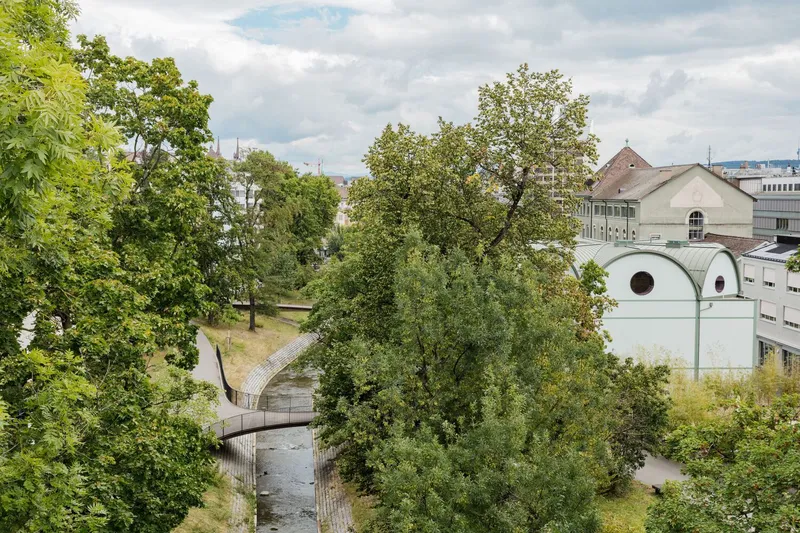
The design of Kuppel Basel draws inspiration from the original temporary dome tent that graced the same site in 1988. That tent, long celebrated for hosting iconic concerts, was a symbol of Basel’s underground music culture. The new permanent structure continues this legacy, providing a dedicated venue for concerts, parties, and emerging local bands, right within a picturesque park between the city center and the zoo.
Unlike typical pop culture venues hidden in industrial basements, the Kuppel Basel Concert Hall is visible, iconic, and architecturally striking. Its octagonal form and vaulted design may resemble a pavilion to an uninformed passerby, yet inside, it is meticulously engineered for high-quality acoustics and a dynamic concert experience. Soundproofing ensures that pulsating music stays within the building, allowing neighbors and park-goers to remain undisturbed.

Historical Context: Revitalizing Nachtigallenwäldeli
Before its transformation, the "Nachtigallenwäldeli", a 300-meter green strip along the Birsig river, was largely neglected. For three decades, the legendary temporary Kuppel stood here. Following its removal in 2016 during the area’s regeneration, a non-profit foundation was formed to establish a new music venue, supported by the local government through co-financed band rehearsal spaces in the basement.
A design competition held in 2019 led to the selection of Vécsey Schmidt Architekt:innen, tasked with creating a building that not only celebrates pop culture but also addresses urban planning considerations. Today, the Kuppel hosts two to three concerts or parties weekly from September to May, catering to a wide spectrum of pop music genres.

Architectural Form: Dome, Vaults, and Industrial Elegance
The octagonal cupola is the centerpiece of Kuppel Basel, blending historical references and contemporary architecture. Its green steel frame evokes a 19th-century pavilion, yet the brick infill and intersecting barrel vaults give it a bold, industrial character. The cupola is not a traditional dome; instead, it features four intersecting barrel vaults with pink-glazed oculi as its only windows, creating an iconic silhouette that signals something extraordinary inside.
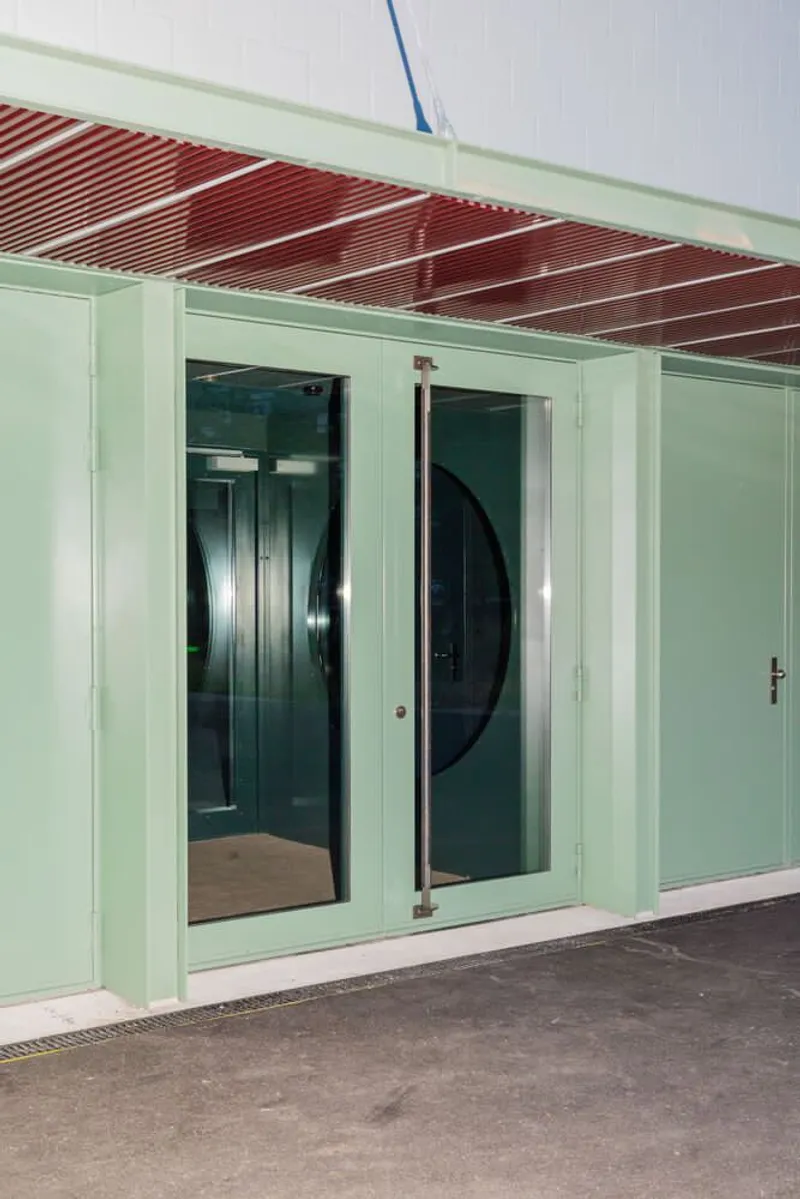
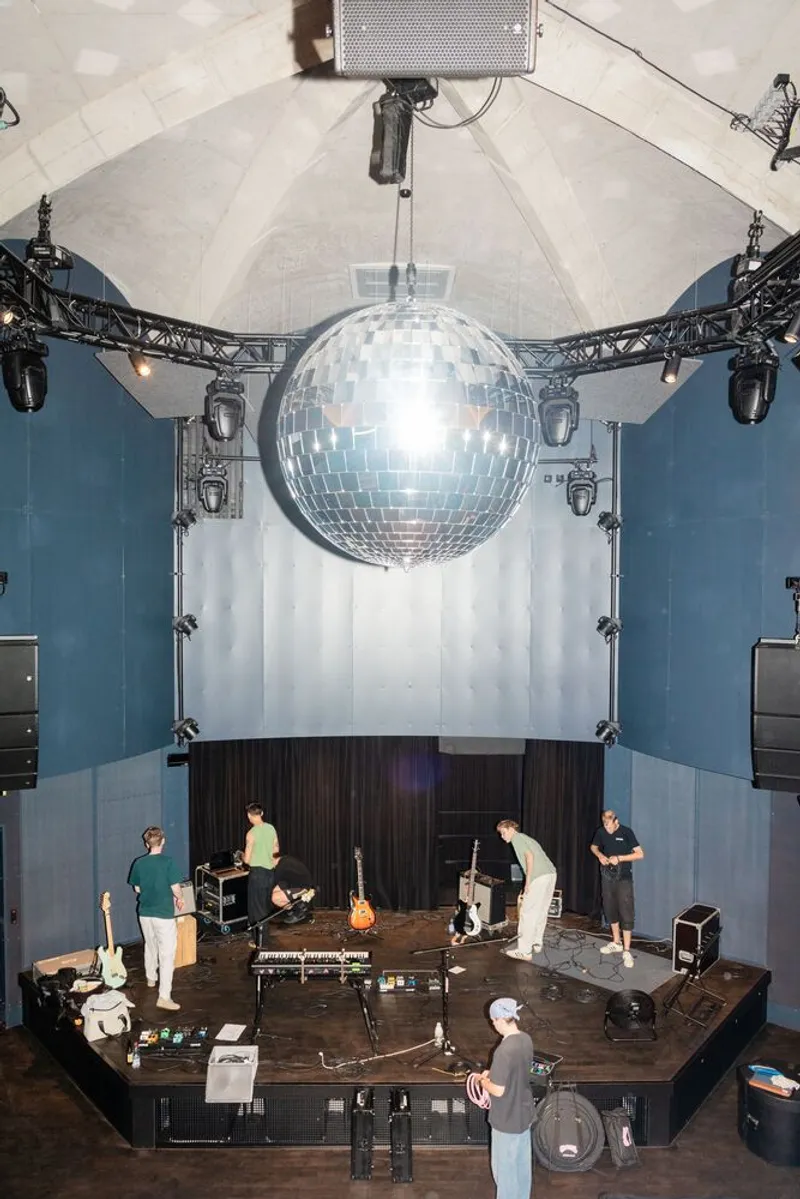
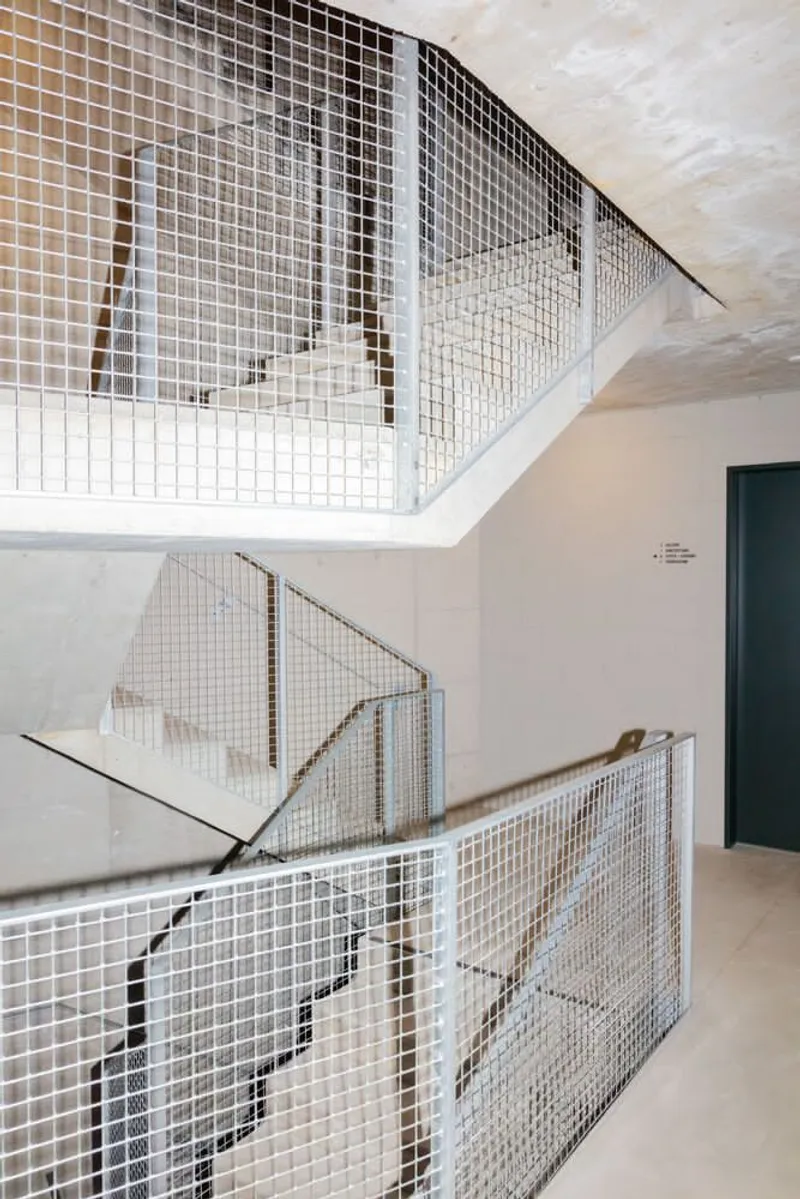
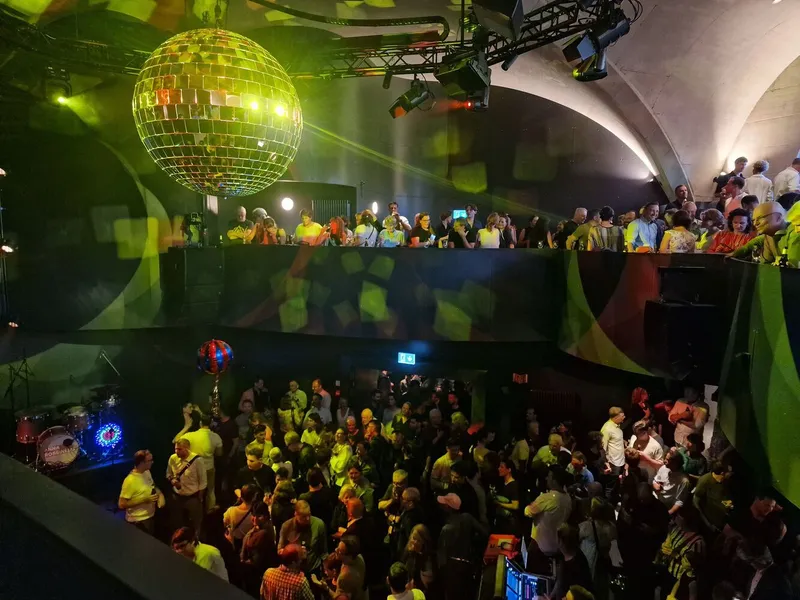
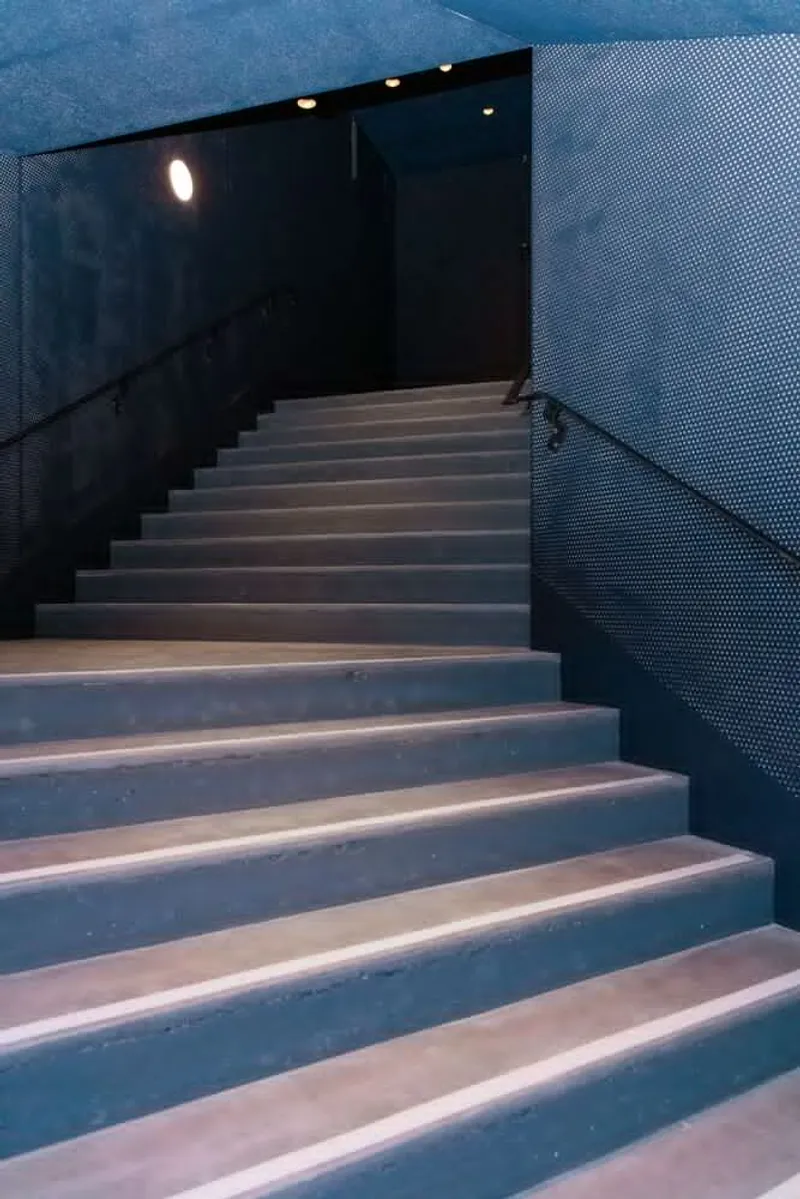
Inside, the venue accommodates up to 600 visitors. The ground floor hosts the foyer and bar, leading to the main concert hall on the first floor beneath the cross-vaulted concrete ceiling. Surrounding the central space are circulation areas and ancillary rooms, designed to enhance the immersive experience. Irregular staircases and cantilevered galleries allow free movement, while a gradient color scheme, from dark green in the foyer to midnight blue in the hall, amplifies the spatial atmosphere. Backstage areas for artists contrast with warm, inspiring dark reds.

Acoustics and Sound Design
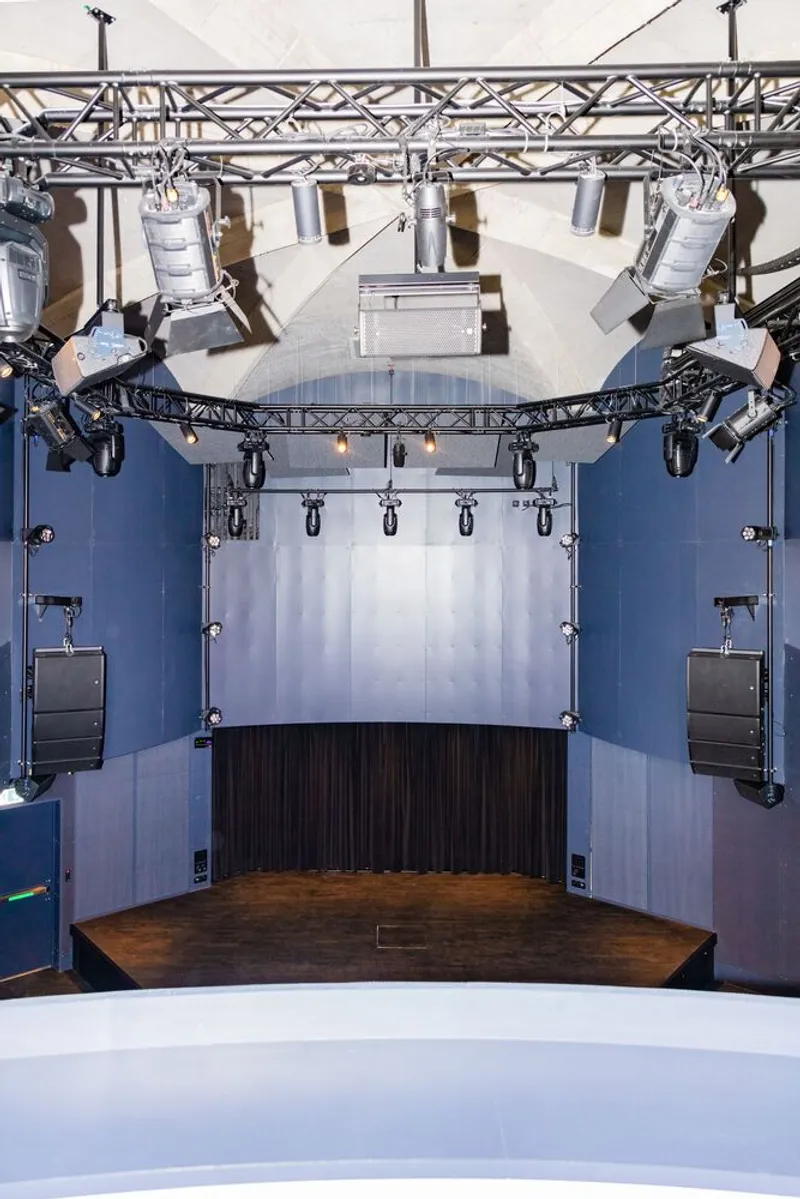
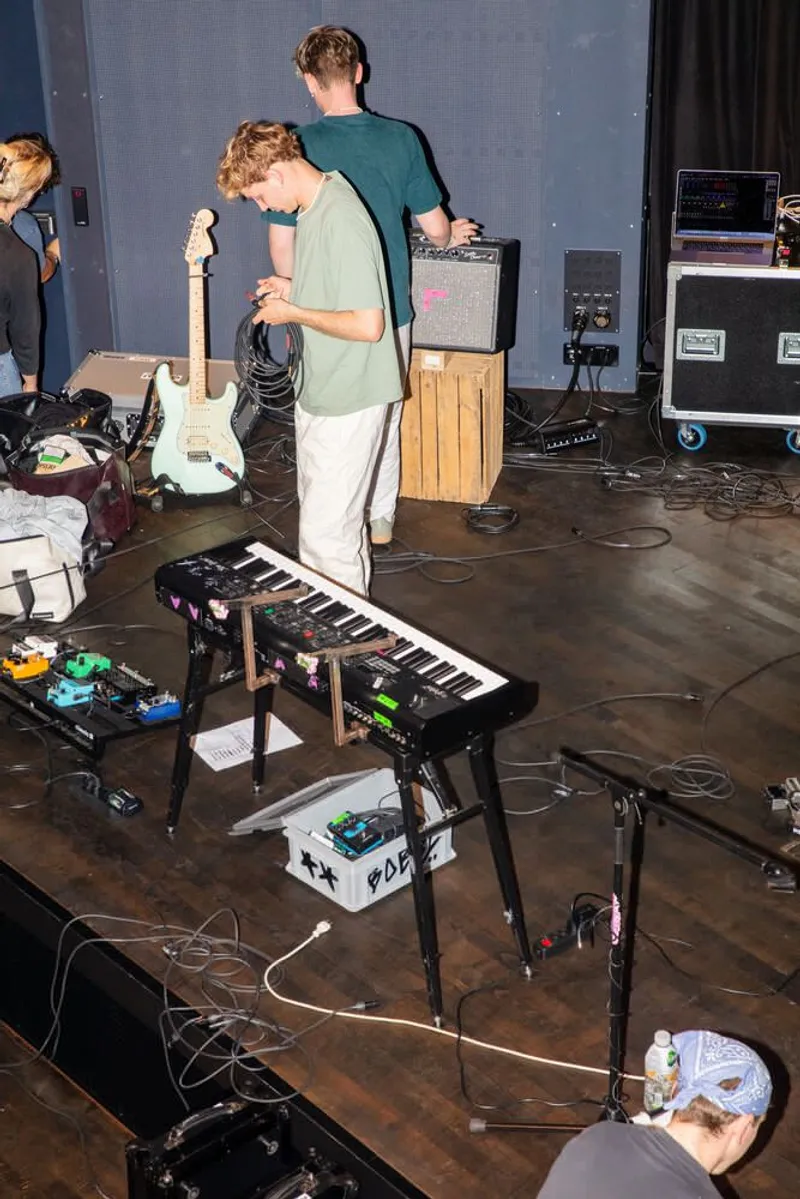
Acoustic excellence is at the heart of Kuppel Basel’s design. Barrel vaults, concave and convex timber-clad galleries, and perforated wooden panels work in harmony to diffuse and absorb sound, creating a balanced auditory environment. A house-in-house construction minimizes vibrations, allowing simultaneous rehearsals in eight basement band rooms without interfering with live performances above. Prefabricated timber elements encase the concrete dome, optimizing sound insulation while respecting the building’s 12-meter height limit.
Complementary Volume: Functional and Sustainable
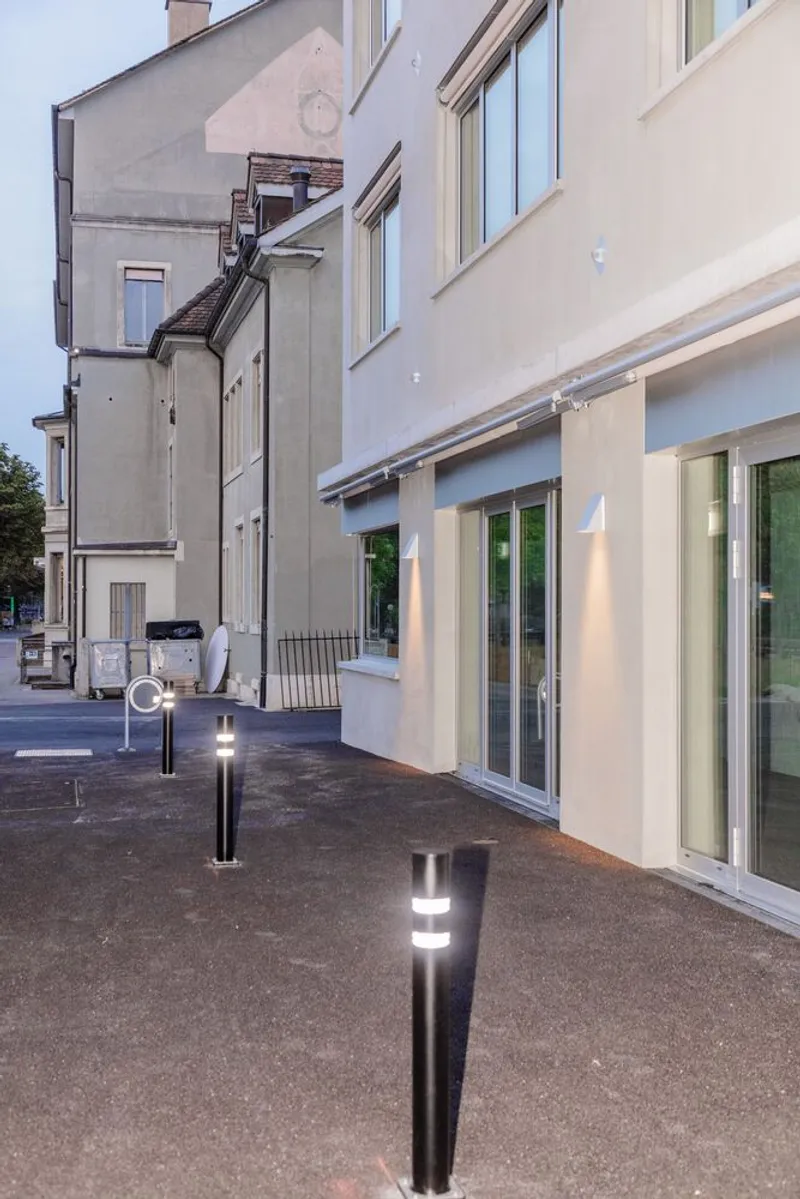
During construction, a secondary building, Volume 3, was added along Binningerstrasse. This structure shields the main hall from street noise and houses offices, restaurants, facility services, solar panels, and a secondary music club for 180 guests. While appearing separate, the basements connect technically and spatially, maximizing functionality.

Underground, Industrial, and Sacred
The Kuppel Basel embodies contrasts: underground yet central, industrial yet sacred, provisional history yet permanent future. Its design references the site’s industrial heritage while offering a bold new cultural icon. The venue’s presence marks both continuity and a fresh start for Basel’s pop music scene, bridging subversive underground culture with mainstream accessibility.
All photographs are works of Vécsey Schmidt Architekt:innen, Pati Grabowicz, Vécsey Schmidt Architekt:innen, Christoph Schmidt



Popular Articles
Popular articles from the community


Hill & Cross Opera: Sculptural Opera House Architecture Shaped by Tallinn’s Landscape and Identity
Hill & Cross Opera reimagines opera house architecture in Tallinn through its sculptural hill, civic plaza, glass wave and a luminous cross.

The Musturak Paradise: Senior Living Architecture for a Connected Future in Temara, Morocco
The Musturak Paradise reimagines senior living architecture in Temara via private homes, social spaces, culture, community, and shared care.

EW PARK: Sustainable Architecture Reimagines the Future of Urban Parking
EW PARK reimagines city parking as a modular wooden tower combining automation, solar energy, electric mobility, and adaptable urban design.

Co-life: Sustainable Architecture for Age-Friendly Community Living
Co-life reimagines sustainable architecture for seniors through courtyards, rammed earth, shared gardens, and spaces designed for belonging.

Similar Reads
You might also enjoy these articles


Hodi-Mandai Geram
Project Function: Preservation and revitalization of the Intangible heritage and socio-spatial identity of the Hodi by Housing, Cultural Memory Center, Sacred Grove, landscape, local tourism economy


Olio Towers: A Mid-Rise for Performers That Fuses Housing, Rehearsal, and Stage
Located blocks from Houston's Theater District, this modular tower stacks living units around a central performance atrium.

Oasis: Modular Green Housing Carved into Dhaka's Urban Fabric
A shortlisted Plugin Housing entry reclaims unauthorized settlements in Dhaka with stepped concrete volumes, green roofs, and ventilation-driven design.

Black Hole: A Floating Megastructure for the Post-Physical Era
Emiliano Mazzarotto envisions a spherical, self-scaling arena where e-sports, digital hotels, and holographic stadiums replace traditional public space.


Explore Concert Hall Competitions
Discover active competitions in this discipline



Challenge to reimagine the Iron Throne


Photograph architecture without architects


Illustrate the lost glory of Angkor Wat - Render Challenge

Bring back Drive In's
Comments (0)
Please login or sign up to add comments
No comments yet. Be the first to comment!