
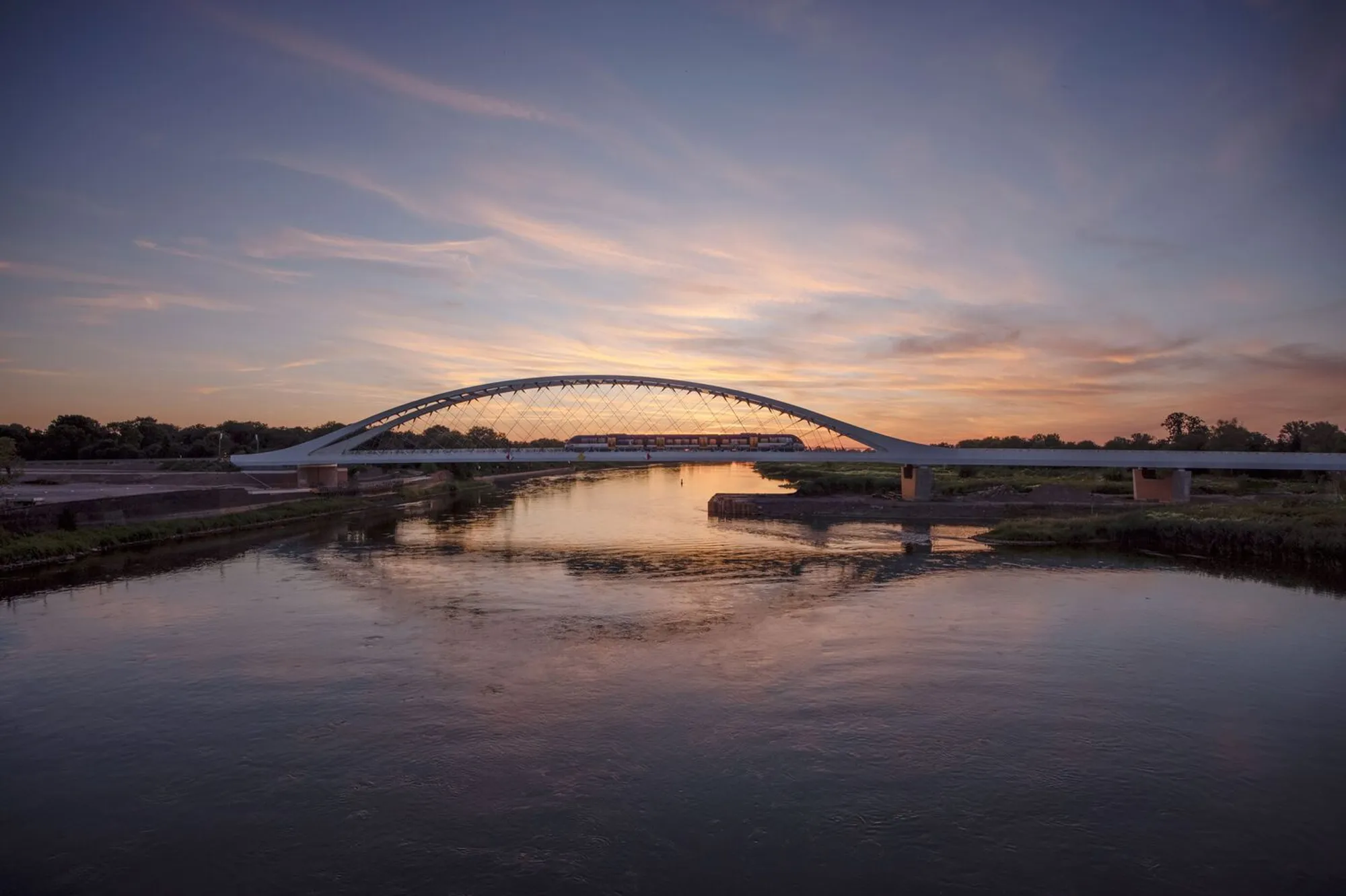
Kustrin Rail Bridge: A Landmark of European Collaboration and Engineering Innovation
The Kustrin Rail Bridge, a sleek network arch, uses carbon cables for lightweight, sustainable design, enhancing Germany-Poland rail connectivity.


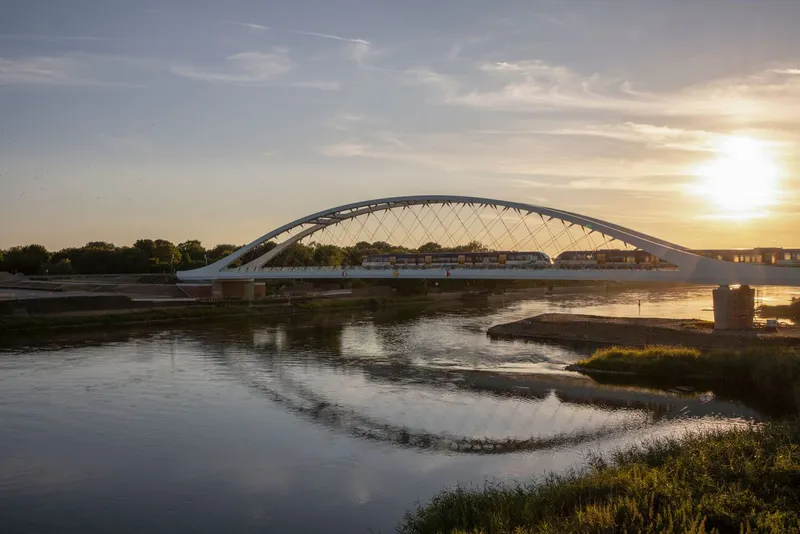
The Kustrin Rail Bridge, designed by Knight Architects in collaboration with DB Infra Go, Bestandsnetz Berlin, and I.II-O-A-B, stands as a striking symbol of European cooperation, connecting Germany and Poland across the Oder River. Completed and inaugurated in July 2024, the bridge marks a major milestone in regional infrastructure, combining architectural elegance, cutting-edge structural engineering, and sustainable construction techniques.
Photographed by Wilfried Dechau, the bridge has already become an iconic landmark, celebrated for its lightweight design, material efficiency, and seamless integration into the surrounding landscape.
A Celebration of European Cooperation
The official inauguration was attended by prominent figures, including Michael Theurer, Federal Commissioner for Rail Transport in Germany and Poland, Piotr Malepszak, Undersecretary of State in the Ministry of Infrastructure in Poland, and Dr. Dietmar Woidke, Prime Minister of Brandenburg. The event highlighted the bridge’s role as a symbol of cross-border collaboration, enhancing mobility, economic development, and connectivity between the two countries.
The Kustrin Rail Bridge is more than just infrastructure, it is a cultural and architectural landmark, signaling a shared commitment to innovation and sustainable transport.
Design Concept and Architectural Vision
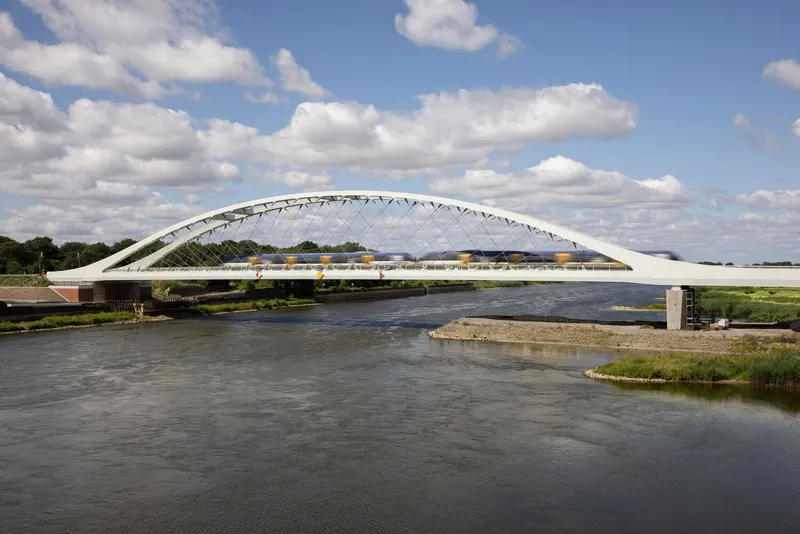
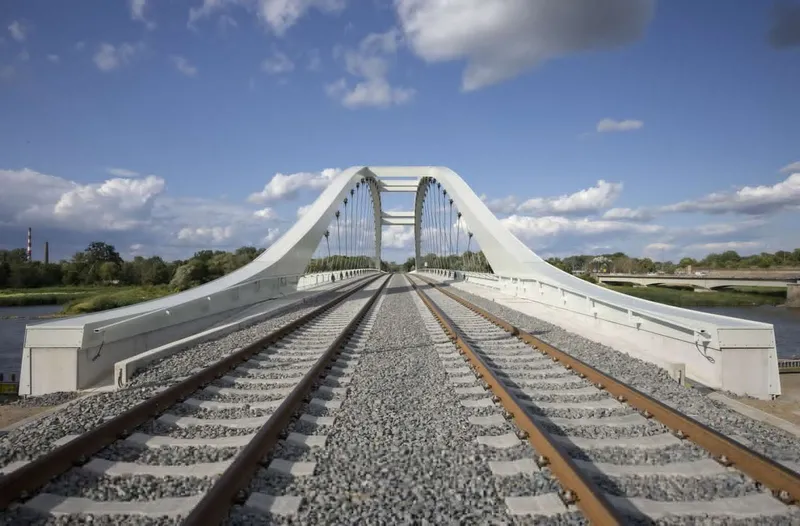
The bridge’s design emerged from a two-stage international design competition, won by Schüßler-Plan Ingenieurgesellschaft mbH and Knight Architects. The project includes two slender, elegant bridge structures:
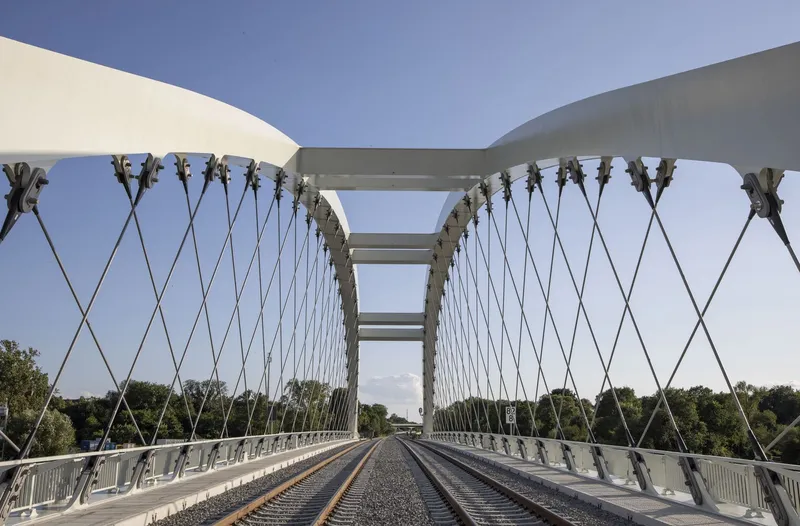
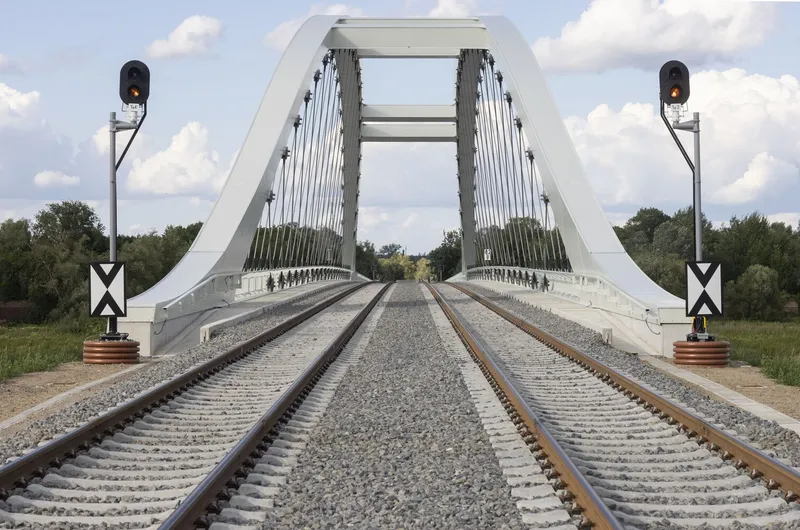
- The main crossing, a 266-meter-long network arch, replaces a derelict 1926 single-track truss. Its distinctive 130-meter steel arch, with the crown positioned above the border line, serves as a visual landmark and a welcoming gateway for travelers between Germany and Poland.
- The Odervorflut bridge, 176 meters in length, spans a flood relief canal 500 meters west of the main crossing. Though less dramatic, its architectural language mirrors the main bridge, ensuring coherence and visual continuity across the project.
The design integrates a three-span eastern approach on the Polish side, blending functionality with filigree, lightweight aesthetics that respect the surrounding natural and urban environment.
Engineering Innovation with Carbon Technology
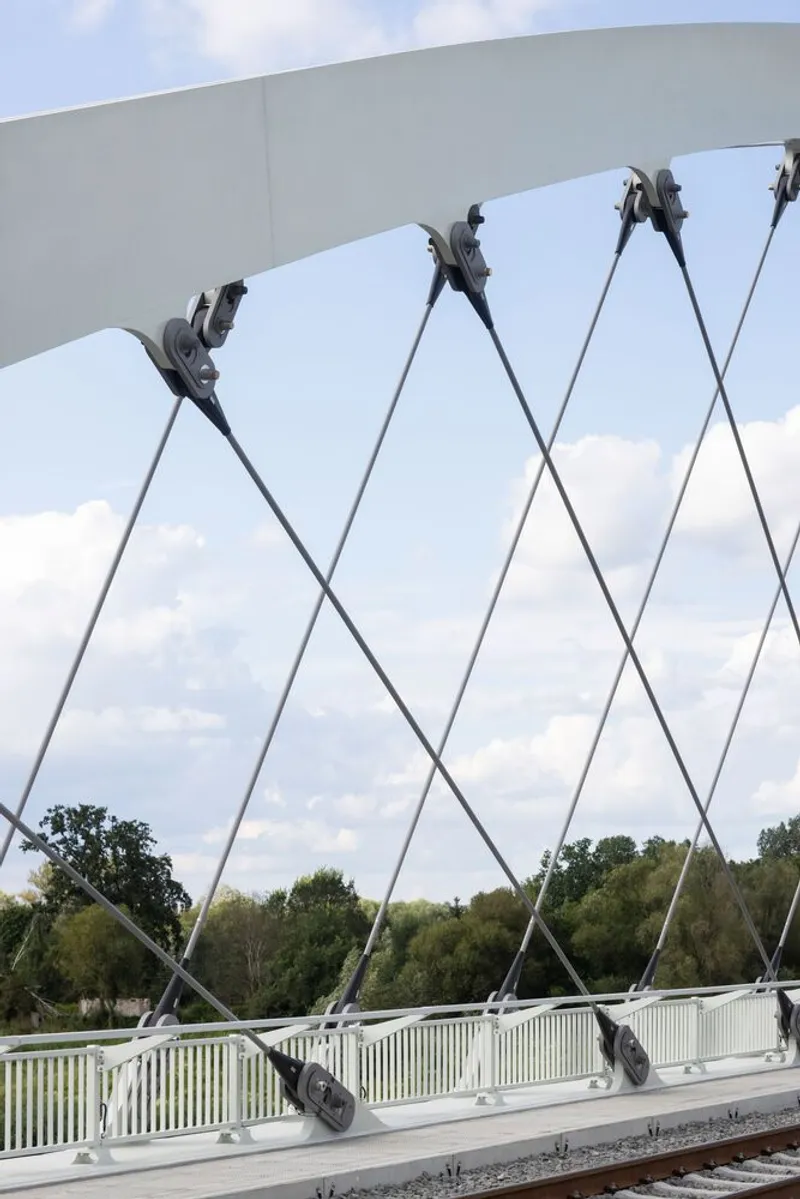
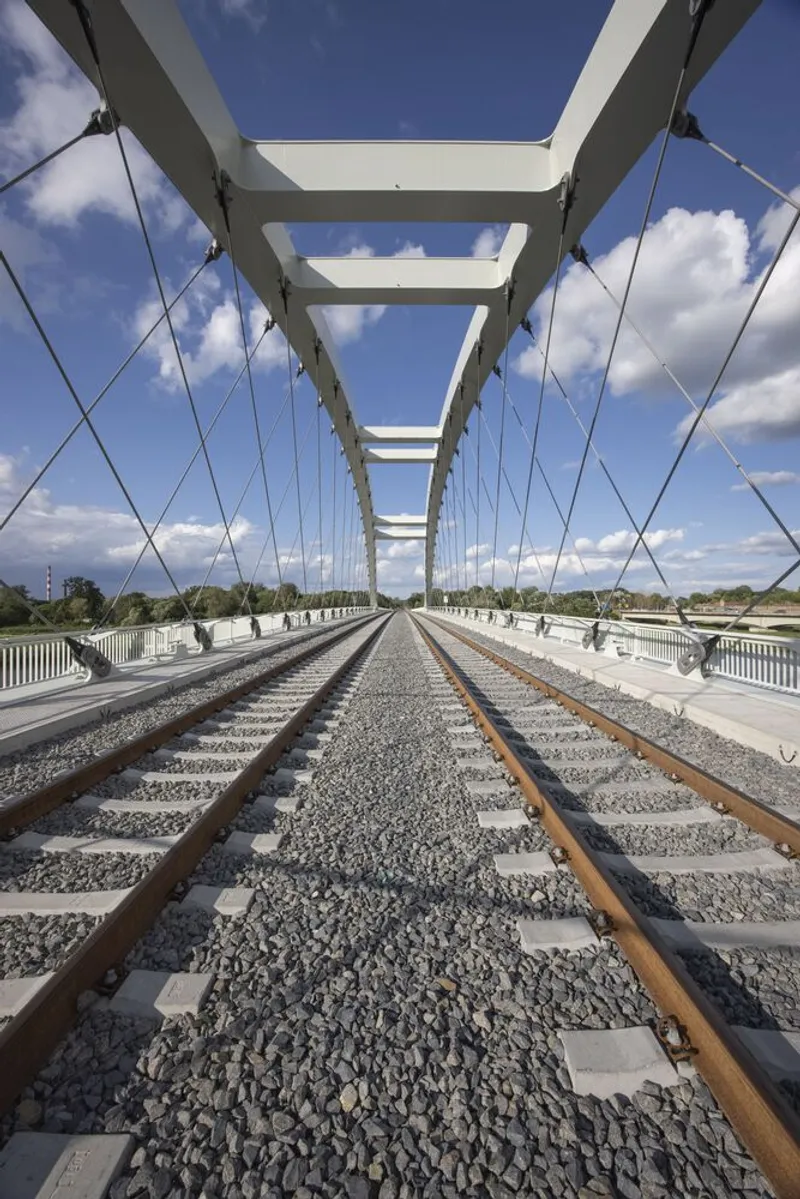
A standout feature of the Kustrin Rail Bridge is its pioneering network arch design, engineered by schlaich bergermann partner (sbp). Departing from traditional flat bar steel hangers, the bridge uses 50mm carbon tensile cables as primary load-bearing elements. This innovation:
- Reduces the overall weight of the structure
- Minimizes steel and concrete usage
- Creates the world’s first rail bridge utilizing carbon for significant structural elements
Implementing carbon cables required comprehensive feasibility studies and special approvals, demonstrating the project’s commitment to technical innovation, sustainable engineering, and material efficiency.
Enhancing Regional and International Mobility
The bridge is not just an architectural marvel; it is a vital infrastructure improvement that:
- Increases rail line capacity
- Supports a maximum permissible speed of 120 km/h
- Shortens travel times, enhancing both regional and international rail connections
By providing an efficient alternative to road transport, the bridge contributes to the mobility shift towards sustainable transportation, promoting environmental stewardship while improving connectivity and economic opportunities for the region.
Collaborative Expertise
The Kustrin Rail Bridge was realized through a multi-disciplinary collaboration:
- Schüßler-Plan Ingenieurgesellschaft mbH – general planning and project coordination
- Knight Architects – architectural concept development, overseeing design integrity
- sbp – structural engineering, specializing in lightweight network arch solutions
- Wilfried Dechau – architectural photography
This synergy between architects, engineers, and planners ensured the project met the highest standards of design excellence, innovation, and technical performance.
The Kustrin Rail Bridge is a testament to modern engineering, architectural elegance, and cross-border collaboration. Its innovative use of carbon tensile cables, filigree network arch design, and seamless integration with the surrounding landscape make it a pioneering example of sustainable infrastructure in Europe.
By combining aesthetic sophistication with functional efficiency, the bridge not only transforms rail travel but also strengthens the cultural and economic links between Germany and Poland.
All photographs are works of Wilfried Dechau



Popular Articles
Popular articles from the community


Hill & Cross Opera: Sculptural Opera House Architecture Shaped by Tallinn’s Landscape and Identity
Hill & Cross Opera reimagines opera house architecture in Tallinn through its sculptural hill, civic plaza, glass wave and a luminous cross.

Co-Life: Senior Housing Design That Reconnects Older Adults With the City
Co-Life reimagines senior housing design through healing gardens, shared streets, workshops, and a sustainable community across generations.

Conexión: Biophilic Design Reimagines High-Rise Living in Hong Kong
Conexión reimagines high-rise living in Hong Kong through biophilic design, green facades, shared spaces, daylight, water and nature within.

Lunar Spiral: Space Architecture Shaped by the Mathematics of the Universe
Lunar Spiral reimagines space architecture through Fibonacci geometry, lunar regolith, levitating habitats, and self-sustaining Moon living.


Similar Reads
You might also enjoy these articles


Hodi-Mandai Geram
Project Function: Preservation and revitalization of the Intangible heritage and socio-spatial identity of the Hodi by Housing, Cultural Memory Center, Sacred Grove, landscape, local tourism economy


Olio Towers: A Mid-Rise for Performers That Fuses Housing, Rehearsal, and Stage
Located blocks from Houston's Theater District, this modular tower stacks living units around a central performance atrium.

Oasis: Modular Green Housing Carved into Dhaka's Urban Fabric
A shortlisted Plugin Housing entry reclaims unauthorized settlements in Dhaka with stepped concrete volumes, green roofs, and ventilation-driven design.

Black Hole: A Floating Megastructure for the Post-Physical Era
Emiliano Mazzarotto envisions a spherical, self-scaling arena where e-sports, digital hotels, and holographic stadiums replace traditional public space.


Explore Die Brücke Competitions
Discover active competitions in this discipline



Challenge to reimagine the Iron Throne


Photograph architecture without architects


Illustrate the lost glory of Angkor Wat - Render Challenge


Design challenge to reuse E-waste
Comments (0)
Please login or sign up to add comments
No comments yet. Be the first to comment!