

Kuwasawa Design School by moss. – A Contemporary Renovation for Japan’s First Design School
Kuwasawa Design School’s renovation by moss. blends Bauhaus-inspired minimalism, adaptive reuse, and collaborative spaces, fostering creativity in Tokyo’s Shibuya district.


Architects: moss.
A Landmark in Japanese Design Education
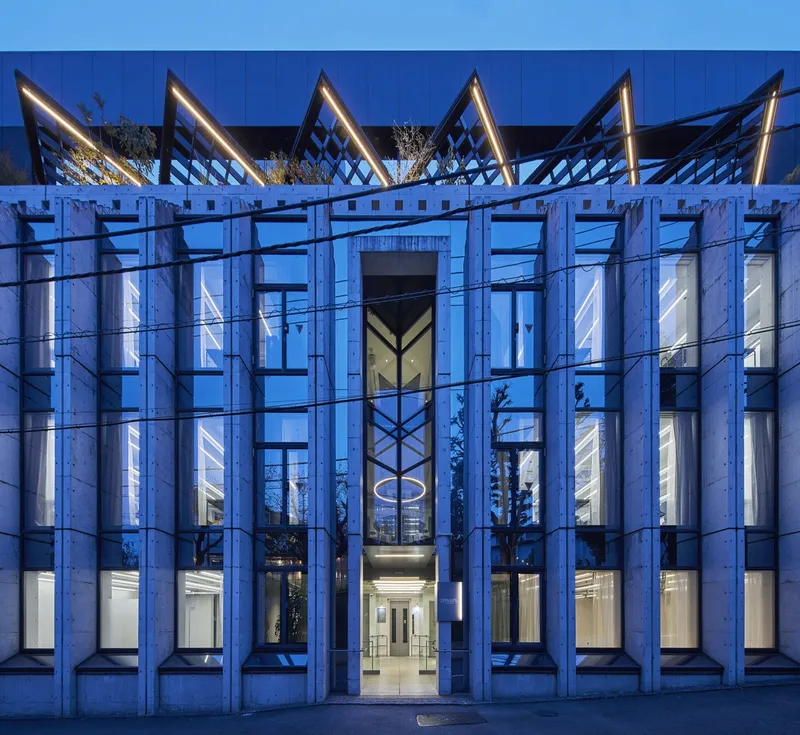
Kuwasawa Design School, founded in 1954 as the first design school in Japan, has been a cradle for generations of creative professionals. In 2023, moss. undertook a transformative renovation of a 1990s post office building located between Shibuya and Harajuku, breathing new life into the institution while honoring its historic role in shaping Japan’s design culture. This marks the first phase of the new campus expansion, designed to work in harmony with the existing school building.
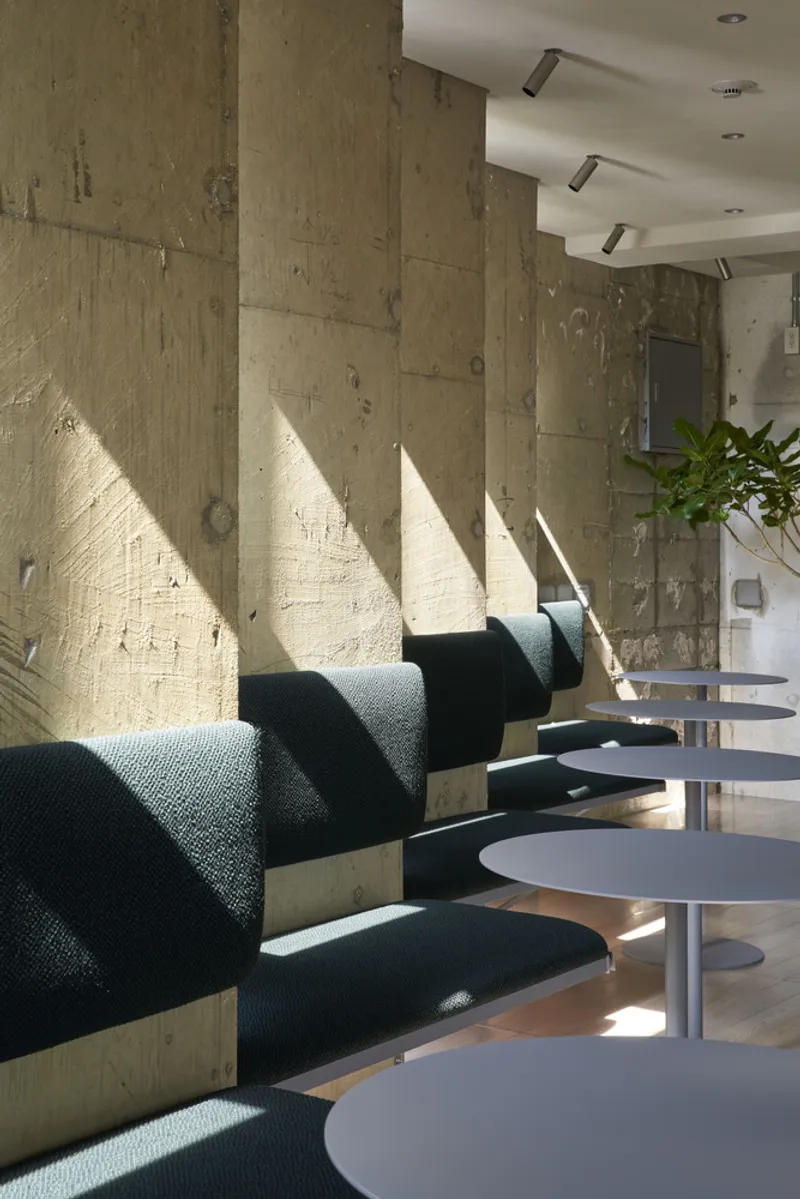
Adaptive Reuse Meets Contemporary Design
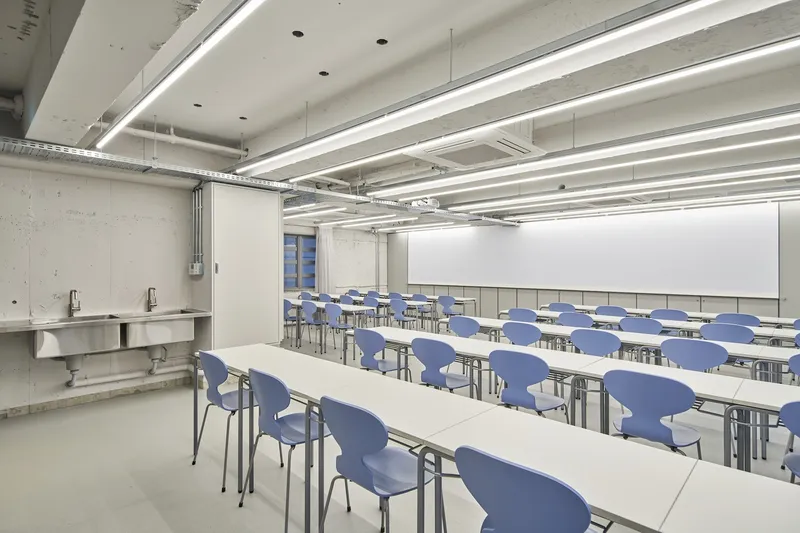
The renovation focused on repurposing the first to fourth floors of the elongated, symmetrical building. moss. embraced the structure’s geometry to create efficient flow lines, accessible facilities, and a welcoming environment for students and the public. The result is an open-plan educational space that promotes creativity, collaboration, and interaction.
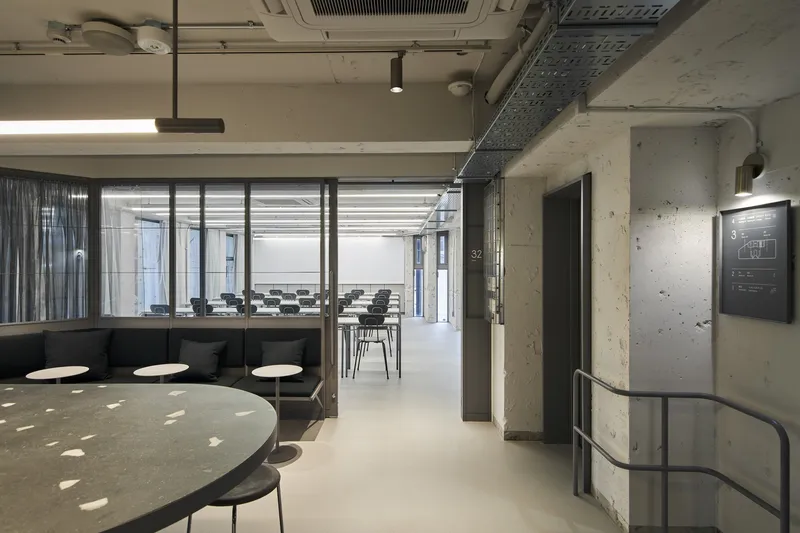
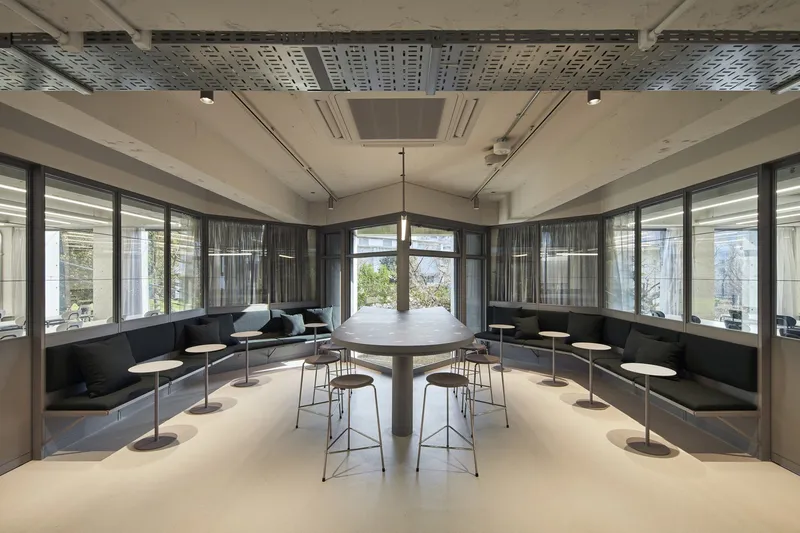
- Ground to Third Floors: A central common space acts as the heart of each floor, flanked by classrooms, event areas, and functional rooms. The ground-floor event space is open, visible from the facade, and easily accessible from the entrance—serving as a bridge between the school and the city. On the second and third floors, high tables and built-in benches encourage informal discussions, peer learning, and relaxed social interactions.
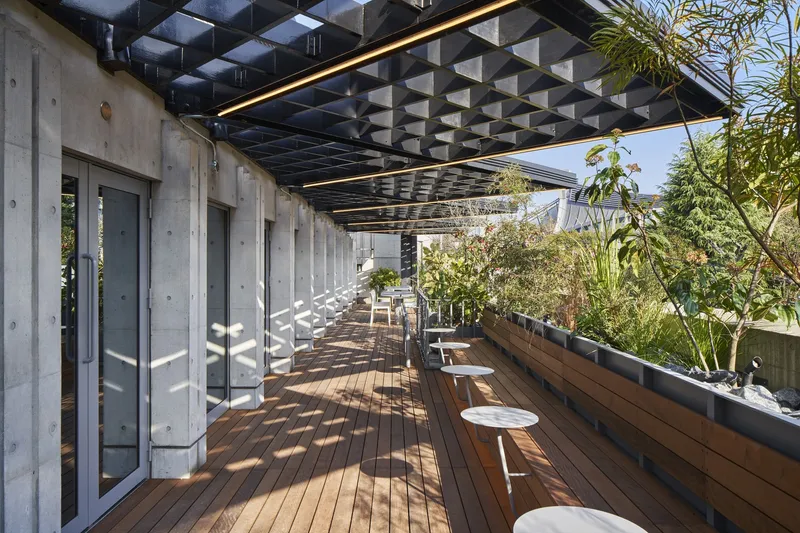
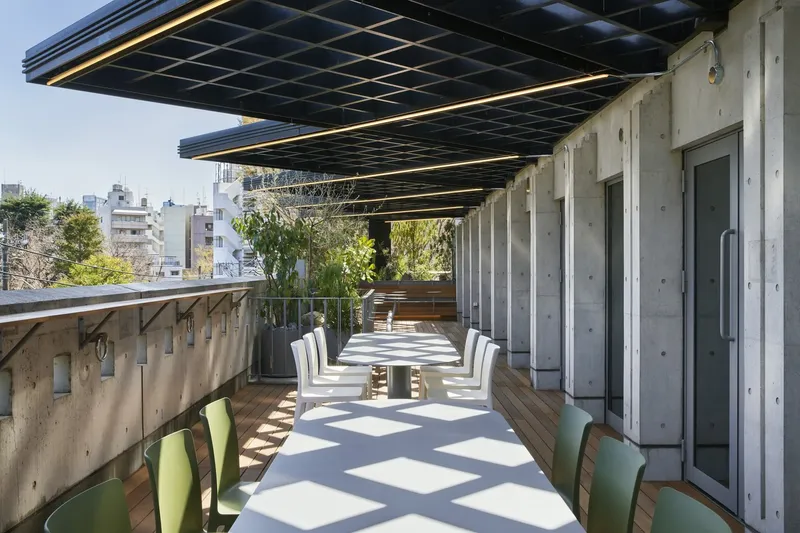
- Fourth Floor Terrace: More than half of the top floor is an outdoor deck with panoramic views of Yoyogi Stadium and the lush Yoyogi Park. Equipped with large communal tables, integrated benches, and counters, it offers a rare urban retreat for students.
Balancing Past and Present
The original 1990s building featured a concrete postmodern exterior and interiors with marble walls and wooden floors. moss. chose to contrast the strong exterior with a neutral, timeless interior palette—minimalist yet functional. By exposing parts of the original structure, the architects preserved the building’s authenticity while ensuring adaptability for future upgrades.
Budget-conscious design decisions prioritized durability and versatility. The steel, glass, and concrete materials pay homage to the school’s Bauhaus-inspired roots, while updated railings and sashes reinterpret details from Dessau’s modernist architecture. Subtle touches—such as custom curtains, upcycled marble tops, and softly curled railings—temper the industrial lines, creating a human warmth that resonates with daily student life.
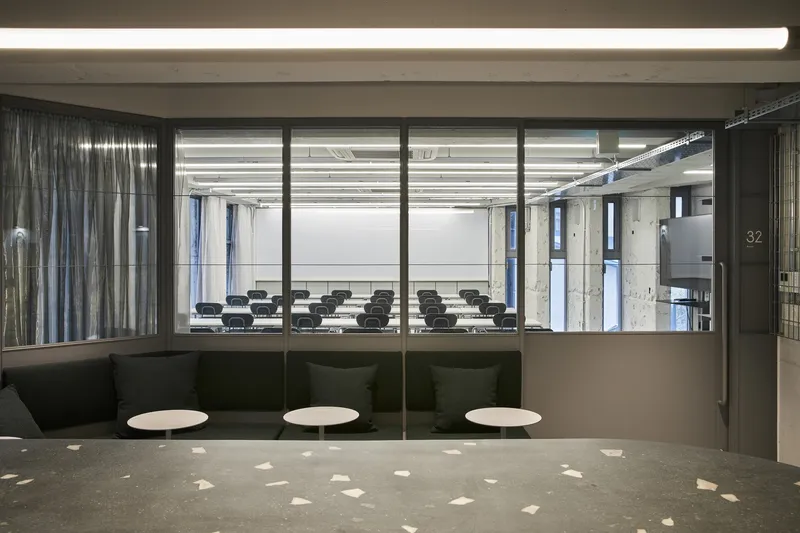
Designing for Creative Growth
The neutral industrial gray backdrop acts as a canvas for students’ individuality, allowing their work and personalities to bring color and vibrancy to the space. This approach embodies Kuwasawa’s mission: to nurture future creators while respecting the legacy of Japan’s pioneering design education.
Every element—from the material textures to the spatial flow—was conceived to inspire tactile engagement. Students are encouraged to interact with the environment, drawing inspiration from its balance of functionality, history, and contemporary design expression.
A Vision for the Future
As this renovated facility operates alongside the original campus, it stands as both a symbol of continuity and a platform for innovation. moss.’s design ensures the building will remain a generous, adaptable space for decades to come, supporting creative exploration while carrying forward the legacy of the first design school in Japan.


Popular Articles
Popular articles from the community


Singing Woman: Contemporary Architecture Inspired by Estonia’s Voice and the Sea
Singing Woman turns Estonia’s song culture into flowing opera house architecture, blending public life, landscape, sea, and national memory.

Tsunami Convergenics: Turning Catastrophic Ocean Forces into Underwater Housing Infrastructure
A speculative underwater settlement off the coast of Onagawa, Japan, treats tsunamis and typhoons as energy sources rather than threats.

Cloaked Colonization: A Mobile Underwater Habitat That Moves Like a Fish
Micah Abaya's shortlisted EHC Pacific entry reimagines ocean settlement as a dispersed network of self-sustaining architectural organisms.

Opera on the Sea: Driftwood Logic Shapes a Timber Opera House on Estonia's Coast
Trevor Orgill's opera house translates the entangled drift of floating timber into a civic building where wood, water, and music converge.

Similar Reads
You might also enjoy these articles


Hodi-Mandai Geram
Project Function: Preservation and revitalization of the Intangible heritage and socio-spatial identity of the Hodi by Housing, Cultural Memory Center, Sacred Grove, landscape, local tourism economy


Olio Towers: A Mid-Rise for Performers That Fuses Housing, Rehearsal, and Stage
Located blocks from Houston's Theater District, this modular tower stacks living units around a central performance atrium.

Oasis: Modular Green Housing Carved into Dhaka's Urban Fabric
A shortlisted Plugin Housing entry reclaims unauthorized settlements in Dhaka with stepped concrete volumes, green roofs, and ventilation-driven design.

Black Hole: A Floating Megastructure for the Post-Physical Era
Emiliano Mazzarotto envisions a spherical, self-scaling arena where e-sports, digital hotels, and holographic stadiums replace traditional public space.

Explore Tetsuo Kobori Architects Competitions
Discover active competitions in this discipline

Challenge to design public laboratory

Challenge to reimagine the Iron Throne

Photograph architecture without architects

Illustrate the lost glory of Angkor Wat - Render Challenge
Comments (0)
Please login or sign up to add comments
No comments yet. Be the first to comment!