
La Petite Ceinture En Folly - Adaptive Reuse Architecture
Adaptive reuse transforms Paris’s forgotten railway into a living museum park, blending culture, movement, and urban ecology seamlessly.


Adaptive reuse architecture continues to redefine how cities engage with their obsolete infrastructures. La Petite Ceinture en Folly positions itself within this discourse by transforming a disused railway network in Paris into a dynamic museum park. The project, designed by Karina Borodai, proposes a spatial narrative where infrastructure is not erased but reinterpreted as a cultural and ecological asset.
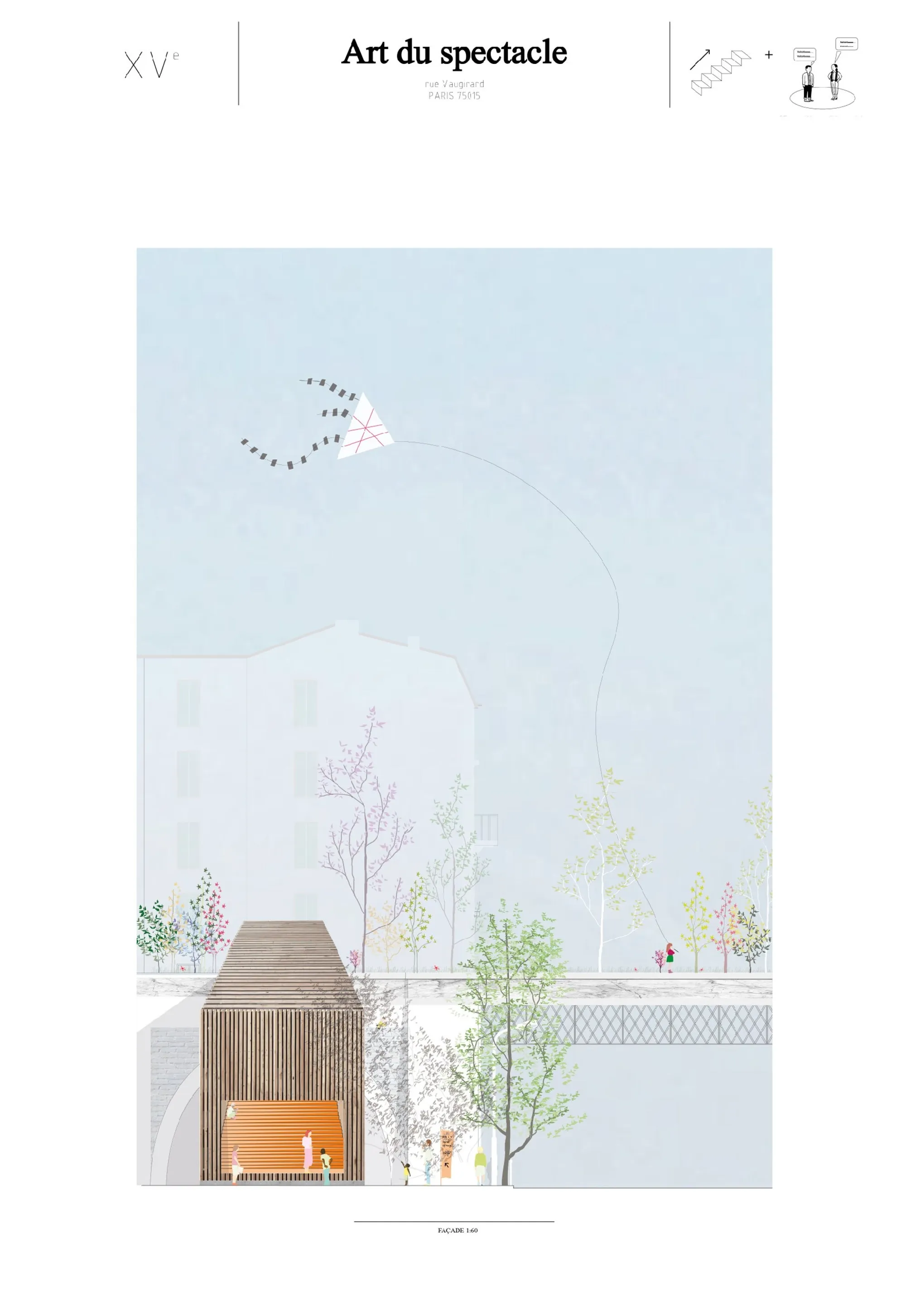
Situated along the historic Petite Ceinture railway, the intervention reclaims linear urban voids and converts them into a sequence of experiential landscapes. The proposal does not impose a singular architectural object; instead, it constructs a system of follies, pathways, and programmatic nodes that activate the site as a continuous public domain.
Concept: Infrastructure as a Living Museum
The project reframes the notion of a museum from a static container of artifacts into a distributed, performative landscape. Here, the railway becomes both archive and stage. Each intervention along the route operates as a "folly": a small-scale architectural gesture that accommodates exhibitions, performances, and informal gatherings.
Rather than concentrating cultural functions in a centralized building, the design disperses them across the site. This decentralization enables a more democratic engagement with art and culture, embedding it within everyday urban movement.
The concept aligns strongly with contemporary adaptive reuse strategies, where the emphasis shifts from preservation alone to activation and reinterpretation.
Spatial Strategy: Linear Continuity and Nodes of Intensity
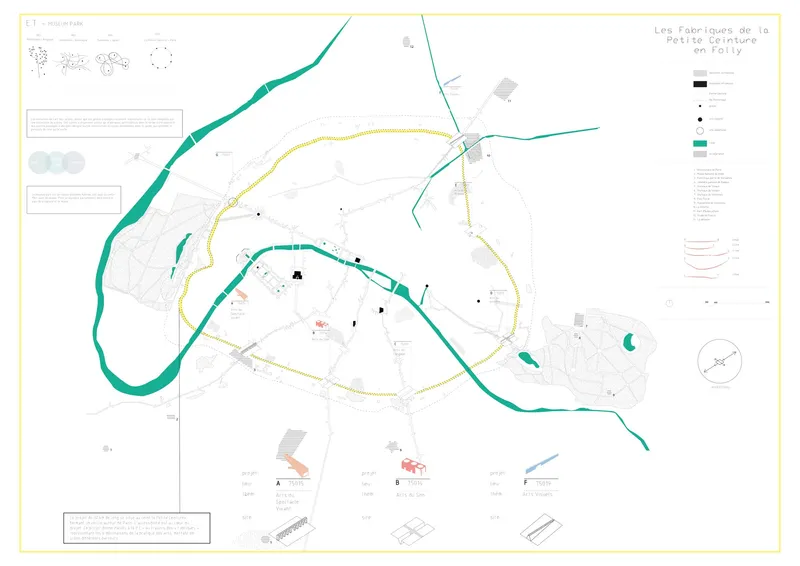
At the urban scale, the project establishes a continuous green corridor along the railway alignment. This corridor acts as a connective tissue linking diverse neighborhoods, infrastructures, and cultural points across Paris.
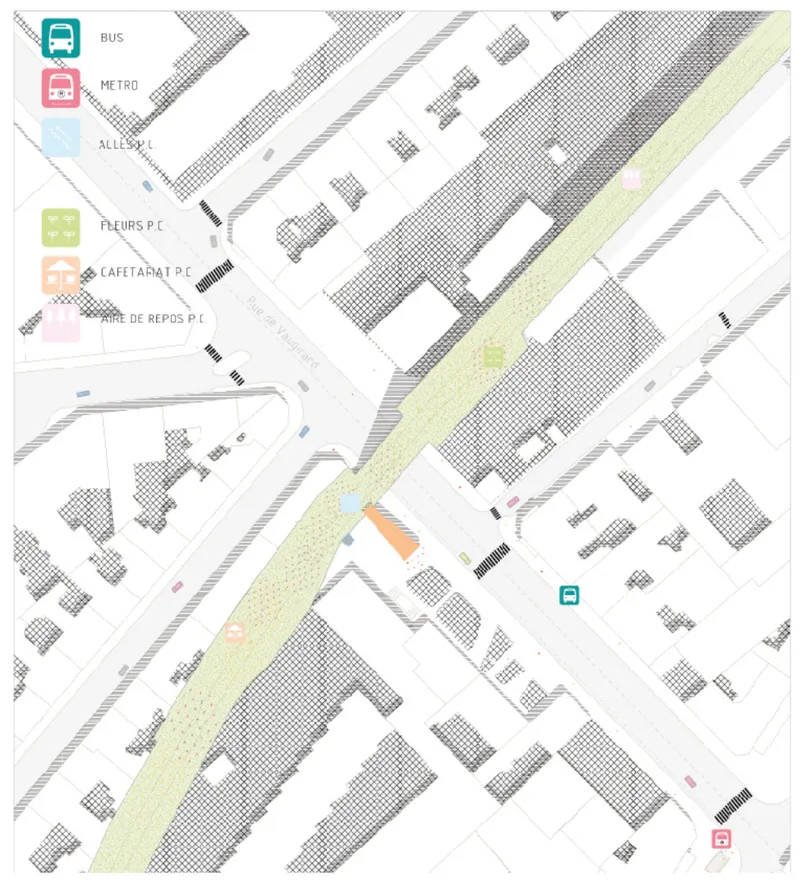
The masterplan introduces a layered circulation system that accommodates pedestrians, cyclists, and cultural flows. Strategic nodes punctuate this linear system, each defined by specific programmatic intensities:
- Performance spaces for live arts
- Exhibition zones integrated within landscape elements
- Social infrastructures such as cafés and resting areas
- Points of intersection with existing public transport networks
These nodes are not isolated interventions but are interconnected through a coherent spatial language. The result is a rhythmic sequence of compression and release, where visitors transition between moments of activity and reflection.
Architectural Language: The Role of the Folly
The follies serve as the primary architectural devices within the project. They are intentionally modest in scale yet precise in their placement and function. Each folly responds to its immediate context, whether it is a dense urban junction or a quieter ecological segment of the railway.
Materially, the interventions maintain a dialogue with the industrial heritage of the site while introducing contemporary elements. This balance ensures continuity with the past while signaling a forward-looking vision.
The architectural expression avoids monumentality. Instead, it prioritizes adaptability, allowing each structure to host multiple uses over time. This aligns with the broader ethos of adaptive reuse architecture, where flexibility is a key parameter.
Urban Integration: Reconnecting the City
One of the most critical contributions of the project lies in its ability to reconnect fragmented urban territories. The Petite Ceinture, once a boundary condition, is reimagined as an inclusive public spine.
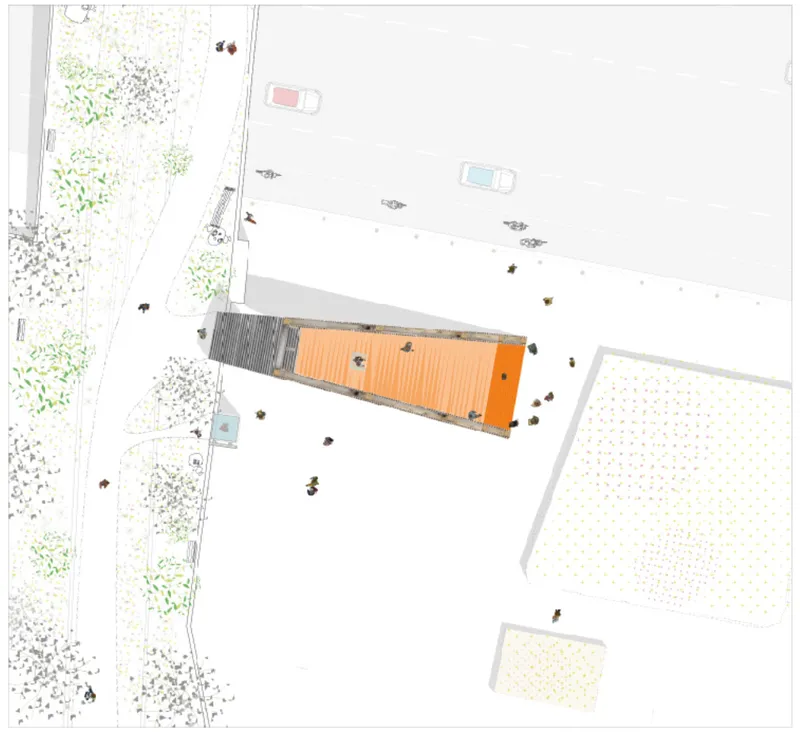
The design strategically integrates with existing mobility networks, including metro and bus systems, enhancing accessibility and usability. By doing so, it transforms a residual infrastructure into an active participant in the city’s daily life.
Furthermore, the project introduces new points of entry and interaction, ensuring that the museum park is not perceived as a destination alone but as part of a continuous urban experience.
Landscape and Ecology: Regenerative Urbanism
Beyond cultural activation, the proposal engages deeply with ecological regeneration. The linear park incorporates native vegetation, micro-habitats, and permeable surfaces to support biodiversity and environmental resilience.
The design acknowledges the spontaneous nature that has already reclaimed parts of the railway. Rather than erasing this condition, it amplifies it, creating a hybrid landscape where designed and natural elements coexist.
This approach positions the project within the broader framework of regenerative urbanism, where architecture and landscape operate as interconnected systems.
Experience: Movement, Memory, and Discovery
The user experience is structured around movement and discovery. As visitors traverse the site, they encounter a sequence of spatial episodes, each offering a distinct sensory and cultural engagement.
The linearity of the railway encourages exploration, while the distributed follies provide moments of pause and interaction. This interplay creates a narrative that is both personal and collective, allowing users to construct their own interpretations of the space.
The project thus transcends the traditional boundaries of architecture, operating instead as an evolving urban experience.
La Petite Ceinture en Folly exemplifies the potential of adaptive reuse architecture to transform obsolete infrastructures into vibrant public assets. By merging cultural programming, ecological strategies, and urban connectivity, the project proposes a new model for the contemporary museum: one that is open, distributed, and deeply embedded within the city.
Through its careful balance of intervention and preservation, the design not only reactivates a forgotten railway but also redefines how architecture can engage with memory, movement, and the evolving fabric of urban life.




Popular Articles
Popular articles from the community


Co-life: Sustainable Architecture for Age-Friendly Community Living
Co-life reimagines sustainable architecture for seniors through courtyards, rammed earth, shared gardens, and spaces designed for belonging.

The Musturak Paradise: Senior Living Architecture for a Connected Future in Temara, Morocco
The Musturak Paradise reimagines senior living architecture in Temara via private homes, social spaces, culture, community, and shared care.

Lunar Spiral: Space Architecture Shaped by the Mathematics of the Universe
Lunar Spiral reimagines space architecture through Fibonacci geometry, lunar regolith, levitating habitats, and self-sustaining Moon living.

Riyadh For All: Intergenerational Urban Design for Active Aging in Rabat
Riyadh For All reimagines urban design in Rabat with intergenerational co-living, adaptive courtyards, and Moroccan cultural exchange today.

Similar Reads
You might also enjoy these articles

Eco Chapel: A Green Architecture Pavilion Designed in Symbiosis with the Forest
Eco Chapel uses green architecture to weave prayer, learning and reuse into a forest pavilion shaped by modular hexagonal canopies for life.
Kaffeebühnen: Coffee Shop Architecture Designed as a Civic Stage Between Vienna’s City and Park
Kaffeebühnen turns coffee shop architecture into a civic stage, linking Vienna’s park edge, urban life, warm timber yards, and coffee craft.
Healing Façade: Sustainable Architecture for Reforestation, Community, and Sacred Ecology in Ethiopia
Healing Façade reimagines sustainable architecture as a living wall that restores soil, catches water and renews Ethiopia's forest churches.


Urban Forest: A Vertical Ecosystem for 5,000 Workers in Singapore's Changi Business Park
Radially stacked pods and layered green decks turn a 7-acre plot into 47 acres of ecological workspace projected for 2040.

Comments (0)
Please login or sign up to add comments
No comments yet. Be the first to comment!