

LaCalor Studio by KAL A
LaCalor Studio by KAL A transforms a former carpentry workshop in Madrid into a light-filled, flexible art and screen-printing studio.


Revitalizing an Artistic Workspace in Carabanchel
Nestled between the Opañel and Comillas neighborhoods in Madrid’s Carabanchel district, LaCalor Studio by KAL A transforms a former carpentry workshop into a vibrant art and screen-printing studio. Designed for artists Bruno del Giúdice and Candela Sotos, the 210 m² renovation balances industrial heritage with contemporary spatial fluidity, offering a renewed identity for creative production.
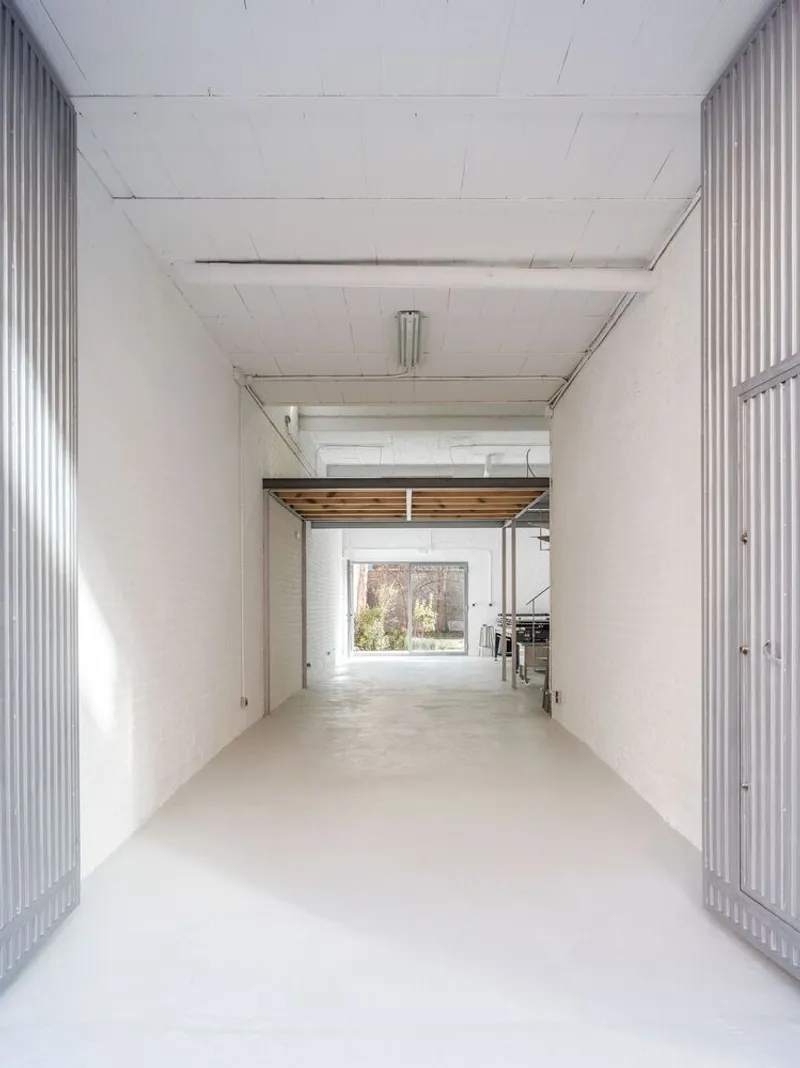
The project organizes two main zones — a 90 m² open studio workspace and a 120 m² back garden, now seamlessly connected through thoughtful architectural interventions.

Architectural Transformation
Three primary design actions define the project:
- Opening the rear façade to establish direct visual and physical continuity between the studio and garden.
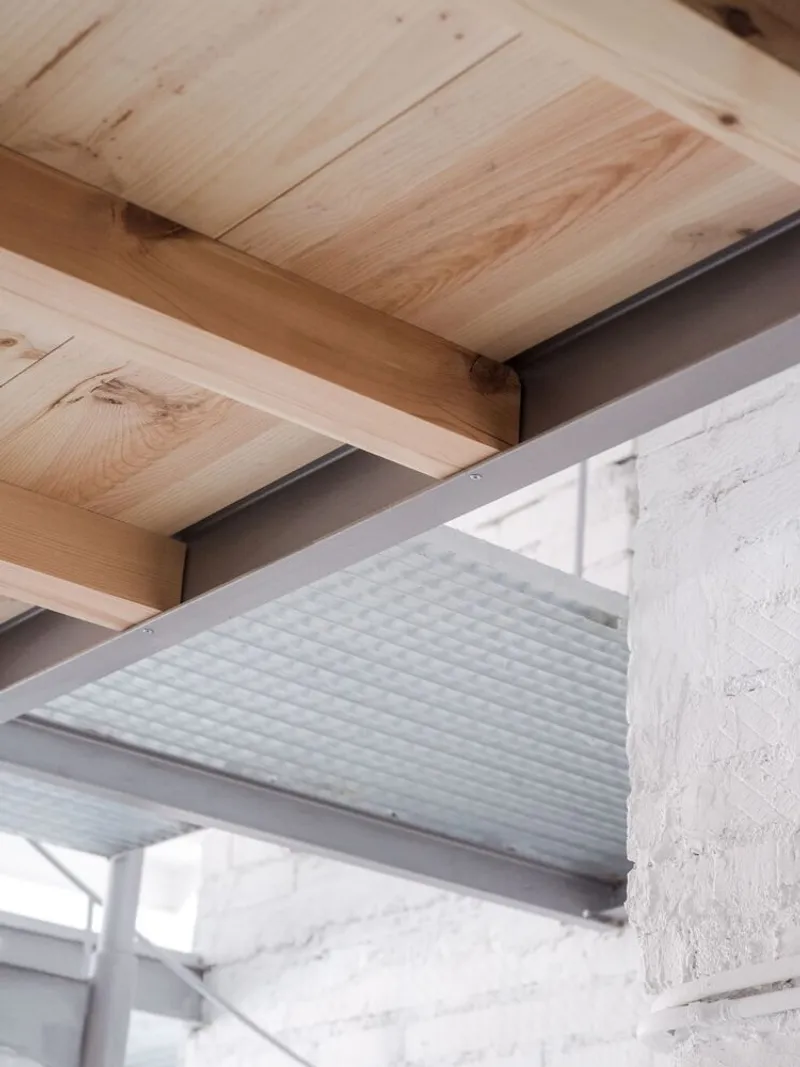
- Introducing a lightweight steel-and-wood structure to create a mezzanine level for an independent work area.
- Completely refurbishing the existing workshop to enhance functionality, lighting, and flow.
Previously, access to the garden was restricted by a small opaque door. By demolishing part of the rear wall and installing a new structural lintel, the architects introduced a wide double door that brings abundant daylight into the interior, reducing dependence on artificial lighting. The choice of reflective floor color amplifies brightness and creates a sense of openness across the workspace.
Spatial Organization and Material Expression
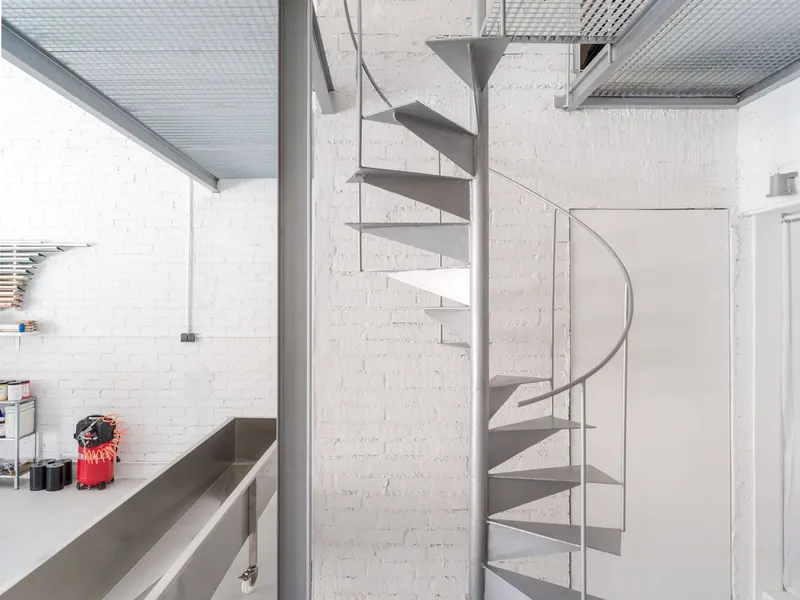
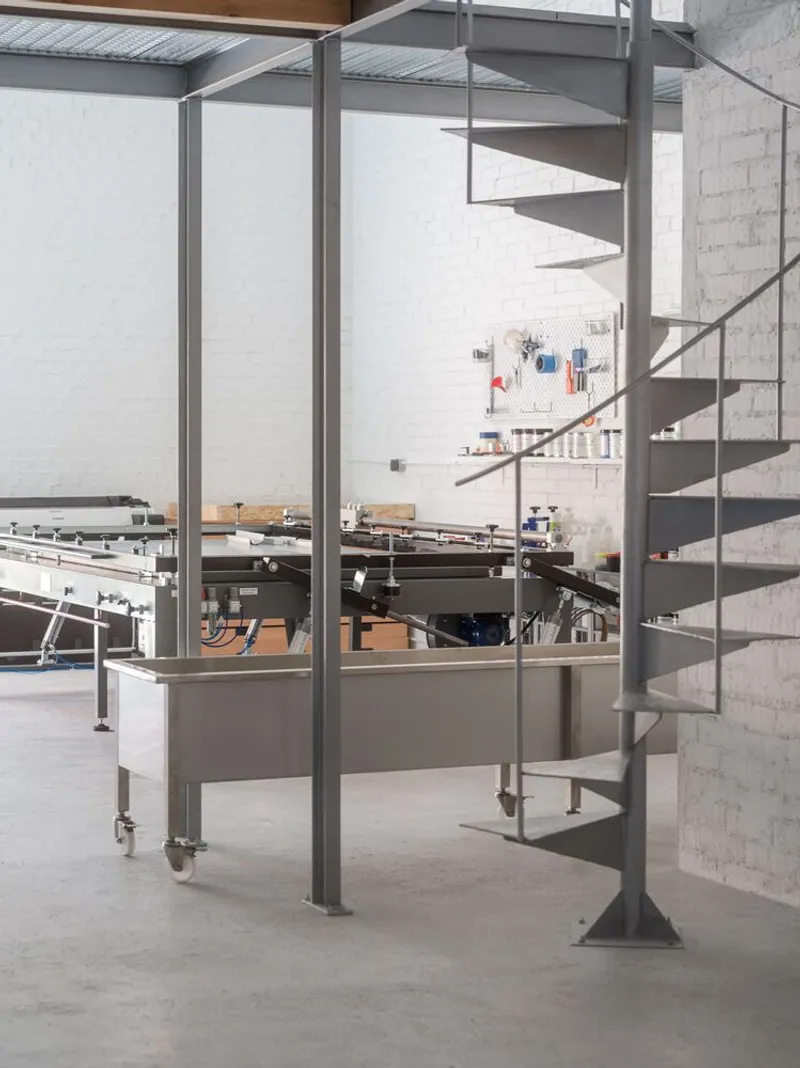
A slender spiral staircase replaces the old linear flight, freeing up floor space and adding sculptural value. Above, the mezzanine structure — crafted in steel and wood — offers flexibility for independent work or exhibitions.
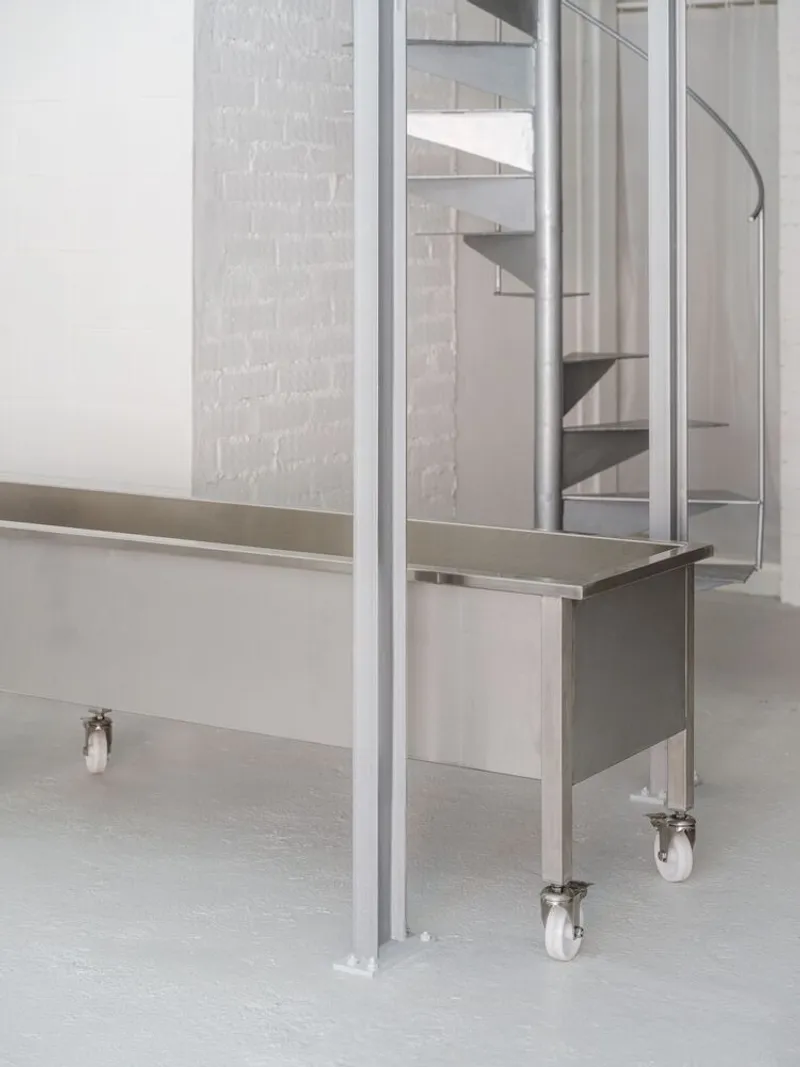
Essential facilities such as storage, kitchen, and toilets are integrated into the central zone, optimizing the workflow around the large-format screen-printing machine, capable of handling 3x2-meter frames. Mobile washing and drying units ensure maximum adaptability for different artistic processes.
The architects chose to paint all structural and carpentry elements in metallic tones, allowing them to merge with the machinery and tools. This restrained palette reinforces the industrial character while letting the artists’ work take visual prominence.

An Adaptive Canvas for Creativity
KAL A’s approach embraces both the material memory of the old workshop and the evolving needs of its new users. The result is a flexible, light-filled studio that functions as a living canvas — a space where art, architecture, and craft coexist harmoniously.
Through minimal yet impactful interventions, LaCalor Studio exemplifies how adaptive reuse and context-sensitive design can reinvigorate urban industrial spaces, fostering creativity and community within Madrid’s cultural landscape.

All Photographs are works of Knu Kim


Popular Articles
Popular articles from the community


Cloaked Colonization: A Mobile Underwater Habitat That Moves Like a Fish
Micah Abaya's shortlisted EHC Pacific entry reimagines ocean settlement as a dispersed network of self-sustaining architectural organisms.

The Amber Palace Opera: A Geological Fiction Surfaces on Tallinn's Baltic Waterfront
Pierre Brillard reimagines a Baltic legend as a public landscape, opera house, and waterfront promenade rooted in Tallinn's coastal identity.

Manzana Morphosis: Stretching Barcelona's Grid into a Living Landscape for 2050
A radical reworking of the Eixample manzana turns density into a tool for generous public space, vertical ecology, and environmental performance.

Tsunami Convergenics: Turning Catastrophic Ocean Forces into Underwater Housing Infrastructure
A speculative underwater settlement off the coast of Onagawa, Japan, treats tsunamis and typhoons as energy sources rather than threats.

Similar Reads
You might also enjoy these articles


Hodi-Mandai Geram
Project Function: Preservation and revitalization of the Intangible heritage and socio-spatial identity of the Hodi by Housing, Cultural Memory Center, Sacred Grove, landscape, local tourism economy


Olio Towers: A Mid-Rise for Performers That Fuses Housing, Rehearsal, and Stage
Located blocks from Houston's Theater District, this modular tower stacks living units around a central performance atrium.

Oasis: Modular Green Housing Carved into Dhaka's Urban Fabric
A shortlisted Plugin Housing entry reclaims unauthorized settlements in Dhaka with stepped concrete volumes, green roofs, and ventilation-driven design.

Black Hole: A Floating Megastructure for the Post-Physical Era
Emiliano Mazzarotto envisions a spherical, self-scaling arena where e-sports, digital hotels, and holographic stadiums replace traditional public space.

Explore Macia Estudio Competitions
Discover active competitions in this discipline

Challenge to design luxury tourism on rails

Challenge to reimagine the Iron Throne

Photograph architecture without architects

VR headsets Storefront design competition
Comments (0)
Please login or sign up to add comments
No comments yet. Be the first to comment!