

Langeveld Building by Paul de Ruiter Architects – A Sustainable and Circular Educational Landmark at Erasmus University Rotterdam
Langeveld Building by Paul de Ruiter Architects is an energy-positive, circular university space combining natural ventilation, biophilic design, and sustainability.


The Langeveld Building, designed by Paul de Ruiter Architects for Erasmus University Rotterdam (EUR), sets a global benchmark in sustainable architecture and energy-positive educational buildings. Completed in 2022, this 8,748 m² campus facility is one of the most sustainable university buildings in the world, certified with the prestigious BREEAM Outstanding rating – a qualification achieved by fewer than 1% of buildings in the Netherlands.

A New Era of Energy-Positive Educational Architecture
The Langeveld Building is not just sustainable; it is energy positive, operating on wind, solar, and geothermal energy. At the heart of its design is a groundbreaking natural ventilation system that reduces energy consumption by 85% compared to conventional systems while ensuring abundant fresh air circulation.
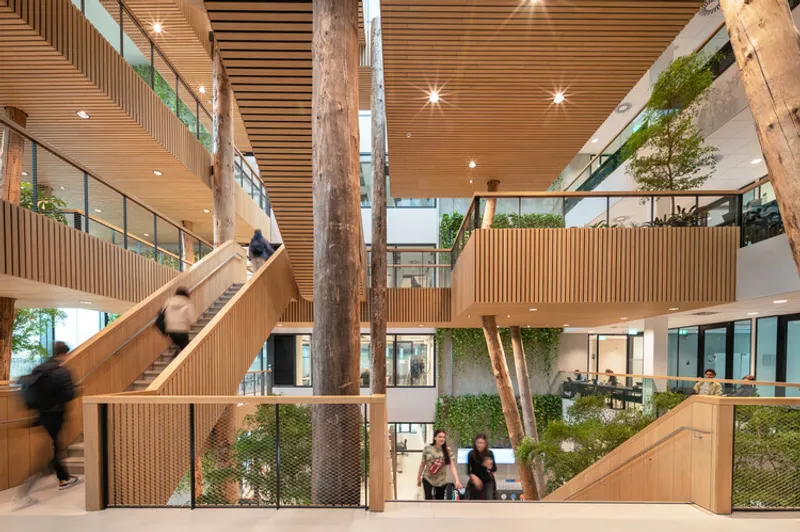

Two solar chimneys on the south façade create vertical shafts that heat and draw warm air upward. Topped with a venturi roof shaped like an aircraft wing, these shafts harness wind power to accelerate airflow, intensifying the natural ventilation effect. Simultaneously, fresh air enters a dedicated shaft, where a cold-water shower cools and pushes it downward, delivering a constant flow of fresh air throughout the building.
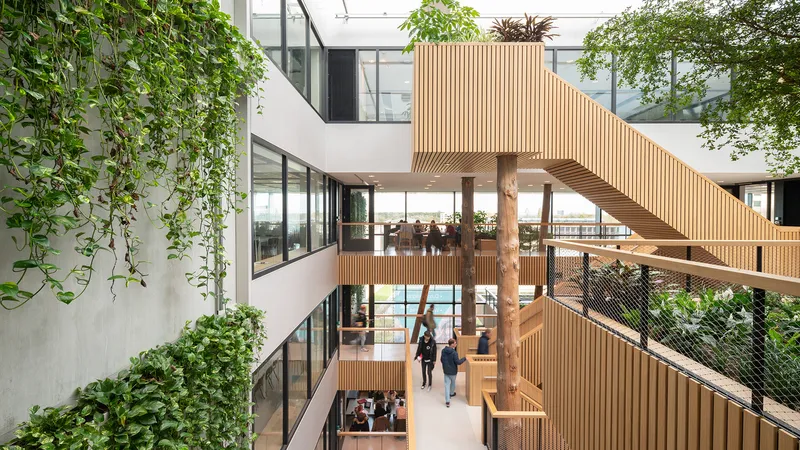
This climate-responsive design stores summer heat in deep-earth layers for winter use and retains winter cold for summer cooling, further minimizing environmental impact. Combined with photovoltaic panels on the roof, the building produces more energy than it consumes.
Architecture in Harmony with Nature
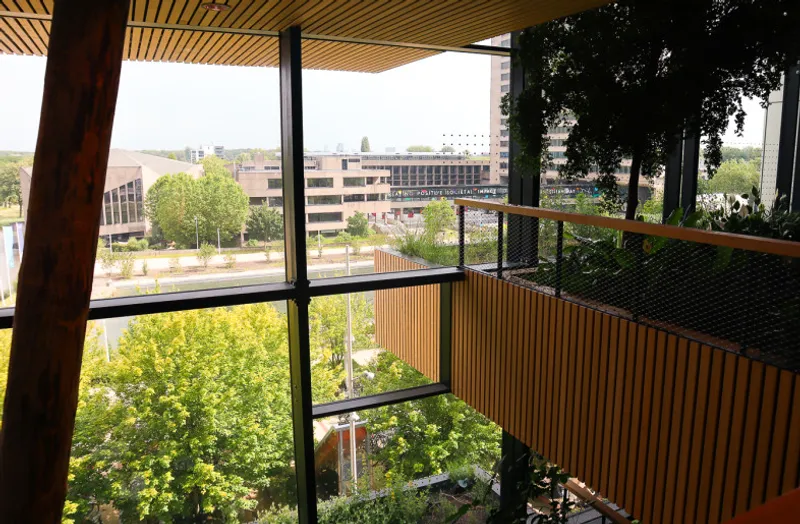
Transparency, daylight, and biophilic design principles define the Langeveld Building. The fully glazed façade connects the building seamlessly with its green campus surroundings, while daylight penetrates deep into the interiors.

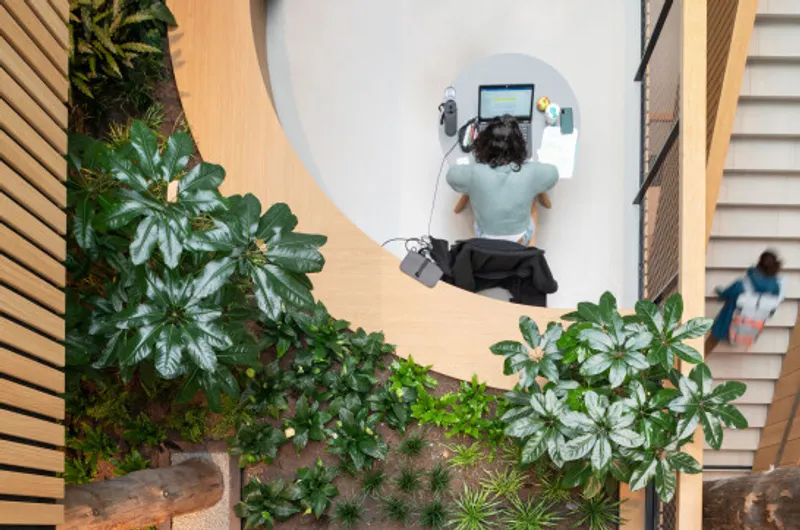
Inside, nature is brought indoors through green study spaces, abundant planting, and warm wooden finishes. A standout feature is the atrium with real wooden tree trunks, which houses a “treehouse-like” study space. These elements not only enhance aesthetics and spatial experience but also promote student well-being, mental health, and productivity.
The project reflects the university’s ambition to provide not only world-class education facilities but also a healthy, inspiring, and human-centered learning environment.

Circular Construction and Material Innovation
Beyond energy and climate strategies, the Langeveld Building is a model of circular architecture. Materials from demolition sites were recycled and reused, and wherever possible, bio-based materials were incorporated into the construction.

Every component has been logged into a digital material passport, ensuring traceability and future reuse potential. This forward-thinking approach reinforces the building’s sustainability credentials and future-proofs it as a resource-conscious campus facility.
Setting Global Standards in Sustainable Design
The Langeveld Building represents the future of university architecture – a structure that not only supports education but also leads in climate responsibility, circularity, and health-centered design. By integrating innovative engineering solutions, renewable energy systems, and biophilic principles, Paul de Ruiter Architects have created a building that redefines what it means to be a sustainable academic space.

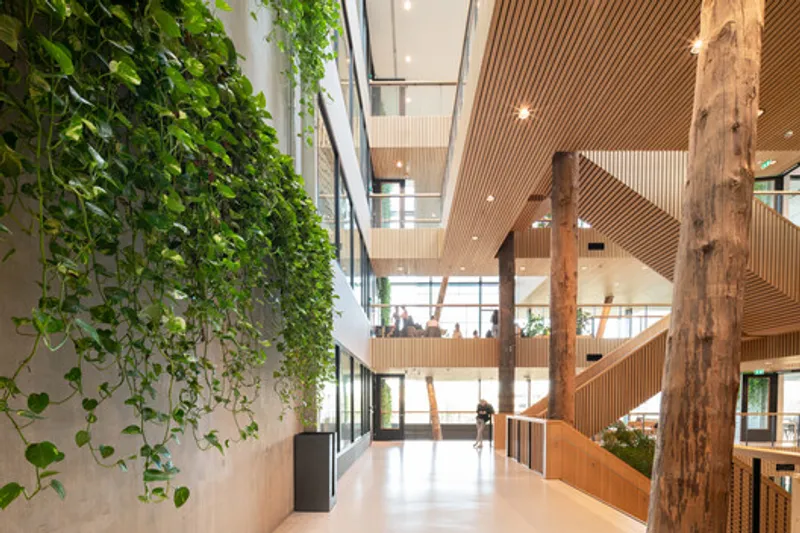
As universities worldwide strive toward greener futures, the Langeveld Building stands as a global reference point for sustainable campus architecture.
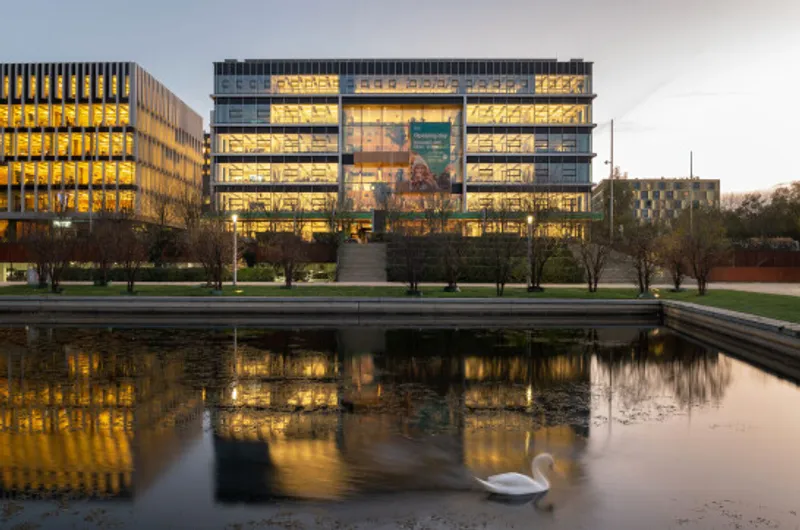
All the photographs are works of Aiste Rakauskaite


Popular Articles
Popular articles from the community


LT2A and OPEN Architectes Thread a Brick and Glass High School Through a Wooded Belgian Campus
In Braine-l'Alleud, a 3,000 m² wing for Collège Cardinal Mercier pairs pale brick with a glazed colonnade, deferring to a small chapel and a dense wood.

longwave studio Reorganizes a 112 m² Tainan Apartment Around the Daily Routines of a Family and Two Cats
In Tainan, Taiwan, birch plywood, rust-red furniture and a freestanding plaster wall link arrival, storage, work and family life in one apartment.

David Ortega Stacks a Two-Story Mexico City Penthouse Around a Steel Stair and a Pergola-Shaded Roof Terrace
In Colonia Roma, a 300 m² penthouse uses oak joinery, a planted steel stair and a slatted roof pergola to make a new-build apartment feel like a house.

Architekt Andreas Gruber Scatters 23 Dark Timber Chalets Across a South Tyrolean Forest Edge
In Molini di Tures, Amonti Chalets breaks a resort into a hamlet of gabled timber houses, with parking, storage and services pushed into the slope.

Similar Reads
You might also enjoy these articles


Hodi-Mandai Geram
Project Function: Preservation and revitalization of the Intangible heritage and socio-spatial identity of the Hodi by Housing, Cultural Memory Center, Sacred Grove, landscape, local tourism economy


Olio Towers: A Mid-Rise for Performers That Fuses Housing, Rehearsal, and Stage
Located blocks from Houston's Theater District, this modular tower stacks living units around a central performance atrium.

Oasis: Modular Green Housing Carved into Dhaka's Urban Fabric
A shortlisted Plugin Housing entry reclaims unauthorized settlements in Dhaka with stepped concrete volumes, green roofs, and ventilation-driven design.

Black Hole: A Floating Megastructure for the Post-Physical Era
Emiliano Mazzarotto envisions a spherical, self-scaling arena where e-sports, digital hotels, and holographic stadiums replace traditional public space.

Explore Academic Building Competitions
Discover active competitions in this discipline

Challenge to design public laboratory

Challenge to reimagine the Iron Throne

Photograph architecture without architects

Illustrate the lost glory of Angkor Wat - Render Challenge
Comments (0)
Please login or sign up to add comments
No comments yet. Be the first to comment!