
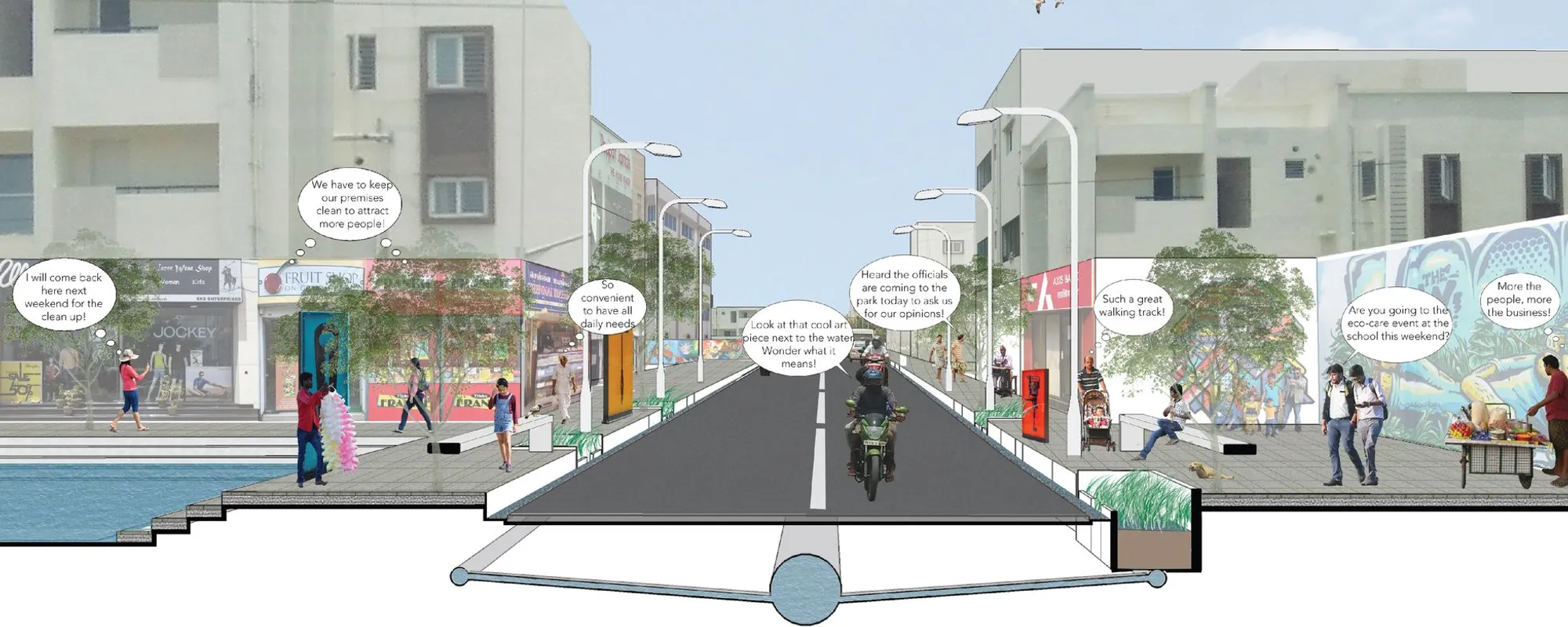
Leveraging Socio-Cultural Networks for Flood-Resilient Architecture
Reimagining Urban Spaces: Creating Resilient Cities through Community-Driven Architecture and Blue-Green Design.


Flood resilience in urban environments is a pressing challenge, particularly in rapidly expanding metropolitan areas such as Chennai. This innovative approach "Leveraging Socio-cultural networks-Chennai,India"by Nilofer Afza Tajuddin, a shortlisted entry for the UnIATA '19 competition, demonstrates how architecture can leverage socio-cultural networks to address ecological concerns and strengthen community ties.
Key Concept: Flood-Resilient Urban Architecture
Flood-resilient urban architecture focuses on integrating social, environmental, and economic strategies to mitigate flooding while fostering sustainable urban development. By aligning infrastructure such as schools, temples, parks, and water bodies, this approach enhances community interactions with their natural environment.
Project Highlights
1. Socio-Cultural Networks as a Foundation
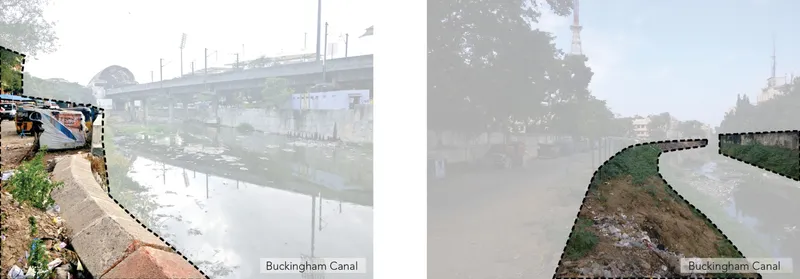
- Social Capital Utilization: Engaging local communities to transform neglected spaces like Buckingham Canal into shared assets.
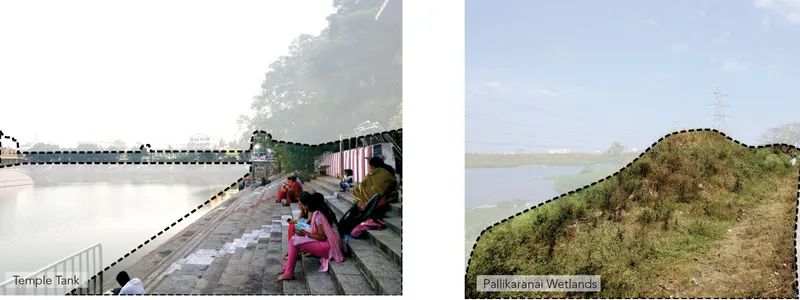
- Community Engagement: Encouraging public participation in the restoration of Pallikaranai Wetlands, fostering a sense of ownership and ecological awareness.
2. Design Strategies for Integrated Urban Resilience
- Blue-Green Corridors: Linking water bodies with parks and green spaces to enhance ecological functionality and urban aesthetics.
- Educational Spaces: Utilizing temples and schools as focal points for water conservation awareness and community activities.
- Transformative Open Spaces: Reimagining underused areas as vibrant community hubs for recreation and environmental education.
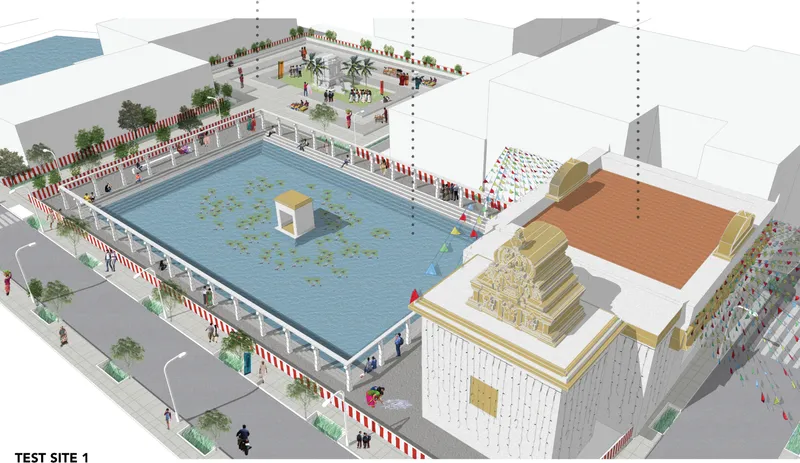
3. Test Site Applications
- Test Site 1: Develops a "green-blue spine" connecting a school, park, and temple to create a unified community space.
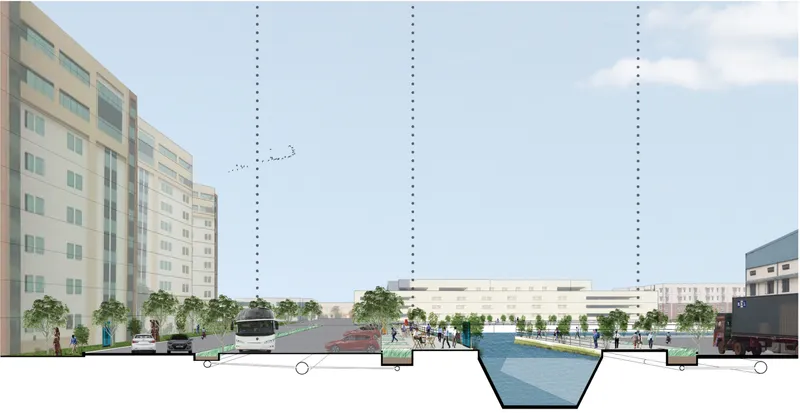
- Test Site 2: Establishes a pedestrian-friendly promenade and bioretention parks, enhancing both accessibility and ecological sustainability in an industrial neighborhood.
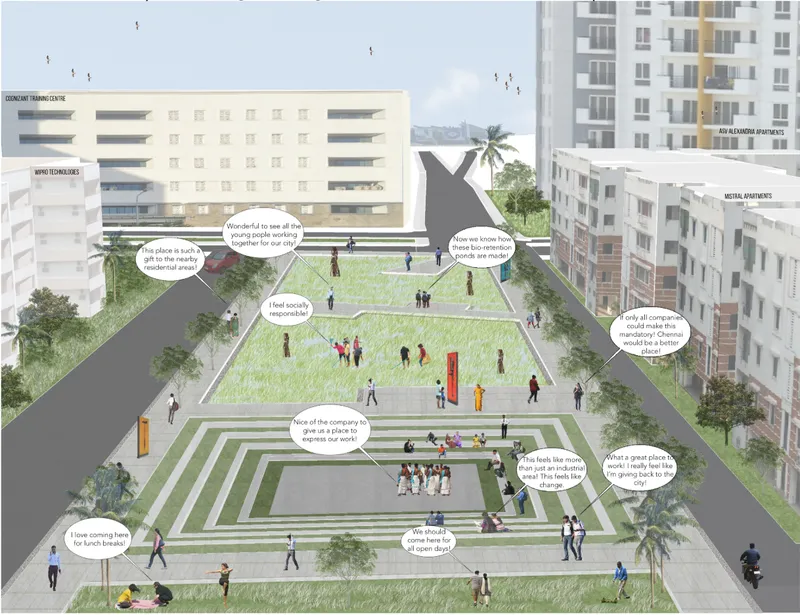
The project envisions a city where water is celebrated as a vital resource rather than a threat. Through retrofitted drainage systems, interconnected blue-green corridors, and empowered socio-cultural networks, Chennai can emerge as a model for flood-resilient urban architecture that inspires other cities worldwide.
Flood-resilient urban architecture redefines how cities interact with water and their ecosystems. By leveraging socio-cultural networks, this innovative project by Nilofer Afza Tajuddin highlights the potential for architectural design to address urban flooding while fostering community cohesion and ecological restoration.



Popular Articles
Popular articles from the community


Co-life: Sustainable Architecture for Age-Friendly Community Living
Co-life reimagines sustainable architecture for seniors through courtyards, rammed earth, shared gardens, and spaces designed for belonging.

Conexión: Biophilic Design Reimagines High-Rise Living in Hong Kong
Conexión reimagines high-rise living in Hong Kong through biophilic design, green facades, shared spaces, daylight, water and nature within.

The Ocean Hive: Sustainable Architecture for a Self-Sufficient Civilization at Sea
The Ocean Hive imagines sustainable architecture at sea, where modular habitats, algae, wave power and ocean waste sustain a growing colony.

The Musturak Paradise: Senior Living Architecture for a Connected Future in Temara, Morocco
The Musturak Paradise reimagines senior living architecture in Temara via private homes, social spaces, culture, community, and shared care.
Similar Reads
You might also enjoy these articles


Hodi-Mandai Geram
Project Function: Preservation and revitalization of the Intangible heritage and socio-spatial identity of the Hodi by Housing, Cultural Memory Center, Sacred Grove, landscape, local tourism economy


Olio Towers: A Mid-Rise for Performers That Fuses Housing, Rehearsal, and Stage
Located blocks from Houston's Theater District, this modular tower stacks living units around a central performance atrium.

Oasis: Modular Green Housing Carved into Dhaka's Urban Fabric
A shortlisted Plugin Housing entry reclaims unauthorized settlements in Dhaka with stepped concrete volumes, green roofs, and ventilation-driven design.

Black Hole: A Floating Megastructure for the Post-Physical Era
Emiliano Mazzarotto envisions a spherical, self-scaling arena where e-sports, digital hotels, and holographic stadiums replace traditional public space.





Comments (0)
Please login or sign up to add comments
No comments yet. Be the first to comment!