

Liberty-Style House Renovation in Trastevere: Villino Liberty by STUDIOTAMAT
STUDIOTAMAT transforms a Liberty-style home in Trastevere into a layered, light-filled retreat blending history with bold modern design.


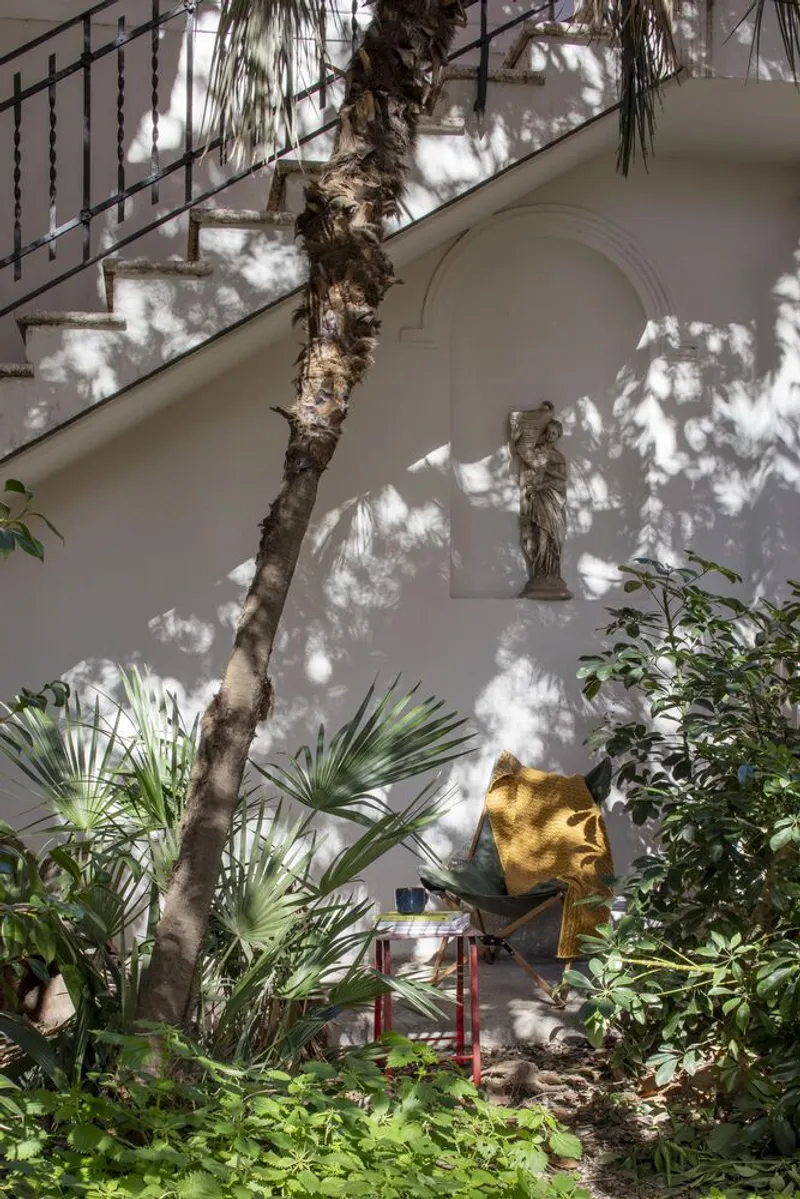
Tucked away behind a 19th-century building along Rome’s Viale di Trastevere, Villino Liberty has been revived by STUDIOTAMAT into a luminous and layered urban refuge. This compact home—once a caretaker’s lodge or perhaps a neighborhood doctor’s office—has undergone a masterful transformation that celebrates its Liberty-style heritage while introducing bold, contemporary gestures. With only 110 m² spread over three floors, the project reimagines small-space living through architectural finesse, material richness, and respect for historic identity.


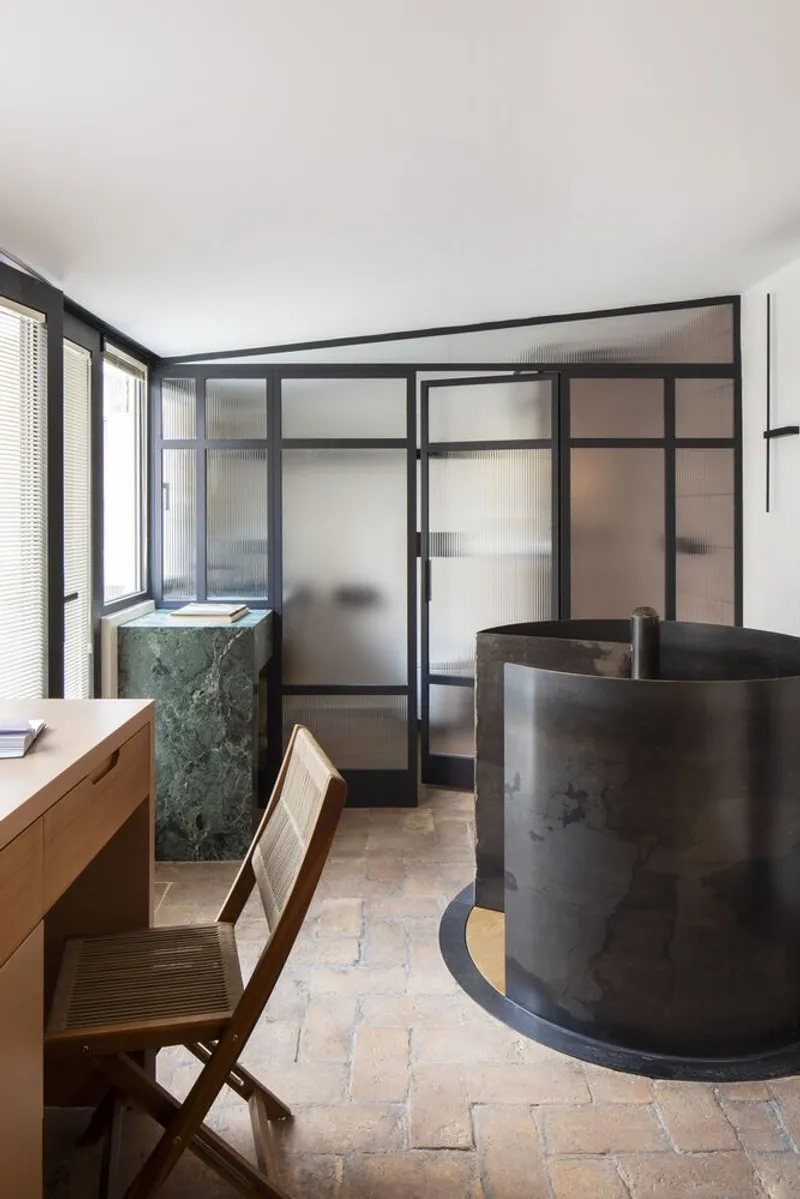
An Urban Hideaway with a Liberty Soul
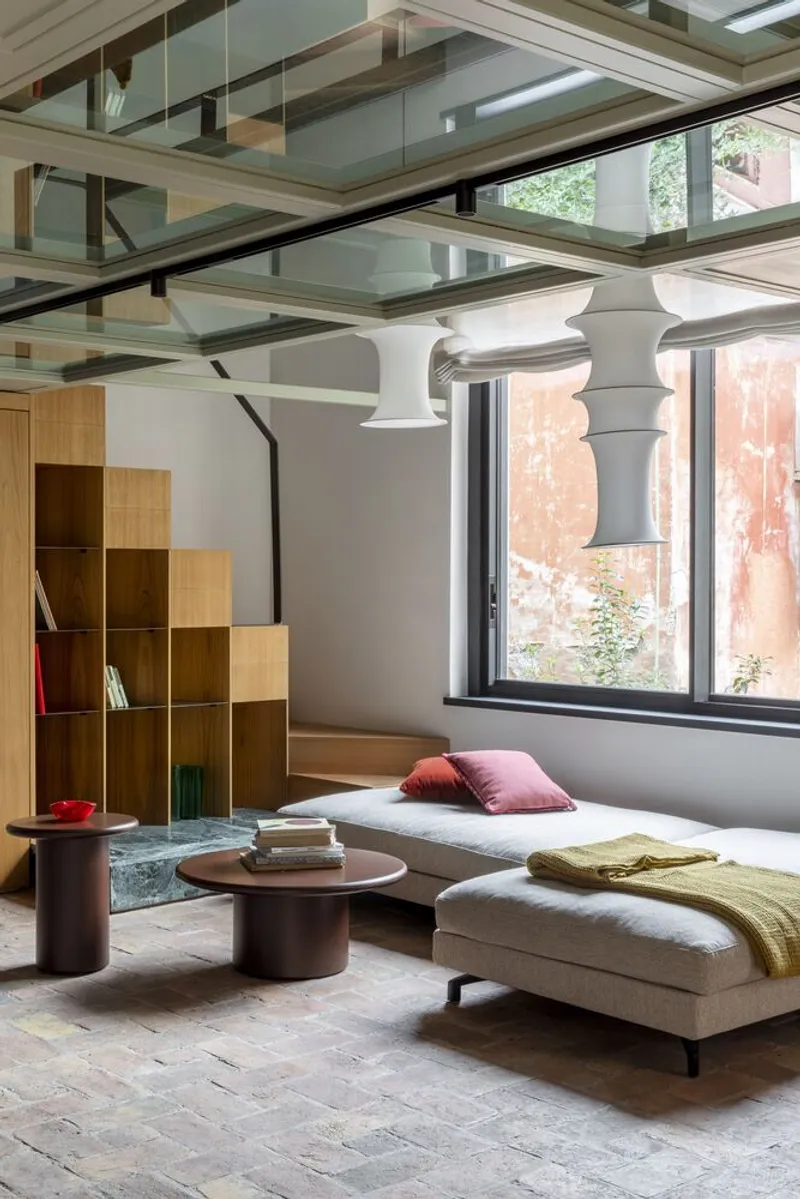
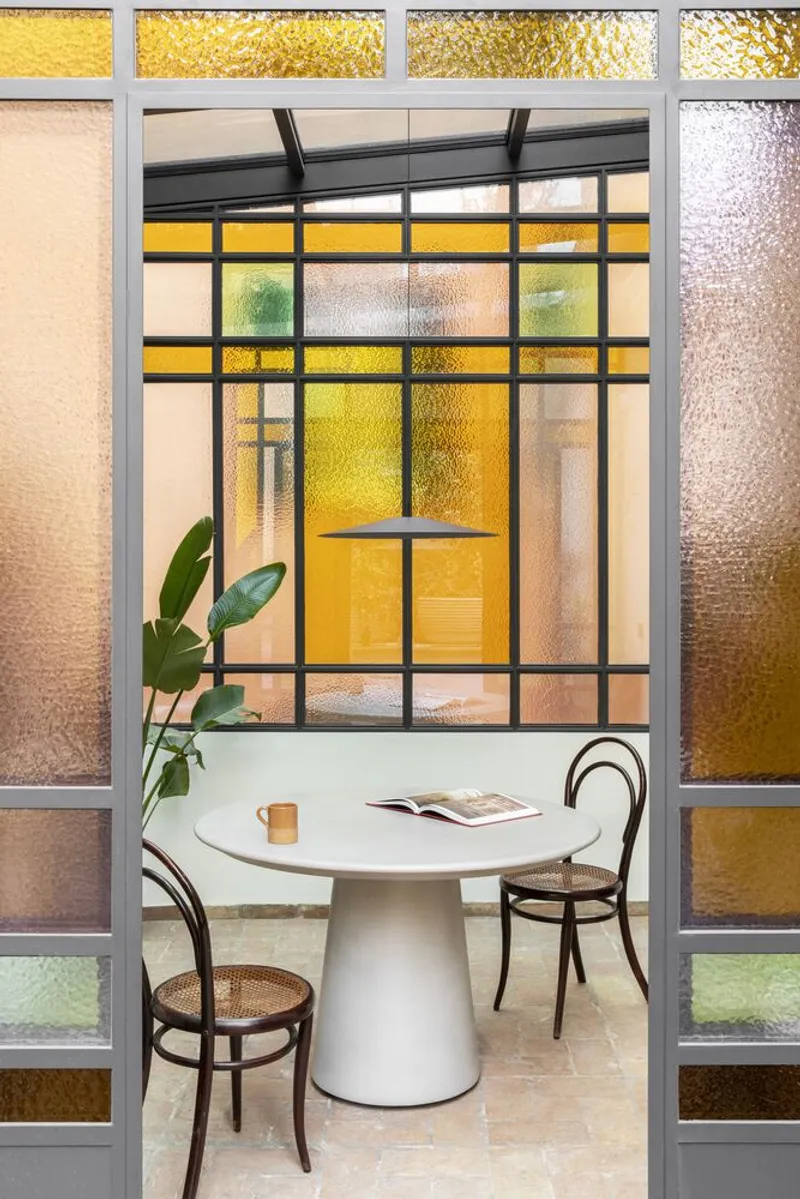
At the heart of the intervention is the careful restoration of the home’s most distinctive feature: its delicate front veranda. Originally framed in soft-toned cathedral glass, this space has been rebuilt with solar-control glazing and a steel frame that preserves the original chromatic rhythm of greens, yellows, and pinks. Removing the French doors that once divided the veranda from the interior allows daylight to flood the living spaces, subtly shifting in tone throughout the day and creating a layered sensory experience.

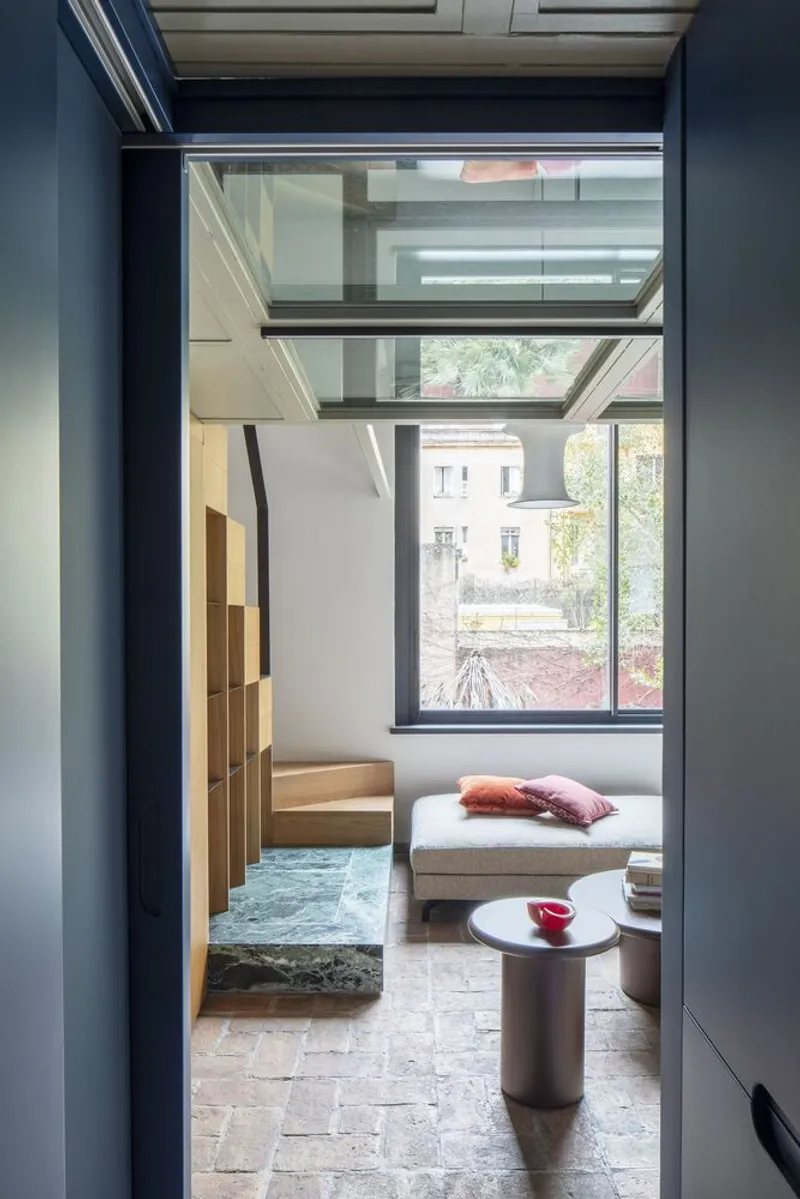
This reinterpretation blurs the threshold between old and new, interior and exterior—anchoring the home in its Liberty-style origins while opening it to contemporary urban living.


Vertical Elegance in a Compact Footprint
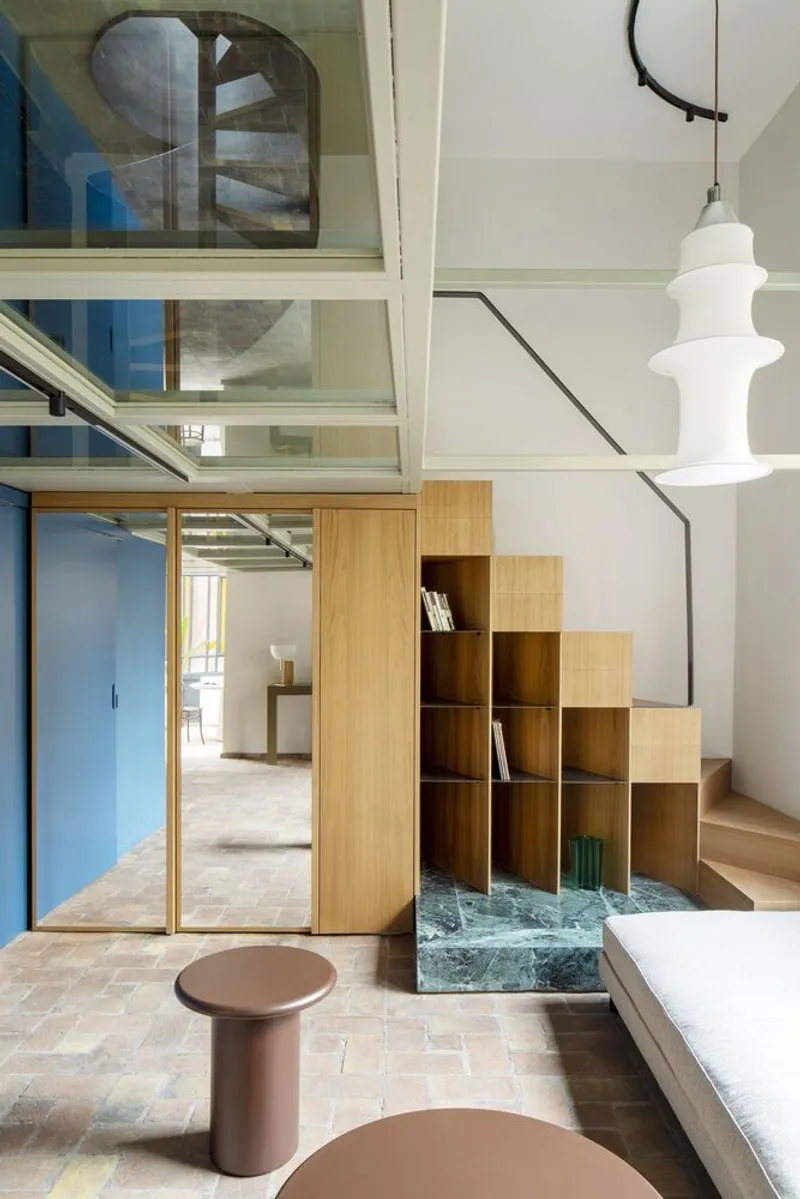
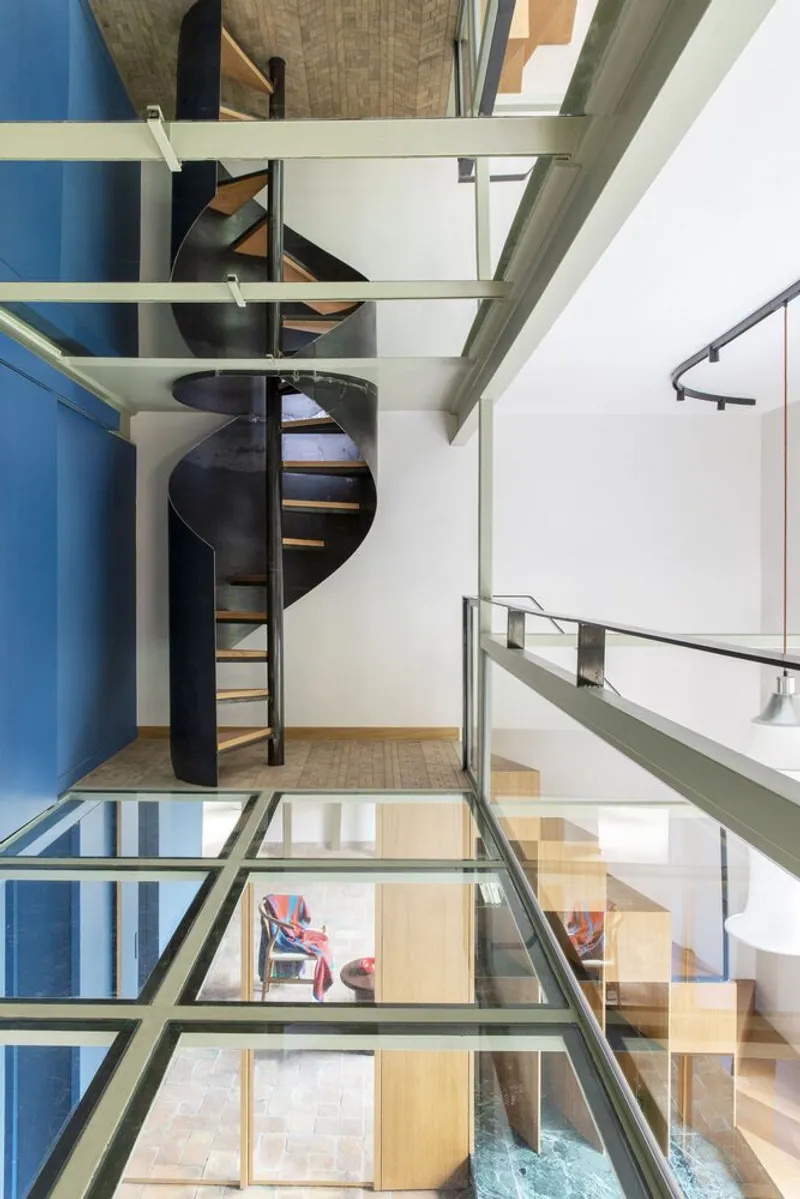
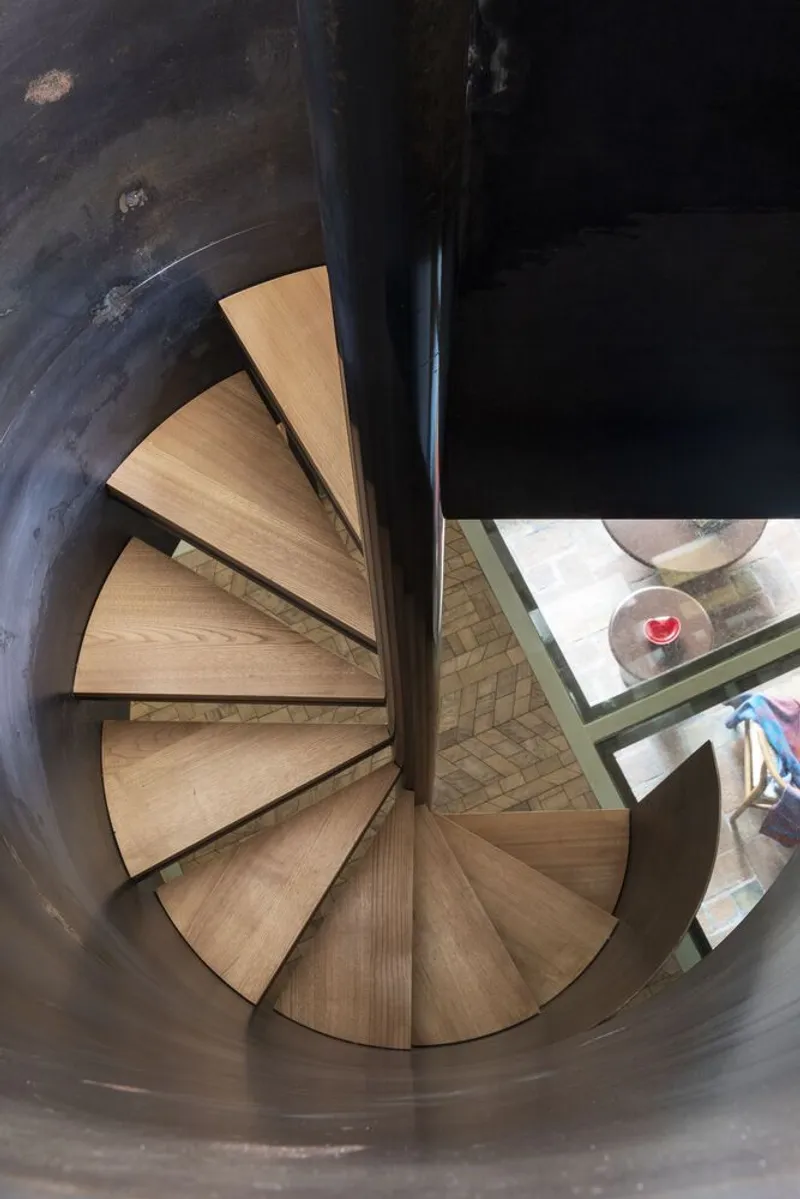
The redesign prioritizes vertical clarity and material continuity. A once-cramped spiral staircase has been replaced by a sculptural alternating-tread stair in chestnut wood. Its first step, carved from Verde Alpi marble, becomes the anchor of a custom shelving unit nestled below. This thoughtful detail is emblematic of the project’s broader approach: each intervention is both functional and poetic.

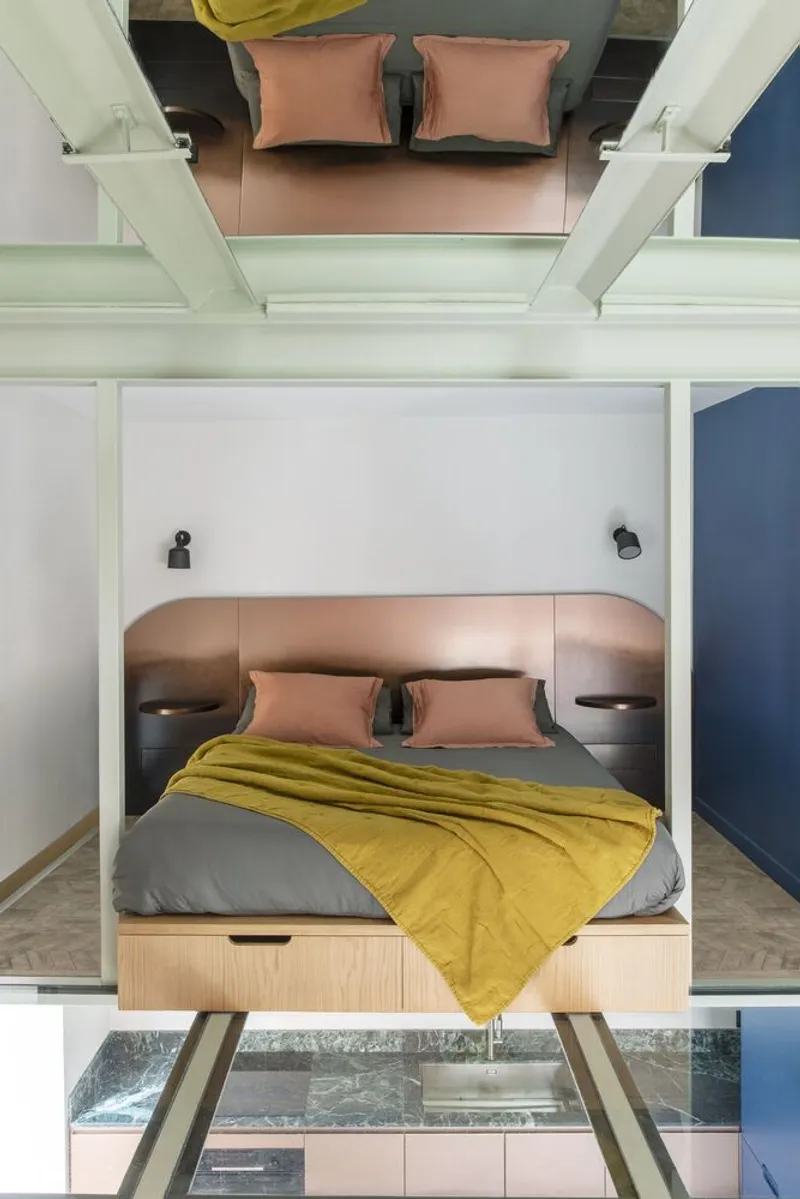
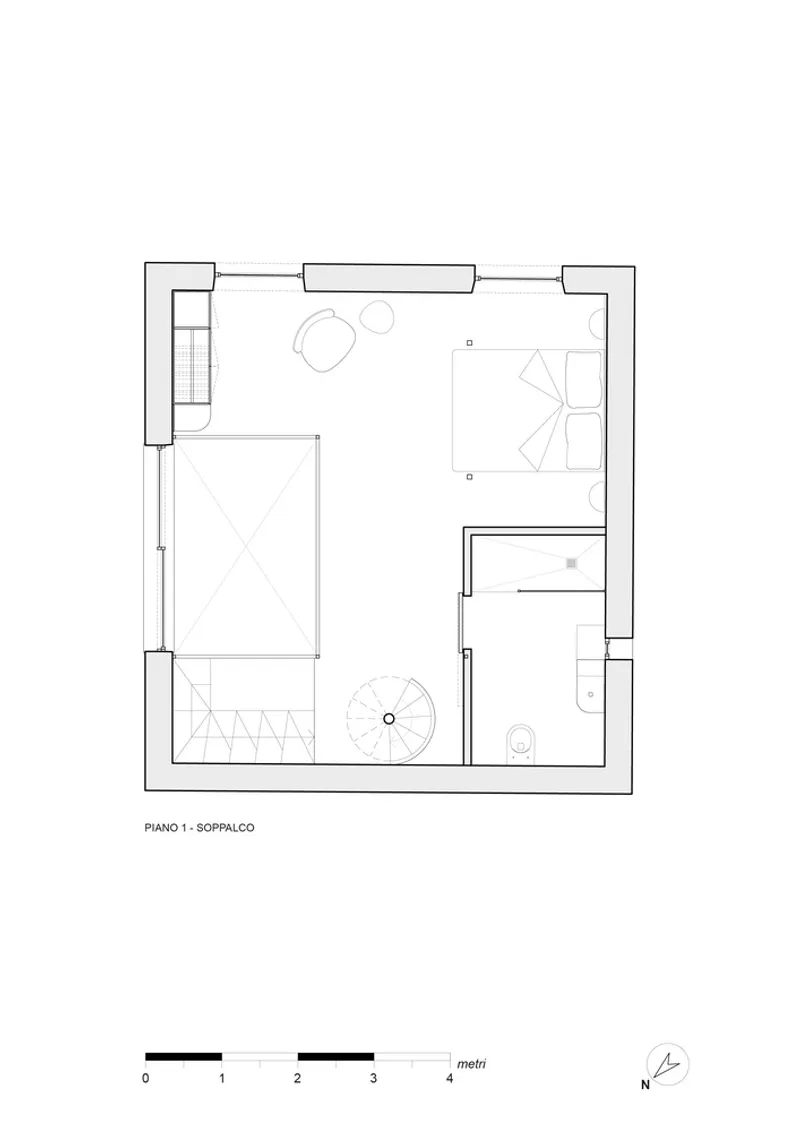
Above, mirrored cabinetry and floating panels bounce light between levels, enhancing the perception of space. The reconfigured mezzanine, partially opened to form a double-height void, amplifies this vertical experience, allowing light and air to circulate freely.

Material Dialogue Between Past and Present
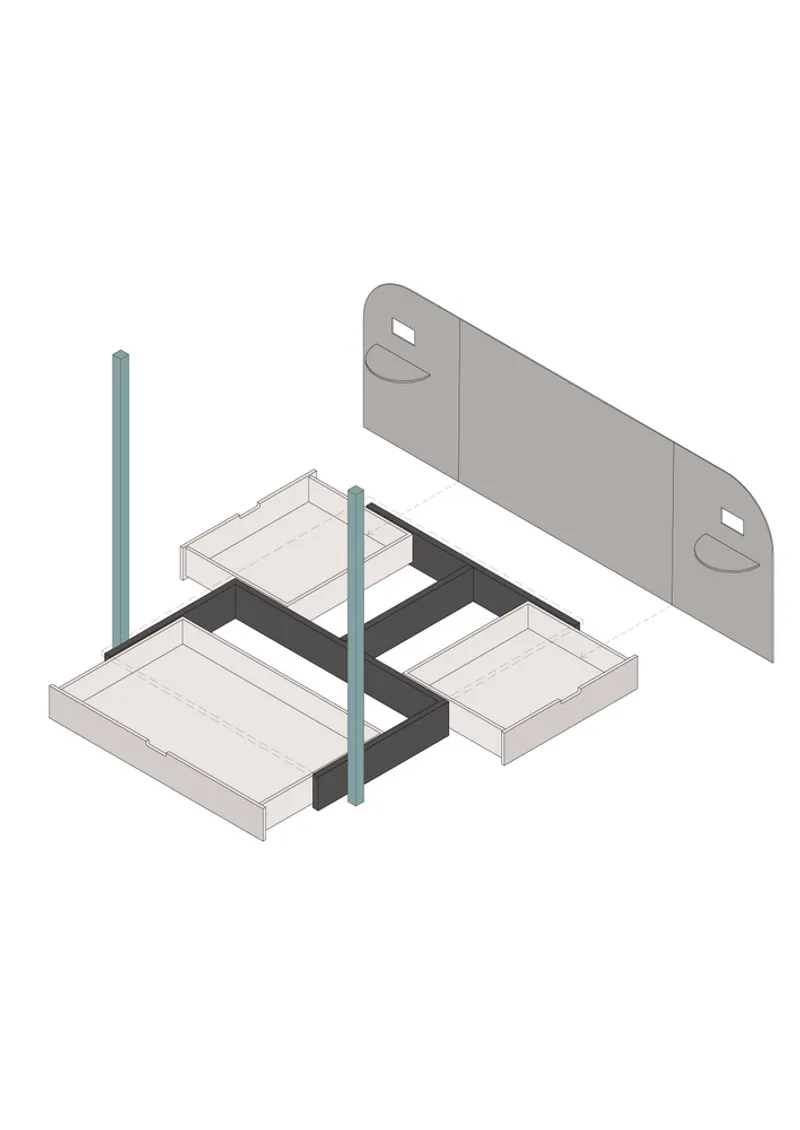
STUDIOTAMAT curated a palette that bridges historical memory and tactile modernity. The original terracotta floors are preserved and echoed in the custom kitchen drawers, which fade from black to earthy terracotta tones. Verde Alpi marble surfaces add a refined Italian touch, while the deep blue service block that threads through all three floors creates a unifying visual axis.

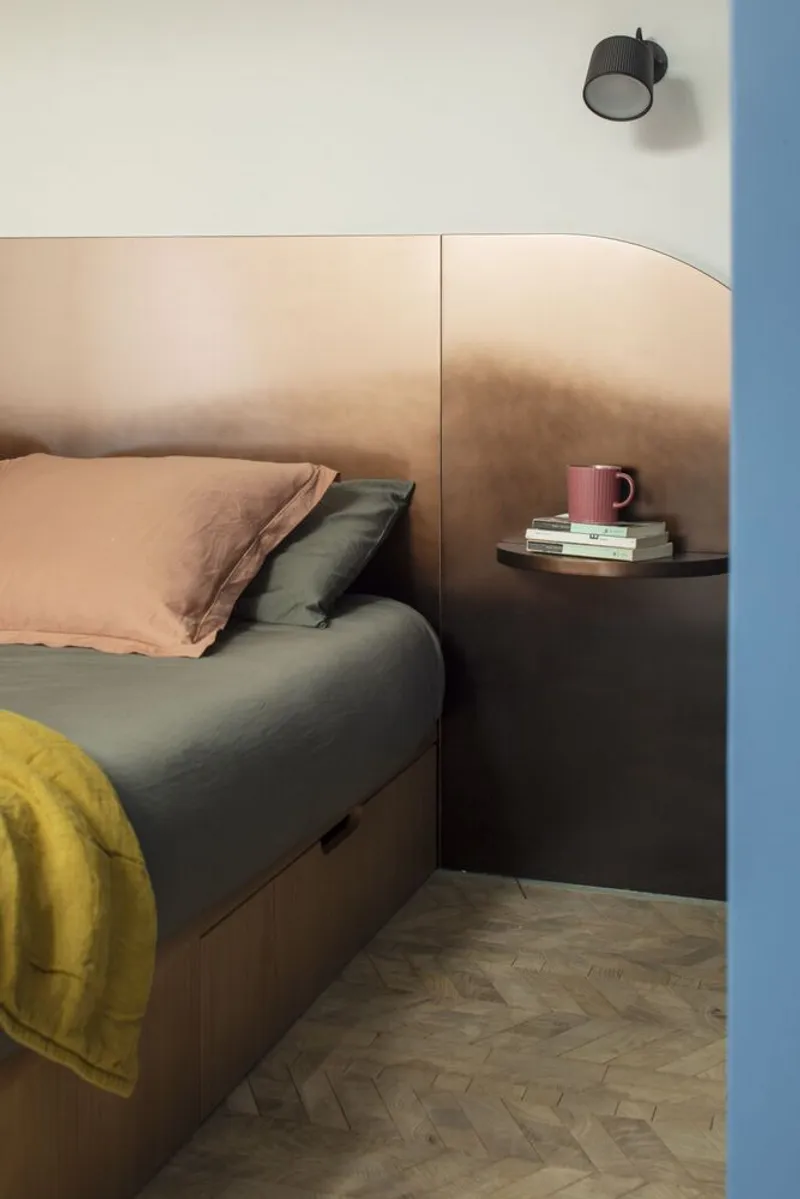
Upstairs, a custom bed repeats the kitchen’s gradient, reinforcing spatial cohesion. The main bathroom merges Ex.t’s Art Nouveau-inspired fixtures with Mutina’s textured Mater tiles by Patricia Urquiola, and taps designed by Formafantasma for Quadro Design—uniting contemporary design with historic nuance.

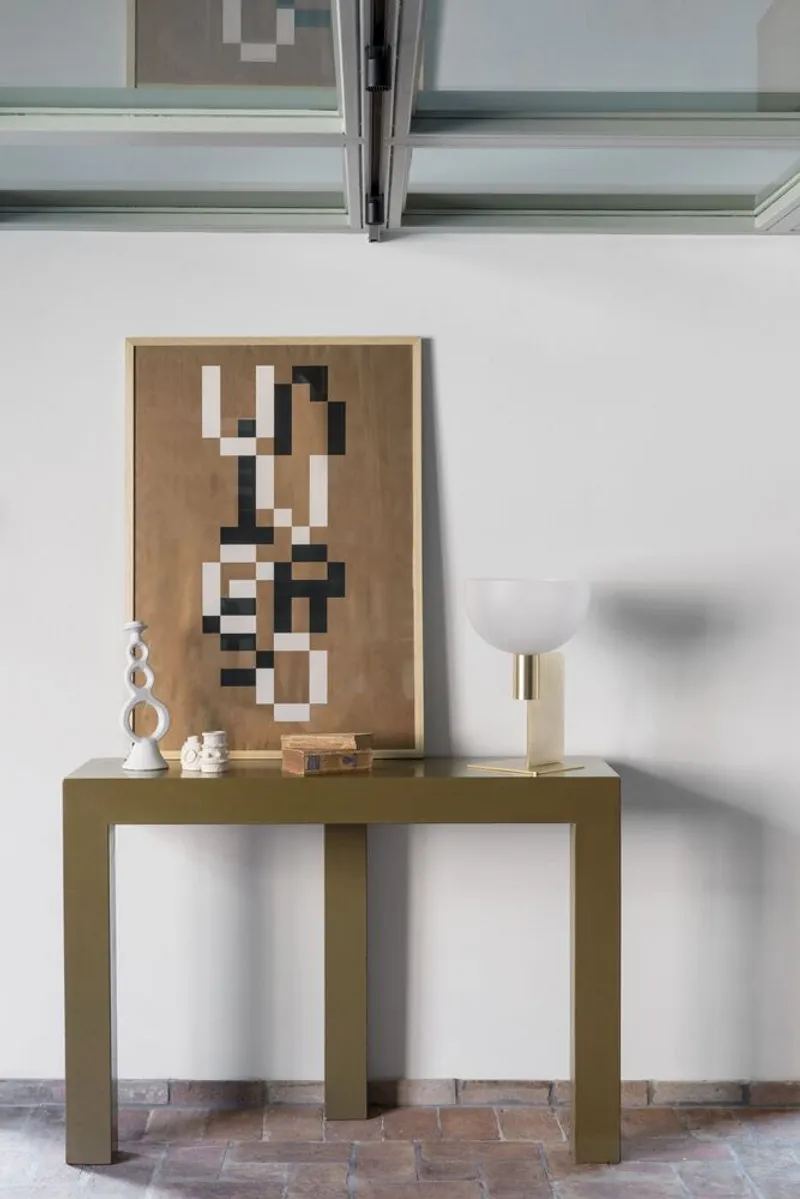
Finishing Touches with Historical Texture
The upper levels are finished in Oscar Ono’s Foret parquet by Raphael Navot—oak planks with visible end grain, evoking the textures of ancient Roman pavements and 19th-century Parisian streets. This material link to history is not mere nostalgia but a tactile expression of place.
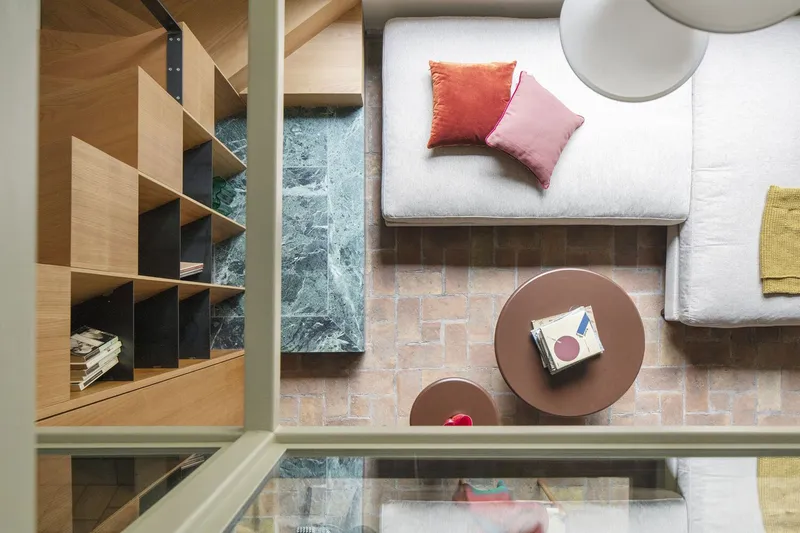


Lighting is also used as narrative: Bruno Munari’s Falkland pendant lamp adds sculptural softness in the living area, while mirrored surfaces and cathedral glass create constantly shifting visual effects that engage with both history and light.

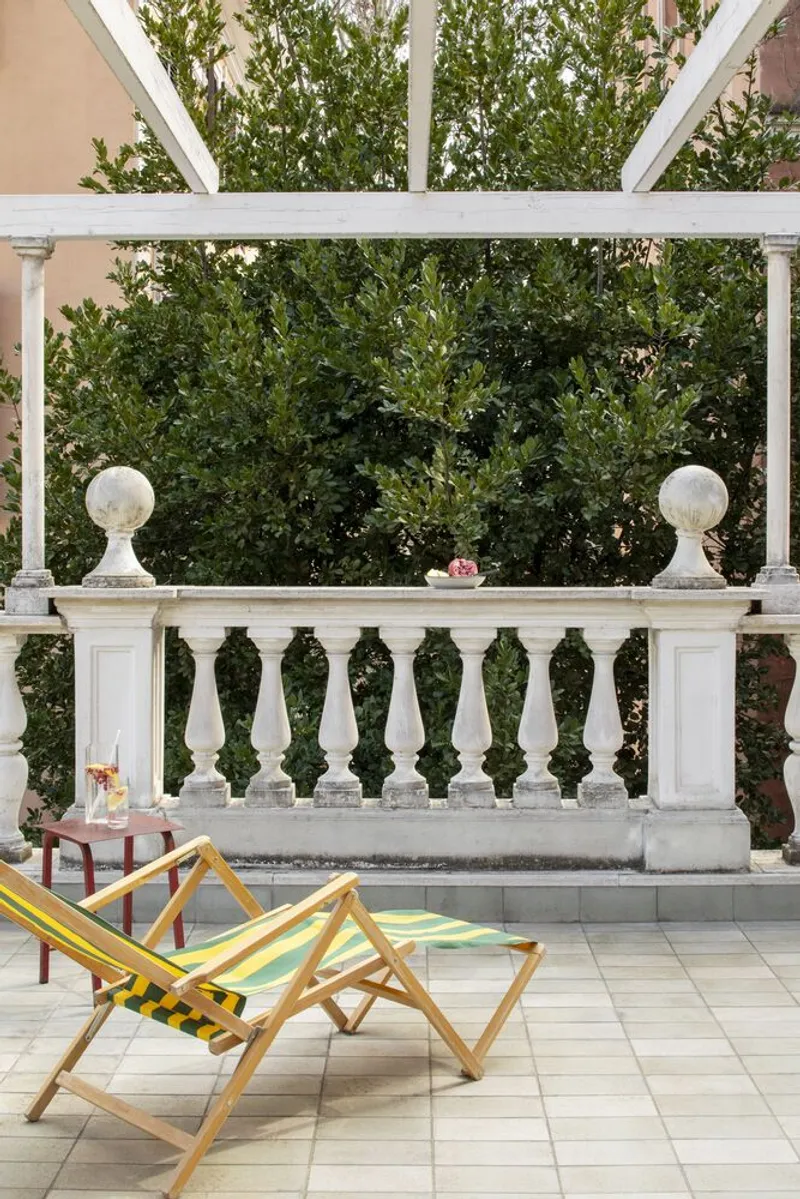
A Quiet Rebirth of Roman Domesticity
Villino Liberty Trastevere stands as a refined example of Liberty-style house renovation in Rome. It demonstrates how historical preservation, spatial reconfiguration, and thoughtful design can converge in small-scale architecture to create a home that is both timeless and of its time. It’s not just a renovation—it’s a spatial story of layered pasts, present elegance, and imaginative reuse.




All Photographs are works of Serena Eller - Ellerstudio




Popular Articles
Popular articles from the community

AL-JANNAH: Sustainable Architecture and Permaculture for Afghan Widows
AL-JANNAH uses sustainable architecture and permaculture to create resilient oasis of housing, learning, work and renewal for Afghan widows.

Riyadh For All: Intergenerational Urban Design for Active Aging in Rabat
Riyadh For All reimagines urban design in Rabat with intergenerational co-living, adaptive courtyards, and Moroccan cultural exchange today.

The Musturak Paradise: Senior Living Architecture for a Connected Future in Temara, Morocco
The Musturak Paradise reimagines senior living architecture in Temara via private homes, social spaces, culture, community, and shared care.

Hill & Cross Opera: Sculptural Opera House Architecture Shaped by Tallinn’s Landscape and Identity
Hill & Cross Opera reimagines opera house architecture in Tallinn through its sculptural hill, civic plaza, glass wave and a luminous cross.

Similar Reads
You might also enjoy these articles

Bamboo Housing Challenge 2026: Design Affordable, Sustainable Homes Using Bamboo
An international design competition by Bamboo U and IBUKU inviting architects and designers to reimagine affordable housing using bamboo — with the winning design built full-scale in Bali.

Computational Design & Education: Beegraphy Design Awards Introduces 7th Category (Featuring Jiyun's Innovative Approach)
Dive into Beegraphy’s 7th Design Awards category, where computational design meets education to create immersive, interactive learning tools, inspired by Jiyun’s work.
From Parametric Lighting to Urban Furniture: Join the 2nd Workshop in Beegraphy’s Computational Design Series
Dive into Cutting-Edge Design Techniques and Practical Applications with Industry Experts

Last Call: Unleash Your Architectural Genius in SHAK's Kindergarten Design Competition
Urgent call for architects to join SHAK's kindergarten design competition before the looming deadline


Explore Architecture Competitions
Discover active competitions in this discipline



Challenge to reimagine the Iron Throne


Photograph architecture without architects


Illustrate the lost glory of Angkor Wat - Render Challenge


Design challenge to reuse E-waste
Comments (0)
Please login or sign up to add comments
No comments yet. Be the first to comment!