
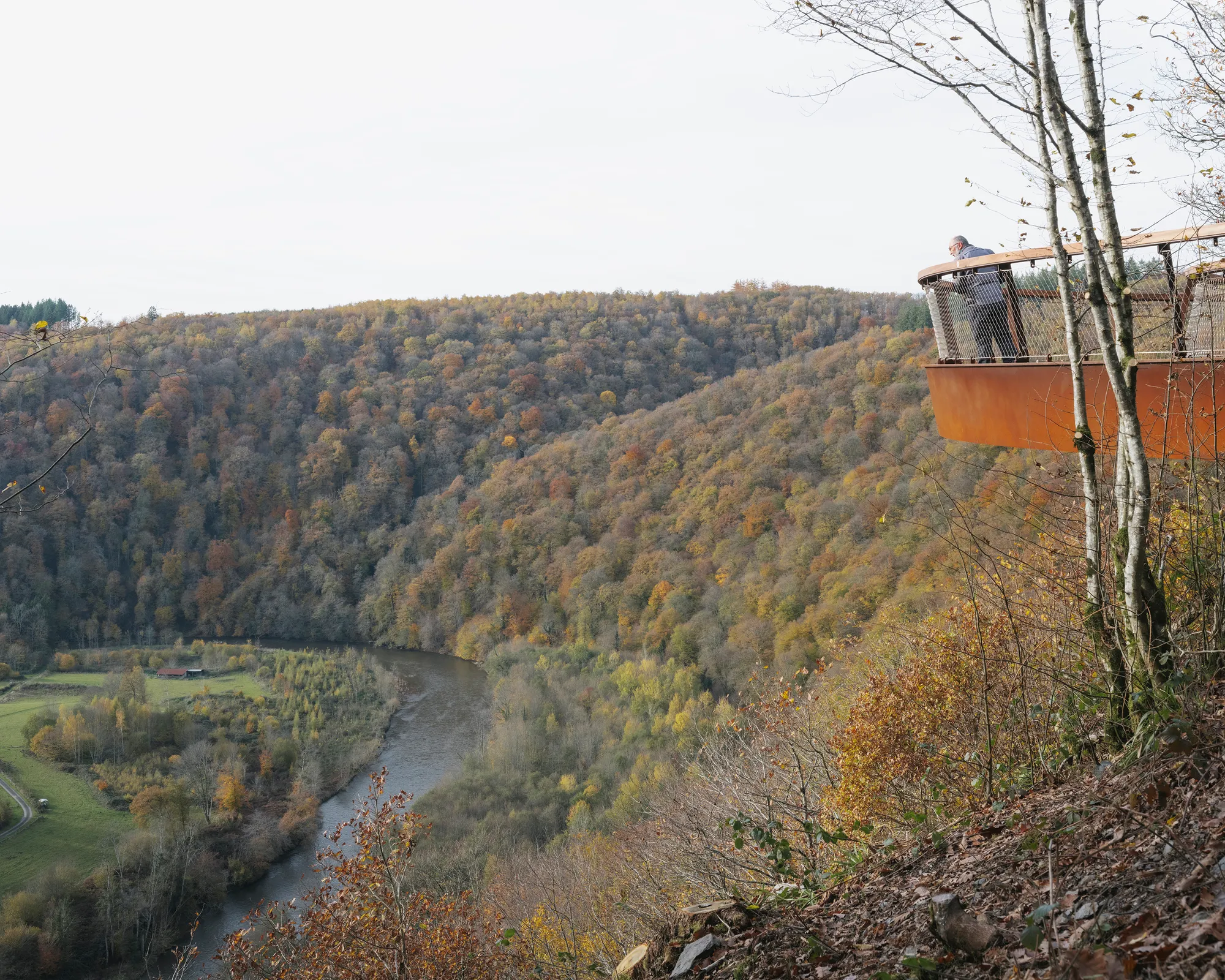
Look Out Point Vresse-sur-Semois: A Quiet Belgian Lookout
SBE nv built a Cor-Ten steel lookout walkway above the Semois river in Vresse-sur-Semois, Belgium that loops between two oaks and cantilevers.


Belgium has more lookout points per square kilometre than the country itself probably realises. The Ardennes and the Walloon countryside are full of small public viewpoints, most of them dating from the early twentieth century, and most of them long overdue for replacement. The new Look Out Point at Point Vue le Jambon in Vresse-sur-Semois, completed in 2025 by SBE nv with architect An Schoenmaekers, is one of the cleaner recent attempts to update this building type without scaling it up out of proportion.
The site sits above the Semois river, in one of the most photogenic stretches of the Ardennes. The brief was to provide a public lookout that could welcome visitors year-round without imposing on a landscape that has been left mostly alone for centuries. The architects' answer is a single curving steel walkway that loops between two existing oaks and cantilevers slightly off the edge of the slope.
The Forest Approach
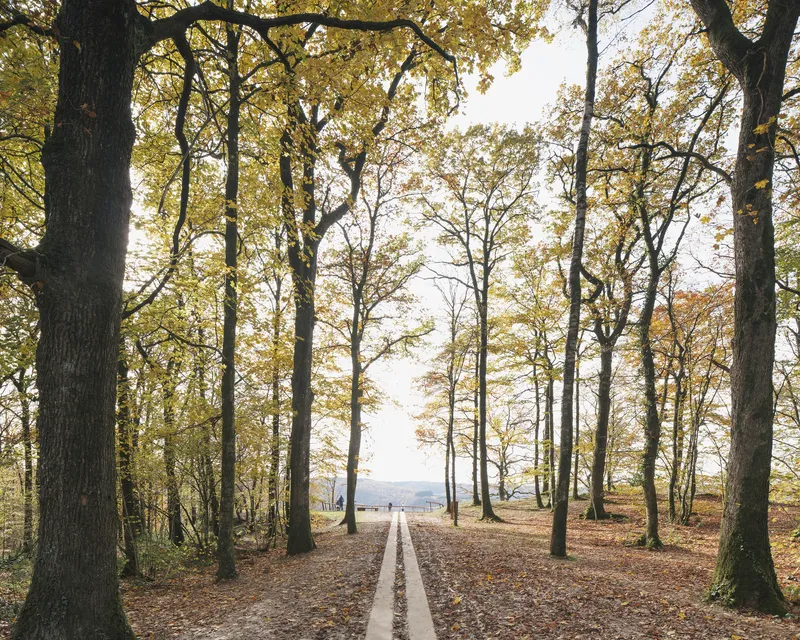
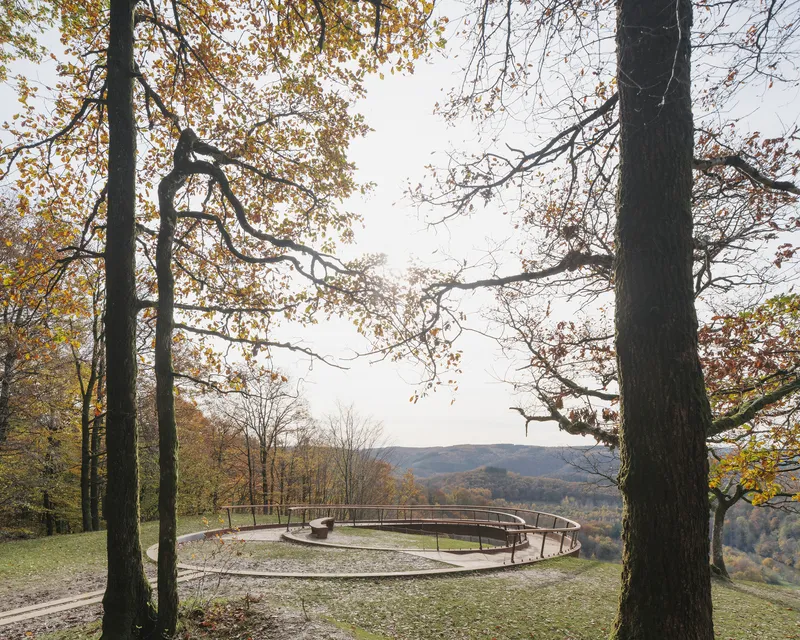
The first thing the photographs make clear is that the lookout is not a building. It is a path. You arrive through the forest, walk through a gap in the trees, and find yourself on a low circular deck that opens to the valley. There is no entrance threshold, no ticket booth, no signage. The architecture begins where the forest path widens.
This is the right strategy for a piece of public infrastructure in a sensitive landscape. A lookout point built as a building, with a roof and walls, would have introduced exactly the kind of object the place does not need. A walkway is closer to a continuation of the existing trail than to a piece of new construction.
Weathering Steel and the Two Oaks
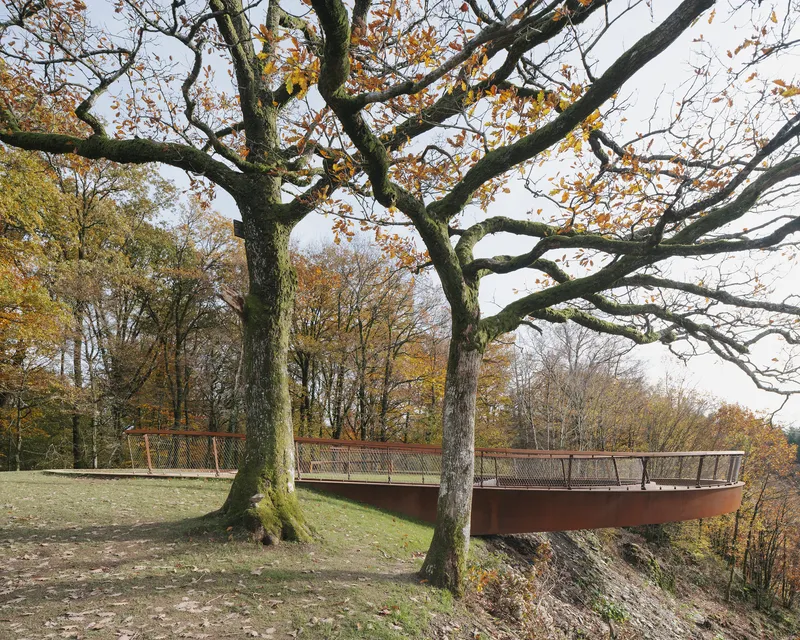
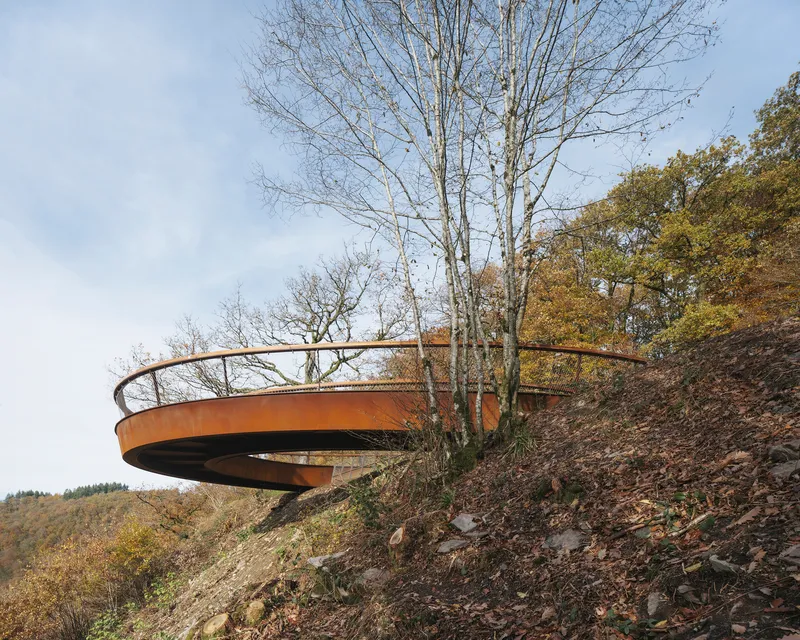

The structure itself is a slim weathering steel curve that touches the ground only at a few points. Two existing oak trees, which were clearly considered untouchable, pass through the loop without being damaged or boxed in. The detailing around the trees is the project's quietest move and probably its most considered one.
Weathering steel is the right material here for two reasons. The first is colour: as the steel rusts, it picks up the russet tones of autumn leaves and the dark brown of bare branches, which means the structure becomes more invisible as the seasons change rather than more obvious. The second is maintenance. Cor-Ten requires almost nothing once it has finished oxidising, which matters for a structure that sits alone in a forest for years between visits from a maintenance crew.
The Loop and the Cantilever


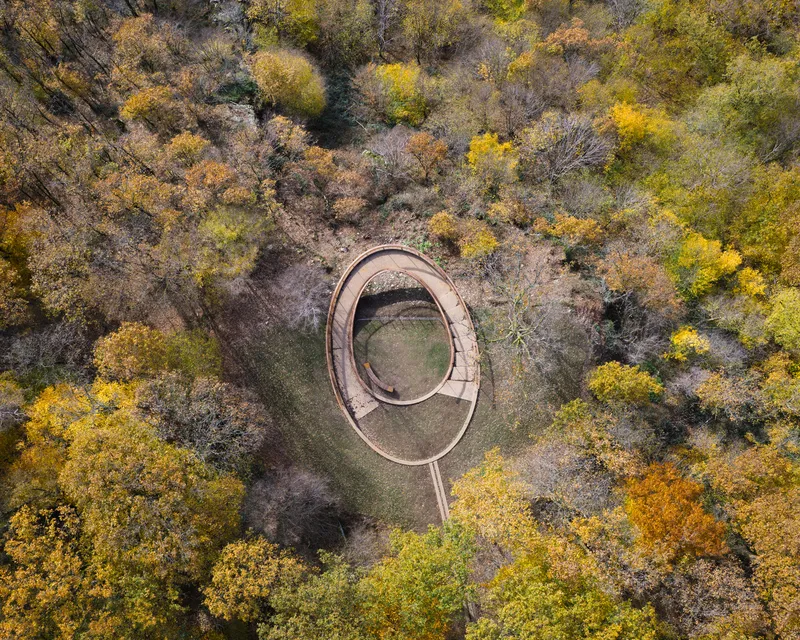
From above, the geometry resolves itself. The walkway is a closed loop, slightly egg-shaped, with one end pulling out toward the valley as a cantilever. The path enters the loop from the forest side and visitors walk around the perimeter, with the river view always to their right or left depending on direction.
The closed loop is a smarter choice than a straight platform. It absorbs movement, gives visitors a sense of journey rather than destination, and allows the structure to be experienced as a sequence of different views rather than a single fixed prospect. From the air, it reads as a piece of land art. From the ground, it reads as a path.
The View from the Tip
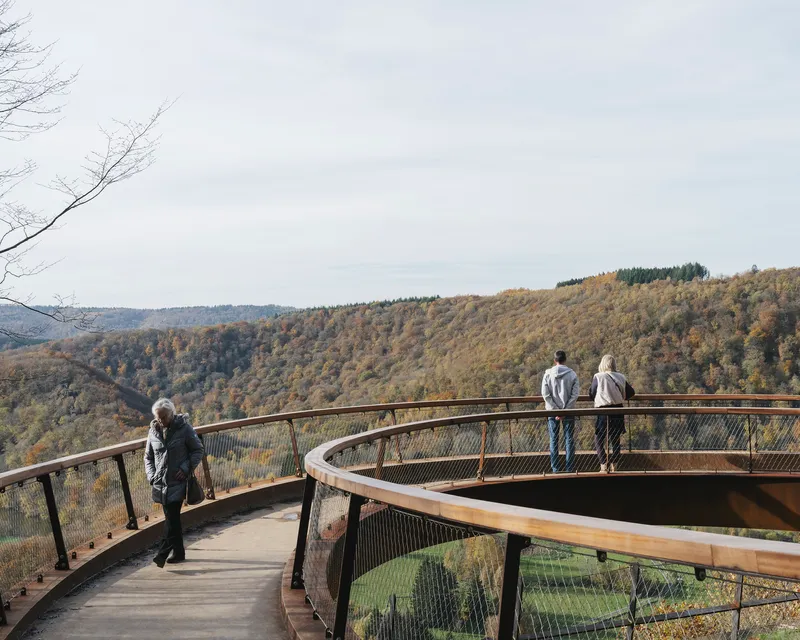


At the tip of the cantilever, the walkway pulls free of the slope and projects over the valley. This is the moment the project is selling. The view opens to the meandering Semois river in the gorge below, with the wooded hills folding into the distance. On a clear autumn afternoon, with the leaves turning, the colour of the steel and the colour of the forest become almost indistinguishable.
The cantilever is short. The architects resisted the obvious temptation to make it longer than it needs to be. A heroic five-metre overhang would have been more dramatic and less honest. What they built is exactly long enough to put visitors past the edge of the slope and no further.
Visitors and Atmosphere
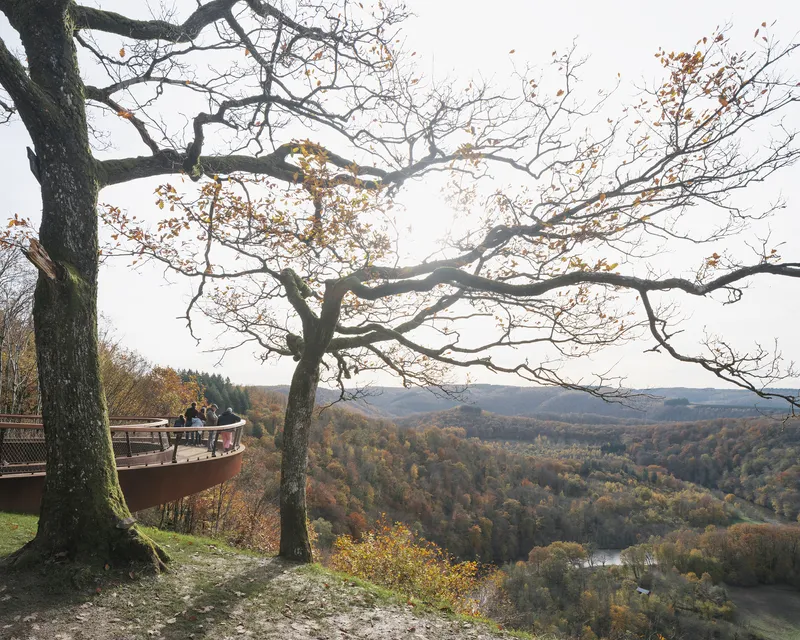
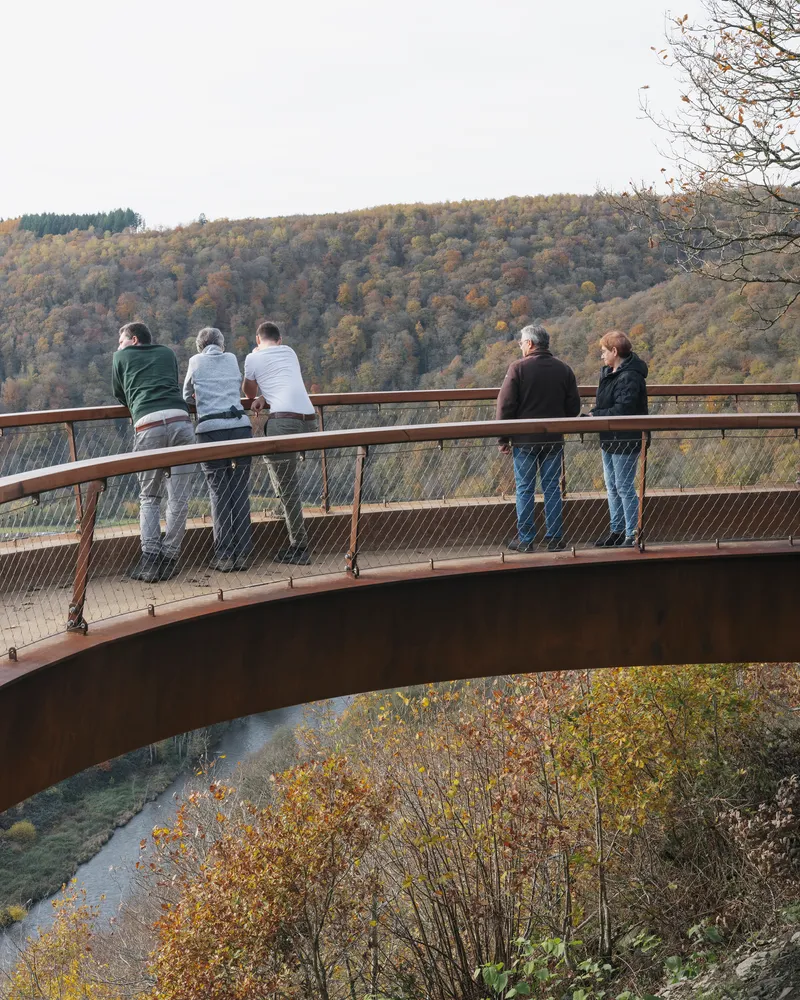
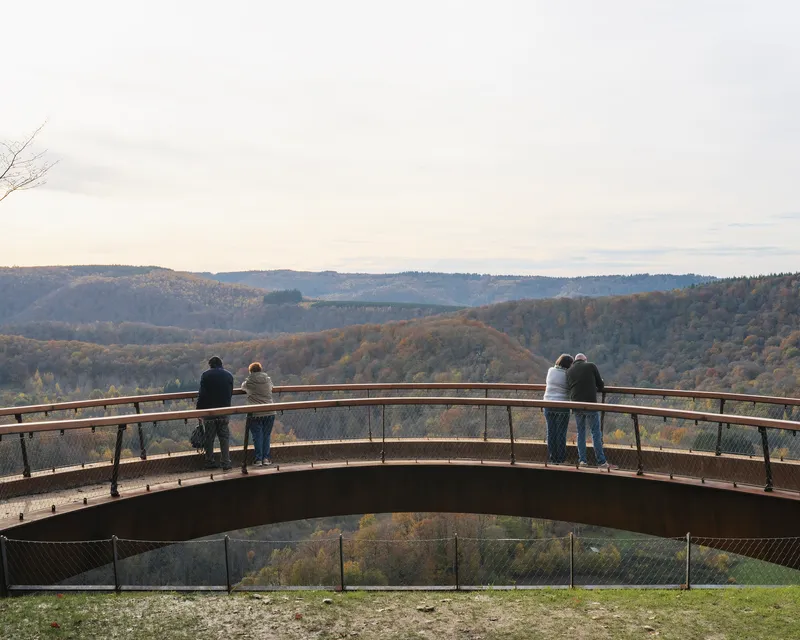
The photographs by Johnny Umans and Jan de Wilde are unusually patient with people. Most architecture photography either empties a project out or uses figures as scale references. Here the visitors are the point. They are leaning on the railing, looking out, talking to each other. The lookout exists for them, and the images record what it actually does.
This matters because public infrastructure is often photographed as if its users were optional. They are not. A lookout that nobody uses is a sculpture. A lookout that fills with people on a Sunday afternoon is doing its job. The proportions of the railing, the width of the walking surface, and the slight slope of the deck are all tuned to make the experience feel comfortable rather than precarious.
Distance and Site
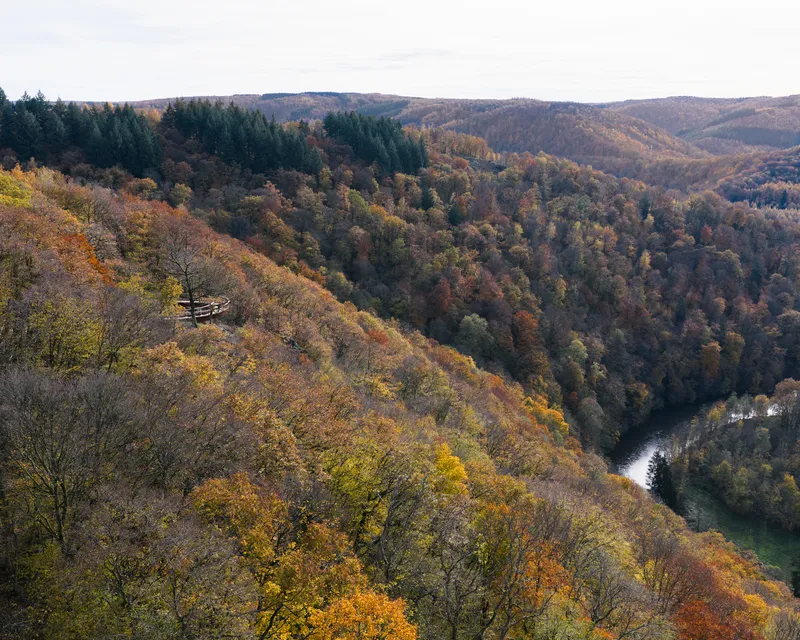
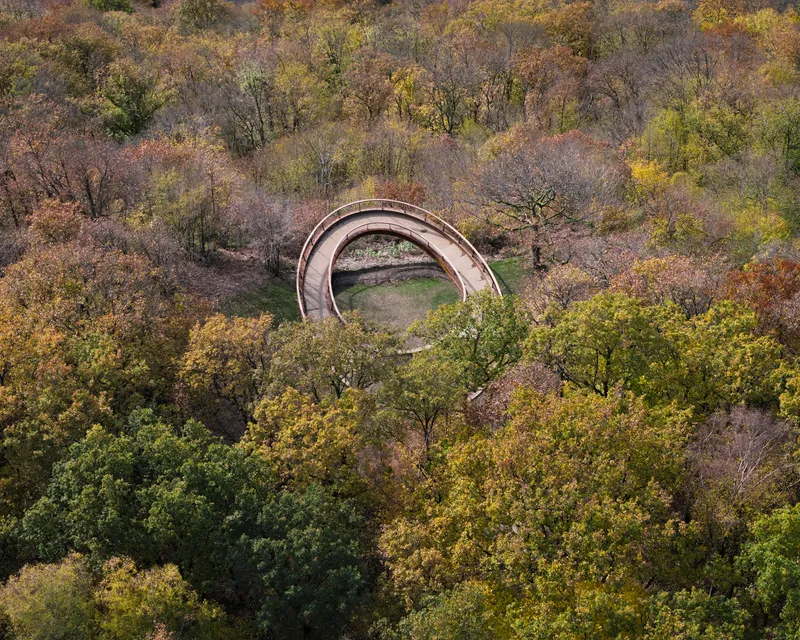
Seen from the opposite slope across the valley, the lookout almost disappears. It is a small horizontal mark on a forested hill, visible only because you know to look for it. This is the test that most lookouts fail. They are designed to be seen as objects, and they end up dominating the view they were meant to frame. This one stays small.
Drawings
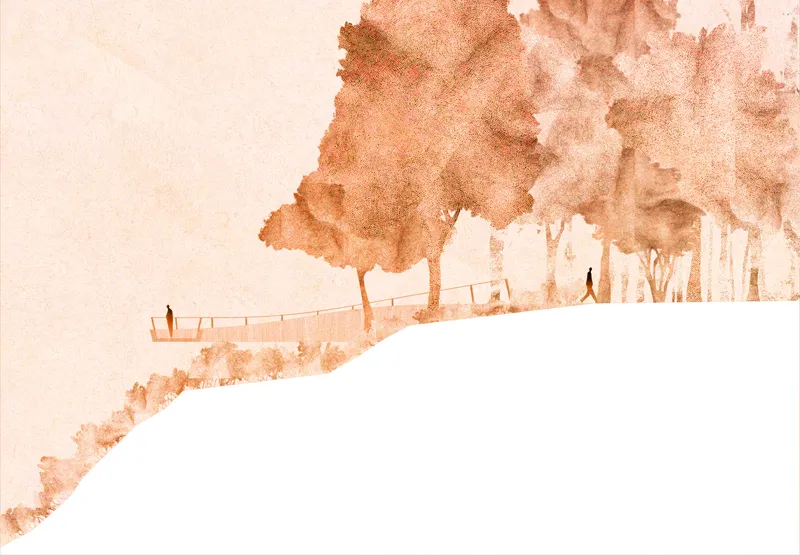

The drawings clarify the geometry. The plan shows how the loop wraps around the two oaks and how the cantilevered tip projects out from the closed circle. The section shows how shallow the structure is in profile and how lightly it touches the ground.
Why This Project Matters
Small public infrastructure is the most overlooked category of contemporary architecture. Lookouts, bus stops, footbridges, and signage all get built constantly, and they are almost always designed by committee or off the shelf. Look Out Point Vresse-sur-Semois proves that a small budget and a sensitive site can produce something both useful and beautiful, if the architects are willing to build less than they could.
The lessons are direct: choose a structural form that follows the path rather than the view, use a material that ages into the landscape, leave existing trees in place even when it complicates the geometry, and resist the urge to make the cantilever longer than it needs to be. SBE nv and An Schoenmaekers have produced a clear example of all four moves, and the result is the kind of small public project that a region can be quietly proud of for decades.
About the Studios
Share Your Own Work on uni.xyz
If you are working on small public infrastructure, lookouts, or landscape architecture, uni.xyz is a place to publish your work, find collaborators, and enter design competitions.
Project credits: Look Out Point Vresse-sur-Semois by SBE nv with An Schoenmaekers. Vresse-sur-Semois, Belgium. Completed 2025. Photographs: Johnny Umans, Jan de Wilde.




Popular Articles
Popular articles from the community


Co-Life: Senior Housing Design That Reconnects Older Adults With the City
Co-Life reimagines senior housing design through healing gardens, shared streets, workshops, and a sustainable community across generations.

The Musturak Paradise: Senior Living Architecture for a Connected Future in Temara, Morocco
The Musturak Paradise reimagines senior living architecture in Temara via private homes, social spaces, culture, community, and shared care.

Conexión: Biophilic Design Reimagines High-Rise Living in Hong Kong
Conexión reimagines high-rise living in Hong Kong through biophilic design, green facades, shared spaces, daylight, water and nature within.
AL-JANNAH: Sustainable Architecture and Permaculture for Afghan Widows
AL-JANNAH uses sustainable architecture and permaculture to create resilient oasis of housing, learning, work and renewal for Afghan widows.


Similar Reads
You might also enjoy these articles

Bao Huynh Watercolor Atelier: A Serene Art Retreat in Hội An
Bao Huynh Watercolor Atelier in Hội An blends multifunctional art spaces, sustainable design, local materials, and family-friendly living in a serene environment.

Atelier Macri Concept Store Interior Design by CASE-REAL
Atelier Macri store features a "ko" counter, walnut wood details, cork displays, blending retail, gallery, and seamless customer experiences.

Manuel Vargas Izquierdo Stadium and High-Performance Sports Center: Architectural Excellence in Jalpa de Méndez
The Manuel Vargas Izquierdo Stadium blends sustainable design, inclusive sports facilities, and cultural-inspired architecture, revitalizing Jalpa de Méndez’s public spaces.

KAKR Buluh Awar Hall: Revitalizing Community and Ecology Through Bamboo Architecture
Community built bamboo hall revitalizes Buluh Awar village, empowering youth, restoring ecology, celebrating vernacular craftsmanship through sustainable architecture and culture.

Comments (0)
Please login or sign up to add comments
No comments yet. Be the first to comment!