

LOOM Ferretería Pere IV – Industrial Building Renovation by Daniel Mòdol
The LOOM Ferretería Pere IV renovation by Daniel Mòdol transforms a historic industrial building into a sustainable, adaptive workspace in Barcelona.


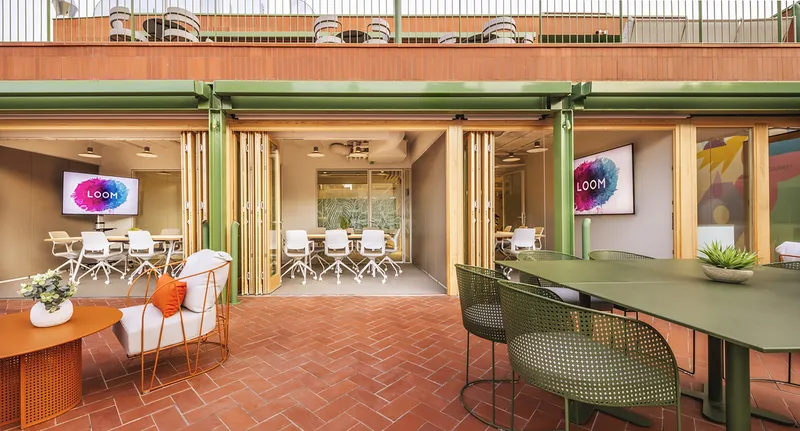
The LOOM Ferretería Pere IV Industrial Building Renovation by Daniel Mòdol is a landmark project in Barcelona’s 22@ district, a neighborhood undergoing transformation from its industrial past into a hub of creativity, technology, and sustainability. This adaptive reuse project reimagines the former Balius hardware store—founded in 1914—into a modern, flexible workspace that balances industrial heritage with contemporary architectural innovation.

Historical Context and Adaptive Reuse
The original five-story building, constructed in the 1970s, carried unique structural details including a metal framework and a Catalan vault. Instead of erasing its history, the renovation preserves these defining elements, weaving them into a new narrative of urban renewal. By embracing adaptive reuse, the project contributes to the 22@ district’s goal of revitalizing obsolete industrial sites into sustainable urban environments.

Architectural Strategy
Preserving the Past, Designing for the Future
The renovation focused on retaining character-defining features while introducing modular, modern construction. Traditional materials such as ceramics, iron, and wood were integrated with prefabricated modular systems to accelerate construction and align with the surrounding residential environment.
Façade Transformation
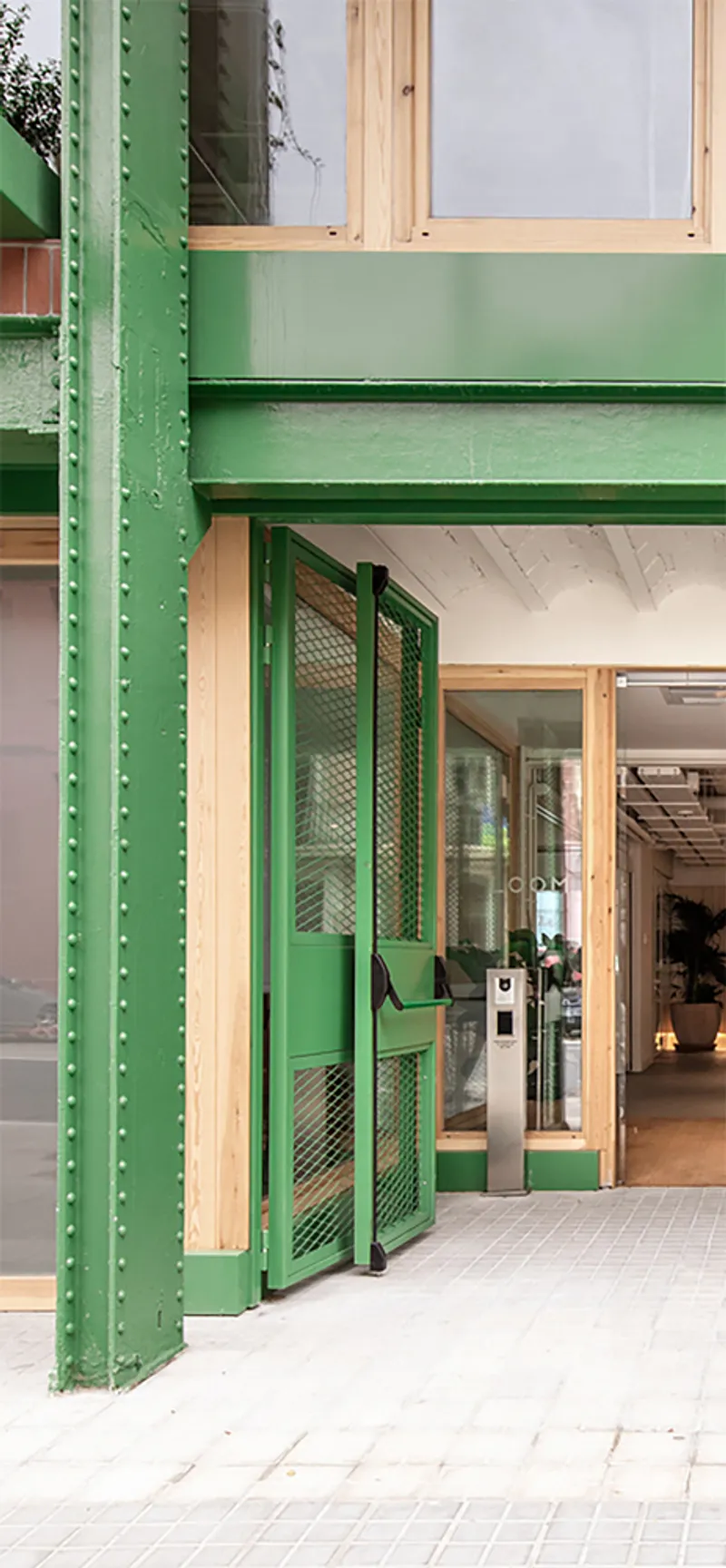
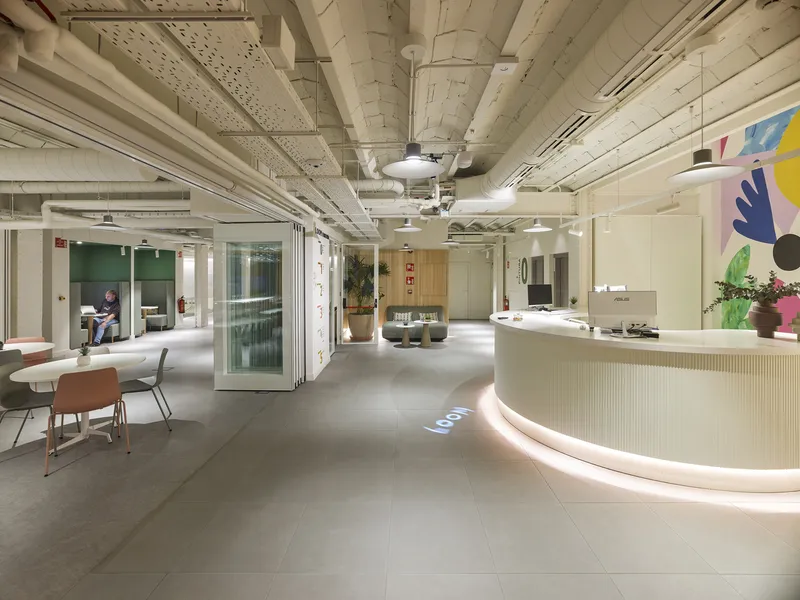
- The main façade was carefully removed to expose the existing structure, creating a striking dialogue between old and new.
- The interior façade adopts a gallery typology with natural wood and glass carpentry, complemented by an industrial metal planter façade that introduces greenery and vitality.
- A distinctive green color scheme highlights the structural elements and ironwork, echoing the building’s historic palette.

Functional Layout
- Fourth Floor Terrace: A façade setback creates an outdoor meeting space, blending indoor collaboration with open-air interaction.
- Natural Light & Ventilation: Openings in the façade, a central patio, and the reconfigured stairwell shaft maximize daylight and airflow across workspaces.
Sustainable Design and Urban Integration
The project prioritizes sustainability and user well-being:
- Achieved LEED certification for environmental performance.
- Connected to Barcelona’s district heating and cooling (DHC) system.
- Integrated with the pneumatic waste collection network for efficient urban management.
- Local, durable materials reduce the carbon footprint while enhancing harmony with the neighborhood’s fabric.
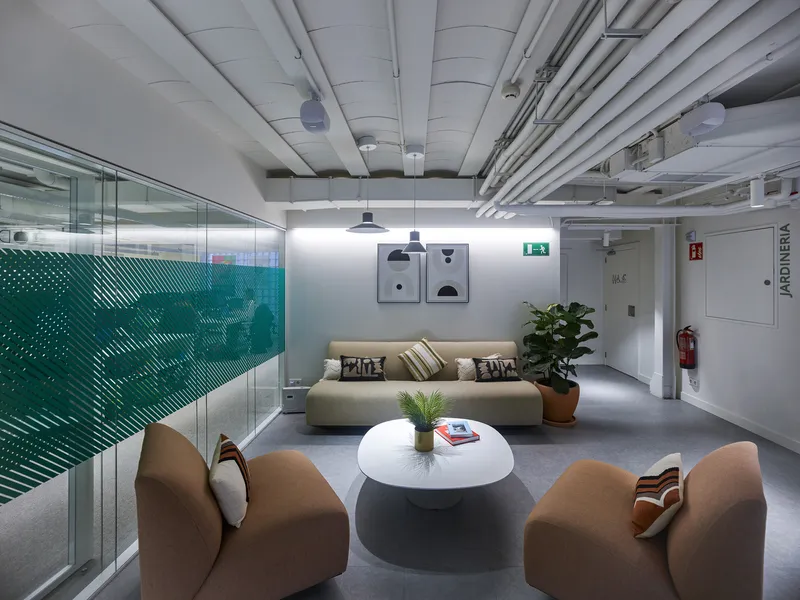
By merging industrial heritage with green building strategies, the renovation not only creates a functional workplace but also strengthens the district’s identity as a model of urban regeneration.
The LOOM Ferretería Pere IV renovation exemplifies how adaptive reuse architecture can transform industrial relics into contemporary, sustainable workspaces. By respecting history while integrating innovative design and green strategies, Daniel Mòdol has delivered a project that redefines the future of Barcelona’s urban architecture.
All Photographs are works of Jordi Bernadó y LOOM


Popular Articles
Popular articles from the community


Cube Design Draws an Ecological Corridor Between Two Shenzhen Hills with the Nankai Building
Beside Shenzhen's container docks, the Nankai Building pairs stacked balconies with a climbing green screen to connect two hillsides across its height.

FCC Arquitectura Expands a Portuguese Granite House with a Board-Marked Concrete Wing
In Portugal, JV House pairs a cleaned-up whitewashed and granite dwelling with a timber-shuttered concrete extension, courtyards and a garden pool.


The Amber Palace Opera: A Geological Fiction Surfaces on Tallinn's Baltic Waterfront
Pierre Brillard reimagines a Baltic legend as a public landscape, opera house, and waterfront promenade rooted in Tallinn's coastal identity.

graciastudio Turns a Viewless Tijuana Lot Inward Around a Courtyard of Concrete, Timber and Trees
In Tijuana, Jorge Gracia's GA2 House stacks a timber-clad private floor over exposed concrete and replaces a missing view with a planted interior patio.

Similar Reads
You might also enjoy these articles


Hodi-Mandai Geram
Project Function: Preservation and revitalization of the Intangible heritage and socio-spatial identity of the Hodi by Housing, Cultural Memory Center, Sacred Grove, landscape, local tourism economy


Olio Towers: A Mid-Rise for Performers That Fuses Housing, Rehearsal, and Stage
Located blocks from Houston's Theater District, this modular tower stacks living units around a central performance atrium.

Oasis: Modular Green Housing Carved into Dhaka's Urban Fabric
A shortlisted Plugin Housing entry reclaims unauthorized settlements in Dhaka with stepped concrete volumes, green roofs, and ventilation-driven design.

Black Hole: A Floating Megastructure for the Post-Physical Era
Emiliano Mazzarotto envisions a spherical, self-scaling arena where e-sports, digital hotels, and holographic stadiums replace traditional public space.

Explore Industrial Building Competitions
Discover active competitions in this discipline

Challenge to reimagine the Iron Throne

Photograph architecture without architects

Illustrate the lost glory of Angkor Wat - Render Challenge

Design challenge to reuse E-waste
Comments (0)
Please login or sign up to add comments
No comments yet. Be the first to comment!