
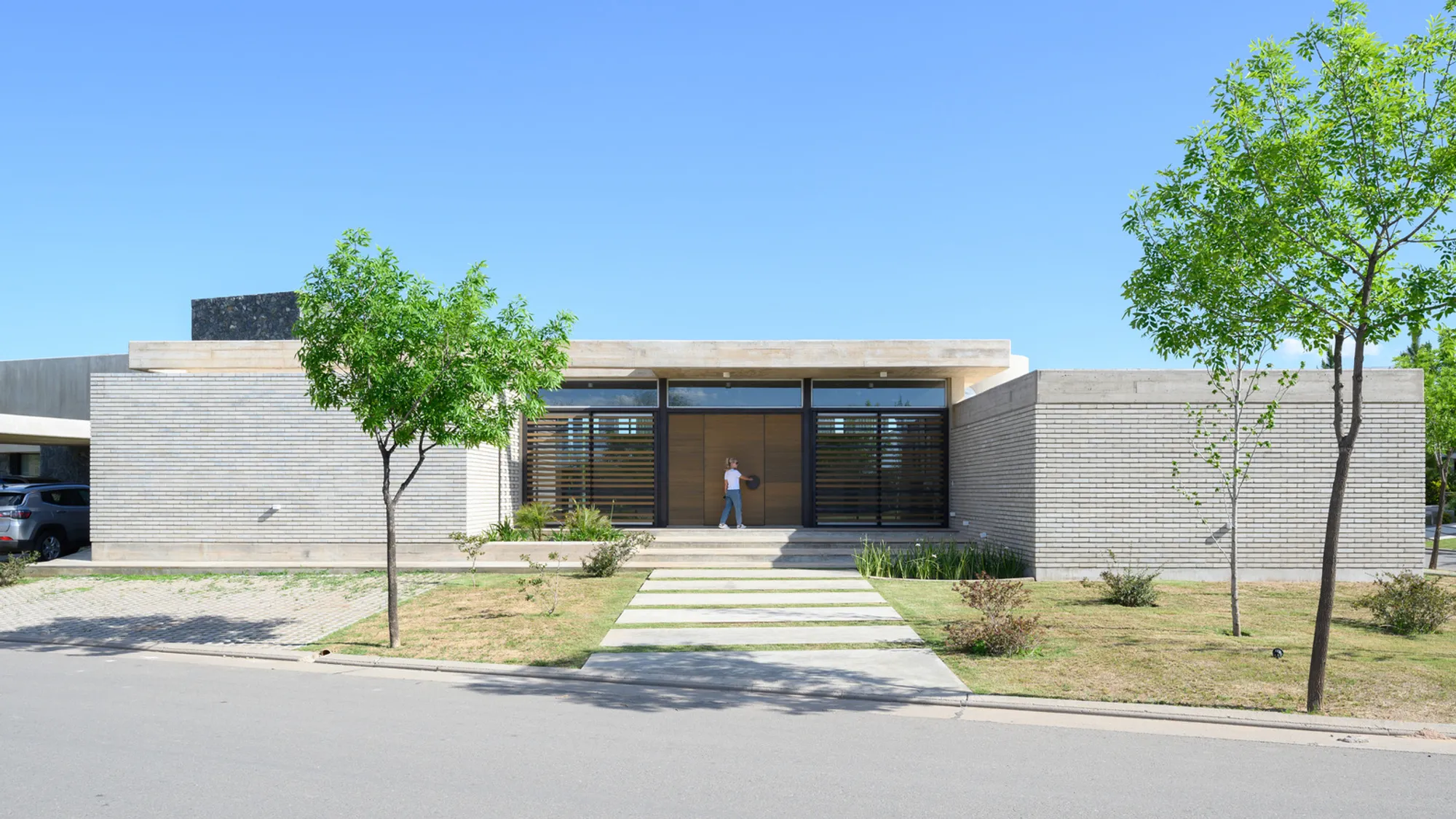
LVP House by FLV Arquitectura: A Contemporary Concrete Residence in Córdoba
Modern concrete house in Córdoba featuring volumetric contrast, elevated social spaces, private garden-level bedrooms, and seamless indoor-outdoor spatial continuity.


LVP House by FLV Arquitectura is a striking example of contemporary residential architecture in Córdoba, Argentina, where spatial hierarchy, volumetric contrast, and material expression define the project’s identity. Completed in 2022, this 425 m² private residence is situated within a gated neighborhood on an irregular corner plot, presenting both challenges and opportunities that the architects skillfully transformed into a cohesive architectural narrative.
Architectural Concept and Site Strategy
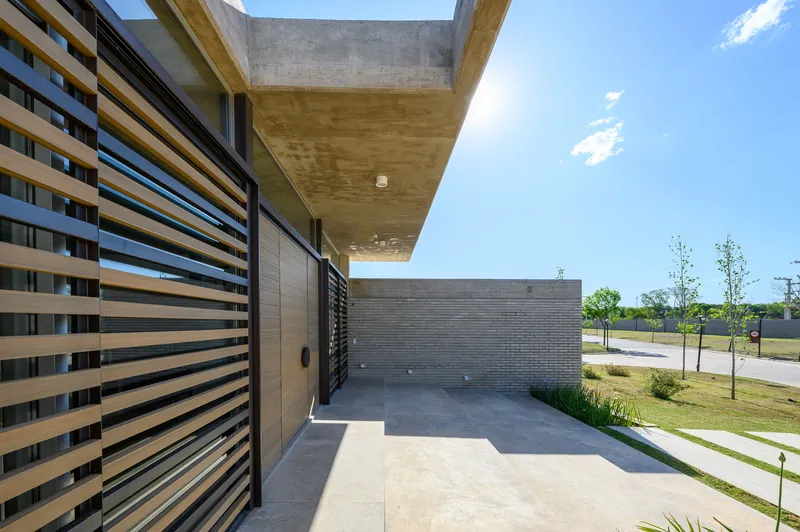
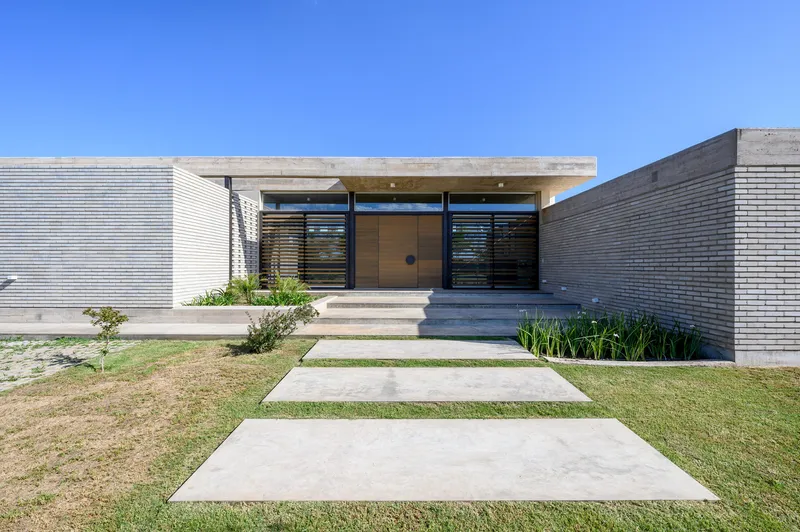
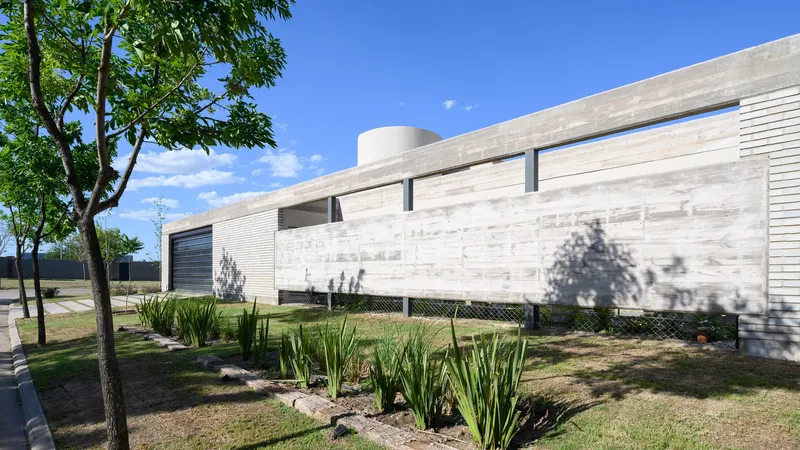
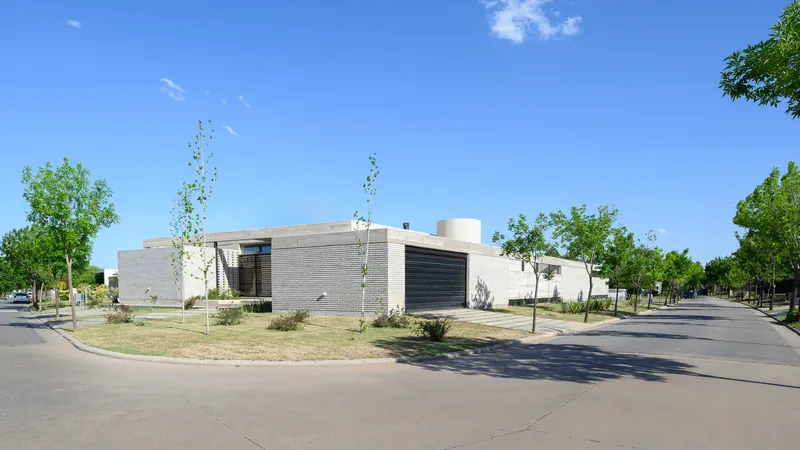
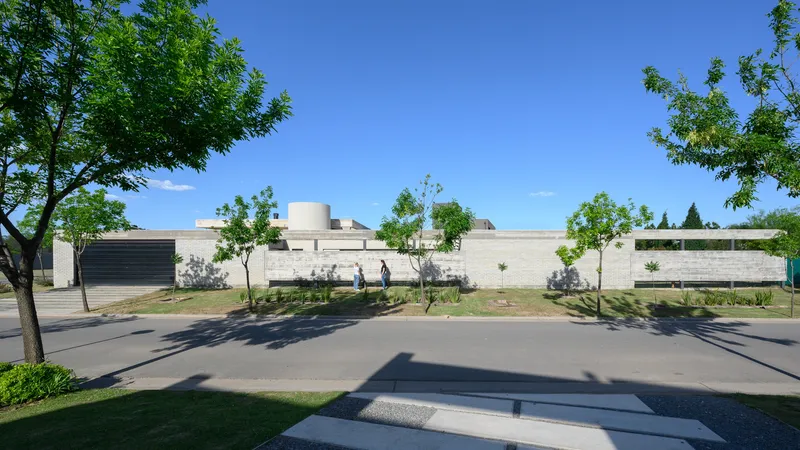
The design of LVP House is deeply rooted in the geometry of its site. Positioned on a uniquely shaped corner lot, the residence is organized along two distinct axes. The shorter edge accommodates the main entrance and social areas, while the longer edge is defined by a solid, blind façade that houses the private living spaces. This deliberate zoning strategy ensures privacy while simultaneously enhancing the architectural clarity of the home.
A key design move lies in the articulation of contrasting volumes, levels, and heights. The façade becomes a visual expression of this contrast, clearly distinguishing between the public and private realms. The interplay between openness and enclosure not only enhances functionality but also reinforces the modern architectural language of the project.
Elevated Social Spaces and Floating Concrete Roof
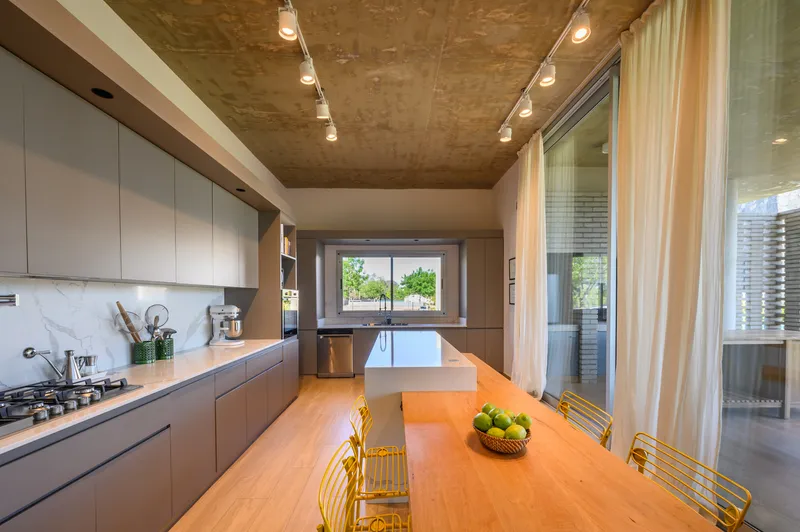
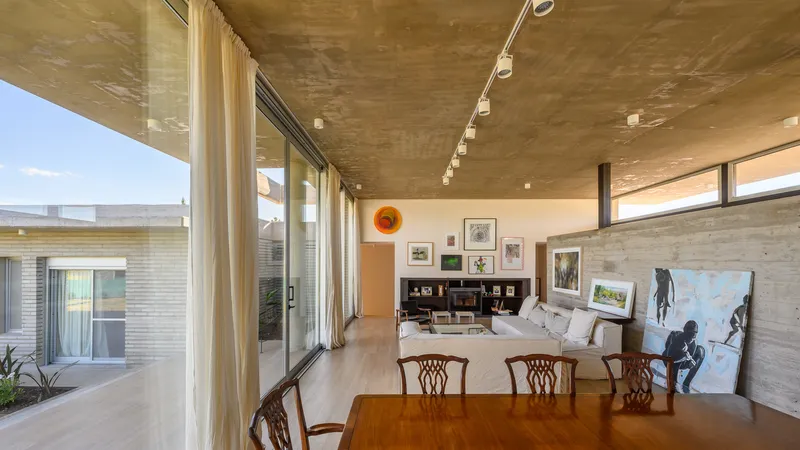
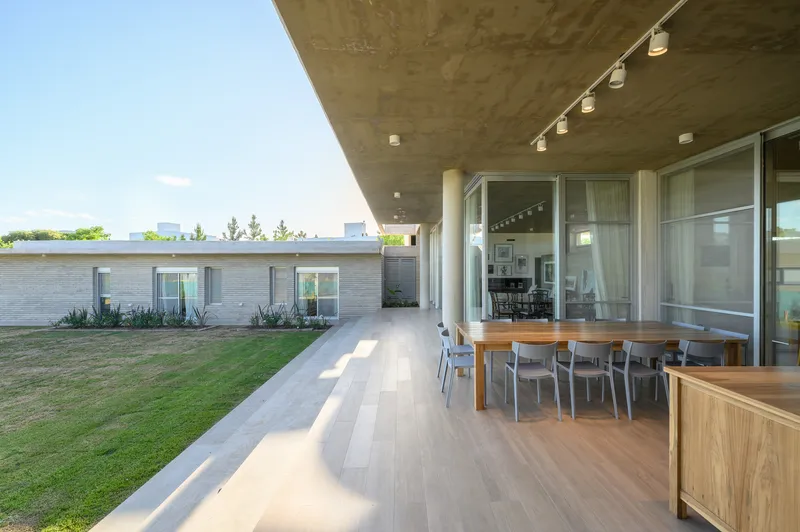
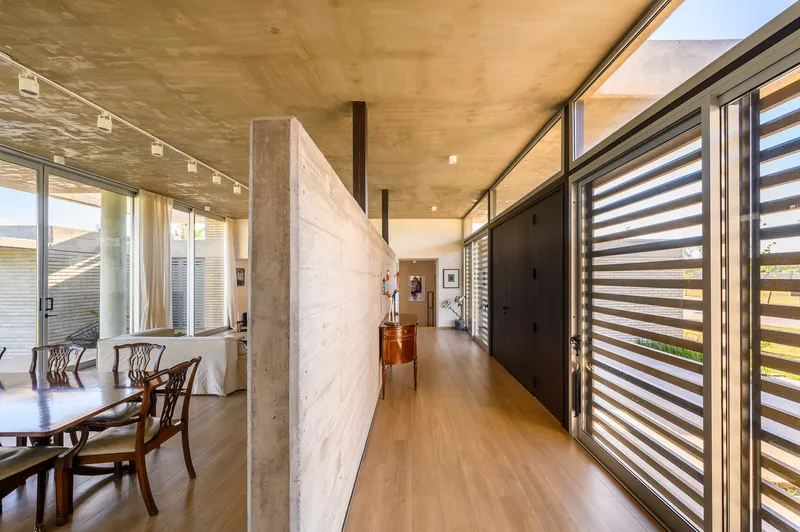
The social core of the house is defined by a dramatic exposed concrete slab, rising 3.50 meters high and appearing to float above the main living areas. This continuous horizontal plane unifies the living room, kitchen, and outdoor gallery, creating a fluid and open spatial experience. The elevated slab introduces a sense of monumentality while maintaining a minimalist aesthetic, characteristic of contemporary concrete architecture.
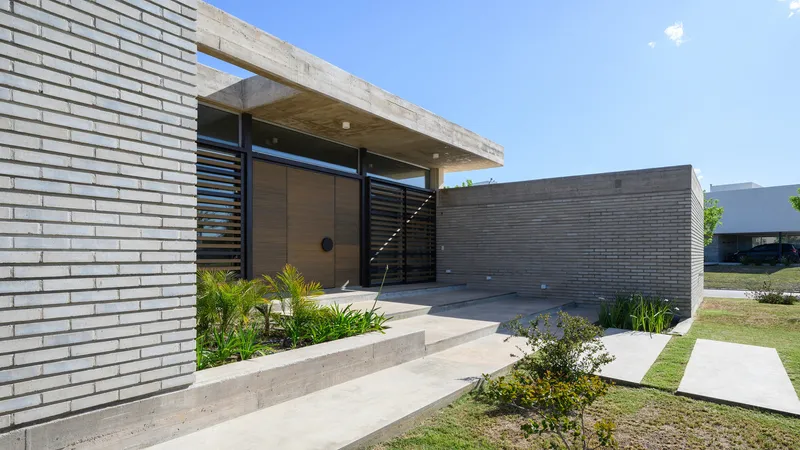
The main entrance is intentionally raised via a series of steps, emphasizing its importance and aligning with the scale of the social volume. This elevation creates a ceremonial transition from the exterior into the expansive interior, reinforcing the spatial hierarchy established by the architects.
Private Zone and Interior Circulation
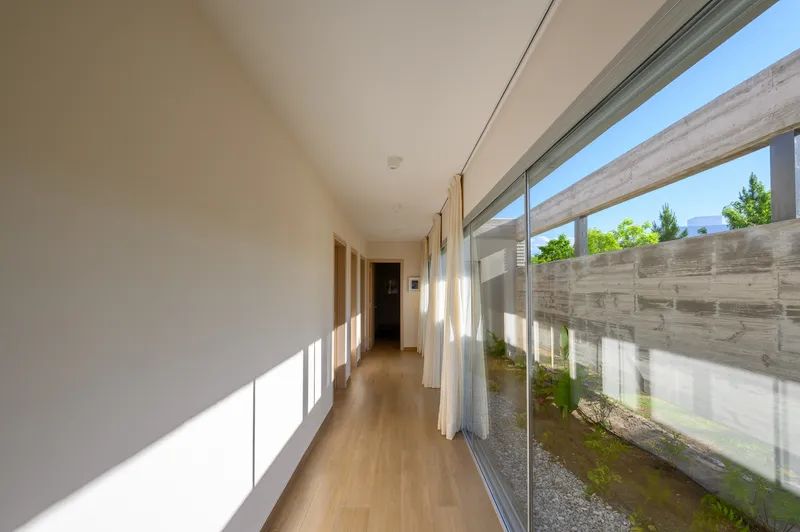
In contrast to the elevated social areas, the private sector of the house is positioned at garden level. Accessed by descending steps, the bedrooms are arranged in a linear configuration along a corridor. This transition from elevated to grounded spaces creates a subtle yet effective separation between public and private functions.
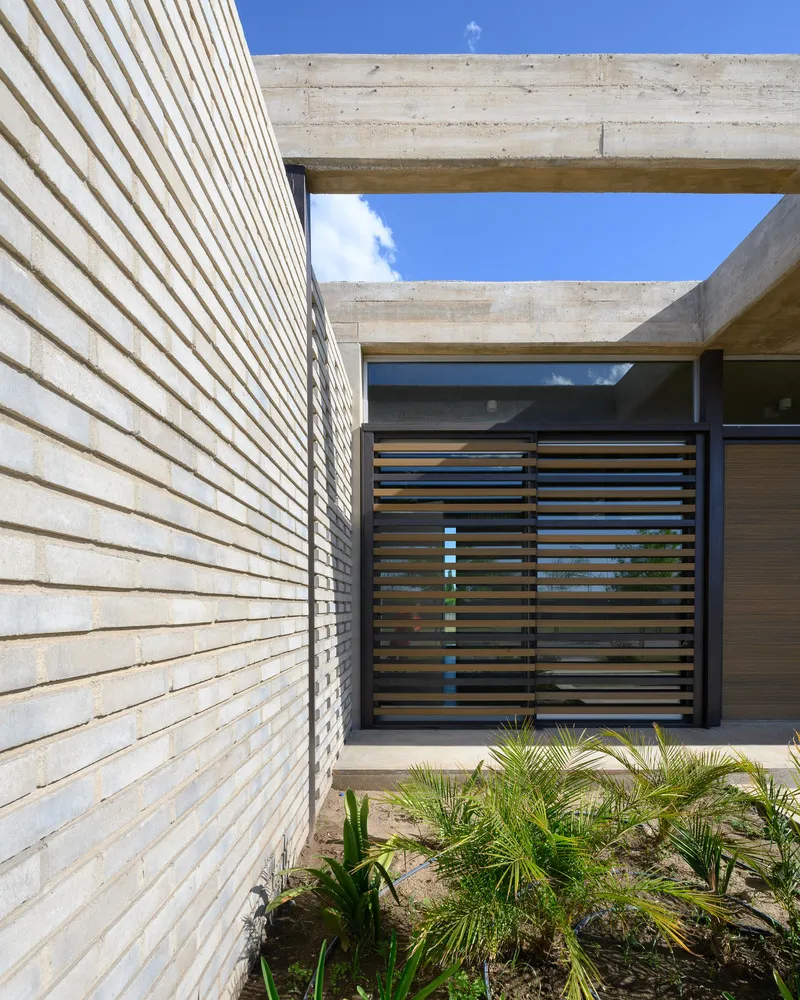
A defining feature of this circulation space is the incorporation of a light patio adjacent to the street. Enclosed by a concrete wall, this patio introduces natural light while preserving privacy. It also adds warmth and visual interest to the otherwise minimalist corridor, demonstrating a thoughtful balance between functionality and atmosphere.
Materiality and Façade Expression
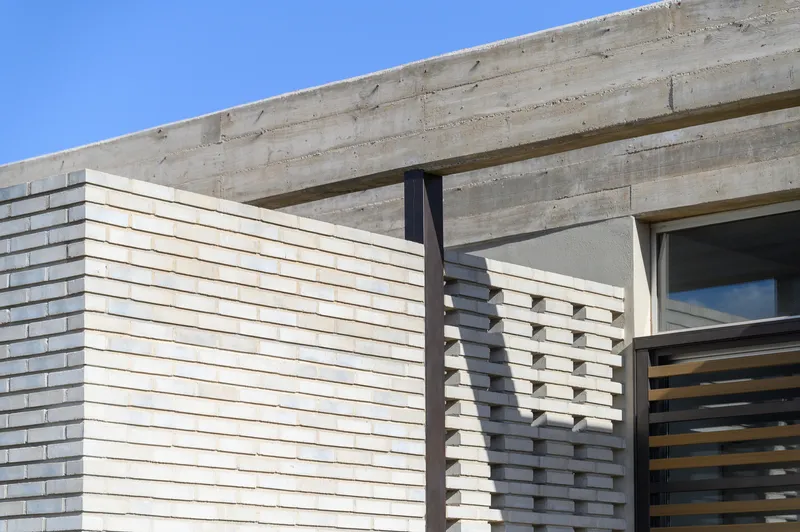
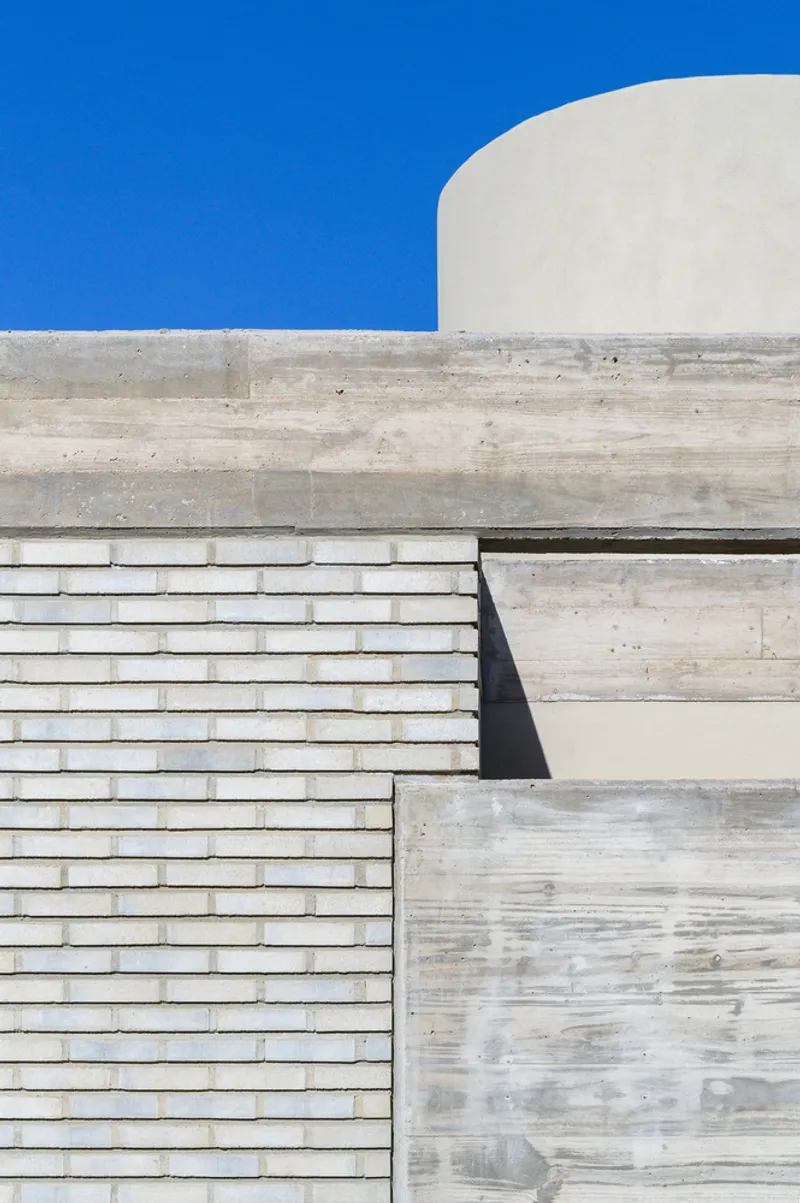
Material selection plays a crucial role in shaping the identity of LVP House. Exposed concrete dominates the design, lending a raw, honest aesthetic that aligns with modern architectural principles. The interplay of solid and void, light and shadow, enhances the visual depth of the façades.
On the rear elevation, the contrast between the elevated social volume and the grounded private wing becomes even more pronounced. The social area appears to hover above the garden, creating a dynamic relationship between built form and landscape. This elevated positioning also enhances views and reinforces the separation between different functional zones.
Contemporary Living Through Spatial Contrast
LVP House exemplifies how contemporary residential design can effectively respond to complex site conditions while prioritizing spatial clarity, privacy, and aesthetic coherence. Through its strategic use of levels, volumetric contrast, and exposed concrete, the project achieves a refined balance between openness and seclusion.
The house stands as a testament to FLV Arquitectura’s ability to merge functional requirements with bold architectural expression, resulting in a modern home that is both visually compelling and highly livable.
All photographs are works of
Gonzalo Viramonte




Popular Articles
Popular articles from the community


Riyadh For All: Intergenerational Urban Design for Active Aging in Rabat
Riyadh For All reimagines urban design in Rabat with intergenerational co-living, adaptive courtyards, and Moroccan cultural exchange today.

Co-Life: Senior Housing Design That Reconnects Older Adults With the City
Co-Life reimagines senior housing design through healing gardens, shared streets, workshops, and a sustainable community across generations.

The Earth Pod: 3D Printed Homes for Resilient Refugee Communities
The Earth Pod reimagines refugee housing through 3D printed homes made from clay, combining resilience, self-sufficiency, and rapid shelter.

Lunar Spiral: Space Architecture Shaped by the Mathematics of the Universe
Lunar Spiral reimagines space architecture through Fibonacci geometry, lunar regolith, levitating habitats, and self-sustaining Moon living.

Similar Reads
You might also enjoy these articles

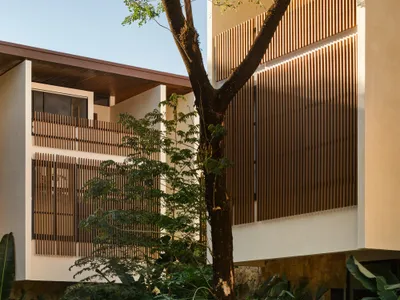
FAMM Arquitectura Organizes Ten Villas Around Courtyards and Jungle in Nosara, Costa Rica
El Molino pairs two elongated volumes with deep overhangs and timber louvers to build a compact coastal community five minutes from the beach.
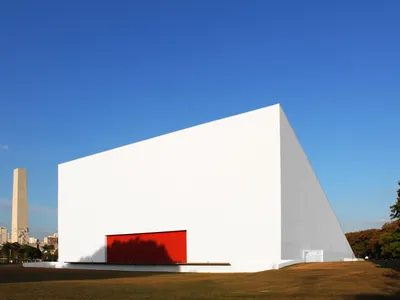
Oscar Niemeyer's Ibirapuera Park Pavilions Define São Paulo's Cultural Identity in Concrete and Curve
A constellation of modernist volumes set within São Paulo's most important urban park, conceived for the city's 400th anniversary in 1954.
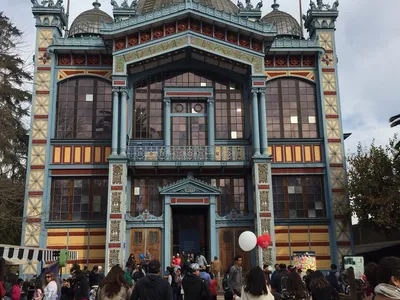
How Henri Picq's 1889 Paris Pavilion Traveled 11,000 Kilometers to Become Santiago's Artequín Museum
A prefabricated iron and glass pavilion built for the Paris Universal Exposition found a second life as a children's art museum in Chile.
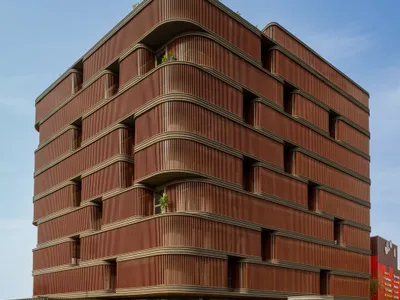
Sanjay Puri Architects Wraps a Jaipur Office Tower in Capsule-Shaped Green Buffers
A nine-level climate-responsive workplace near Jaipur Airport uses stacked planter terraces and aluminium screens to fight 40°C heat.


Explore Architecture Competitions
Discover active competitions in this discipline



Challenge to reimagine the Iron Throne


Photograph architecture without architects


Illustrate the lost glory of Angkor Wat - Render Challenge


Design challenge to reuse E-waste
Comments (0)
Please login or sign up to add comments
No comments yet. Be the first to comment!