

David Chipperfield Architects Shapes a Concrete Quarter on Lyon's Confluence Waterfront
A mixed-use neighborhood of towers, colonnades, and planted courtyards anchors the southern tip of Lyon's Presqu'île peninsula.


Lyon's Confluence district has spent the last two decades transforming from a post-industrial rail yard into a dense, mixed-use extension of the city center. The question hanging over every large masterplan parcel is the same: can a single practice deliver an entire urban block without it feeling monolithic? David Chipperfield Architects answers by breaking the program into a family of residential towers, a low-rise commercial plinth, and generous planted ground plane, all held together by a shared material palette of cast-in-place concrete and pale green metal panels.
What makes the project genuinely interesting is the tension between repetition and variation. Every tower reads as part of the same family, yet no two are identical: fenestration patterns shift, balcony depths alternate, and massing steps back at different levels. The result is a quarter that feels as if it grew over time rather than arriving all at once. It is a studied exercise in how to make large-scale development feel civic instead of corporate.
Towers as Individuals, Not Copies
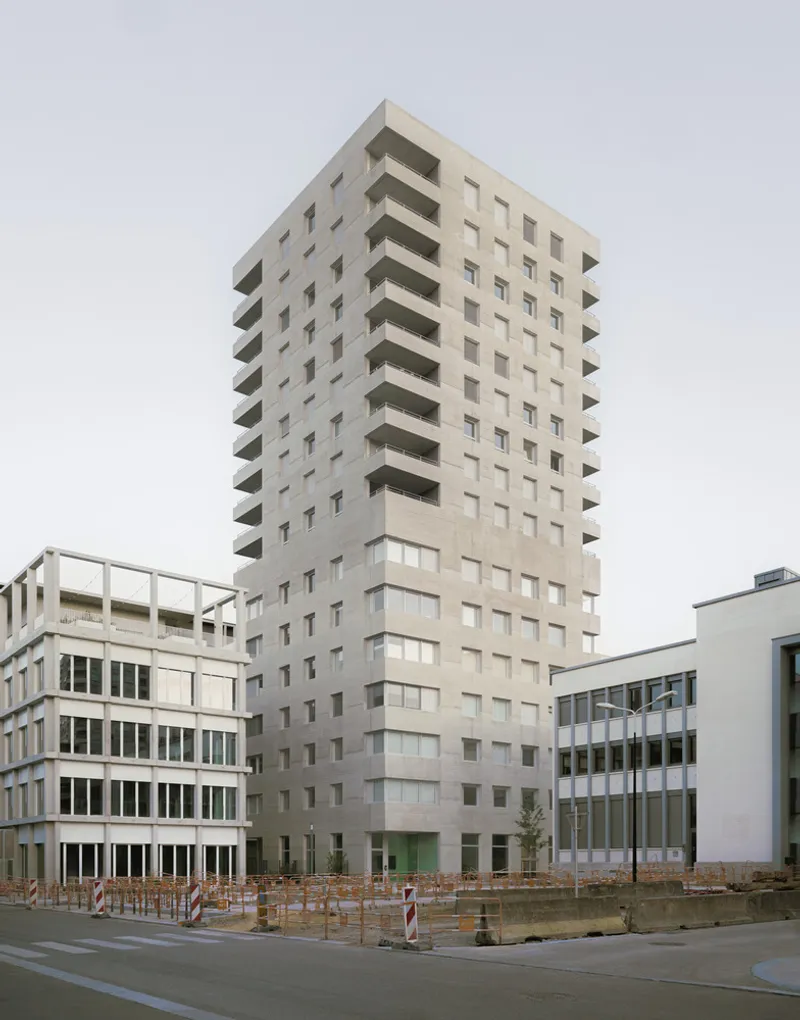
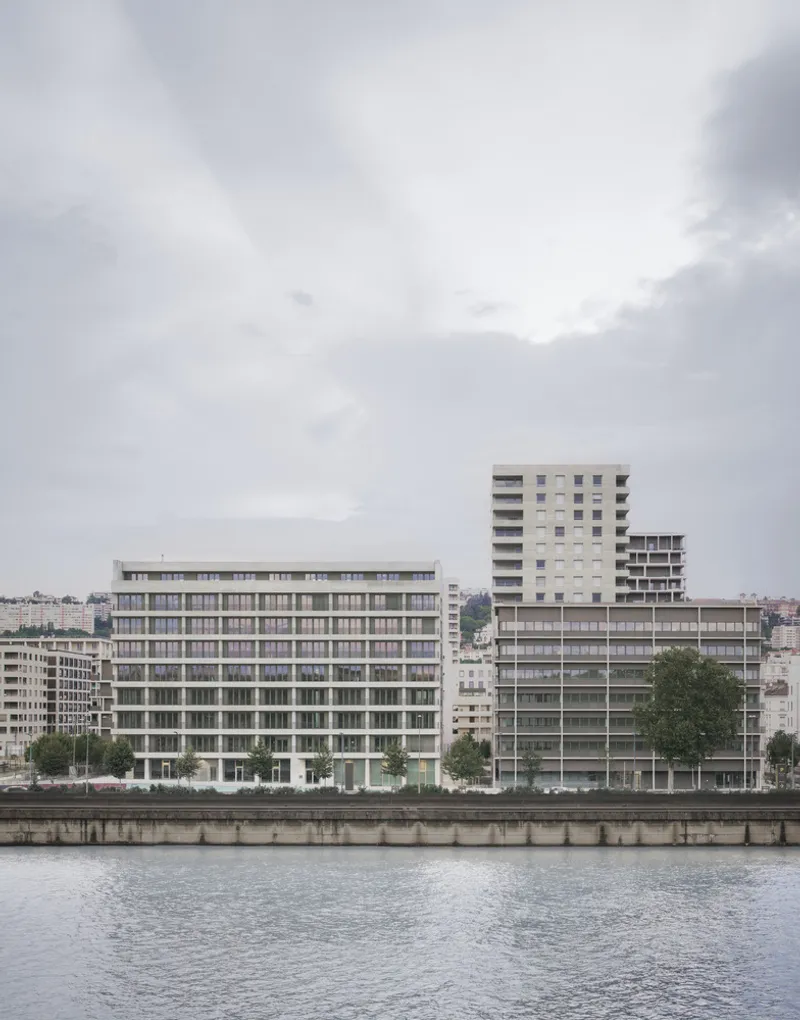
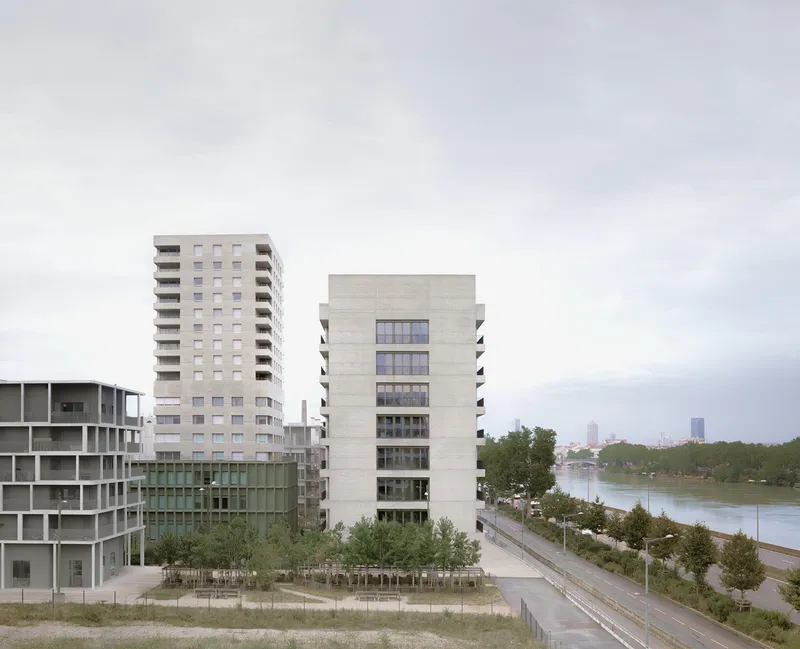
Seen from the river, the cluster reads as a loose skyline rather than a continuous wall. Each tower holds its own footprint and height, and the gaps between volumes let daylight and sightlines pass through the block. Horizontal banding wraps the facades, but the rhythm of punched openings and projecting balconies changes from tower to tower, giving each volume a distinct personality.
The approach avoids the common pitfall of masterplan housing, where identical slabs are rotated on plan to manufacture difference. Here the variation is embedded in the section: some towers are slender with deep balconies, others are broader with flush fenestration. You can read the whole ensemble as one composition without mistaking any two buildings for each other.
The Ground Plane Does the Heavy Lifting
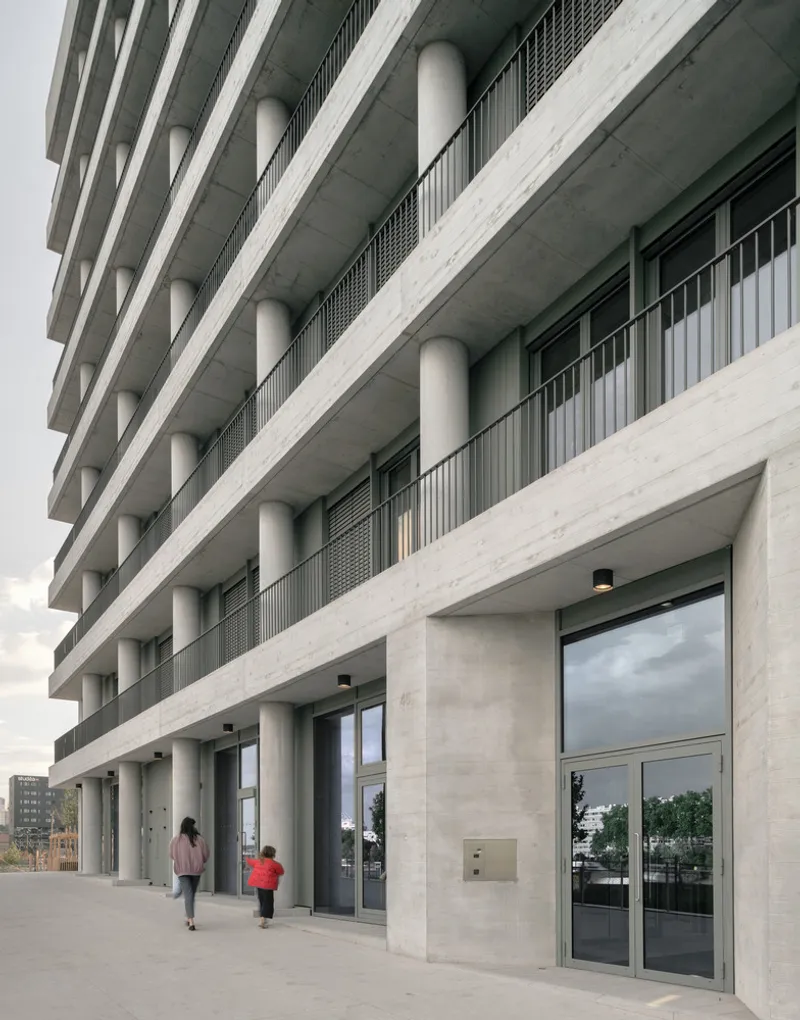
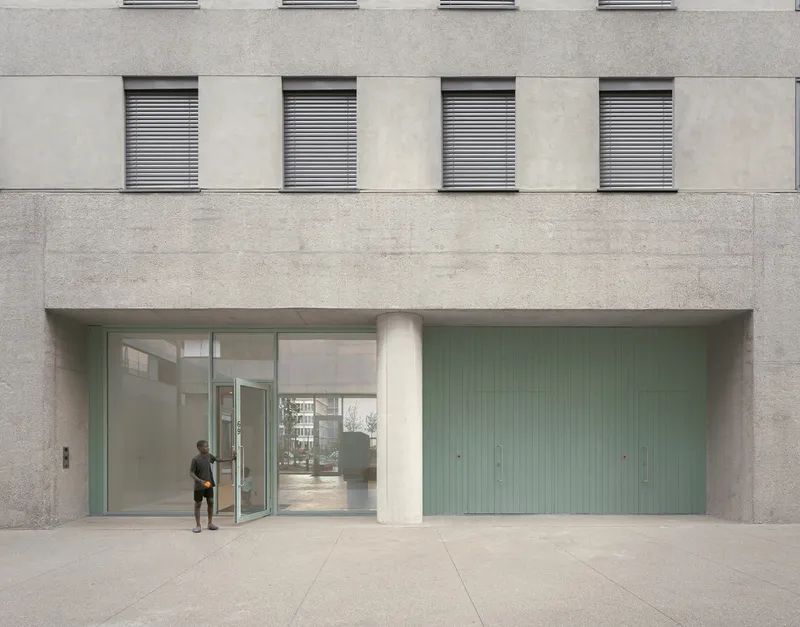
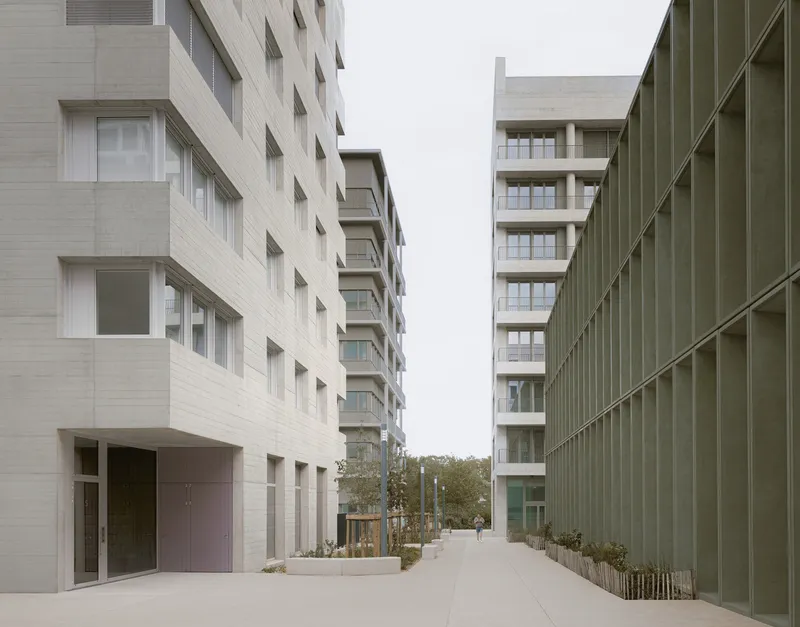
The most convincing move happens at street level. A deep colonnade of circular concrete columns wraps the commercial base, giving pedestrians a covered threshold between the public sidewalk and the glazed storefronts. It is an old device, colonnades have been doing this work in Lyon for centuries, but Chipperfield deploys it with enough scale and restraint that it reads as infrastructure rather than decoration.
Between the towers, planted pathways and green metal screen walls create a semi-private landscape layer. Residents pass through it daily; visitors wander into it from the riverside promenade. The screen walls filter views without sealing them off, and the planting beds soften the transition from public path to private courtyard.
Material Restraint, Texture Over Color
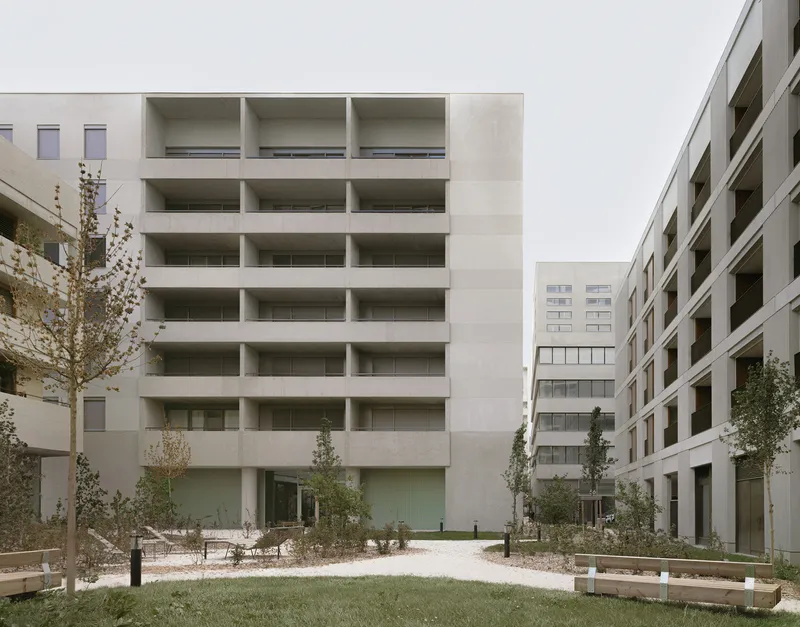
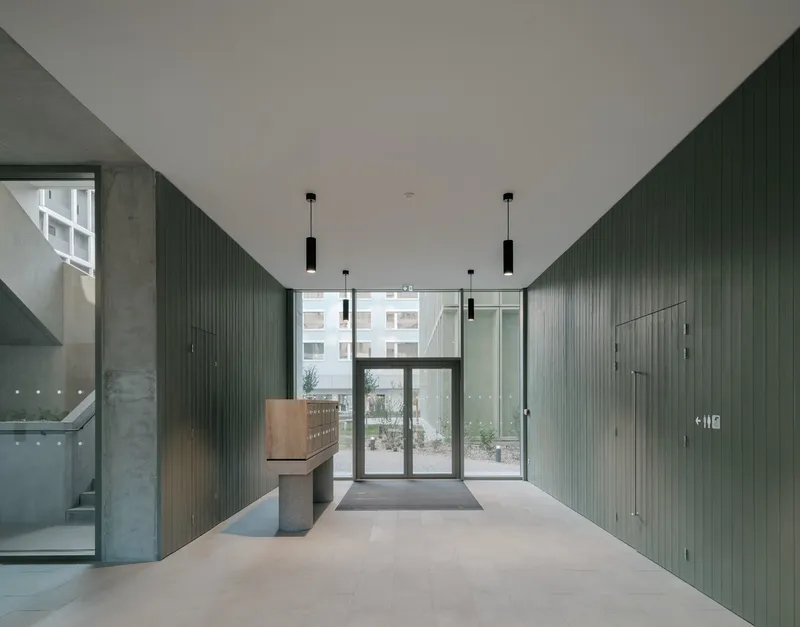
The material palette is deliberately narrow: board-formed concrete, pale green vertical panels, and clear glazing. It is a strategy that relies on texture and tone rather than chromatic contrast. The green panels recur at entrances, lobby walls, and screen fences, threading a single accent through the entire quarter without overwhelming the concrete's natural warmth.
Inside the lobby, the same green panels line the walls alongside polished concrete floors and black pendant lights. The effect is calm and slightly institutional in the best sense: it signals shared space rather than private luxury, which is exactly the right register for a multi-building residential complex.
Rooftop Landscape and the Fifth Facade

The rooftop terrace confirms that the architects treated the fifth facade as seriously as the street-facing ones. Planted beds with grasses and low shrubs create a usable communal landscape with wide views over the surrounding neighborhood. In a district built on sustainability targets, these green roofs do real work: they manage stormwater, reduce heat island effects, and provide residents with outdoor space that the tight ground-level footprint cannot always deliver.
Plans and Drawings
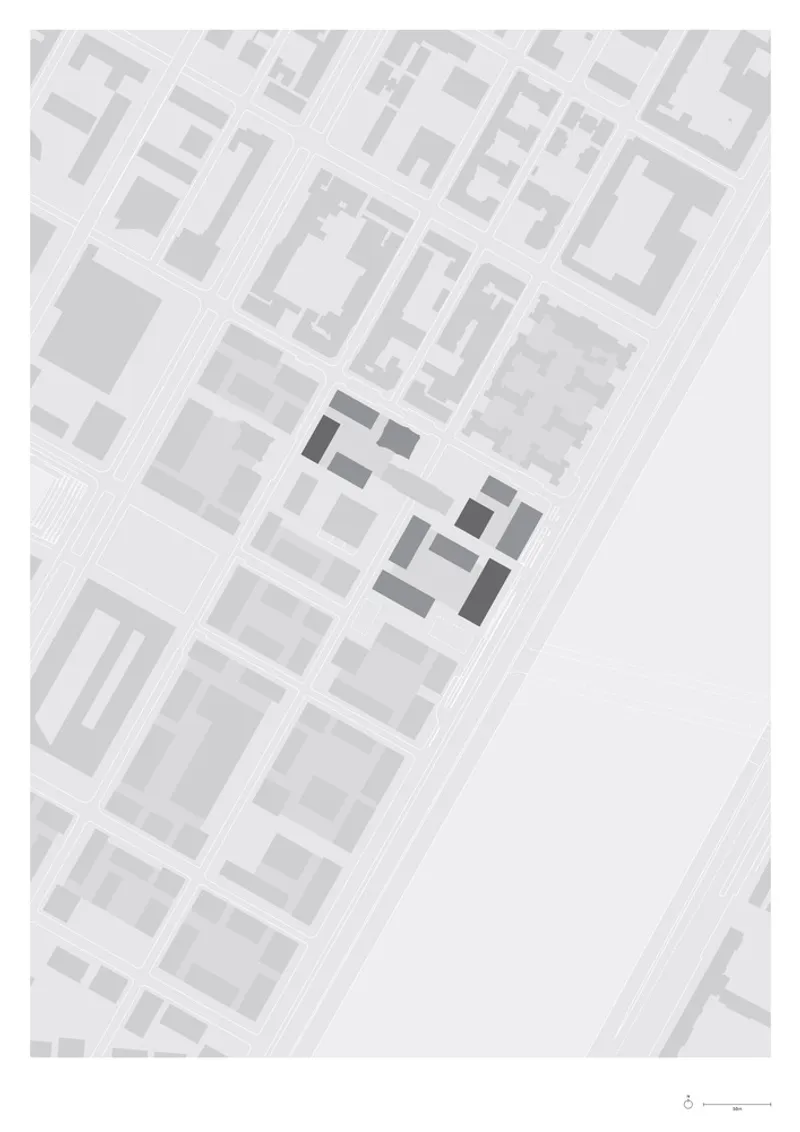
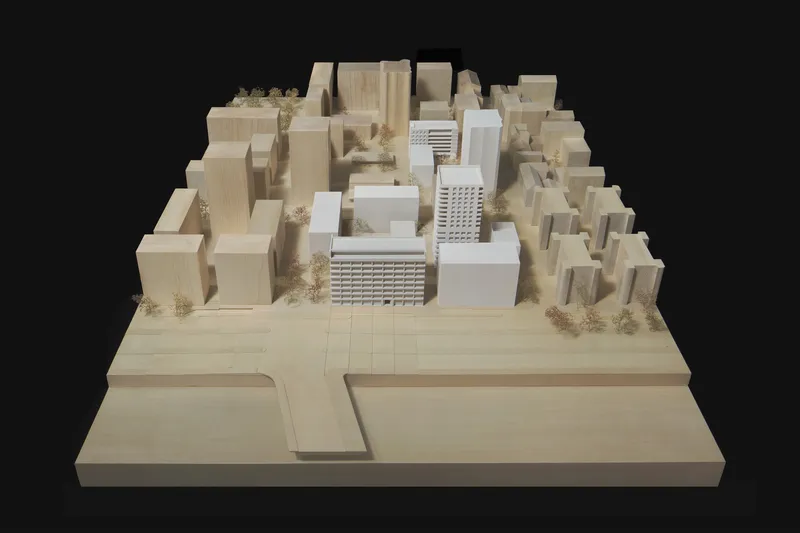
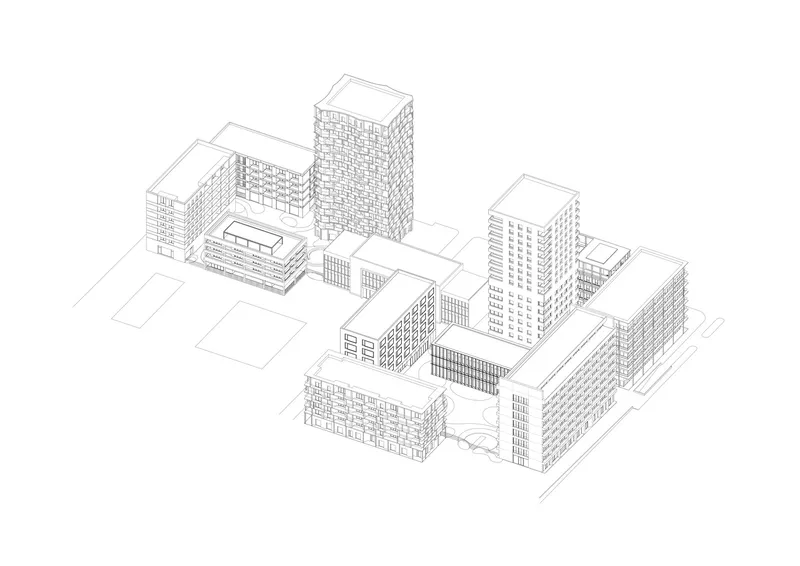
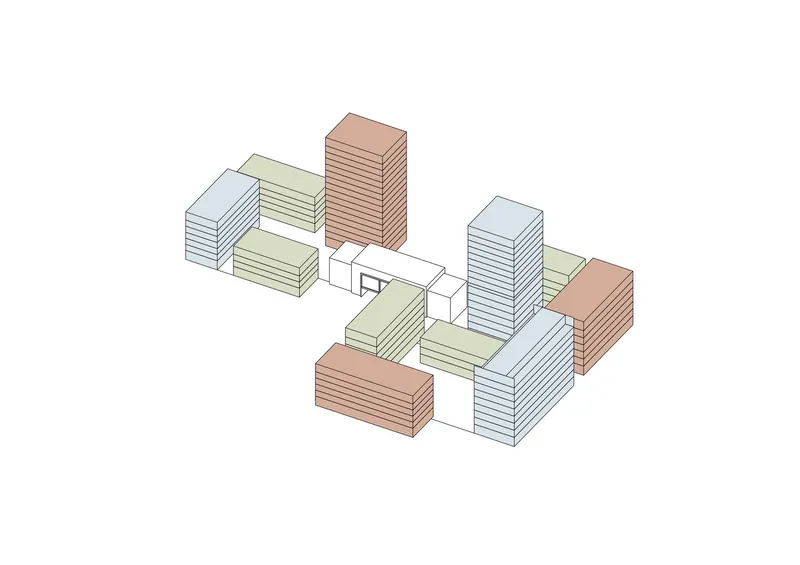
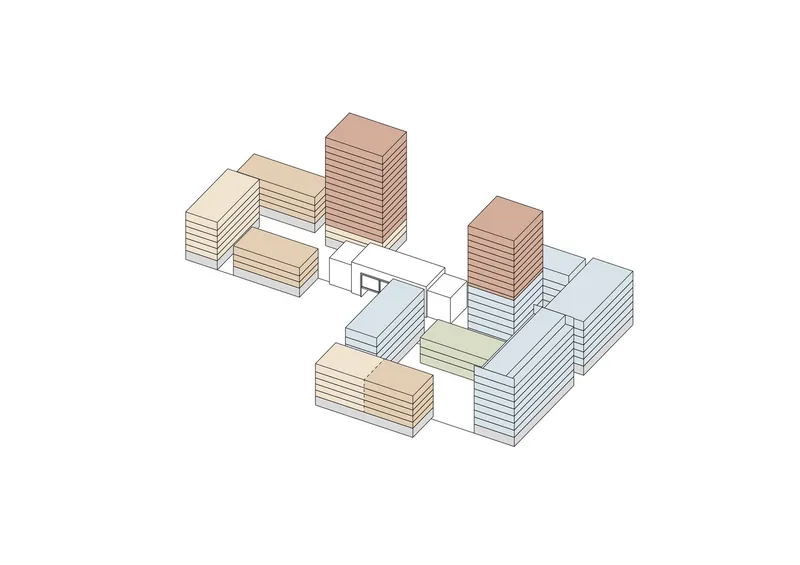
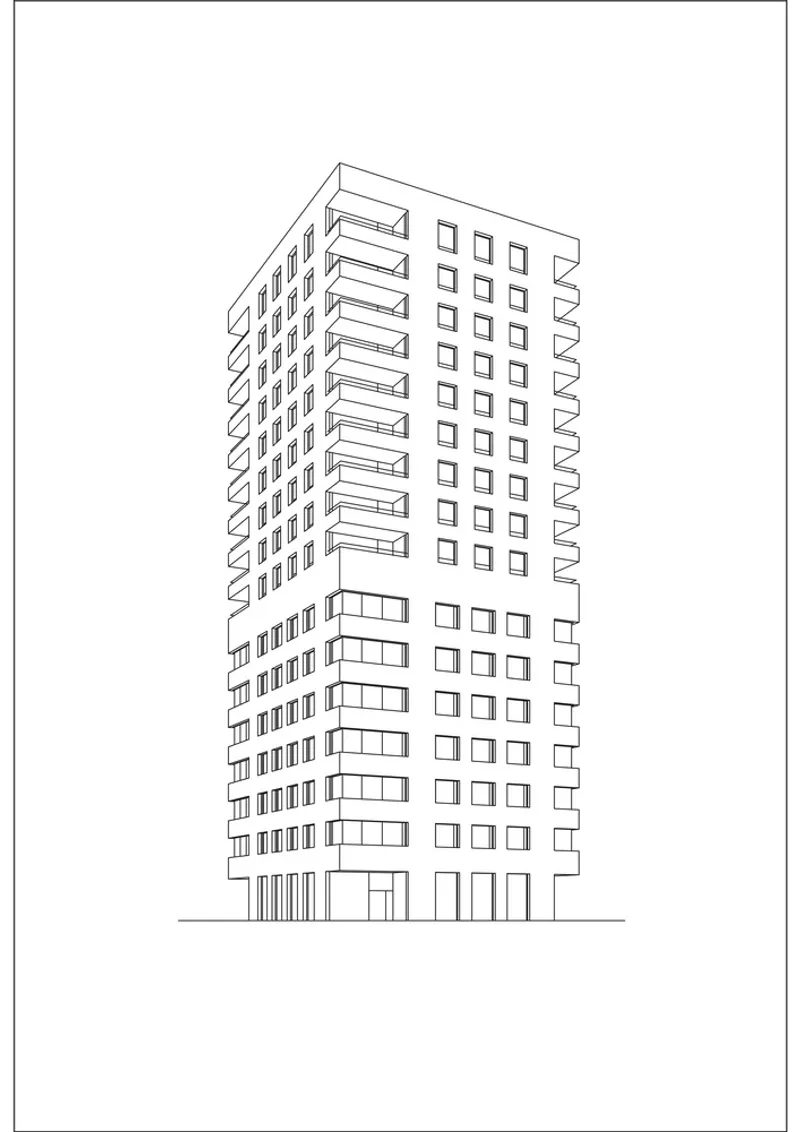
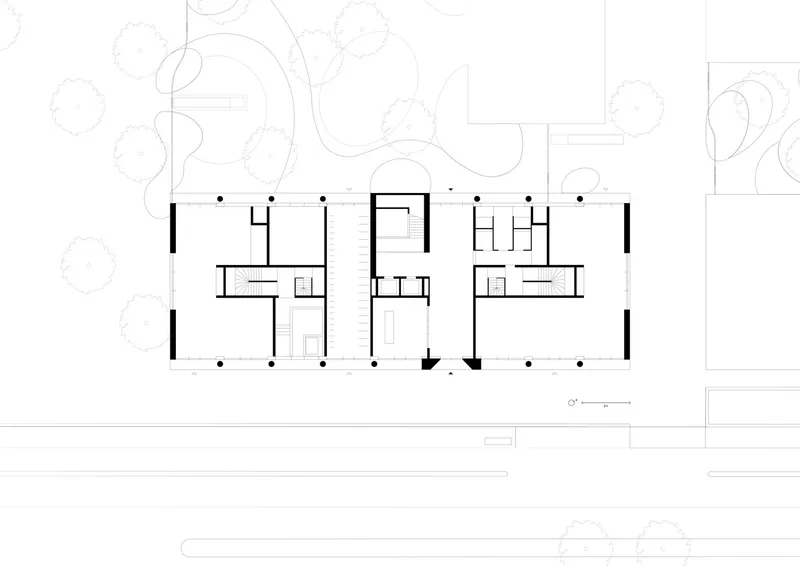
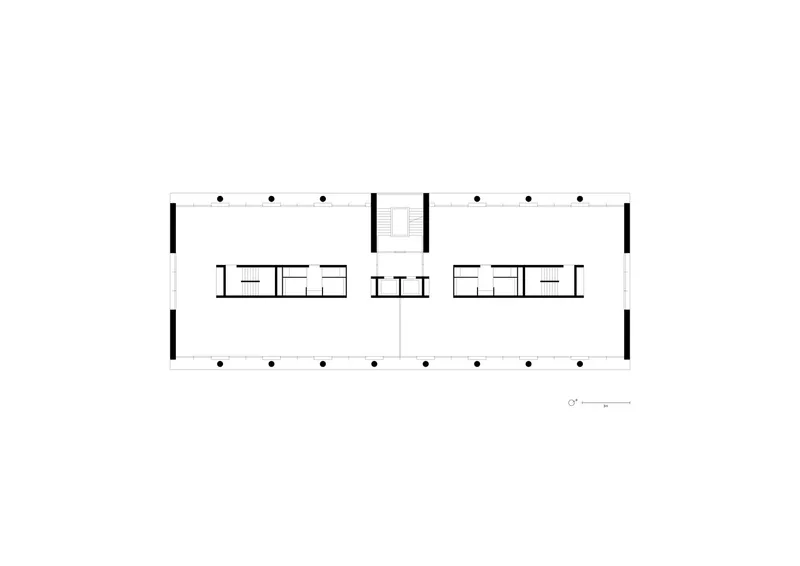
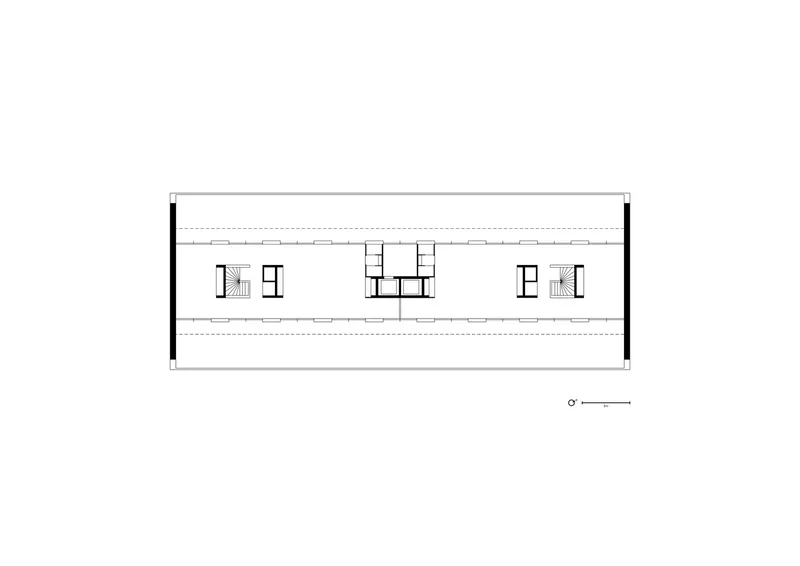
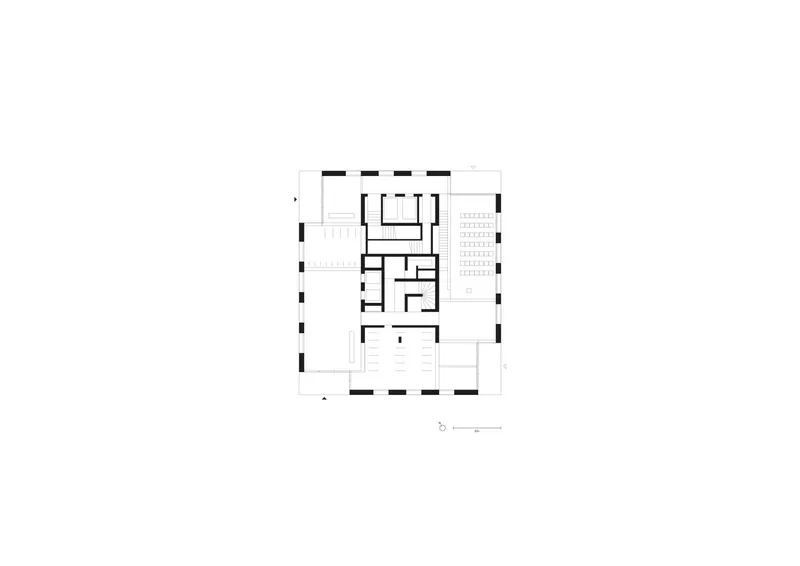
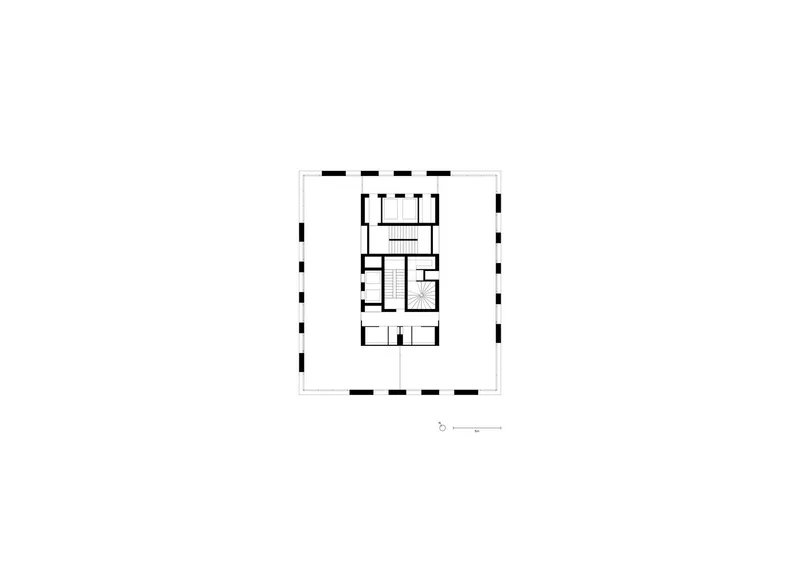
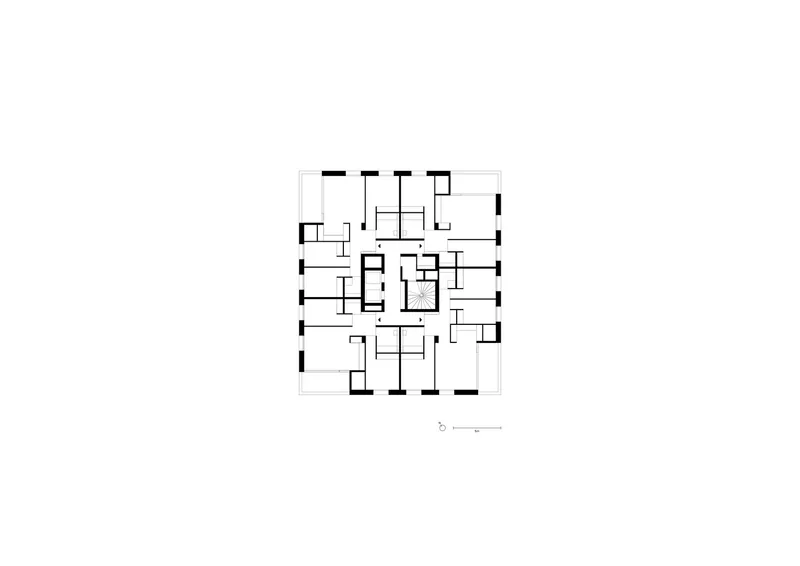
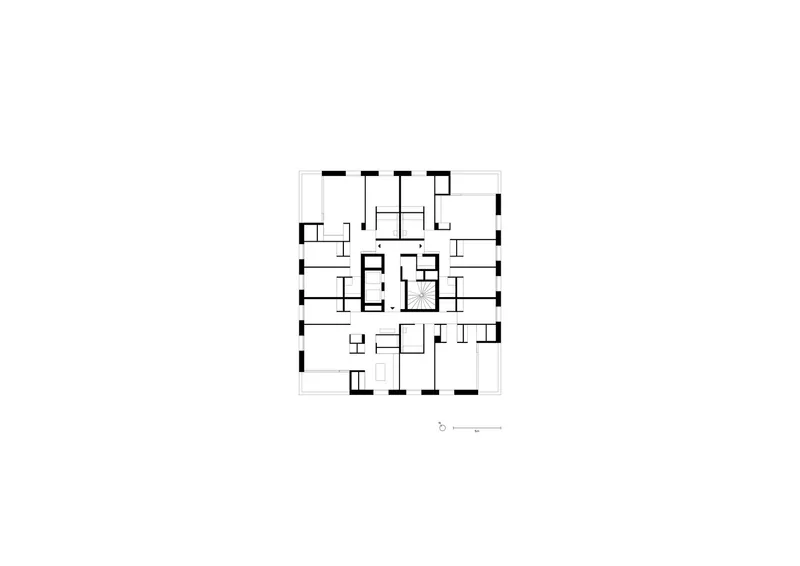
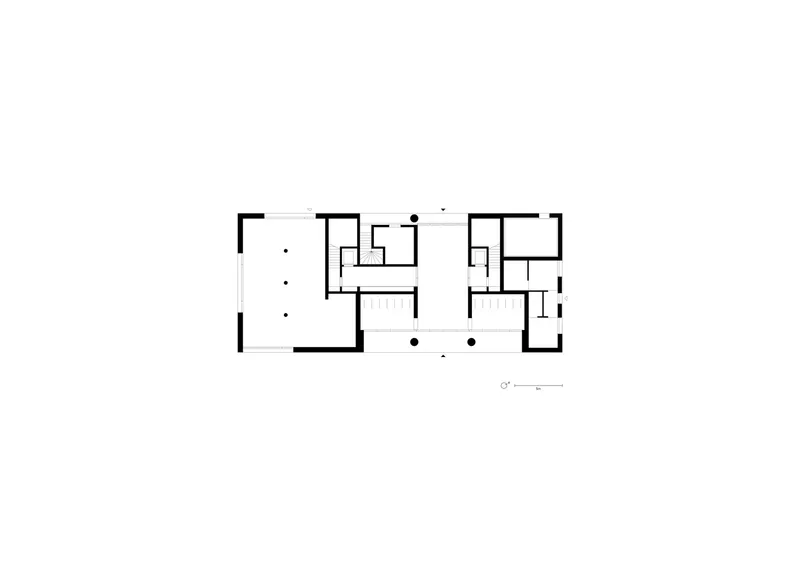
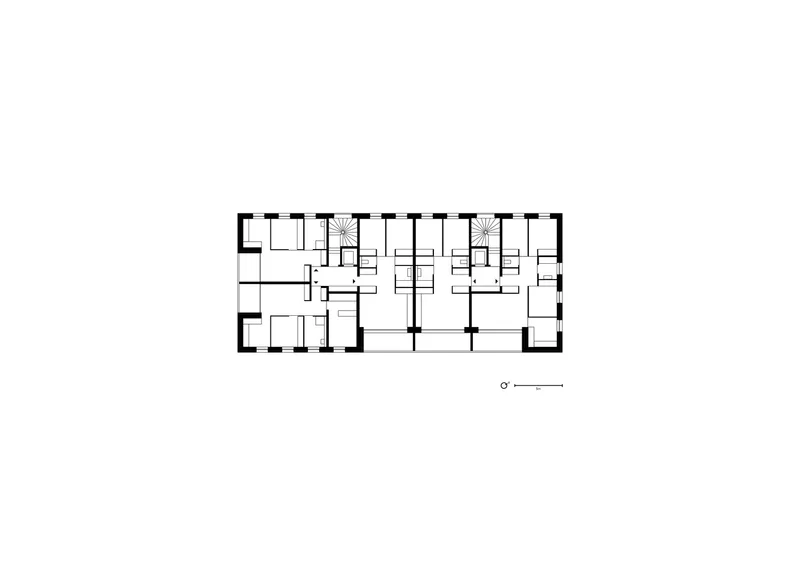
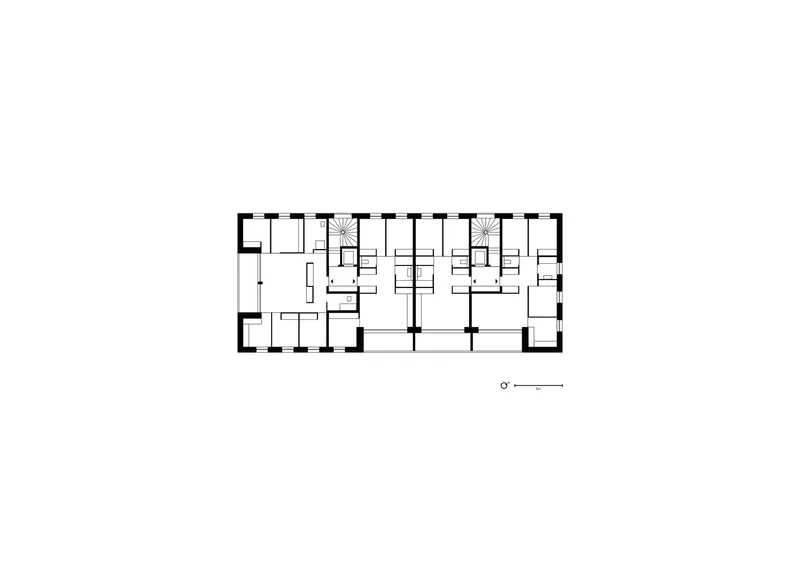
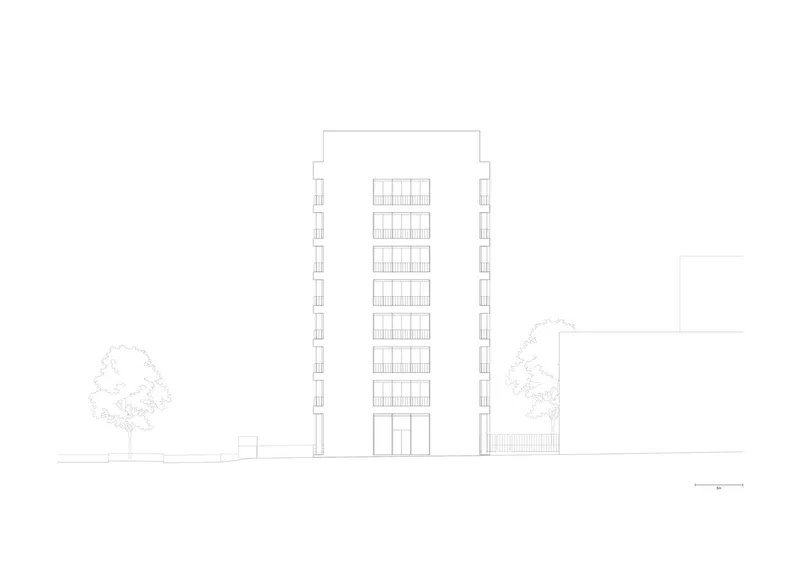
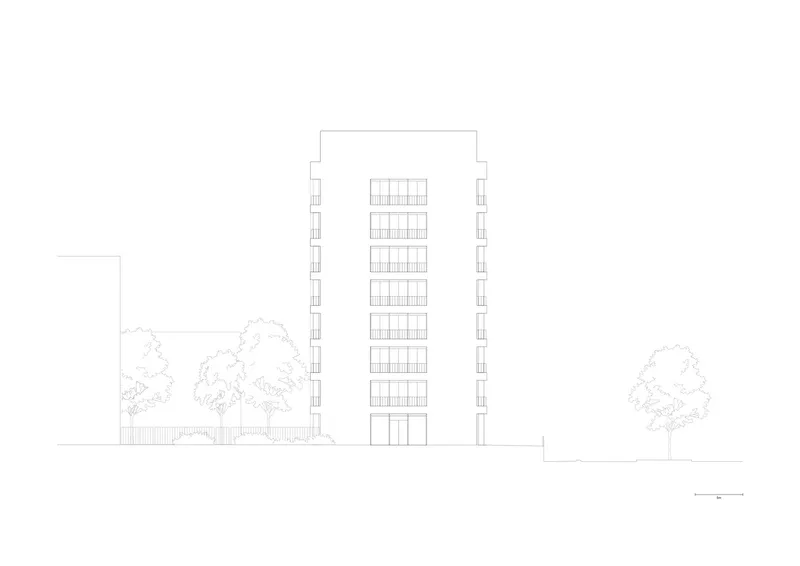
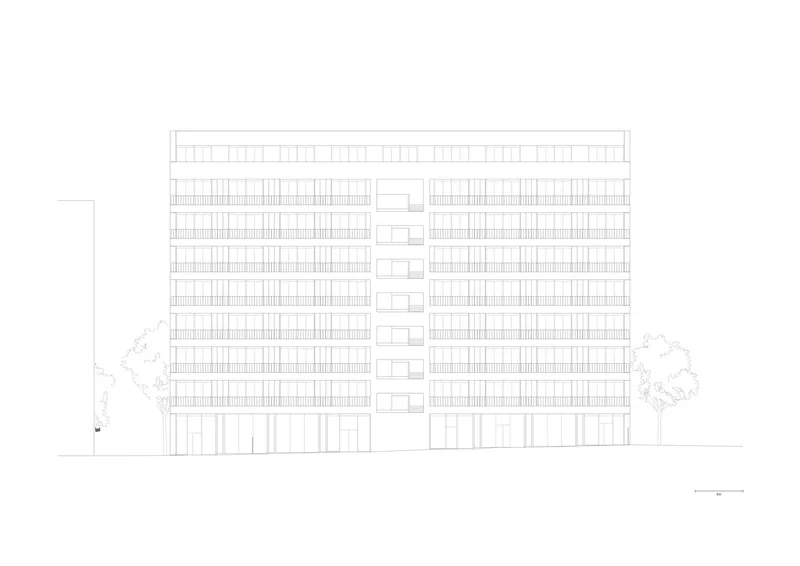
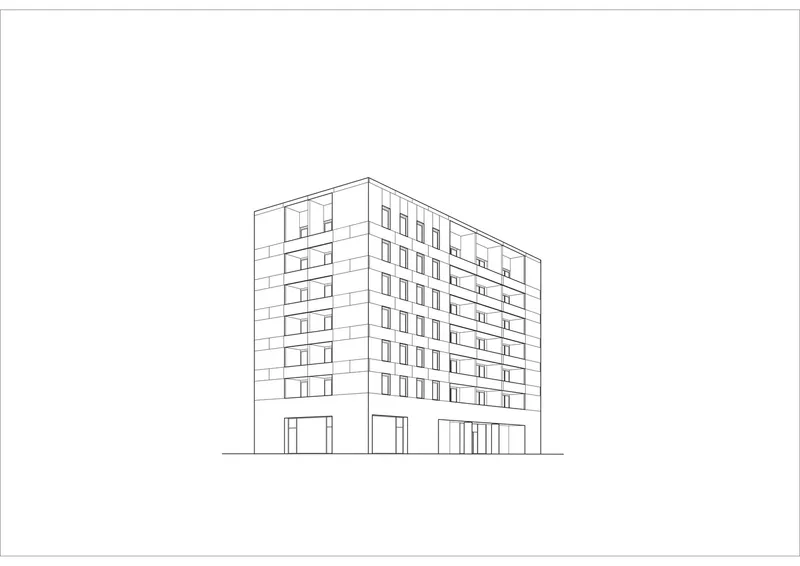
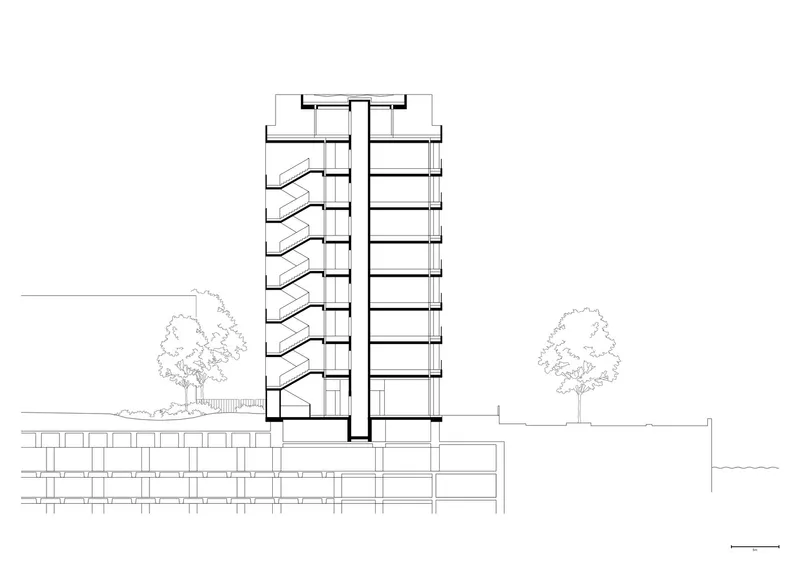
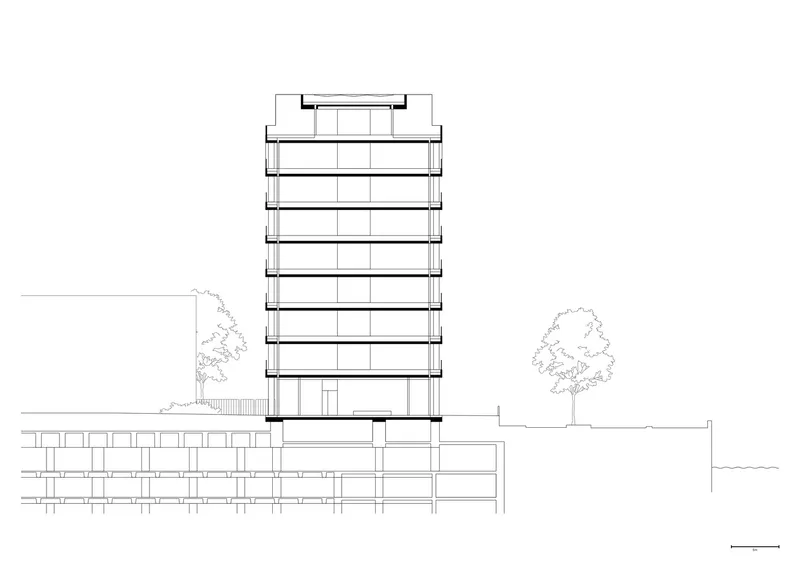
The drawings reveal the organizational logic beneath the visual variety. Axonometric views show how colored volumes cluster around central courtyards, each tower stepping to a different height. Floor plans demonstrate efficient central-core circulation serving apartments of varied size, while the elevations confirm the careful calibration of window proportions and balcony projections. Sections cut through the towers expose the plinth as a continuous datum: below it, commercial life; above it, a diverse landscape of residential types.
The site plan is especially telling. Rather than a single superblock, the quarter is organized as a series of discrete volumes along a permeable street grid. Pedestrian routes thread between buildings in multiple directions, and the ground-floor landscape wraps continuously from building to building. It is a plan that prioritizes porosity, allowing the neighborhood to stitch into the larger Confluence grid rather than sitting apart from it.
Why This Project Matters
Large masterplan parcels handed to a single firm tend to produce one of two results: either a numbing repetition of identical blocks or a self-conscious potpourri of shapes that never cohere. Chipperfield's Lyon Confluence quarter finds a disciplined middle path. A shared material language and structural logic hold the composition together, while variations in massing, fenestration, and balcony rhythm give each tower enough autonomy to register as its own building. The result is a quarter that reads as a neighborhood, not a campus.
For anyone working on mixed-use housing at urban scale, the project offers a useful counter-argument to the prevailing trend of maximizing visual difference between adjacent buildings. Sometimes the more generous move is to build a family: related forms that share a common DNA while allowing residents, and passersby, to orient themselves through subtle distinctions rather than spectacular gestures.
Lyon Confluence Mixed-Use Quarter by David Chipperfield Architects. Lyon, France. Photography by Simon Menges.
About the Studio
Share Your Own Work on uni.xyz
If projects like this are the kind of work you want to make, uni.xyz is a place to publish your own, find collaborators, and enter design competitions.



Popular Articles
Popular articles from the community


The Earth Pod: 3D Printed Homes for Resilient Refugee Communities
The Earth Pod reimagines refugee housing through 3D printed homes made from clay, combining resilience, self-sufficiency, and rapid shelter.

Co-life: Sustainable Architecture for Age-Friendly Community Living
Co-life reimagines sustainable architecture for seniors through courtyards, rammed earth, shared gardens, and spaces designed for belonging.

Hill & Cross Opera: Sculptural Opera House Architecture Shaped by Tallinn’s Landscape and Identity
Hill & Cross Opera reimagines opera house architecture in Tallinn through its sculptural hill, civic plaza, glass wave and a luminous cross.
EW PARK: Sustainable Architecture Reimagines the Future of Urban Parking
EW PARK reimagines city parking as a modular wooden tower combining automation, solar energy, electric mobility, and adaptable urban design.
Similar Reads
You might also enjoy these articles


Hodi-Mandai Geram
Project Function: Preservation and revitalization of the Intangible heritage and socio-spatial identity of the Hodi by Housing, Cultural Memory Center, Sacred Grove, landscape, local tourism economy


Olio Towers: A Mid-Rise for Performers That Fuses Housing, Rehearsal, and Stage
Located blocks from Houston's Theater District, this modular tower stacks living units around a central performance atrium.

Oasis: Modular Green Housing Carved into Dhaka's Urban Fabric
A shortlisted Plugin Housing entry reclaims unauthorized settlements in Dhaka with stepped concrete volumes, green roofs, and ventilation-driven design.

Black Hole: A Floating Megastructure for the Post-Physical Era
Emiliano Mazzarotto envisions a spherical, self-scaling arena where e-sports, digital hotels, and holographic stadiums replace traditional public space.
Explore Residential Building Competitions
Discover active competitions in this discipline


Challenge to design mud housing for contemporary communities


Challenge to reimagine the Iron Throne


Photograph architecture without architects


Illustrate the lost glory of Angkor Wat - Render Challenge
Comments (0)
Please login or sign up to add comments
No comments yet. Be the first to comment!