
M-Nasti
UNDER A ROOF: Modular housing for migrants in Indian cities

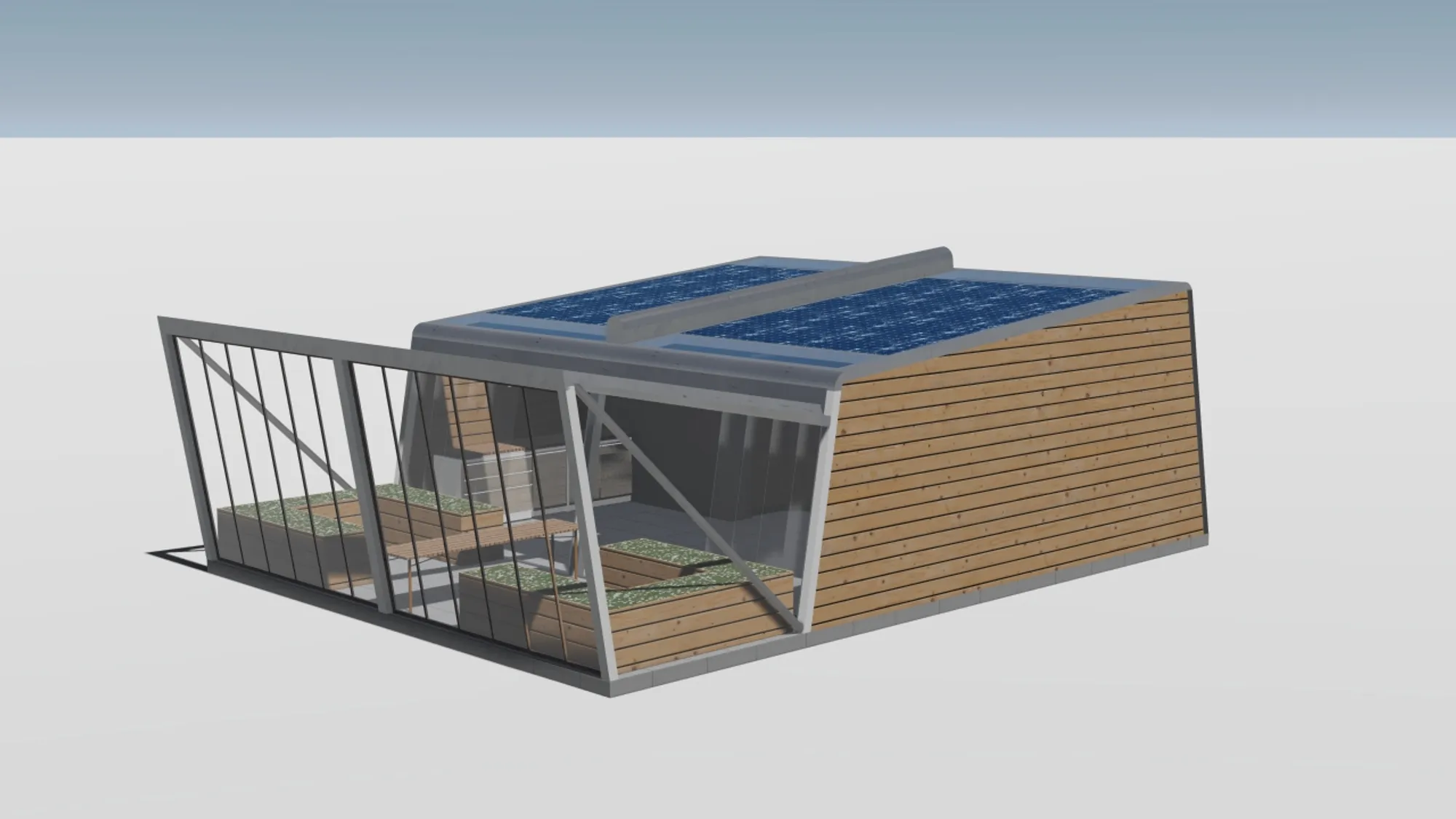
The purpose of the project is construct a residential building that is suited for migrant families, a small model (A) for a family of 4-6 members and a big model (B) for a family of 6-8. This way several generations are able to share their home.
The big model B is the double size of the small model A, meaning that every part is doubled: two bathrooms, two kitchens, and so on. It is a simple idea with optimal outcome.
THE HOUSE
The house is divided in three sections:
- Steel
- Aluminium
- Sandwich element (polyurethane, wood/metal)
- Glass
- Plastic
THE WALLS
The main construction is made in steel. The walls are made of sandwich elements consisting of a layer of polyurethane sandwiched into a layer of wood on both sides. The wood is treated to be water repellent.
THE ROOF
The roof is constructed from the same materials as the walls except that the top layer is made of thin metal plate instead of wood.
In the roof there are sun panels. We have chosen to turn the roof towards the south so that it will have optimal use of the sun during the day time.
Inside the house is a ventilation system that can be seen on the roof.
THE GREENHOUSE
The vertical parts of the greenhouse is constructed from thick (3 mm) soft plastic, this is cheaper than glass and be rolled up when needed to. The horizontal parts are made of glass.
Underneath the greenhouse is a container for collecting rain water. Through a recycling system the water will used for bath, common use and watering the greenhouse. After first use the water can be reused again in the toilet.
The family’s harvest from the greenhouse can also be sold on the market place, and afterwards to the supermarket.
This can all help the economy of a family of little means.
The surplus of vegetables and fruits can be saved in the store rooms with refrigerators beside the center square.
THE OUTSIDE AREAS
Between the houses are areas for recreation and different activities. The many water features are perfect for when the children are playing and all kinds of fun.
THE CENTER SQUARE
Center in the settlement is the round center square where the inhabitants can meet for activities, like sale of the surplus of vegetables and fruits from the greenhouses of the families.
On the right side is a supermarket for daily use. On the left side is a help center with doctors, dentist and so on. Beside these are the cooling rooms for storing vegetables and fruits.
On either side are two parking areas for the inhabitants and their guests. The idea is to keep the cars out of the central city area which is exclusively for pedestrians and bicycles.



Popular Articles
Popular articles from the community


Co-life: Sustainable Architecture for Age-Friendly Community Living
Co-life reimagines sustainable architecture for seniors through courtyards, rammed earth, shared gardens, and spaces designed for belonging.

The Ocean Hive: Sustainable Architecture for a Self-Sufficient Civilization at Sea
The Ocean Hive imagines sustainable architecture at sea, where modular habitats, algae, wave power and ocean waste sustain a growing colony.

The Earth Pod: 3D Printed Homes for Resilient Refugee Communities
The Earth Pod reimagines refugee housing through 3D printed homes made from clay, combining resilience, self-sufficiency, and rapid shelter.

Co-Life: Senior Housing Design That Reconnects Older Adults With the City
Co-Life reimagines senior housing design through healing gardens, shared streets, workshops, and a sustainable community across generations.

Similar Reads
You might also enjoy these articles

Day and Night Park: A Time-Based Urban Newsstand in Beijing
A temporary urban newsstand in Beijing blending travel, light, and reading through poetic colors, compact form, and community-focused design.

Modernist Patio Renovation in El Masnou, Barcelona by Oliver Segura Arquitectura + Cebrià Arquitectura
Modernist patio renovation blending tradition and innovation with a movable pool, leveled floors, and Catalan materials in El Masnou.

Alto Residencial Coop: Cooperative Housing Development in Santiago de Compostela by Carbajo Barrios Arquitectos
A linear cooperative housing complex blending white volumes and perforated metal façades, enhancing community living, natural light, privacy, and urban integration.
Vil Genis School by BPA ARCHITECTURE – Massy, France
Vil Genis School in Massy, France, features sustainable design, south-facing classrooms, community integration, accessible spaces, and modern educational architecture.






Comments (0)
Please login or sign up to add comments
No comments yet. Be the first to comment!