
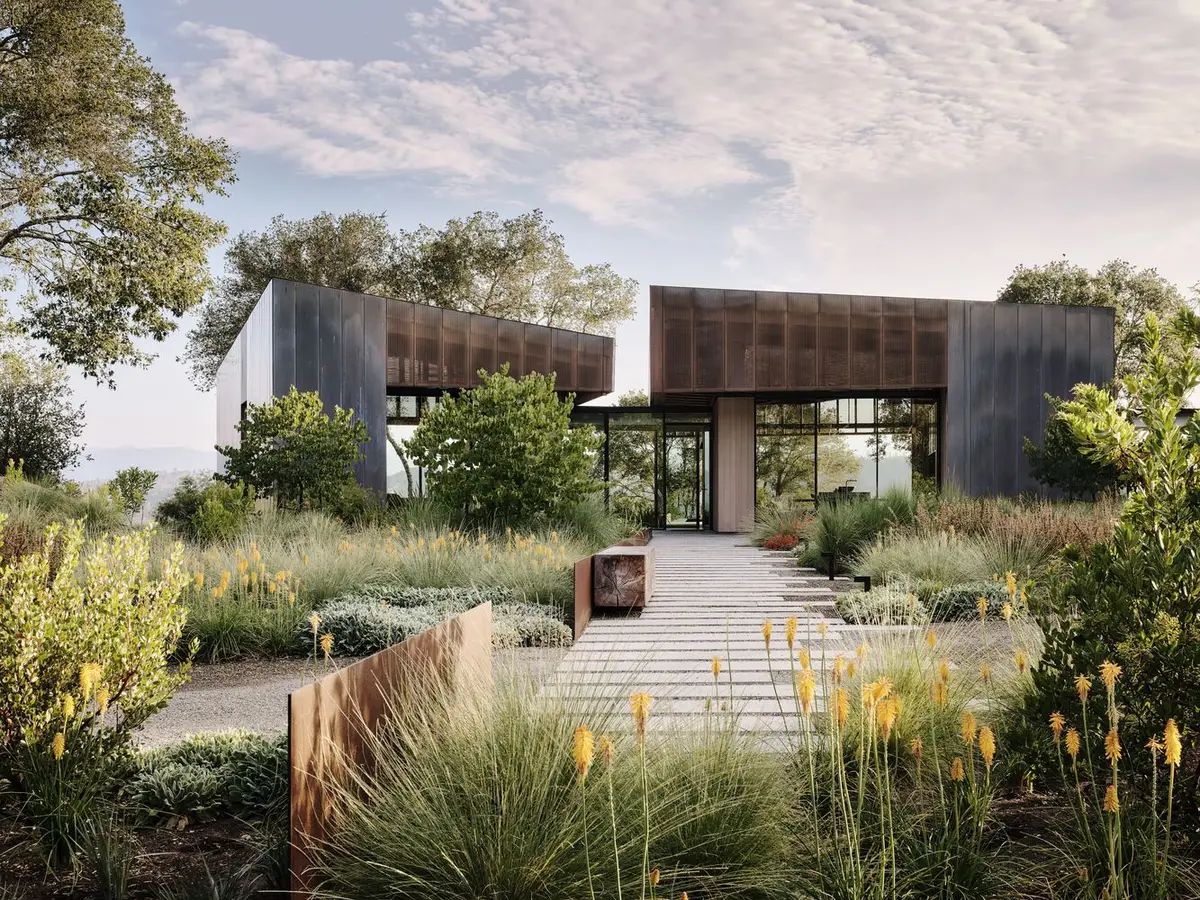
Madrone Ridge by Field Architecture: A Harmonious Dialogue Between Architecture and Nature
Madrone Ridge seamlessly integrates with nature, embracing water cycles, sustainable design, and biophilic architecture for a harmonious living experience.


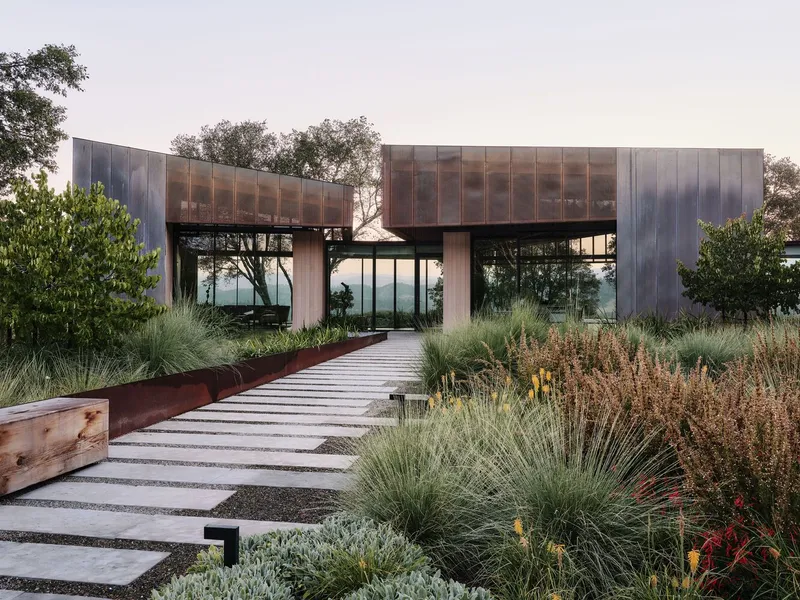
Madrone Ridge, designed by Field Architecture, is a stunning residential retreat nestled within the valleys of Northern California. Inspired by the natural hydrology of the region, the home seamlessly integrates with the landscape, embracing the seasonal cycles of water and ecology.
A Home Rooted in Nature
Situated within a 27-square-mile watershed, this residence is deeply connected to its surroundings. The nearby creek, a tributary of the Russian River, sustains the region’s rich agricultural lands, providing essential nutrients to local farms and vineyards. The home’s design is a response to this dynamic environment, acknowledging the rhythm of seasonal rainfall and drought.
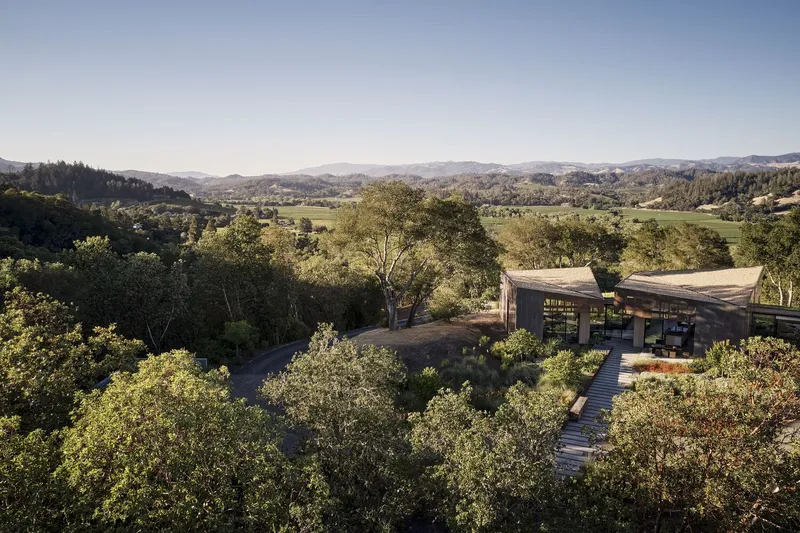
Rather than drawing from traditional Sonoma County architecture or agrarian influences, Field Architecture looked to the wild, untamed landscapes of the region for inspiration. The house is carefully positioned to blend with its surroundings, nestled between the forest’s edge and the valley floor, creating a unique transitional space where human habitation and wildlife coexist.
Water as a Design Principle
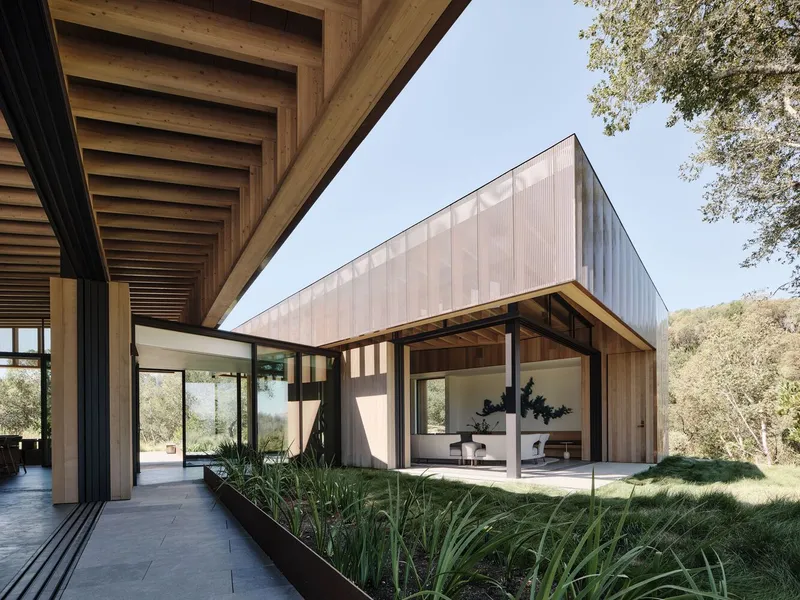
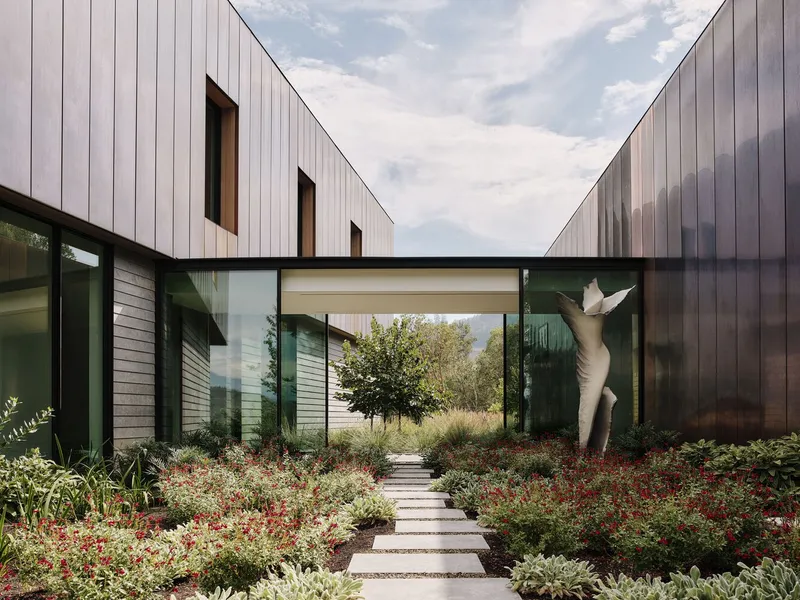
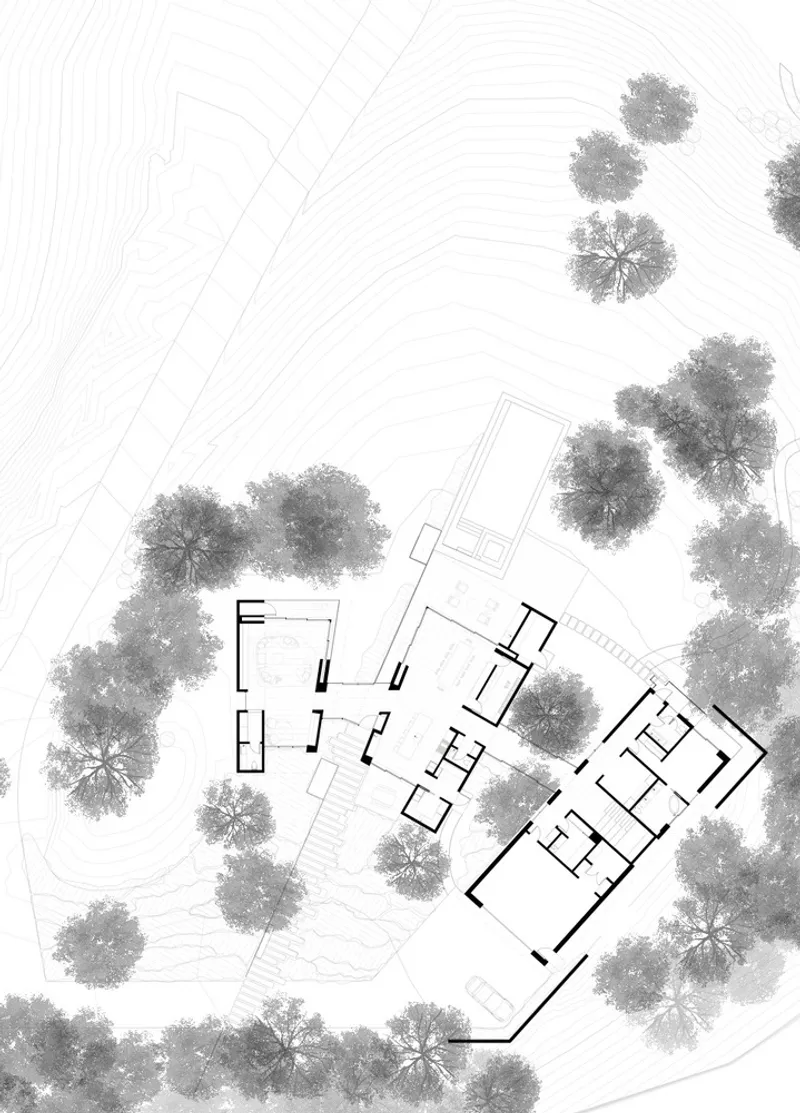
The architectural concept of Madrone Ridge is shaped by the presence and absence of water. Designed to echo the natural hydrological systems, the home’s layout metaphorically channels water through its spaces. The residence consists of three distinct pavilions, each strategically positioned to reflect the movement of water:
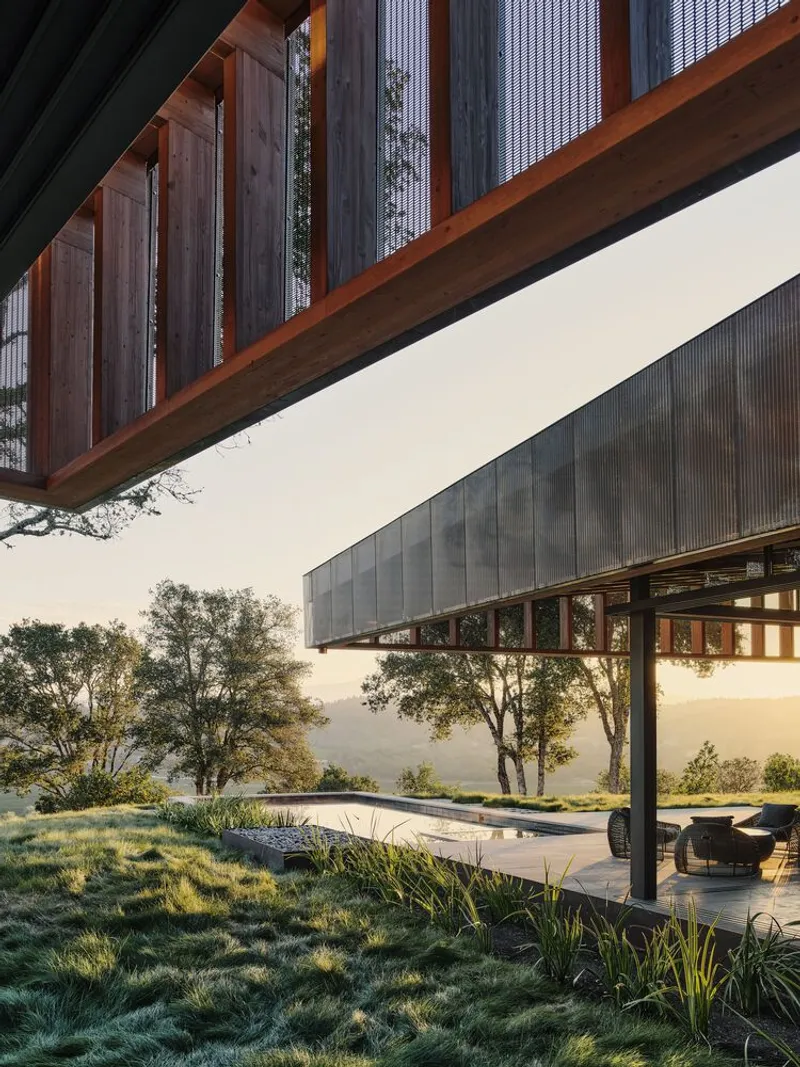
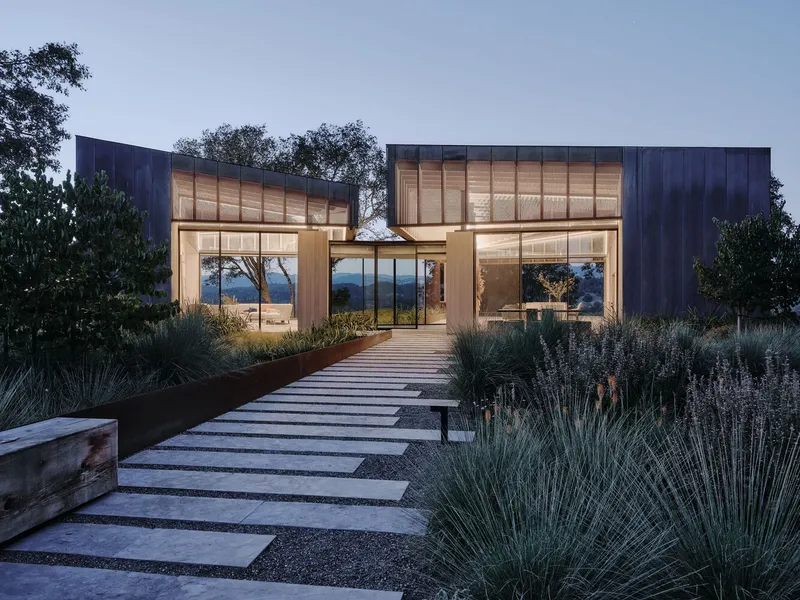
- Two living pavilions, appearing as if they are stones in a river, are set apart to allow light and air to flow through.
- A third pavilion, housing the bedrooms and an office, stands slightly apart, engaging with the landscape on a more intimate scale.
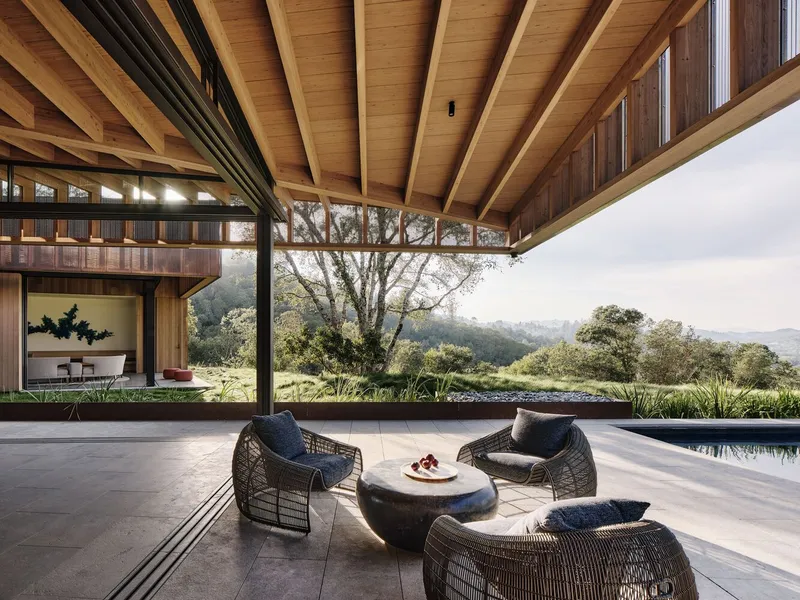
The sloping roofs serve as natural catchments for rainwater, directing it into basins filled with river rocks that gradually replenish the underground aquifer. During the dry season, these basins serve as symbolic reminders of the life-giving waters that return each year.
Blurring the Line Between Indoors and Outdoors
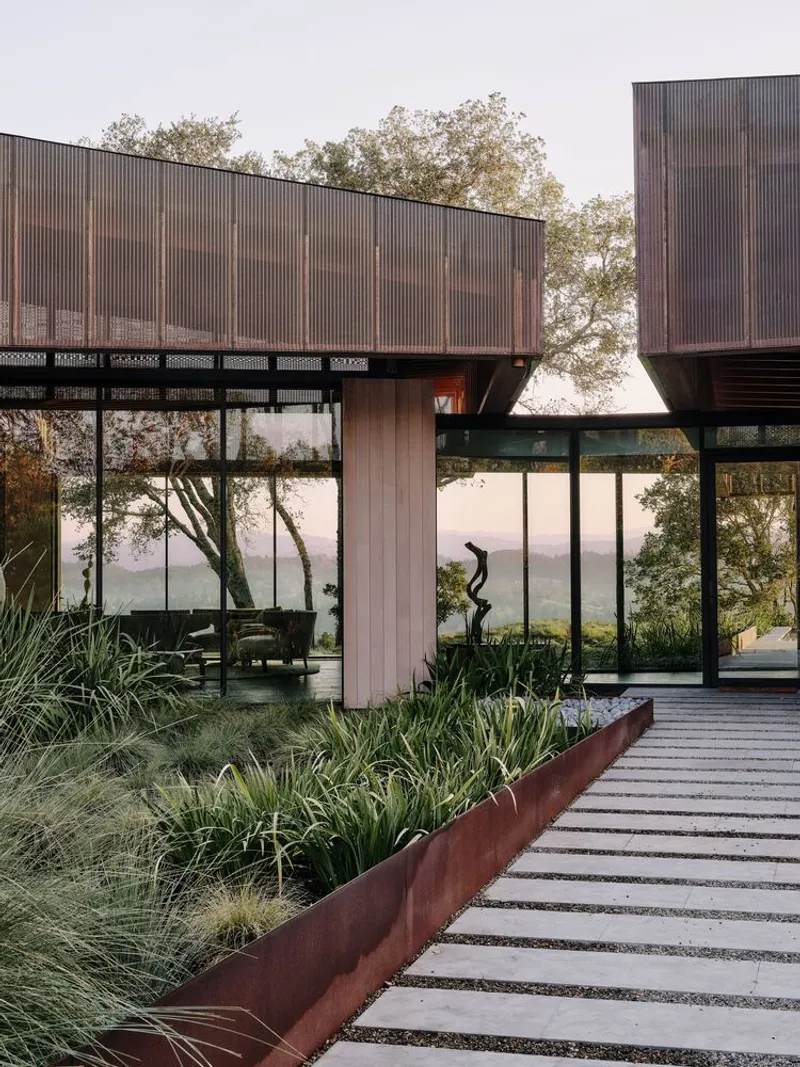
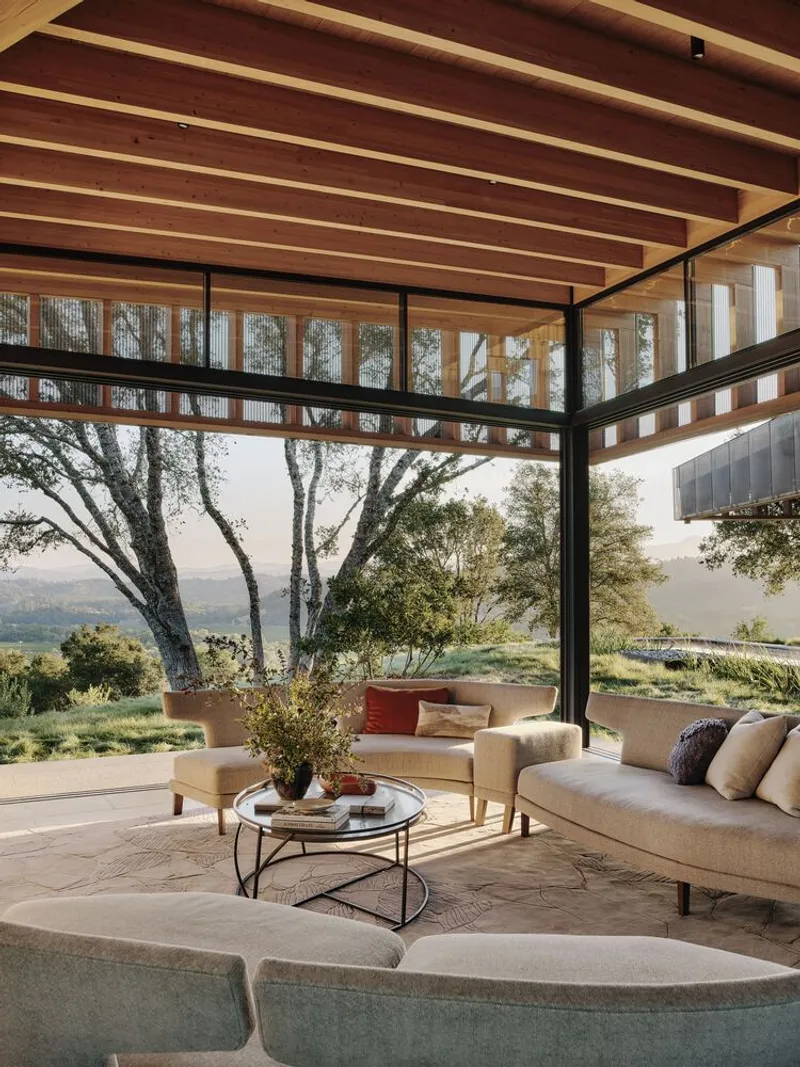
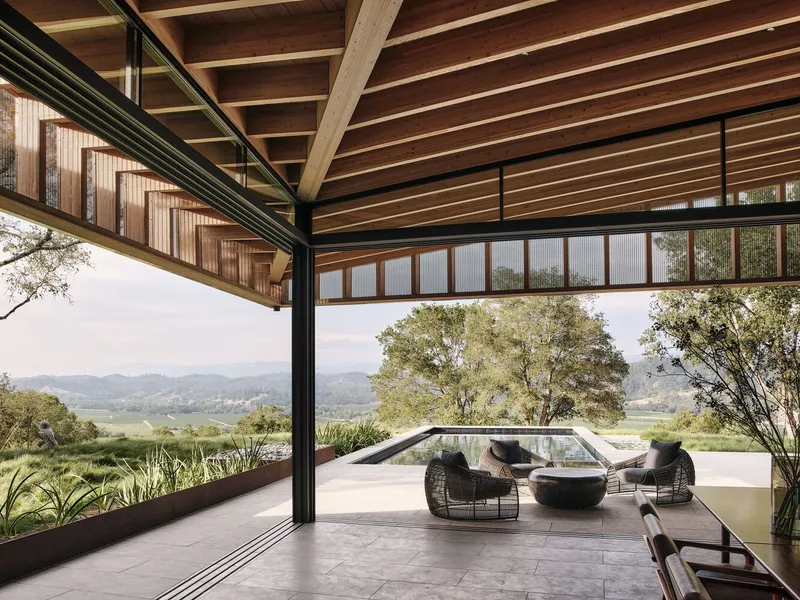
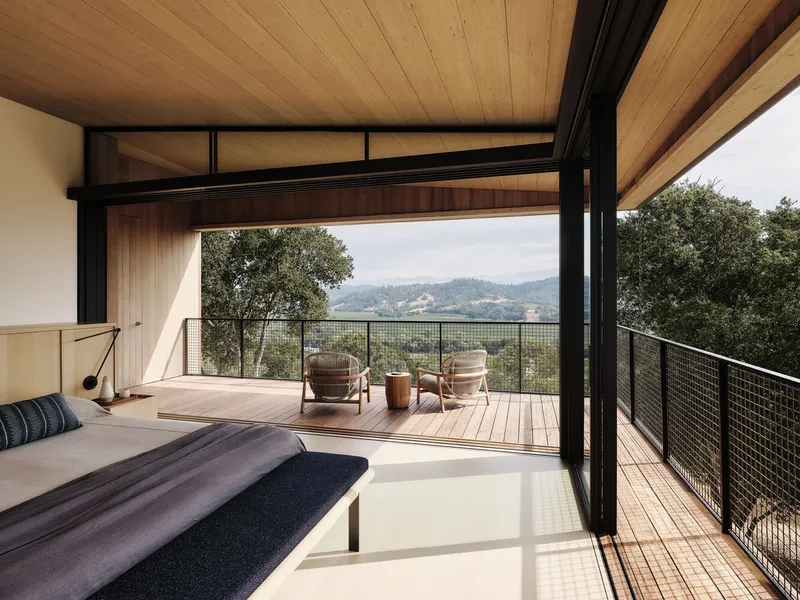
Inside Madrone Ridge, the design fosters a seamless connection between interior and exterior spaces. Large, sliding doors disappear, allowing the living spaces to extend effortlessly into the surrounding forest and vineyards. Copper screens at the edges of the roof filter sunlight, casting intricate shadows that mimic the patterns of nearby trees.
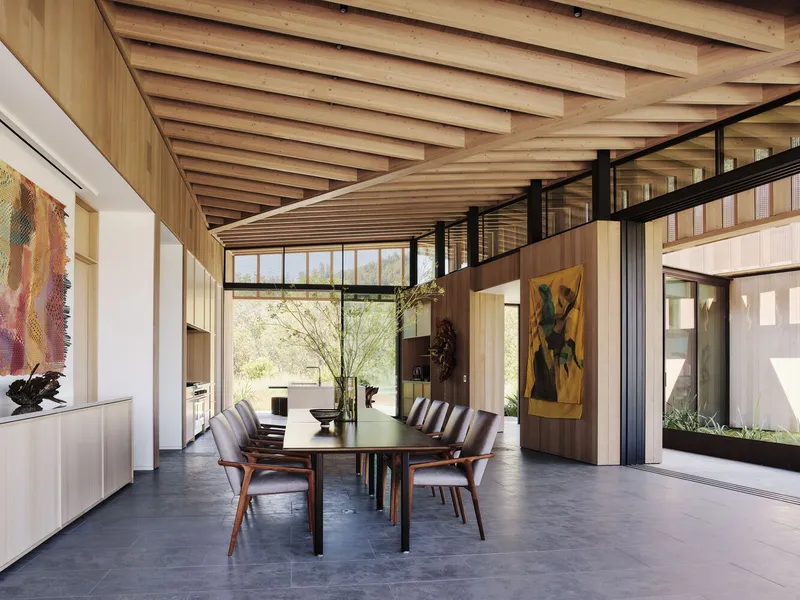
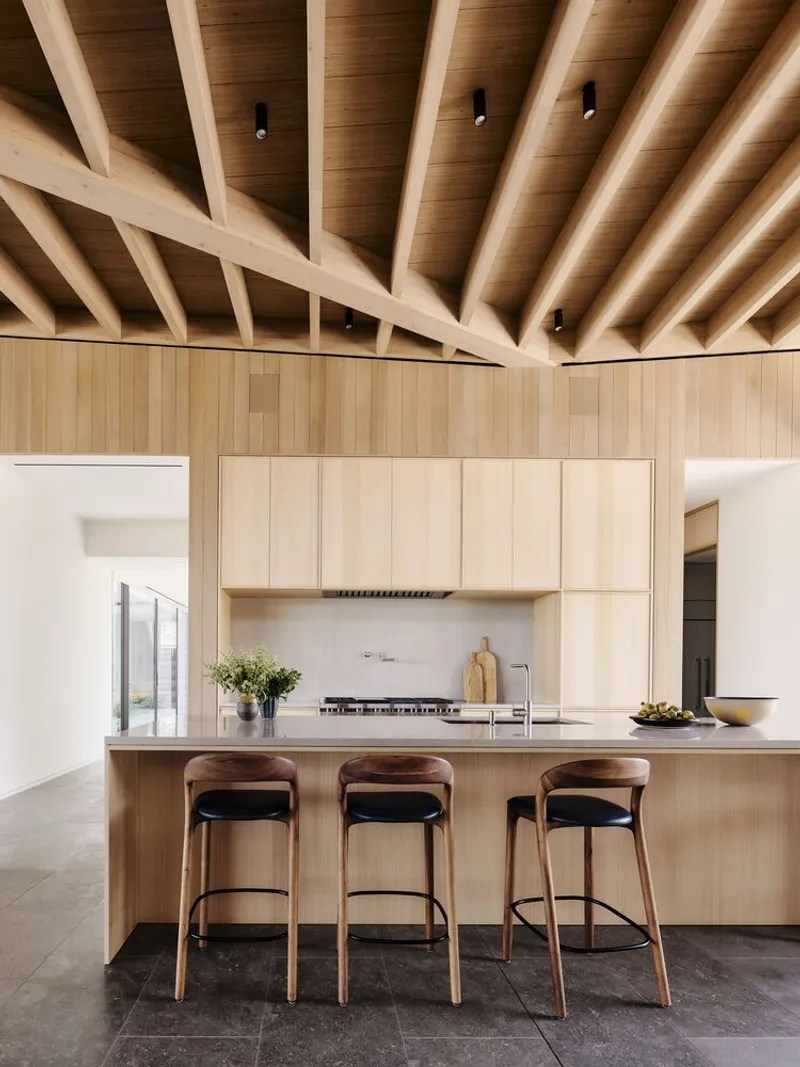
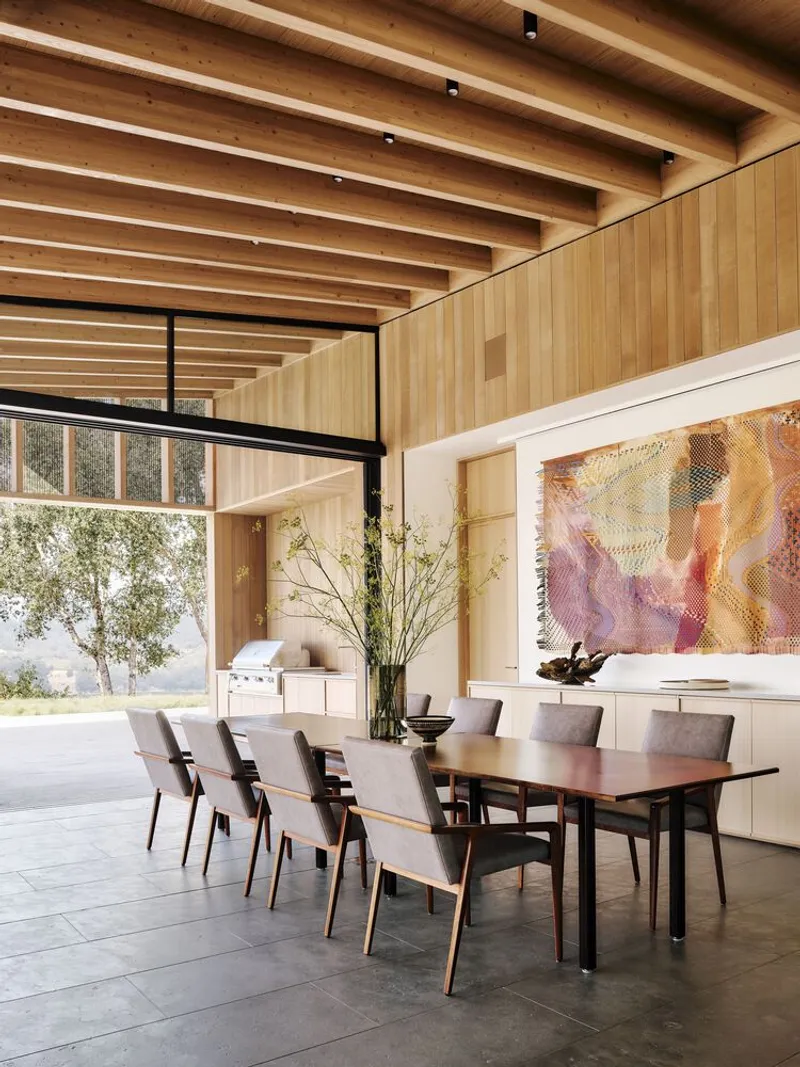
The kitchen and dining areas are located in one pavilion, while a library and lounge spaces occupy another. Every space is designed to maximize natural light and ventilation, reducing the home’s dependence on artificial energy sources. The materials—stone, wood, and copper—are chosen to patina gracefully over time, mirroring the evolving landscape.
Sustainability and Resilience
Beyond its poetic relationship with water, Madrone Ridge is built to withstand the climate challenges of Northern California. The copper-clad exterior is not only visually striking but also provides resistance to fire, rain, and sun exposure. Indoors, muted stone floors and locally sourced wood celebrate the region’s natural beauty.
A carefully framed staircase window offers a moment of reflection, providing a framed view of the dense madrone and oak trees that surround the house. Throughout the design, Field Architecture has crafted a home that is both shelter and sanctuary, engaging deeply with the rhythms of nature.
A New Model for Contextual Living
By honoring the seasonal changes, topography, and hydrological cycles of its setting, Madrone Ridge stands as a model of sustainable architecture. The home doesn’t impose itself on the land—it listens, adapts, and coexists.
All Photographs are works of Joe Fletcher


Popular Articles
Popular articles from the community


FCC Arquitectura Expands a Portuguese Granite House with a Board-Marked Concrete Wing
In Portugal, JV House pairs a cleaned-up whitewashed and granite dwelling with a timber-shuttered concrete extension, courtyards and a garden pool.


Aquadapt: An Underwater Habitat That Rewrites Its Rooms by the Hour
Curved modules ring the seabed while one shell shifts from breakfast room to cinema, farm and football pitch as residents' needs change.

Singing Woman: An Opera House That Performs Before the Curtain Rises
Ovidiu Cristian Pavel's conceptual opera house translates Estonia's choral identity into a sculpted waterfront landmark facing the Baltic Sea.

graciastudio Turns a Viewless Tijuana Lot Inward Around a Courtyard of Concrete, Timber and Trees
In Tijuana, Jorge Gracia's GA2 House stacks a timber-clad private floor over exposed concrete and replaces a missing view with a planted interior patio.

Similar Reads
You might also enjoy these articles


Hodi-Mandai Geram
Project Function: Preservation and revitalization of the Intangible heritage and socio-spatial identity of the Hodi by Housing, Cultural Memory Center, Sacred Grove, landscape, local tourism economy


Olio Towers: A Mid-Rise for Performers That Fuses Housing, Rehearsal, and Stage
Located blocks from Houston's Theater District, this modular tower stacks living units around a central performance atrium.

Oasis: Modular Green Housing Carved into Dhaka's Urban Fabric
A shortlisted Plugin Housing entry reclaims unauthorized settlements in Dhaka with stepped concrete volumes, green roofs, and ventilation-driven design.

Black Hole: A Floating Megastructure for the Post-Physical Era
Emiliano Mazzarotto envisions a spherical, self-scaling arena where e-sports, digital hotels, and holographic stadiums replace traditional public space.

Explore Natural Architecture Competitions
Discover active competitions in this discipline

Challenge to reimagine the Iron Throne

Photograph architecture without architects

Illustrate the lost glory of Angkor Wat - Render Challenge

Design challenge to reuse E-waste
Comments (0)
Please login or sign up to add comments
No comments yet. Be the first to comment!