

maumstudio Turns a 68-Square-Meter Seoul Pop-Up into a Candle-Lit Manifesto for Human Rights
CHO SHOP commemorates 50 years of Amnesty International Korea through color, craft, and candlelight in Mapo-gu, Seoul.


A pop-up store for a human rights organization sounds like it could go two ways: earnest and forgettable, or provocative and commercial. maumstudio found a third path. CHO SHOP, built to mark Amnesty International Korea's 50th anniversary, is a 68-square-meter retail interior in Seoul's Mapo-gu district that treats the candle, Amnesty's enduring symbol, as both a literal product and an organizing design principle. Under the creative direction of Dalwoo Lee, the team translated the organization's core values (pride, inclusion, courage, solidarity, equality, love) into a spatial experience that feels simultaneously playful and deliberate.
What makes the project worth studying is its refusal to separate message from material. Every surface, from the warm terracotta plaster walls to the green-slatted ceiling and blue rubber flooring, carries a saturated hue that reads as optimistic without veering into kitsch. The house-shaped timber volumes, the layered horizontal cladding, the niches carved into walls for individual candles: each detail serves a dual function as retail display and architectural gesture. It is a small space asked to do heavy symbolic work, and it delivers.
Street Presence and the Brick Threshold
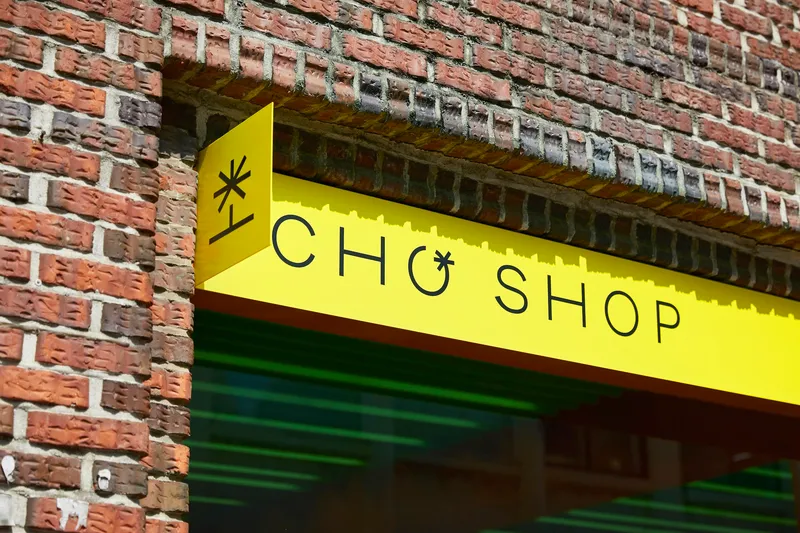
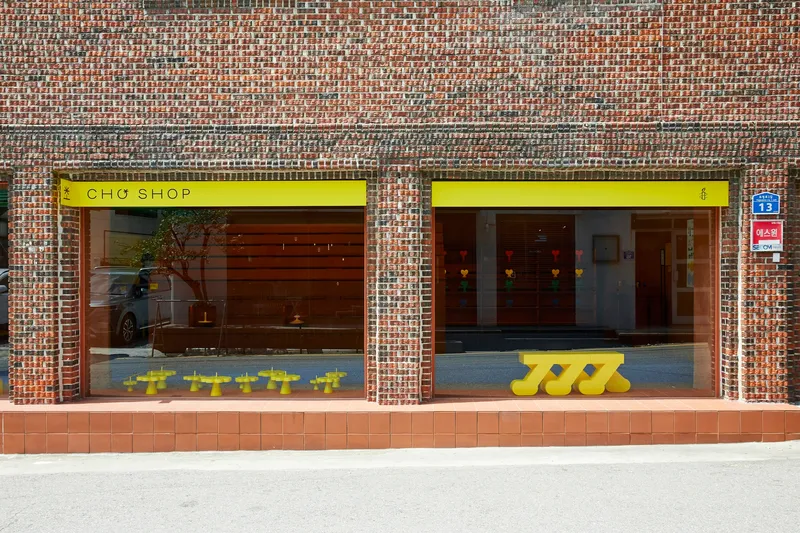
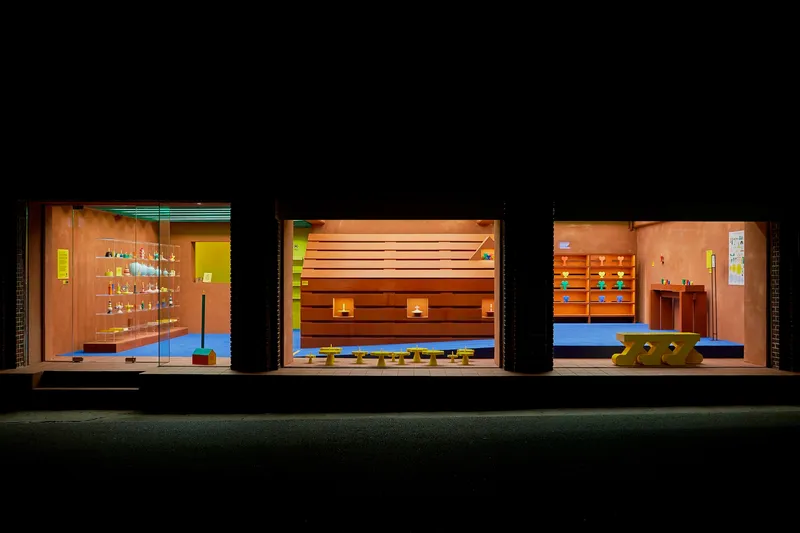
The existing building wears a weathered brick facade with a geometric mortar pattern that maumstudio wisely left intact. A yellow signage blade projects from the corner, acting as a beacon without competing with the masonry's texture. Full-height glazing along the street front turns the interior into a glowing vitrine at night, each of the three bays revealing a different slice of the composition: timber furnishings, blue flooring, colored objects on shelves. The decision to let the exterior remain raw and the interior burst with warmth creates a clear threshold between the city and the world of the pop-up.
The Horizontal Wood Facade Within
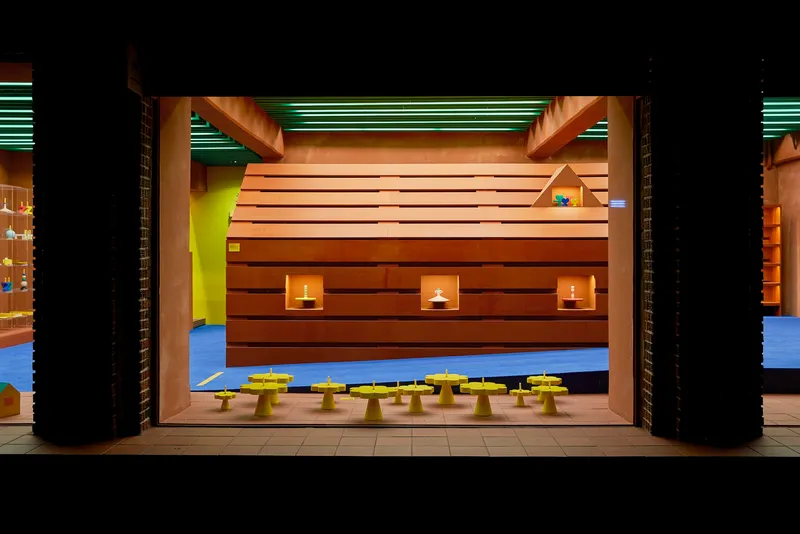
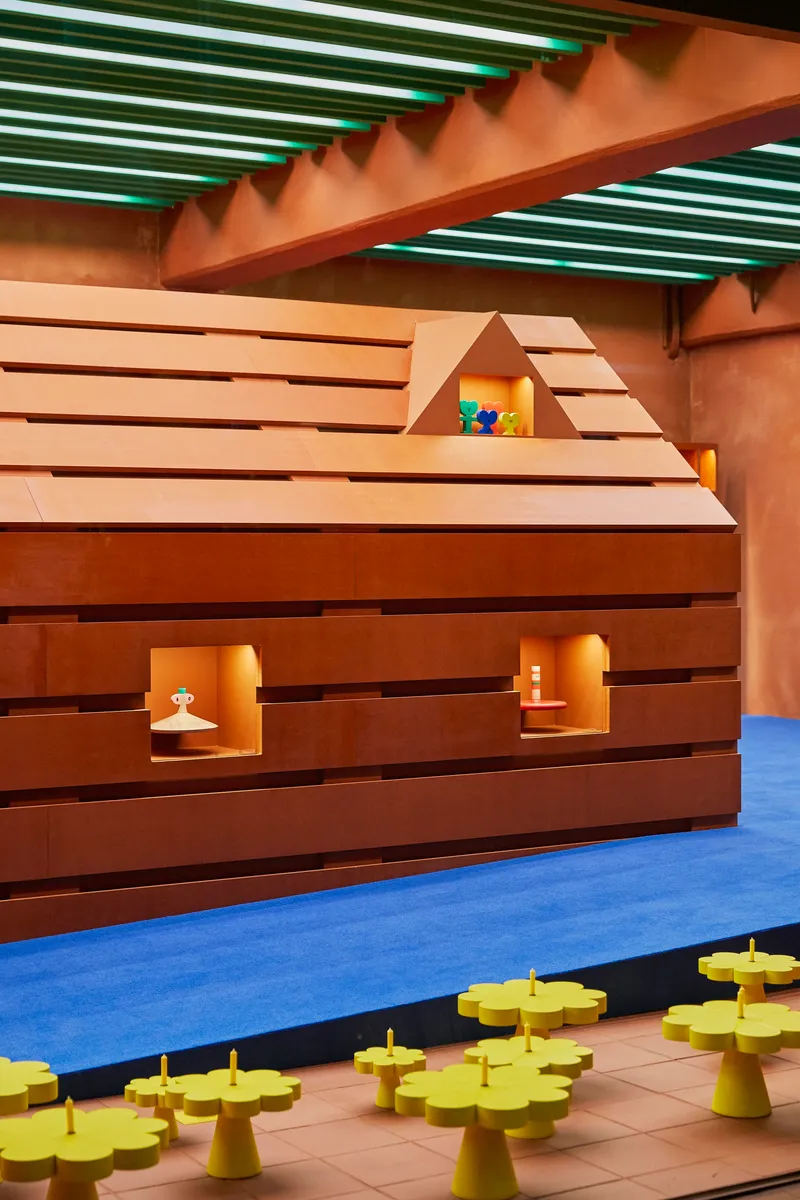
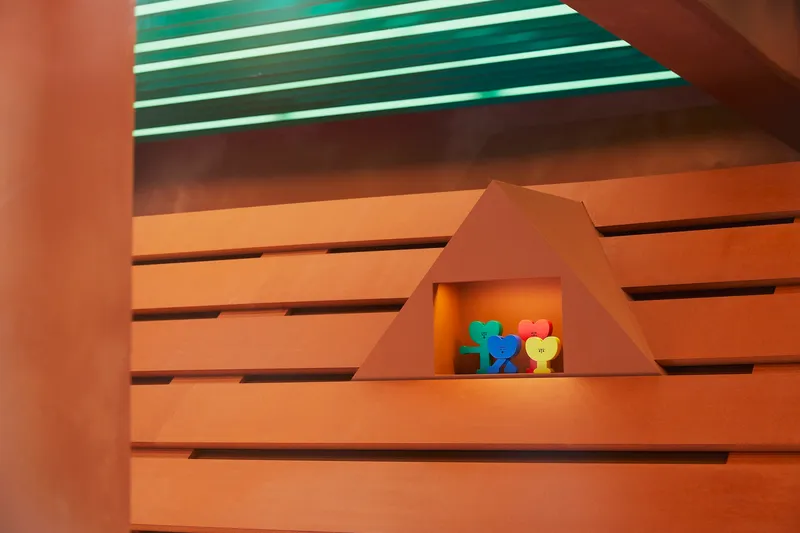
Inside, a long wall of horizontal wood planks operates as both surface and furniture. Square window cutouts and triangular recesses punctuate the cladding, transforming a flat plane into a display wall that recalls a doll's house or an advent calendar. At night, candles placed in the niches glow through the openings, returning the project to its symbolic core. The planks are closely spaced but not seamless, allowing thin shadows to fall between them and giving the wall a tactile grain that invites touch.
Flanked at its ends by the building's original black brick columns, this timber volume reads as a long, inhabitable piece of furniture inserted into the existing shell. It is the project's central spatial move, and it works because of restraint: the material palette stays tight, and the geometry stays legible.
House Shapes and Symbolic Volumes
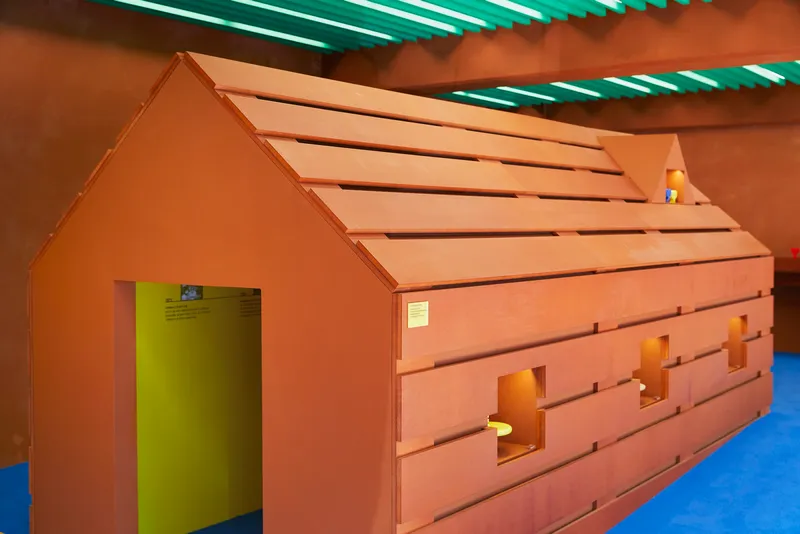
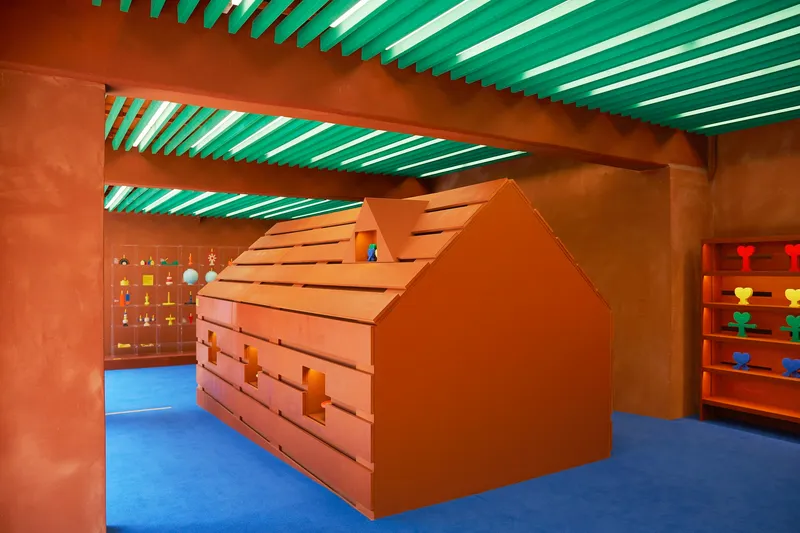
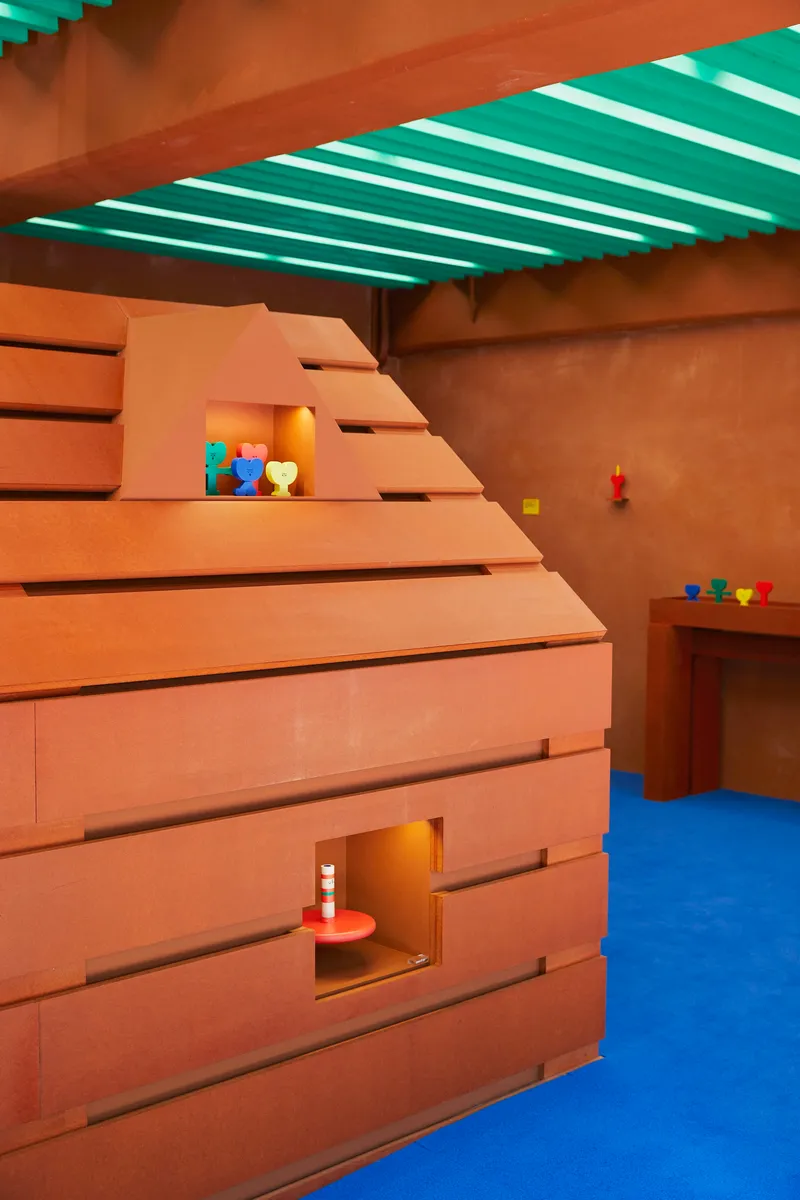
Several freestanding structures within the shop take the form of gabled houses. One, clad in layered timber with a doorway revealing a lime green interior, functions as a storage volume and visual anchor. Another, with slot openings and a stepped profile, doubles as shelving for colorful sculptural objects. The house archetype is the oldest shorthand for shelter, safety, and belonging, and maumstudio deploys it without irony. In the context of a human rights organization, the form carries genuine weight.
These miniature architectures also solve a practical problem: in a 68-square-meter room, they subdivide space without adding walls, creating pockets of intimacy and moments of discovery as visitors circulate around and through them.
Color as Conviction
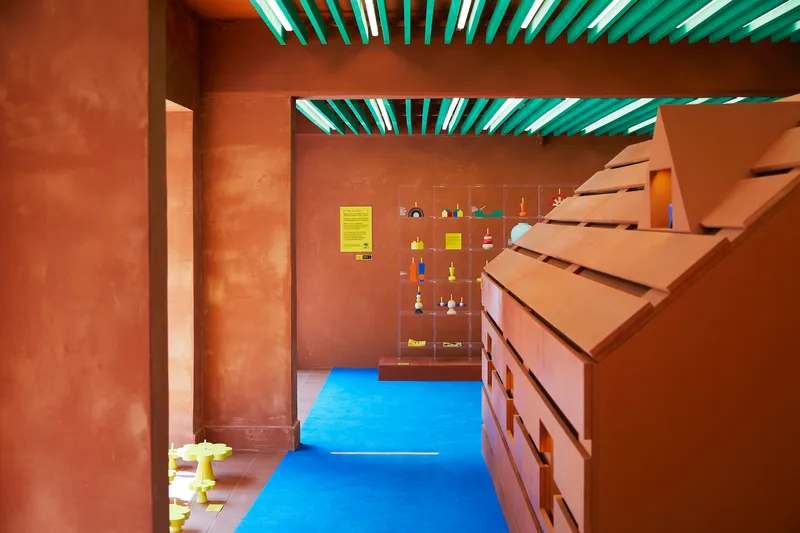
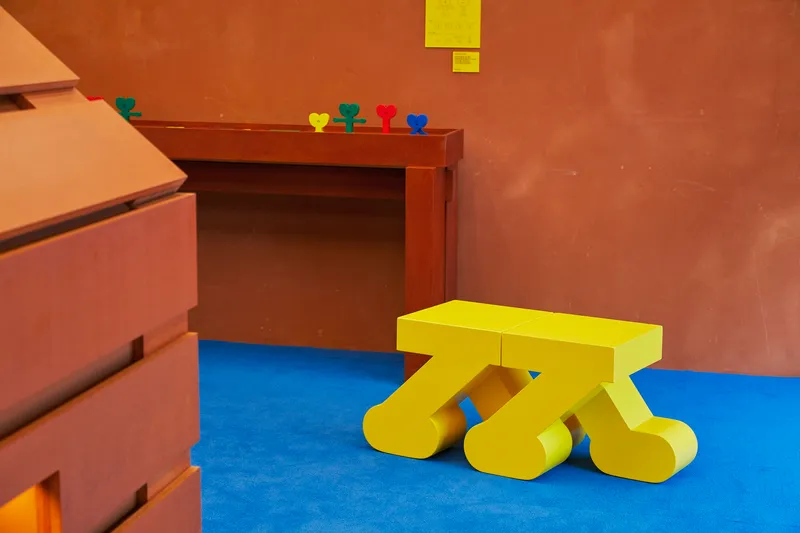
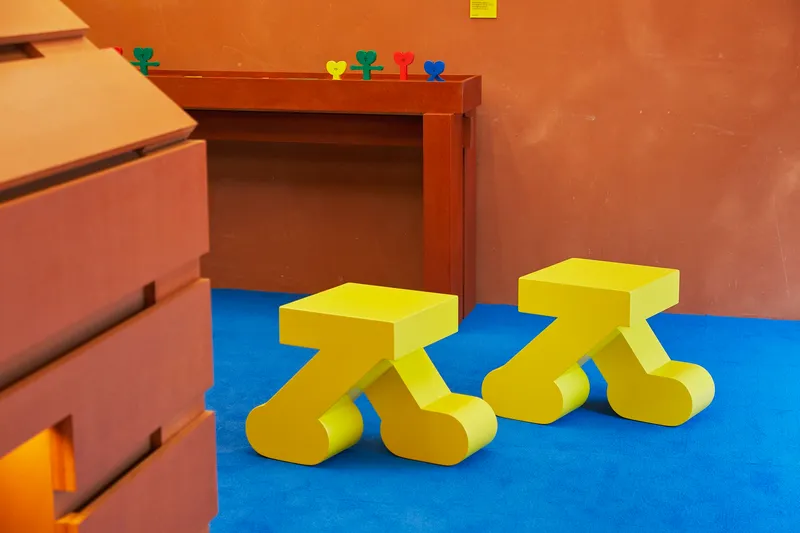
The palette is bold but controlled. Ochre and terracotta plaster coat the walls, giving the space a warm, almost earthy base tone. Blue rubber flooring underfoot adds a cool counterpoint, while the green slatted ceiling strips filter daylight and cast fine linear shadows across the room. Yellow appears in the sculptural benches and stools, their curved legs and rounded forms introducing a softness that offsets the rectilinear timber structures.
Each color seems to correspond loosely to one of the six keywords guiding the design, though maumstudio wisely avoids making the mapping explicit. The result is an environment that feels emotionally rich without requiring a decoder ring.
Display and the Act of Looking
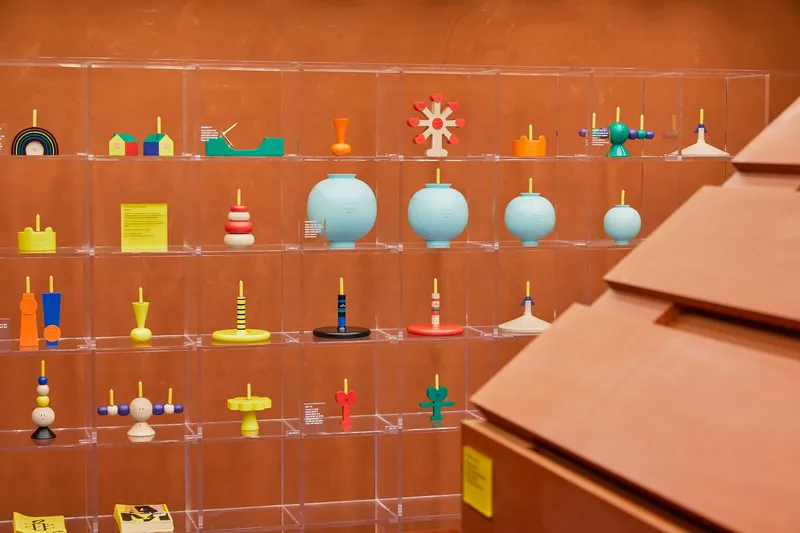
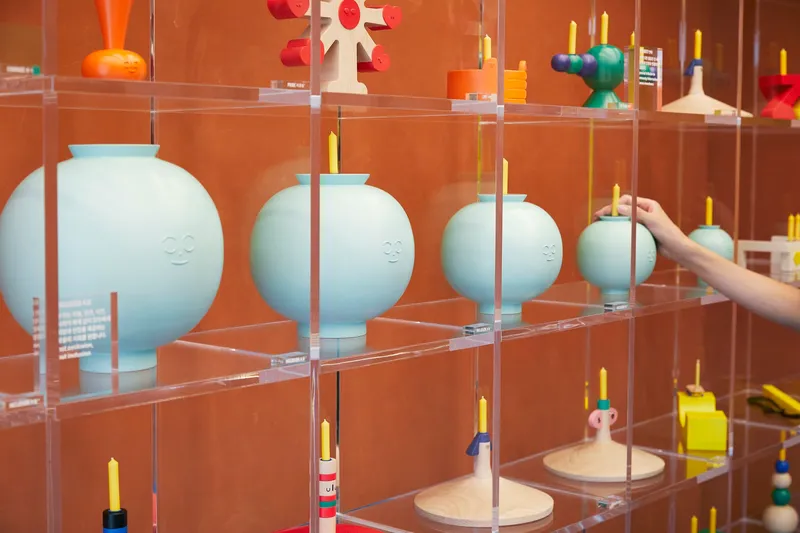
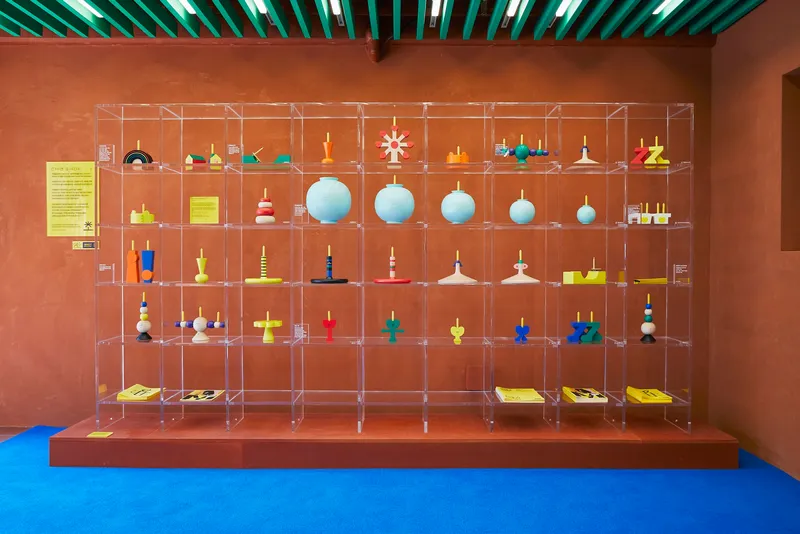
Clear acrylic shelving recurs throughout the shop, holding spinning tops, white ceramic vessels, and candleholders. The transparency of the display system allows the products to appear almost suspended, foregrounding shape and color over material support. Against the terracotta walls, the effect is striking: objects float in warm light, and the hand reaching into one shelf in the photographs feels less like a customer browsing and more like someone participating in an installation.
A grid of these transparent shelving units fills one wall, stacked beneath the green ceiling lights. The repetition gives the display an almost devotional quality, each cell holding a single object the way a reliquary holds a fragment. For a store whose products are designed to carry values like solidarity and courage, this intensity of presentation is appropriate.
Thresholds, Niches, and Framed Views
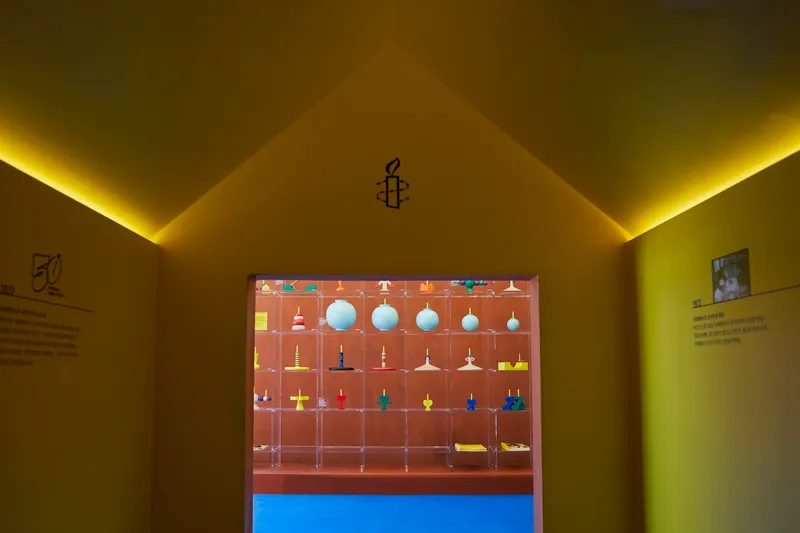
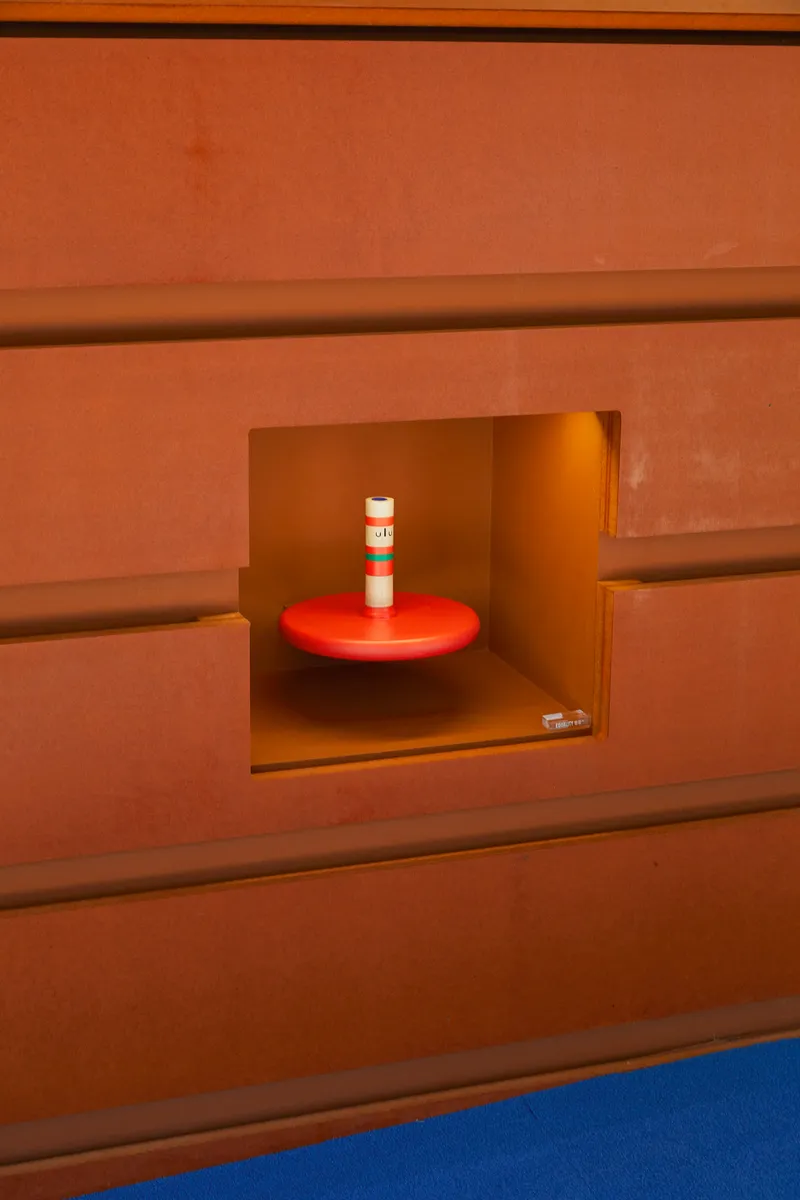
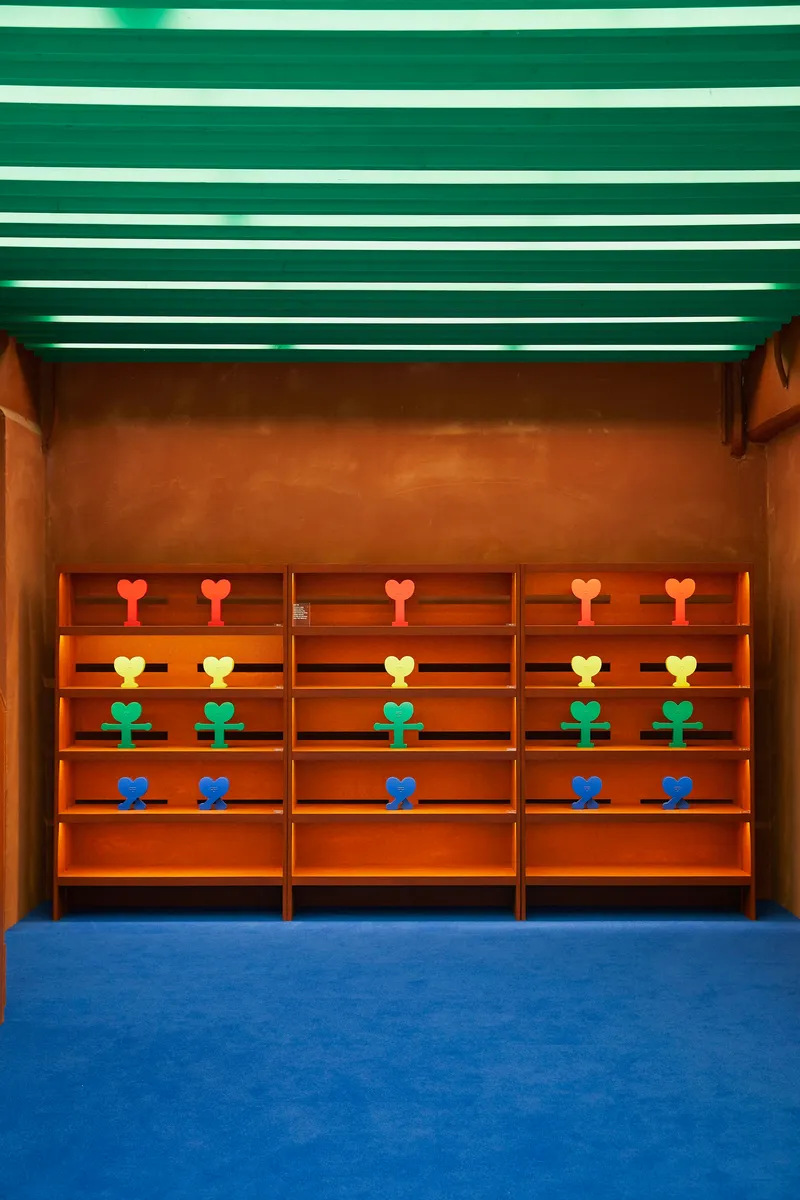
maumstudio treats every opening as a frame. A doorway looks through to a display vitrine where objects hang suspended, the gabled ceiling above washed in yellow cove lighting. A square niche in the terracotta wall holds a single red shelf and a white candle, turning a 30-centimeter recess into a quiet moment. Built-in shelving along another wall presents rows of colorful sculptural objects, each slot proportioned to make its contents feel considered rather than stocked.
The cumulative effect is that of a space composed entirely of views within views. Nothing is simply on display; everything is framed, lit, and positioned to make the act of looking deliberate. In a pop-up store with a limited lifespan, this level of spatial care speaks to a conviction that even temporary architecture deserves precision.
Plans and Drawings
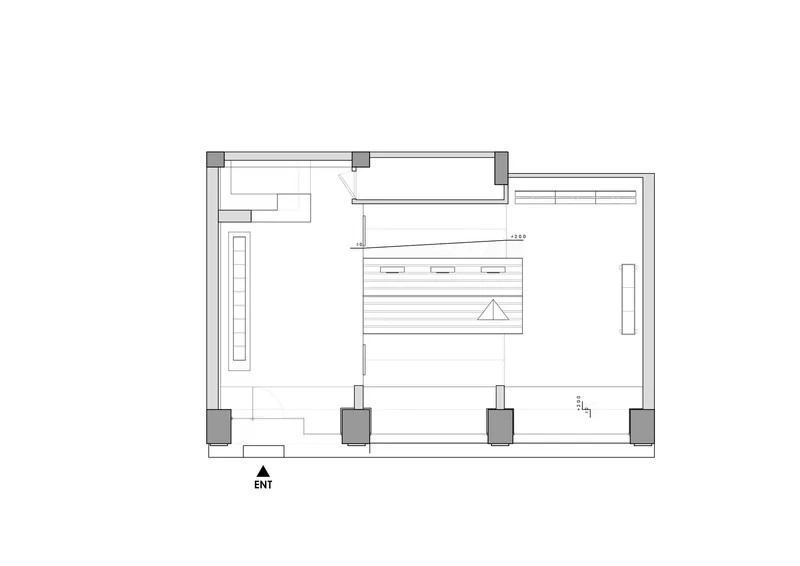
The floor plan reveals a straightforward rectangular volume with the street entrance along one long side and a central service counter organizing circulation. The simplicity of the plan makes the richness of the interior all the more impressive: maumstudio did not rely on complex geometry to create spatial variety. Instead, the freestanding house-shaped volumes, wall niches, and changes in material and color do all the work of differentiating zones within a single open room.
Why This Project Matters
Pop-up stores are by definition ephemeral, and many designers treat them accordingly, investing in graphic impact over spatial intelligence. CHO SHOP refuses that compromise. At 68 square meters, it is smaller than many apartments, yet it contains a coherent architectural argument about what it means to give physical form to abstract values. The candle motif could have been reduced to a logo on a wall; instead, it shaped niche depths, lighting strategies, and the fundamental relationship between display and enclosure.
For maumstudio, the project demonstrates that retail interiors can carry genuine intellectual ambition without sacrificing warmth or accessibility. For Amnesty International Korea, it proved that 50 years of advocacy could be distilled not into slogans but into materials, colors, and the careful arrangement of objects in space. That is a harder thing to achieve, and a more lasting one.
CHO SHOP by maumstudio. Mapo-gu, Seoul, South Korea. 68 m². Completed 2022. Creative Direction: Dalwoo Lee. Space and Product Lead: Eunhye Oh. Space and Product Design: Youngbak Jeong, Hanwool Kim, Kyoungjin Kim. Photography by Ju Yeon Lee.
About the Studio
Share Your Own Work on uni.xyz
If projects like this are the kind of work you want to make, uni.xyz is a place to publish your own, find collaborators, and enter design competitions.


Popular Articles
Popular articles from the community


David Macias Steps a Doorless Stone and Plaster House Down a Tropical Colombian Hillside
In the humid hills of Colombia, Threshold House replaces the front door with an open void and terraces its 850 m² down the slope instead of fighting it.

longwave studio Reorganizes a 112 m² Tainan Apartment Around the Daily Routines of a Family and Two Cats
In Tainan, Taiwan, birch plywood, rust-red furniture and a freestanding plaster wall link arrival, storage, work and family life in one apartment.

Jaramillo Van Sluys Arquitectura and Urbanismo Turn a Demolished Registry Lot in Quito into an Orchard Plaza
In Quito's Centro Histórico, a 2,800 m² plaza exposes the San Agustín convent wall and redraws its lost Augustinian orchard in volcanic stone.

Architekt Andreas Gruber Scatters 23 Dark Timber Chalets Across a South Tyrolean Forest Edge
In Molini di Tures, Amonti Chalets breaks a resort into a hamlet of gabled timber houses, with parking, storage and services pushed into the slope.

Similar Reads
You might also enjoy these articles


LAVA Architecten Gives Vocational Education a Sawtooth-Roofed Face on a Mechelen School Campus
In Mechelen, Belgium, a 2,053 m² STEM school on a 6×6 m grid turns workshops and classrooms into rooms that can be rearranged as teaching changes.

KEMA Studio Turns a Derelict Marvila Attic into a 60 m² Lighthouse Apartment Above Lisbon
In Lisbon's Marvila district, a rebuilt roof, four skylights and two plywood volumes turn an unlivable attic into a bright home facing the Tagus.

Pixel Gardens: One Repeated Module Stacked Into a Terraced Social Housing Tower for Famagusta
Salem Bader's shortlisted housing tower builds a vertical neighbourhood from one repeated module, offsetting units to carve terraces, light and air.

Bao Huynh Watercolor Atelier: A Serene Art Retreat in Hội An
Bao Huynh Watercolor Atelier in Hội An blends multifunctional art spaces, sustainable design, local materials, and family-friendly living in a serene environment.


Comments (0)
Please login or sign up to add comments
No comments yet. Be the first to comment!