
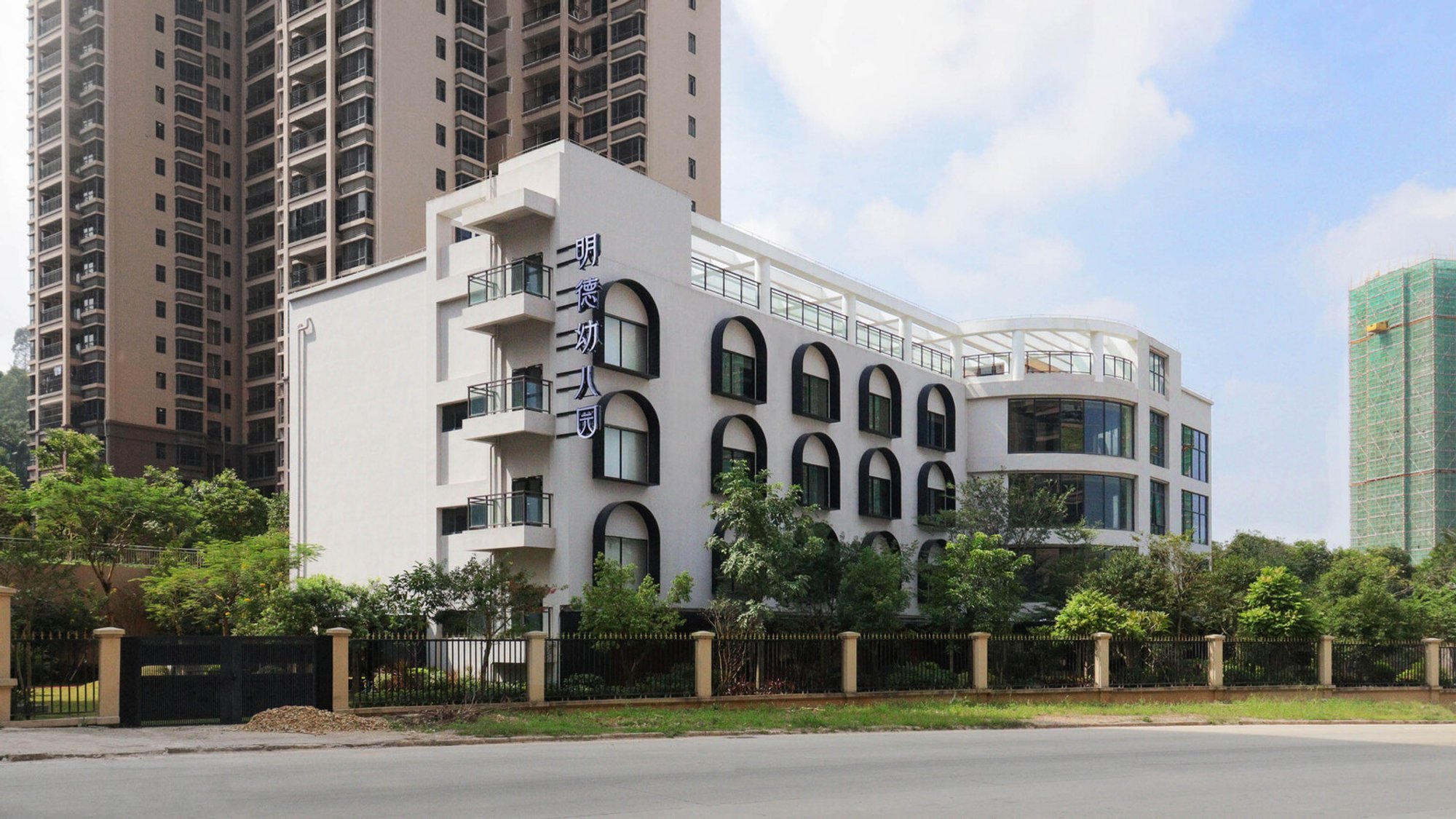
MD Kindergarten by HIBINOSEKKEI, Youji no Shiro & Kids Design Labo: A Contemporary Learning Environment Rooted in Hakka Heritage
MD Kindergarten blends Hakka-inspired enclosures with playful indoor and outdoor spaces, fostering children’s independence, creativity, sensory growth, and active learning daily.

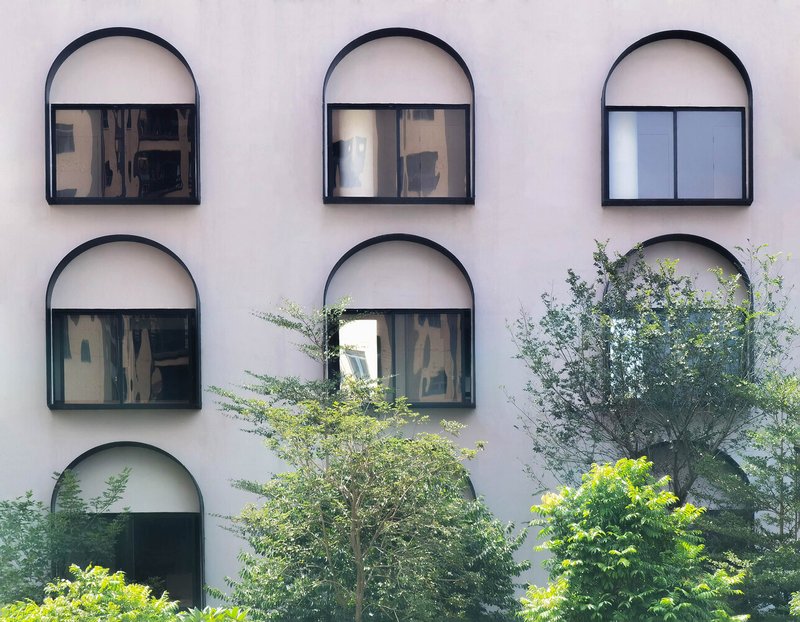
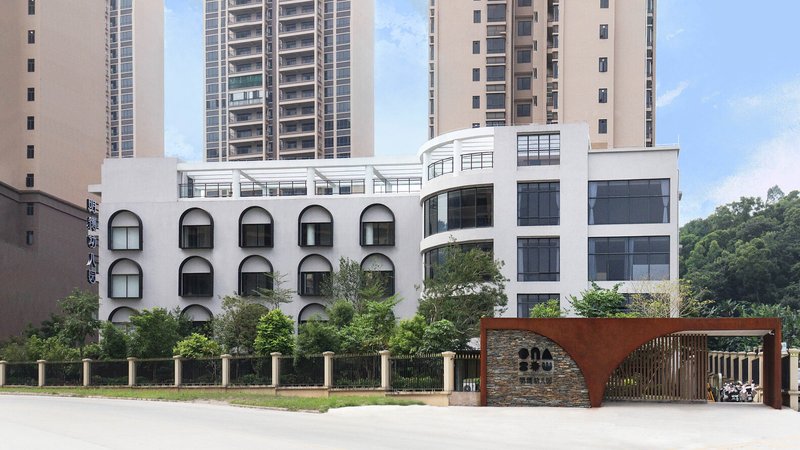
Located in Huizhou, China, MD Kindergarten reimagines early childhood learning spaces by blending traditional Hakka architectural principles with contemporary educational design. Created by HIBINOSEKKEI, Youji no Shiro, and Kids Design Labo, the 3,178 m² kindergarten (completed in 2022) focuses on nurturing children’s independence, sensory development, and holistic wellbeing through immersive spatial experiences.
Architecture Inspired by the Hakka “Enclosed House”
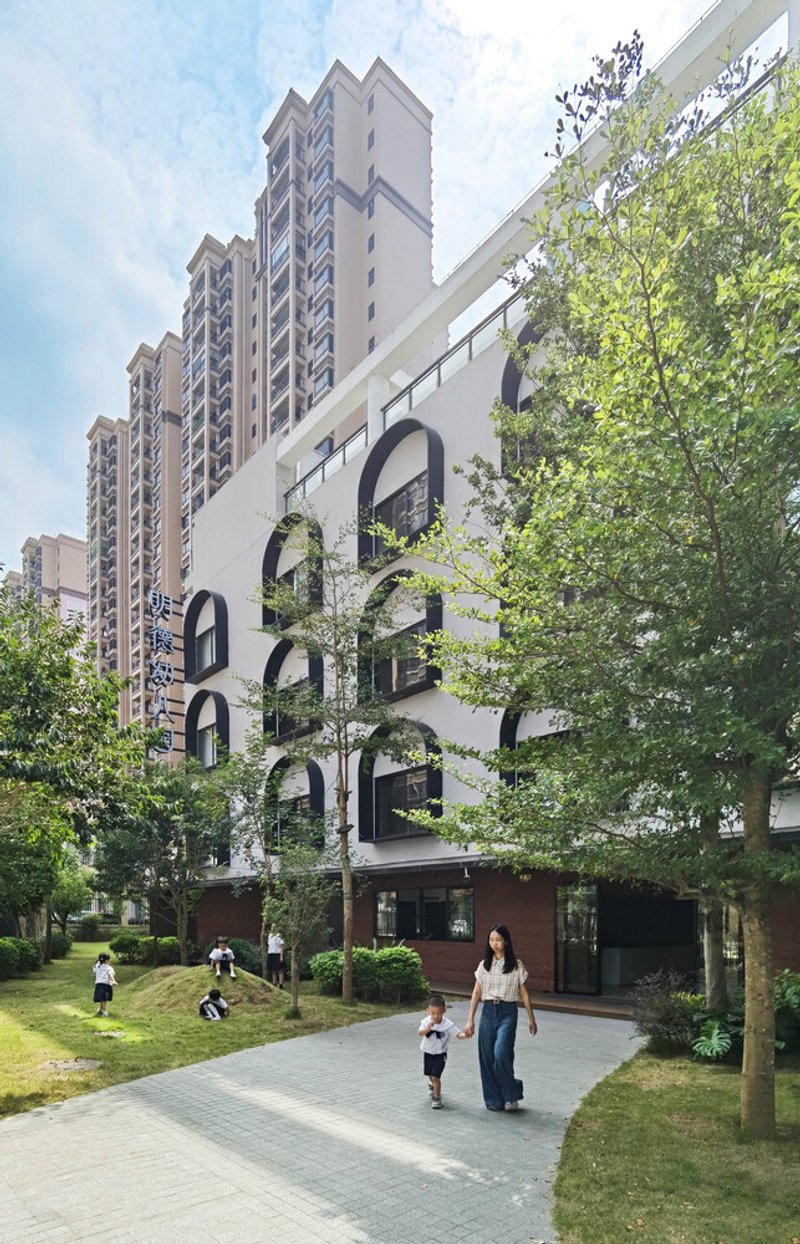
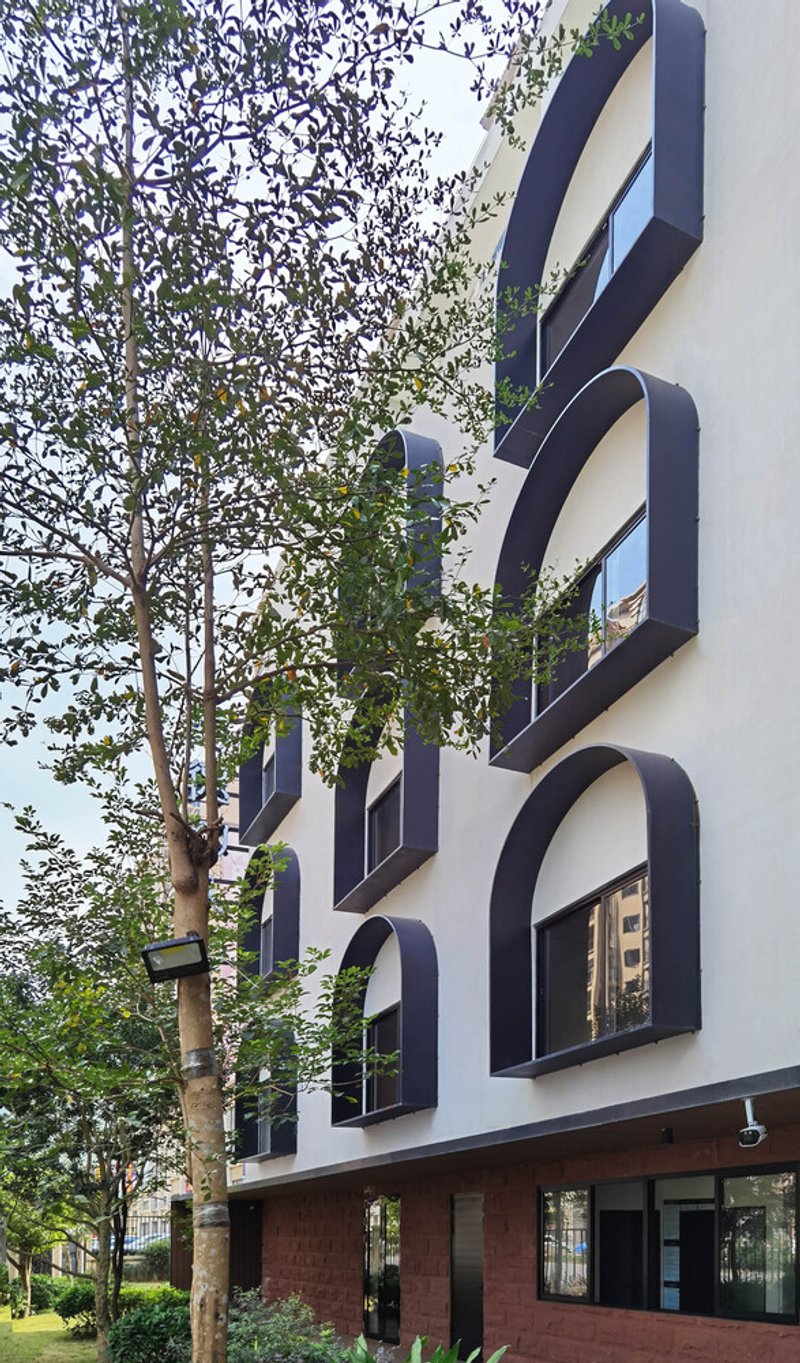
The design draws from the region’s iconic Hakka enclosed house, a typology known for its solid exterior walls that historically protected families and communities. The architects reinterpret this idea of “enclosure” not as confinement, but as a nurturing architectural gesture that creates safe, calm, and supportive environments for young learners.
Throughout the project, enclosure is expressed in various forms—solid walls, house-shaped volumes, semi-open rooms, and interior pockets—crafted to support children’s growth while inspiring curiosity and autonomy.
Child-Centered Interiors that Encourage Exploration
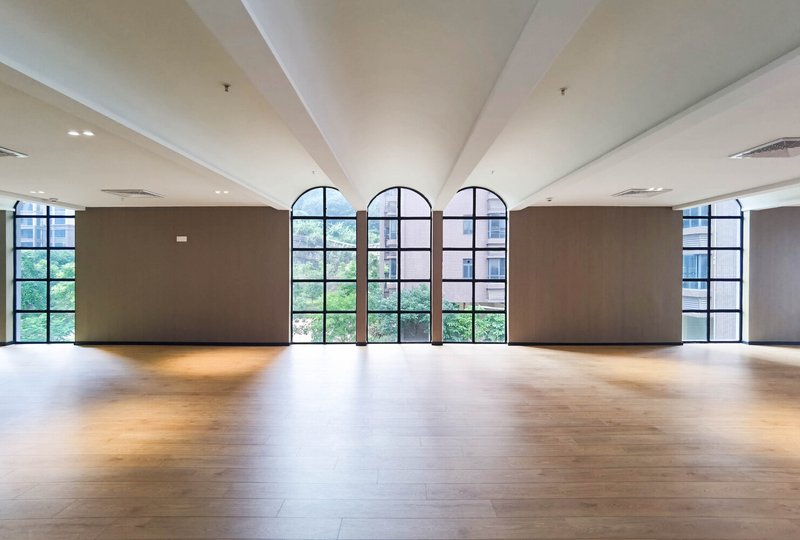
Inside the building, spatial strategies prioritize independence, creativity, and sensory engagement.
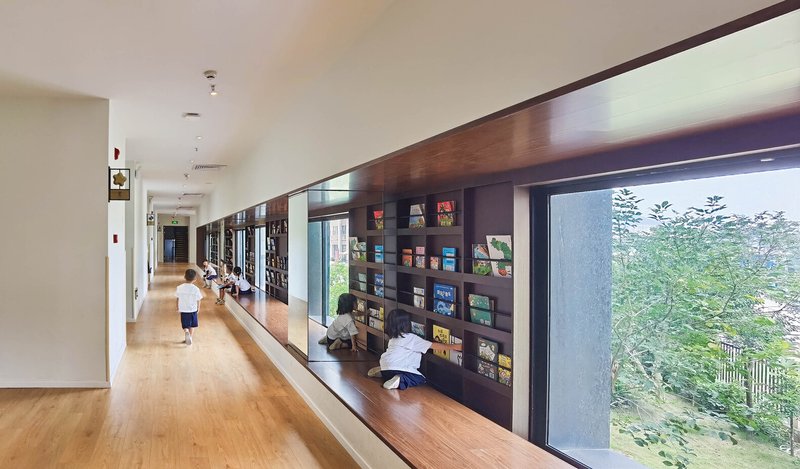
- The picture book corner and atelier space are placed within house-shaped micro-environments, helping children associate specific forms with distinct activities.
- These intimate spaces foster emotional development and concentration while still maintaining visual connections to the wider school environment.
To promote physical activity, the architects introduce vertical play elements, including climbing nets that connect the first and third floors. These features encourage children to navigate height, movement, and balance every day, making the building itself a tool for motor development.
A Landscape Designed for Active Learning
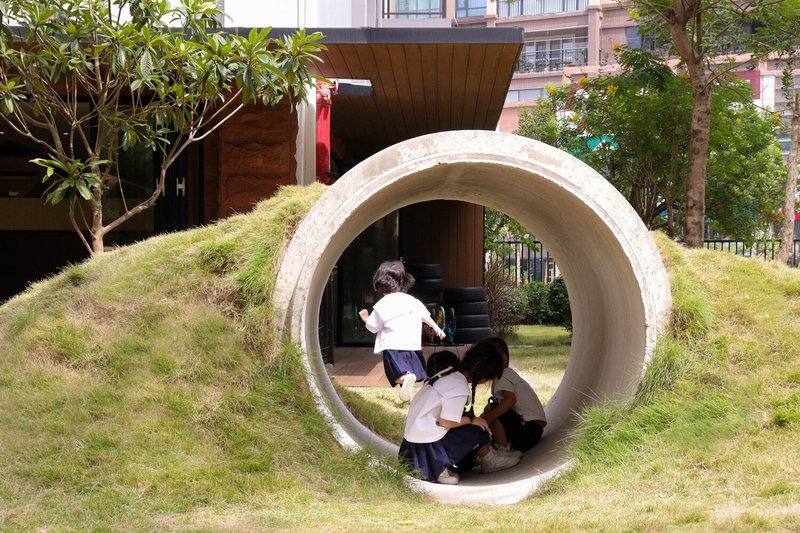
Outdoors, the kindergarten garden becomes an extended learning landscape. Soft slopes, small hills, and a gentle pond transform the space into a natural playground where children can engage their full bodies and senses. The landscape promotes spontaneous exploration, nature-based learning, and cooperative play—key components of healthy early childhood development.
Dining Connected to Nature and Food Education
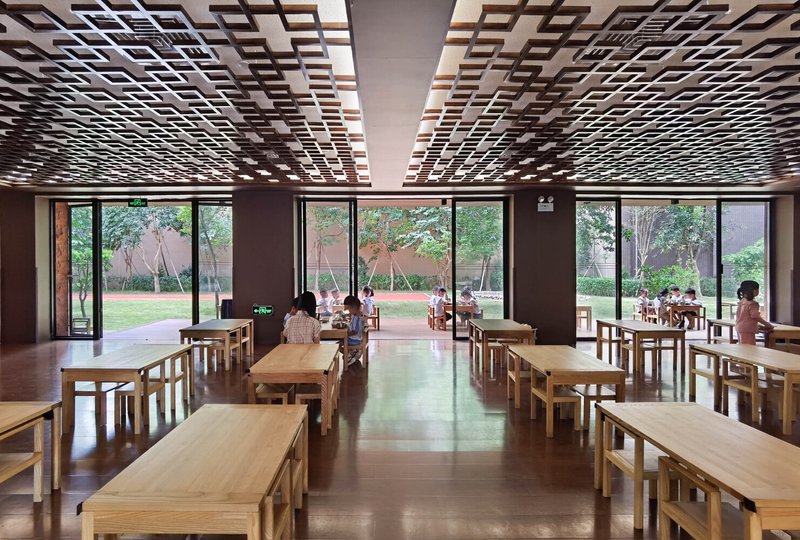
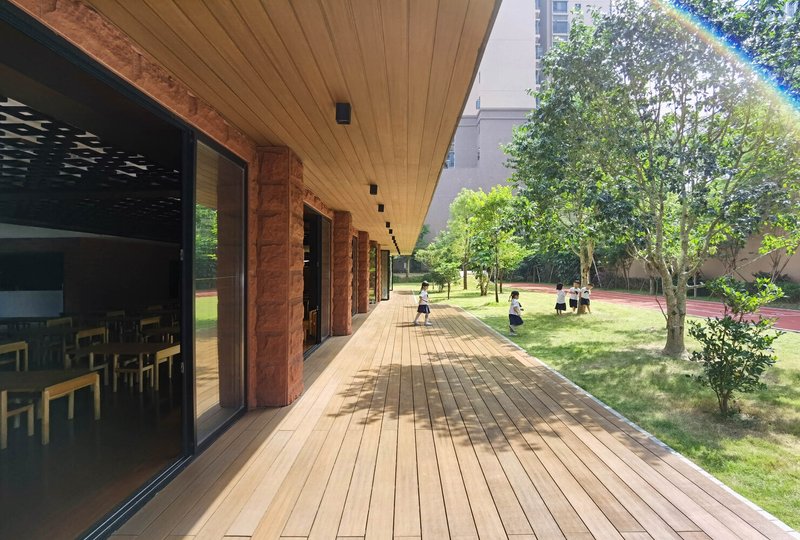
A standout feature of the design is the integration of the dining room with the garden, creating a seamless indoor-outdoor eating environment. This strategy encourages children to form a positive relationship with food by:
- Stimulating appetite through natural light and fresh air
- Providing visual access to plants, greenery, and seasonal changes
- Making mealtimes part of daily learning
The dining space becomes not just a functional area, but an environment that supports food literacy and sensory awareness.
A Holistic Environment for Growth and Independence
MD Kindergarten is more than an educational facility—it is a thoughtfully designed ecosystem where architecture, nature, and child psychology come together. Through form, materiality, and spatial planning, the project offers children an environment to:
- Explore freely
- Develop independent thinking
- Engage their bodies and creativity
- Build emotional and sensory awareness



Popular Articles
Popular articles from the community

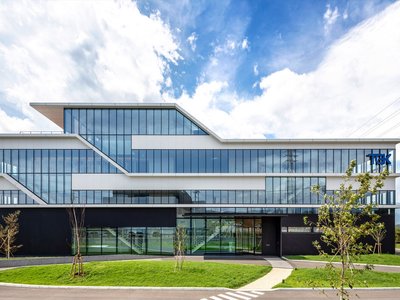
TGK Nirasaki Plant: A Smart Factory Blending Technology, Landscape, and Wellness
Smart factory in Japan blending IoT manufacturing, scenic trail design, natural ventilation, and landscape integration to enhance user experience and sustainability.
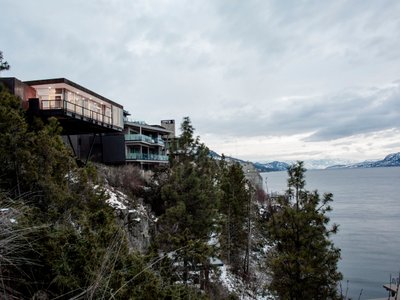
Alton Cliff House: A Harmonious Retreat by f2a Architecture in Lake Country, Canada
Alton Cliff House blends corten steel, prefabrication, and sustainable design, creating a luxurious, energy-efficient retreat perched on Canadian cliffs.
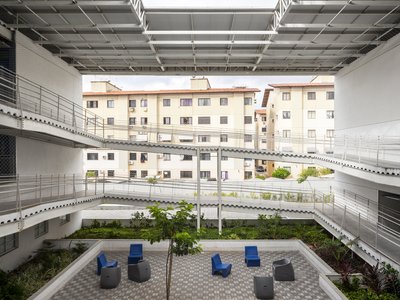
Rede Arquitetos Builds an Open-Air School in Fortaleza That Doubles as a Neighborhood Living Room
Educar II SESC-CE folds sports, dance, and community gathering into a courtyard campus wrapped in mesh and tropical color.
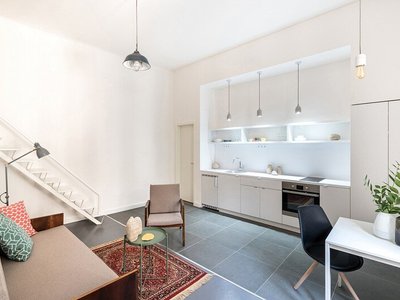
Marvila Apartment Renovation in Lisbon: A Bright Minimalist Attic Transformation by KEMA Studio
Bright attic transformed into minimalist Lisbon apartment with skylights, sustainable materials, open plan layout, and industrial-inspired interior design elements.


Similar Reads
You might also enjoy these articles

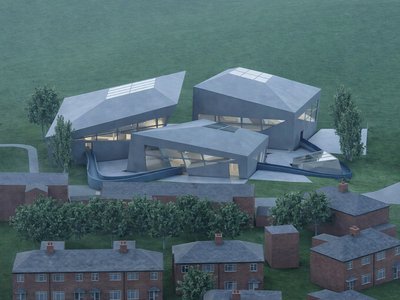
Filtering Space: A Gradual Spatial Experience
From urban intensity to spatial calm.


The Ken Roberts Memorial Delineation Competition (Krob)
As the most senior architectural drawing competition currently in operation anywhere in the world, it draws hundreds of entries each year, awarding the very best submissions in a series of medium-based categories.


Waterfront Redevelopment and Urban Revitalization in Mumbai: Forging a New Dawn for Darukhana
A transformative waterfront redevelopment project reimagining Darukhana’s shipbreaking heritage into an inclusive urban future.

OUT-OF-MAP: A Call for Postcards on Feminist Narratives of Public Space
Rhizoma Design and Research Lab invites artists, designers, architects, researchers, and students to reflect on how feminist perspectives can reshape public space. Selected works will be exhibited in Barcelona, October 2026. Submissions open until 15 April 2026.


Explore Architecture Competitions
Discover active competitions in this discipline




The International Standard for Design Portfolios


The Global Benchmark for Architecture Dissertation Awards


The Global Benchmark for Graduation Excellence


Challenge to design public laboratory
Comments (0)
Please login or sign up to add comments
No comments yet. Be the first to comment!