

Mediterranean Courtyard House: Casa Tres Patis by TwoBo Arquitectura
Casa Tres Patis redefines the Mediterranean courtyard house, blending tradition, sustainability, and modern design into a sensory-rich living experience.


A Contemporary Interpretation of Mediterranean Living
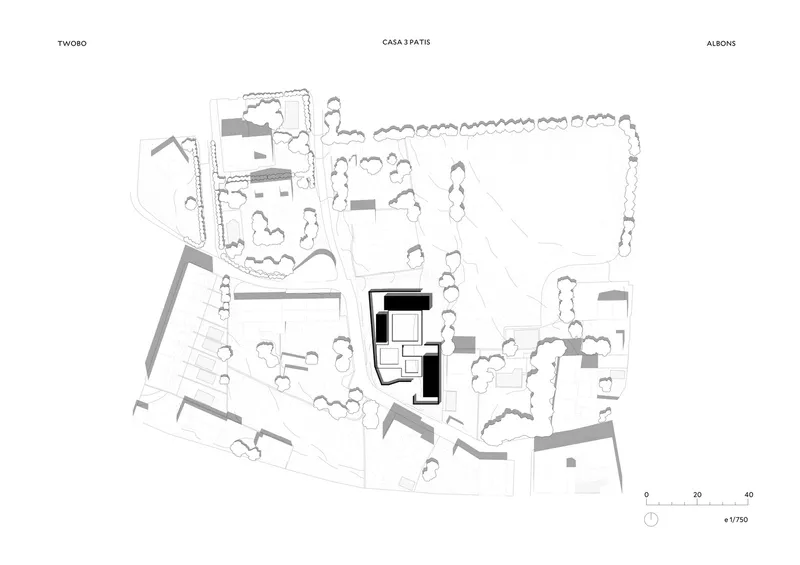
In the serene plains of Empordà, just a few kilometers from the ancient Greco-Roman ruins of Empúries, Casa Tres Patis by TwoBo Arquitectura reimagines the Mediterranean courtyard house for the modern era. This 300 m² single-family home draws from both the timeless typology of the Mediterranean villa and the experimental spirit of California’s Case Study Houses, blending tradition and innovation into a cohesive living environment.
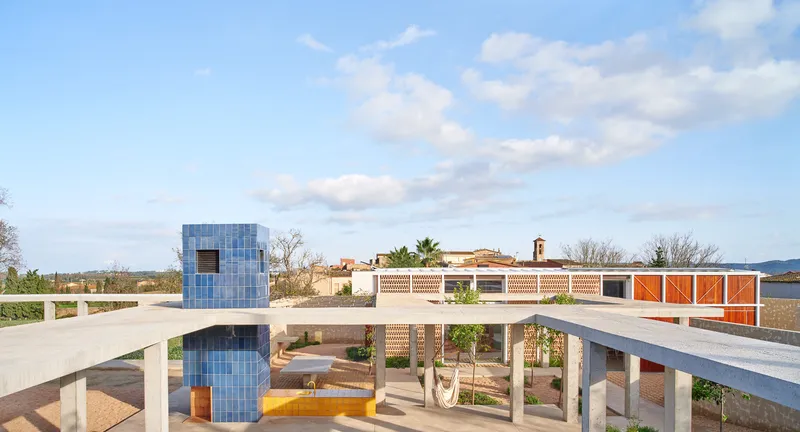

The architects, María Pancorbo, Alberto Twose, and Pablo Twose, envisioned a home where architecture is not placed in the landscape but becomes the landscape itself. The result is a residence that interacts seamlessly with light, wind, water, and the human body.
The Concept of Three Courtyards
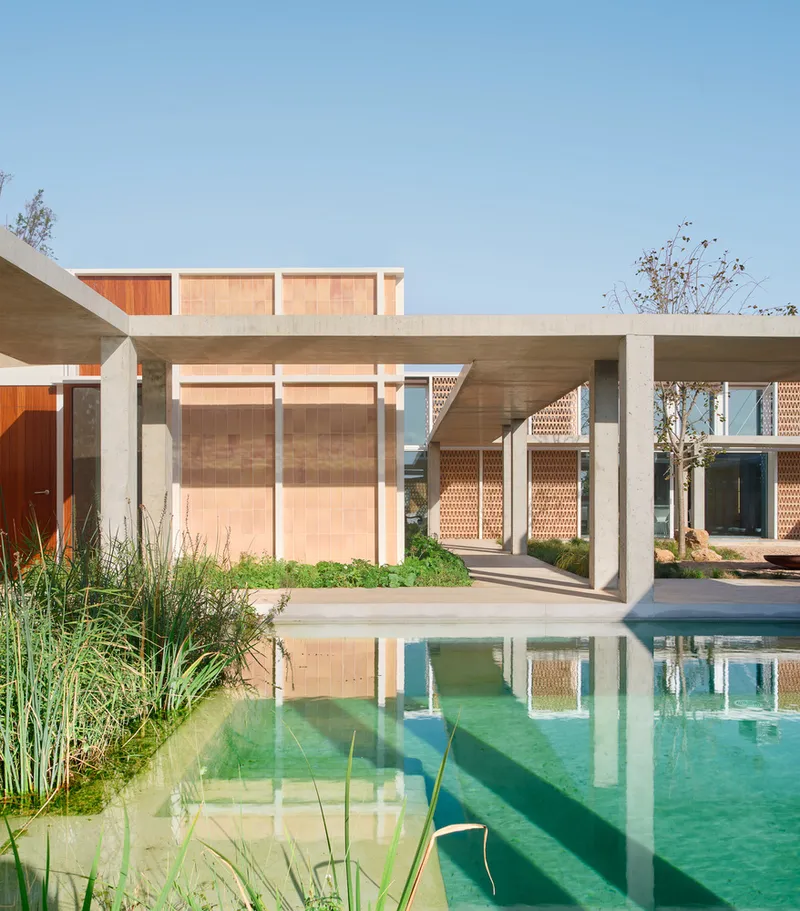
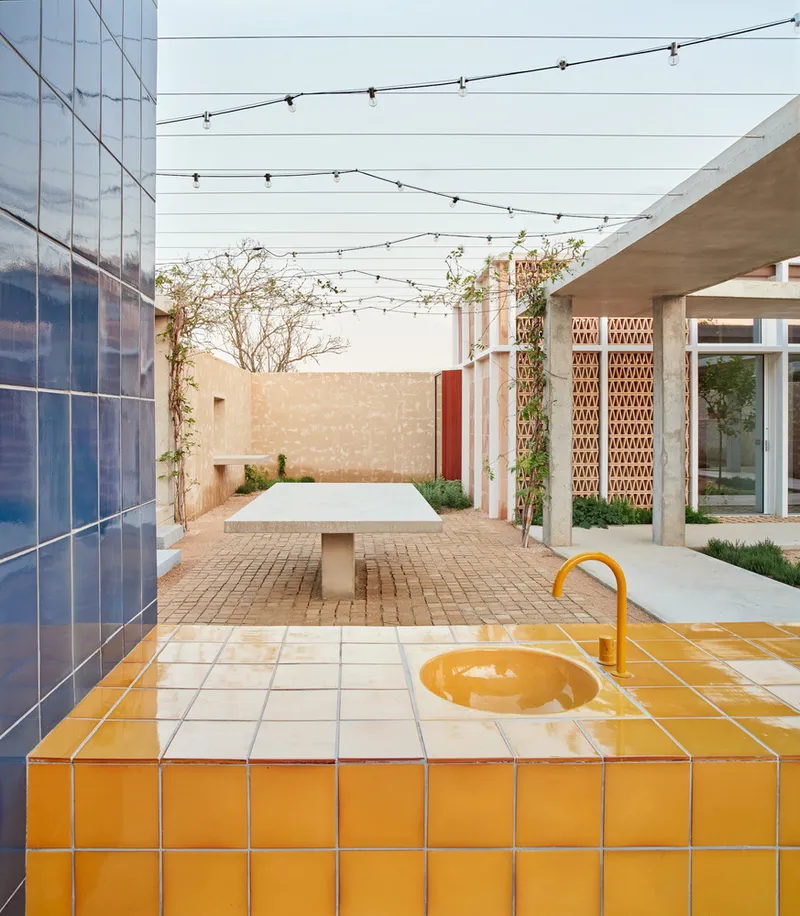
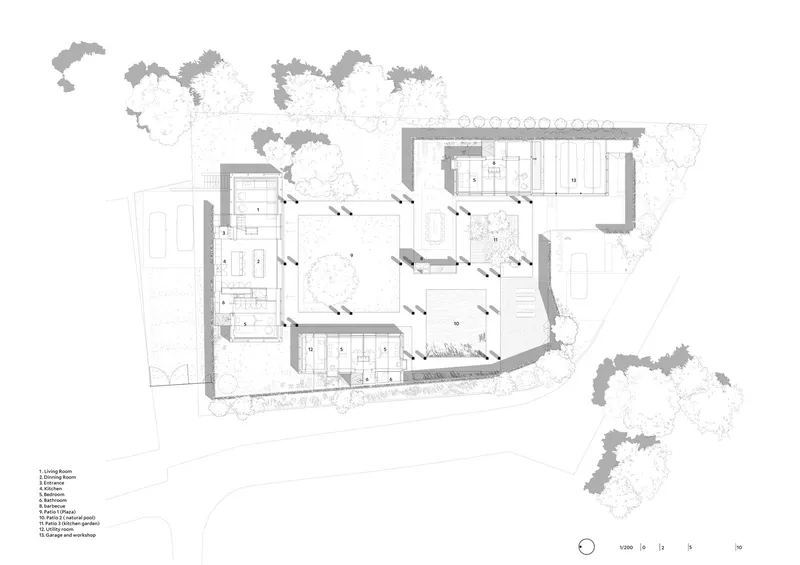
Casa Tres Patis is organized around three distinct courtyards, each serving as a focal point of domestic life. The first courtyard functions as a social hub, shaded by a tree and equipped with a stone table, barbecue, climbing wisteria, and space for petanque. The second courtyard, inspired by the Roman impluvium, is a quiet retreat for contemplation. The third courtyard offers a serene aromatic garden, reminiscent of monastic cloisters, designed for intimate moments and sensory enjoyment.
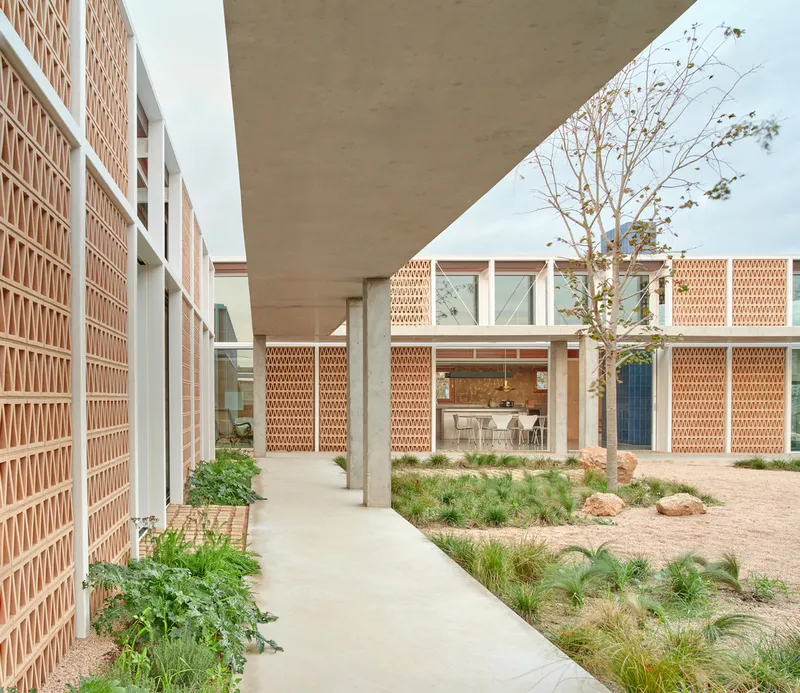
These courtyards are not ornamental voids but lived spaces, shaping the rhythms of daily life and blurring the boundaries between indoors and outdoors.
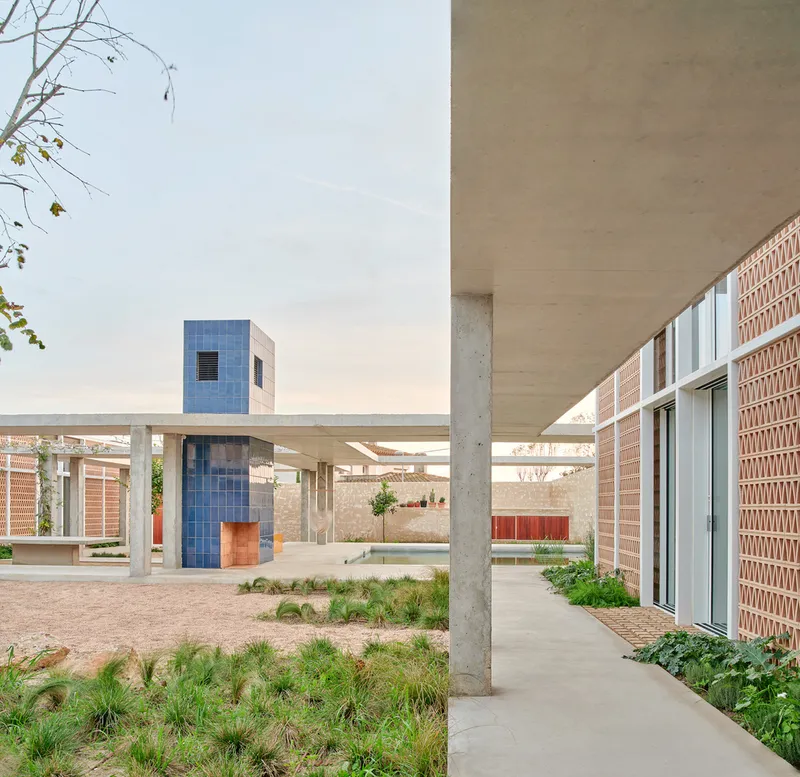
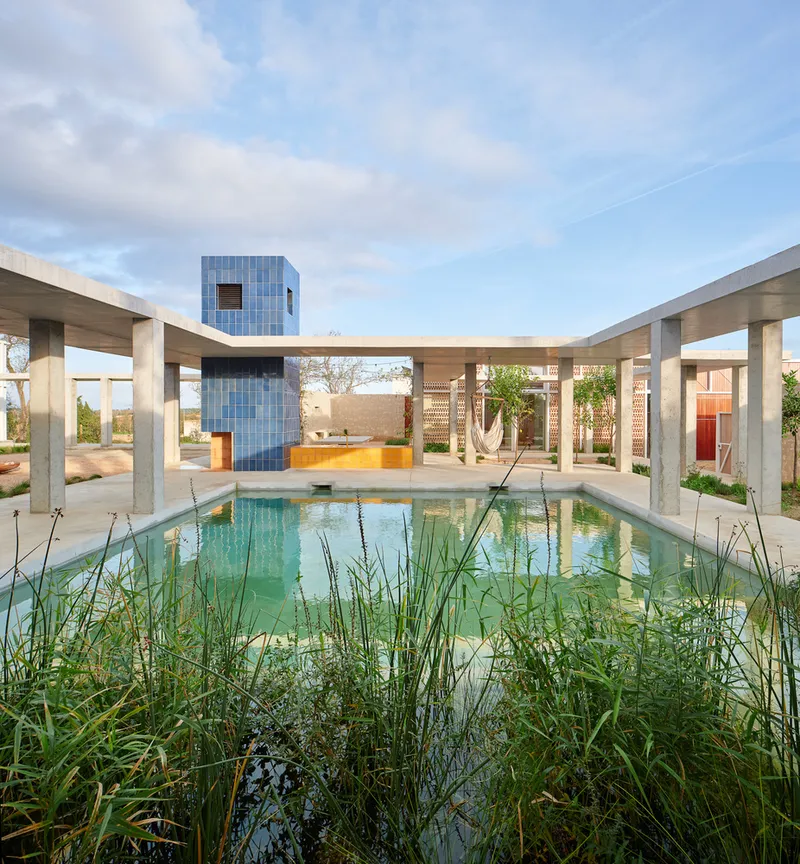
Pavilion-Based Architecture
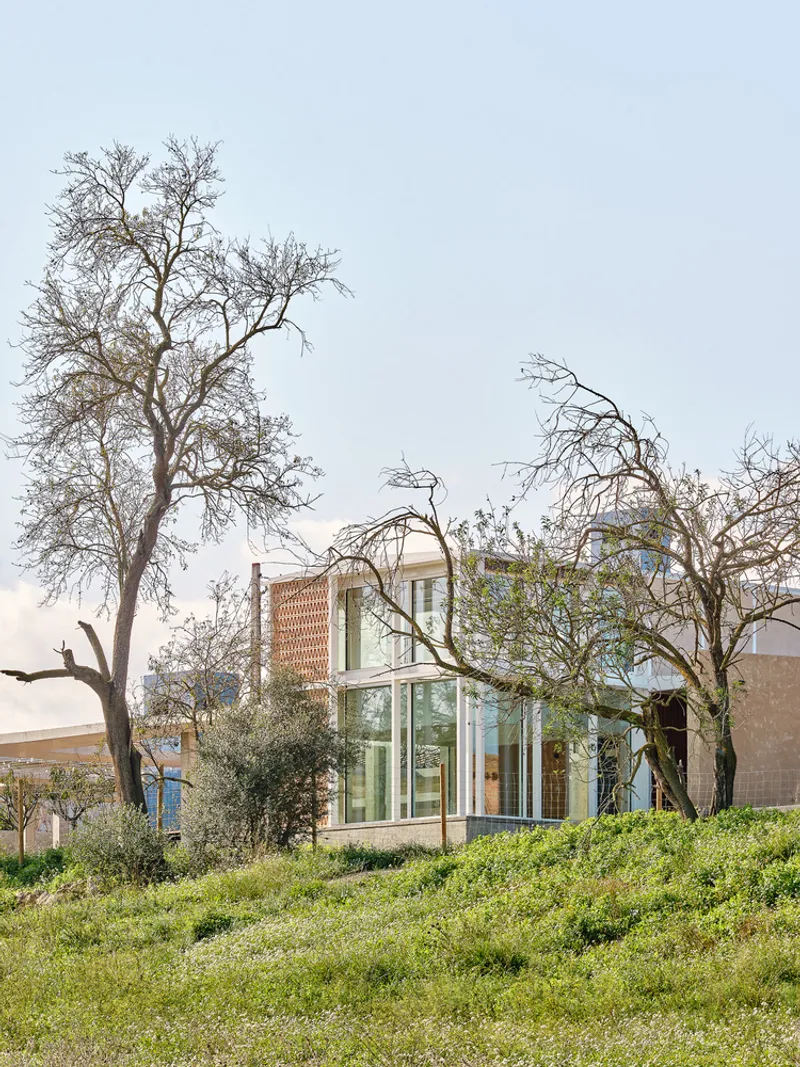
The house consists of three lightweight pavilions, each tailored to specific uses. The main pavilion houses the kitchen, living room, bathroom, and master bedroom. A second pavilion contains the children’s rooms and laundry facilities. The third serves as a guest house and workshop.
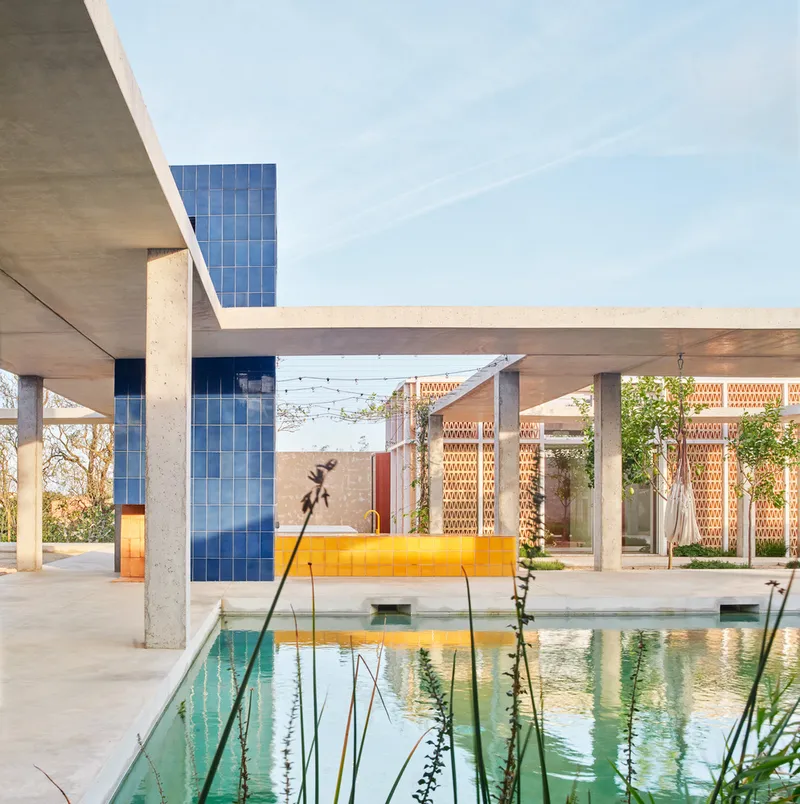
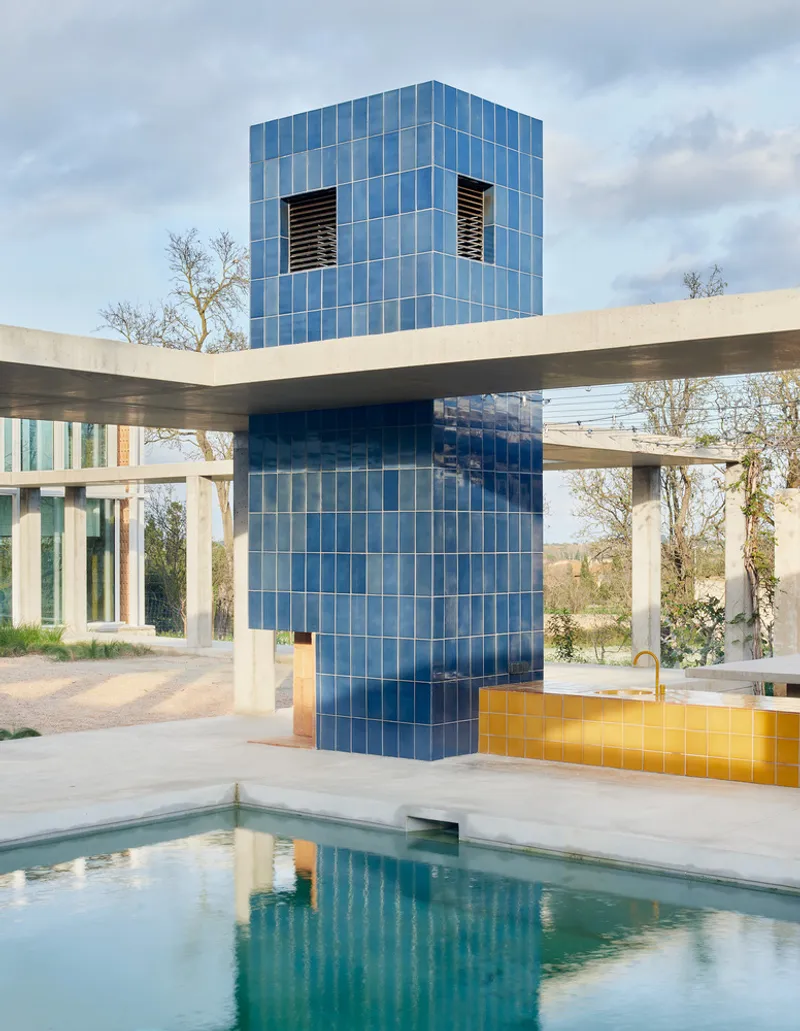

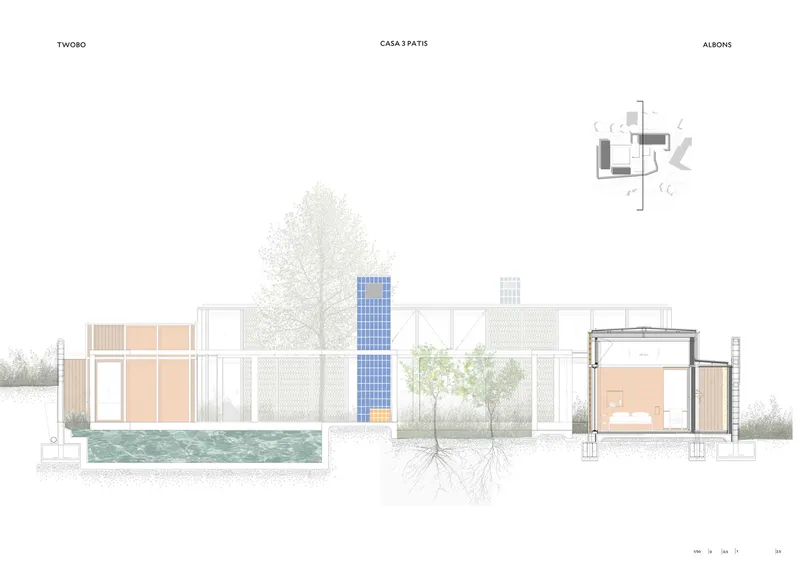
Constructed with ceramic screens, wooden panels, metal structures, and expansive glass openings, the pavilions harmonize with their environment while offering flexibility and openness. Locally crafted materials, including blue ceramic tiles by Cerámica Ferrés, embed the home within its regional context and artisanal heritage.
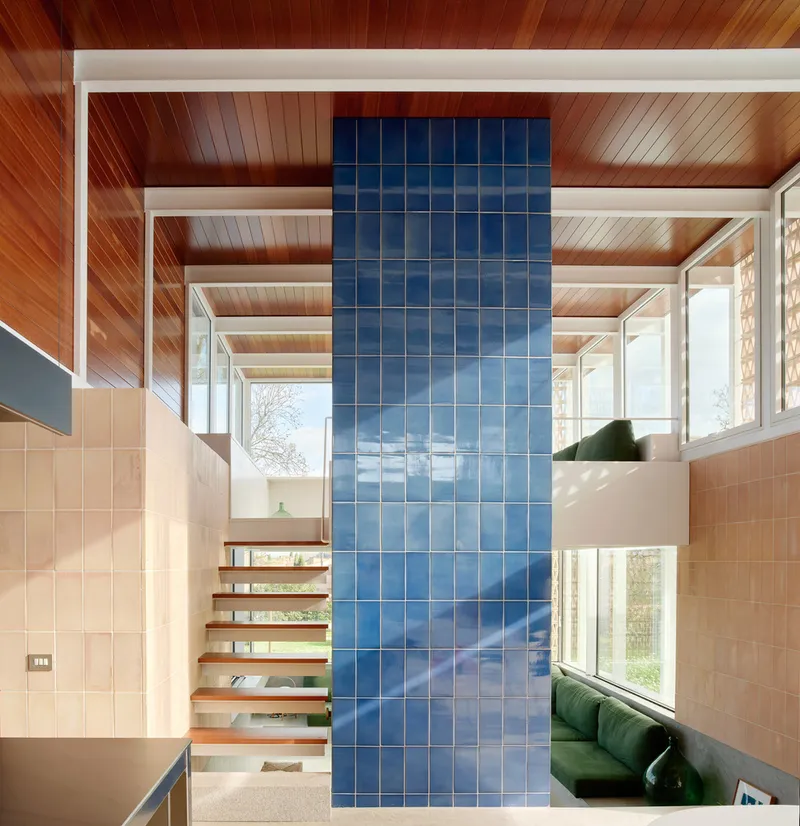
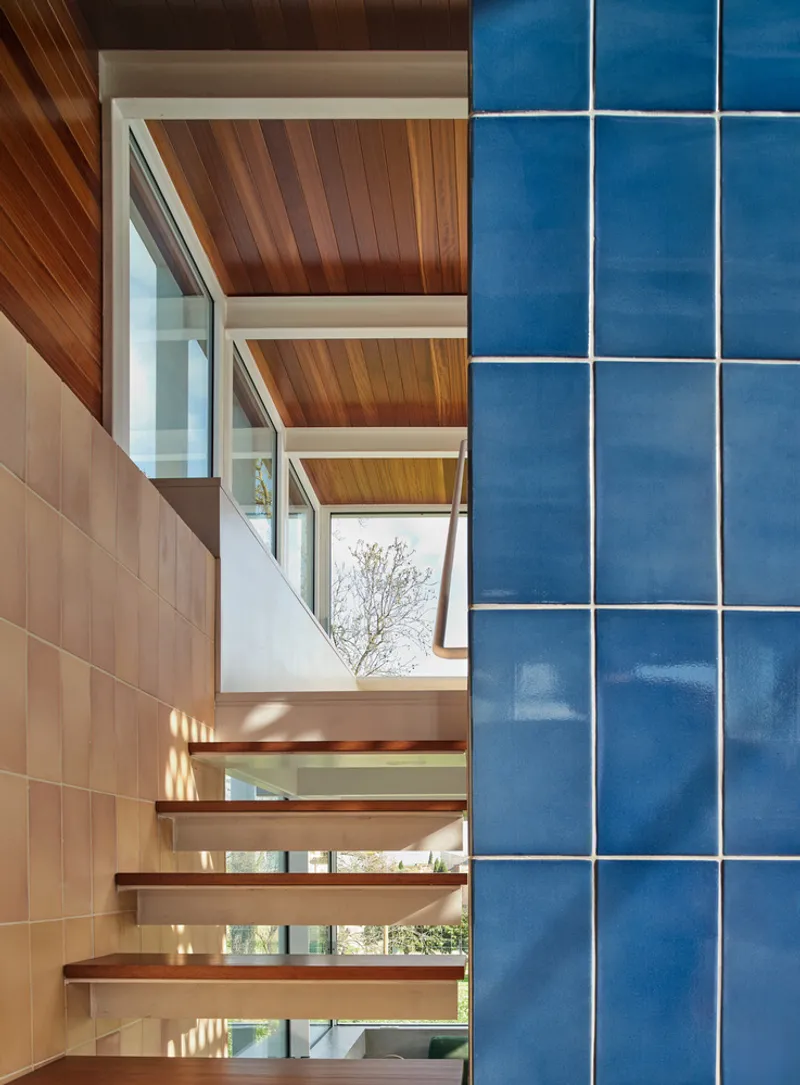
Design Influences and Climate Responsiveness
Taking cues from Richard Neutra and the California Modern Movement, the volumes incorporate repetitive metal frames, shaded windows, and triangular screens that temper the intense Mediterranean sun. A protective stucco wall encircles the property, shielding it from the tramontane wind while framing curated views of the surrounding rural landscape.
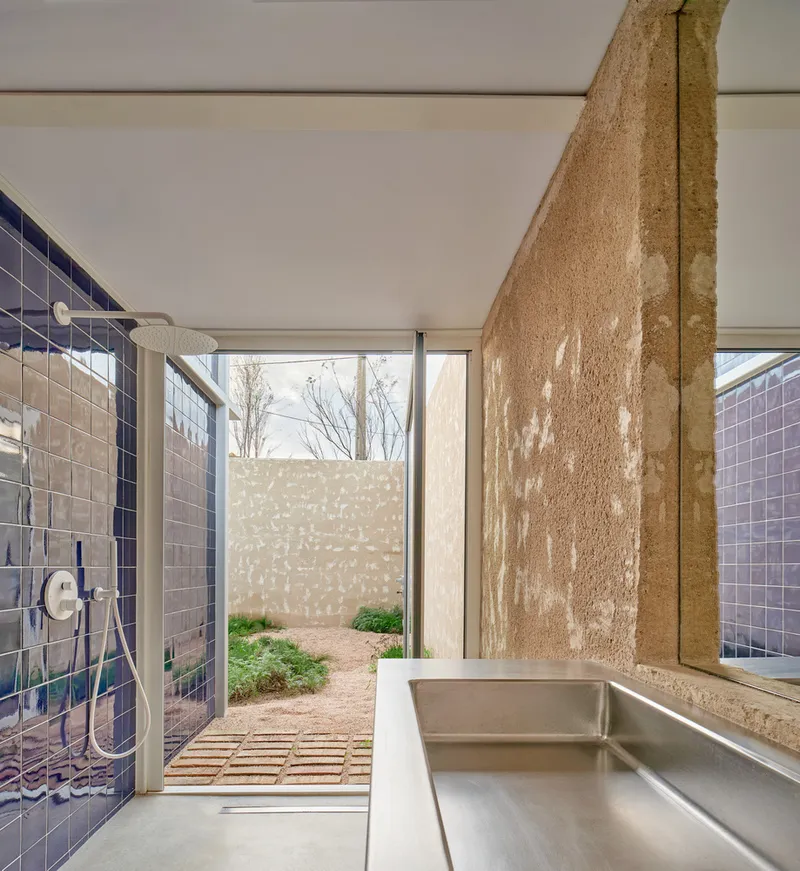
Passive design strategies such as cross ventilation, optimal solar orientation, and natural shading work alongside active systems like solar panels and gray water recycling to achieve energy efficiency without compromising aesthetics.
A House for Slow Living
Casa Tres Patis is more than a home — it is an invitation to a slower pace of life, deeply connected to nature. Pathways flow seamlessly from interior to exterior, showers open onto courtyards, and every space is attuned to seasonal changes.

TwoBo Arquitectura’s design embodies a poetic reinterpretation of Mediterranean tradition, creating a home where well-being emerges from the harmony between architecture, landscape, and the human body. It is a place to live with all the senses engaged, offering a vision of sustainable beauty rooted in cultural heritage.

All the photographs are works of Jose Hevia


Popular Articles
Popular articles from the community


LT2A and OPEN Architectes Thread a Brick and Glass High School Through a Wooded Belgian Campus
In Braine-l'Alleud, a 3,000 m² wing for Collège Cardinal Mercier pairs pale brick with a glazed colonnade, deferring to a small chapel and a dense wood.

Architekt Andreas Gruber Scatters 23 Dark Timber Chalets Across a South Tyrolean Forest Edge
In Molini di Tures, Amonti Chalets breaks a resort into a hamlet of gabled timber houses, with parking, storage and services pushed into the slope.

longwave studio Reorganizes a 112 m² Tainan Apartment Around the Daily Routines of a Family and Two Cats
In Tainan, Taiwan, birch plywood, rust-red furniture and a freestanding plaster wall link arrival, storage, work and family life in one apartment.

Jaramillo Van Sluys Arquitectura and Urbanismo Turn a Demolished Registry Lot in Quito into an Orchard Plaza
In Quito's Centro Histórico, a 2,800 m² plaza exposes the San Agustín convent wall and redraws its lost Augustinian orchard in volcanic stone.

Similar Reads
You might also enjoy these articles

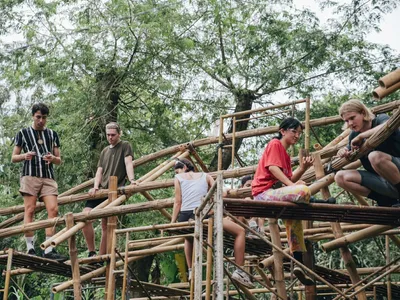
Bamboo Housing Challenge 2026: Design Affordable, Sustainable Homes Using Bamboo
An international design competition by Bamboo U and IBUKU inviting architects and designers to reimagine affordable housing using bamboo — with the winning design built full-scale in Bali.

Computational Design & Education: Beegraphy Design Awards Introduces 7th Category (Featuring Jiyun's Innovative Approach)
Dive into Beegraphy’s 7th Design Awards category, where computational design meets education to create immersive, interactive learning tools, inspired by Jiyun’s work.

From Parametric Lighting to Urban Furniture: Join the 2nd Workshop in Beegraphy’s Computational Design Series
Dive into Cutting-Edge Design Techniques and Practical Applications with Industry Experts

Last Call: Unleash Your Architectural Genius in SHAK's Kindergarten Design Competition
Urgent call for architects to join SHAK's kindergarten design competition before the looming deadline
Explore Architecture Competitions
Discover active competitions in this discipline

Challenge to reimagine the Iron Throne

Photograph architecture without architects

Illustrate the lost glory of Angkor Wat - Render Challenge

Design challenge to reuse E-waste
Comments (0)
Please login or sign up to add comments
No comments yet. Be the first to comment!