

Modern Courtyard House Design in Kyoto: Element House by APOLLO Architects & Associates
A modern courtyard house in Kyoto blends work and life through natural light, flexible zoning, and tactile concrete design.


Integrating Light, Privacy, and Nature Through Courtyards
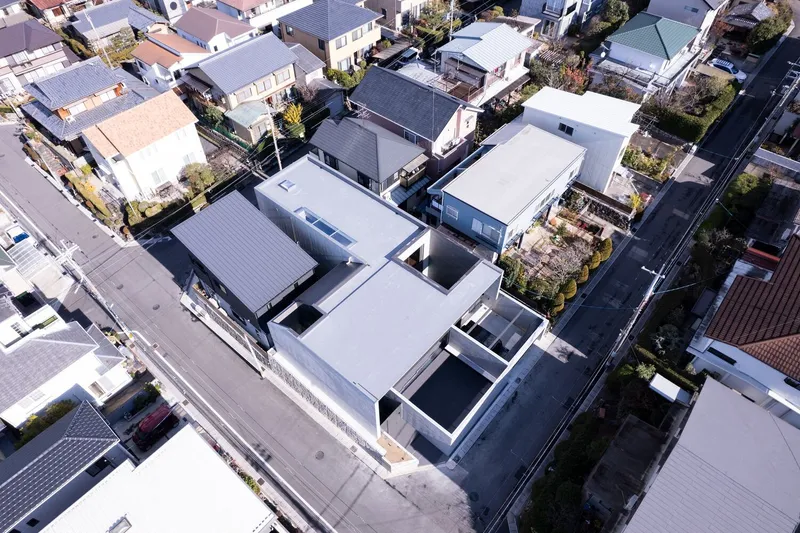
The Element House, designed by APOLLO Architects & Associates in 2024, is a refined example of modern courtyard house design in Uji, a quiet residential enclave in southern Kyoto, Japan. With a built area of 189 m², the residence leverages spatial layering and a multi-courtyard concept to create a seamless blend between architecture and nature, privacy and openness, and living and working.
A Dual-Faced Concrete Statement
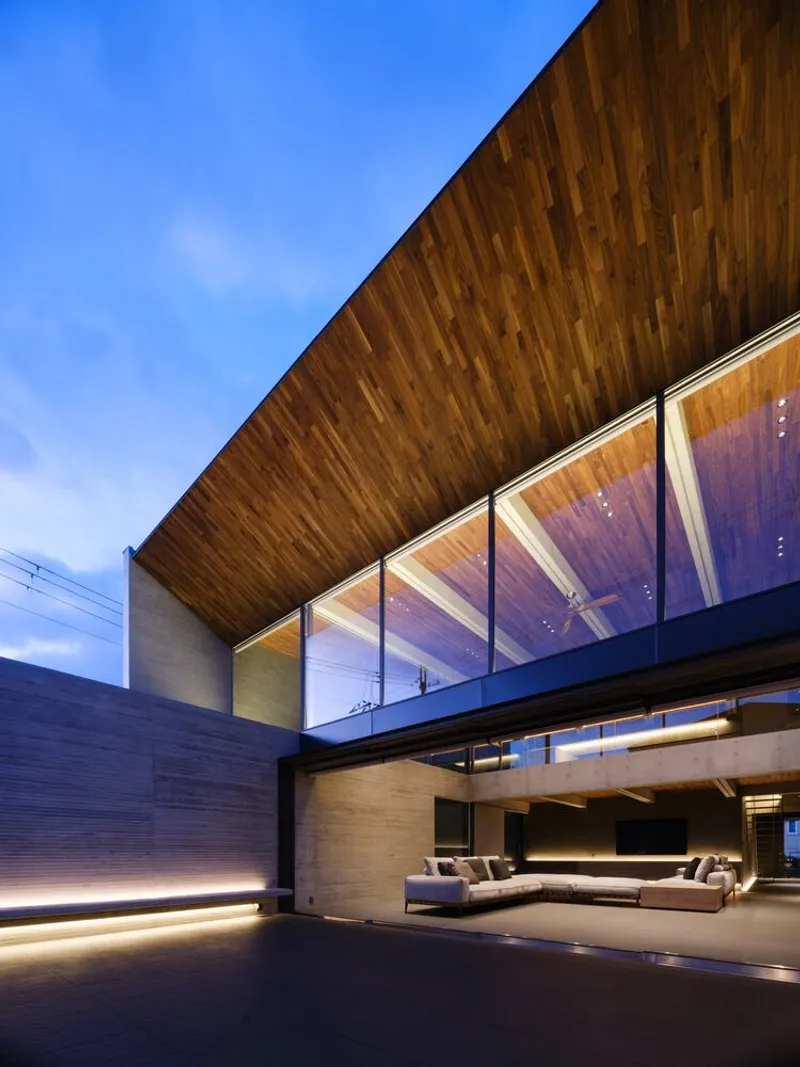
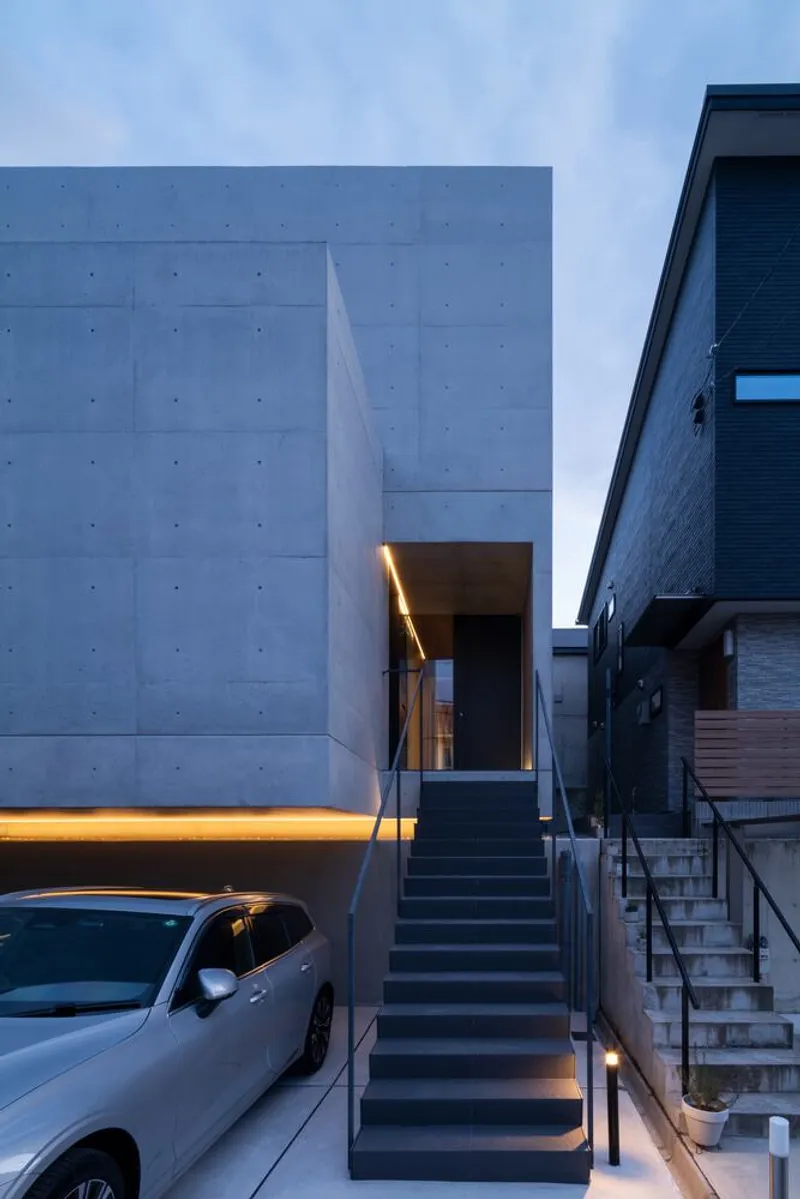
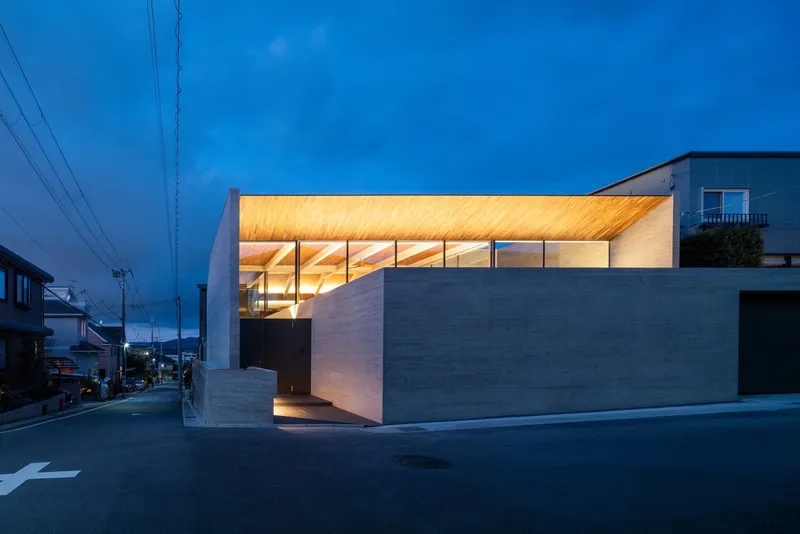
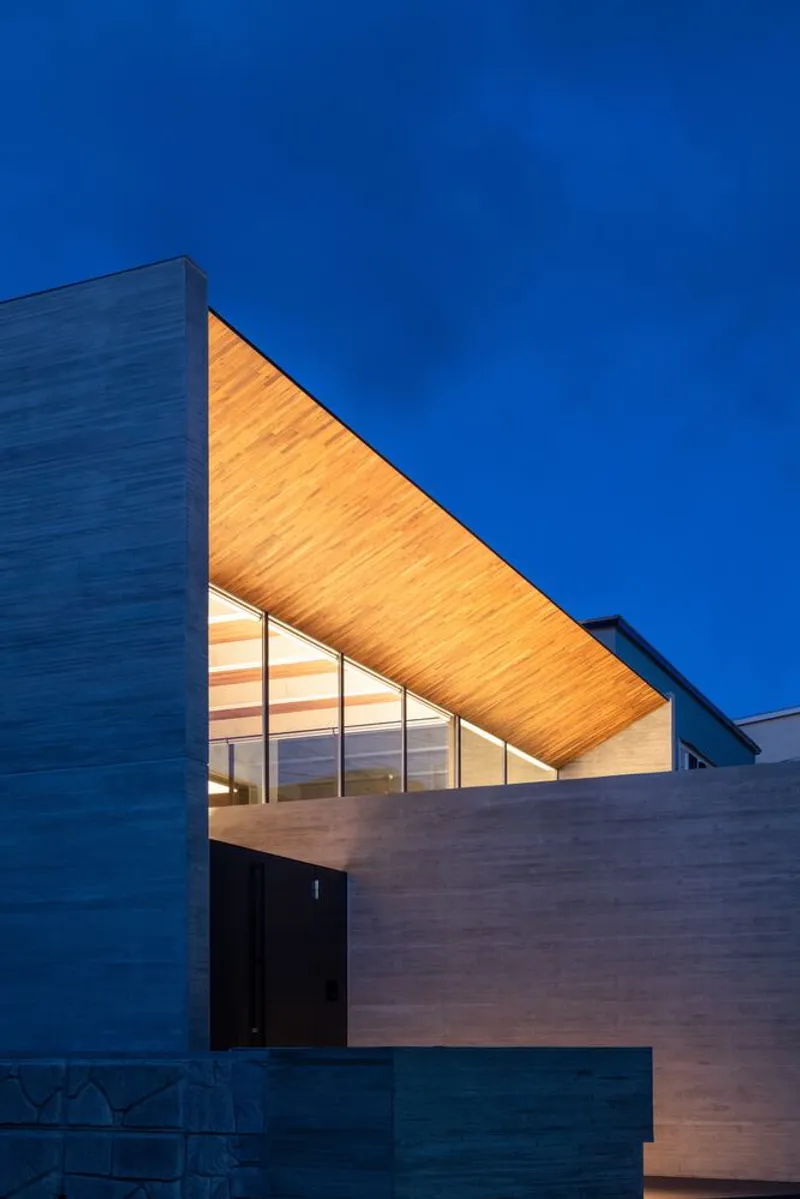
Set on an L-shaped plot that borders two roads, the home takes advantage of its changing topography and dual orientation. The main southern façade features a bold overhang and expansive glazing, framed by a concrete wall finished with cedar-board formwork—offering a tactile reminder of traditional Japanese material craft. The northern façade, defined by a powerful cantilever, forms a pilotis garage that gives the home a grounded yet dynamic presence.
A Journey Begins With Light and Courtyards
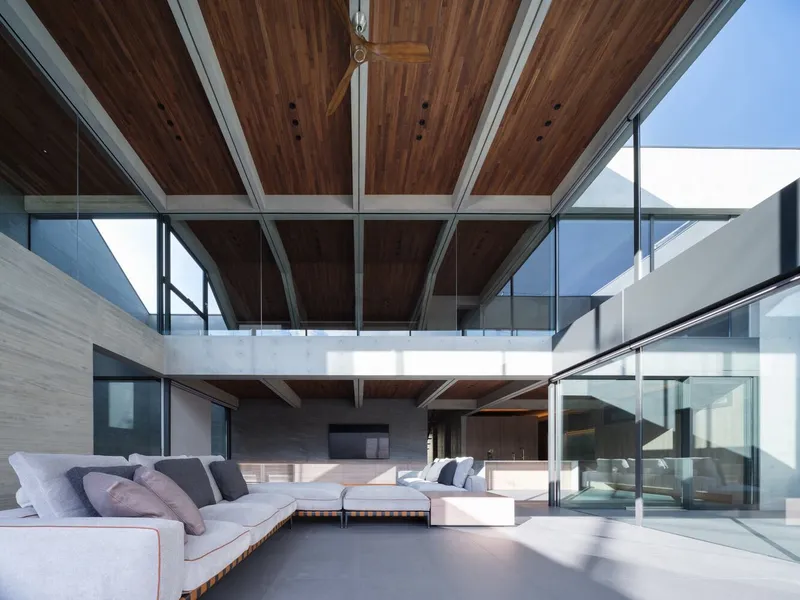
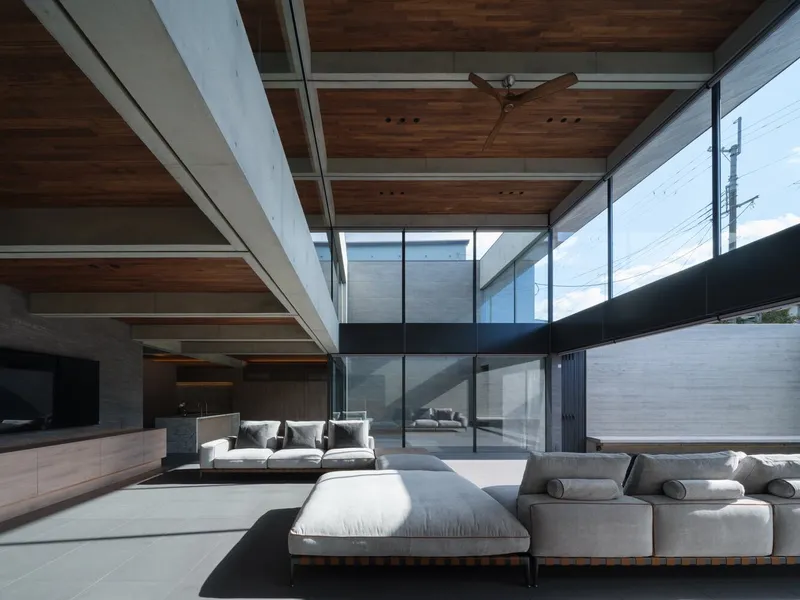
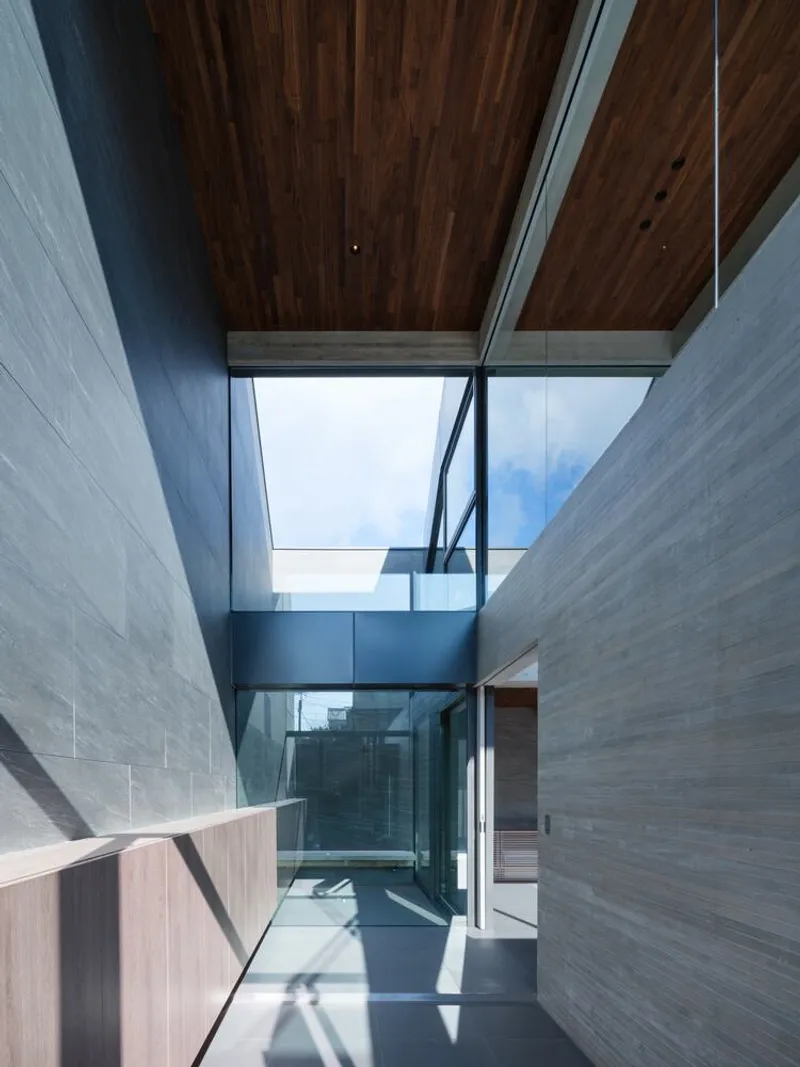
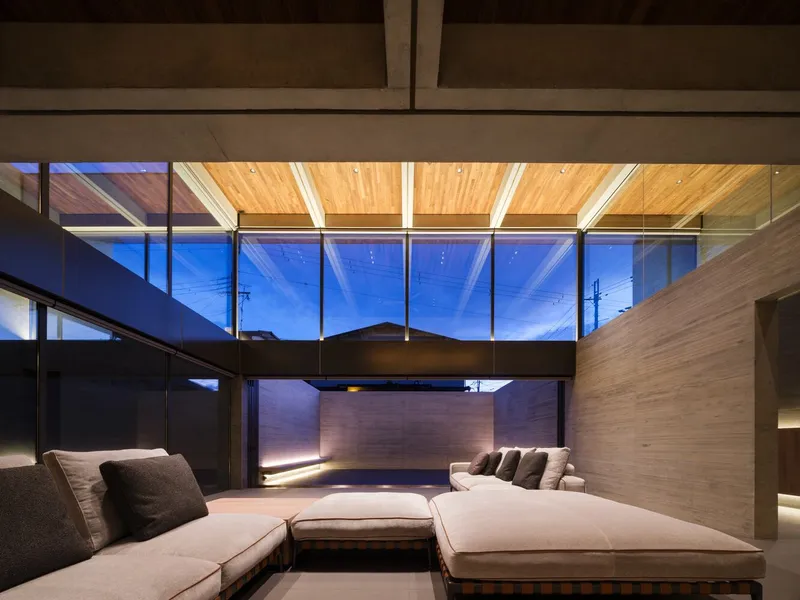
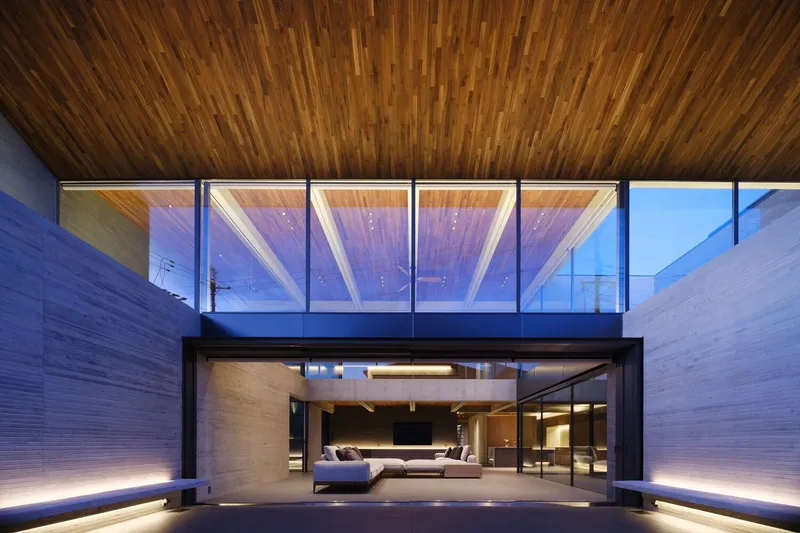
Upon entering, guests step into a two-story atrium space washed with light from clerestory windows on both the north and south sides. A welcoming entrance courtyard anchors the view directly ahead, establishing a theme of spatial fluidity and natural dialogue that continues throughout the home. The atrium also houses the primary family living space, surrounded by a trio of distinct courtyards.
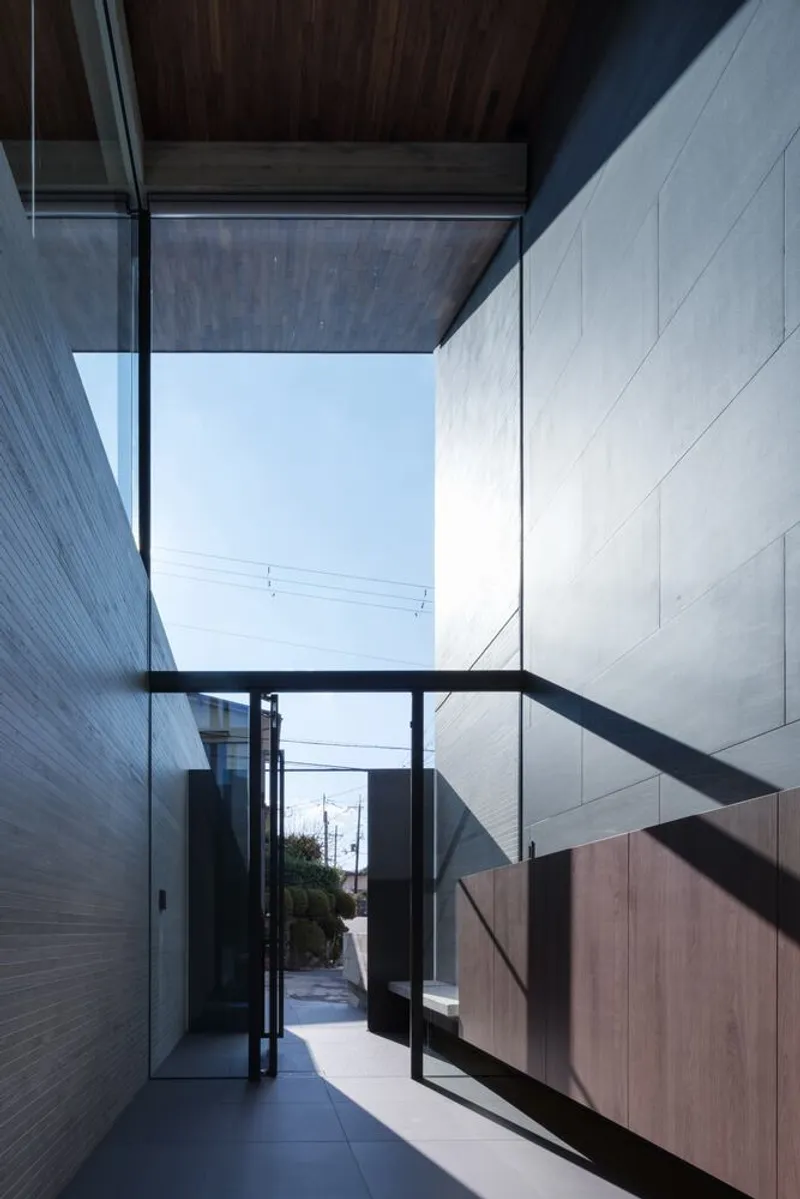
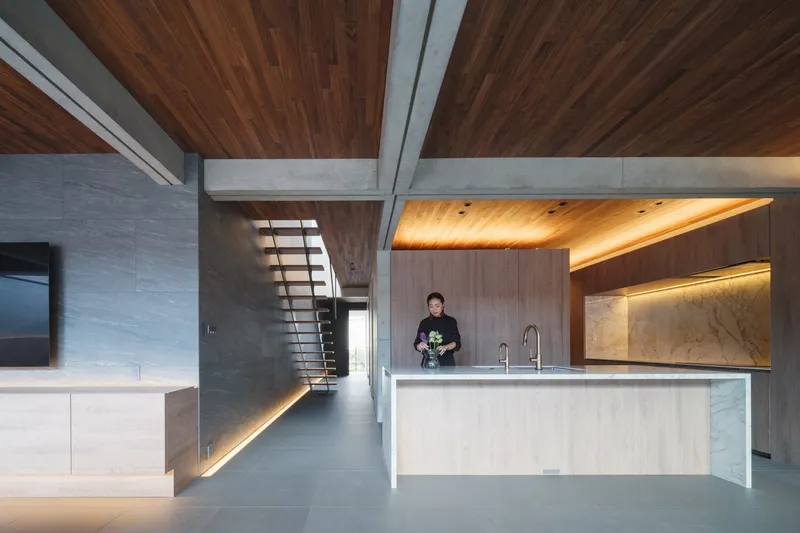
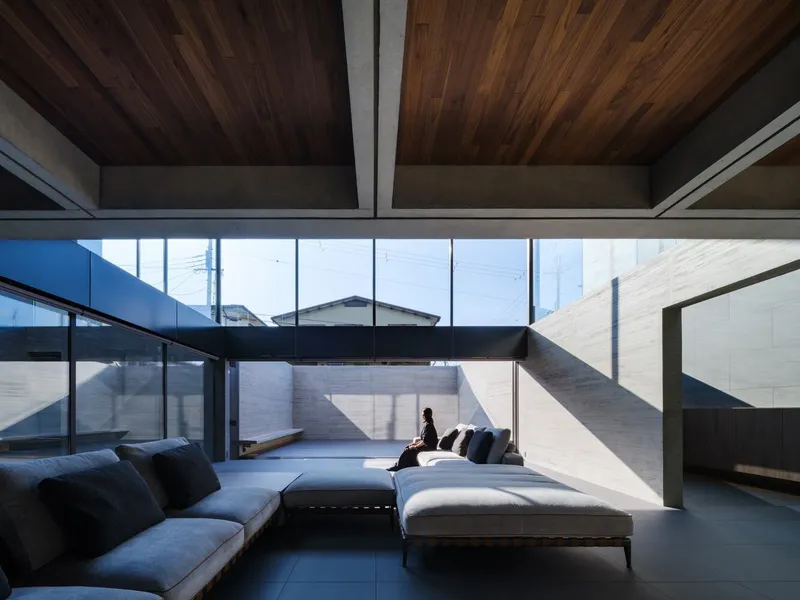
The kitchen and dining zone opens into a courtyard that draws daylight deep into the interior, illuminating the back of the kitchen and creating a vibrant, inviting atmosphere. A second courtyard at the heart of the home features full-height sliding glass doors and a built-in bench, functioning as a serene gathering space. These outdoor rooms are not decorative but integral—each one extends the interior and enriches the sensory experience of domestic life.
Flexible Interiors for Remote Work and Wellness
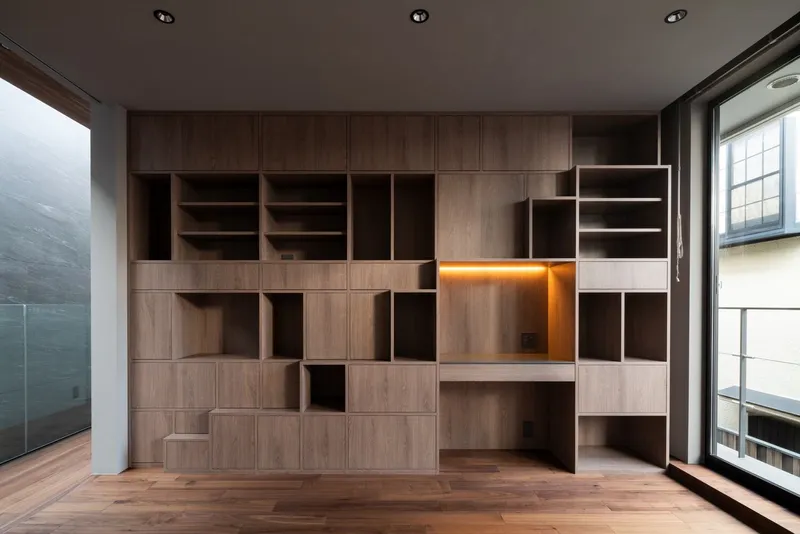
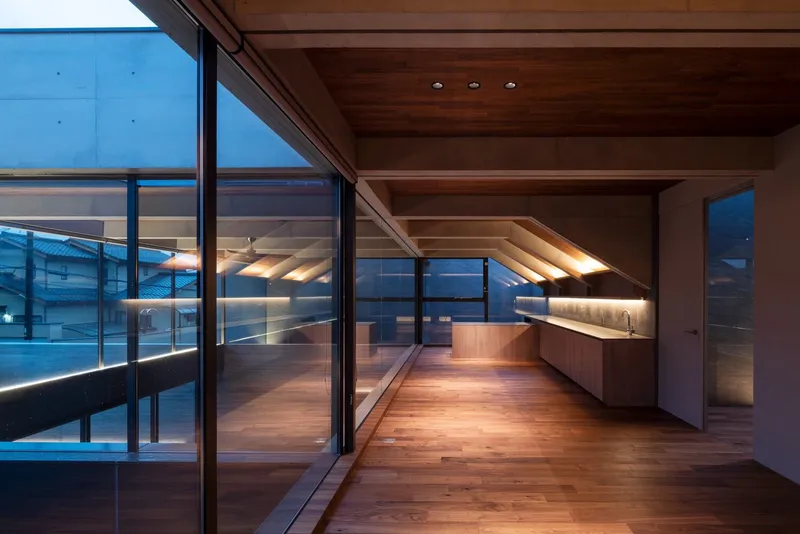
A prominent aspect of Element House’s design is its spatial zoning. Public functions such as the living and dining rooms, as well as outdoor spaces, are positioned near the main entrance, while private functions like bedrooms and washrooms are grouped near a secondary access point. On the upper level, a dedicated workspace includes office and meeting areas as well as a compact fitness zone. Visible from the living room below, the workspace connects domestic life with the realities of modern remote work, promoting both engagement and wellbeing.
Rhythmic Materiality and Spatial Harmony
One of the most distinctive features of the home is its ceiling—a sculptural grid of concrete ribs interspersed with recessed solid walnut panels. This coffered ceiling spans the main living area, introducing a rhythmic interplay of material and light while echoing the order and calm of the architecture. It reinforces the home’s narrative of balance: raw and refined, open and intimate, static and active.
A Living Narrative of Contemporary Japanese Architecture
Element House is more than a residential project—it is a thoughtful exploration of how architecture can support diverse ways of living. Through the strategic placement of courtyards, light wells, and flexible programmatic zones, the design achieves a sophisticated equilibrium. It blurs the thresholds between interior and exterior, solitude and community, domesticity and productivity. In doing so, it stands as a compelling model for modern courtyard house design, especially within the urban conditions of contemporary Japan.
All Photographs are works of Masao Nishikawa


Popular Articles
Popular articles from the community


Cube Design Draws an Ecological Corridor Between Two Shenzhen Hills with the Nankai Building
Beside Shenzhen's container docks, the Nankai Building pairs stacked balconies with a climbing green screen to connect two hillsides across its height.


Opera on the Sea: Driftwood Logic Shapes a Timber Opera House on Estonia's Coast
Trevor Orgill's opera house translates the entangled drift of floating timber into a civic building where wood, water, and music converge.

ETEH Reworks the Shared Spaces of São Domingos School in Brazil Around Timber, Color and Hanging Plants
At São Domingos School in Brazil, 436 m² of hall, refectory and library are recast with timber joinery, a yellow and blue code and trailing greenery.

Singing Woman: An Opera House That Performs Before the Curtain Rises
Ovidiu Cristian Pavel's conceptual opera house translates Estonia's choral identity into a sculpted waterfront landmark facing the Baltic Sea.

Similar Reads
You might also enjoy these articles


Bamboo Housing Challenge 2026: Design Affordable, Sustainable Homes Using Bamboo
An international design competition by Bamboo U and IBUKU inviting architects and designers to reimagine affordable housing using bamboo — with the winning design built full-scale in Bali.

Computational Design & Education: Beegraphy Design Awards Introduces 7th Category (Featuring Jiyun's Innovative Approach)
Dive into Beegraphy’s 7th Design Awards category, where computational design meets education to create immersive, interactive learning tools, inspired by Jiyun’s work.

From Parametric Lighting to Urban Furniture: Join the 2nd Workshop in Beegraphy’s Computational Design Series
Dive into Cutting-Edge Design Techniques and Practical Applications with Industry Experts

Last Call: Unleash Your Architectural Genius in SHAK's Kindergarten Design Competition
Urgent call for architects to join SHAK's kindergarten design competition before the looming deadline

Explore Courtyard Competitions
Discover active competitions in this discipline

Challenge to reimagine the Iron Throne

Photograph architecture without architects

Illustrate the lost glory of Angkor Wat - Render Challenge

Design challenge to reuse E-waste
Comments (0)
Please login or sign up to add comments
No comments yet. Be the first to comment!