
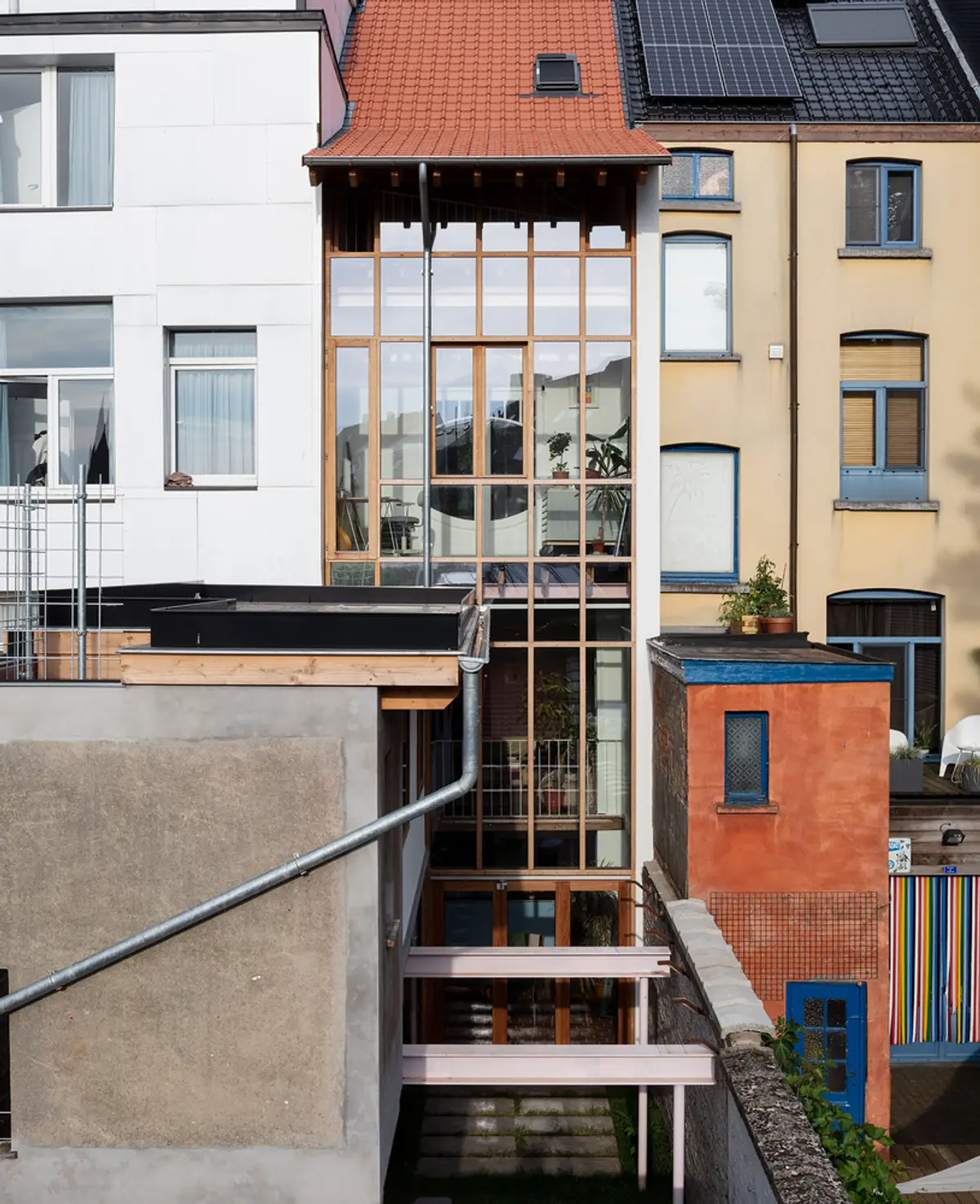
LDSRa and Olivier Goethals Float a Caravan Over a Ghent Row House Garden
Valine House strips a narrow Belgian terrace back to its party walls and rebuilds it as a vertical loop of light, air, and outdoor rooms.


Row house conversions in Belgium tend to follow a predictable script: gut the ground floor, add a skylight, clad everything in white plaster, and call it contemporary. Valine House in Ghent refuses that script entirely. Designed by LDSRa and Olivier Goethals as their own home, the project takes a narrow, deep terrace house and reworks it from section rather than plan, removing floors to create double-height voids, threading a spiral staircase through an outdoor courtyard, and suspending an actual caravan above the garden to house a bathroom and storage. The result is a 220 square meter home that feels twice its size.
What makes Valine House worth studying is its refusal to treat the row house envelope as a limitation. The existing party walls stay, but nearly everything between them is up for negotiation. A veranda and ground-level extension were demolished to reclaim the garden. Floors were selectively removed to stack rooms into a continuous loop that moves from kitchen to living space to caravan to office to rooftop garden and up to bedrooms on the third and fourth levels. The organization in plan is derived almost entirely from moves made in cross-section, which inverts the usual design sequence for a house this narrow. It is radical in its interventions and empathetic in how it gives space to daily life.
The Rear Facade as a Sectional Diagram
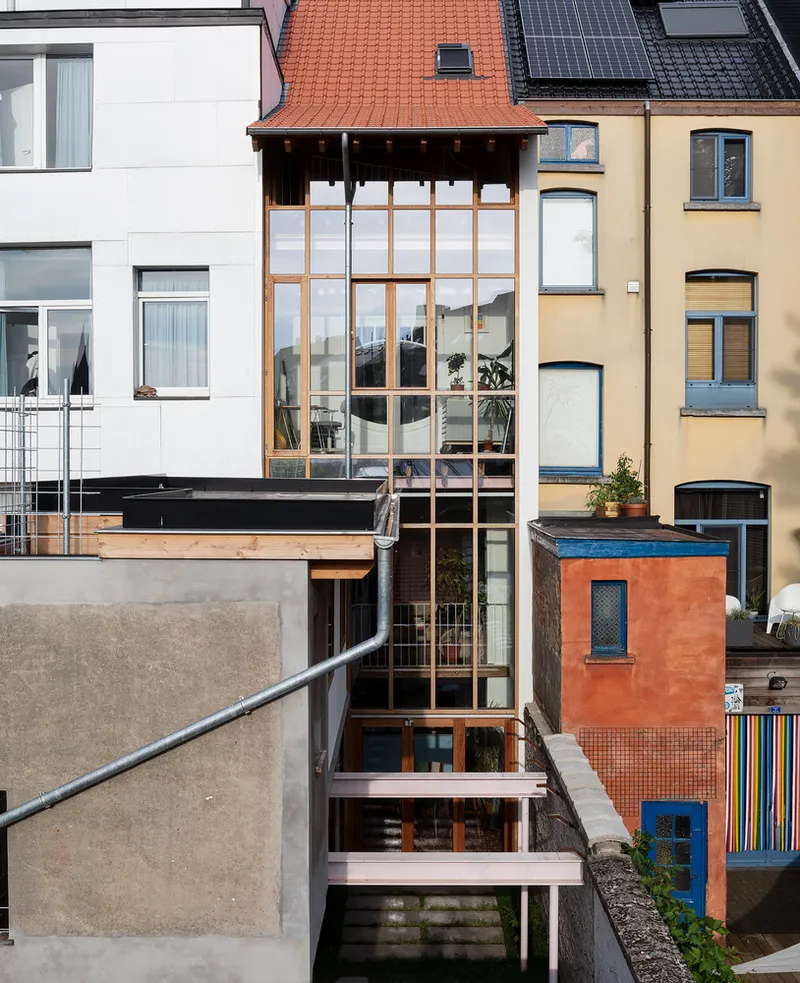
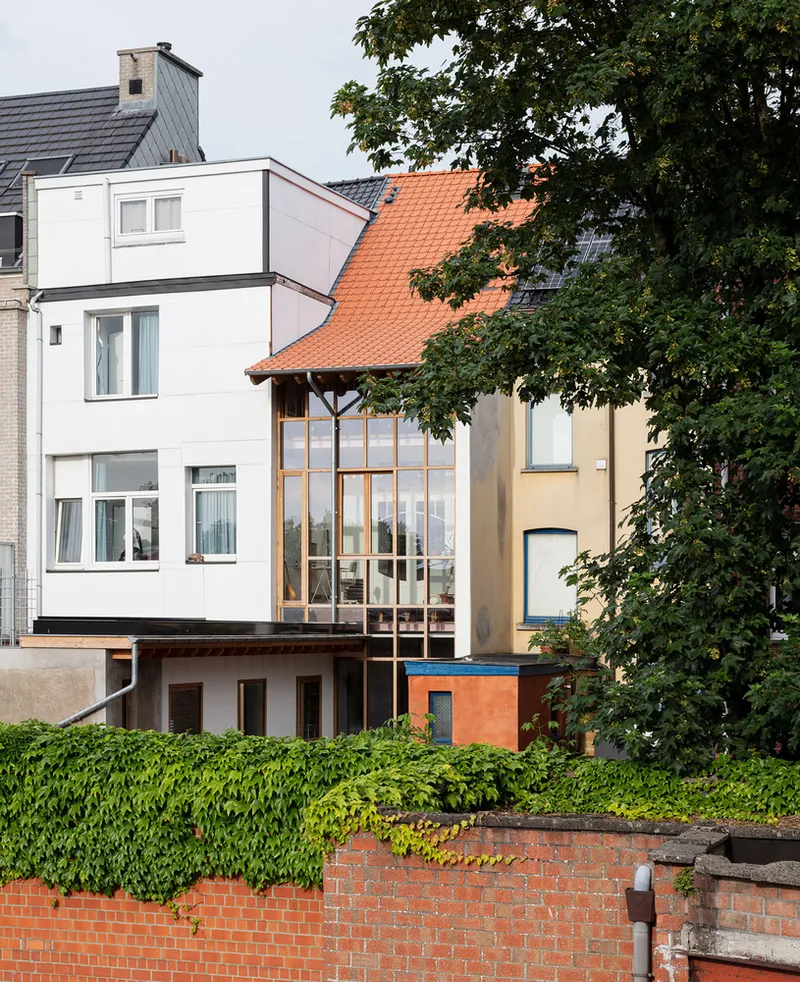
From the back, Valine House reads like a sectional drawing pinned to the party wall. Stacked terraces framed in steel and full-height glazed bays step back and forth, revealing the vertical organization of the house in a single glance. The orange tile roof sits on top almost casually, a reminder that this is still, technically, a terraced house in a Belgian street. Next door, the neighboring row houses carry on with their pitched roofs and modest rear elevations, making the contrast legible without being aggressive.
The timber and glass addition at the rear does serious spatial work. The folding doors at ground level create a pronounced connection between interior and garden, while the bay window on the second floor office level pushes the workspace outward into the air. Every level of the rear facade negotiates a different relationship with the outside, and the joinery, including awnings and folding mechanisms, makes those thresholds operable rather than merely visual.
A Courtyard Reclaimed
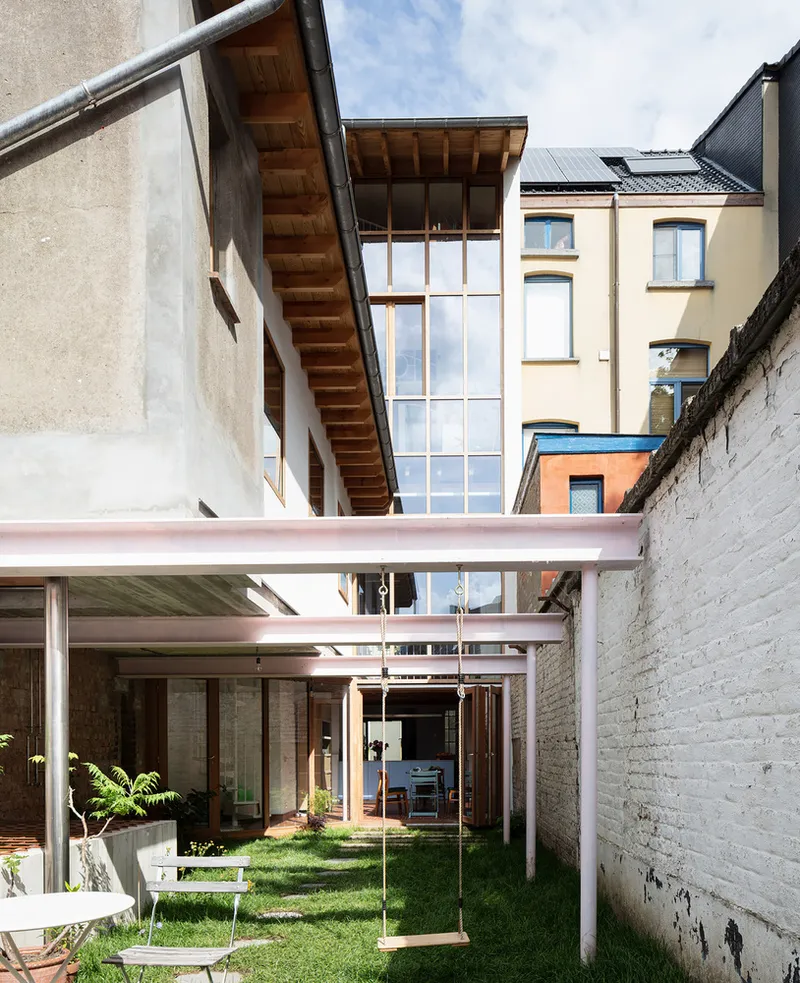
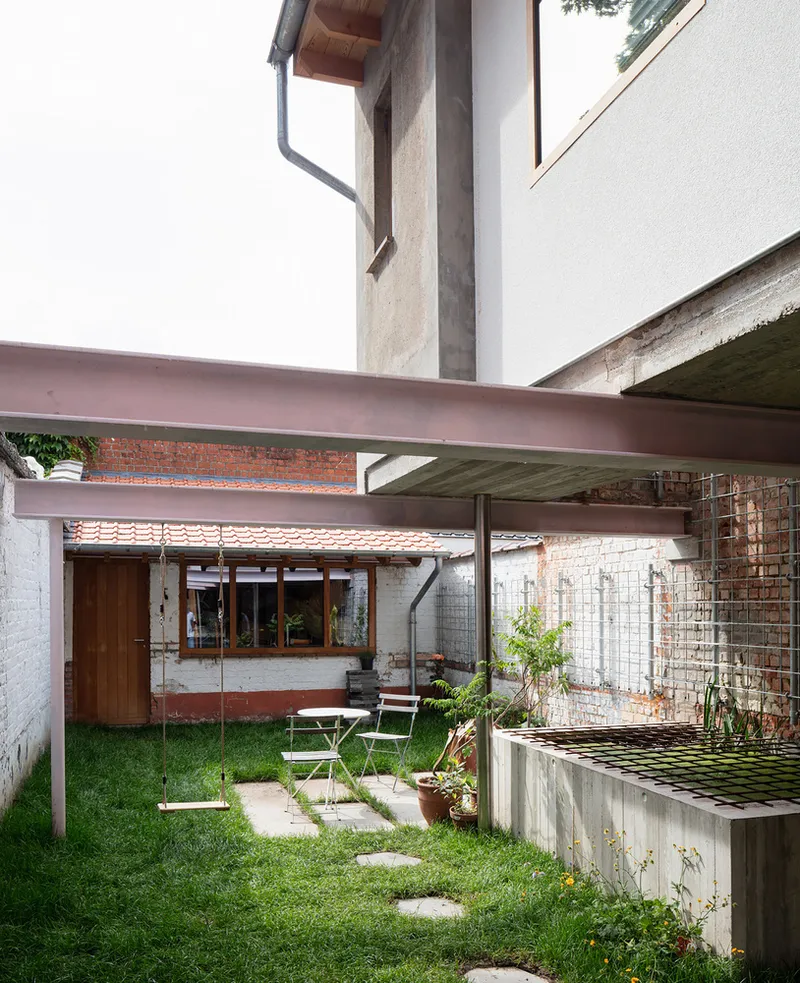
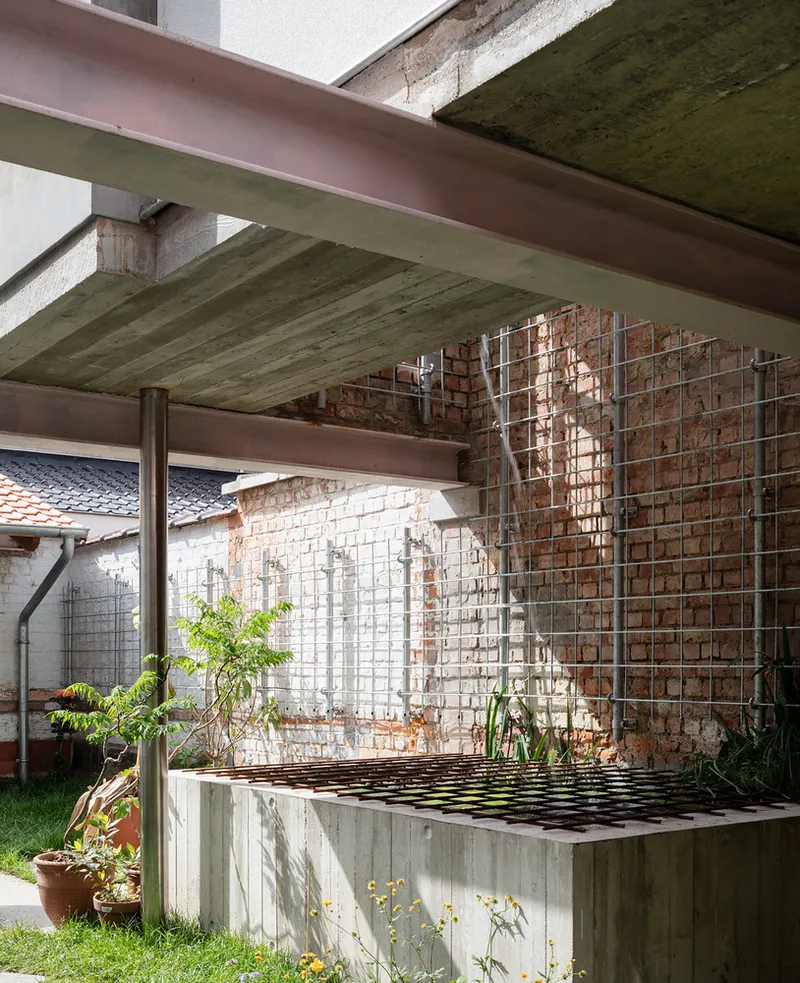
The garden was always small, west-facing, and squeezed between painted brick party walls. After demolishing the old veranda and ground-level extension, the architects turned that liability into the heart of the house. A rope swing hangs from a pink steel beam canopy. A grass lawn sits below. Concrete planters and planted beds line the brick walls. A rainwater collection pond anchors the landscape strategy. The word "garden" undersells it: this is a compressed outdoor room that does as much spatial work as any interior.
The steel beam canopy and wire mesh screen that span the courtyard at upper levels serve a dual purpose. They support the floating caravan structure above while filtering light down to the ground plane. The effect is layered: from below you read the courtyard as open sky framed by structure, while from the upper levels the courtyard reads as a void that pulls air and light deep into the narrow plan. The boundary between inside and outside genuinely blurs here, not as a design catchphrase but as a spatial fact.
The Vertical Loop
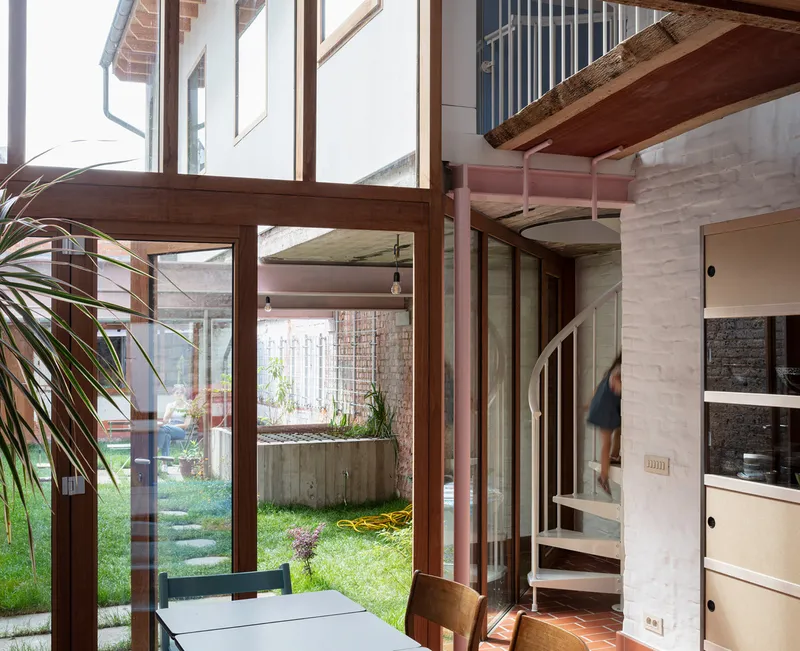
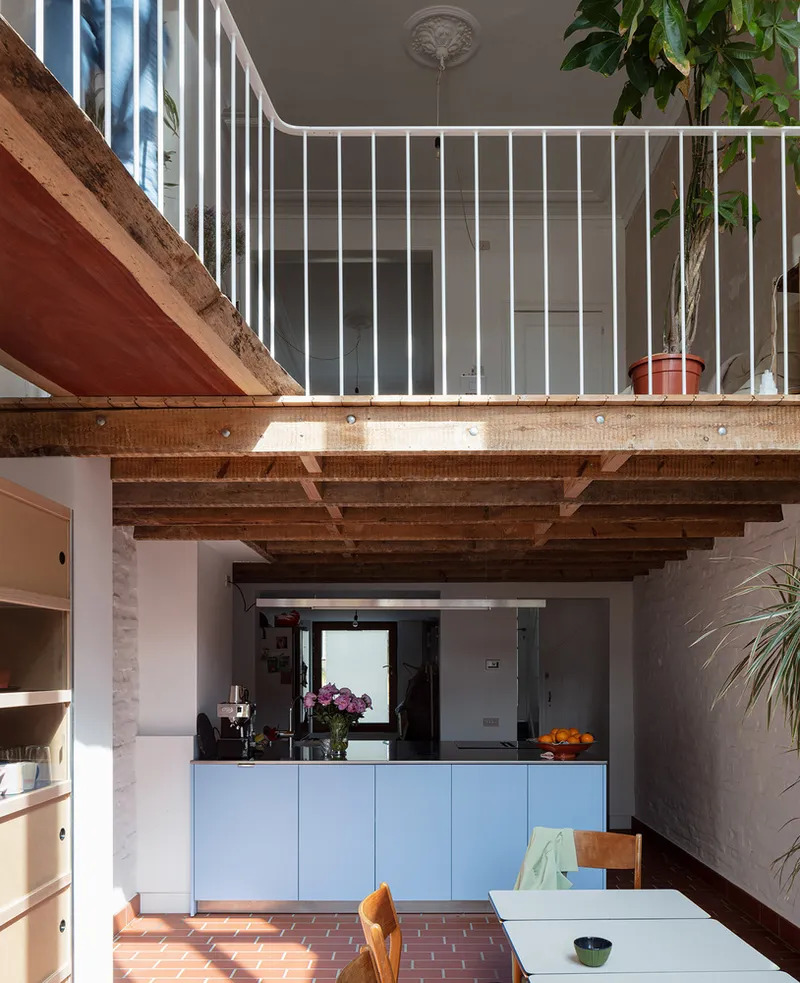
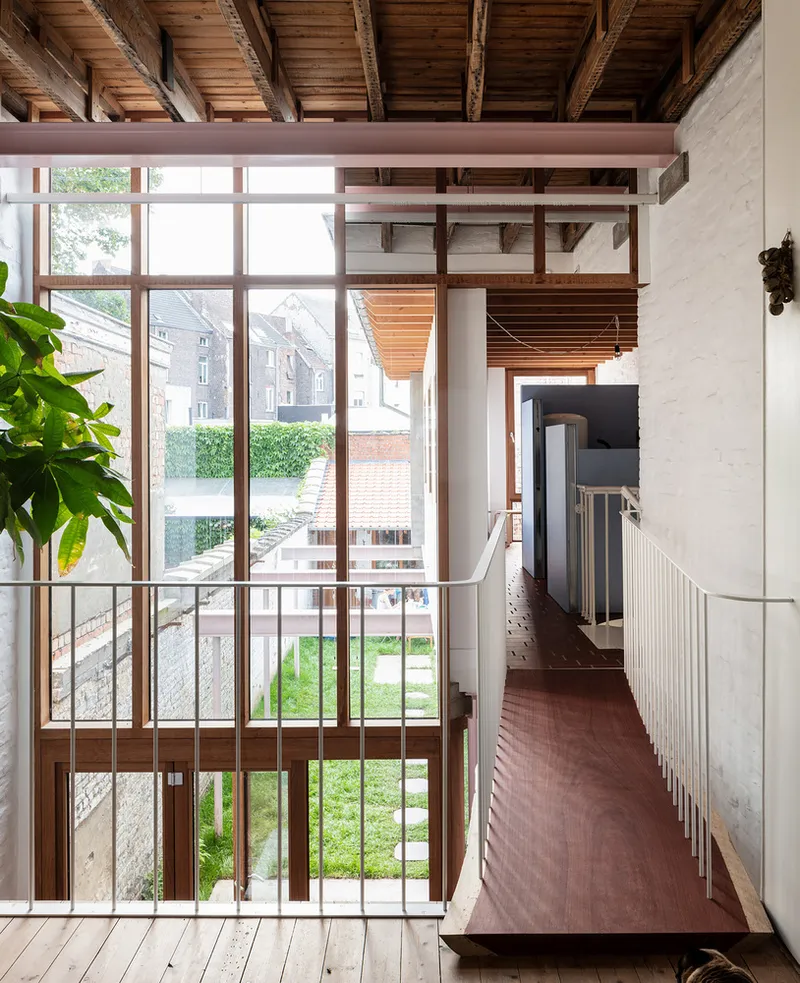
Valine House circulates vertically through three distinct devices: an existing staircase retained from the original house, a new spiral staircase in the courtyard, and a bridge that connects the first-floor living area to the caravan hovering above the garden. Together they create a loop, not a corridor, so that moving through the house means constantly shifting between interior and exterior conditions. The kitchen sits at ground level, open to the courtyard through timber-framed glazing. One floor up, the living space and caravan are linked by the bridge, with a void cutting down to the kitchen below.
The exposed timber joists above the kitchen mezzanine and the white vertical railings at the upper levels are deliberately plain. The architects let the spatial complexity do the talking. From the upper hallway, you look down through full-height glazing to the planted courtyard, across to the opposite party wall, and up to the steel structure overhead. The house reads differently from every vantage point, which is the whole argument for designing from section rather than plan.
The Floating Caravan
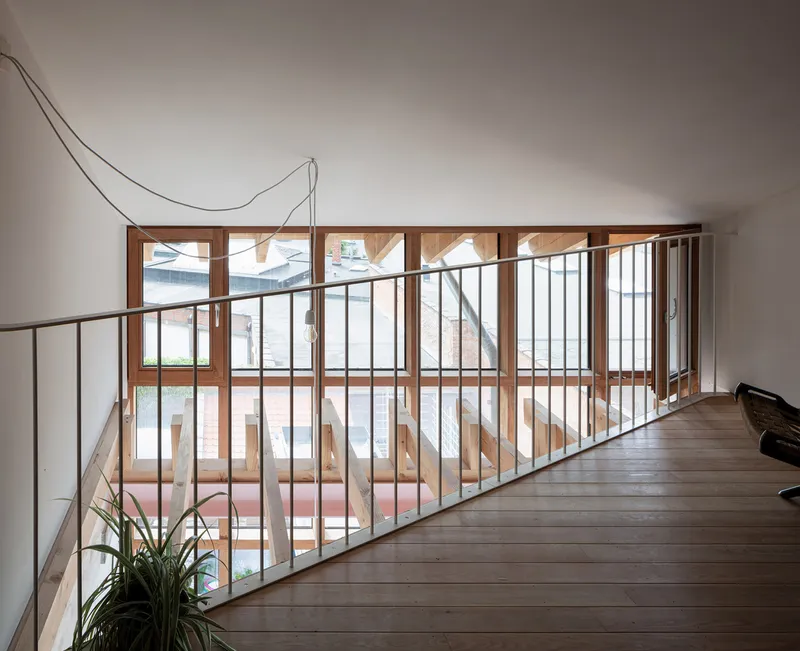
The caravan is the project's most provocative gesture. Suspended above the garden on steel structure, it accommodates storage, an additional bathroom, and a toilet. Programmatically it is service space. Spatially it is something stranger: a found object hovering in the void between house and garden, connected by a bridge to the first-floor living area. It reframes the question of what counts as a room in a row house conversion.
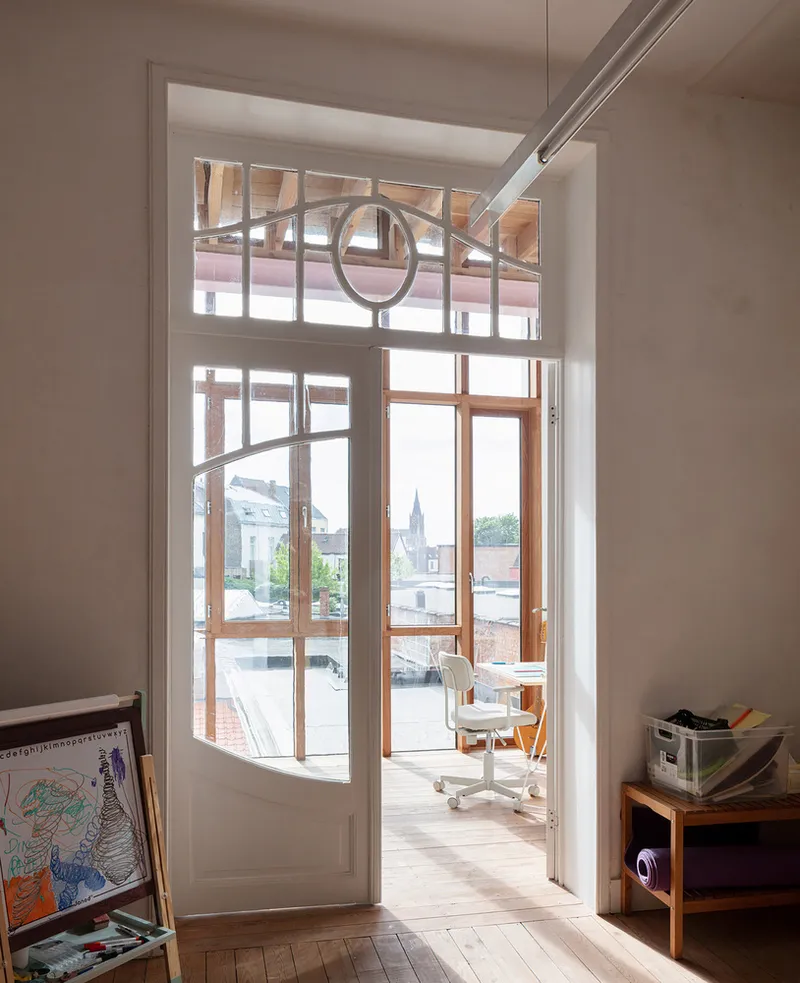
The decorative transom windows and timber doors that frame views onto the terraces and toward the caravan have a domestic warmth that tempers the structural bravado. These are architects who live in the house, and the detailing reflects that. The threshold moments, a doorway framing a terrace, a metal railing overlooking the courtyard, are composed with care but not preciousness. The house is meant to be lived in hard, and the robustness of the materials suggests it can take it.
Working with Light and Orientation
With the garden facing west, the house receives afternoon and evening sun at its deepest point. The architects organized the program so that occupants can shift with the light during the day: working at the bay window office on the second floor during morning hours, moving down to the kitchen and courtyard as the sun drops, and retreating to the upper bedrooms as evening comes. The voids cut through the floors pull that western light vertically into the house, so even the ground-level kitchen benefits from the orientation.
The folding door at the rear facade is the key mechanism. When open, the ground floor becomes an extension of the courtyard, and the light floods in without obstruction. When closed, the timber-framed glazing still reads as transparent. It is a passive design strategy that requires no technology, only careful sectional thinking and joinery that works.
Plans and Drawings
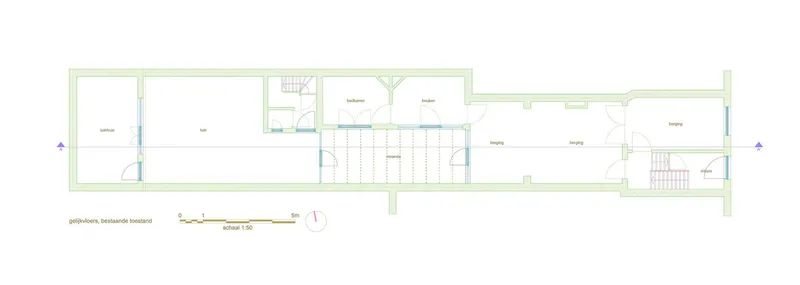
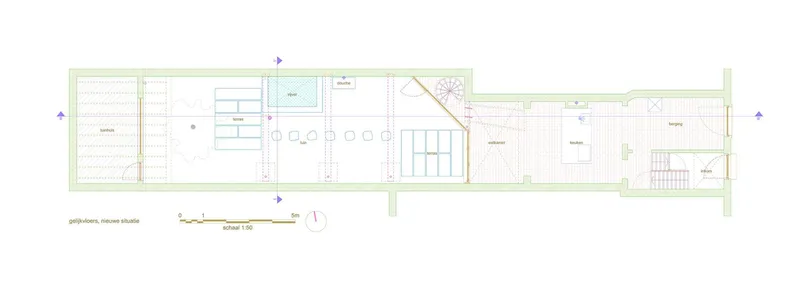
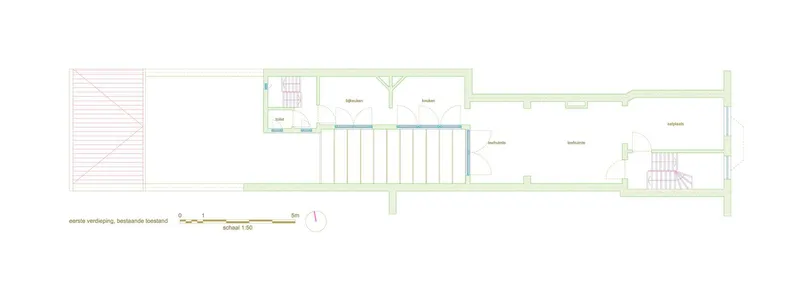
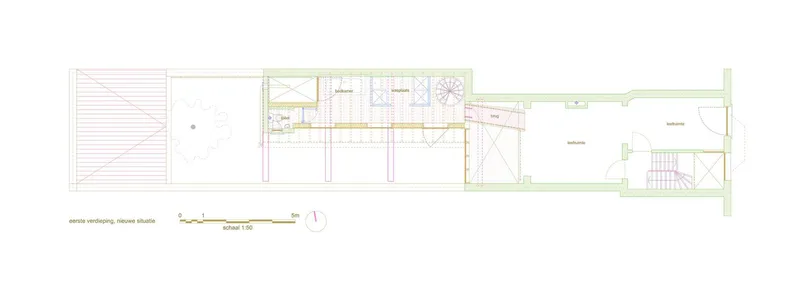
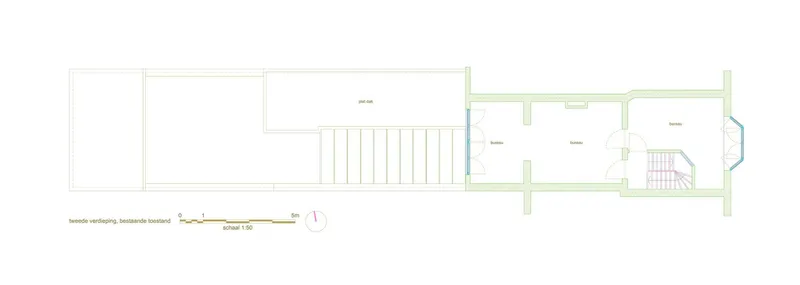
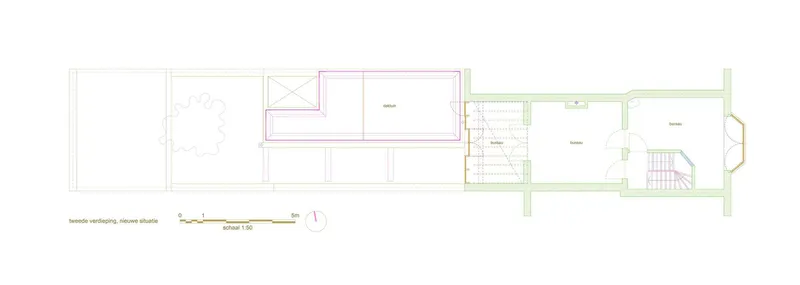
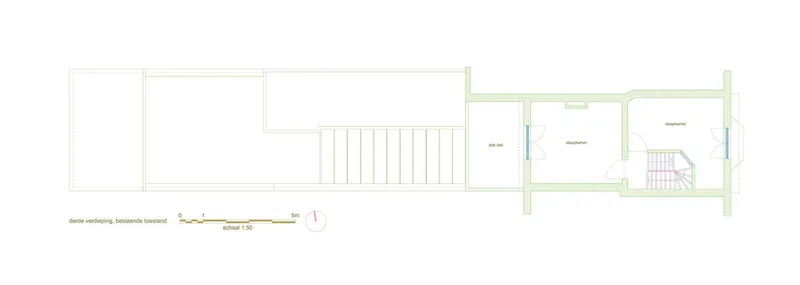
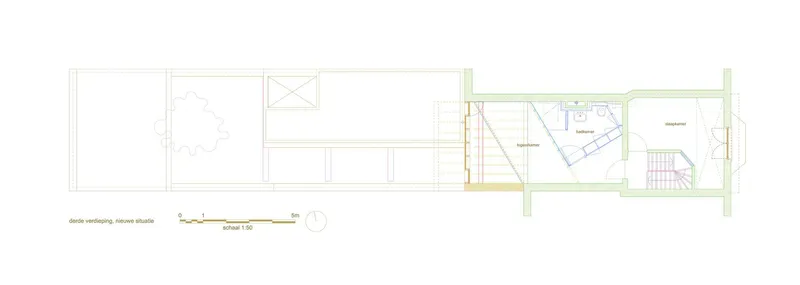
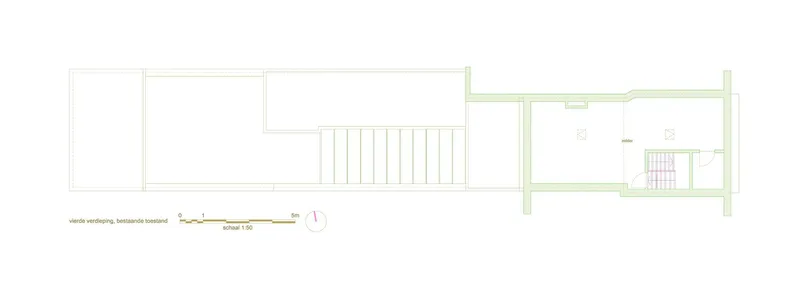
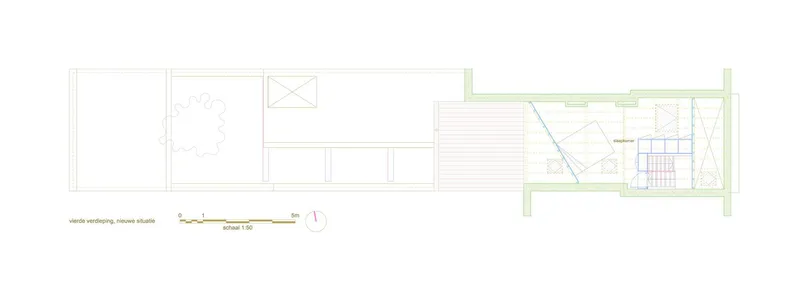
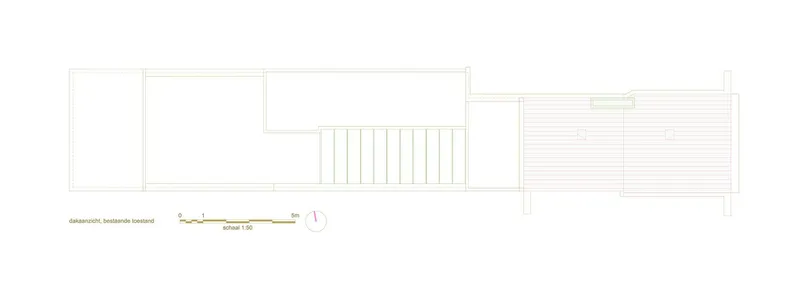
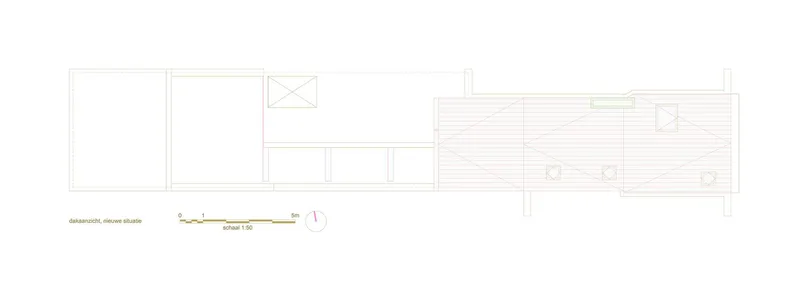
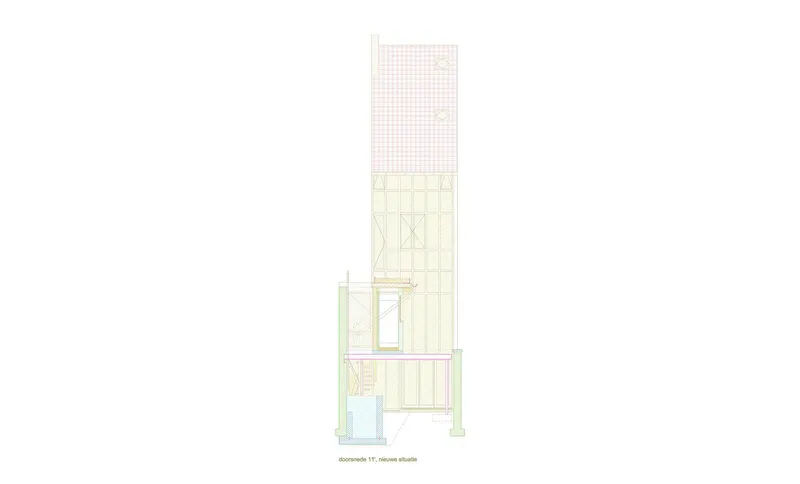
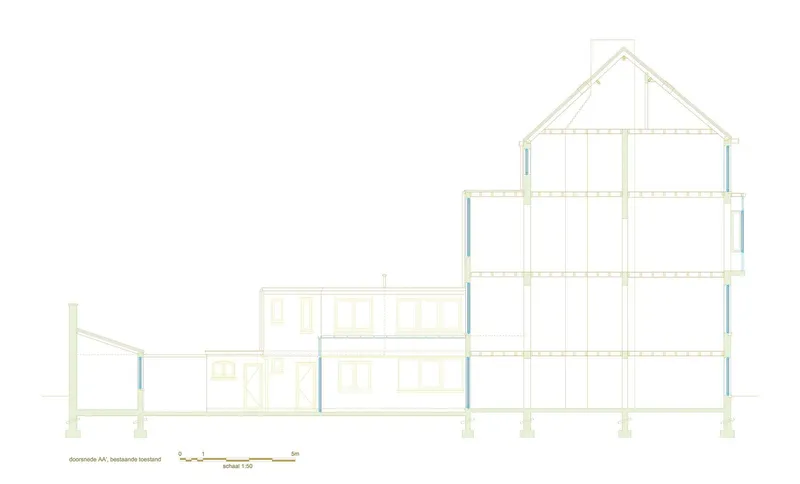
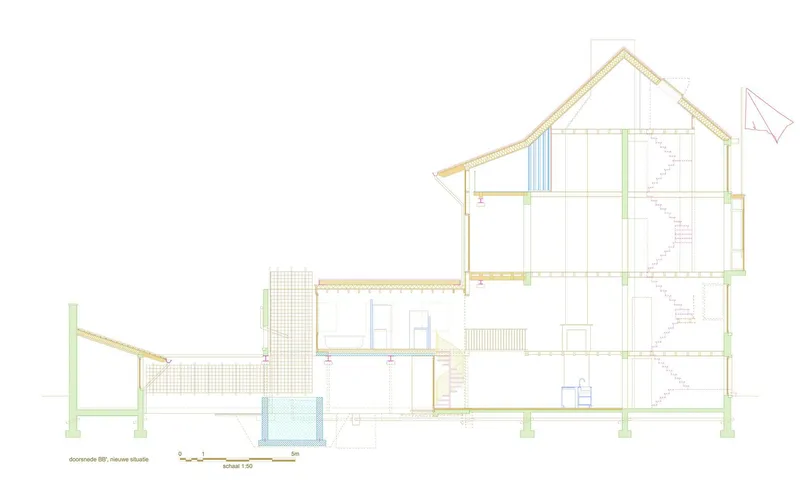
The floor plans reveal the before-and-after logic of the conversion with clarity. Existing conditions show the typical deep, narrow row house layout with a grid of rooms stacked front to back. The new plans introduce diagonal stairs, angled partitions, and decking areas that break the linear sequence. The sections are where the project truly comes alive: they show the multi-level voids, the floating caravan structure, the pitched roof sitting above a stepped interior topography, and the gabled connection between the main house and the lower rear wing. The drawing set makes a strong case that section-driven design can unlock spatial potential that plan-driven approaches simply cannot reach in a house this constrained.
Why This Project Matters
Valine House matters because it demonstrates what happens when architects design for themselves with genuine ambition. There is no client brief to satisfy, no committee to placate, and no developer's pro forma to respect. The result is a conversion that takes real risks: suspending a caravan in mid-air, removing floors to create voids in a four-story house, and treating the garden as the organizational center of the plan. These are moves that most clients would reject and most architects would not propose. The fact that LDSRa and Olivier Goethals live in the outcome gives the project an honesty that speculative designs lack.
More broadly, the project offers a model for working within the Belgian row house typology that goes far beyond the cosmetic. By retaining the party walls and working primarily in section, the architects show that the constraints of the terrace house, its narrowness, its depth, its limited garden, can become generative rather than restrictive. The vertical loop, the layered courtyard, and the operable thresholds all emerge from those constraints. For anyone working on dense urban housing in northern Europe, Valine House is a provocation and a proof of concept in equal measure.
Valine House by LDSRa and Olivier Goethals. Gent, Belgium. 220 m². Completed 2022. Structural engineer: H110 Ingenieur en Architecten. Builder: Jonas Bockxstaele. Photography by Michiel Decleene.
About the Studio
Share Your Own Work on uni.xyz
If projects like this are the kind of work you want to make, uni.xyz is a place to publish your own, find collaborators, and enter design competitions.


Popular Articles
Popular articles from the community


LT2A and OPEN Architectes Thread a Brick and Glass High School Through a Wooded Belgian Campus
In Braine-l'Alleud, a 3,000 m² wing for Collège Cardinal Mercier pairs pale brick with a glazed colonnade, deferring to a small chapel and a dense wood.

Jaramillo Van Sluys Arquitectura and Urbanismo Turn a Demolished Registry Lot in Quito into an Orchard Plaza
In Quito's Centro Histórico, a 2,800 m² plaza exposes the San Agustín convent wall and redraws its lost Augustinian orchard in volcanic stone.

longwave studio Reorganizes a 112 m² Tainan Apartment Around the Daily Routines of a Family and Two Cats
In Tainan, Taiwan, birch plywood, rust-red furniture and a freestanding plaster wall link arrival, storage, work and family life in one apartment.

Juan García Correa, John González and Claudia Rueda Sink a Circular Amphitheater into a Manizales Engineering Building
On the La Nubia campus in Manizales, Colombia, the S1 Building folds labs and offices into a hillside of ramped lawns that double as a campus route.

Similar Reads
You might also enjoy these articles


Hodi-Mandai Geram
Project Function: Preservation and revitalization of the Intangible heritage and socio-spatial identity of the Hodi by Housing, Cultural Memory Center, Sacred Grove, landscape, local tourism economy


Olio Towers: A Mid-Rise for Performers That Fuses Housing, Rehearsal, and Stage
Located blocks from Houston's Theater District, this modular tower stacks living units around a central performance atrium.

Oasis: Modular Green Housing Carved into Dhaka's Urban Fabric
A shortlisted Plugin Housing entry reclaims unauthorized settlements in Dhaka with stepped concrete volumes, green roofs, and ventilation-driven design.

Black Hole: A Floating Megastructure for the Post-Physical Era
Emiliano Mazzarotto envisions a spherical, self-scaling arena where e-sports, digital hotels, and holographic stadiums replace traditional public space.

Explore Architecture Competitions
Discover active competitions in this discipline

Challenge to reimagine the Iron Throne

Photograph architecture without architects

Illustrate the lost glory of Angkor Wat - Render Challenge

Design challenge to reuse E-waste
Comments (0)
Please login or sign up to add comments
No comments yet. Be the first to comment!