

Guinle Park: Restoring a Lucio Costa Apartment
LINHA Arquitetura restored a 1954 apartment in Rio's Caledônia Building, keeping the cobogó screens, parquet, and a turquoise basin from the original.


The Caledônia Building in Rio de Janeiro's Guinle Park was designed by Lucio Costa and completed in 1954. It is one of the canonical works of Brazilian modernism: cobogó screens, pilotis, generous floor plans, and views into one of the most beautiful urban parks in South America. Living in a Lucio Costa apartment is a privilege and a responsibility. LINHA Arquitetura, led by Paula Daemon and Lis Fernanda Thuller, took on both.
The restoration of this Guinle Park apartment strips back decades of accumulated renovation to reveal the original 1954 fabric: parquet floors, cylindrical columns, stainless steel kitchen cabinets, cobogó screens, and a turquoise bathroom basin. The approach is subtraction, not addition. Remove what was layered on. Restore what was hidden. Add only what the apartment needs to function for a contemporary family.
Cobogó Light and the Living Room
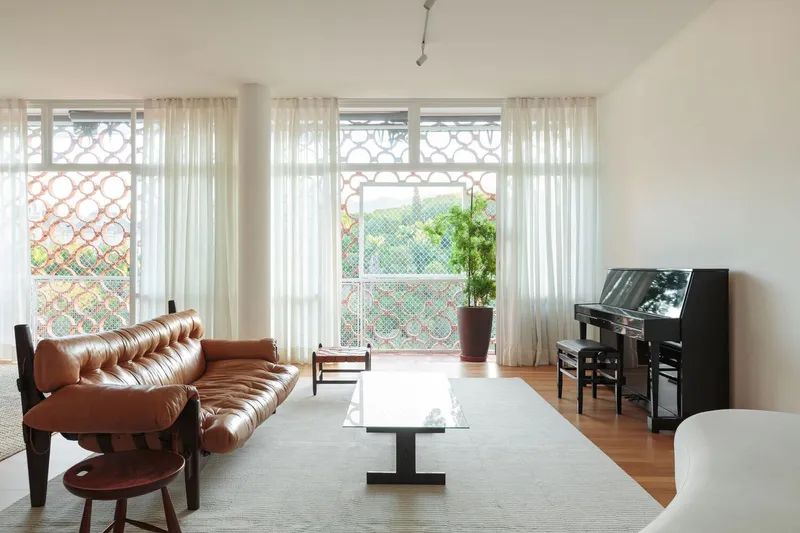
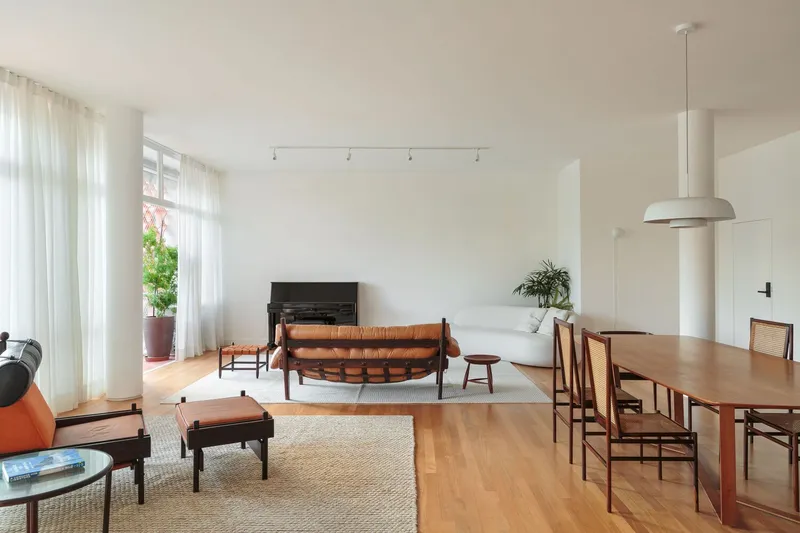

The cobogó screens on the building's facade are the apartment's signature. They filter light into diamond patterns that move across the walls and floors through the day. The living room is designed around this light: a leather Mole sofa by Sergio Rodrigues, a rosewood armchair, a piano, and sheer curtains. The furniture is mid-century Brazilian. The room is white, warm, and quiet.
The cobogó does three things at once: it shades the interior from direct tropical sun, it provides privacy from the park without blocking the view, and it creates a light quality that no curtain or blind can replicate. The architects understood that this element is the apartment, and designed everything else to serve it.
Dining and Kitchen: Rosewood and Stainless Steel
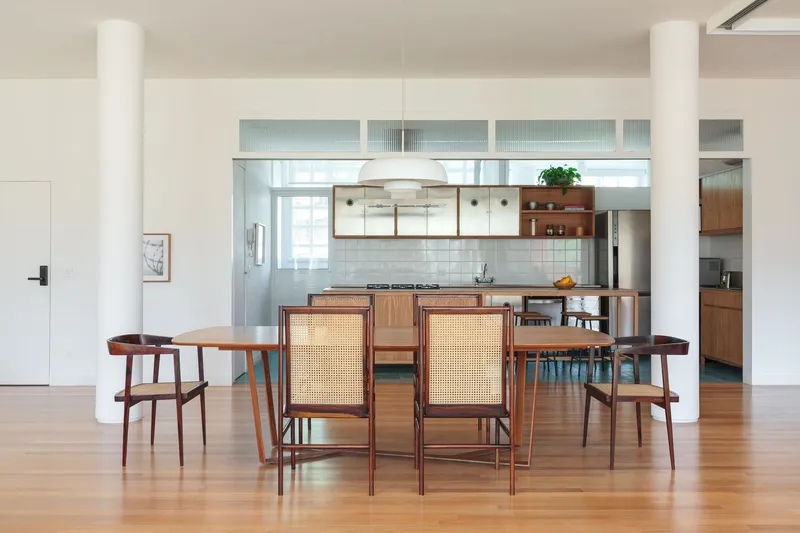
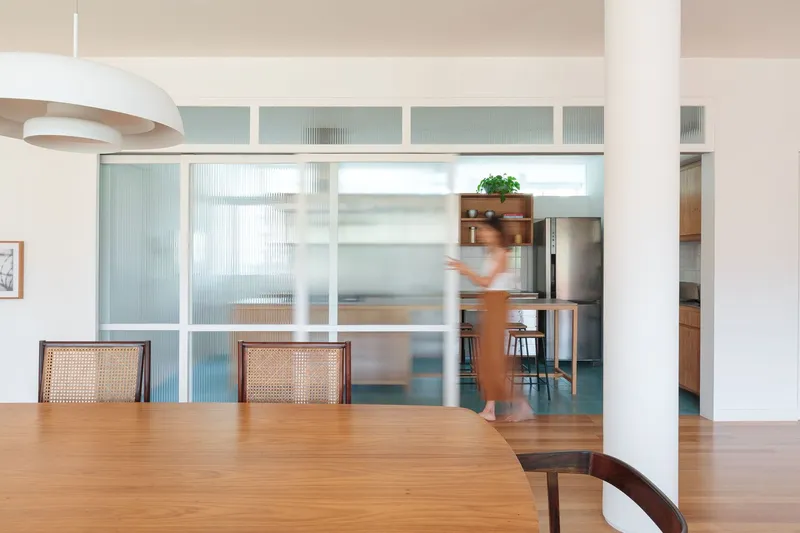
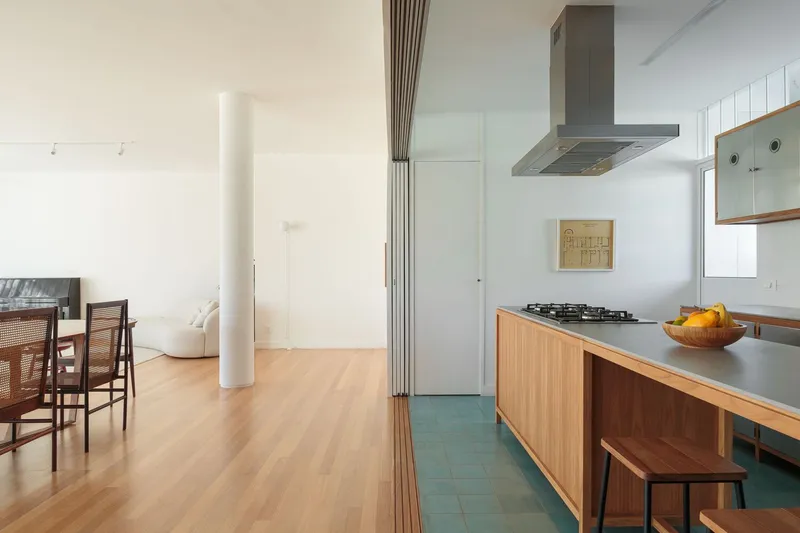
The dining area sits between the living room and the kitchen, separated by a glass sliding partition. The rosewood table and cane-back chairs are period-appropriate: mid-century Brazilian design that belongs in this building. A white cylindrical column marks the zone boundary. A white pendant lamp hangs above.
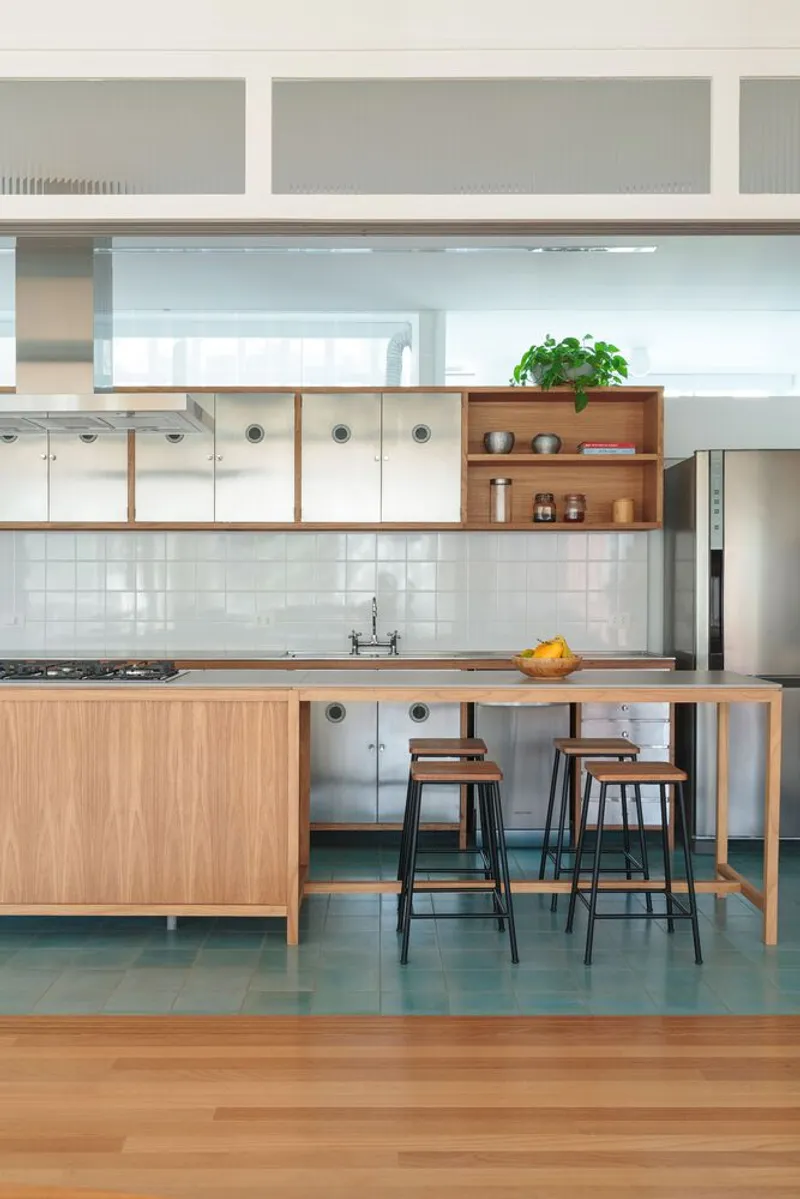
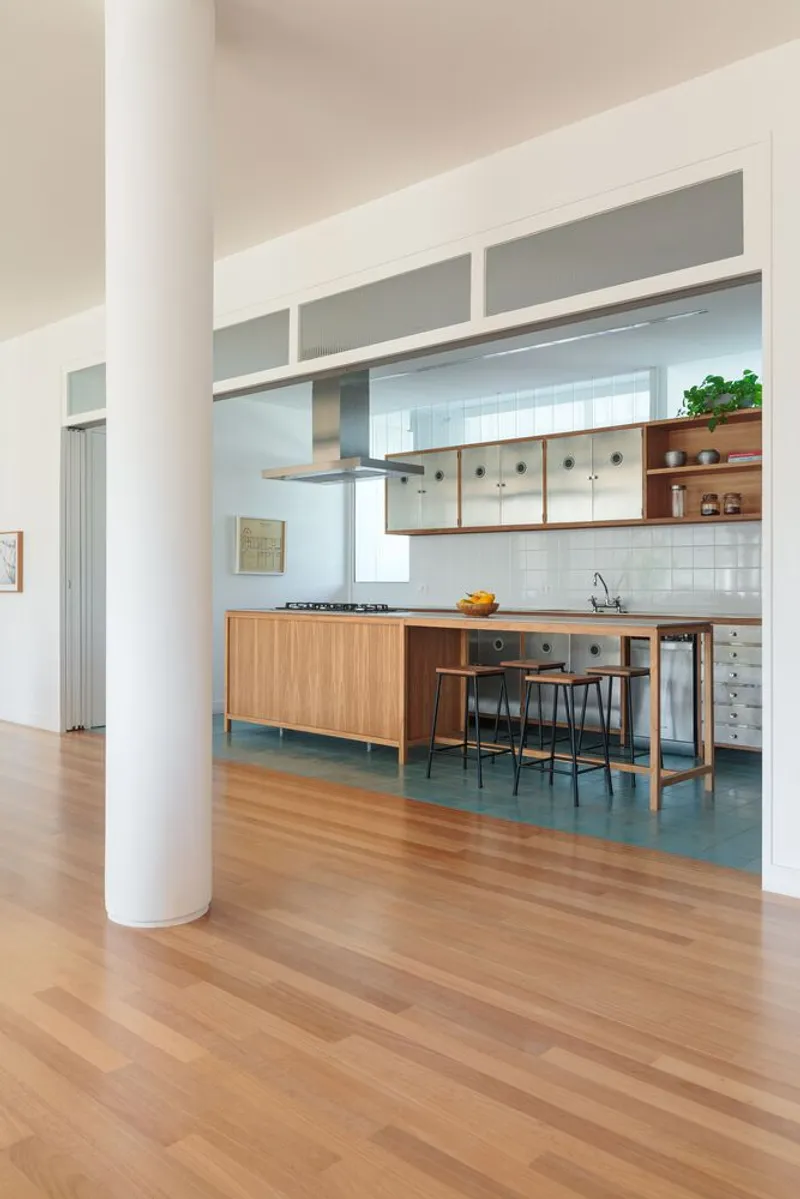
The kitchen is the project's most remarkable preservation. The original stainless steel cabinets from 1954 were cleaned, refurbished, and reintegrated. They sit alongside a new oak and stainless steel island. The floor changes from oak to blue-green tile at the kitchen threshold. This colour, unexpected and specific, is the apartment's only strong chromatic move. It works because everything around it is neutral.
The Corridor and the Parquet
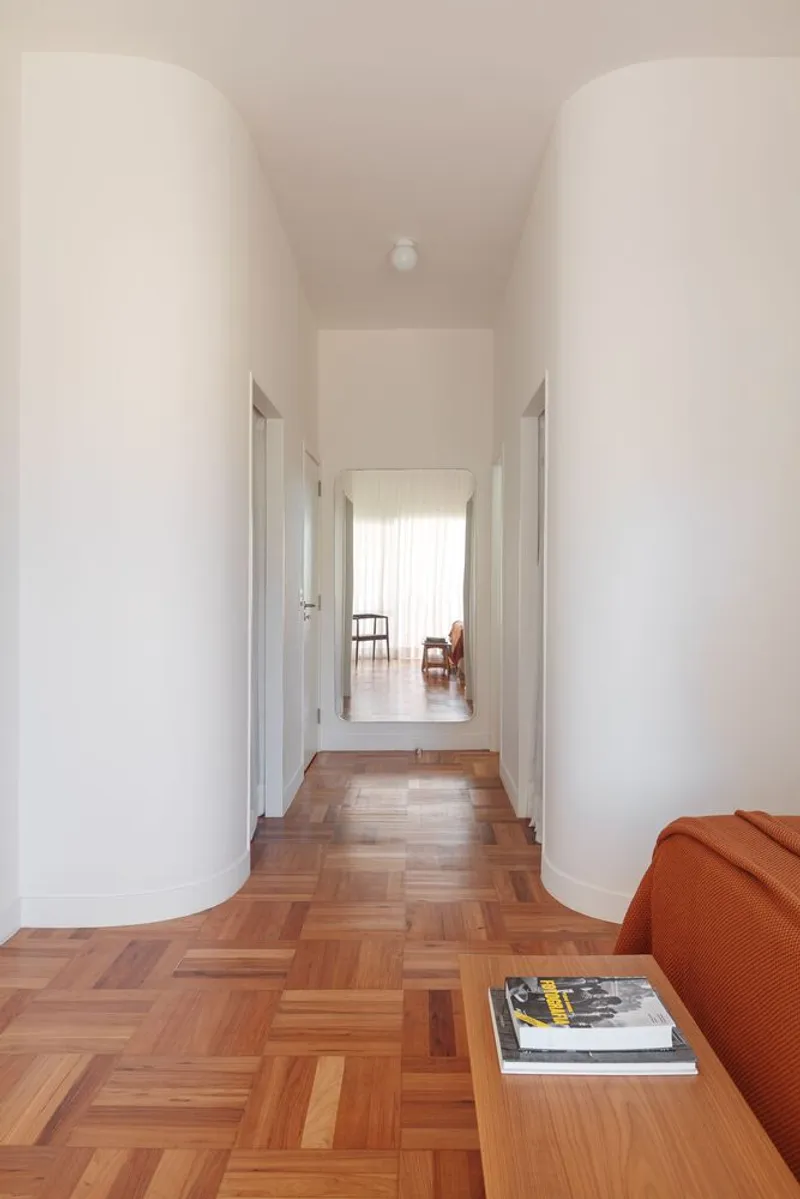
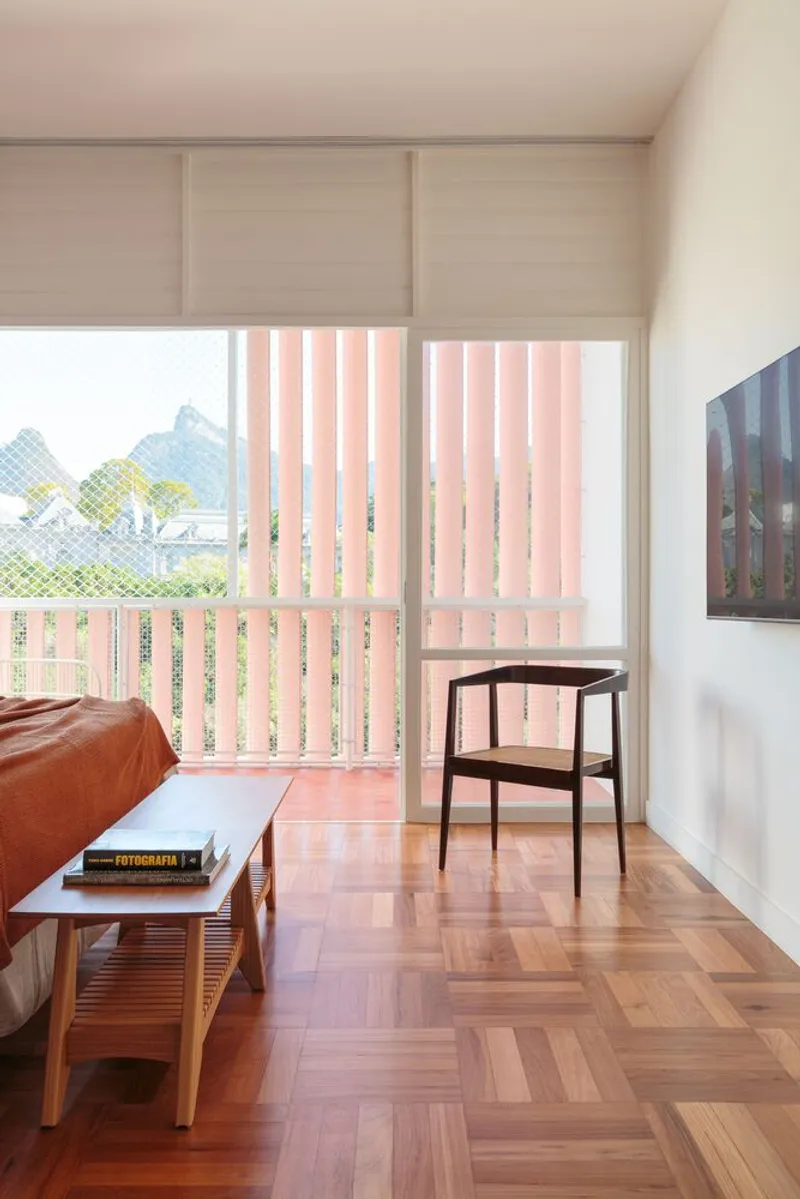
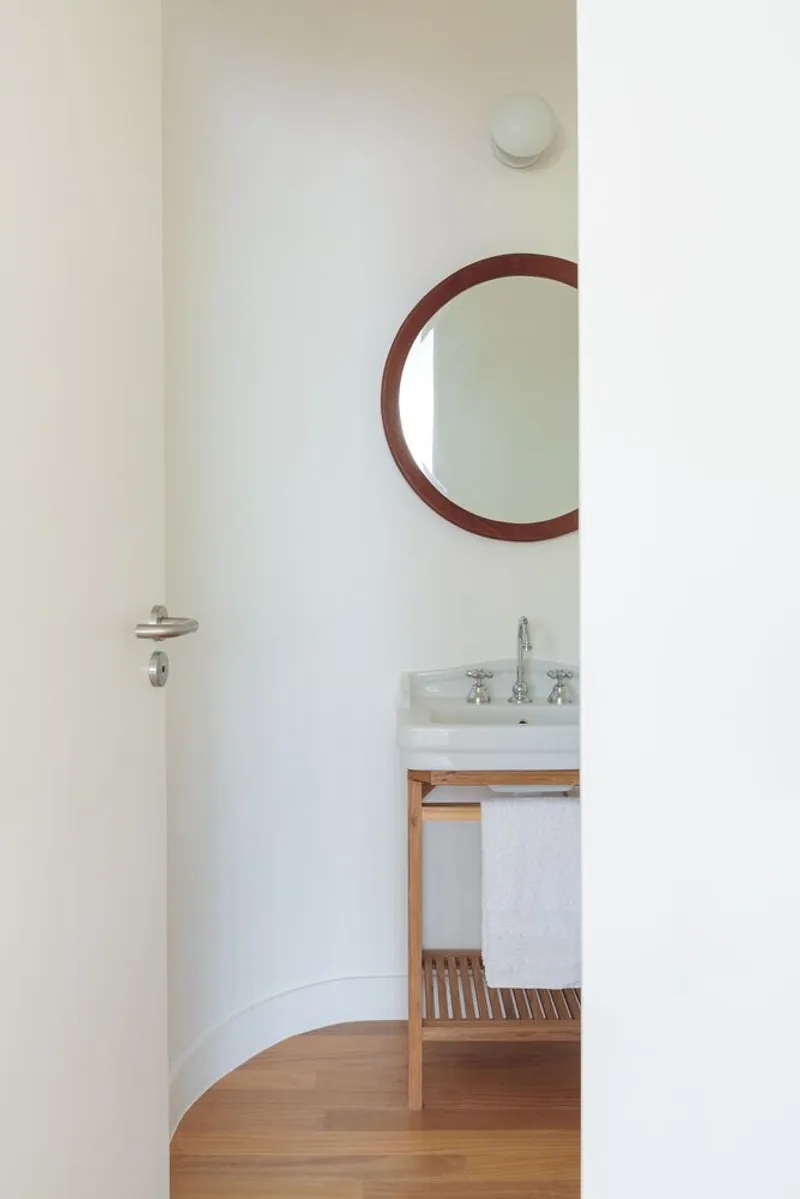
The corridor runs the full depth of the apartment, connecting the social rooms to the bedrooms. The parquet floor is original: a basket-weave pattern in warm tropical timber that has darkened over seventy years. The walls curve where they meet the columns. There are no sharp corners. This is a Lucio Costa detail: the columns are cylindrical, and the partitions acknowledge them.
The corridor photograph, with its globe light and long perspective, is the clearest image of what this apartment was built to be. It is not a decorated space. It is a proportioned one. The width, the ceiling height, the floor pattern, and the curve of the wall do the work.
Bedroom: Column and Colour
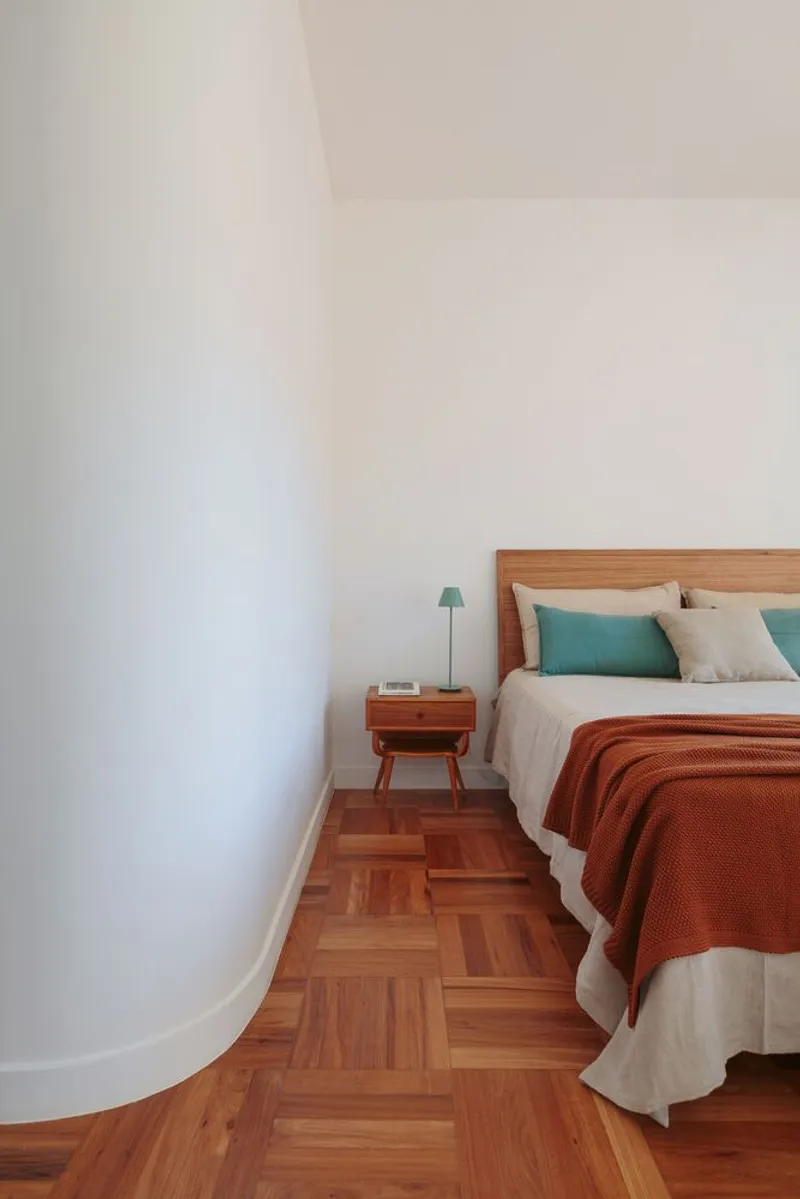
The bedroom shows the most intimate relationship between old and new. A curved white column meets the wall. An oak headboard and timber nightstand are contemporary. A terracotta throw and teal cushions provide the only colour. The parquet floor continues from the corridor. The room is calm because every element is either original or chosen to defer to the original.
Bathrooms: Tile, Terracotta, and a Turquoise Basin
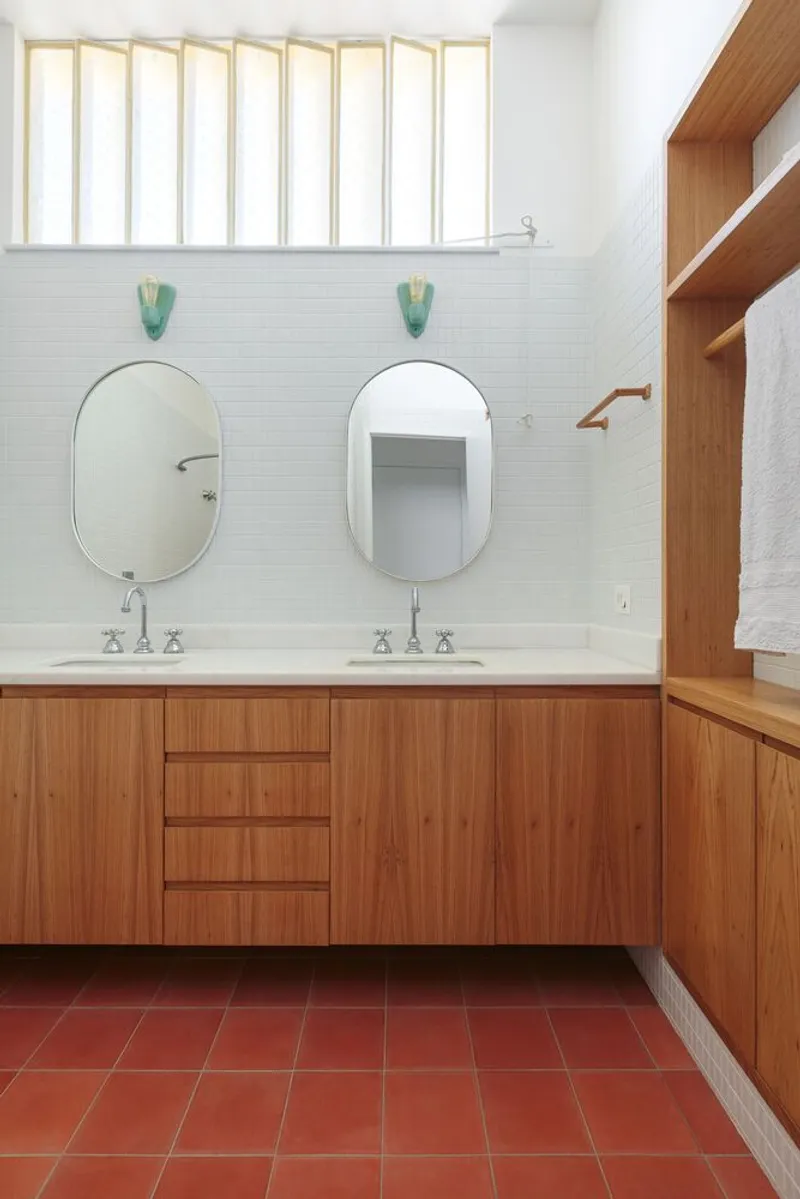
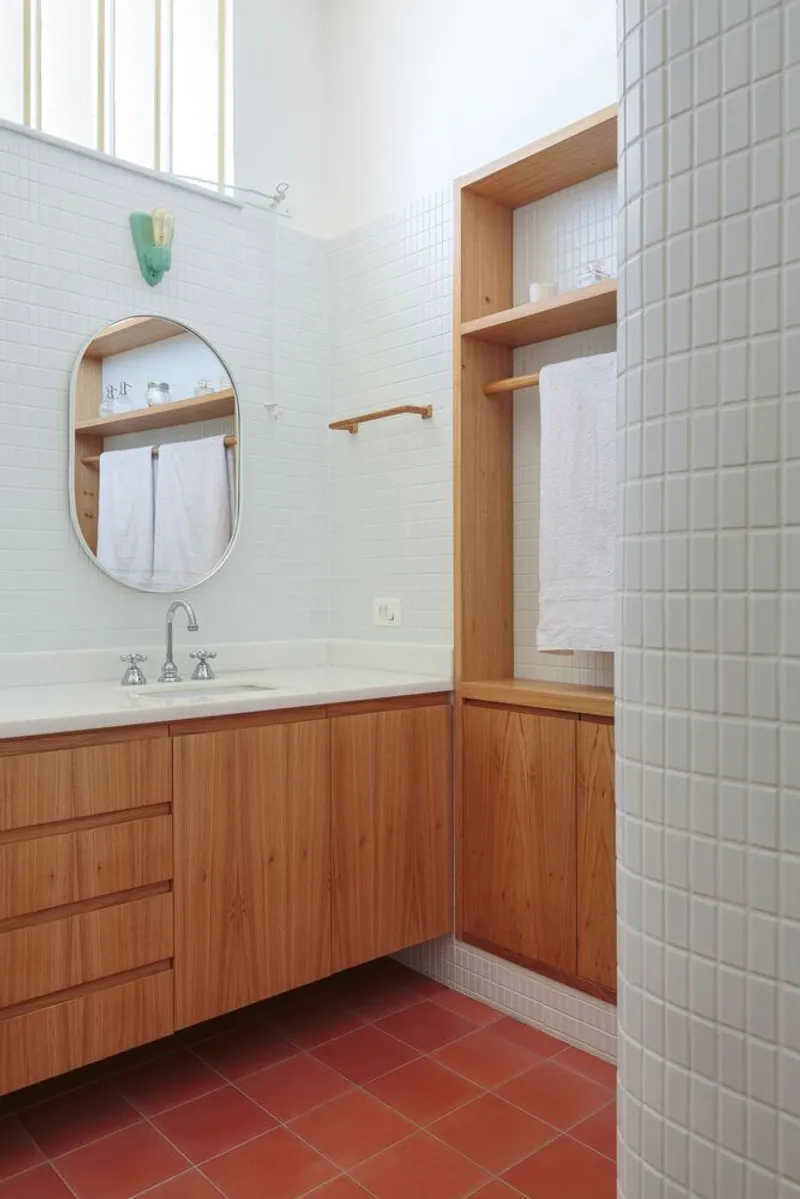
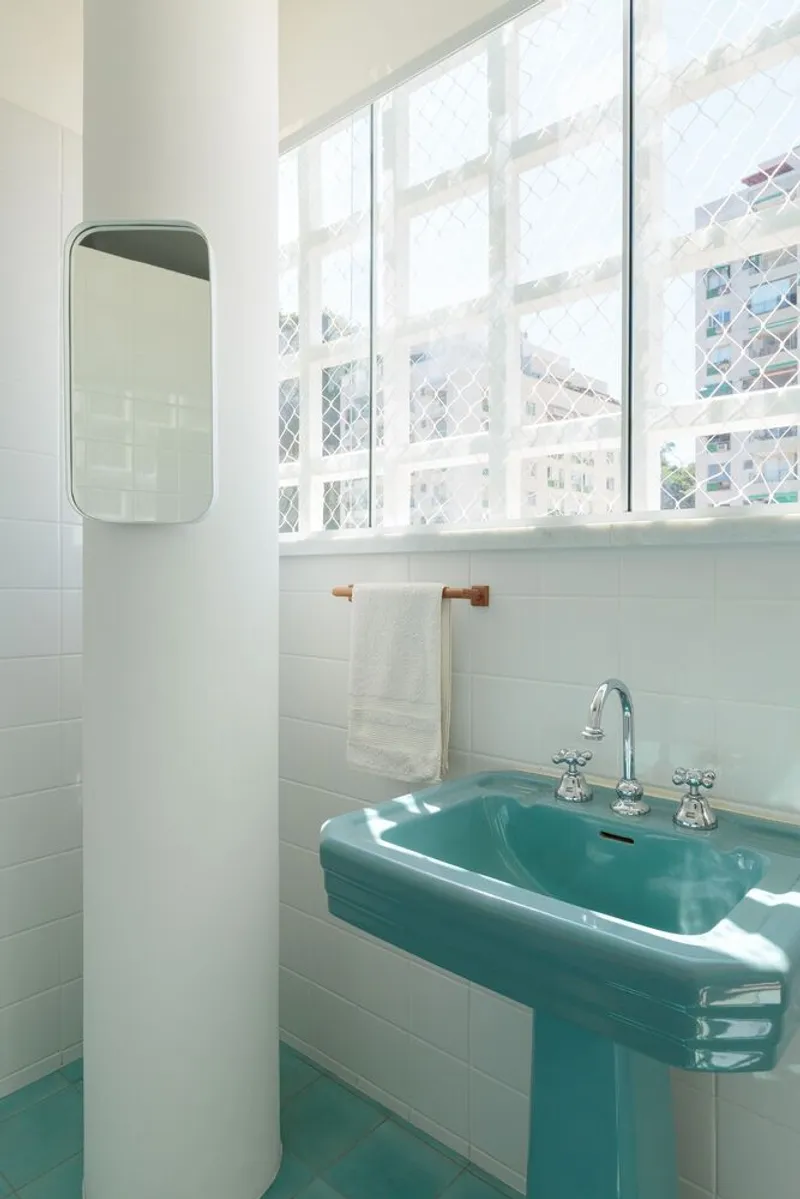
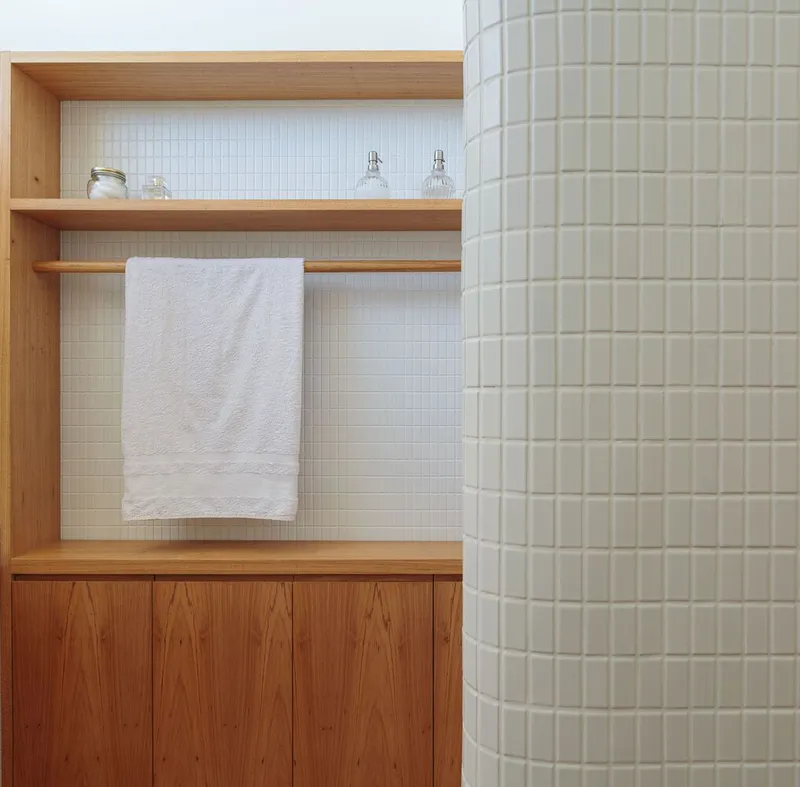
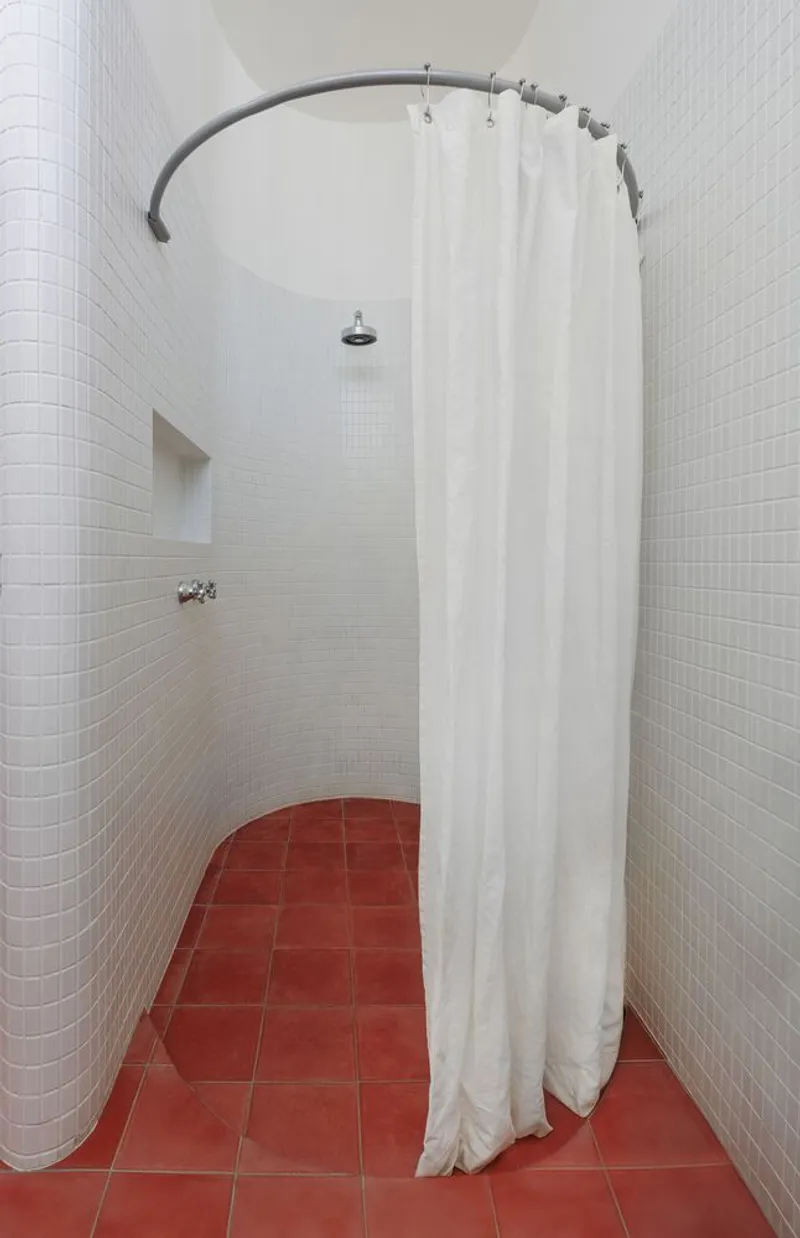
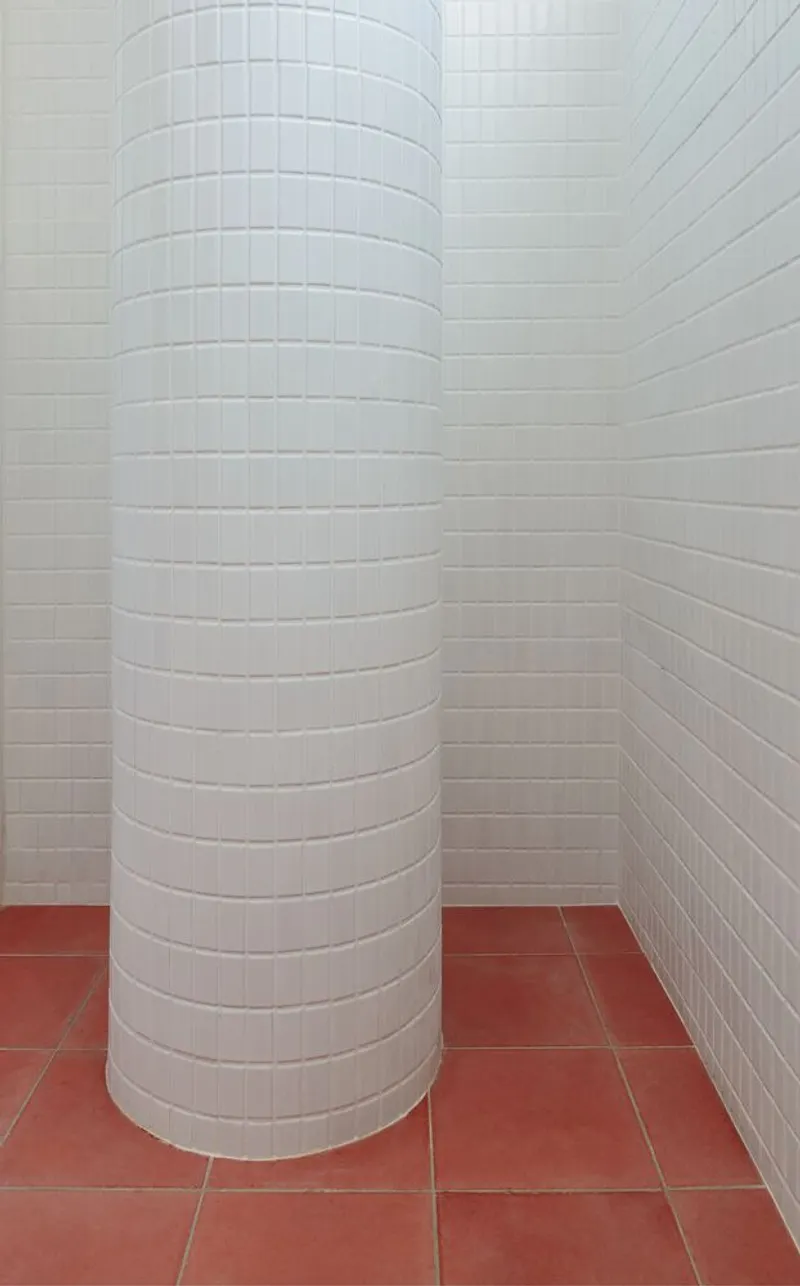
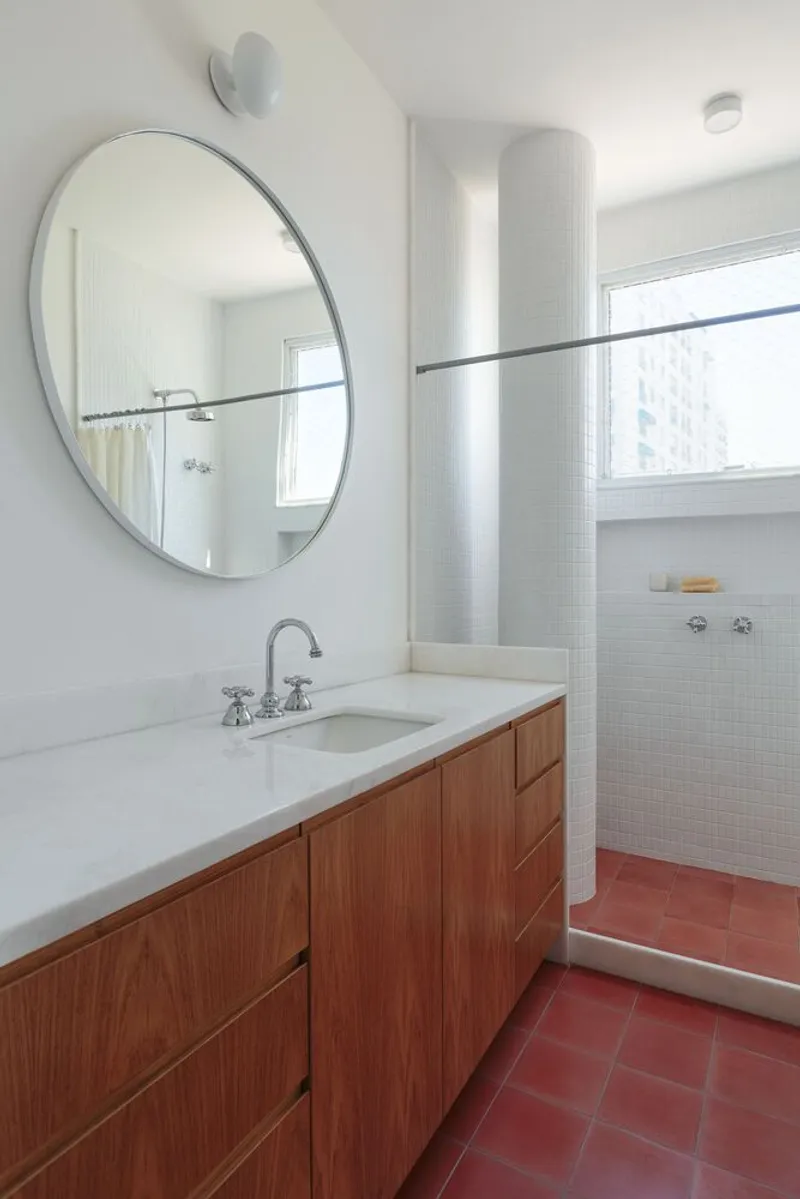
The bathrooms are the most complete preservation in the apartment. The main bathroom has oak vanity cabinets, white square tiles, oval mirrors, louvre windows, and terracotta floor tiles. All of these are either original or matched to original specifications. The cylindrical columns appear here too, clad in small white tiles.
The standout is a turquoise pedestal basin, preserved intact from 1954. It sits in its original bathroom with the original louvre window and white tile. This is the kind of detail that most renovations discard. LINHA Arquitetura kept it, cleaned it, and let it be the room's centrepiece. It is the most colourful object in the apartment, and it was there before the architects arrived.
Plan
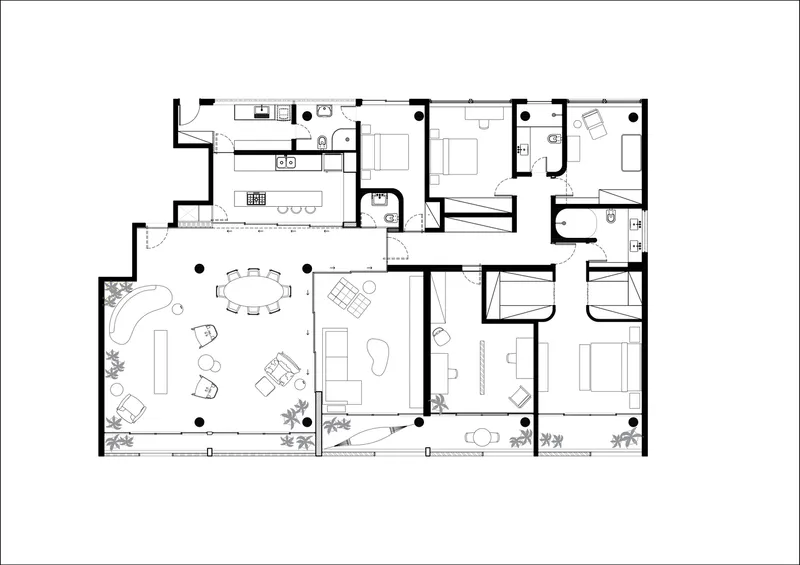
The floor plan shows the full apartment: a generous living room along the cobogó facade, dining and kitchen behind, three bedrooms and bathrooms in the private wing, and a service area at the back. The plan is Lucio Costa's. The architects did not change it. They cleared it.
Why This Project Matters
Modernist apartment restoration is one of the most sensitive briefs in architecture. The building is listed or iconic. The original architect is famous. The current owner wants to live in it, not curate it. Most renovations fail by either museumifying the apartment (too precious to touch) or gutting it (too inconvenient to keep). LINHA Arquitetura found the productive middle: keep the parquet, keep the columns, keep the stainless steel kitchen, keep the turquoise basin, and add only what is necessary.
If you are working on a modernist apartment, a heritage interior, or any project where the existing fabric is more valuable than anything you could add, this project is worth studying for its discipline. The best move was the one they did not make.
About the Studio
Share Your Own Work on uni.xyz
If you are working on heritage restoration, modernist interiors, or apartment renovation, uni.xyz is a place to publish your work and connect with a global design community.
Project credits: Guinle Park Apartment by LINHA Arquitetura. Caledônia Building, Rio de Janeiro, Brazil. Architects: Paula Daemon, Lis Fernanda Thuller.


Popular Articles
Popular articles from the community


Architekt Andreas Gruber Scatters 23 Dark Timber Chalets Across a South Tyrolean Forest Edge
In Molini di Tures, Amonti Chalets breaks a resort into a hamlet of gabled timber houses, with parking, storage and services pushed into the slope.

GROUP A Strips a 1969 Rotterdam Harbor Headquarters to Its Frame and Wraps It in Timber Louvers
In Rotterdam's M4H harbor district, Ferro Offices reuses a 1969 frame, adds one timber storey and reaches BREEAM-NL Outstanding.

Cube Design Draws an Ecological Corridor Between Two Shenzhen Hills with the Nankai Building
Beside Shenzhen's container docks, the Nankai Building pairs stacked balconies with a climbing green screen to connect two hillsides across its height.

U.GA Architects Wraps an Oval Rooftop Pool in Curved Board-Formed Concrete on Busan's Jeollidan-gil
In Busan's Jeonpo-dong, a 454 m² mixed-use block stacks a neighborhood facility, guest rooms and an oval rooftop pool inside spiraling concrete walls.

Similar Reads
You might also enjoy these articles


Hodi-Mandai Geram
Project Function: Preservation and revitalization of the Intangible heritage and socio-spatial identity of the Hodi by Housing, Cultural Memory Center, Sacred Grove, landscape, local tourism economy


Olio Towers: A Mid-Rise for Performers That Fuses Housing, Rehearsal, and Stage
Located blocks from Houston's Theater District, this modular tower stacks living units around a central performance atrium.

Oasis: Modular Green Housing Carved into Dhaka's Urban Fabric
A shortlisted Plugin Housing entry reclaims unauthorized settlements in Dhaka with stepped concrete volumes, green roofs, and ventilation-driven design.

Black Hole: A Floating Megastructure for the Post-Physical Era
Emiliano Mazzarotto envisions a spherical, self-scaling arena where e-sports, digital hotels, and holographic stadiums replace traditional public space.

Explore Architecture Competitions
Discover active competitions in this discipline

Challenge to reimagine the Iron Throne

Photograph architecture without architects

Illustrate the lost glory of Angkor Wat - Render Challenge

Design challenge to reuse E-waste
Comments (0)
Please login or sign up to add comments
No comments yet. Be the first to comment!