
MODO Designs Wraps an Ahmedabad Corporate Tower in Perforated Terracotta and Rope-Braced Glass
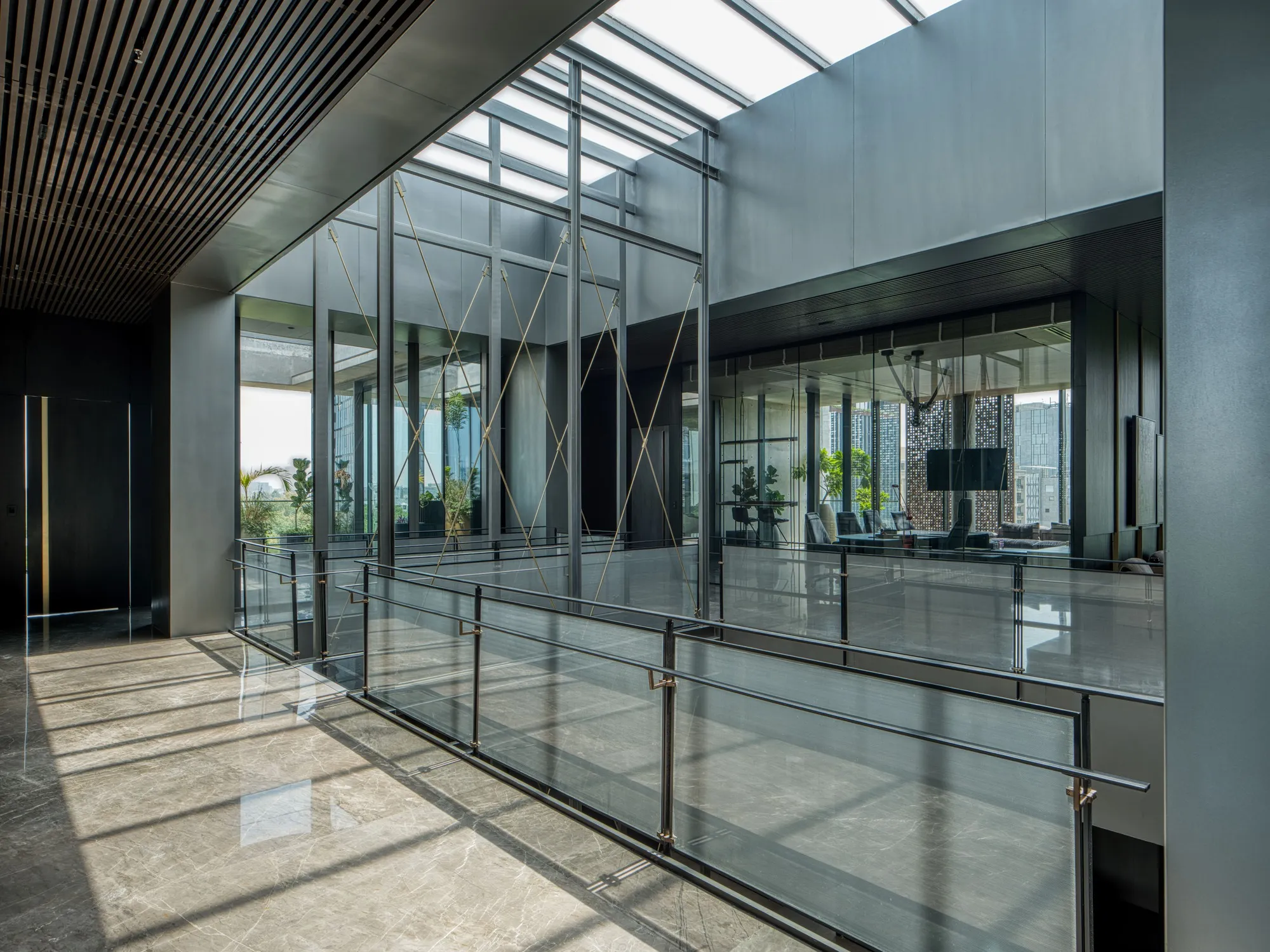
A six-storey office building in Ahmedabad consolidates scattered workplaces around a skylit atrium threaded with brass cables and dappled light.


Consolidating several dispersed offices into a single corporate headquarters sounds like a logistics problem. MODO Designs, led by Ar. Arpan Shah Interior, treats it as an architectural one, stacking six floors of workspace in Ahmedabad around a central glazed void that becomes the social and environmental engine of the entire building. The result is a tower that negotiates between the brutal heat of Gujarat and the desire for transparency, using perforated terracotta screens as a primary material strategy and a rope-braced atrium as the spatial centerpiece.
What makes the project genuinely interesting is the tension between its two dominant material systems. On the outside, patterned brick panels filter light and reduce solar gain with an almost textile quality. On the inside, a dramatic glass atrium held together by diagonal brass tension cables creates a completely different atmosphere: open, vertiginous, and flooded with diffused daylight. The building is less a singular gesture and more a dialogue between opacity and openness, and MODO Designs manages both registers with confidence.
A Terracotta Skin That Breathes
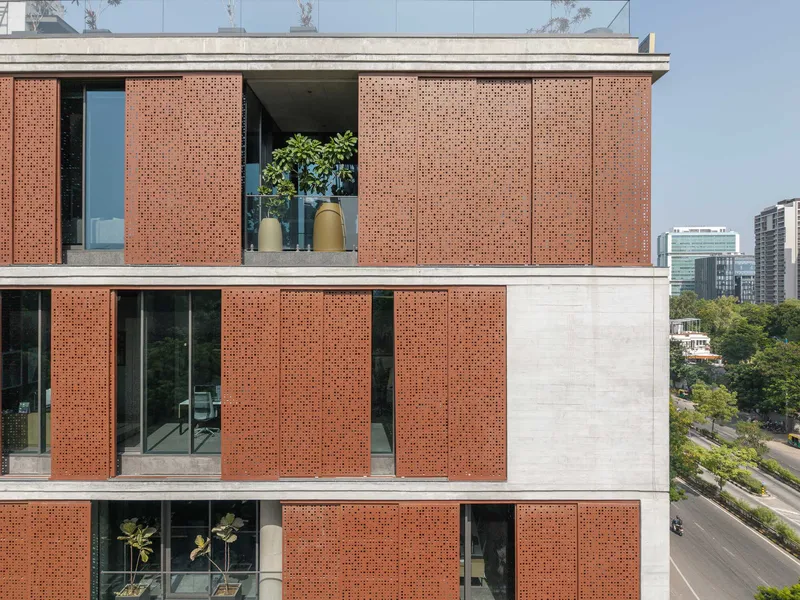


The facade reads as a monolithic composition from a distance, but up close it reveals itself as a modular assembly of perforated terracotta panels set between horizontal concrete bands. The perforation pattern is not decorative; it controls light ingress floor by floor, with the density of openings calibrated to the orientation and program behind. Sliding screens on some levels allow occupants to adjust the degree of enclosure, turning the skin into something closer to a responsive membrane than a fixed wall.
The material choice is site-specific in the best sense. Terracotta handles Ahmedabad's dry heat well, ages gracefully, and carries cultural resonance in a region with a deep brick-building tradition. MODO Designs avoids nostalgia, though: the panels are crisply cut, the joints are tight, and the interplay with glass balconies and concrete slab edges keeps the composition firmly contemporary.
Facade Details: Brick, Concrete, and Depth
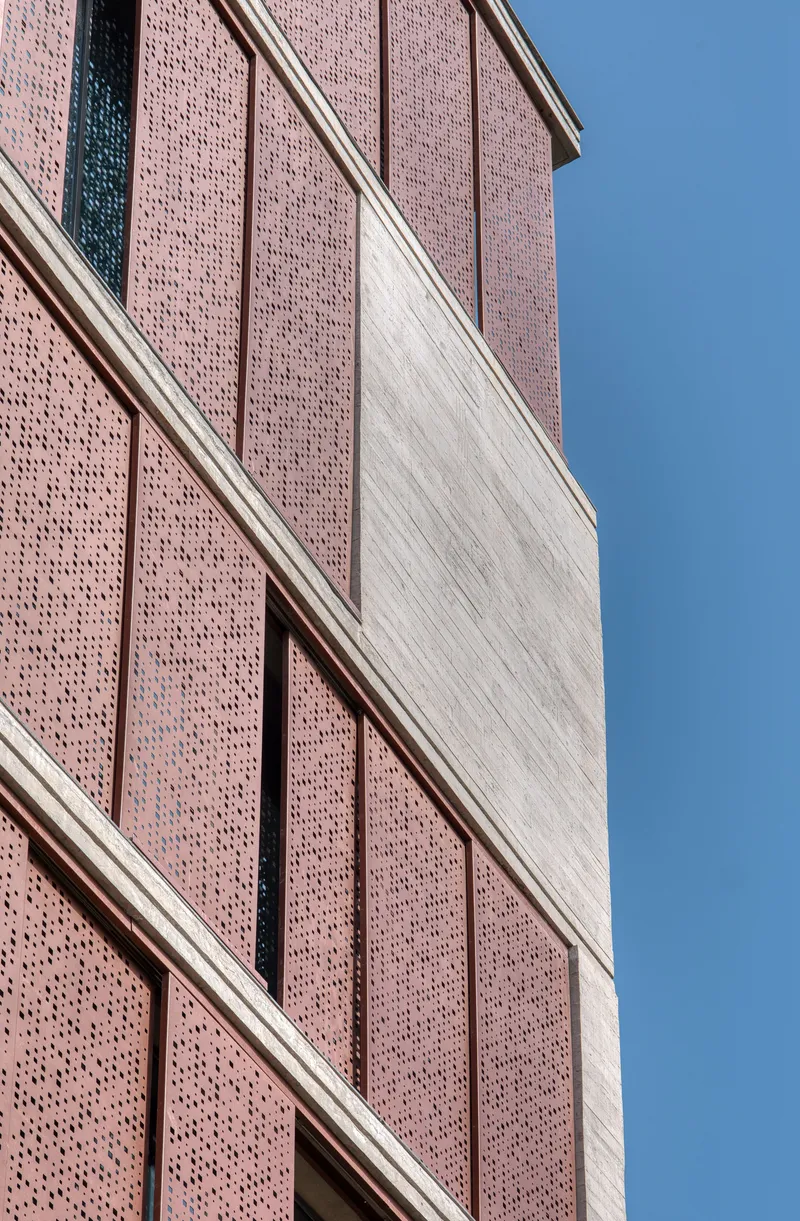


A closer look at the facade reveals the care taken with its layered depth. Perforated brick panels alternate with vertical concrete bands that provide structural rhythm, and the recessed balconies behind add a third layer of shadow. The result is a facade that changes character throughout the day as the sun tracks across it, generating long diagonal shadows in the morning and a warm, glowing uniformity at golden hour.
The overhanging tree canopy, visible in several shots, is not accidental. Existing mature trees on the site were retained and now participate in the facade composition, their leaves overlapping with the perforated panels to create a second, organic filter. It is a simple move that costs nothing and pays enormous dividends in terms of microclimate and visual richness.
The Rope-Braced Atrium

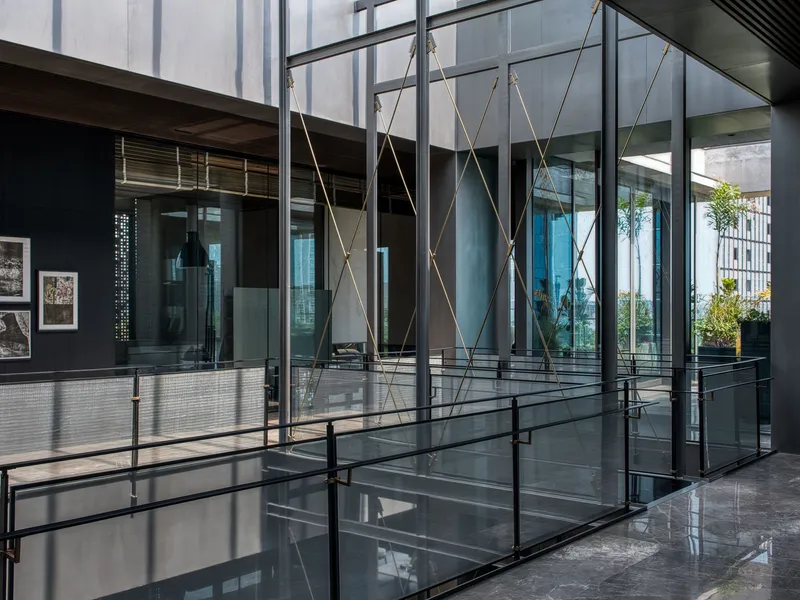

The central atrium is the building's most legible spatial idea. Rising through all six floors, it is enclosed in glass and braced by a network of diagonal rope tensioners and brass cables that span between steel-framed floors. These are structural, not ornamental: they stabilize the glass enclosure against wind and thermal movement while keeping the visual field as unobstructed as possible. The effect is somewhere between a ship's rigging and a suspension bridge, and it gives the interior a tautness that complements the soft, filtered exterior.
Planted terraces cascade down the edges of the void, softening the steel-and-glass palette and drawing the eye upward toward the translucent skylight roof. Circulation bridges cross the atrium at multiple levels, turning the simple act of moving between departments into a moment of spatial awareness. You always know where you are in relation to the whole.
Bridges, Walkways, and Vertical Connections
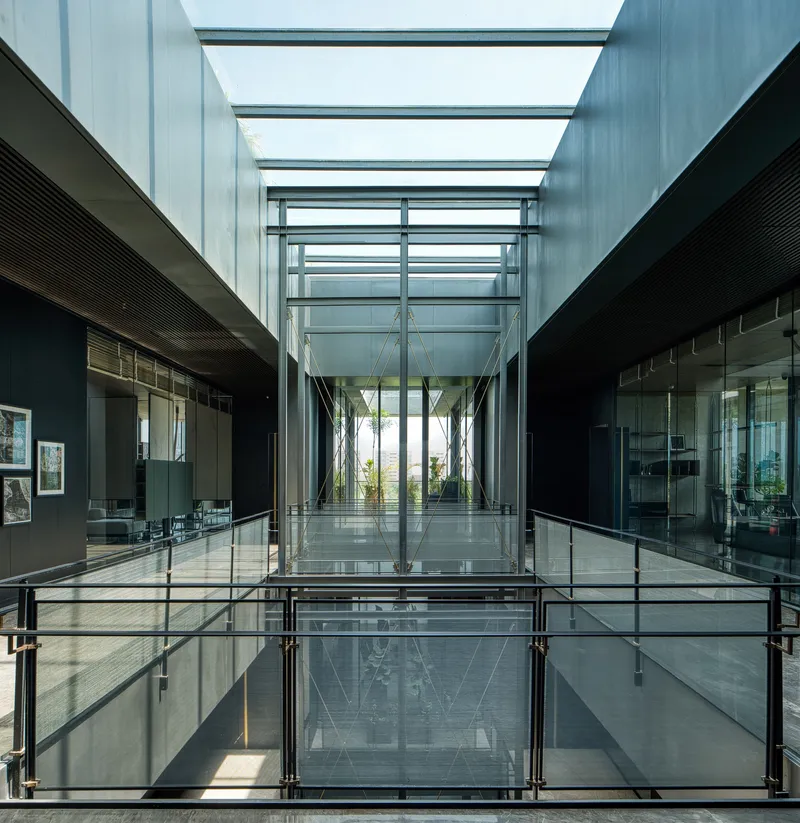


The glass-floored bridges that span the atrium are among the building's most photogenic elements, and for good reason. They do real work: connecting departments that would otherwise require elevator trips, encouraging chance encounters between staff from different divisions, and reinforcing the idea that the atrium is a shared civic space rather than a decorative hole in the plan. The glass floors are a bold choice in an office context, lending an almost theatrical transparency to movement through the building.
The stairwell, enclosed in glass beneath an angled skylight, serves as a secondary vertical event. Steel cross-bracing frames the view upward, and the polished floor below catches reflections that double the perceived height of the space. It is a compact piece of architecture that punches well above its programmatic weight.
Dappled Light as Interior Material


Inside, the perforated screens do not merely reduce glare; they project shifting patterns of light across polished stone floors, concrete walls, and timber ceilings throughout the day. MODO Designs clearly designed for this effect, using the screens as a kind of architectural projector. The dappled patterns recall the filtered light under a tree canopy, creating an environment that feels alive and in constant, gentle motion.
The double-height spaces benefit most from this strategy. Where a conventional office building would install blinds and artificial lighting to manage solar gain, this building turns sunlight into an amenity. The concrete columns, left exposed with board-formed textures, absorb and scatter the projected light in ways that change the perceived weight of the structure from hour to hour.
Workplace Interiors: Concrete, Timber, Brass
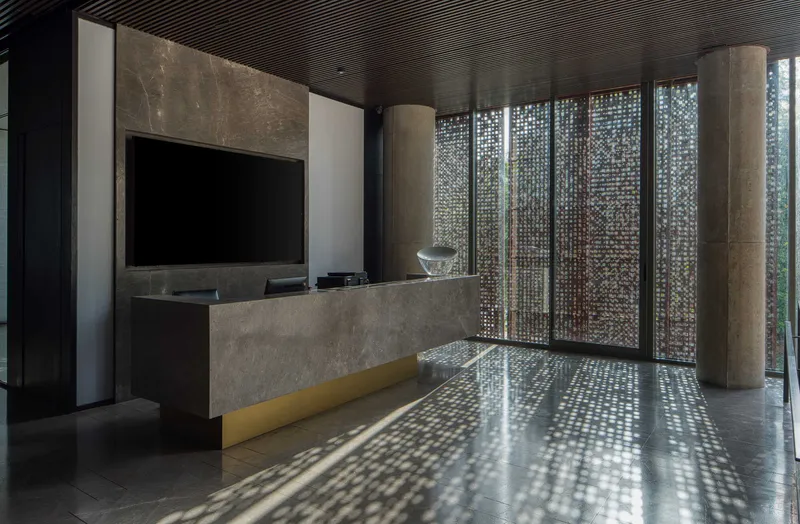

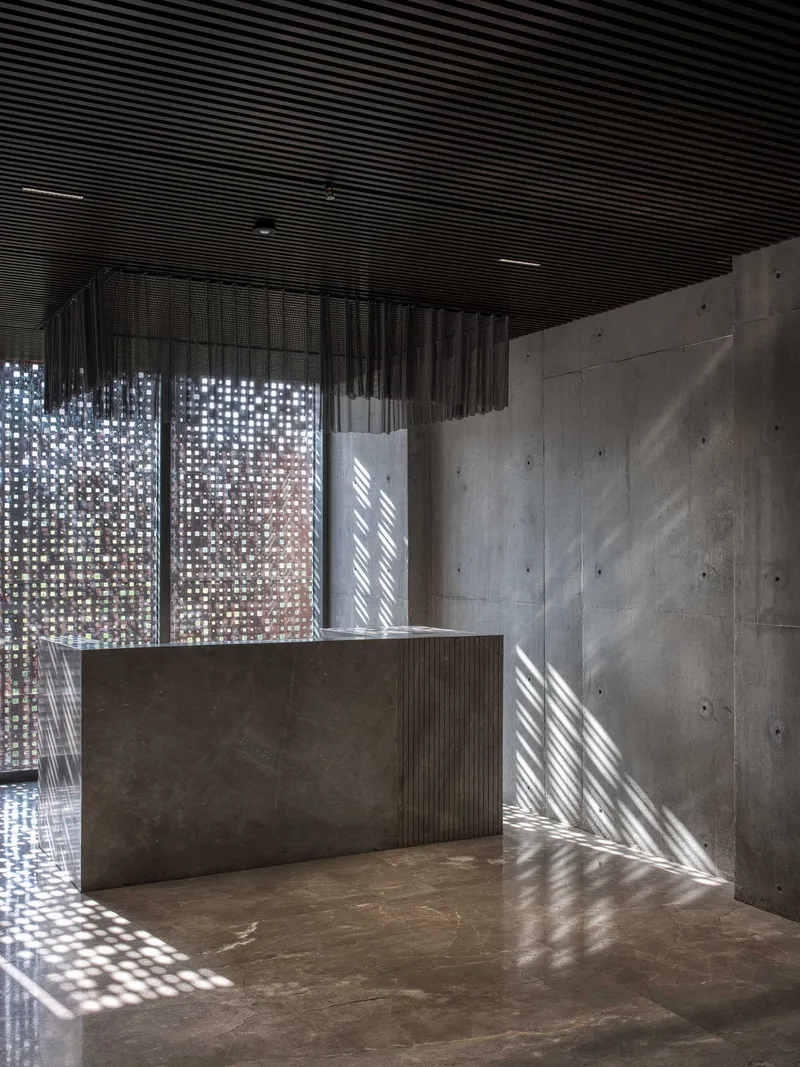
The interior palette is deliberately restrained: board-formed concrete, dark timber ceiling slats, polished stone floors, and accents of brass at reception desks and cable railings. The corrugated ribbed ceiling at the reception desk is a nice detail, adding acoustic absorption while contributing visual texture that reads as considered rather than decorative. The yellow bench beneath the slatted ceiling introduces the only real color note in the lobby, and it is the right amount.
Brass appears again at the mezzanine-level reception, where a clad desk sits beneath a timber ceiling and glass cable railings. The material choices throughout are consistent enough to register as a system but varied enough to give each floor and function its own identity. It is disciplined work that avoids both the sterility of many corporate offices and the overwrought theming that plagues others.
Courtyards, Gardens, and the Ground Plane


At ground level, an interior courtyard with a shallow reflecting pool and planted beds anchors the plan. Glass-walled volumes surround it on all sides, ensuring that daylight and green views reach deep into the floor plate. The reflecting pool is shallow enough to be practical in Ahmedabad's climate, where standing water can become a maintenance liability, but effective enough to bounce light upward into the atrium and cool the air moving across its surface.
The entrance plaza, with its stone paving and proximity to a mature tree, sets the tone before you walk inside. The building does not announce itself with grand gestures or branded signage; it lets the material quality and spatial generosity do the talking. The cascading planted terraces visible through the glass-roofed atrium complete the picture, turning vegetation into a structural presence rather than an afterthought in planters.
Why This Project Matters
Corporate office buildings in Indian cities rarely receive this level of architectural attention. The typical approach is a glass curtain wall with maximum floor-plate efficiency, sealed against the climate and reliant on mechanical systems. MODO Designs offers an alternative that is both more humane and more regionally grounded: a building that works with Ahmedabad's sun rather than against it, that uses local materials in technically precise ways, and that treats the workspace as a place worth inhabiting rather than merely occupying.
The project also demonstrates that consolidation, the act of gathering dispersed operations into one building, can itself be a design opportunity. The atrium, the bridges, the shared courtyard: these are all devices that turn organizational proximity into spatial richness. The Light and Black Workplace is not a flashy building, and that is precisely its strength. It is a carefully reasoned piece of architecture that will age well, perform well, and improve the daily experience of everyone who works inside it.
The Light and Black Workplace by MODO Designs (Ar. Arpan Shah Interior), Ahmedabad, India. Completed 2025. Photography by Umang Shah.
About the Studio
Share Your Own Work on uni.xyz
If projects like this are the kind of work you want to make, uni.xyz is a place to publish your own, find collaborators, and enter design competitions.


Popular Articles
Popular articles from the community

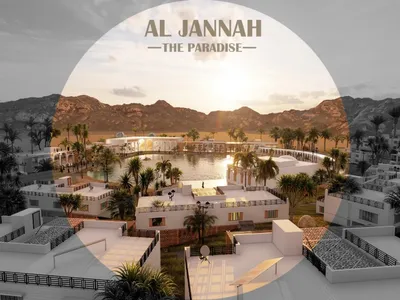
AL-JANNAH: Sustainable Architecture and Permaculture for Afghan Widows
AL-JANNAH uses sustainable architecture and permaculture to create resilient oasis of housing, learning, work and renewal for Afghan widows.

Riyadh For All: Intergenerational Urban Design for Active Aging in Rabat
Riyadh For All reimagines urban design in Rabat with intergenerational co-living, adaptive courtyards, and Moroccan cultural exchange today.

Co-life: Sustainable Architecture for Age-Friendly Community Living
Co-life reimagines sustainable architecture for seniors through courtyards, rammed earth, shared gardens, and spaces designed for belonging.

Hill & Cross Opera: Sculptural Opera House Architecture Shaped by Tallinn’s Landscape and Identity
Hill & Cross Opera reimagines opera house architecture in Tallinn through its sculptural hill, civic plaza, glass wave and a luminous cross.


Similar Reads
You might also enjoy these articles

Bao Huynh Watercolor Atelier: A Serene Art Retreat in Hội An
Bao Huynh Watercolor Atelier in Hội An blends multifunctional art spaces, sustainable design, local materials, and family-friendly living in a serene environment.

Atelier Macri Concept Store Interior Design by CASE-REAL
Atelier Macri store features a "ko" counter, walnut wood details, cork displays, blending retail, gallery, and seamless customer experiences.

Manuel Vargas Izquierdo Stadium and High-Performance Sports Center: Architectural Excellence in Jalpa de Méndez
The Manuel Vargas Izquierdo Stadium blends sustainable design, inclusive sports facilities, and cultural-inspired architecture, revitalizing Jalpa de Méndez’s public spaces.

KAKR Buluh Awar Hall: Revitalizing Community and Ecology Through Bamboo Architecture
Community built bamboo hall revitalizes Buluh Awar village, empowering youth, restoring ecology, celebrating vernacular craftsmanship through sustainable architecture and culture.
Explore Workplace Competitions
Discover active competitions in this discipline



Challenge to reimagine the Iron Throne


Photograph architecture without architects


Illustrate the lost glory of Angkor Wat - Render Challenge


Design challenge to reuse E-waste
Comments (0)
Please login or sign up to add comments
No comments yet. Be the first to comment!