

Montreal West Station Pavilion by Sid Lee Architecture: A Contemporary Transit Landmark in Montreal
Montreal West Station Pavilion blends heritage-inspired pitched roof, zinc façade, and glass transparency, creating a sustainable, accessible, and community-focused transit landmark.


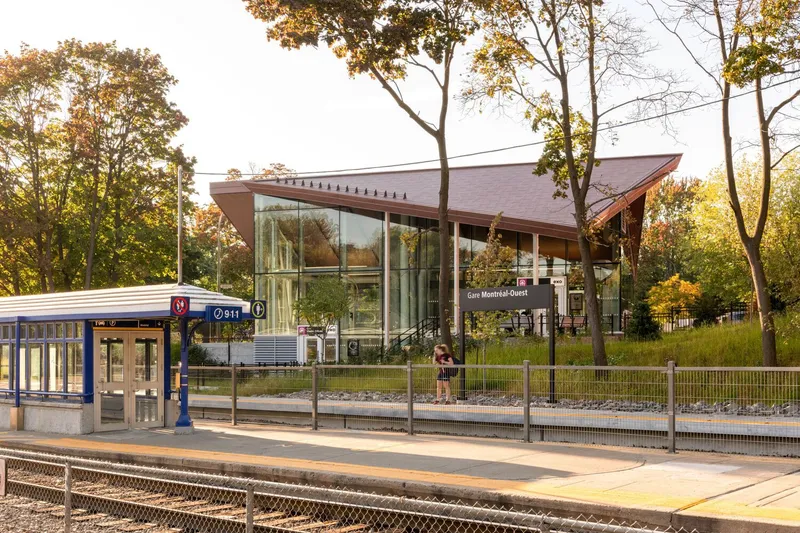
Montreal’s Montreal West Station Pavilion, designed by Sid Lee Architecture and completed in 2024, redefines the concept of a transit hub by seamlessly blending heritage influences, modern design, and community-focused architecture. Located in the heart of the Côte-des-Neiges: Notre-Dame-de-Grâce neighborhood, this 6,329 ft² pavilion serves as a key node on one of the busiest lines of Montreal’s exo transit network, enhancing accessibility, safety, and passenger experience while acting as a new architectural landmark.
Context-Sensitive Design and Heritage Integration
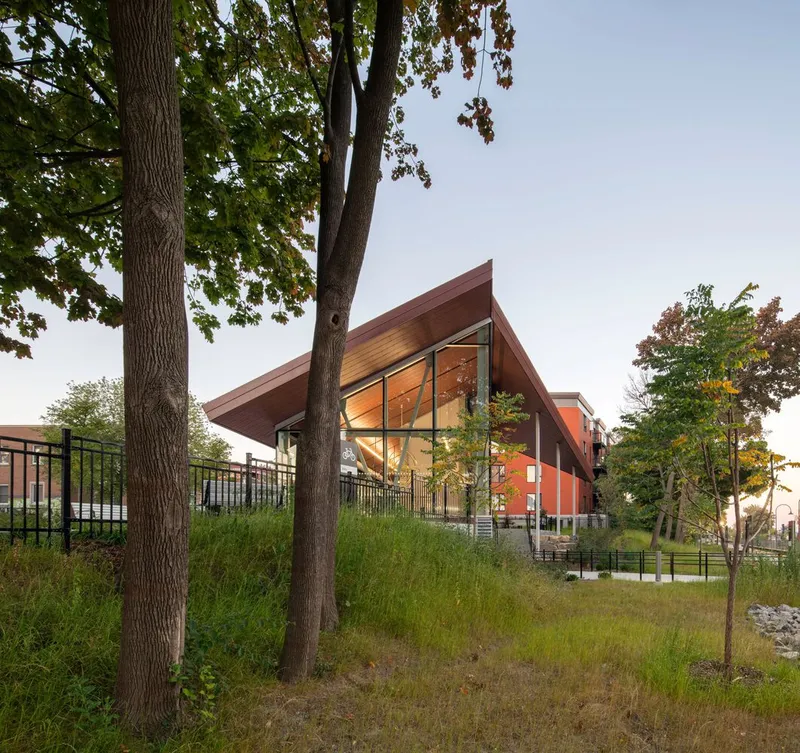
The design of the pavilion reflects a deep sensitivity to its surrounding context. Sid Lee Architecture drew inspiration from nearby historical and residential buildings, including St. Philip's Church and the existing train station. The distinctive double-pitched roof references traditional residential forms while being reinterpreted in a contemporary manner. Treated in zinc with a reddish hue, the roof complements the brickwork of the historic station, paying homage to Montreal’s architectural heritage while ensuring durability and modern appeal.
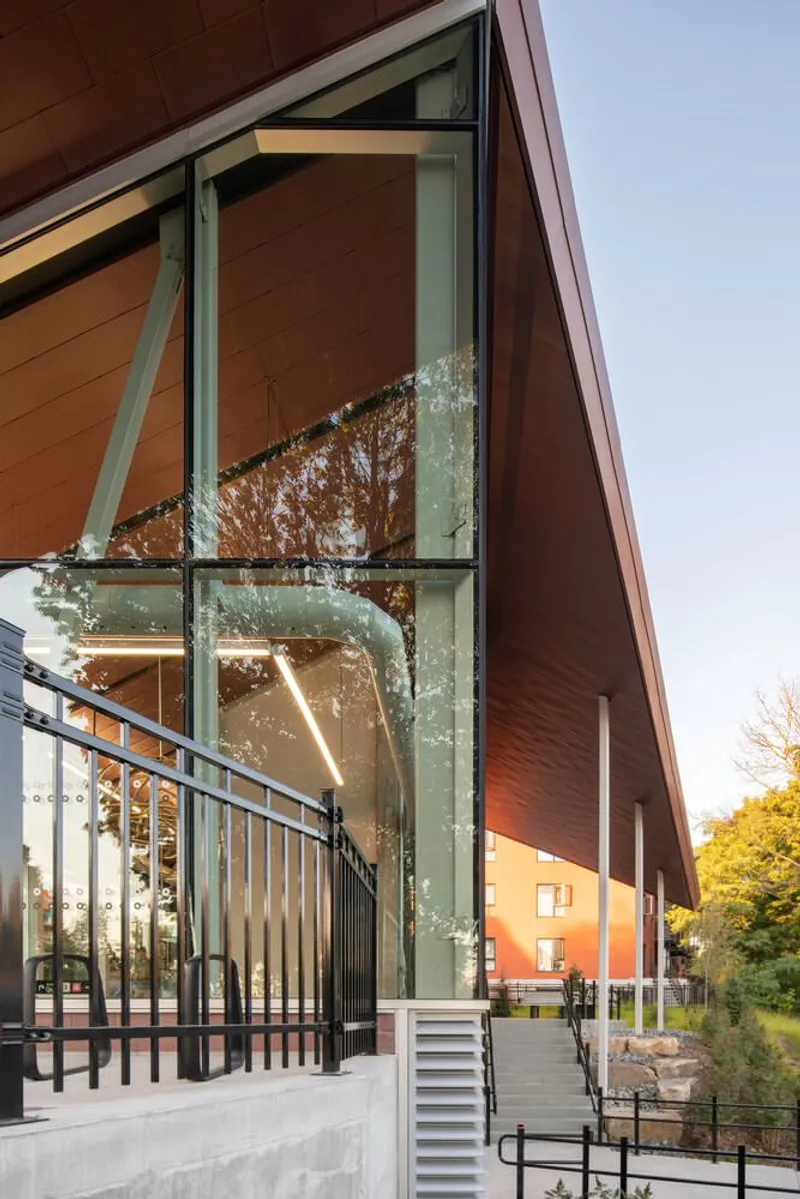
The roof’s design was carefully crafted to maximize natural light, reminiscent of a “folded and slit piece of paper,” offering an elemental yet elegant architectural expression. This approach allows the pavilion to feel both familiar and inviting, reinforcing a sense of community identity.
Architectural Innovation Meets Public Transit Function
Beyond aesthetics, the pavilion addresses practical challenges of its unique site. Situated on a constrained plot surrounded by preserved woodland, the design integrates an underground rail connection without disrupting the existing biodiversity. The glass-enclosed lower volume balances the pitched roof, creating a light-filled interior that encourages visual exploration and smooth circulation.
Jean Pelland, Principal Partner at Sid Lee Architecture, emphasizes, “The new pavilion transcends its transit function to become a community landmark. By merging heritage with modern design, we have created a welcoming and lasting space that enhances the user experience and reinforces the neighborhood's identity.”
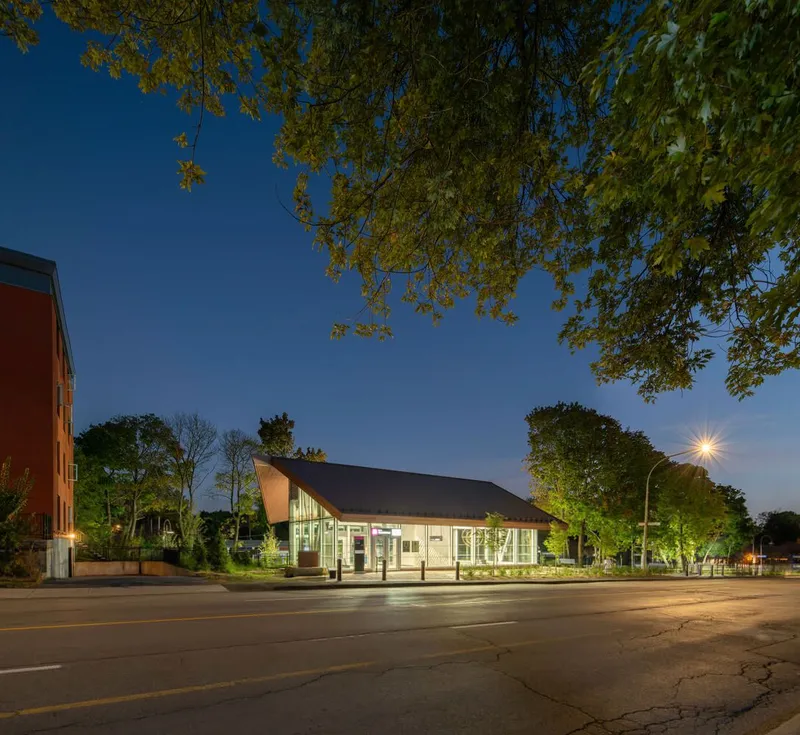
The building’s strategic positioning along Sherbrooke Street West ensures it stands out as a beacon, easily recognizable during the day for its reflective glass surfaces and landscaped surroundings, and subtly illuminated at night to highlight its civic presence and ensure a safe, welcoming environment.
Interior Design and User Experience
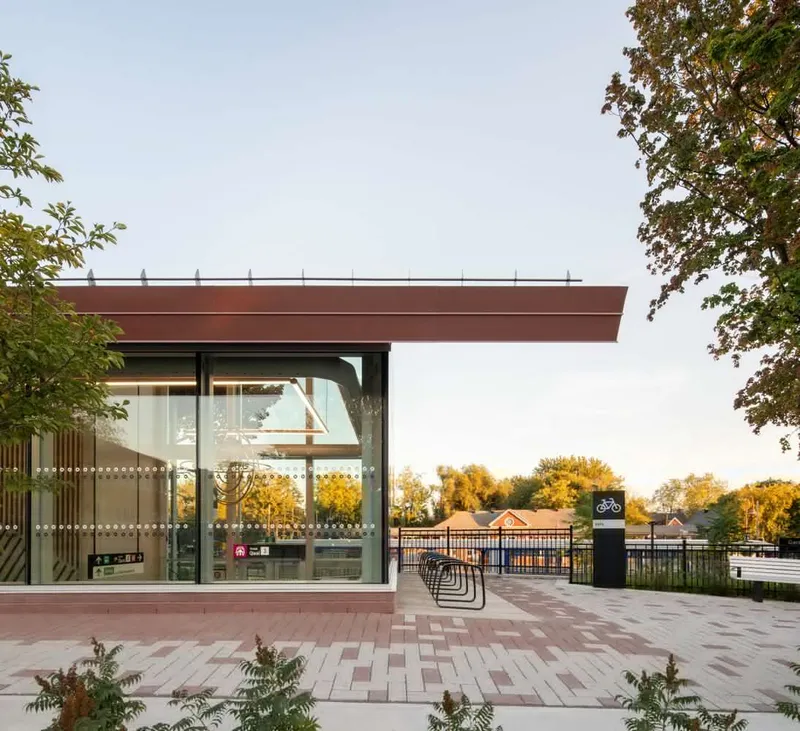
Inside, transparent walls and carefully aligned floors foster clarity and accessibility, promoting intuitive movement throughout the station. A chevron-grooved concrete treatment along the staircase references Montreal’s iconic metro designs while guiding passengers toward the tunnel. Complemented by a suspended art installation by local artist Philippe Allard, the interior exudes a refined geometric aesthetic without competing with the prominent zinc roof visible from within.
An integrated elevator ensures universal accessibility, reflecting the project’s commitment to inclusive design. The pavilion’s meticulous interior detailing exemplifies Sid Lee Architecture’s philosophy of creating meaningful, functional, and visually engaging public spaces within the urban fabric.

Sustainability and Community Impact
Sid Lee Architecture’s approach also emphasizes sustainability and environmental stewardship. The design preserves the site’s existing trees and biodiversity, incorporates natural light to reduce energy consumption, and uses long-lasting materials for minimal maintenance. As a result, the pavilion not only improves transit efficiency but also enriches the neighborhood’s cultural and ecological landscape.


The Montreal West Station Pavilion stands as a testament to how modern transit infrastructure can combine heritage sensitivity, contemporary design, and community engagement. By transforming a simple station into a visually striking, functional, and welcoming landmark, Sid Lee Architecture has elevated public transit into an experience that connects people, history, and place.


All photographs are works of
David Boyer


Popular Articles
Popular articles from the community


Cube Design Draws an Ecological Corridor Between Two Shenzhen Hills with the Nankai Building
Beside Shenzhen's container docks, the Nankai Building pairs stacked balconies with a climbing green screen to connect two hillsides across its height.

longwave studio Reorganizes a 112 m² Tainan Apartment Around the Daily Routines of a Family and Two Cats
In Tainan, Taiwan, birch plywood, rust-red furniture and a freestanding plaster wall link arrival, storage, work and family life in one apartment.

Jaramillo Van Sluys Arquitectura and Urbanismo Turn a Demolished Registry Lot in Quito into an Orchard Plaza
In Quito's Centro Histórico, a 2,800 m² plaza exposes the San Agustín convent wall and redraws its lost Augustinian orchard in volcanic stone.

U.GA Architects Wraps an Oval Rooftop Pool in Curved Board-Formed Concrete on Busan's Jeollidan-gil
In Busan's Jeonpo-dong, a 454 m² mixed-use block stacks a neighborhood facility, guest rooms and an oval rooftop pool inside spiraling concrete walls.

Similar Reads
You might also enjoy these articles

Gil Mello Arquitetura Tilts a Single Roof Toward the Waterfalls on a Plateau Above Aiuruoca, Brazil
In Aiuruoca, Minas Gerais, a 200 m² house of local labor and reclaimed poles pairs a low valley veranda with a tall mountain one.
U.GA Architects Wraps an Oval Rooftop Pool in Curved Board-Formed Concrete on Busan's Jeollidan-gil
In Busan's Jeonpo-dong, a 454 m² mixed-use block stacks a neighborhood facility, guest rooms and an oval rooftop pool inside spiraling concrete walls.

Felipe Hess Arquitetos Turns a Blind Stone Wall to the Street and Opens a Brazilian House onto a Courtyard and Canal
A canal-front house in Brazil hides behind painted stone and planting, then opens to an olive-tree courtyard, a reed-ceilinged porch and a curving pool.

David Macias Steps a Doorless Stone and Plaster House Down a Tropical Colombian Hillside
In the humid hills of Colombia, Threshold House replaces the front door with an open void and terraces its 850 m² down the slope instead of fighting it.

Explore Infrastructure Design Competitions
Discover active competitions in this discipline

Challenge to reimagine the Iron Throne

Photograph architecture without architects

Illustrate the lost glory of Angkor Wat - Render Challenge

Design challenge to reuse E-waste
Comments (0)
Please login or sign up to add comments
No comments yet. Be the first to comment!