
Morphosis Unveils Stunning Yangtze River Conference Center in Nanjing, China
The New Nanjing Landmark Boasts Sustainable Design and State-of-the-Art Conference Facilities


Morphosis, an international architecture and design firm based in Los Angeles, has announced the completion and opening of the Yangtze River International Conference Center in Nanjing Jiangbei New District, China. The centre is a flagship project for the new district and was designed to embody a charter for sustainable and ecologically-sensitive development. The 36,000 square meter complex includes a conference space and a tower with a four-star hotel featuring 340 rooms, providing scenic views of the Yangtze River. The building takes inspiration from the river that provides one of the most important arterial connections across China and has shaped human development in the region throughout history.
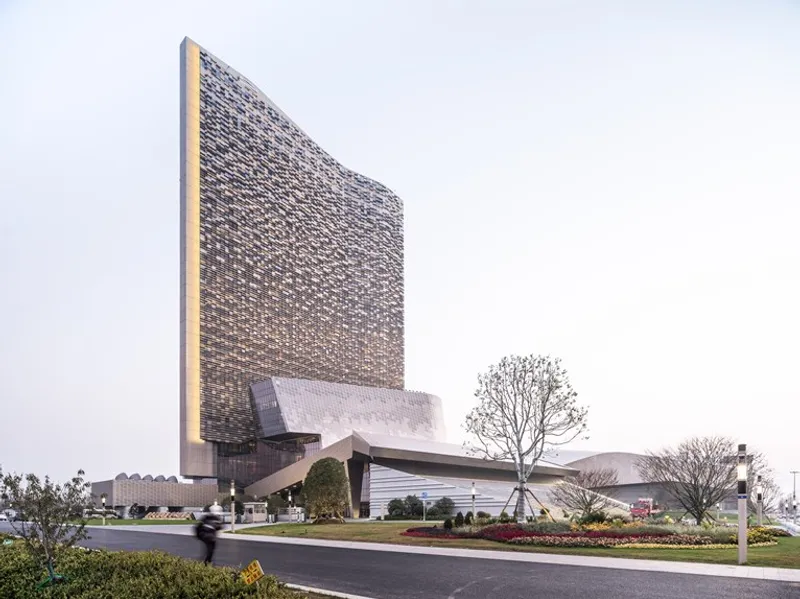
Morphosis Partner Eui-Sung Yi said, "The Yangtze International Conference Center is our second project to open in China this year, following Hanking Center in Shenzhen, but each responds to the spirit of its city. As Nanjing continues to grow into a hub of international business for China, the convention centre will become an important national anchor to host local and international events." The design of the building reflects the significance of the centre as the transitioning icon for the westward expansion of Nanjing across the Yangtze River.
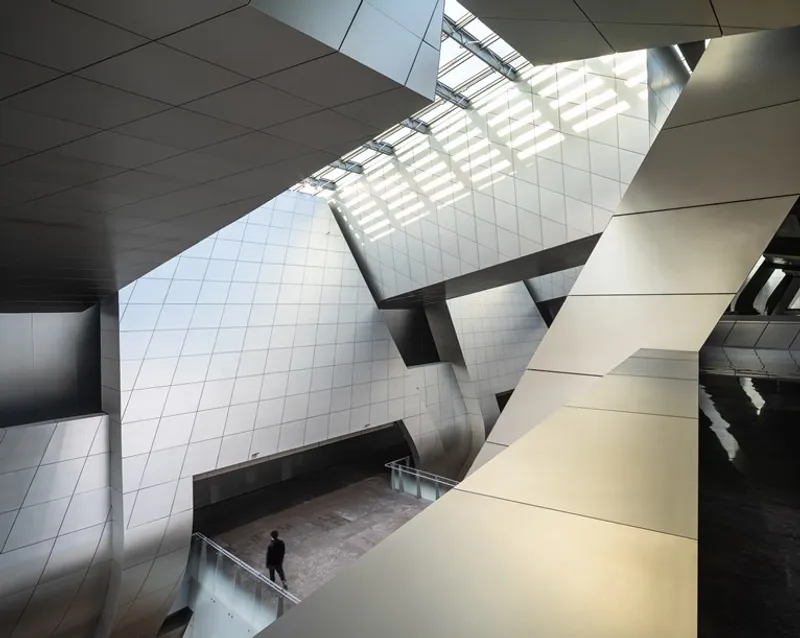
The immense program area of the convention centre contains a series of flexible conference spaces bisected by a central 200-meter arcade, dividing the building into a north and south wing. The arcade serves as the primary circulation spine for the building, intersected by short, perpendicular bridges providing access from VIP entrances and the hotel tower. Bringing visitors to the arcade, the convention centre's grand, formal entrance and atrium are illuminated by a skylight, highlighting the hotel tower.
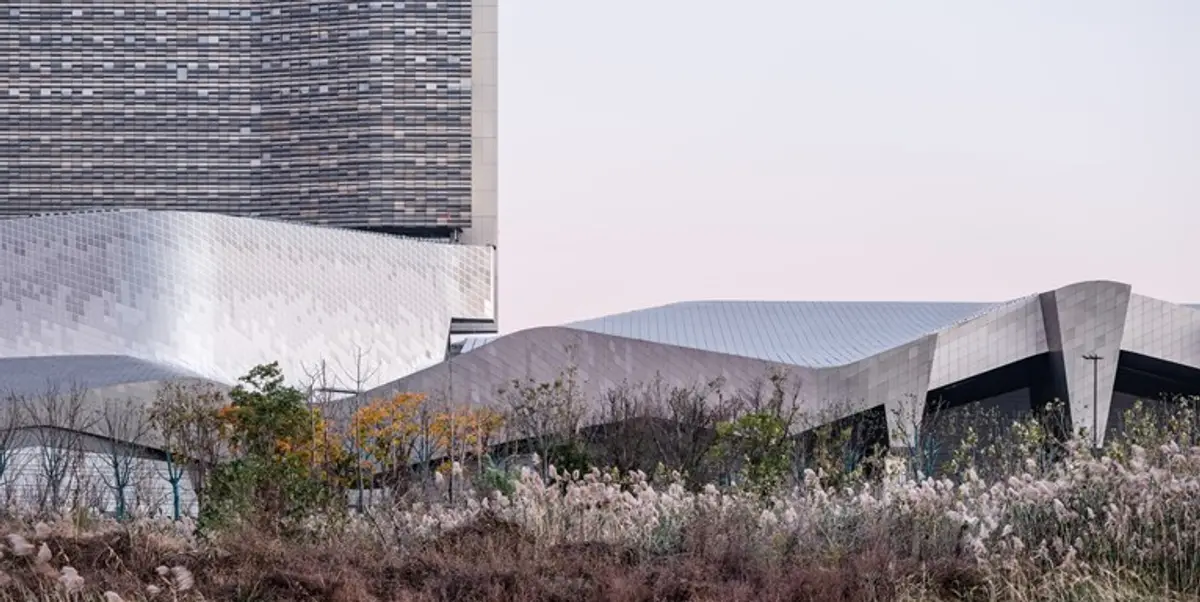
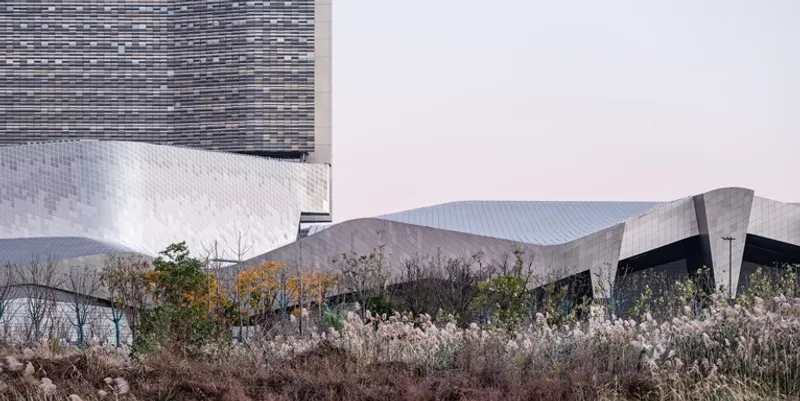
The building's podium takes inspiration from the flowing curves of the Yangtze River, with undulating shapes that reflect sunlight playing on the water's surface. The hotel tower, rising above the podium, evokes the sail of a traditional wind-powered river boat once common on the Yangtze. The hotel tower's façade utilizes a metal brise-soleil system that shades the building during the day, increasing energy efficiency, while at night, lighting integrated into the façade creates a distinctive night-time presence within the city.

On the riverside, to the south, the building's façade mirrors the organic nature of the river's edge, with a rippling metal and glass brise-soleil comprised of over 90,000 distinct metallic panels. The overall landscape follows a "sponge landscape" principle, strengthening ecological infrastructure by aiding in the responsible management of runoff, which is especially important to the riverside site. The high-performance facades and environmentally conscious landscape design contribute to the building's "3-Star rating," the highest sustainable design grade recognized by China's national green building standard.
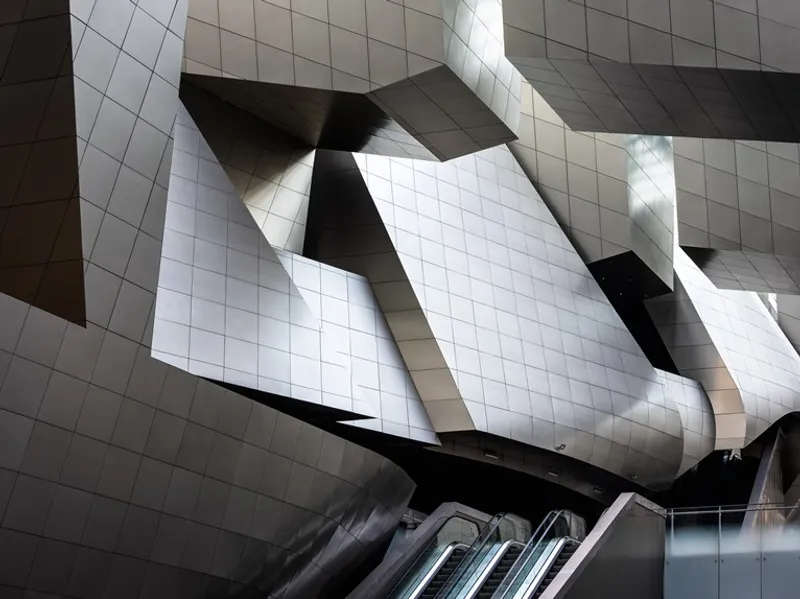
The Yangtze River International Conference Center is an important addition to Nanjing's growing status as a hub of international business for China. The building's design takes inspiration from the river that has shaped human development in the region throughout history, while its sustainable and ecologically-sensitive development charter demonstrates a commitment to responsible management of the region's natural resources. The building's multi-use complex will become an important national anchor to host local and international events, contributing to the region's continued growth and development.
***
Cover Image: Courtesy of 田方方 Tian Fangfang
Press Release


Popular Articles
Popular articles from the community


longwave studio Reorganizes a 112 m² Tainan Apartment Around the Daily Routines of a Family and Two Cats
In Tainan, Taiwan, birch plywood, rust-red furniture and a freestanding plaster wall link arrival, storage, work and family life in one apartment.

Architekt Andreas Gruber Scatters 23 Dark Timber Chalets Across a South Tyrolean Forest Edge
In Molini di Tures, Amonti Chalets breaks a resort into a hamlet of gabled timber houses, with parking, storage and services pushed into the slope.

David Macias Steps a Doorless Stone and Plaster House Down a Tropical Colombian Hillside
In the humid hills of Colombia, Threshold House replaces the front door with an open void and terraces its 850 m² down the slope instead of fighting it.

Cube Design Draws an Ecological Corridor Between Two Shenzhen Hills with the Nankai Building
Beside Shenzhen's container docks, the Nankai Building pairs stacked balconies with a climbing green screen to connect two hillsides across its height.

Similar Reads
You might also enjoy these articles


Rede Arquitetos Turns Circulation into Civic Space at the Educar II SESC School in Fortaleza
In Fortaleza, Brazil, Educar II SESC-CE trades a signature form for mesh screens, yellow thresholds and courtyard walkways built for equatorial heat.
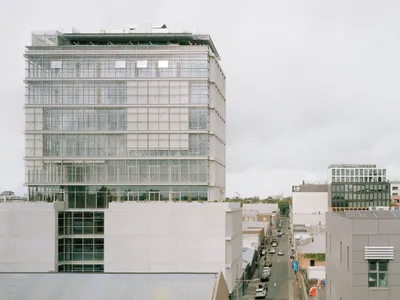
116 Rokeby Building, Collingwood
Sustainable Collingwood office building featuring double-skin façade, natural ventilation, rooftop amenities, and carbon-neutral design focused on wellbeing and longevity.
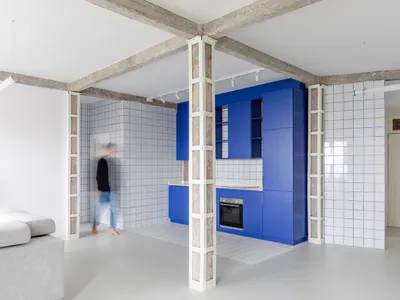
Contemporary Apartment Renovation in Spain: RV House by BIAN Opens Up to the Sea
A minimalist 1930s apartment in Santander is transformed into a flexible, sea-facing home through contemporary Spanish renovation.
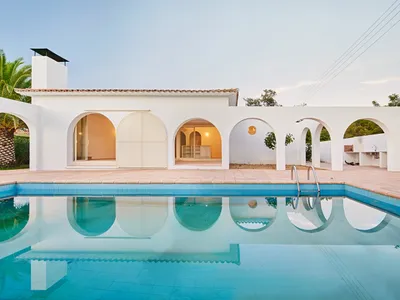
3 Marías House: A Contemporary Mediterranean Courtyard Retreat by Bajet Giramé + Burckhardt
Mediterranean courtyard home blending traditional architecture with modern design, terracotta flooring, flexible interiors, sustainable climate strategies, and garden integration.

Explore Architecture Competitions
Discover active competitions in this discipline


Challenge to reimagine the Iron Throne

Photograph architecture without architects

Illustrate the lost glory of Angkor Wat - Render Challenge

Design challenge to reuse E-waste
Comments (0)
Please login or sign up to add comments
No comments yet. Be the first to comment!