
Mount Alexander College by Kosloff Architecture: A Vertical Urban Campus in Melbourne
A vertical urban high school blending flexible learning spaces, cultural heritage, and sustainable design within Melbourne’s dense inner-city context.


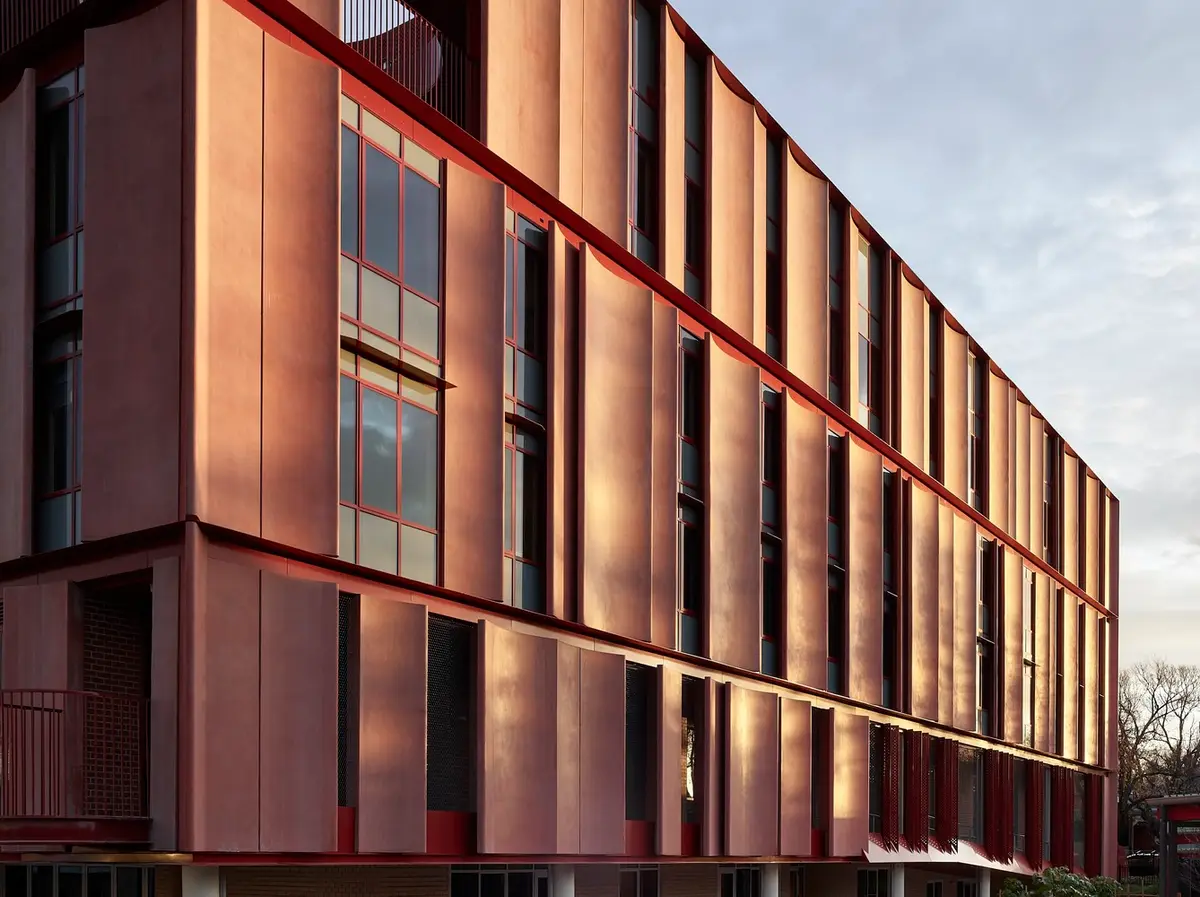
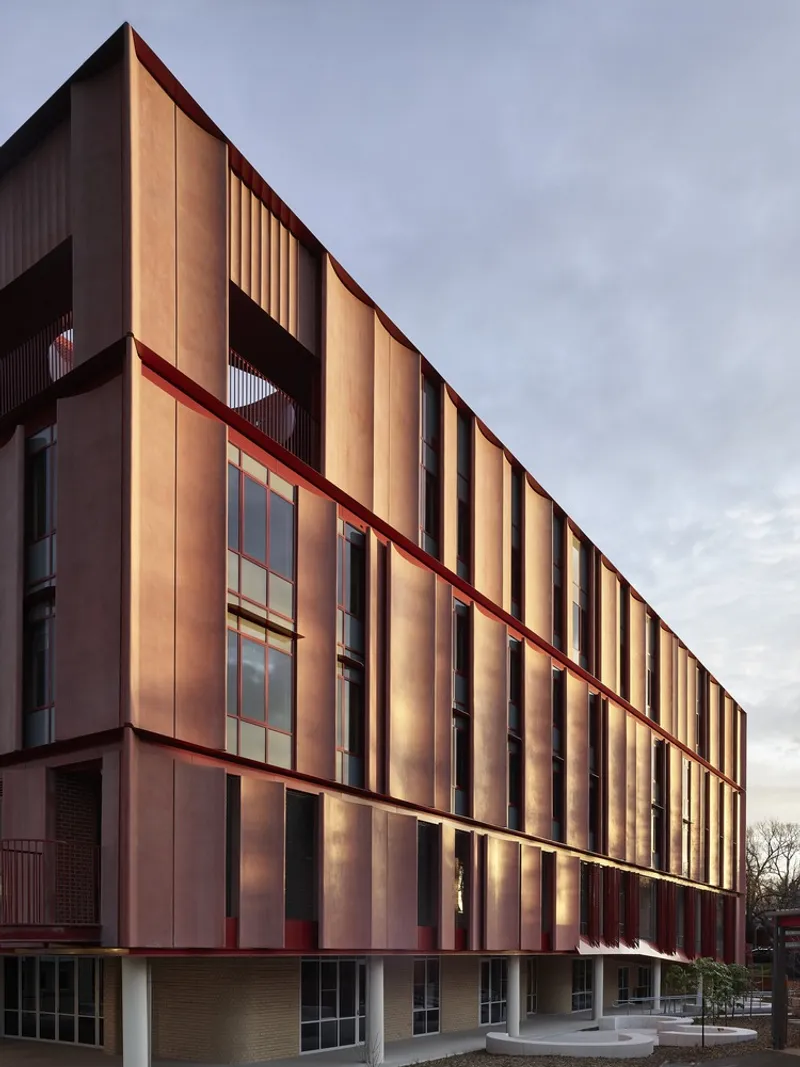
Mount Alexander College is a striking new addition to Melbourne’s educational landscape, designed by Kosloff Architecture. The five-storey, 4,590 m² secondary school building transforms a compact inner-city site into a dynamic vertical campus that supports contemporary pedagogy, collaborative learning, and community engagement.
A Vertical Campus for Modern Education
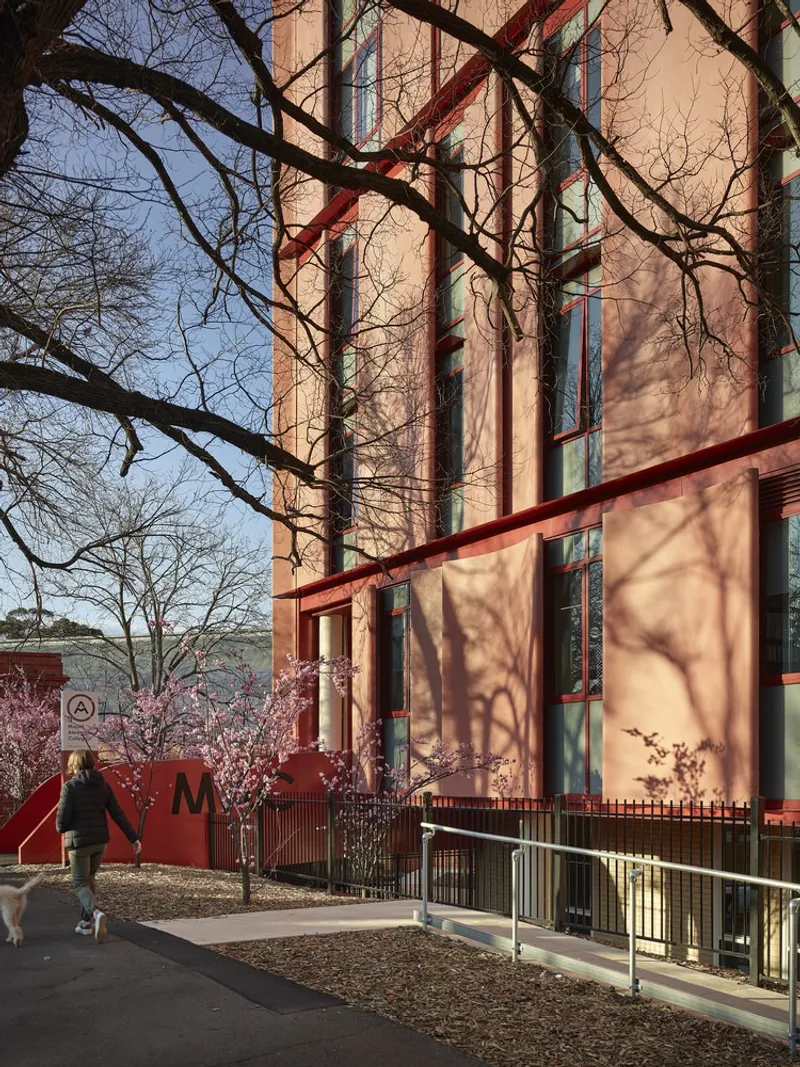
Situated within a dense urban environment, the design responds to spatial constraints through verticality, housing a broad range of facilities across five levels. The project includes junior science laboratories, flexible learning environments, music and digital technology rooms, and administration offices—strategically planned to accommodate 400 additional students.
A separate standalone canteen pavilion complements the main building, creating a cohesive campus layout while offering a social hub for students and faculty alike.
Community-Driven and Culturally Informed Design
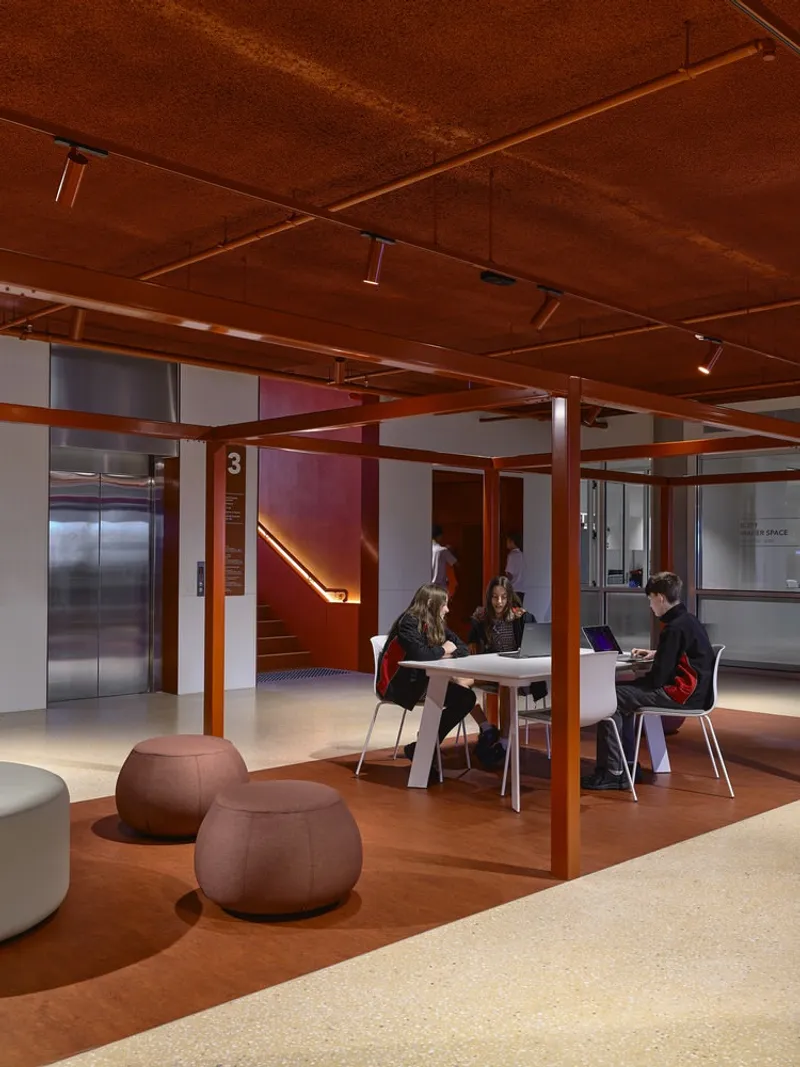
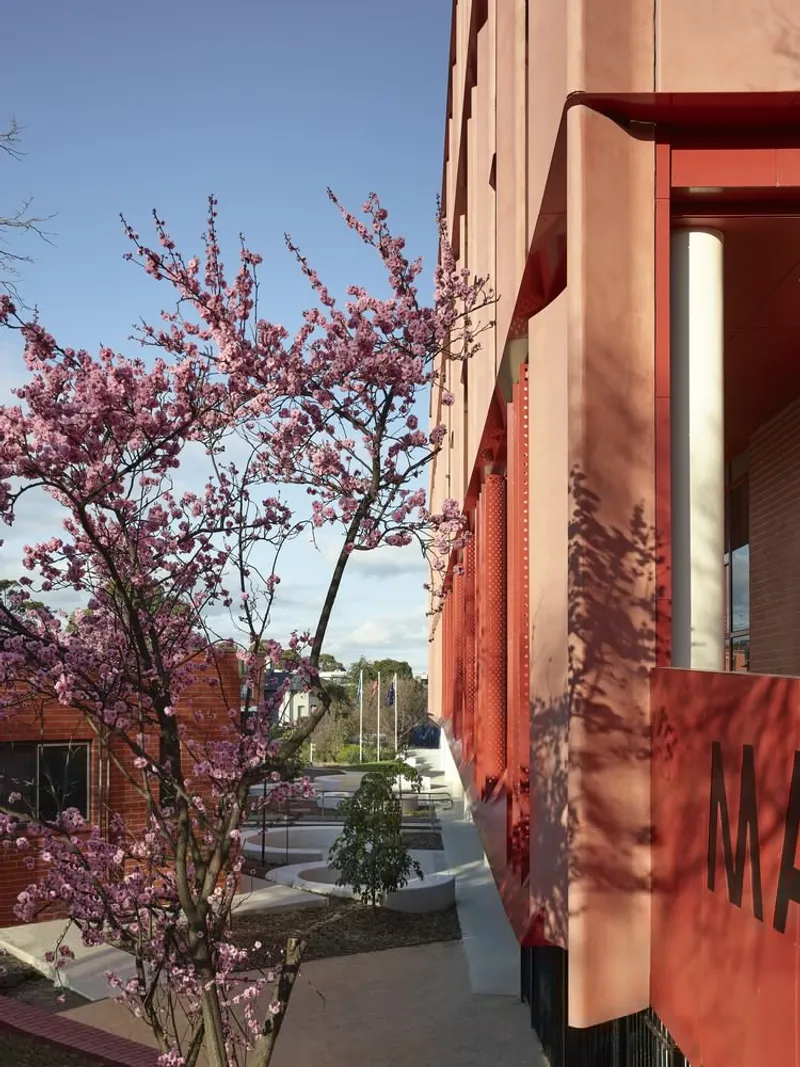
The project’s development was deeply collaborative. Extensive consultation involved students, faculty, school council members, parents, and the Wurundjeri Woi Wurrung Cultural Heritage Corporation. This inclusive process enriched the architectural outcome, ensuring it reflected both the needs of the school community and the cultural heritage of the Traditional Owners.
Multi-Level Learning and Creative Integration
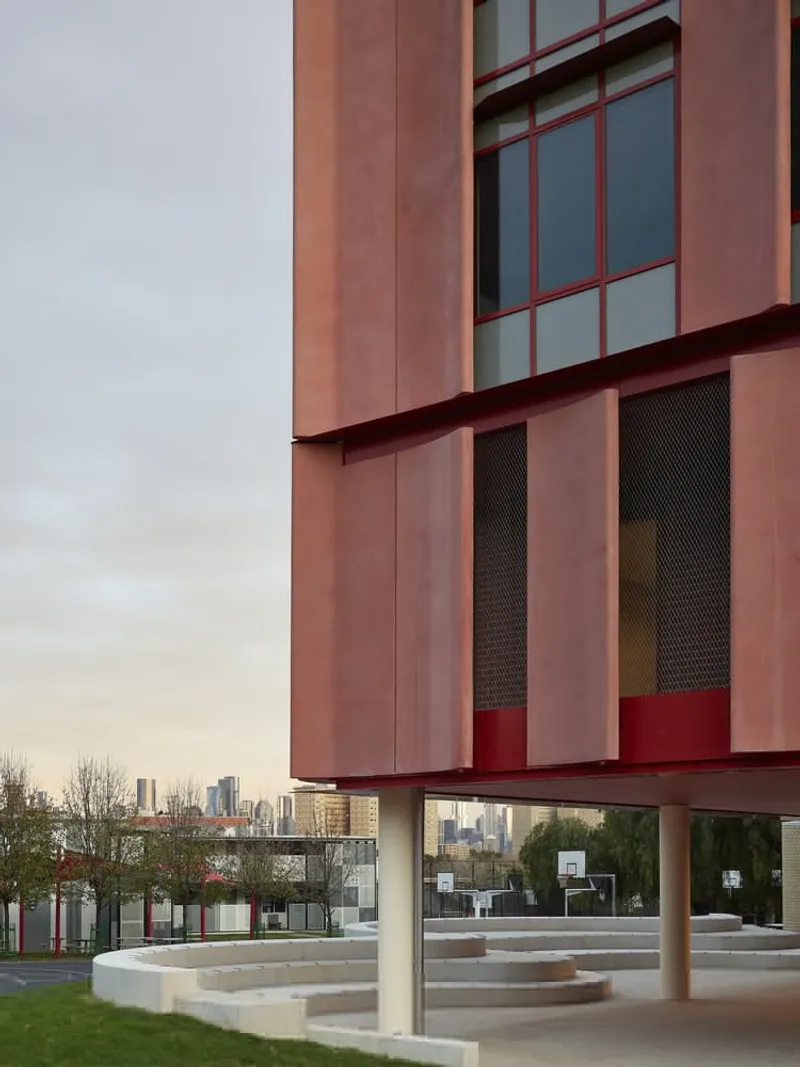
Each floor in the building serves a specific educational purpose. The ground level features performing and visual arts studios alongside an indoor exhibition space and a large outdoor amphitheater, enabling students to showcase their work in a real-world performance setting.
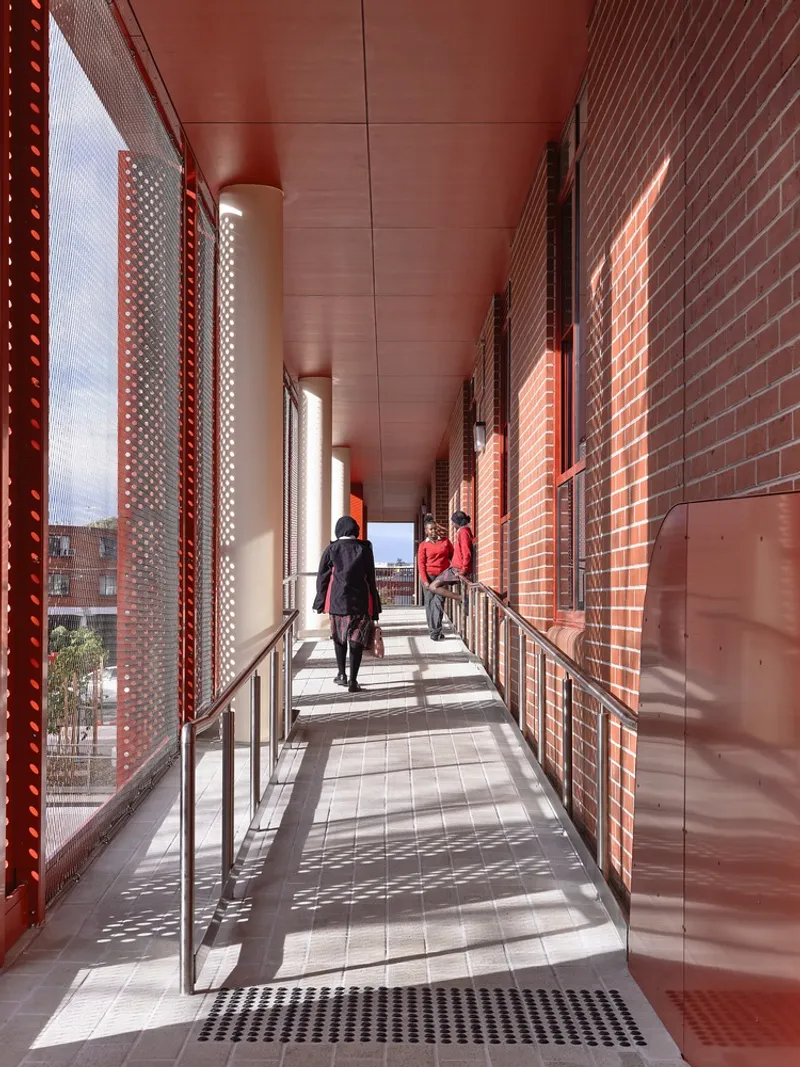
The first floor is dedicated to administration and staff, including common rooms and a welcoming reception area. A connecting bridge from Wellington Street not only provides full accessibility but also offers elevated views of the campus landscape.
On the second and third floors, students engage with specialized learning spaces for robotics, materials technology, visual and digital arts, and junior science. Breakout zones and meeting rooms support collaboration and cross-disciplinary projects.
The fourth level hosts senior VET program spaces, mathematics and English classrooms, all connected by an outdoor breakout terrace overlooking the city skyline.
Topping the vertical school is a roof-level basketball half-court, ensuring recreational amenities remain accessible even within the site's compact urban footprint.
Sustainable Landscape and Indigenous Planting
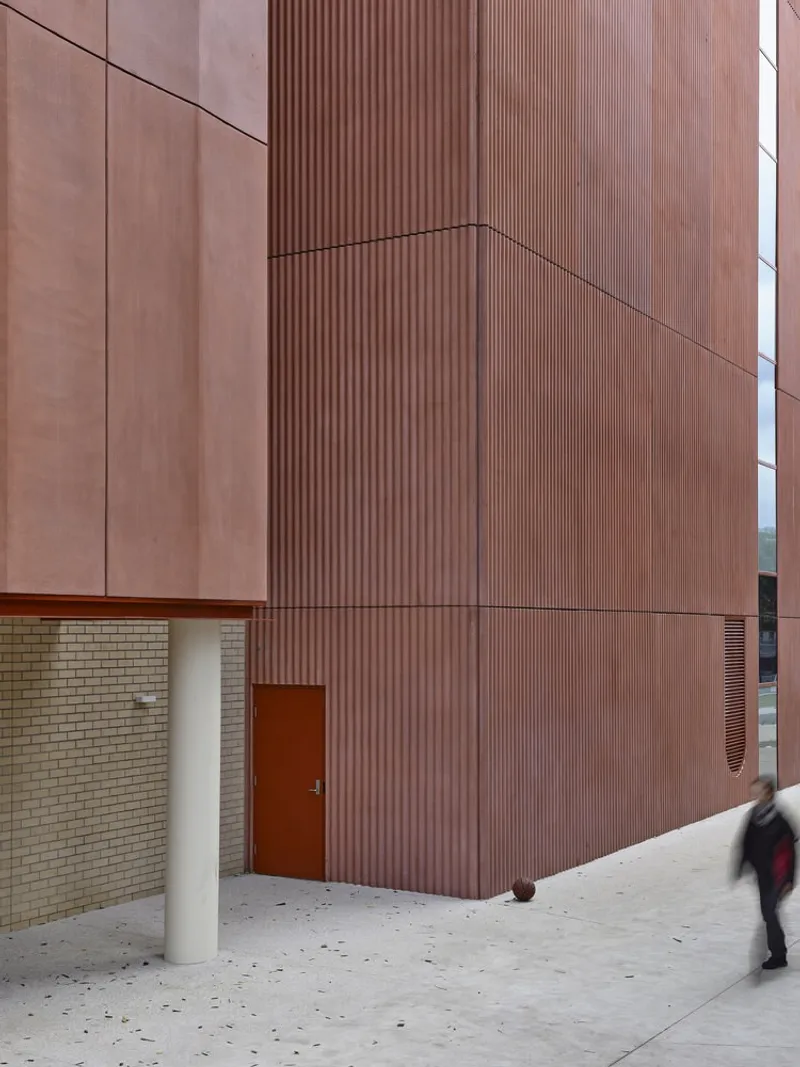
The landscape architecture—developed in close consultation with Traditional Owners—emphasizes sustainability and cultural sensitivity. Outdoor learning zones are north-facing and include rain gardens and powered spaces for music and group activities. Indigenous plant species have been carefully integrated to reflect local ecology and heritage.
Architectural Language and Materiality
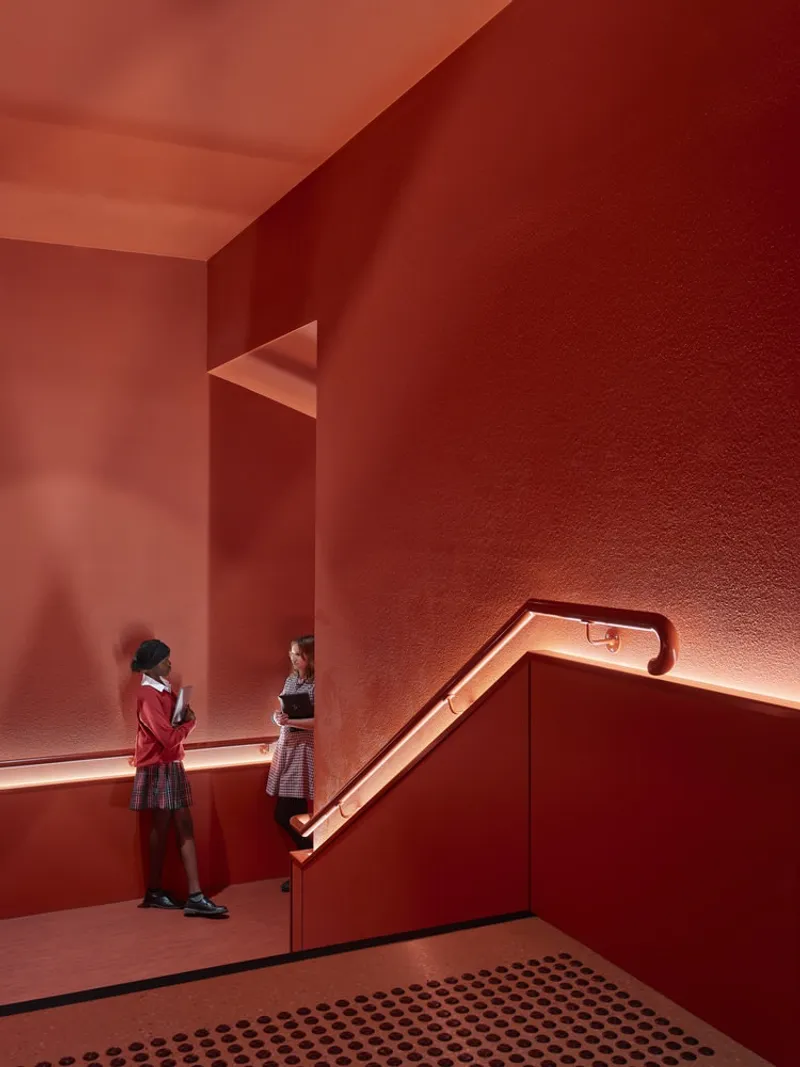
Inspired by the surrounding neighborhood’s architectural vernacular, the building’s façade pays homage to Melbourne’s heritage red brickwork. However, this traditional language is reinterpreted through precast red oxide concrete panels, offering a contemporary expression that aligns with the area’s historic urban fabric.
This balance between modern educational design, urban integration, and cultural heritage defines Mount Alexander College as a progressive model for future vertical schools in Australia and beyond.
All Photographs are works of Derek Swalwell


Popular Articles
Popular articles from the community


ALGAL REALM: A Bio-Integrated Lunar Habitat Design for Life Beyond Earth
ALGAL REALM reimagines lunar habitat design with algae-powered life support, 3D-printed regolith, and vertical living for a lunar future.

Lunar Spiral: Space Architecture Shaped by the Mathematics of the Universe
Lunar Spiral reimagines space architecture through Fibonacci geometry, lunar regolith, levitating habitats, and self-sustaining Moon living.

The Musturak Paradise: Senior Living Architecture for a Connected Future in Temara, Morocco
The Musturak Paradise reimagines senior living architecture in Temara via private homes, social spaces, culture, community, and shared care.

Play: Fragments of Their World
Familiar architecture becomes modular playground design, creating safe spaces where displaced children can learn, connect, imagine and play.

Similar Reads
You might also enjoy these articles


Hodi-Mandai Geram
Project Function: Preservation and revitalization of the Intangible heritage and socio-spatial identity of the Hodi by Housing, Cultural Memory Center, Sacred Grove, landscape, local tourism economy


Olio Towers: A Mid-Rise for Performers That Fuses Housing, Rehearsal, and Stage
Located blocks from Houston's Theater District, this modular tower stacks living units around a central performance atrium.

Oasis: Modular Green Housing Carved into Dhaka's Urban Fabric
A shortlisted Plugin Housing entry reclaims unauthorized settlements in Dhaka with stepped concrete volumes, green roofs, and ventilation-driven design.

Black Hole: A Floating Megastructure for the Post-Physical Era
Emiliano Mazzarotto envisions a spherical, self-scaling arena where e-sports, digital hotels, and holographic stadiums replace traditional public space.

Explore Moscow Architectural Academy Competitions
Discover active competitions in this discipline

Challenge to design public laboratory

Challenge to reimagine the Iron Throne

Photograph architecture without architects

Illustrate the lost glory of Angkor Wat - Render Challenge
Comments (0)
Please login or sign up to add comments
No comments yet. Be the first to comment!