
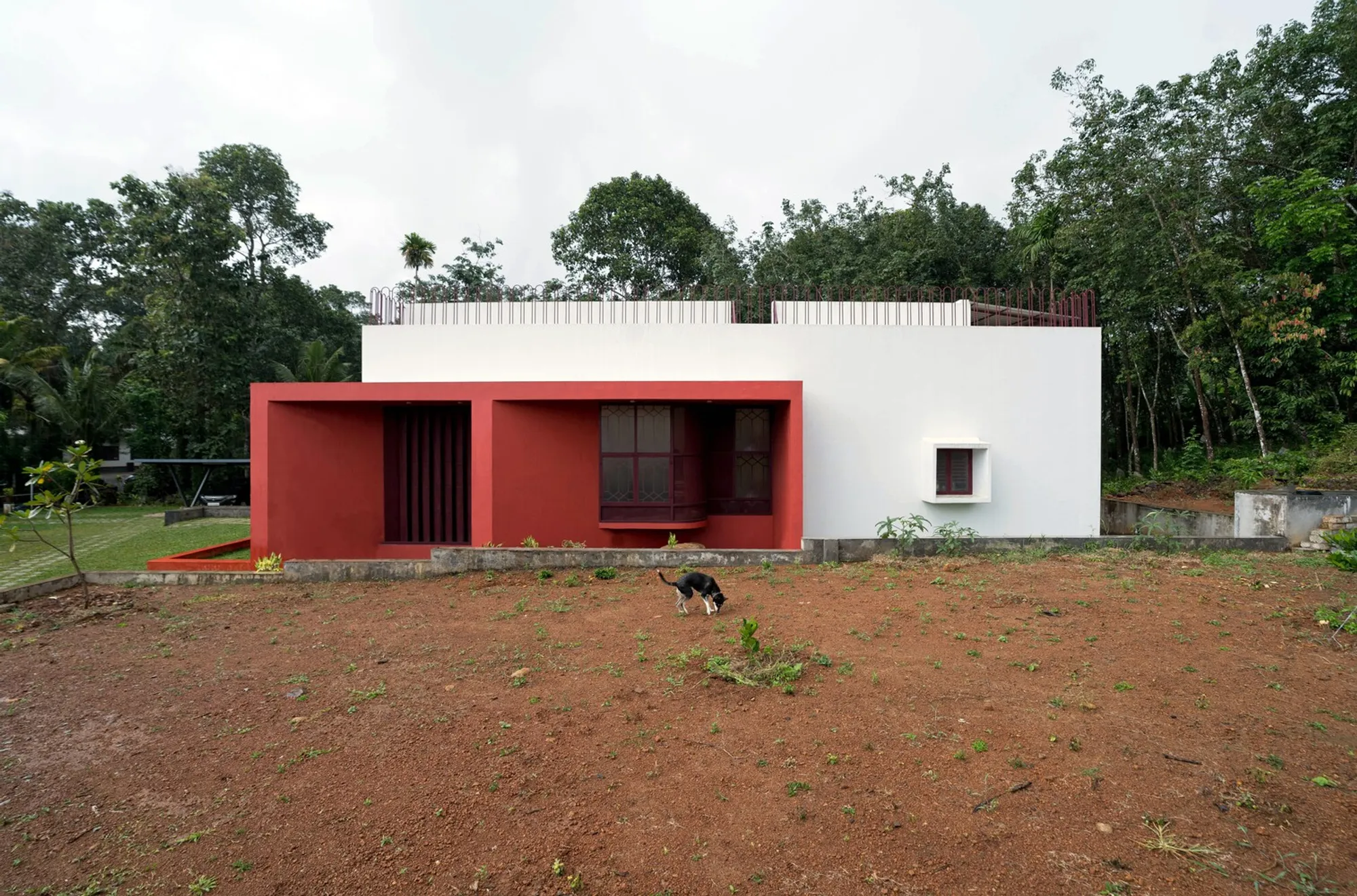
Multigenerational Home Design in India: Saba House by Project 51 A (h)
Saba House is a climate-responsive multigenerational home in Kerala, designed for accessibility, memory, and intergenerational connection.


Reimagining Family Living Across Four Generations
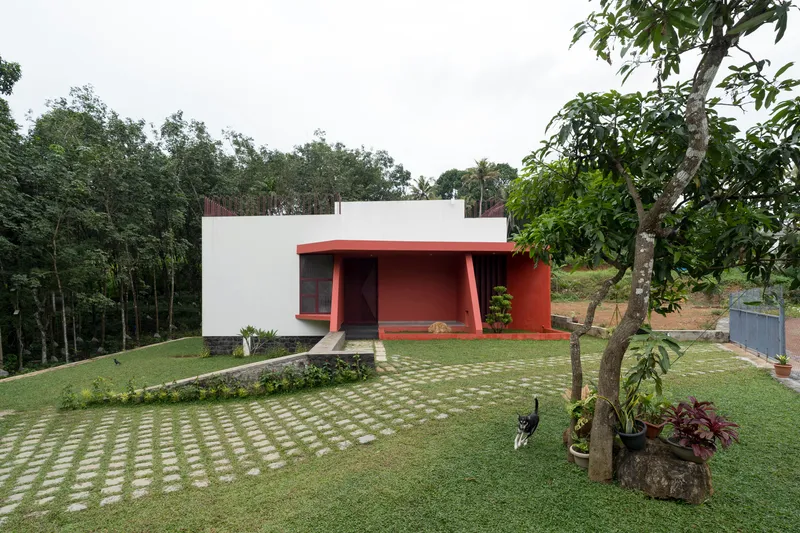
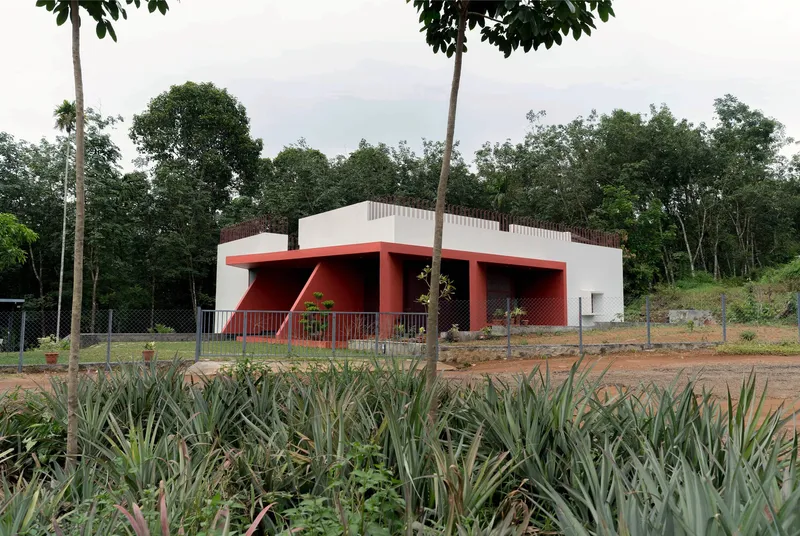
Located in the lush, sloping hills of Pallickathodu in Kottayam, Saba House by Project 51 A (h) is a remarkable response to the evolving needs of a four-generation Indian family. Designed in 2024, this 236-square-meter residence exemplifies thoughtful multigenerational home design, harmonizing shared spaces, privacy, accessibility, and emotional connections through architecture.
From a Deteriorating Legacy to a Living Tribute
The concept of the house began with a 60-year-old structure that no longer met the spatial and infrastructural needs of its occupants. Seven family members—including a soon-to-be-born child—lived in cramped, dimly lit, and deteriorating conditions. The new home not only replaced a failing structure but preserved the soul of the original dwelling through memory, view orientation, and spatial continuity.
Adapting to Terrain and Airflow
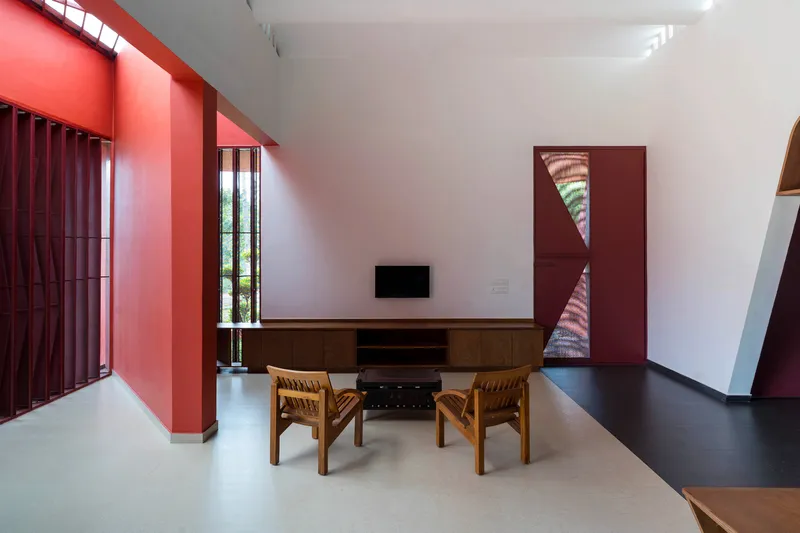
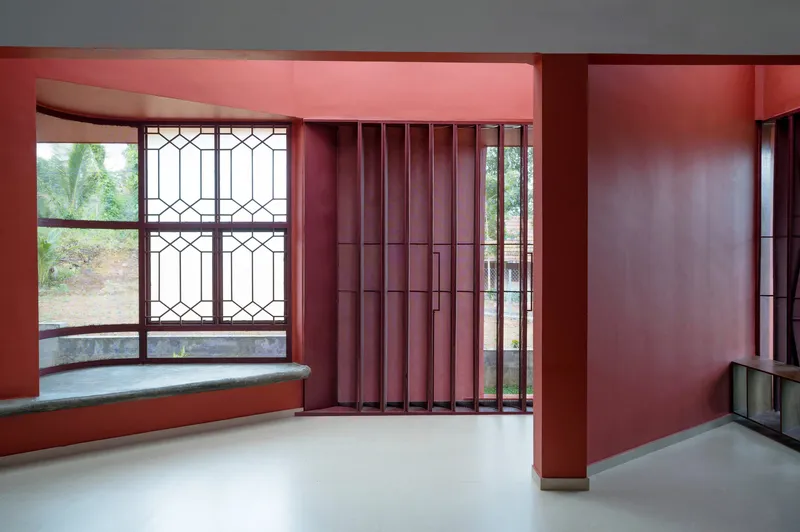
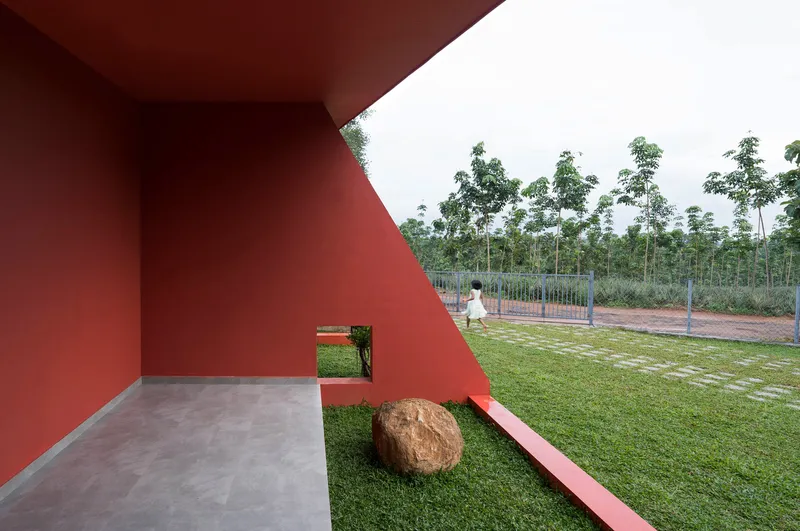
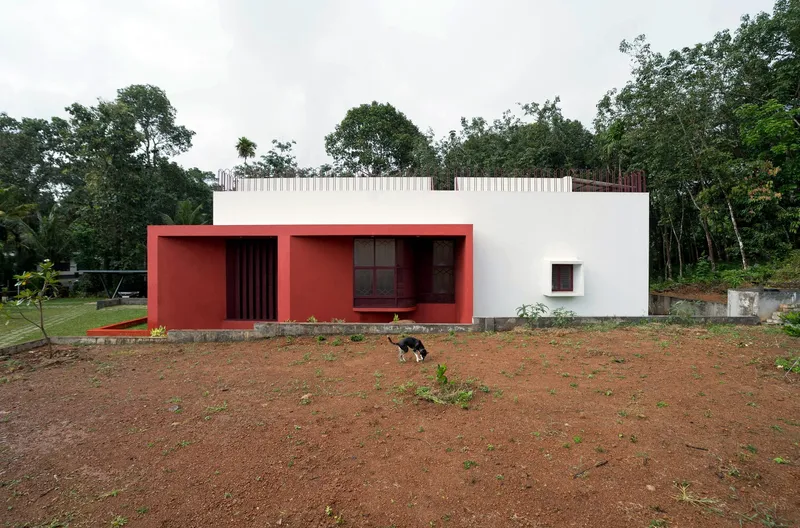
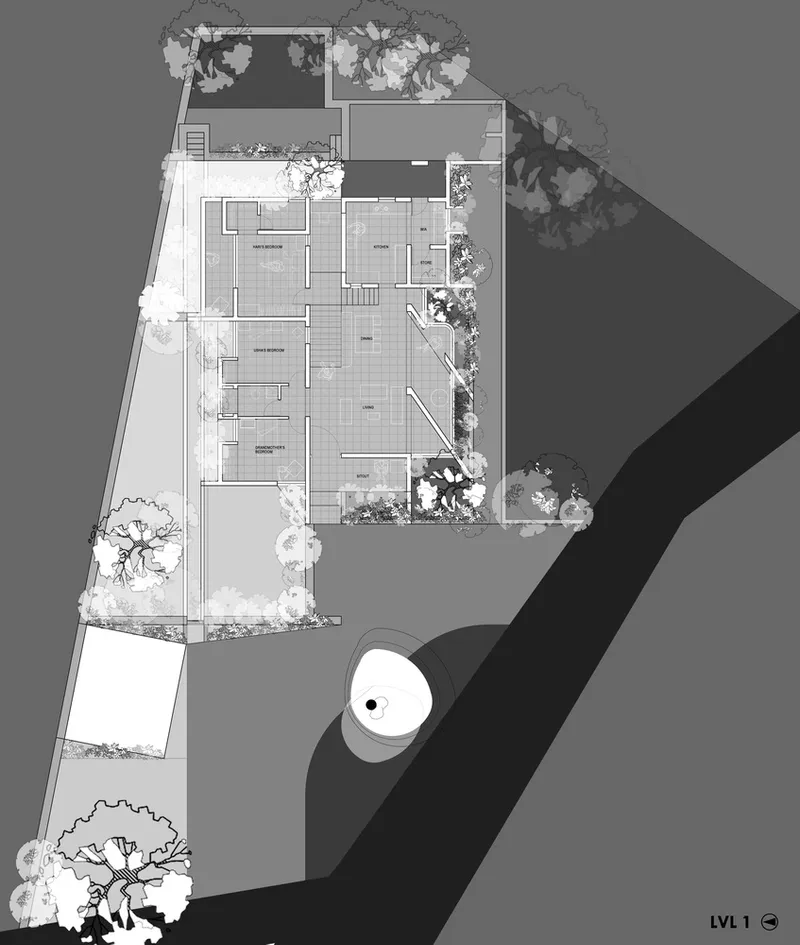
Set on a 22-cent hilltop site with a 24-foot slope, the new design cleverly follows the natural gradient without obstructing movement. The southern-facing road allows consistent airflow, which the architects harnessed using wind catcher walls, perforated openings, and a strategically placed skylight. These passive strategies ensure daylight and cross-ventilation throughout the house without mechanical intervention.
Spatial Planning for Generational Needs
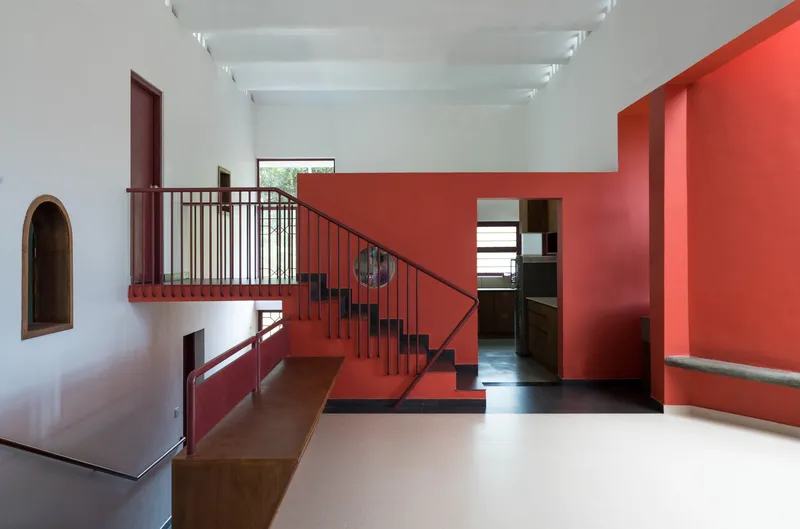
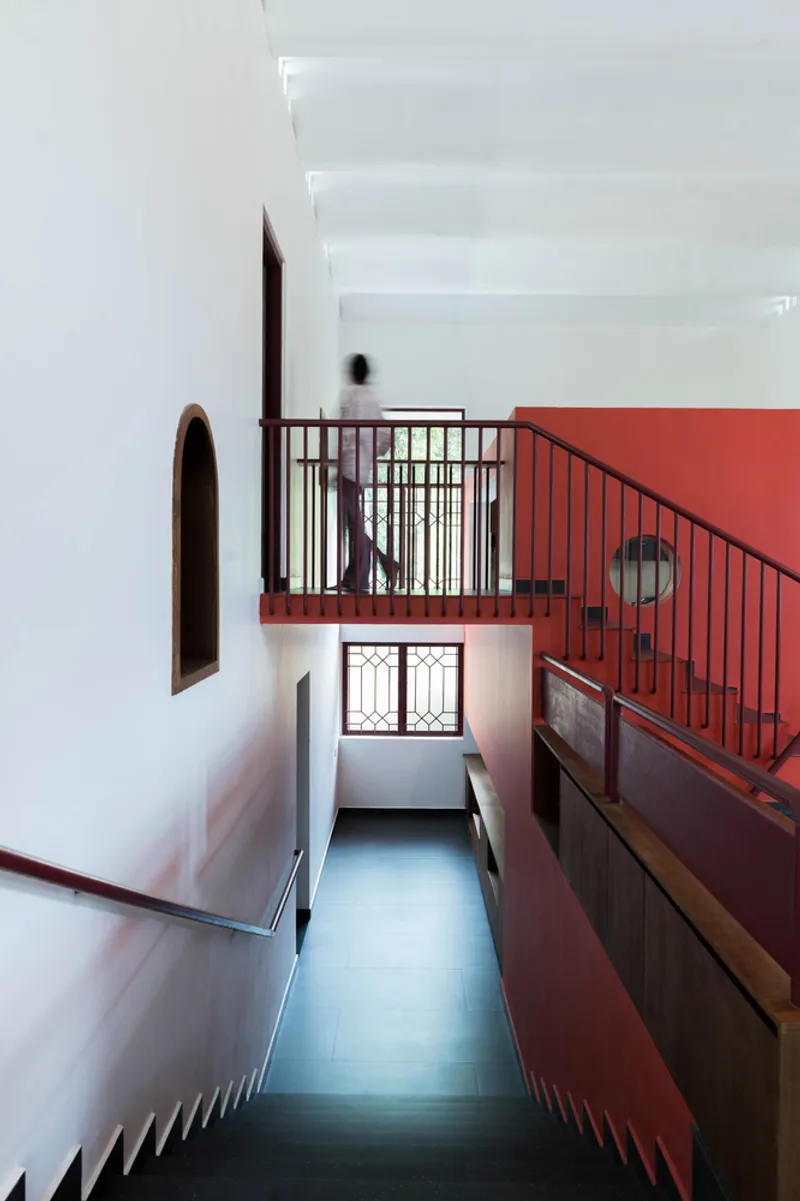
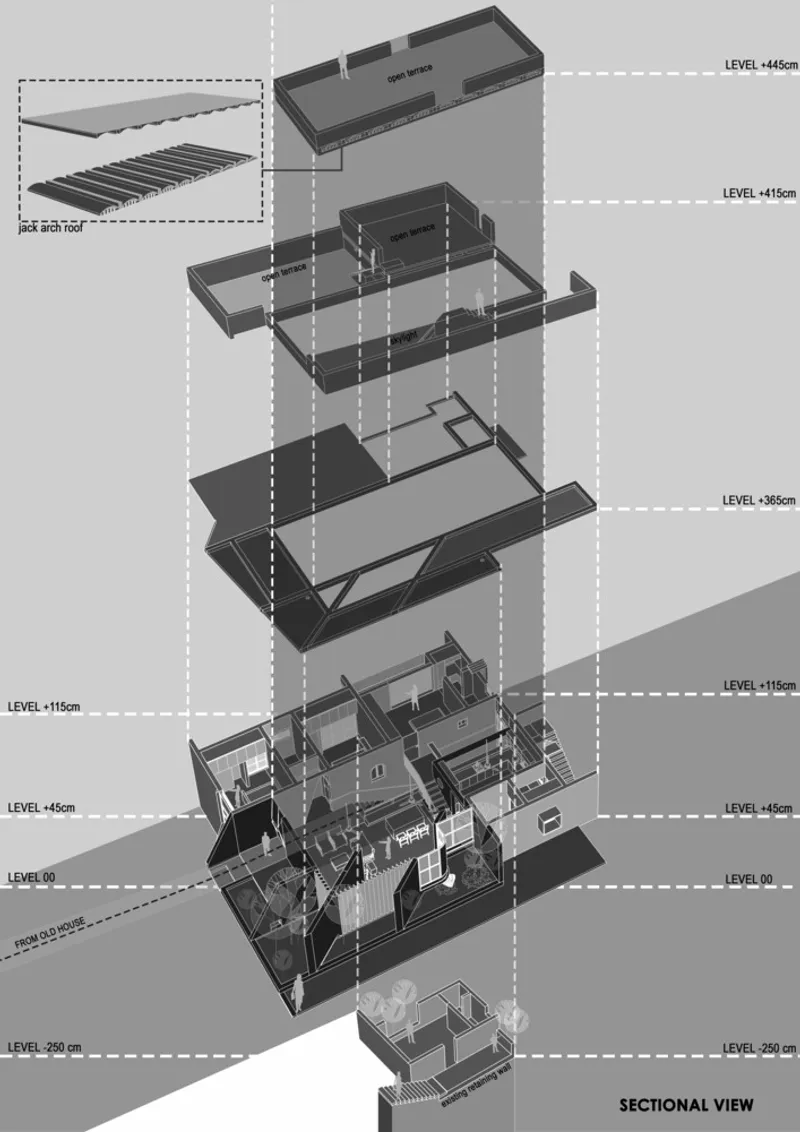
The home is layered to reflect the family's structure. Usha and the grandmother’s rooms are placed on the main level for ease of access. The children’s area, located six feet below, includes both a bedroom and study. The master bedroom is raised four feet above the living space and accessed by a bridge. This tiered layout maintains spatial connectivity while offering privacy and purpose.
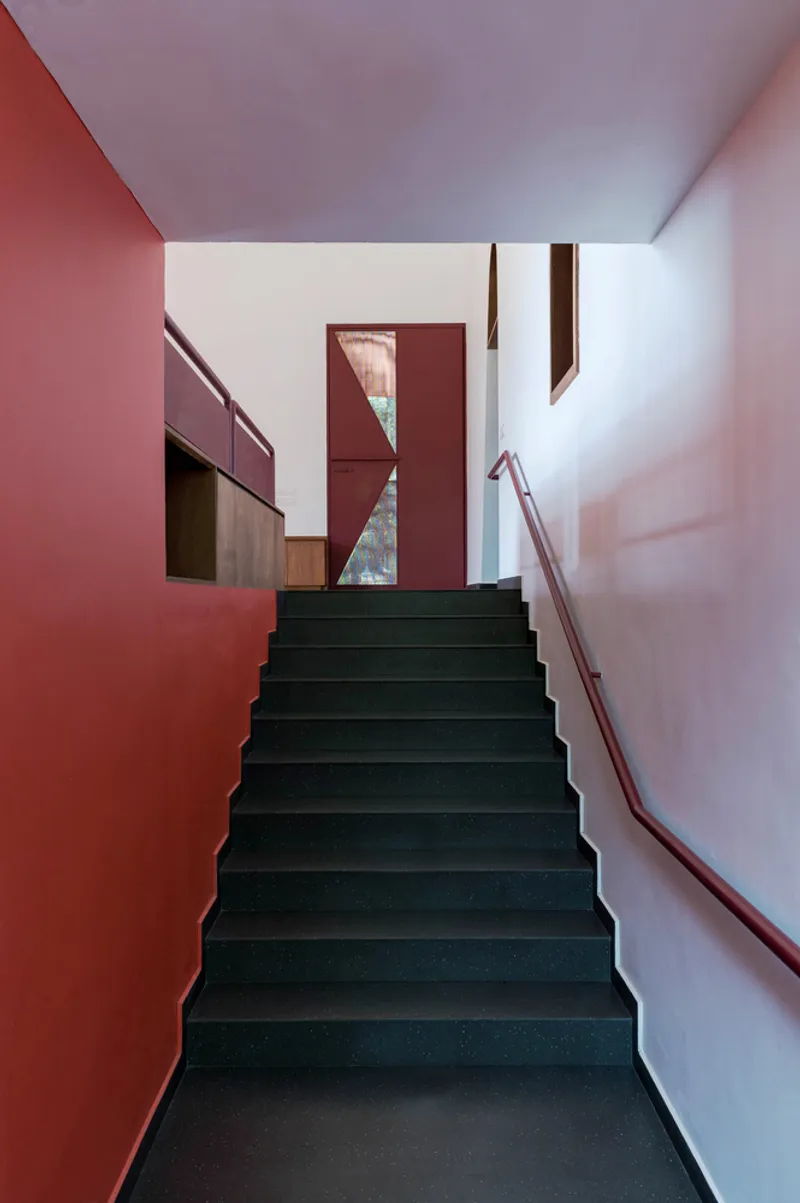
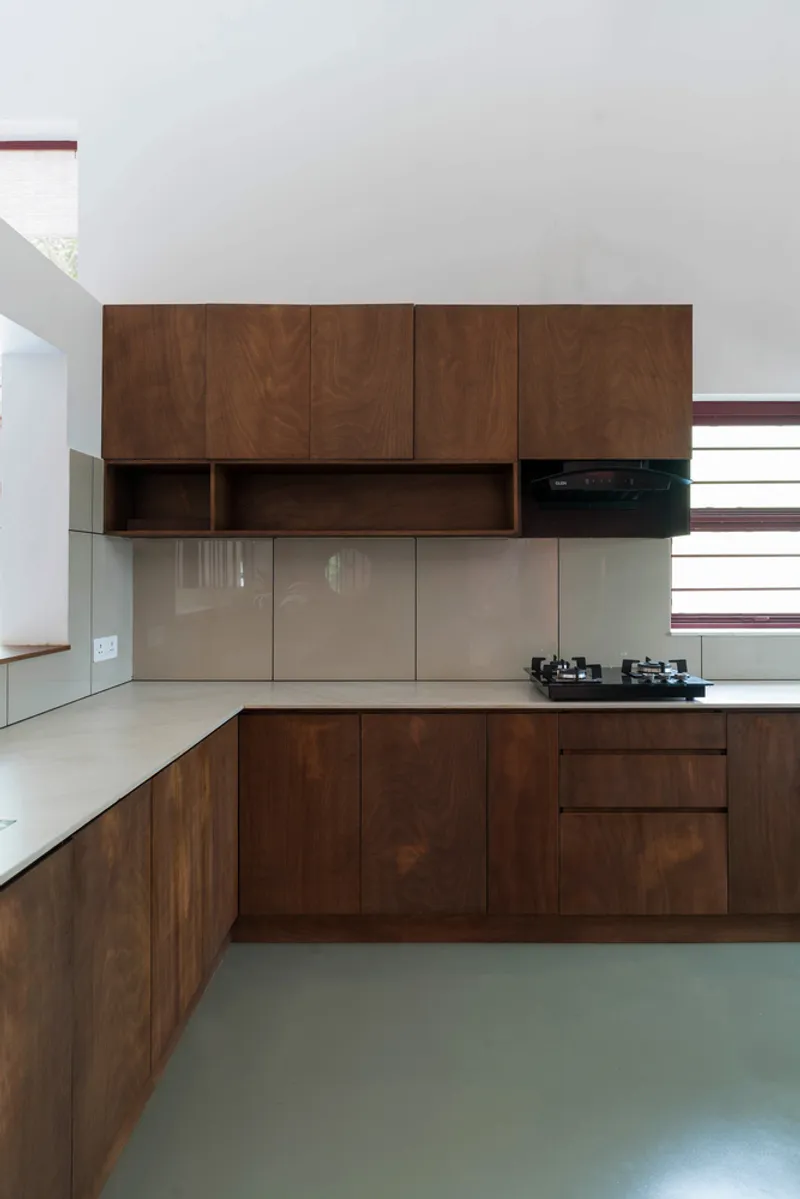
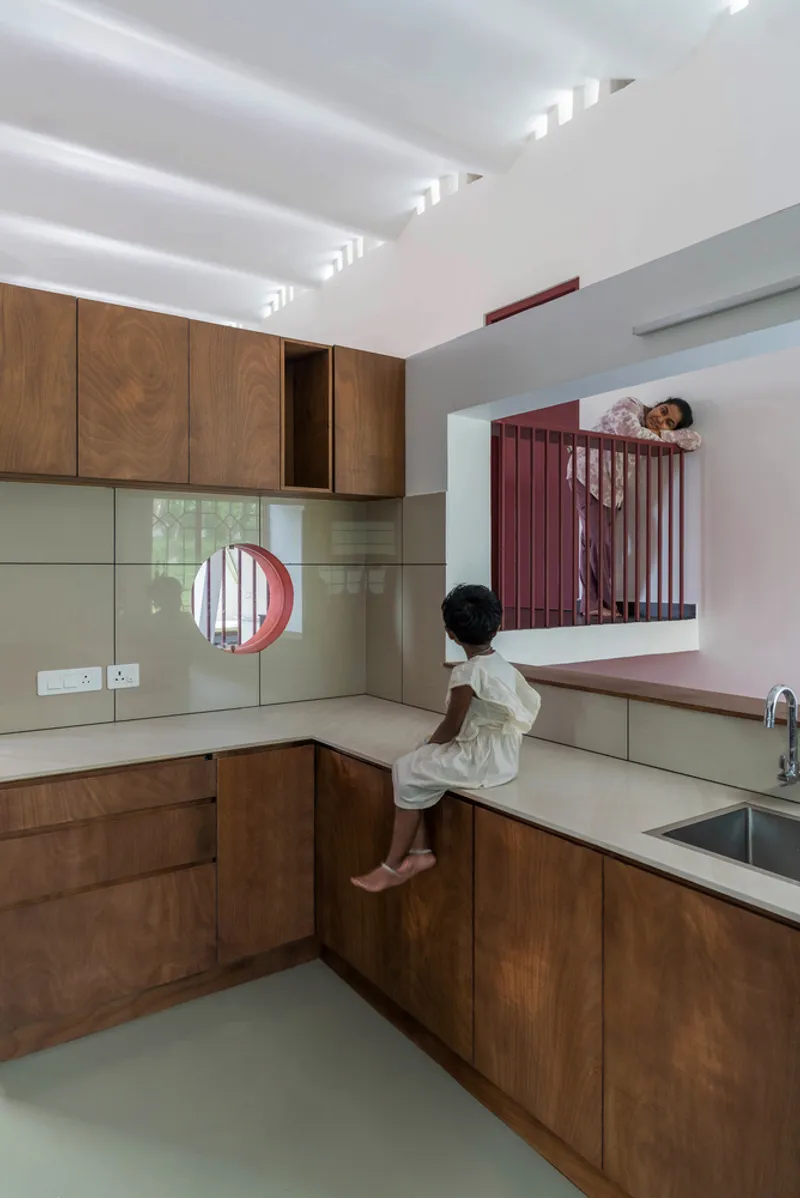
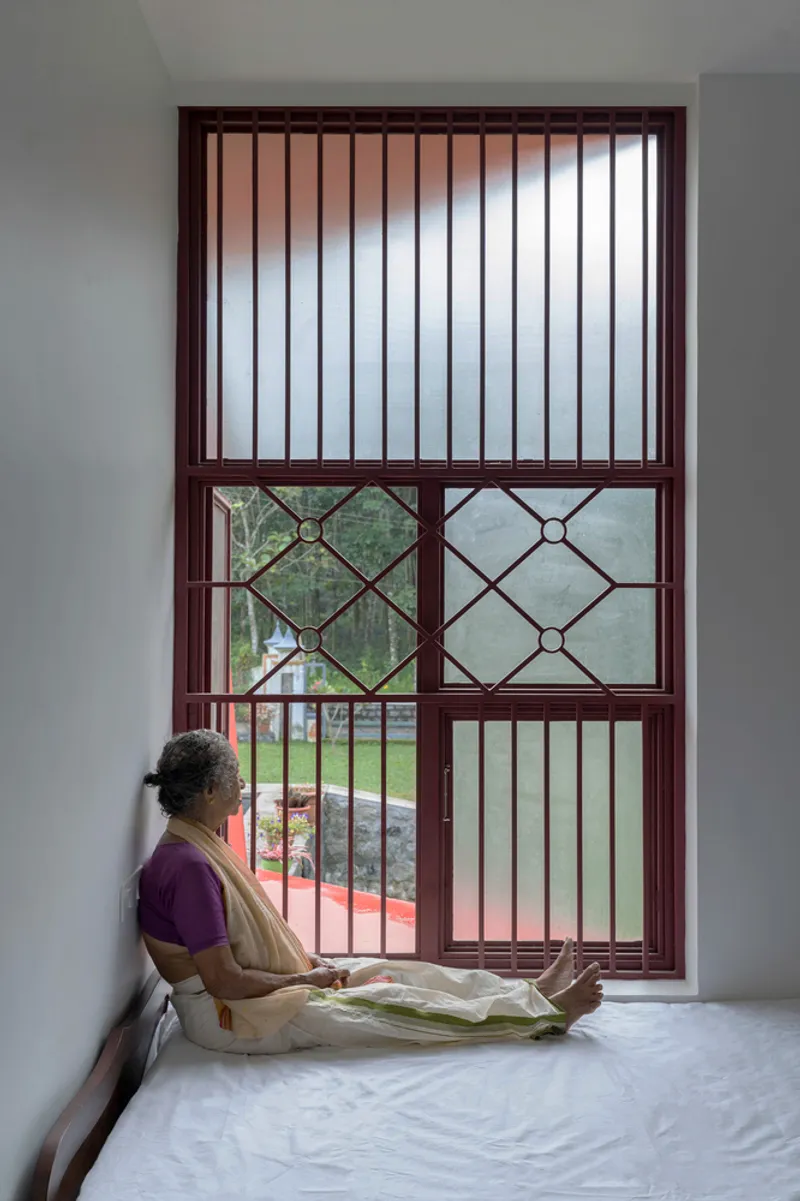
Open connections from the kitchen and passageways maintain visual contact across levels, especially with the children's spaces. All bedrooms face north, maximizing views of the surrounding greenery. The grandmother’s room specifically overlooks the site of her former home, creating a deep emotional anchor within the architecture.
Blending Vernacular Sensibility with Climate-Responsive Design
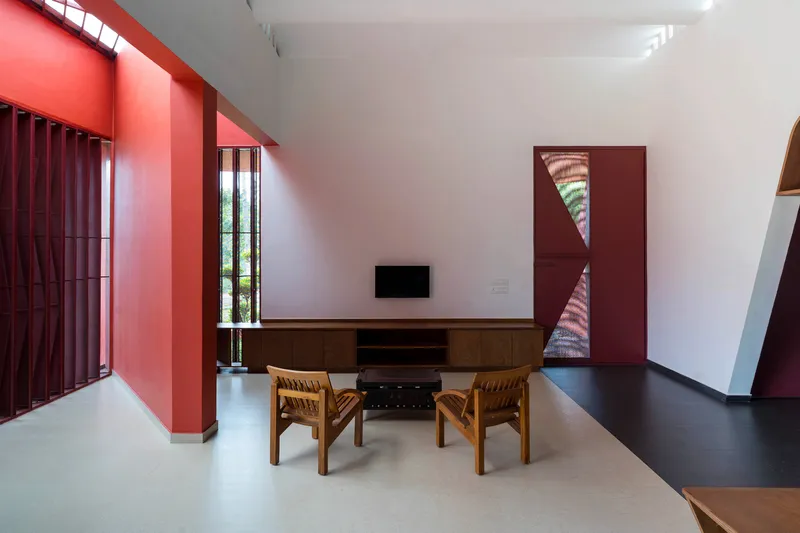
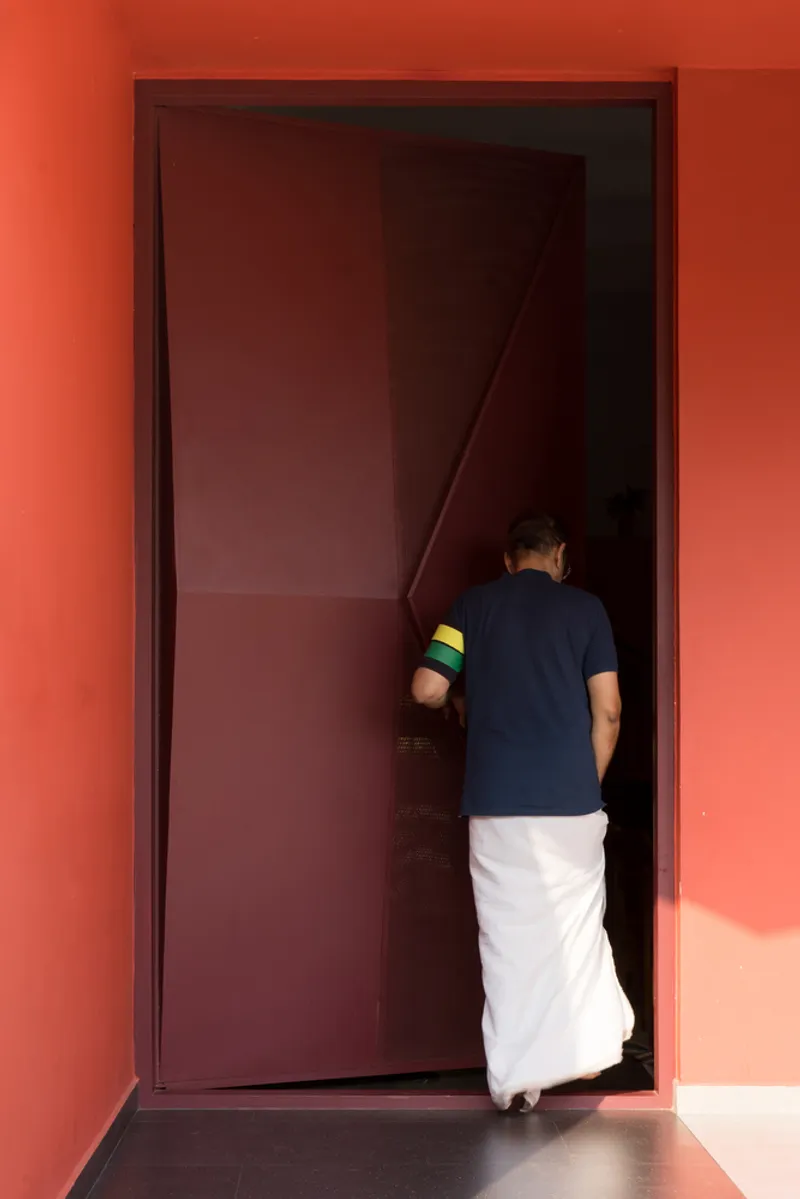
A defining feature of the house is its jack arch roof—brick vaults supported by beams—which ensures airflow even when windows are shut. This allows ventilation while maintaining privacy, a key consideration in multigenerational homes. The house also features a ten-foot-tall wooden door, subtly repositioned for improved circulation and privacy.
A Palette Rooted in Nature
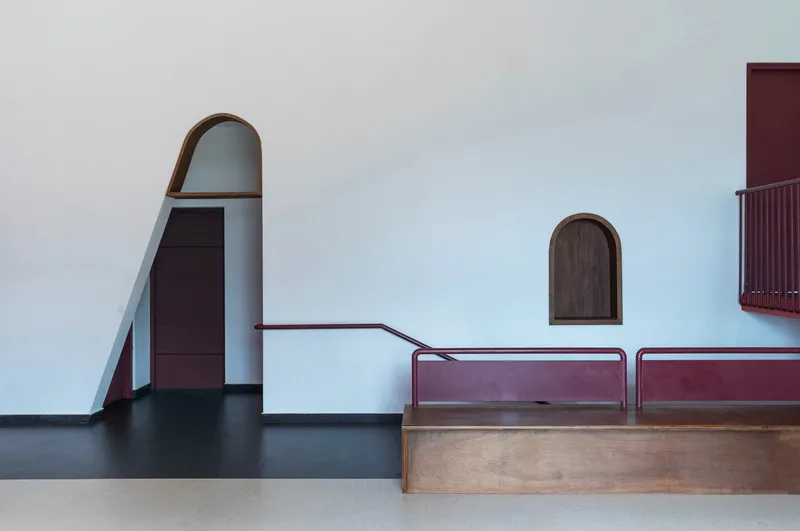
Red walls and furnishings were chosen to contrast and complement the surrounding rubber plantation. The bold hue not only enhances the home’s visibility but also marks a departure from the muted tones of the previous structure, giving the new house a sense of vitality and modernity.
A Home Named by a Breeze
The name “Saba” emerged from a moment of sensory delight. Upon entering the home, the grandmother—Malathi Teacher—felt a breeze she had never experienced in the old house. The name captures both the freshness and purpose of the design: to bring comfort, air, and light into the lives of its residents.
Building Emotional and Functional Continuity
Saba House is a living, breathing example of multigenerational home design, where architectural sensitivity meets emotional intelligence. The design respects memory while embracing change, offering a sanctuary that accommodates the daily rhythms, mobility needs, and relationships of its residents. It’s a case study in how architecture can bridge the past and the future, enabling families to grow together in spaces that are functional, inclusive, and deeply personal.
All photographs are works of Prasoon Suresh




Popular Articles
Popular articles from the community


Lunar Spiral: Space Architecture Shaped by the Mathematics of the Universe
Lunar Spiral reimagines space architecture through Fibonacci geometry, lunar regolith, levitating habitats, and self-sustaining Moon living.

The Earth Pod: 3D Printed Homes for Resilient Refugee Communities
The Earth Pod reimagines refugee housing through 3D printed homes made from clay, combining resilience, self-sufficiency, and rapid shelter.

The Musturak Paradise: Senior Living Architecture for a Connected Future in Temara, Morocco
The Musturak Paradise reimagines senior living architecture in Temara via private homes, social spaces, culture, community, and shared care.

Play: Fragments of Their World
Familiar architecture becomes modular playground design, creating safe spaces where displaced children can learn, connect, imagine and play.


Similar Reads
You might also enjoy these articles

Bamboo Housing Challenge 2026: Design Affordable, Sustainable Homes Using Bamboo
An international design competition by Bamboo U and IBUKU inviting architects and designers to reimagine affordable housing using bamboo — with the winning design built full-scale in Bali.

Computational Design & Education: Beegraphy Design Awards Introduces 7th Category (Featuring Jiyun's Innovative Approach)
Dive into Beegraphy’s 7th Design Awards category, where computational design meets education to create immersive, interactive learning tools, inspired by Jiyun’s work.
From Parametric Lighting to Urban Furniture: Join the 2nd Workshop in Beegraphy’s Computational Design Series
Dive into Cutting-Edge Design Techniques and Practical Applications with Industry Experts

Last Call: Unleash Your Architectural Genius in SHAK's Kindergarten Design Competition
Urgent call for architects to join SHAK's kindergarten design competition before the looming deadline


Explore Architecture Competitions
Discover active competitions in this discipline



Challenge to reimagine the Iron Throne


Photograph architecture without architects


Illustrate the lost glory of Angkor Wat - Render Challenge


Design challenge to reuse E-waste
Comments (0)
Please login or sign up to add comments
No comments yet. Be the first to comment!