
Mushroom Library in Yunnan: A Sustainable Library Architecture That Blends Nature and Culture
The Mushroom Library in Yunnan exemplifies sustainable library architecture by harmonizing nature, culture, and community engagement in a rural setting.

A Cultural Sanctuary in Rural China
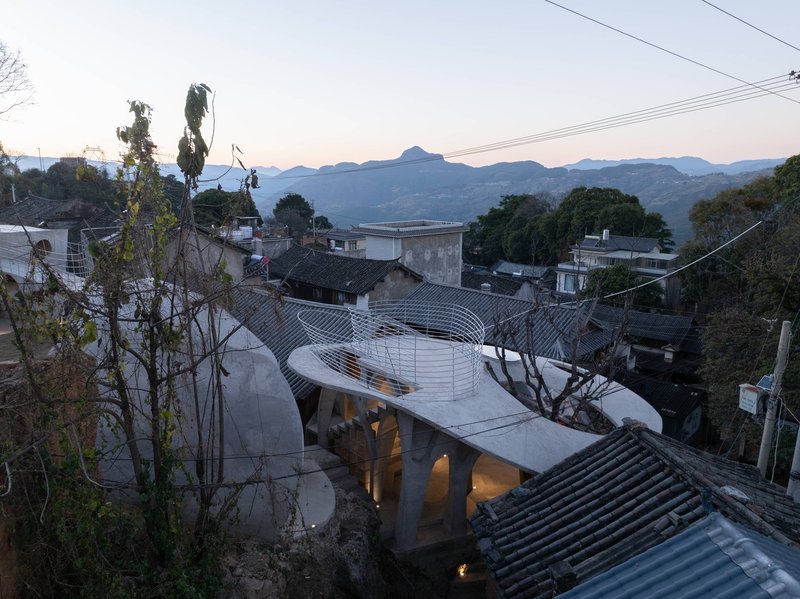
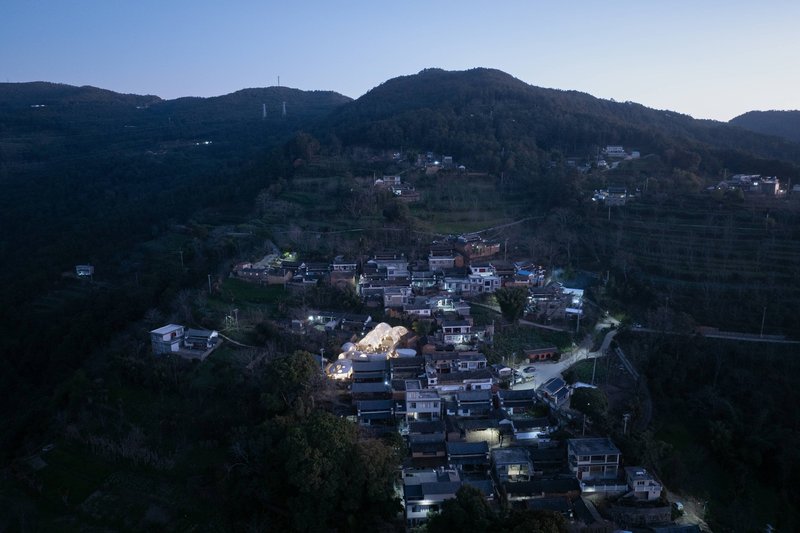
Nestled in the Wuliang Mountains of Yunnan, the Mushroom Library for Children stands as a beacon of sustainability, cultural preservation, and architectural innovation. Designed by Kong Xiangwei Studio, this 50-square-meter structure integrates itself seamlessly into the fabric of Yanzitou Village, a small rural community inhabited by six ethnic groups. The library not only serves as a space for learning and exploration but also as a symbol of rural rejuvenation, offering children and elders alike a space to connect, read, and engage with their heritage.
Harmonizing Architecture with Nature
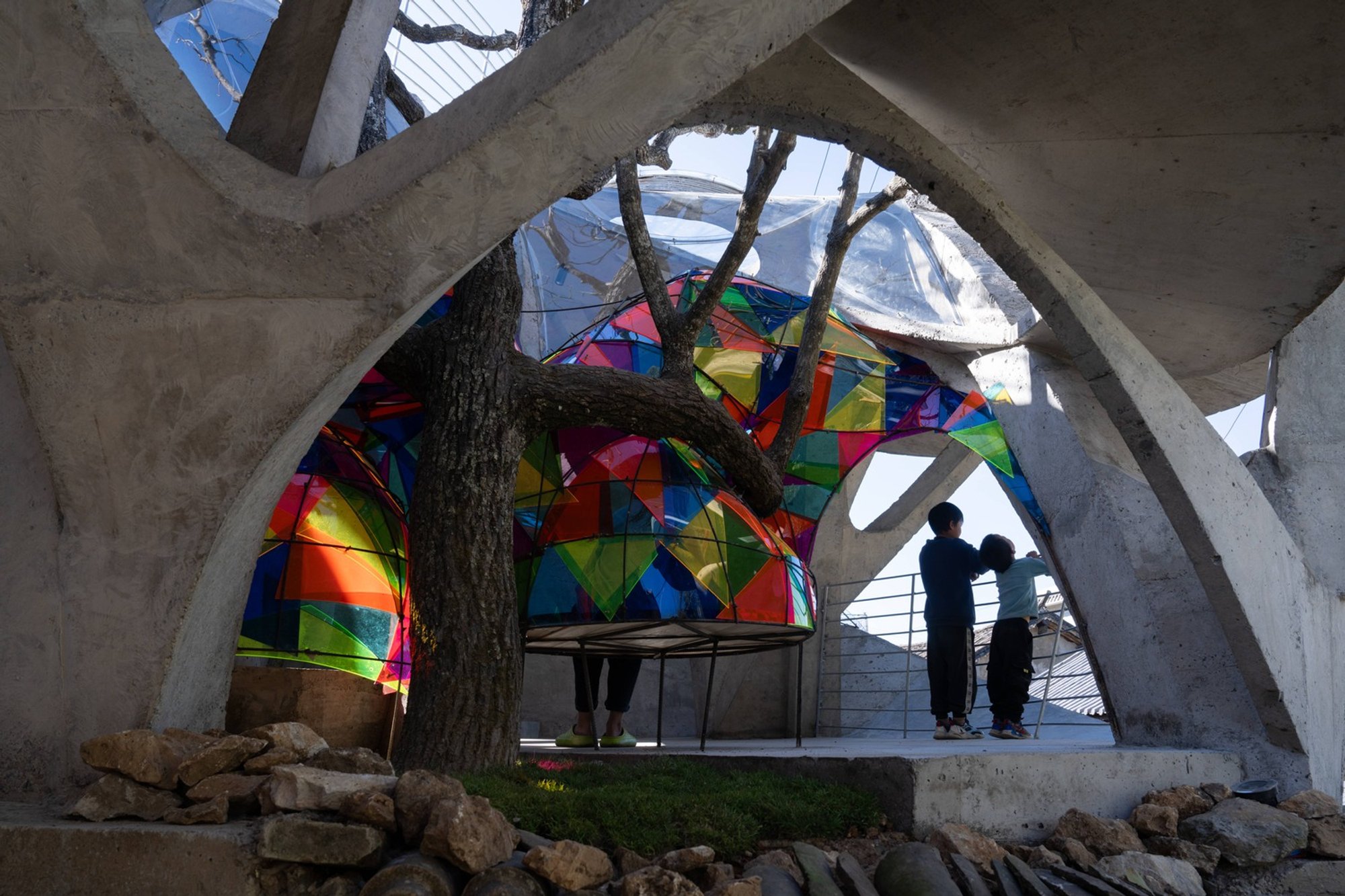
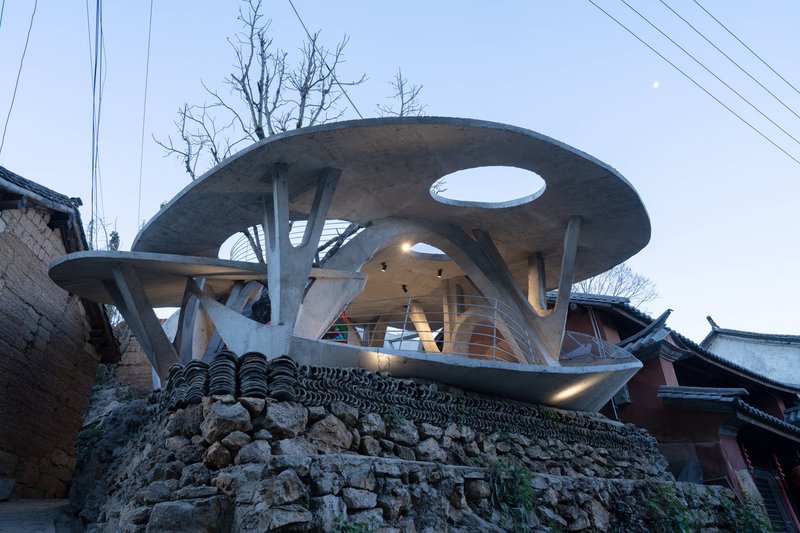
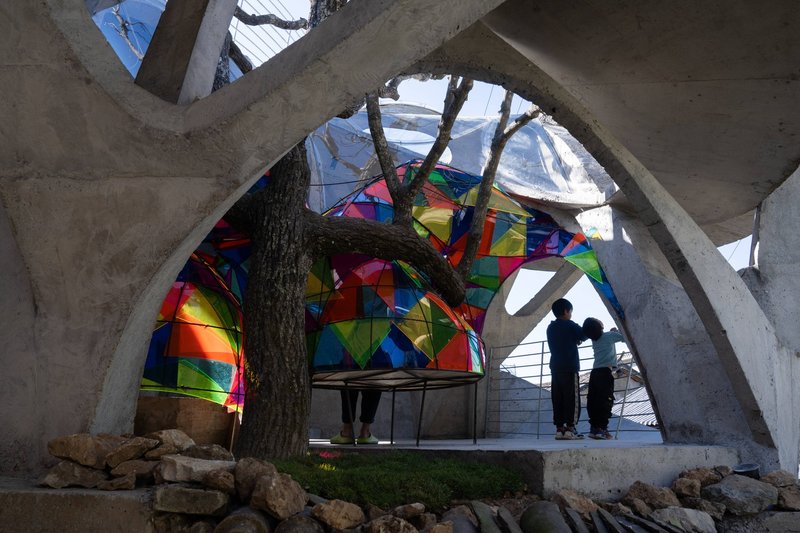
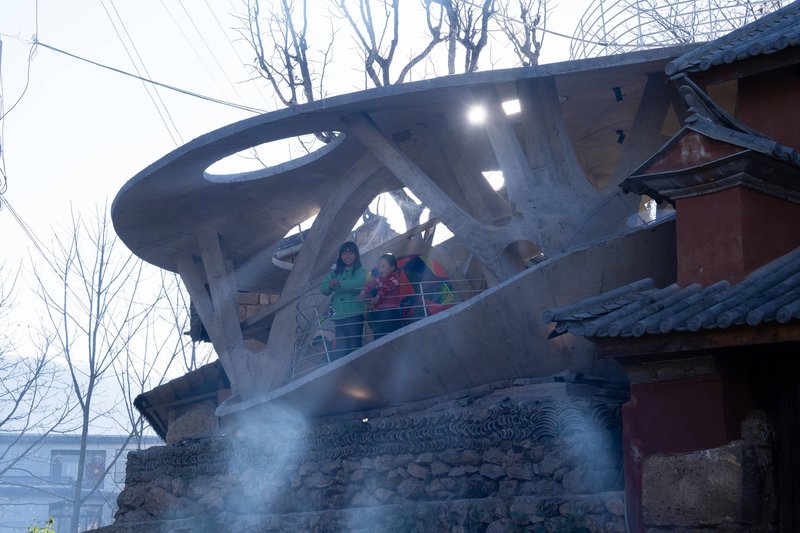
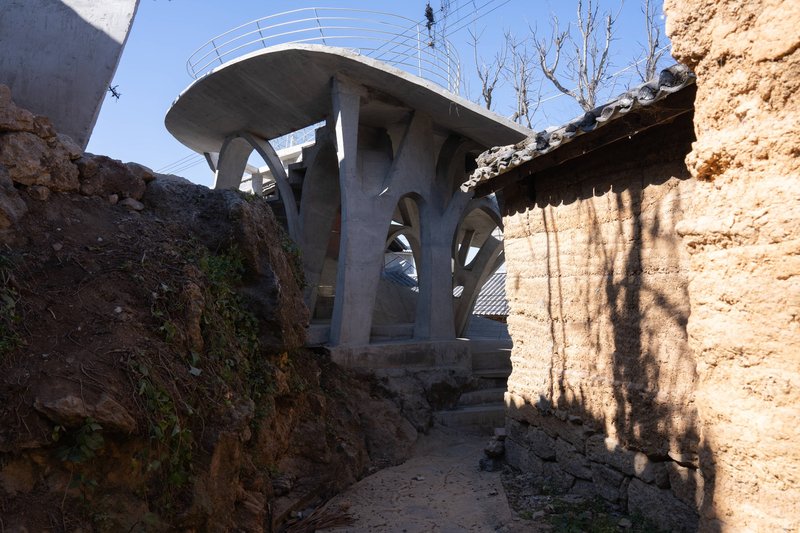
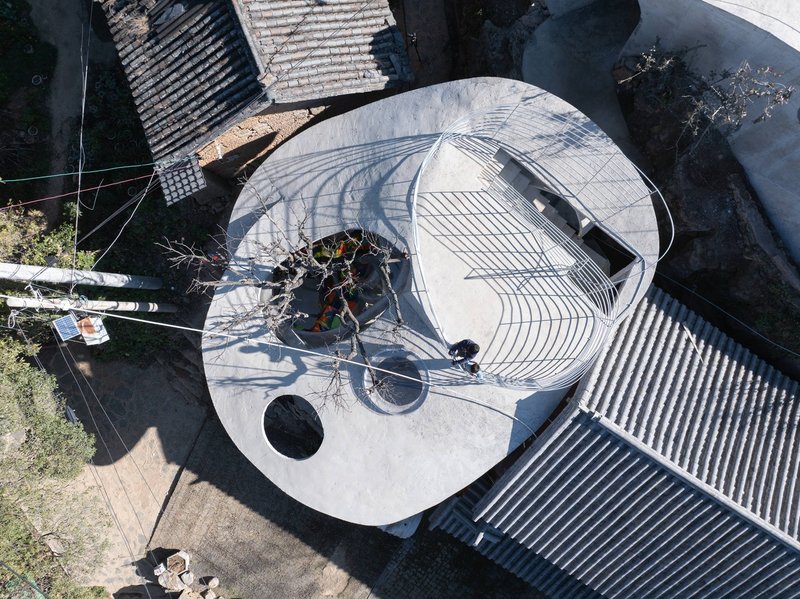
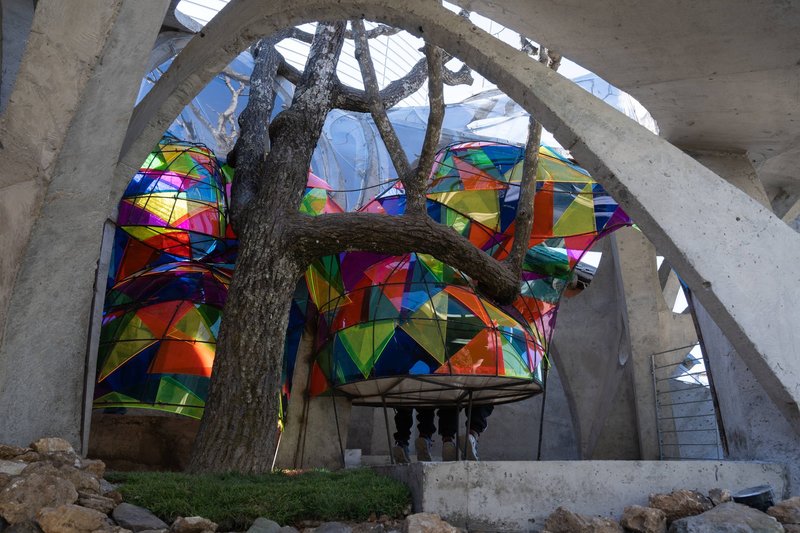
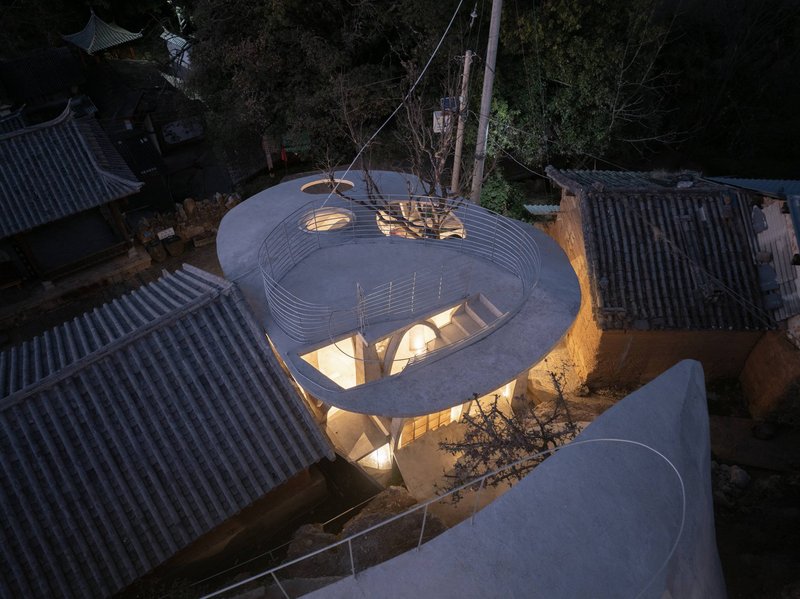
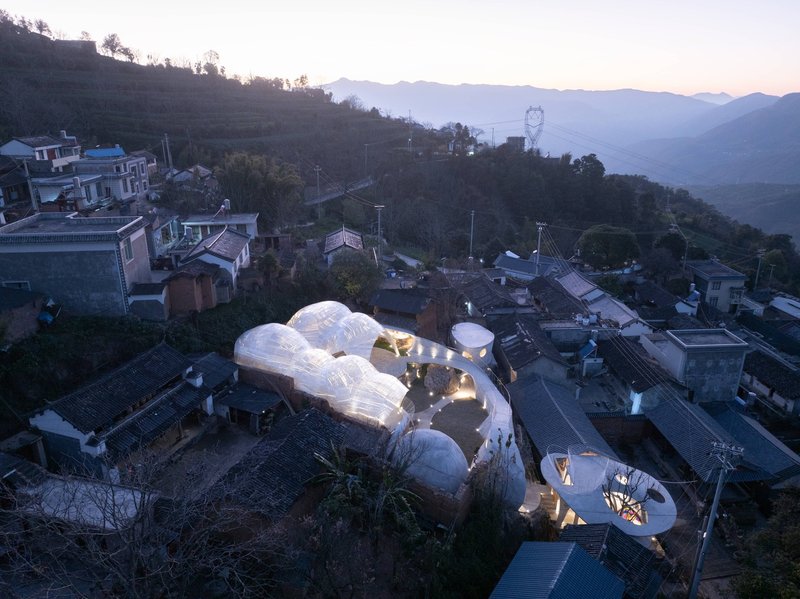
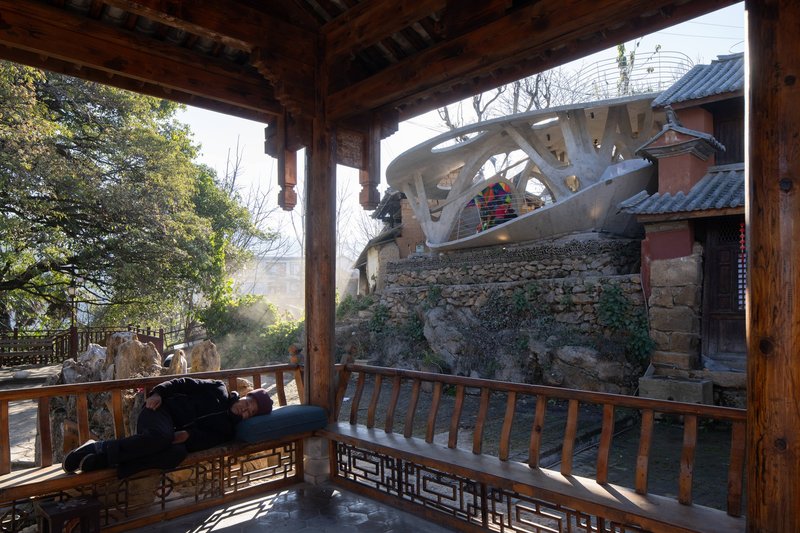
Built on a narrow, rocky plot between two old village dwellings, the library embraces the presence of a centuries-old raisin tree as a central design element. Rather than disturbing the tree, the architects designed a branch-like canopy system using 12mm ribbed steel bars, allowing the building to exist in harmony with nature. The overlapping mushroom-shaped roofs, inspired by local fungi, provide a playful yet organic aesthetic, reinforcing the connection between the built environment and the natural landscape.
A Sustainable Approach to Rural Architecture
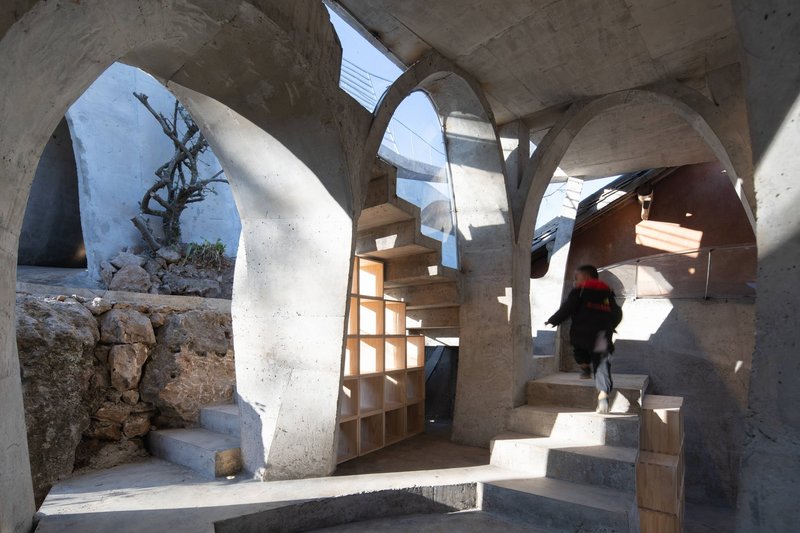
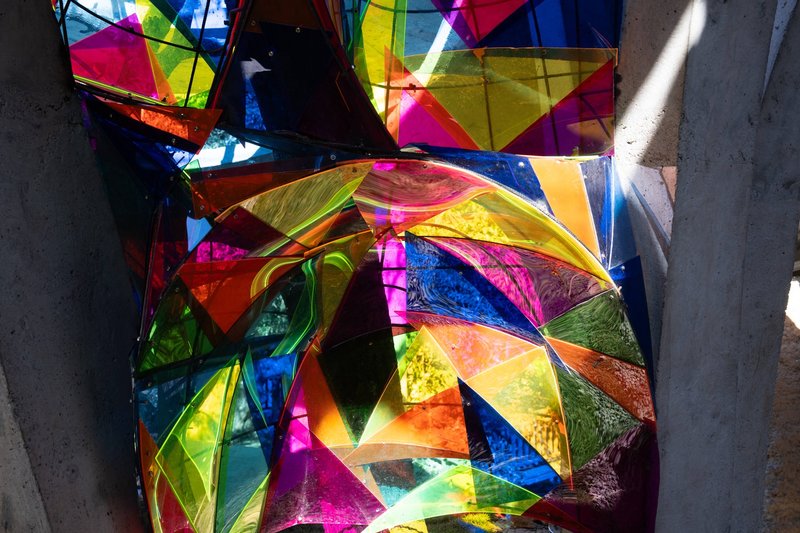
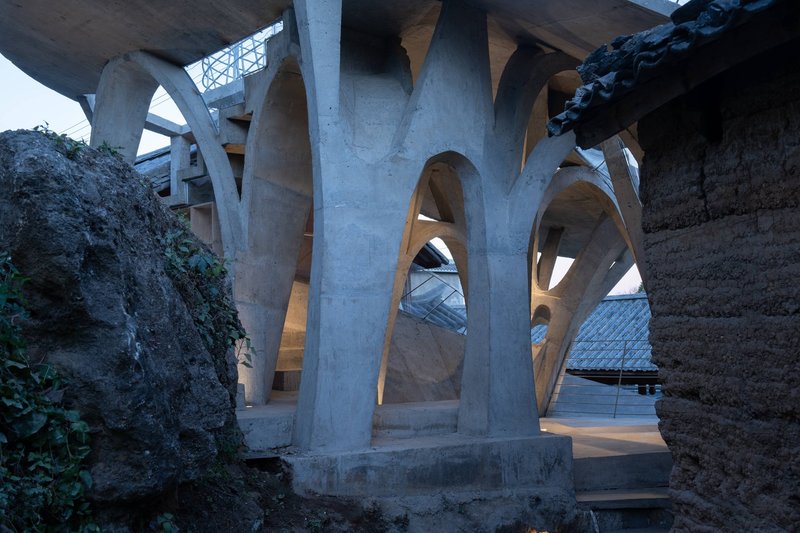
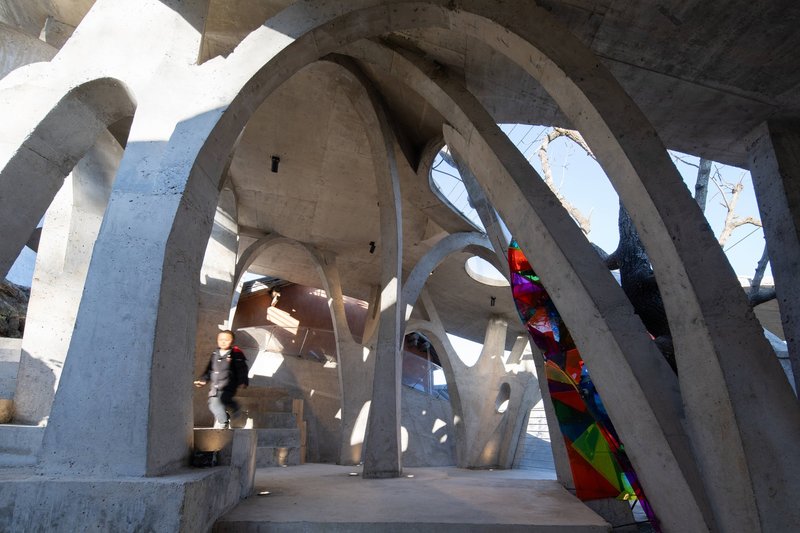
To create a resilient yet contextually appropriate structure, the architects opted for cast-in-place concrete vaults, replacing the traditional thatch-and-earth construction while maintaining the rustic charm of the region. The material palette embraces raw concrete, handcrafted steel, and translucent acrylic panels, reinforcing a tactile, unpolished aesthetic that resonates with the village’s architectural identity. This low-maintenance, climate-responsive design ensures that the building remains a sustainable community asset for years to come.
Dynamic Light and Spatial Interaction
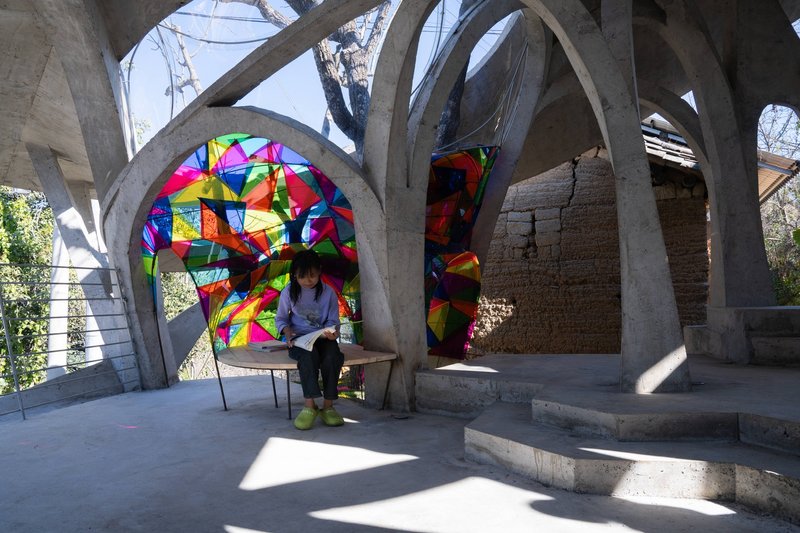
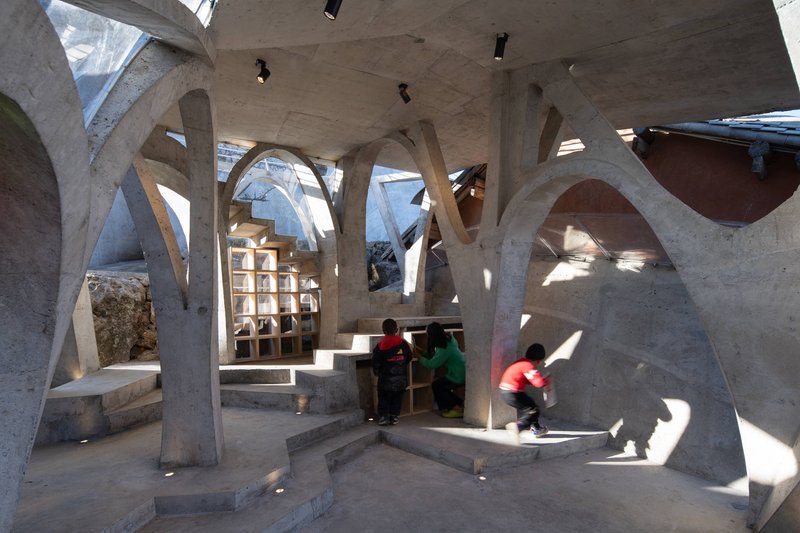
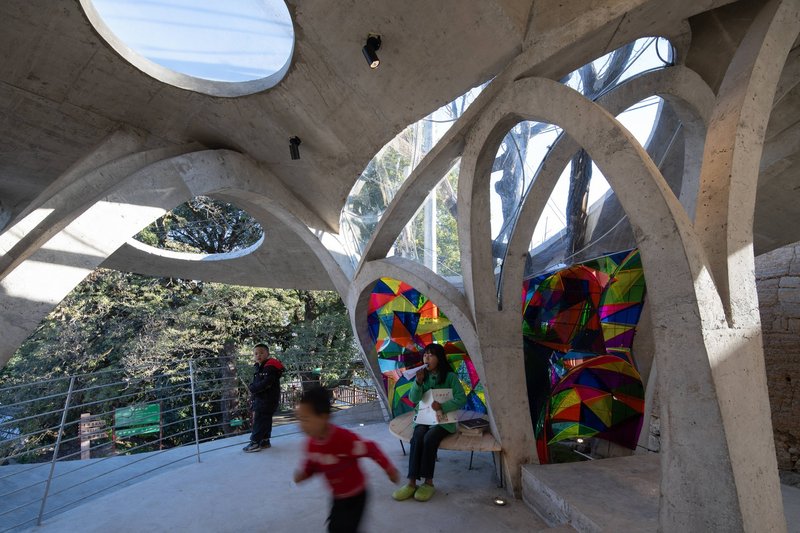
The Mushroom Library is more than a static structure—it is a living, breathing space animated by the movement of natural light and shadows. Through carefully placed oculi, tree hollows, and stair voids, sunlight filters into the space, creating ever-shifting patterns throughout the day. The arched steel columns cast organic, branch-like shadows, further enhancing the interplay between architecture and nature. Inside, semi-spherical bookshelves woven from 6mm steel rods and clad in color-saturated acrylic panels reflect light dynamically, transforming the space into a kaleidoscopic storytelling hub for children.
A Playful and Engaging Spatial Experience
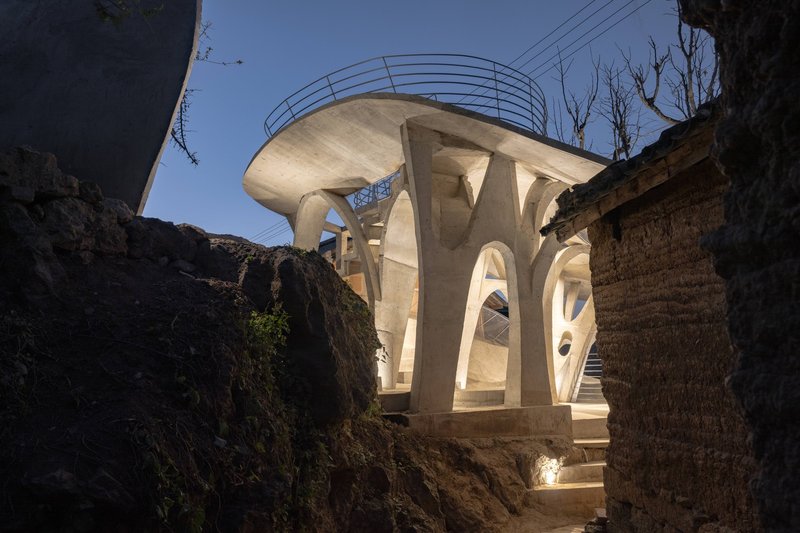
The architectural form encourages interaction and exploration. The mushroom-like roof, when viewed from different angles, takes on varied expressions—from a hat brim in the alleyway to a whimsical face from above. The open interior layout and ascending pathways lead visitors to a rooftop platform, where children can observe the surrounding forest, interact with the tree, or enjoy panoramic views of the village. At night, the structure glows like a floating lantern, becoming a magnet for community gathering and storytelling.
Preserving Rural Identity Through Architecture
The Mushroom Library is not just an architectural project; it is a repository of intergenerational memory. It serves as a meeting place for village elders and children, weaving itself into the fabric of daily life. From Elder Yang's morning routine of waiting for the first sunlight to children reclining on the curved seating to watch the play of light, the space fosters storytelling, learning, and shared experiences. This continuity of cultural engagement transforms the library into a time capsule, preserving rural traditions while embracing modern possibilities.
A Model for Sustainable Library Architecture
By blending ecological sensitivity, cultural heritage, and innovative design, the Mushroom Library sets a precedent for sustainable library architecture in rural contexts. It reimagines the library as a dynamic space that bridges the past and future, fostering community resilience, environmental harmony, and architectural ingenuity.
This project is a testament to how thoughtful design can revitalize rural communities, offering a space where tradition and modernity coexist, knowledge and play merge, and sustainability becomes a guiding principle for future generations.
All Photographs are works of Arch Translator



Popular Articles
Popular articles from the community

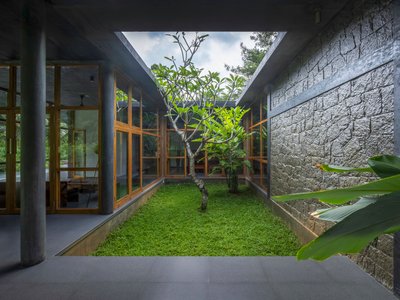
3dor Concepts Wraps a Kerala Home in Mirrored Concrete Arcs Around a Courtyard Tree
In the Western Ghats foothills of Thamarassery, a 270 m² single-story house uses two curved volumes to frame nature as its center.
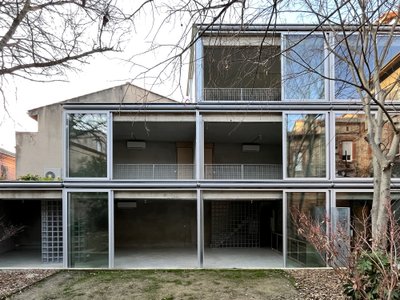
BAST Slots a Four-Story Glass House into a Narrow Gap Between Toulouse Townhouses
In the dense Bonnefoy district, a stepped infill building merges home and office while preserving a majestic hackberry tree.

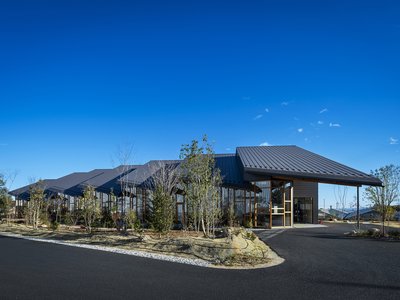
20 Most Popular Office Building Projects of 2025
From biophilic workspaces in India to net-positive energy offices in New Delhi, 20 office building projects that defined architecture in 2025.
Ippolito Fleitz Group Identity Architects Turn Eight Floors in Shanghai into a Vertical Creative City
Publicis Groupe's new headquarters in Xintiandi reimagines the office as a courtyard-driven urban landscape stacked across eight floors.
Similar Reads
You might also enjoy these articles
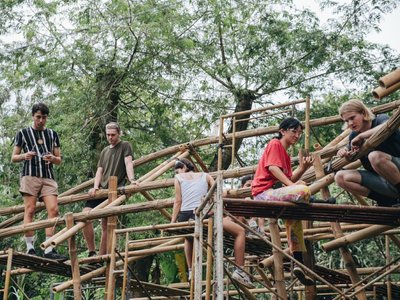
Bamboo Housing Challenge 2026: Design Affordable, Sustainable Homes Using Bamboo
An international design competition by Bamboo U and IBUKU inviting architects and designers to reimagine affordable housing using bamboo — with the winning design built full-scale in Bali.
Computational Design & Education: Beegraphy Design Awards Introduces 7th Category (Featuring Jiyun's Innovative Approach)
Dive into Beegraphy’s 7th Design Awards category, where computational design meets education to create immersive, interactive learning tools, inspired by Jiyun’s work.
From Parametric Lighting to Urban Furniture: Join the 2nd Workshop in Beegraphy’s Computational Design Series
Dive into Cutting-Edge Design Techniques and Practical Applications with Industry Experts

Introducing Sphere by UNI: Pioneering a New Era in AEC Industry
Unlocking Global Potential with BIM and Agile Management

Explore Architecture Competitions
Discover active competitions in this discipline




The International Standard for Design Portfolios


The Global Benchmark for Architecture Dissertation Awards


The Global Benchmark for Graduation Excellence


Challenge to reimagine the Iron Throne
Comments (0)
Please login or sign up to add comments
No comments yet. Be the first to comment!