
MVRDV and morePlatz Fold a Sculptural Office Building into Mainz's Former Industrial Harbor
A zig-zagging aluminium skin turns a six-story office block into a noise buffer and waterfront landmark on the Rhine.


Europe's post-industrial waterfronts tend to follow a familiar playbook: rezone, add housing, insert a landmark or two, repeat. Mainz's Zollhafen, a former shipping container harbor northeast of the city's Neustadt district on the west bank of the Rhine, is no exception. What sets MVRDV and morePlatz's ZigZag Offices apart from the generic glass boxes that populate these regeneration zones is the directness with which the building's form addresses its real problems: acoustic separation from a still-active industrial zone to the north, solar control on long south-facing elevations, and the creation of genuine public space at the building's feet.
Completed in 2021 as one of the pioneer projects at the Zollhafen's Hafenspitze, the 4,600 square meter office building sits on the newly renamed Rotterdamer Platz, opening onto a waterfront square that invites people to the canal edge. The most immediately striking move is the facade itself: a folded aluminium skin clad in matt-silver panels that tilts, cantilevers, and zig-zags across six floors, evoking the serial geometry of Brancusi's Endless Column more than any corporate office typology. The result is a building that acts simultaneously as sculpture, sound barrier, and flexible workplace.
The Folded Skin
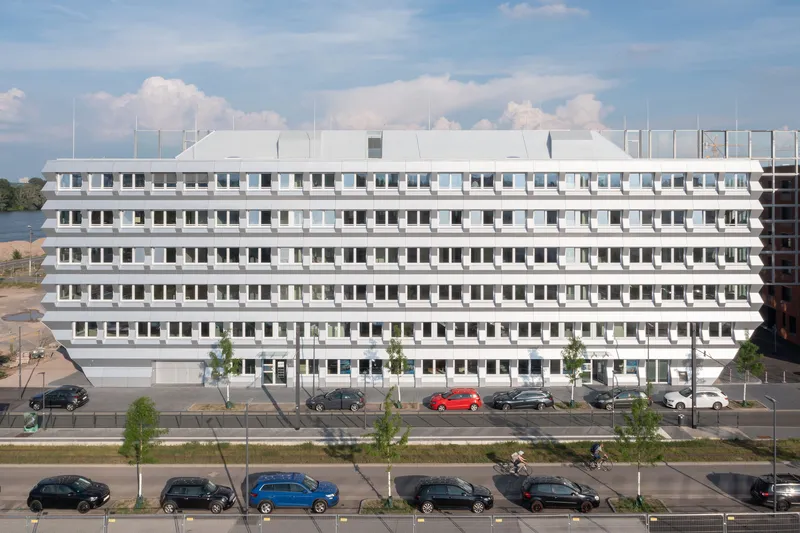
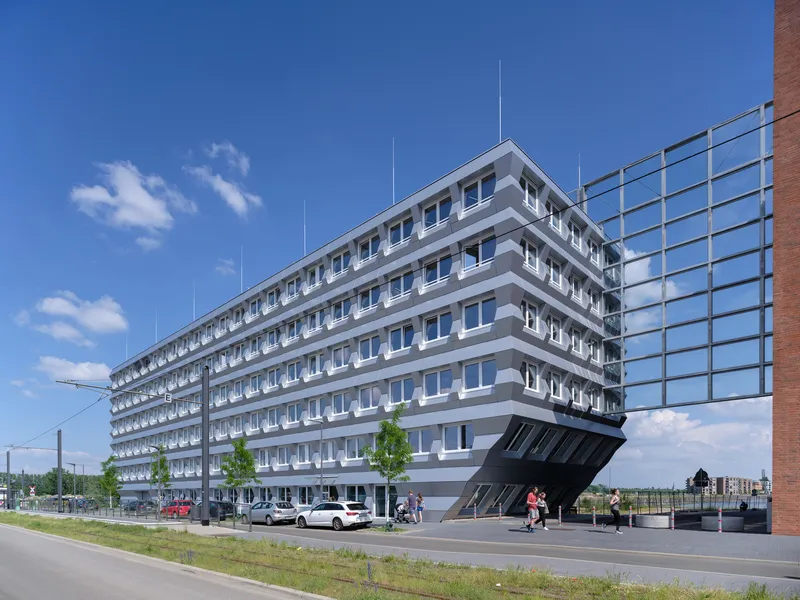
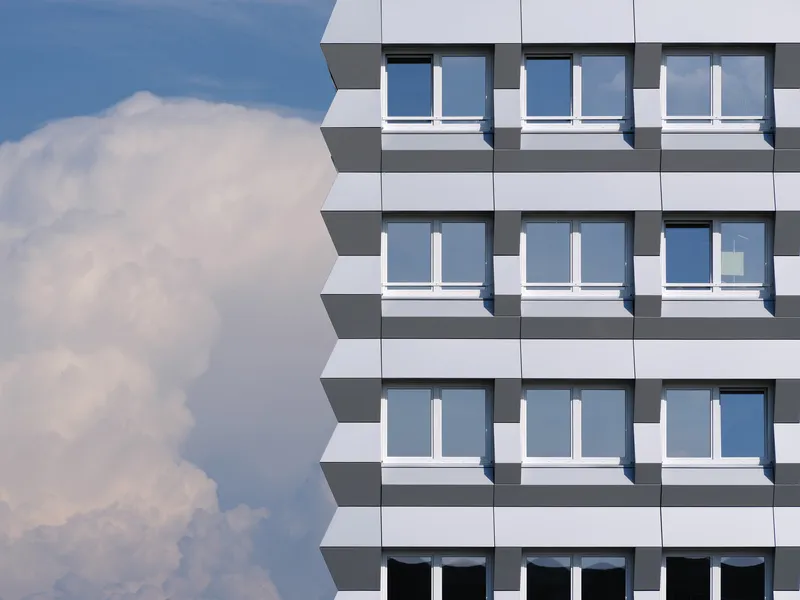
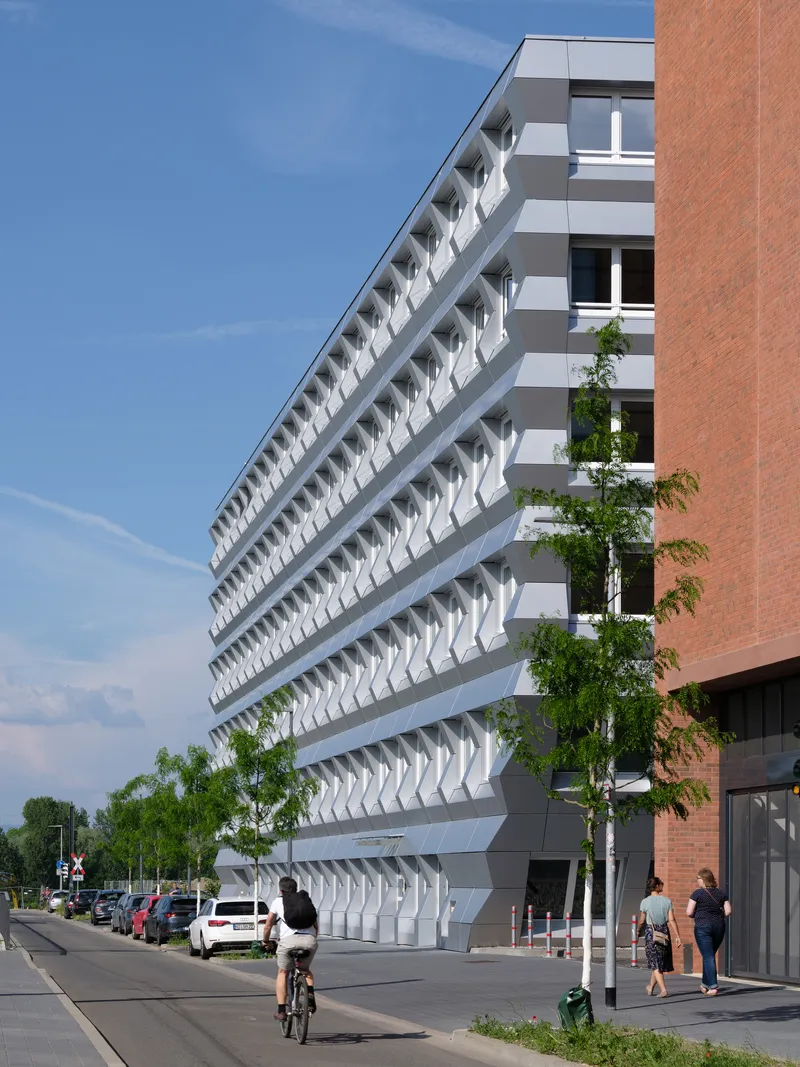
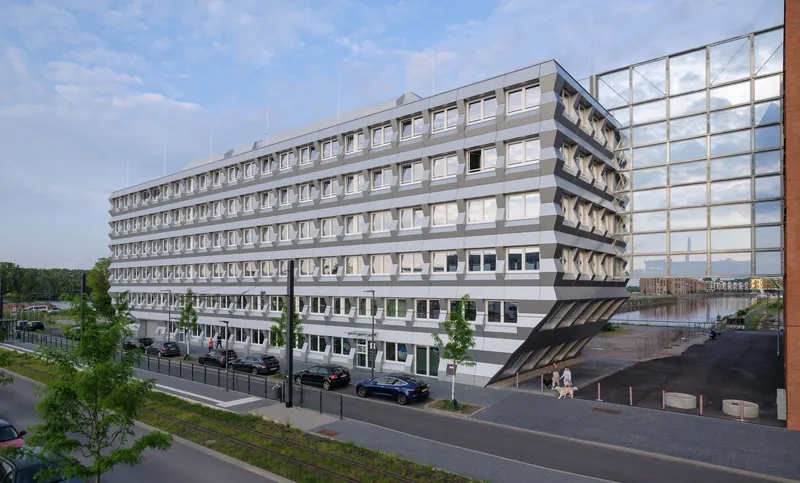
The long elevations tell the story most clearly. Horizontal bands of matt-silver aluminium panels alternate with recessed window strips, but nothing sits plumb. Each floor plate shifts forward or back from the one below, producing the rhythmic zig-zag profile that gives the building its name. Seen from the street, the effect is of a restless surface that refuses to settle into flatness, compressing and expanding the depth of the facade as it rises.
That depth is not ornamental. The sloping cantilevers of each volume allow external sunshades to be integrated within the facade's folds, reducing glare without bolting a secondary system onto the envelope. It is a tidy piece of problem-solving dressed up as formal exuberance, and it keeps the building's clean lines intact where a typical brise-soleil addition might clutter them.
A Lattice Tower and Two Identities
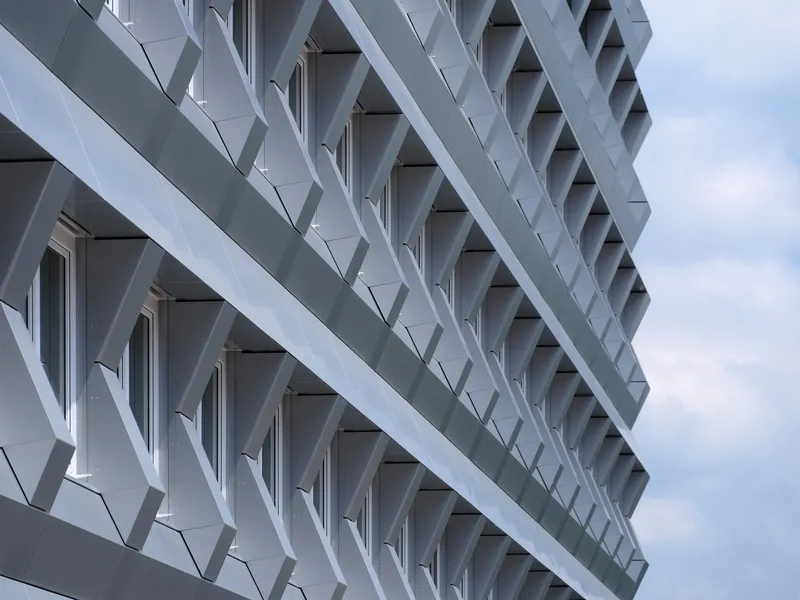
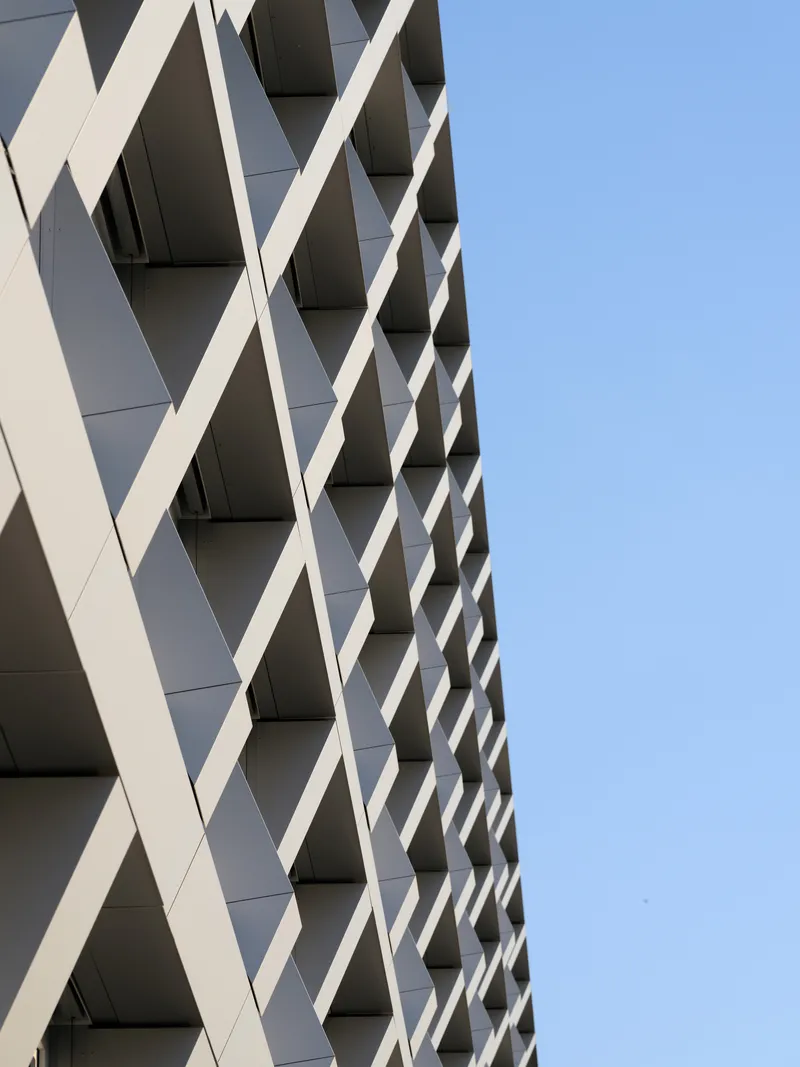
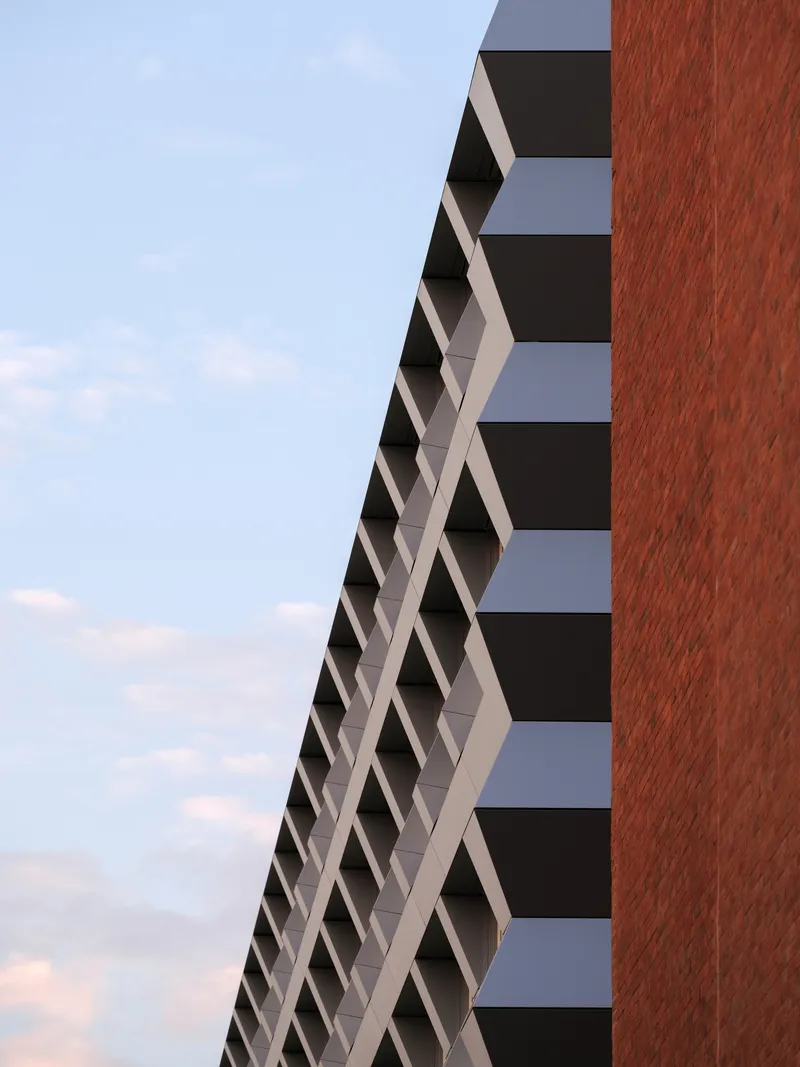
The building is not one thing. Walk around the corner from the horizontal banding and the facade shifts into a completely different register: a lattice of white diagonal fins that crisscross in a diamond pattern, casting sharp triangular shadows across recessed balconies. The lattice wraps a taller tower volume that anchors the composition at one end, giving the project a vertical counterpoint to the low, stretched office floors.
Where the horizontal volume reads as stacked and planar, the tower reads as woven and three-dimensional. At dusk, the lattice catches warm light in a way the flat panels do not, lending the corner an almost textile quality. This duality, two facade systems coexisting on a single building, prevents the ZigZag from becoming a one-liner. It rewards the second glance.
Ground Floor as Public Gift
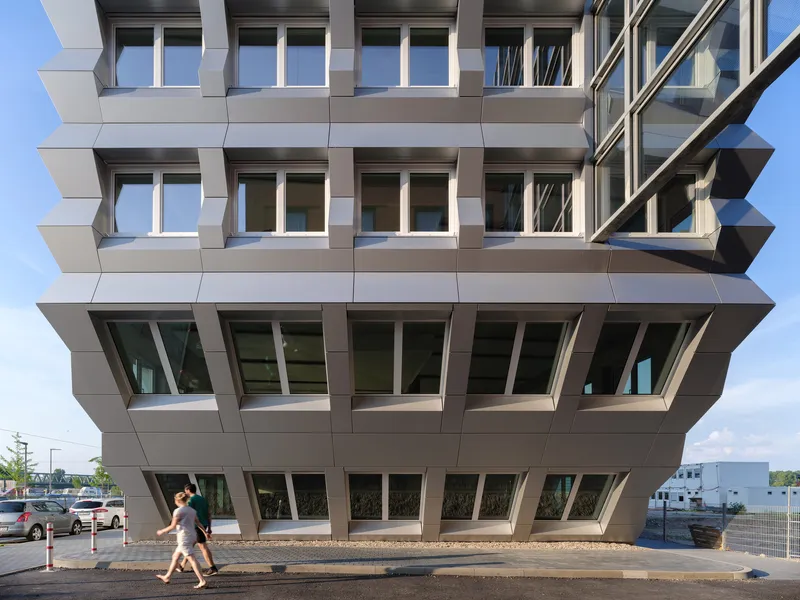
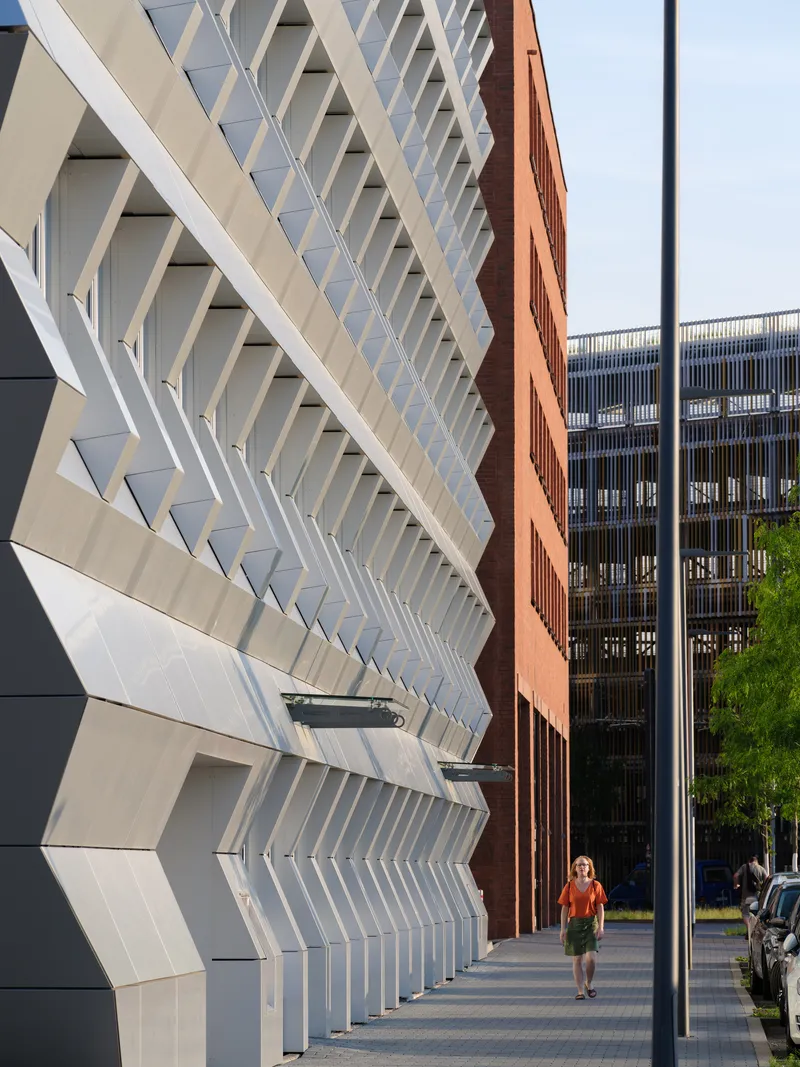
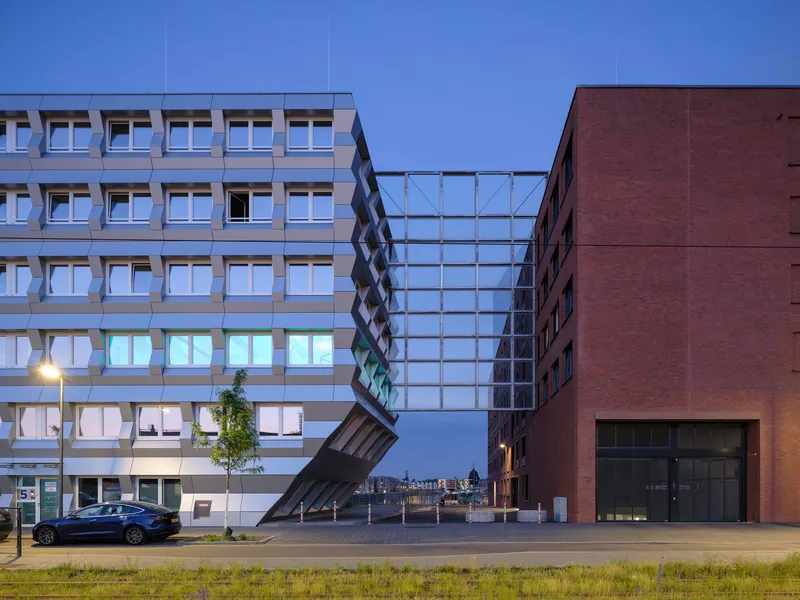
The zig-zagging facade tapers inward at ground level, pulling the building mass back from the sidewalk and generating extra outdoor space beneath its cantilevered belly. Pedestrians walk through a zone that is half covered, half open, shaded by the overhang yet exposed to the street. It is a generous gesture for a speculative office building, one that treats the public realm as more than a leftover.
The cantilevered entrance volume, visible at twilight connecting the latticed tower to a glazed curtain wall section, creates a sheltered threshold that reads clearly from the street. It signals arrival without resorting to a grand lobby. The angled window frames at street level pull your eye upward along the fold lines, linking the human-scaled entrance to the building's larger geometry.
Waterfront Context
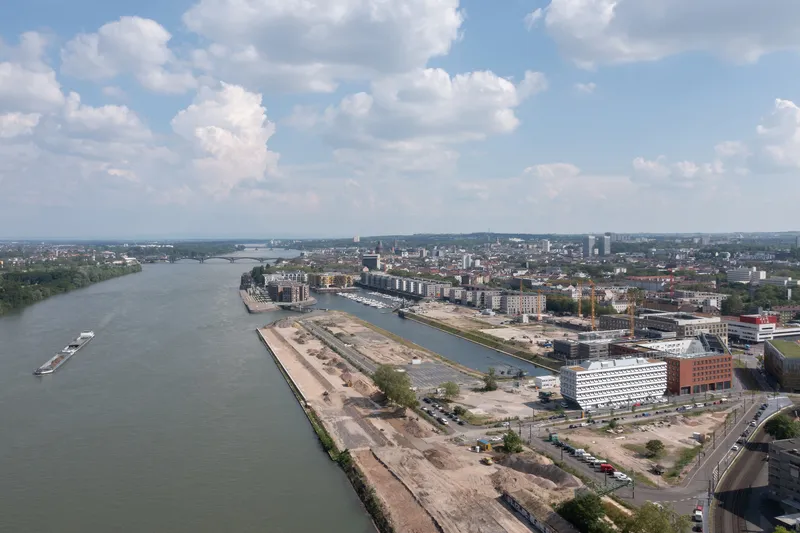
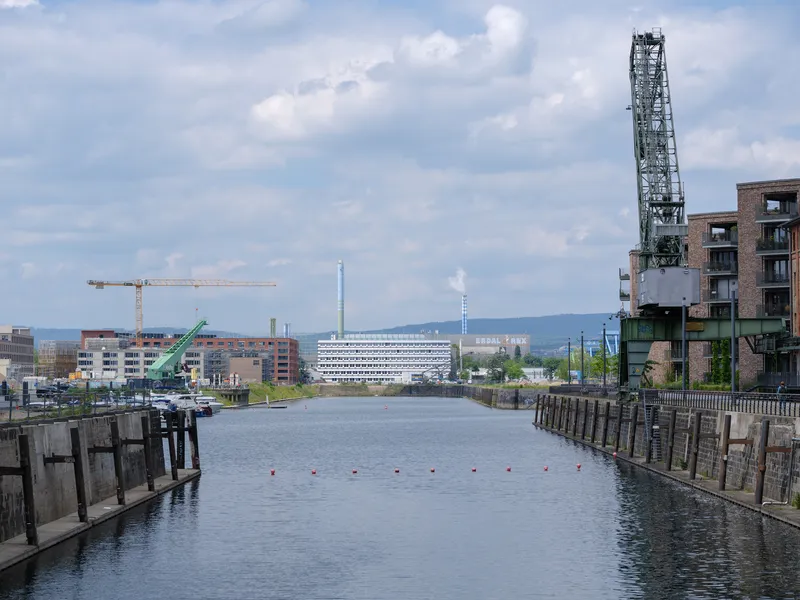
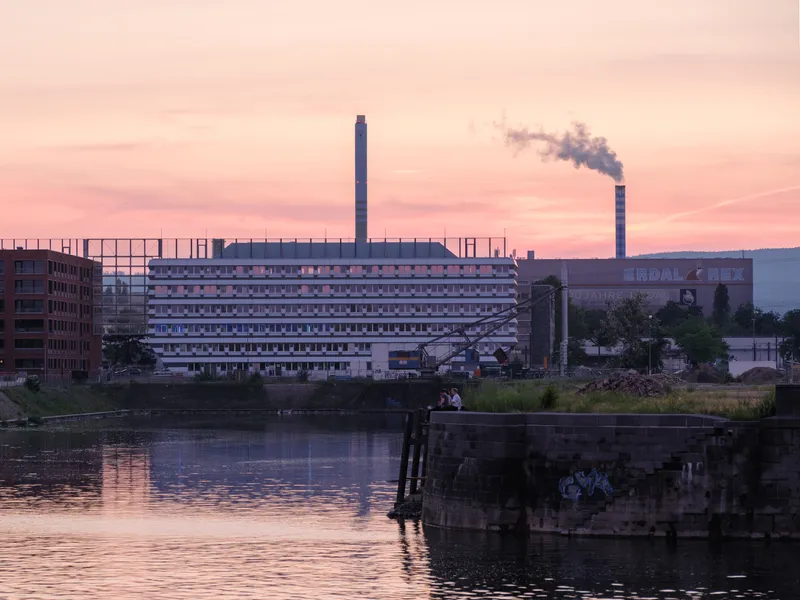
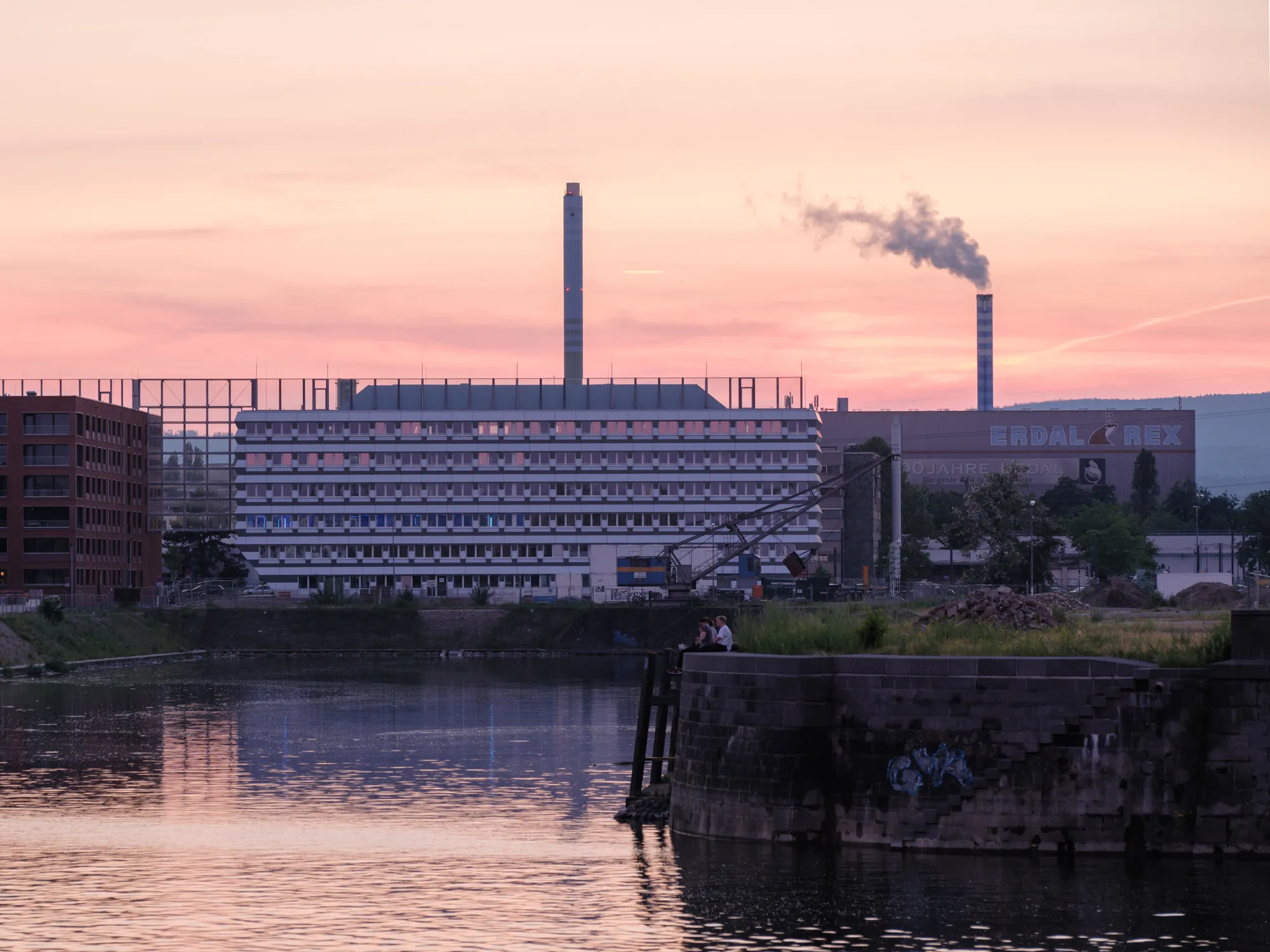
The aerial view reveals how tightly the building plugs into its harbor site, sitting at the tip of the Hafenspitze where canal water and the Rhine nearly meet. To the north, cranes and an industrial chimney still punctuate the skyline, a reminder that the transformation of the Zollhafen is ongoing rather than complete. ZigZag occupies the seam between old and new, and its role as a noise buffer between the emerging urban quarter and the remaining industrial zone is legible in plan: the building's solid aluminium flanks face the noise source while its glazed openings orient toward the water and the new Rotterdamer Platz.
At dusk, the building's layered white facade reflects in the canal, doubling the zig-zag rhythm and softening the hard edges into shimmering bands. The distant smokestack visible against the pink sky becomes part of the composition, an accidental juxtaposition that captures the transitional identity of the entire district.
Materiality Up Close
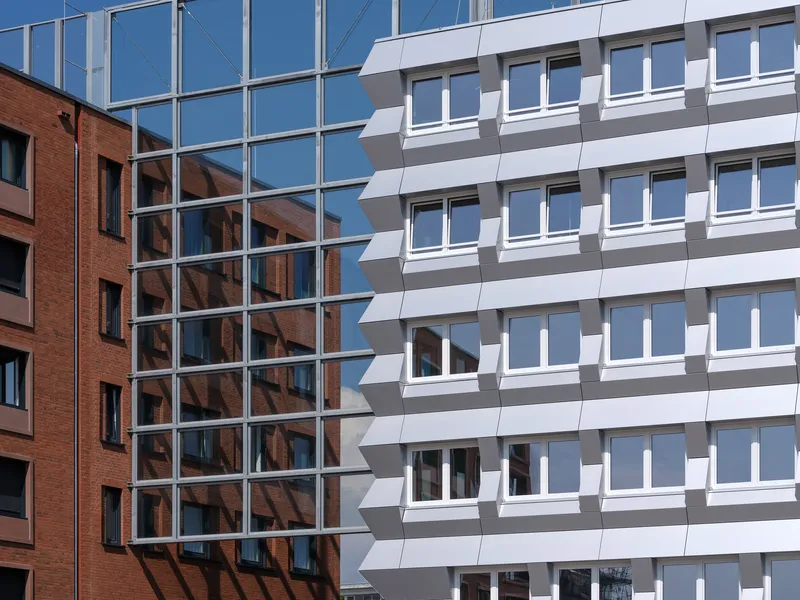
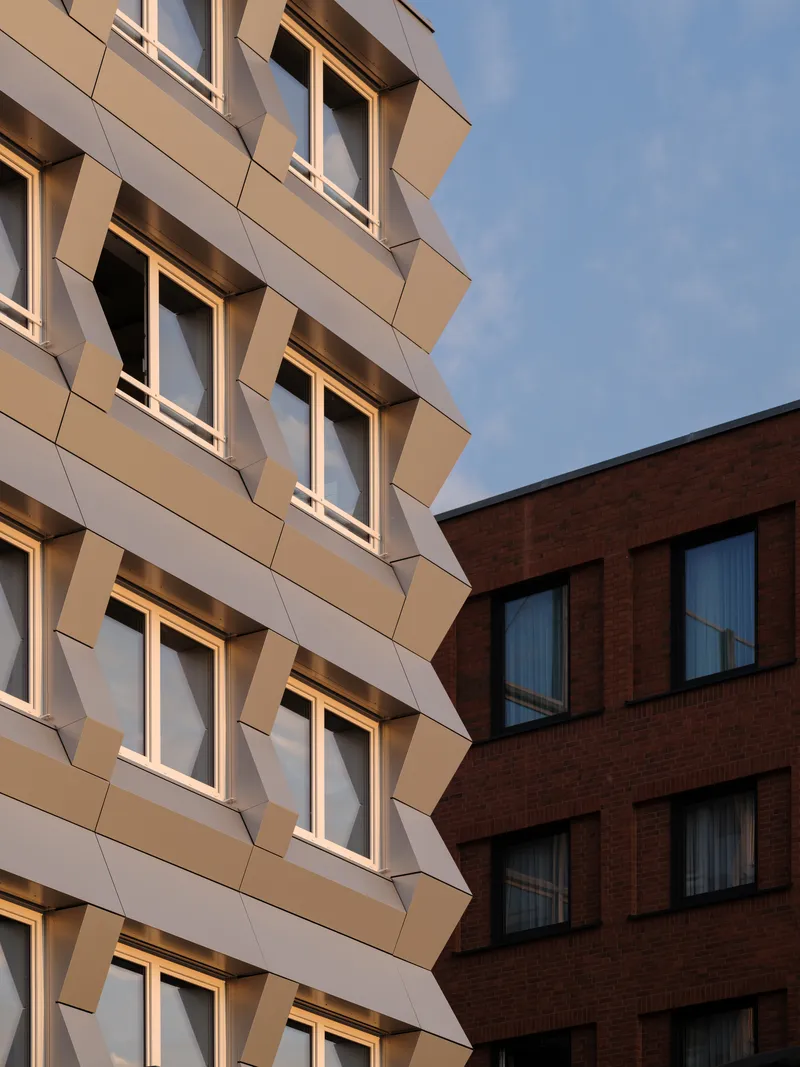
Zooming into the facade junctions, the matt-silver aluminium panels hold their own against the adjacent brick building that shares the block. The meeting of white metal and red masonry is handled without fuss: a clean vertical joint, no awkward transition piece. The brick volume, whether existing context or part of the same development, grounds the aluminium abstraction in something more tactile and familiar.
In warm evening light, the faceted white panels pick up subtle color from the sky, shifting from cool silver to a faint amber. The projecting shading elements read as crisp white blades during the day but dissolve into soft lines at golden hour. It is a material palette that changes character with the weather and the clock, a quality that static renderings never capture but Ossip van Duivenbode's photography makes abundantly clear.
Day to Night
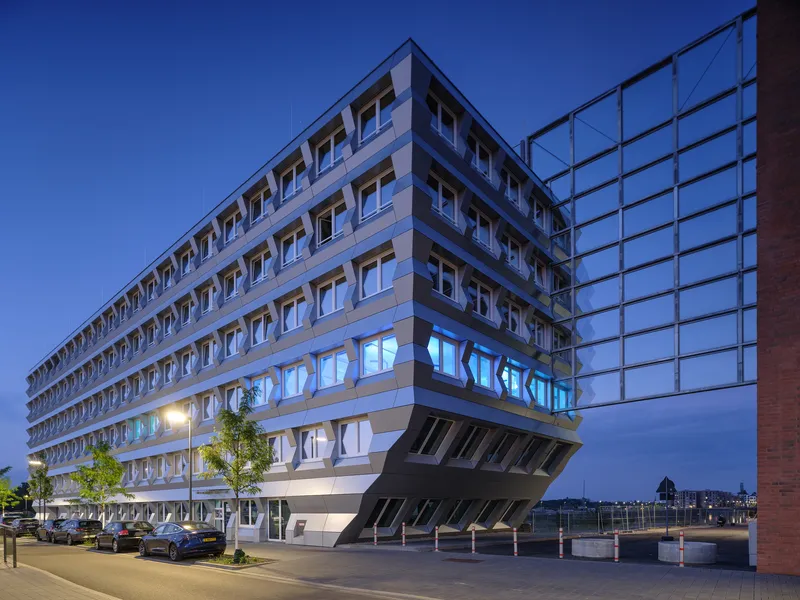
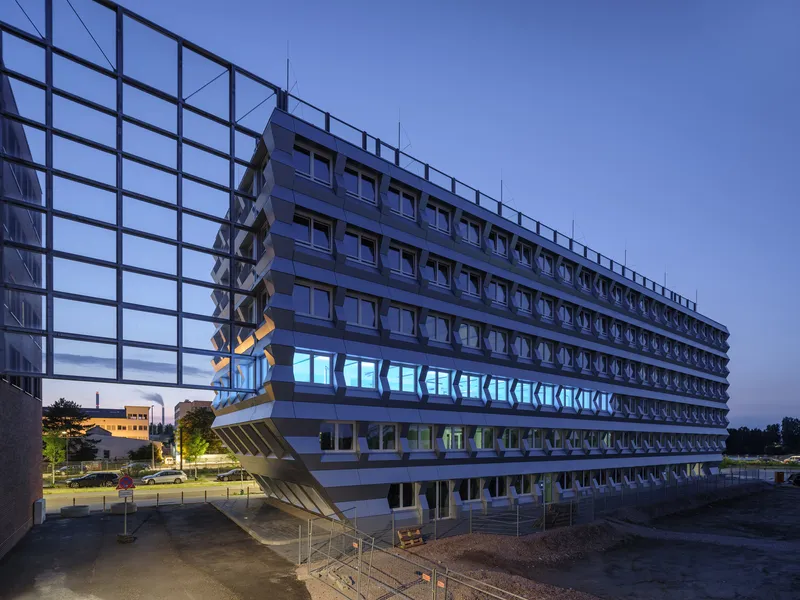
At blue hour, the building transforms. The illuminated ground floor glows beneath the cantilevered mass, the tree-lined street gains a sense of theater, and the reflective glass curtain wall section becomes a mirror for the evening sky. The horizontal window bands, anonymous during the day, turn into warm ribbons of interior light that trace the zig-zag profile with new legibility.
The daytime street view, by contrast, is almost quiet. Repetitive window bays, young street trees, parked cars: the kind of ordinary urbanism that most office buildings produce without trying. ZigZag earns its presence not through relentless spectacle but through moments where the folded geometry catches you off guard, a shadow angle here, a reflected glow there.
Interior Light
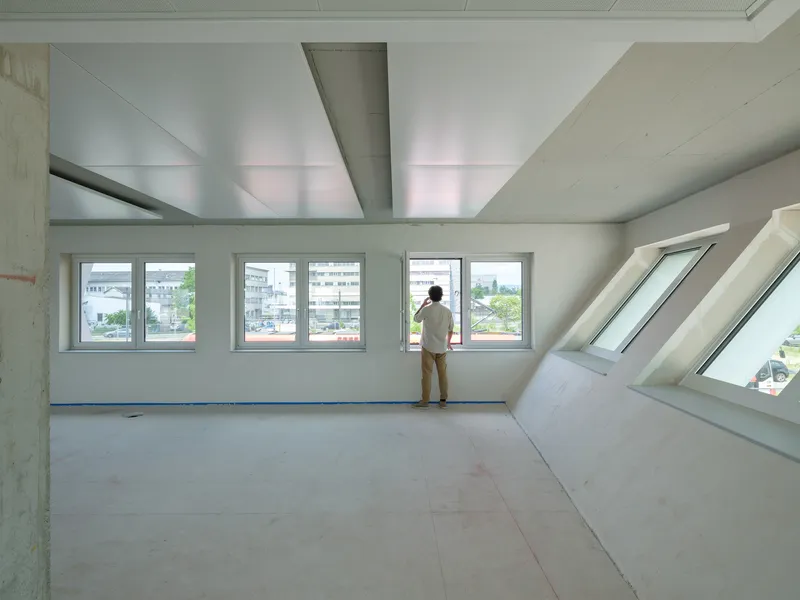
Only one interior image is available, but it is telling. An angled skylight and perimeter windows flood the workspace with daylight, and a figure stands gazing out at the urban view. The sloped ceiling plane follows the exterior fold, so the zig-zag is not a cosmetic wrapper but a section that occupies the interior experience. Flexible floor plans allow tenants to configure anything from individual offices to open-plan arrangements, and wireless radio technology replaces conventional cabling, reducing the infrastructure embedded in floors and ceilings.
Smartphone-controlled lighting and temperature give occupants granular comfort control, a feature increasingly standard in new offices but one that pairs well here with the facade's integrated sunshading. The depth of the aluminium folds does genuine environmental work on the exterior while the smart systems handle the fine-tuning inside.
Why This Project Matters
Speculative office buildings on regeneration waterfronts rarely escape mediocrity. The economics push toward maximum floor plate, minimum facade cost, and generic identity. ZigZag Offices, realized for approximately 16 million euros by CA Immo, proves that a folded envelope can simultaneously solve acoustic, solar, and urban problems without inflating the budget into landmark territory. The zig-zag is not a gimmick layered onto a conventional box; it is the structural and environmental logic made visible.
For Mainz's Zollhafen, the building sets a useful precedent. It shows that early projects in a transformation zone can carry specificity and civic generosity rather than deferring character to some future masterplan. MVRDV and morePlatz have delivered a building that works as a noise wall, a sun screen, a public canopy, and a waterfront landmark, all within a single folded gesture. That economy of means, not the sculptural profile, is what makes it worth studying.
ZigZag Offices by MVRDV and morePlatz (executive architects Schmidt Plöcker Architekten), Mainz, Germany. 4,600 m², completed 2021. Photography by Ossip van Duivenbode.
About the Studio
Share Your Own Work on uni.xyz
If projects like this are the kind of work you want to make, uni.xyz is a place to publish your own, find collaborators, and enter design competitions.



Popular Articles
Popular articles from the community


Co-Life: Senior Housing Design That Reconnects Older Adults With the City
Co-Life reimagines senior housing design through healing gardens, shared streets, workshops, and a sustainable community across generations.

Co-life: Sustainable Architecture for Age-Friendly Community Living
Co-life reimagines sustainable architecture for seniors through courtyards, rammed earth, shared gardens, and spaces designed for belonging.

Conexión: Biophilic Design Reimagines High-Rise Living in Hong Kong
Conexión reimagines high-rise living in Hong Kong through biophilic design, green facades, shared spaces, daylight, water and nature within.

Lunar Spiral: Space Architecture Shaped by the Mathematics of the Universe
Lunar Spiral reimagines space architecture through Fibonacci geometry, lunar regolith, levitating habitats, and self-sustaining Moon living.

Similar Reads
You might also enjoy these articles

Bao Huynh Watercolor Atelier: A Serene Art Retreat in Hội An
Bao Huynh Watercolor Atelier in Hội An blends multifunctional art spaces, sustainable design, local materials, and family-friendly living in a serene environment.

Atelier Macri Concept Store Interior Design by CASE-REAL
Atelier Macri store features a "ko" counter, walnut wood details, cork displays, blending retail, gallery, and seamless customer experiences.

Manuel Vargas Izquierdo Stadium and High-Performance Sports Center: Architectural Excellence in Jalpa de Méndez
The Manuel Vargas Izquierdo Stadium blends sustainable design, inclusive sports facilities, and cultural-inspired architecture, revitalizing Jalpa de Méndez’s public spaces.
KAKR Buluh Awar Hall: Revitalizing Community and Ecology Through Bamboo Architecture
Community built bamboo hall revitalizes Buluh Awar village, empowering youth, restoring ecology, celebrating vernacular craftsmanship through sustainable architecture and culture.

Comments (0)
Please login or sign up to add comments
No comments yet. Be the first to comment!