
National Innovation Center by Joaquim Portela Arquitetos: Preserving Heritage and Innovating Legal Spaces
The National Innovation Center in Bragança blends historic restoration with modern legal innovation, highlighting monumental stone staircases and adaptive architectural design.


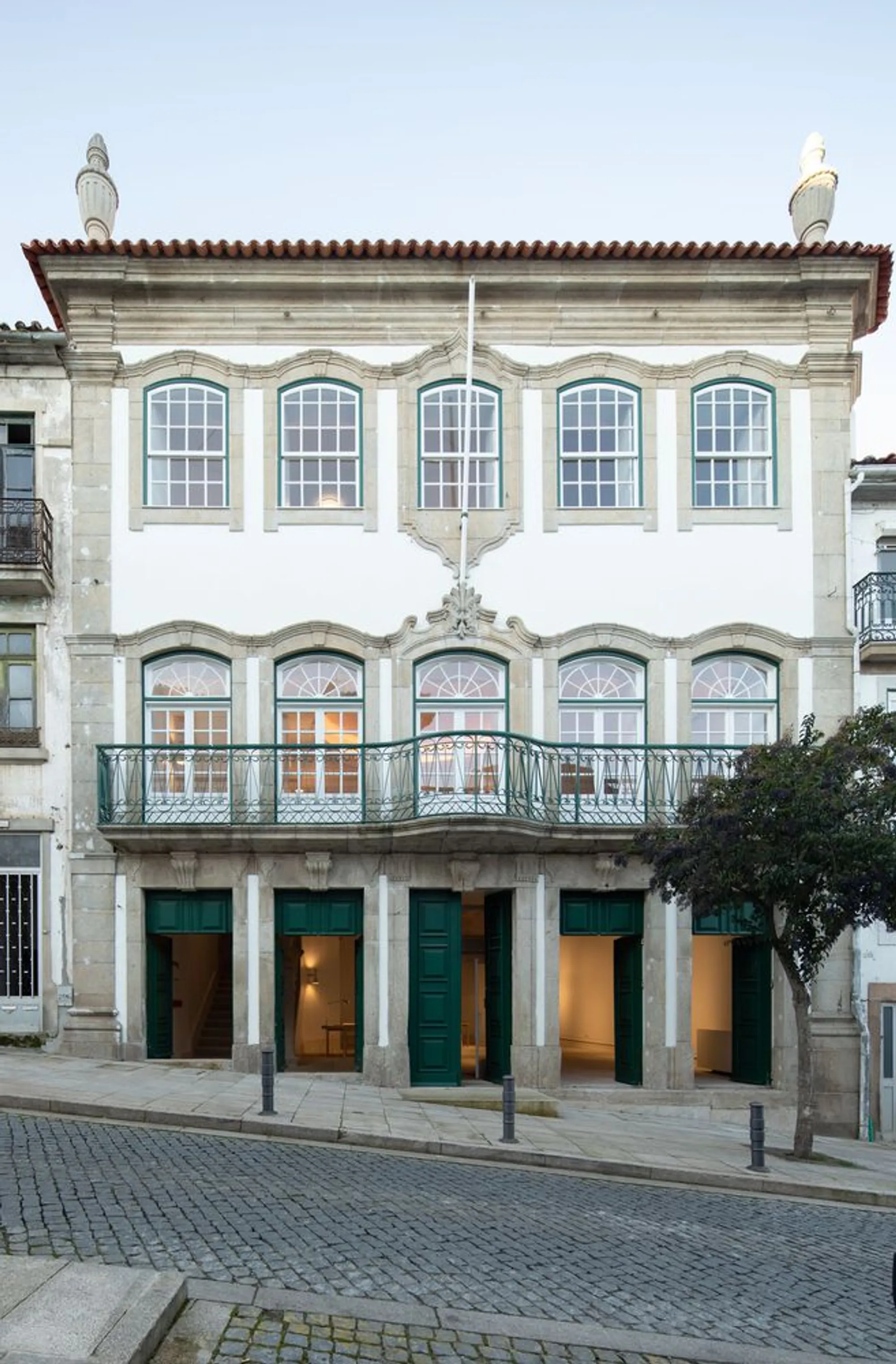
The National Innovation Center, designed by Joaquim Portela Arquitetos, is a striking example of adaptive reuse and architectural preservation in the historic center of Bragança, Portugal. Completed in 2021 with a total area of 596 m², this project demonstrates a seamless integration of heritage restoration and modern legal innovation, redefining the role of historic buildings in contemporary urban contexts.
Architectural Context and Vision
Located in the heart of Bragança, the building had undergone multiple interventions over the years to accommodate changing functional demands. Many of these modifications had altered or defaced significant architectural features, requiring careful restoration. The design philosophy of Joaquim Portela Arquitetos focused on preserving the monumentality of the original structure while reinterpreting it for modern use as a Legal Innovation Center.
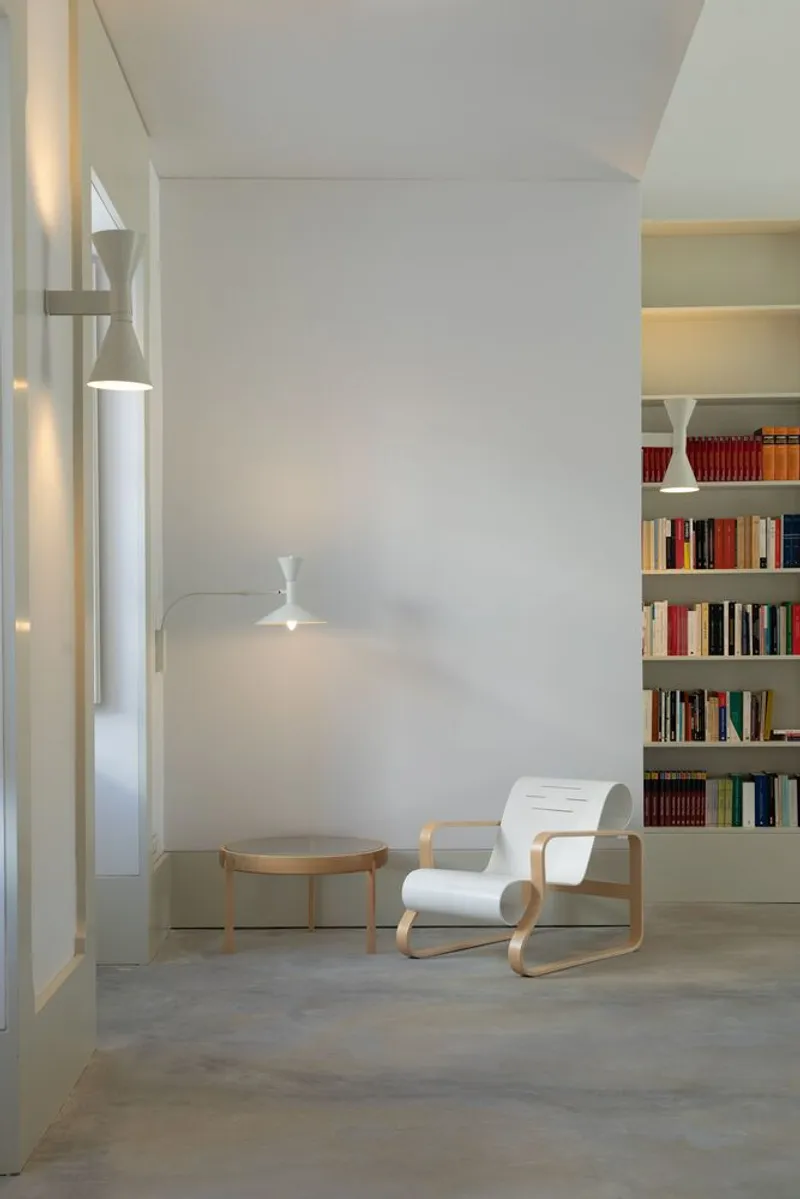
The project prioritized retaining the existing volume and main façade, the perimeter stone walls, and original carpentry details, while reconstructing the roof with a wooden structure. Notable features such as the main room ceiling, the stone staircase, the rear façade, and side shutters were restored and highlighted, respecting the historical integrity of the building.
Monumentality of the Staircase
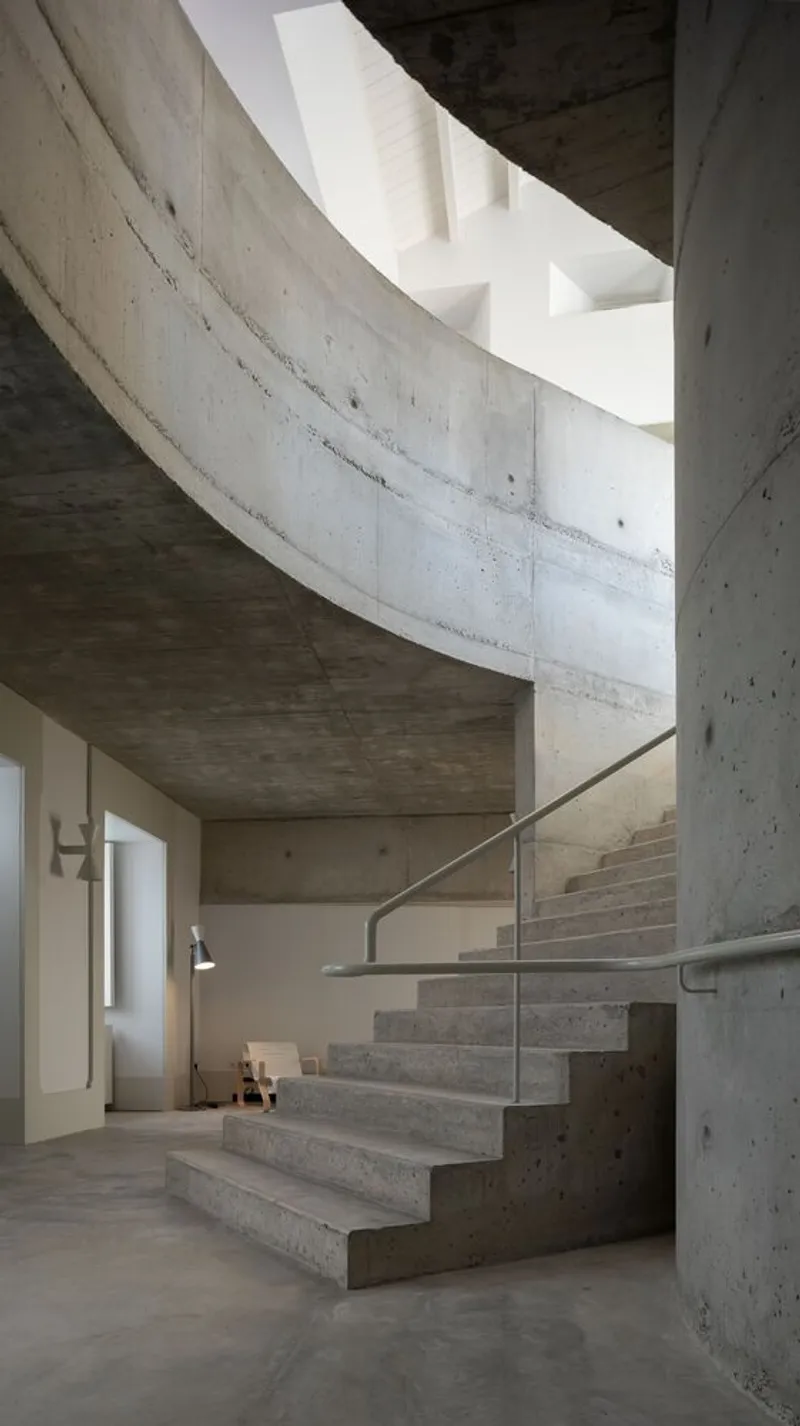
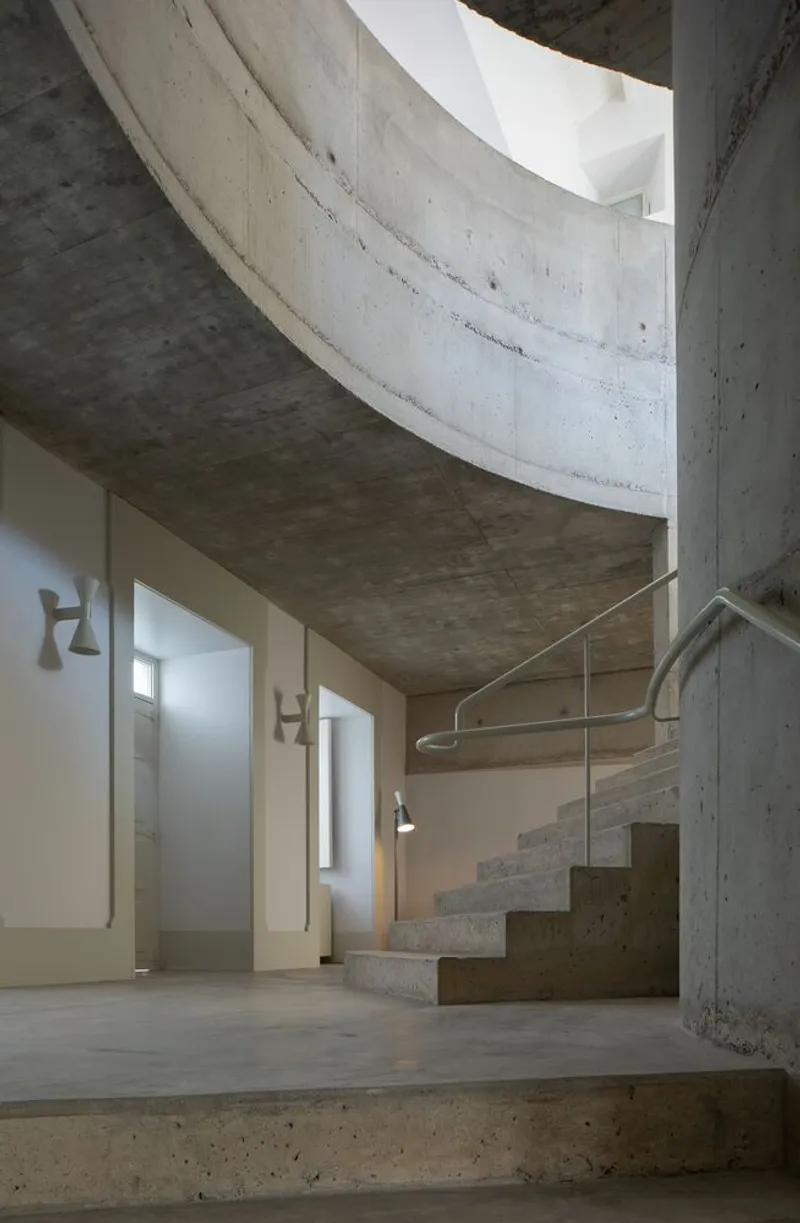
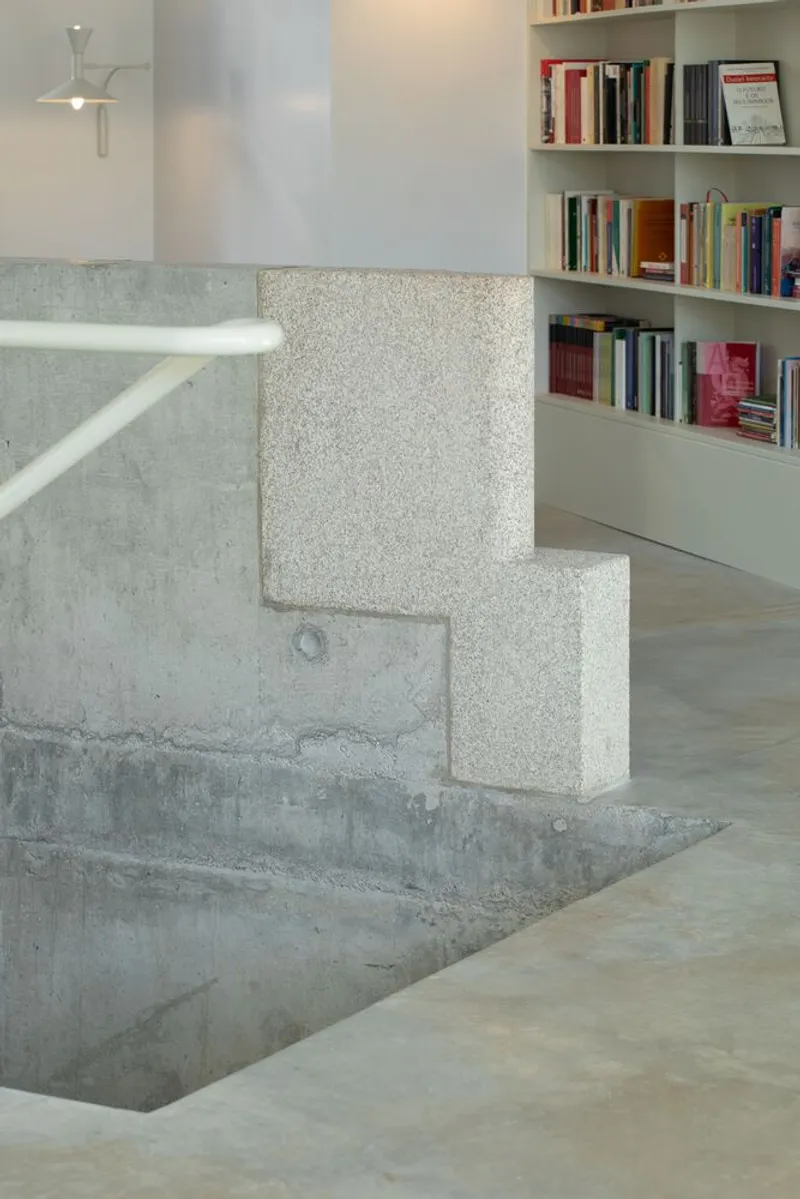
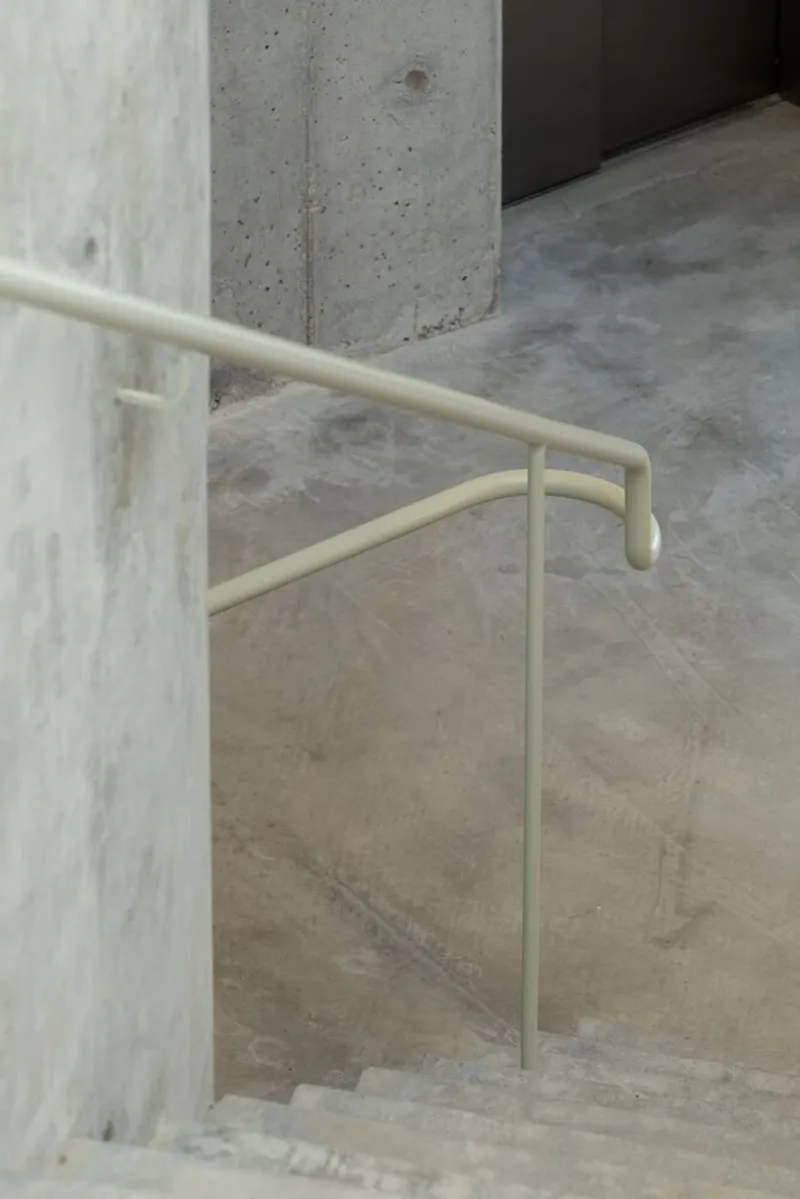
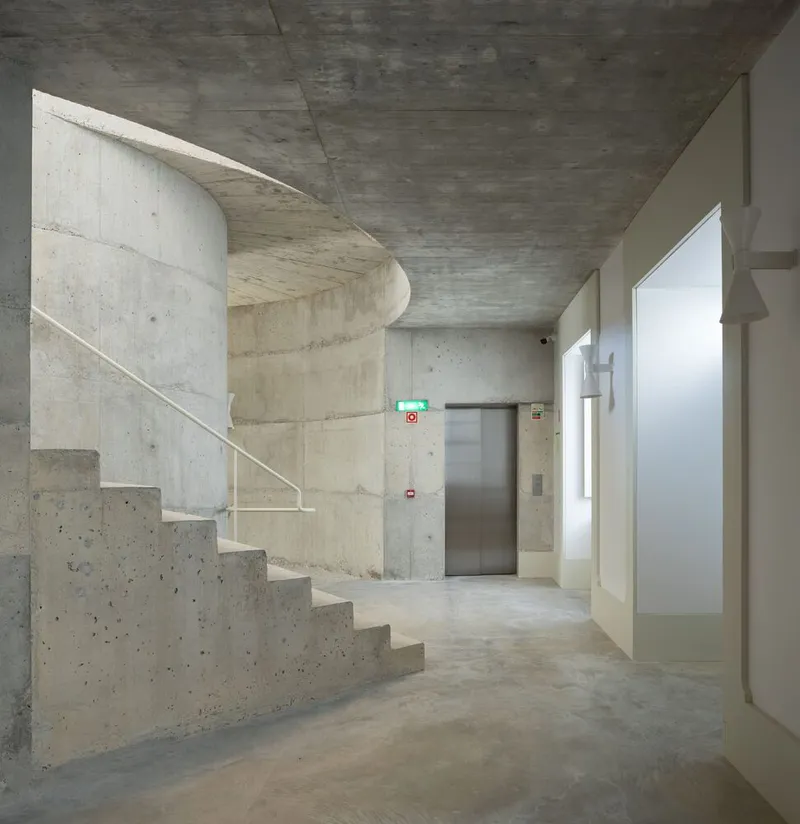
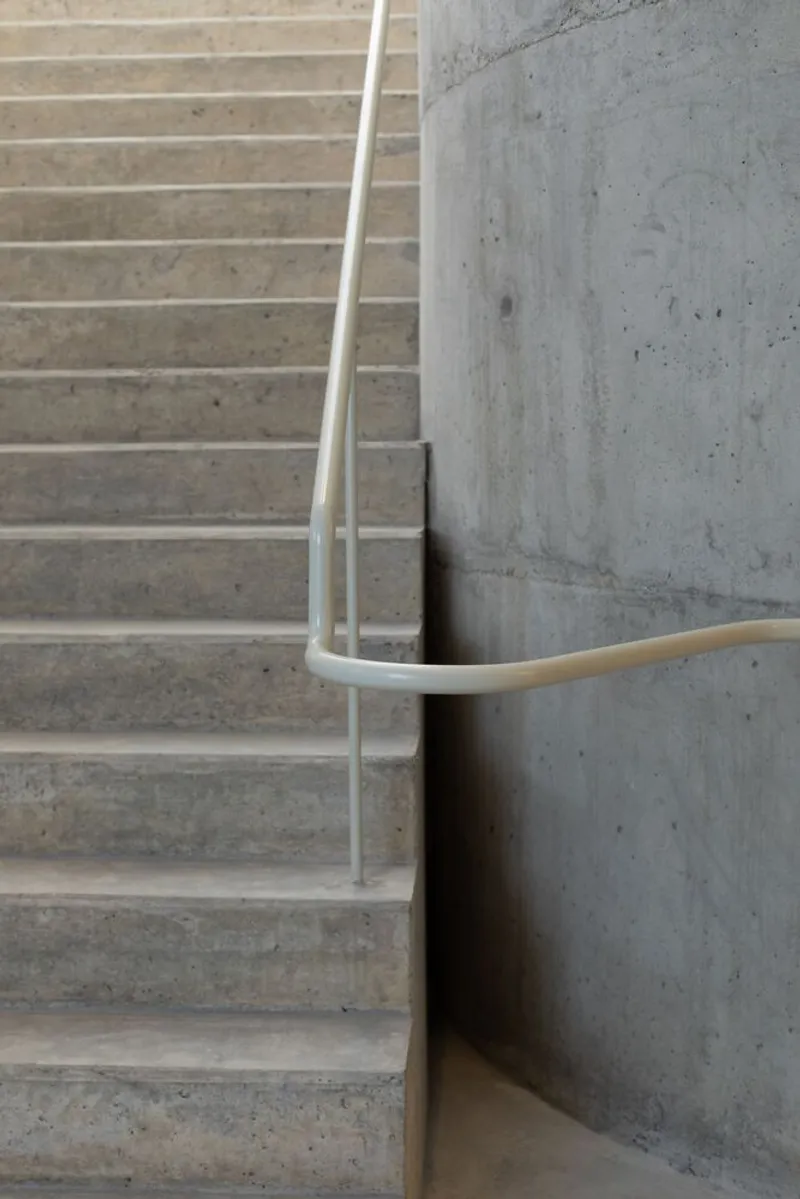
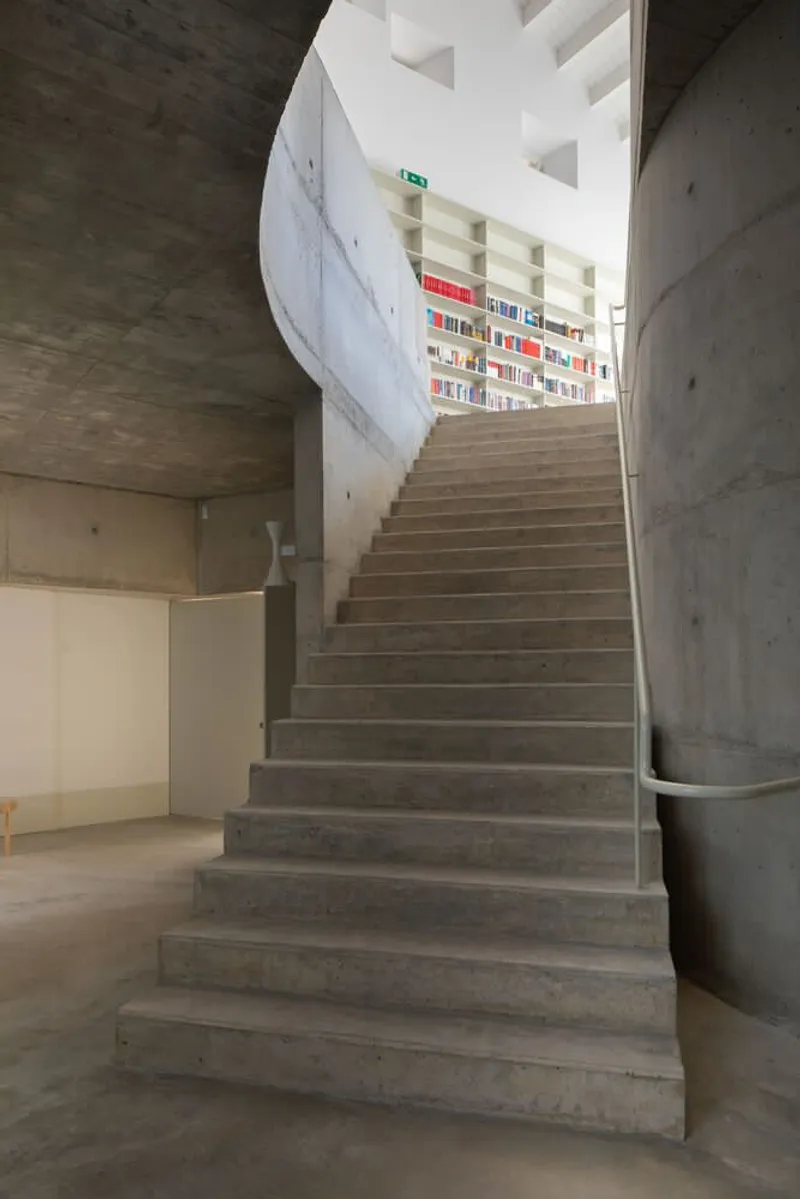
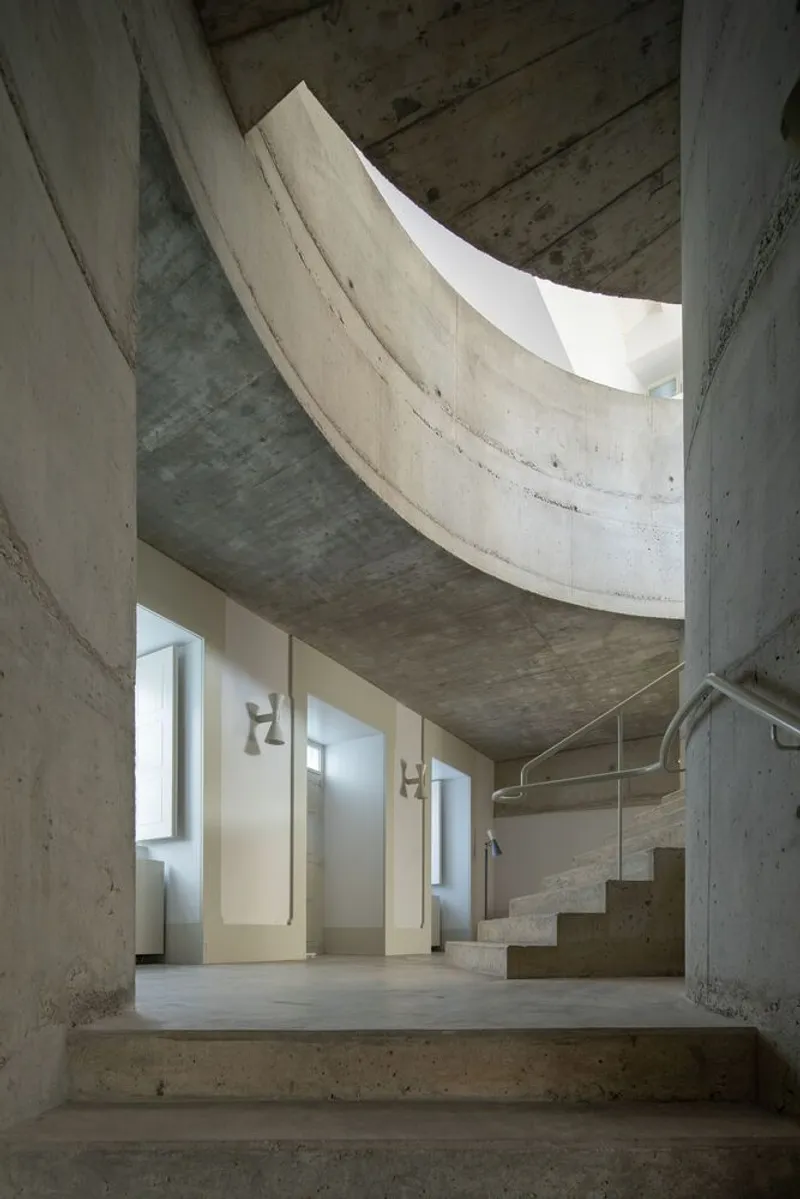
A central feature of the building is its historic stone staircase. Initially designed to create a dramatic entry experience, the staircase was reimagined to extend its monumental presence throughout the building. This approach not only preserved the scenic character of the stairway but also established a continuous visual and spatial connection between different areas of the center. The staircase now serves as a unifying element, enhancing circulation, and integrating programmatic functions in a visually cohesive manner.
Programmatic Innovation
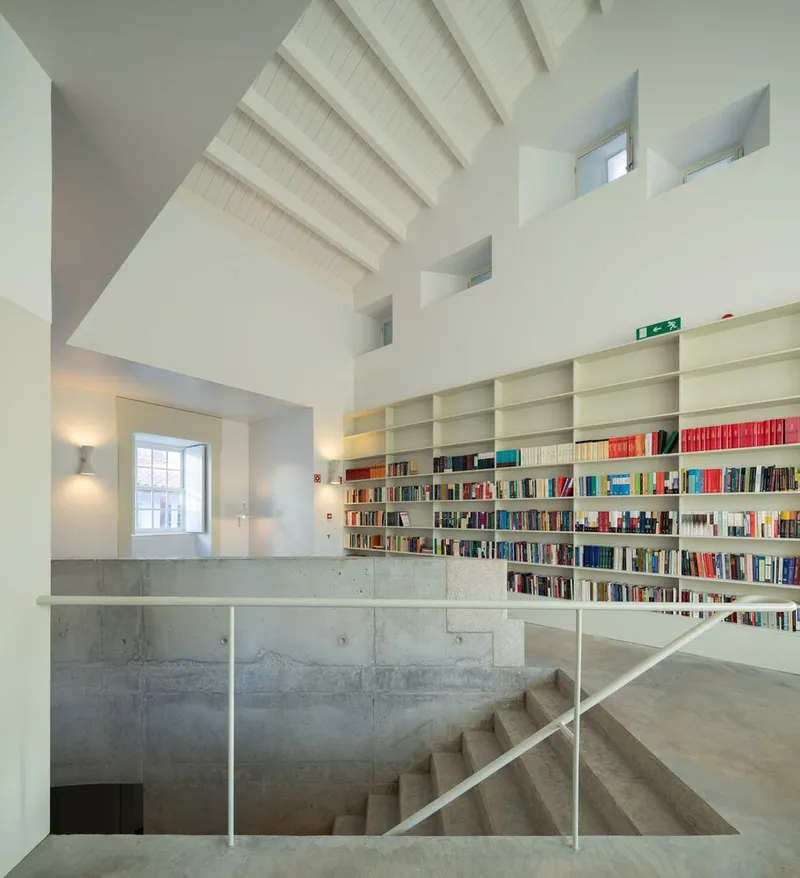
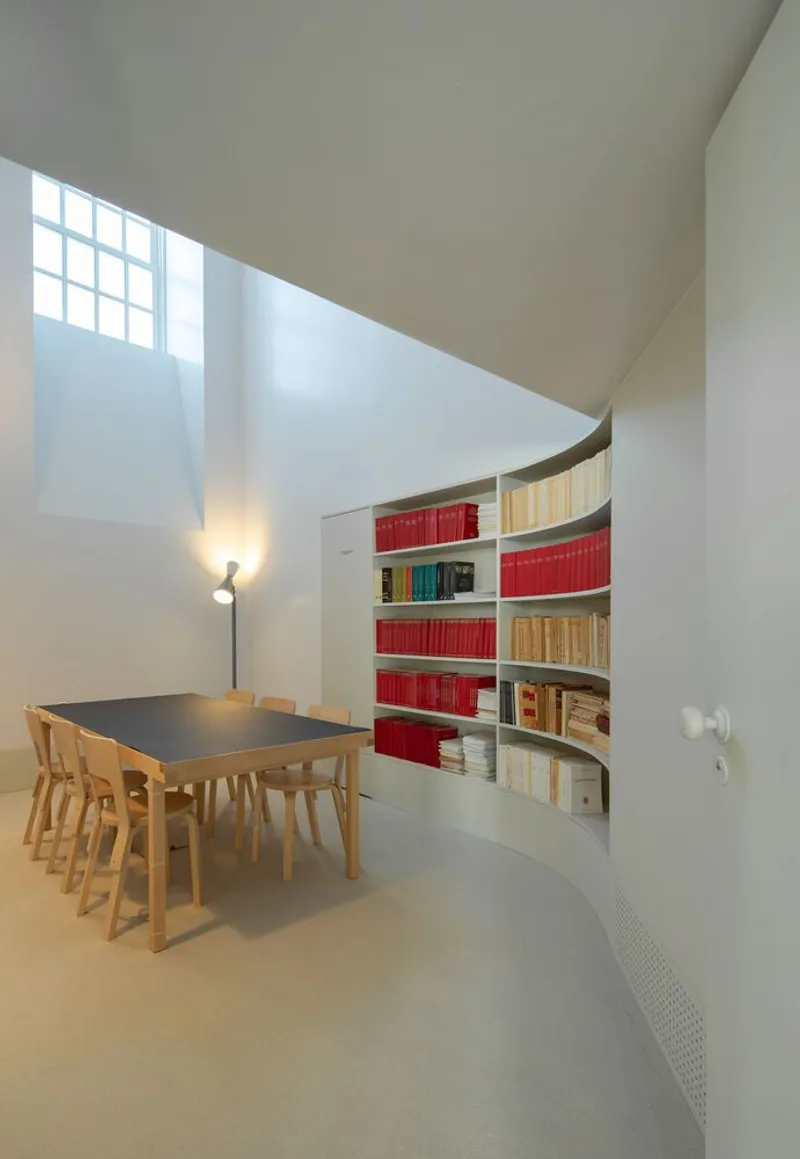
The design carefully aligns with the functional requirements of a Legal Innovation Center, ensuring that the restored architectural elements support contemporary use. Open shelves, modern seating arrangements, and integrated circulation paths facilitate interaction, collaboration, and knowledge exchange. Every architectural decision respects the building’s historic context while supporting its new technological and social functions, making it a model for adaptive reuse in historic urban centers.
Materiality and Spatial Experience
Materials were selected to complement the historic character while providing modern durability and aesthetics. The use of exposed stone, wooden ceilings, and concrete accents reinforces a dialogue between the past and present. Large windows, restored facades, and careful interior detailing enhance natural light penetration and spatial openness, creating a stimulating environment for innovation and research.
The National Innovation Center by Joaquim Portela Arquitetos exemplifies how architectural restoration and contemporary design can coexist. By preserving the building’s monumental elements and integrating modern programmatic needs, the project strengthens Bragança’s cultural heritage while fostering legal innovation and collaborative research.
All photographs are works of
José Campos




Popular Articles
Popular articles from the community


The Earth Pod: 3D Printed Homes for Resilient Refugee Communities
The Earth Pod reimagines refugee housing through 3D printed homes made from clay, combining resilience, self-sufficiency, and rapid shelter.

Conexión: Biophilic Design Reimagines High-Rise Living in Hong Kong
Conexión reimagines high-rise living in Hong Kong through biophilic design, green facades, shared spaces, daylight, water and nature within.

Play: Fragments of Their World
Familiar architecture becomes modular playground design, creating safe spaces where displaced children can learn, connect, imagine and play.

Hill & Cross Opera: Sculptural Opera House Architecture Shaped by Tallinn’s Landscape and Identity
Hill & Cross Opera reimagines opera house architecture in Tallinn through its sculptural hill, civic plaza, glass wave and a luminous cross.


Similar Reads
You might also enjoy these articles

FAMM Arquitectura Organizes Ten Villas Around Courtyards and Jungle in Nosara, Costa Rica
El Molino pairs two elongated volumes with deep overhangs and timber louvers to build a compact coastal community five minutes from the beach.
Oscar Niemeyer's Ibirapuera Park Pavilions Define São Paulo's Cultural Identity in Concrete and Curve
A constellation of modernist volumes set within São Paulo's most important urban park, conceived for the city's 400th anniversary in 1954.
How Henri Picq's 1889 Paris Pavilion Traveled 11,000 Kilometers to Become Santiago's Artequín Museum
A prefabricated iron and glass pavilion built for the Paris Universal Exposition found a second life as a children's art museum in Chile.
Sanjay Puri Architects Wraps a Jaipur Office Tower in Capsule-Shaped Green Buffers
A nine-level climate-responsive workplace near Jaipur Airport uses stacked planter terraces and aluminium screens to fight 40°C heat.


Explore Architecture Competitions
Discover active competitions in this discipline



Challenge to reimagine the Iron Throne


Photograph architecture without architects


Illustrate the lost glory of Angkor Wat - Render Challenge


Design challenge to reuse E-waste
Comments (0)
Please login or sign up to add comments
No comments yet. Be the first to comment!