
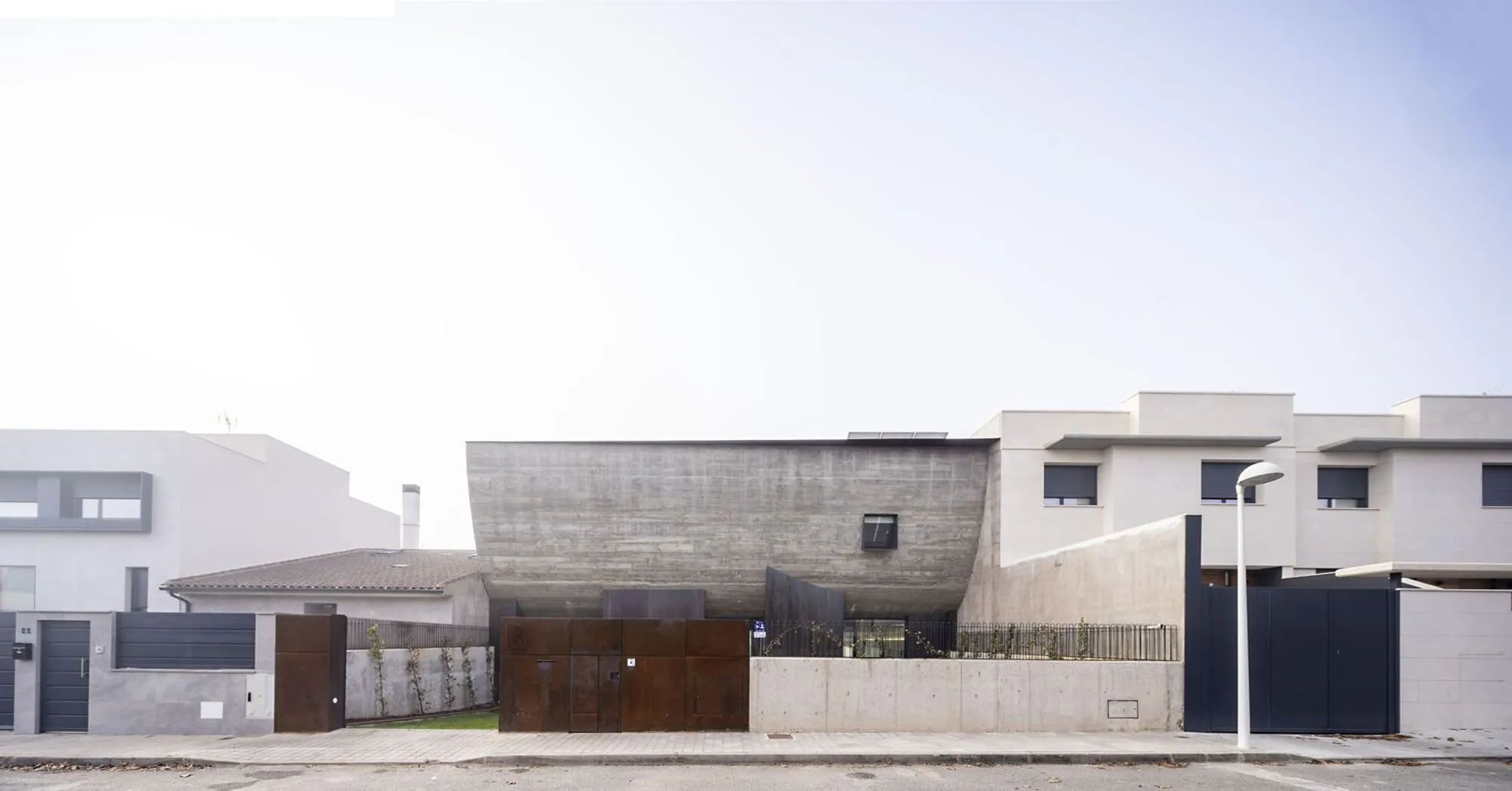
NAU House by MUKA Arquitectura: Innovative Urban Dwelling in Ciudad Real, Spain
NAU House blends curved concrete volumes, courtyards, and bioclimatic solutions, redefining urban single-family homes in Ciudad Real, Spain.


Nestled in the heart of Ciudad Real, Spain, the NAU House by MUKA Arquitectura redefines urban residential design through its innovative spatial strategies, material use, and relationship with its surrounding context. Completed in 2022, this 2,756 ft² single-family home exemplifies a thoughtful approach to urban planning while challenging conventional notions of dwelling typology in tightly constrained city plots. Lead architects Moisés Royo Márquez and Jesús Bermejo López sought to create a residence that harmonizes functionality, aesthetics, and a meaningful connection between interior and exterior spaces.
Contextual Design in Dense Urban Plots
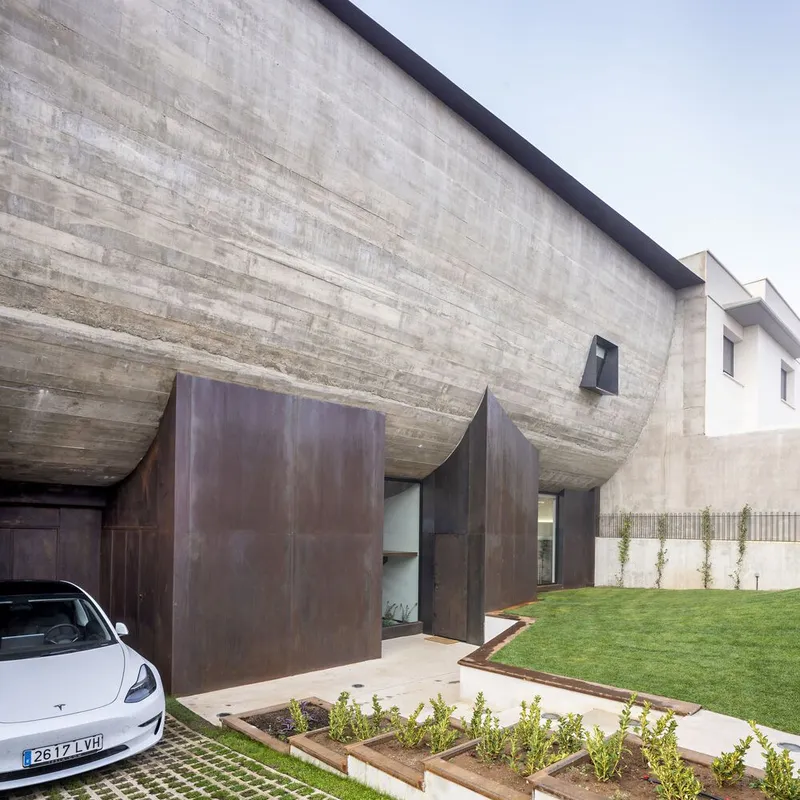
Situated on a narrow plot governed by Ciudad Real’s urban planning regulations, NAU House responds to the mandatory setback areas at the front and rear of the property. Traditional plot usage in this area often results in underutilized front zones and cramped rear patios, constrained by adjacent buildings and limited natural light. To counteract these limitations, MUKA Arquitectura strategically designed two intimate courtyards at either end of the house, with the main residence positioned between them. These courtyards not only maximize light penetration but also expand visual continuity, creating a seamless connection between indoor and outdoor living spaces.
Curved Concrete Volume: Form and Function
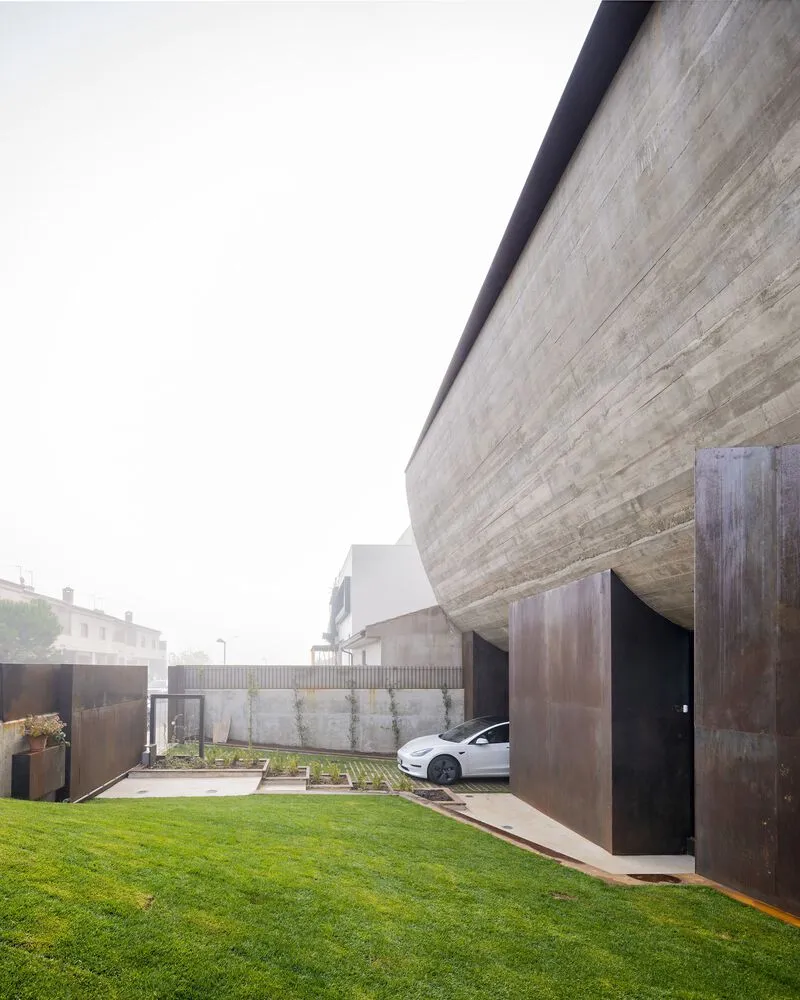
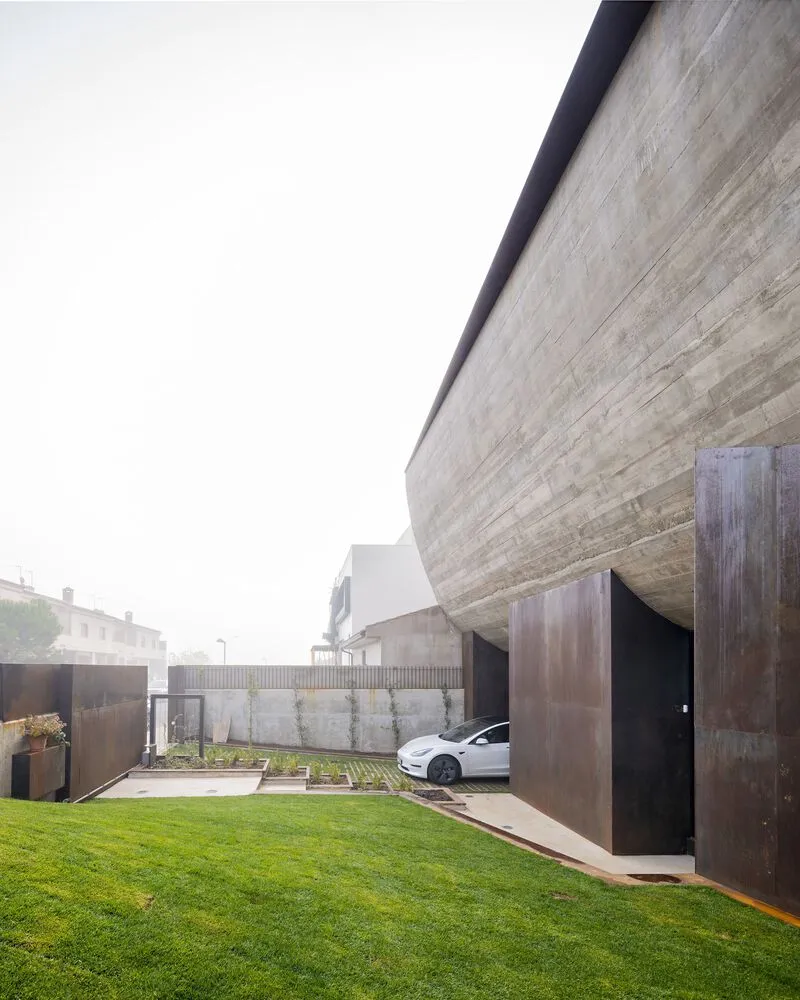
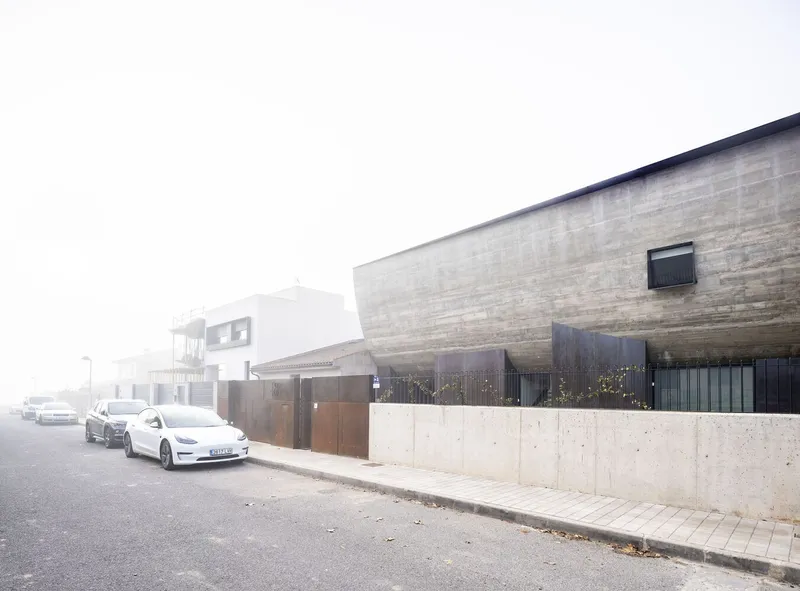
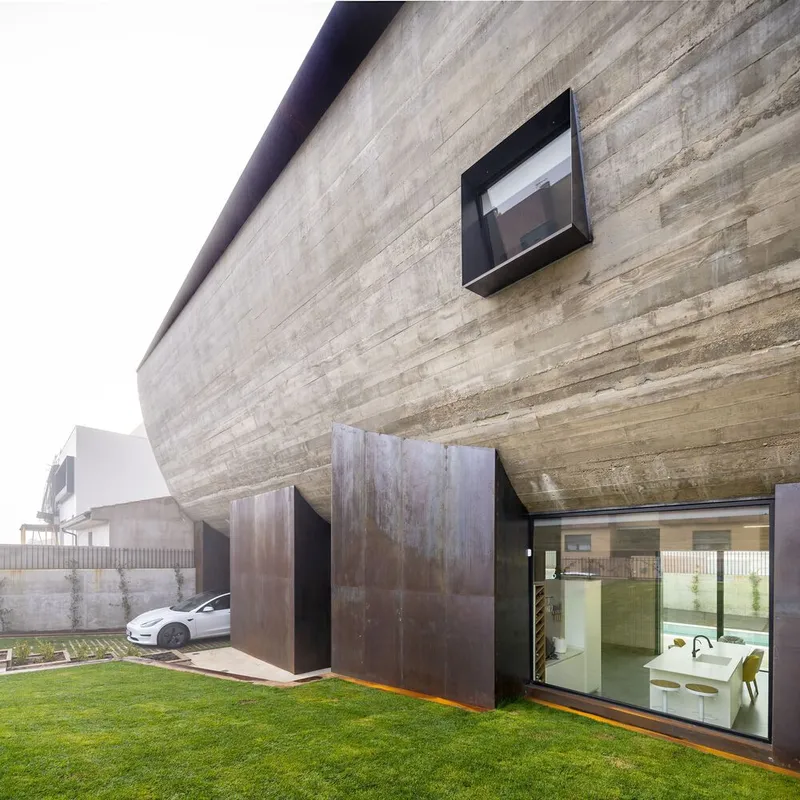
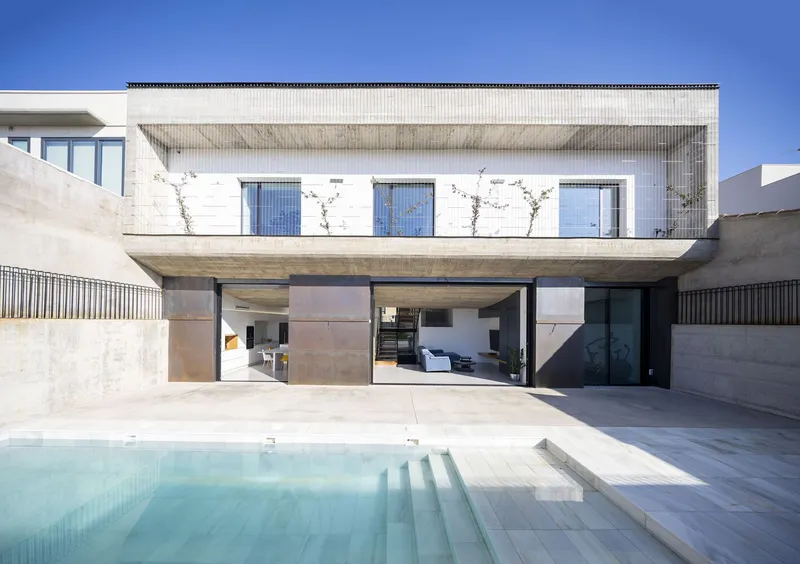
The centerpiece of NAU House is its curved concrete volume, a bold architectural gesture that accommodates the bedrooms while floating above the recessed ground floor. This design strategy allows the lower level to function as a semi-outdoor inhabited threshold, blending private and shared areas in a fluid spatial hierarchy. Corten steel pillars support the elevated concrete volume, housing secondary uses such as storage, circulation, and service areas beneath. Subtle rotation of some supports emphasizes the curvature, establishing a sculptural yet functional composition that enhances the perception of interior-exterior continuity.
Innovative Interior Planning
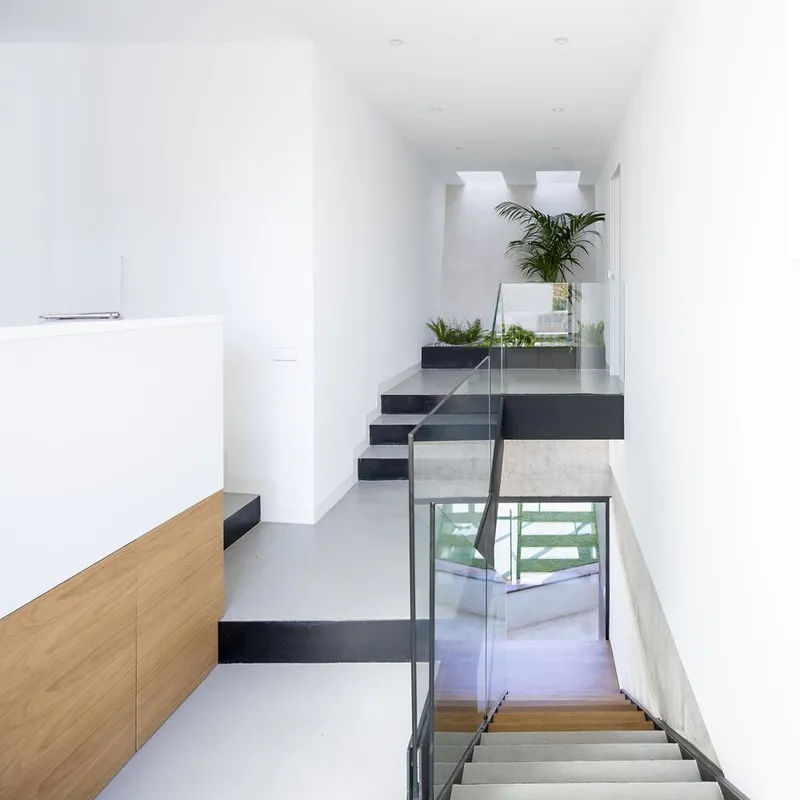
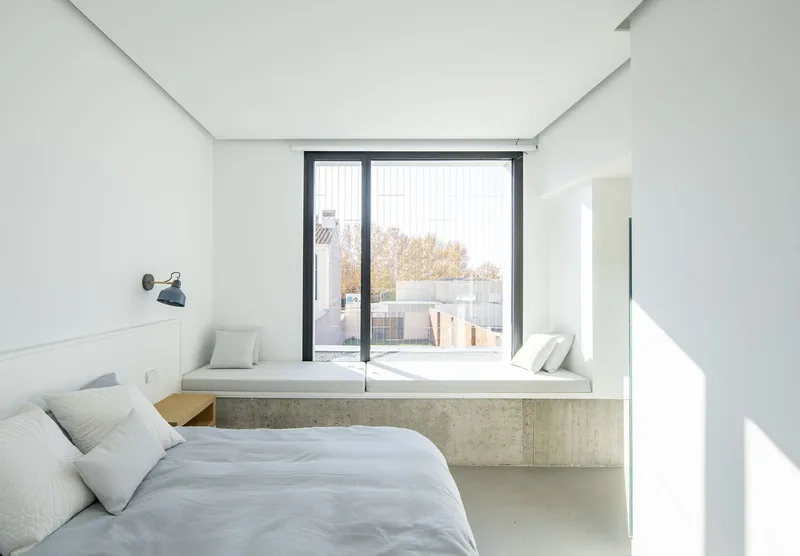
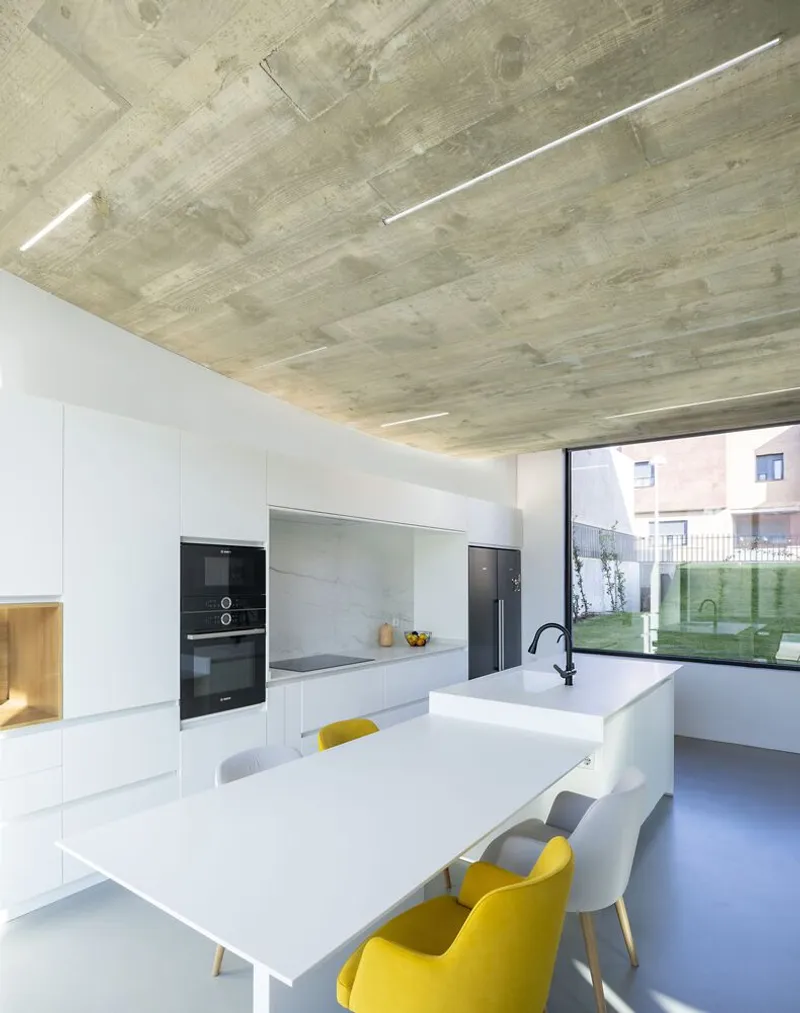
The NAU House interior prioritizes flexible, multifunctional living spaces. The ground floor integrates living, dining, and kitchen areas while maintaining visual and physical connections to both courtyards. Extended window sills double as seating, planters are embedded within the floor geometry, and carefully positioned desks and storage optimize usability. This design strategy enhances the everyday experience, allowing the family to inhabit each space fully while interacting with the outdoors.
Façade and Urban Relationship
NAU House establishes a dialogue with the city while asserting its independence from adjacent structures. The main façade on Calle Villahermosa is oriented northeast and deliberately minimizes openings, preserving privacy and selectively framing views toward the street. By rejecting conventional volumetric correspondence with neighboring buildings, the design presents a new approach to urban integration, demonstrating that a single-family dwelling can establish both autonomy and contextual relevance.
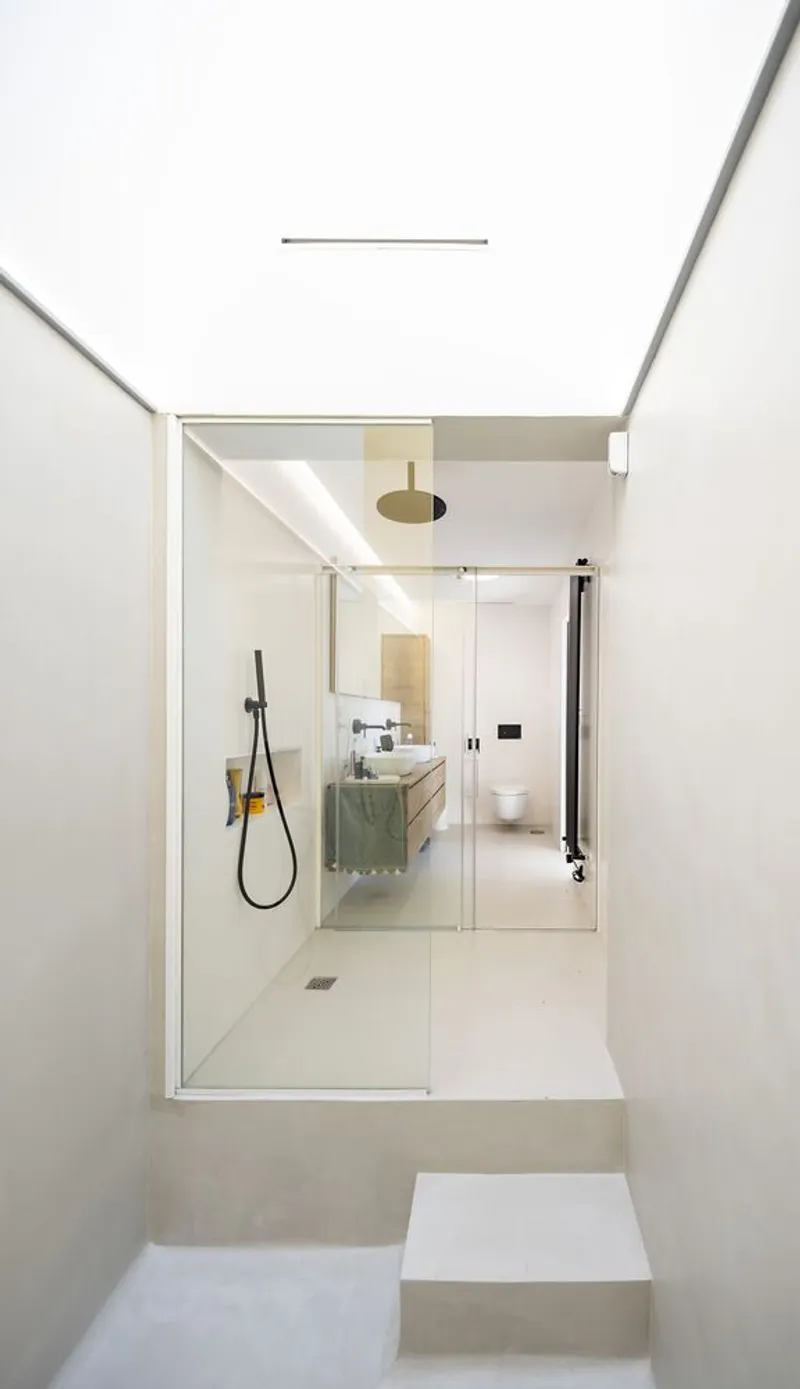
The rear courtyard, facing south, features a lower, asymmetrical concrete edge, promoting light penetration and openness. Bioclimatic solutions, steel cables intertwined with climbing plants, modulate sunlight while extending views toward the sky. Natural zenithal light illuminates secondary rooms, the staircase hall, and one of the bedrooms, while the master bedroom’s curved bathtub enjoys a private skylight.
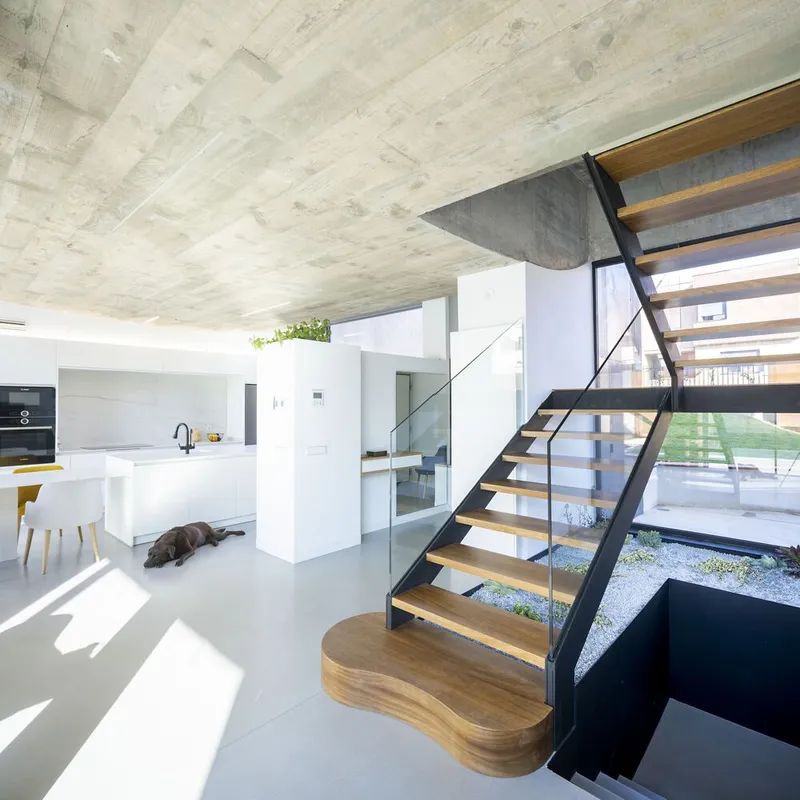
Materiality and Sustainability
Material choices reinforce NAU House’s sculptural language and urban responsiveness. The exposed concrete shell conveys permanence and modernity, while Corten steel introduces warmth, texture, and durability. Combined with careful bioclimatic strategies and sun-control features, the house balances visual impact, sustainability, and comfort. Porcelanosa Grupo materials enhance the interior quality, adding elegance and functional durability to kitchens, bathrooms, and living areas.
Spatial Innovation and Everyday Life
The staggered concrete curve enables a dynamic interplay of interior and exterior spaces, fostering practical living solutions. The design extends window sills into seating niches, incorporates planters within concave floor forms, and integrates desks and storage, creating an adaptable, human-centered environment. This approach challenges conventional urban dwelling norms, offering a residence that prioritizes family interactions, privacy, and connection to the surrounding cityscape.
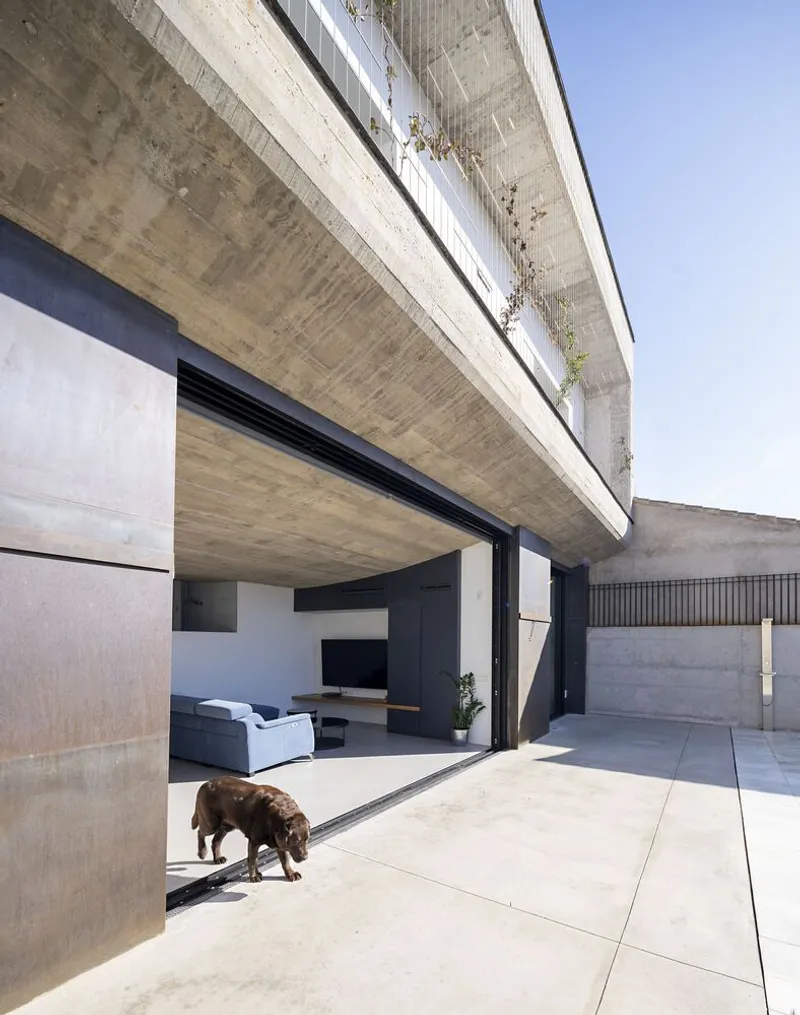
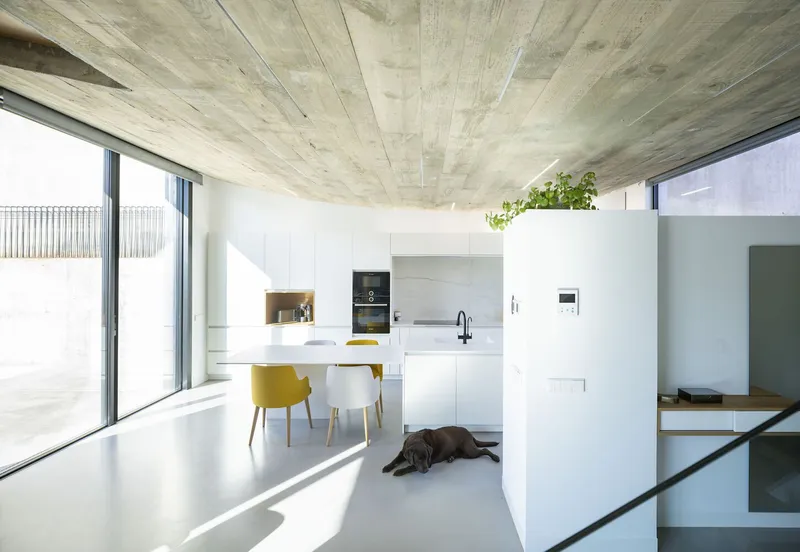
NAU House by MUKA Arquitectura exemplifies innovative residential architecture in dense urban environments. By reconciling constrained plots, natural light challenges, and urban privacy concerns, the project redefines single-family dwelling typologies. Its integration of sculptural concrete, steel supports, bioclimatic strategies, and spatial flexibility positions it as a forward-thinking model for contemporary city living, where form, function, and context seamlessly converge.
All photographs are works of
Javier Callejas




Popular Articles
Popular articles from the community


The Musturak Paradise: Senior Living Architecture for a Connected Future in Temara, Morocco
The Musturak Paradise reimagines senior living architecture in Temara via private homes, social spaces, culture, community, and shared care.

The Earth Pod: 3D Printed Homes for Resilient Refugee Communities
The Earth Pod reimagines refugee housing through 3D printed homes made from clay, combining resilience, self-sufficiency, and rapid shelter.

Co-Life: Senior Housing Design That Reconnects Older Adults With the City
Co-Life reimagines senior housing design through healing gardens, shared streets, workshops, and a sustainable community across generations.

Co-life: Sustainable Architecture for Age-Friendly Community Living
Co-life reimagines sustainable architecture for seniors through courtyards, rammed earth, shared gardens, and spaces designed for belonging.

Similar Reads
You might also enjoy these articles


Bamboo Housing Challenge 2026: Design Affordable, Sustainable Homes Using Bamboo
An international design competition by Bamboo U and IBUKU inviting architects and designers to reimagine affordable housing using bamboo — with the winning design built full-scale in Bali.

Computational Design & Education: Beegraphy Design Awards Introduces 7th Category (Featuring Jiyun's Innovative Approach)
Dive into Beegraphy’s 7th Design Awards category, where computational design meets education to create immersive, interactive learning tools, inspired by Jiyun’s work.

From Parametric Lighting to Urban Furniture: Join the 2nd Workshop in Beegraphy’s Computational Design Series
Dive into Cutting-Edge Design Techniques and Practical Applications with Industry Experts

Last Call: Unleash Your Architectural Genius in SHAK's Kindergarten Design Competition
Urgent call for architects to join SHAK's kindergarten design competition before the looming deadline


Explore Housing Competitions
Discover active competitions in this discipline



Challenge to reimagine the Iron Throne


Photograph architecture without architects


Illustrate the lost glory of Angkor Wat - Render Challenge


Design challenge to reuse E-waste
Comments (0)
Please login or sign up to add comments
No comments yet. Be the first to comment!