

Nautical Residential Beacon by Civic Architects – Iconic Waterfront Living in Amsterdam
Nautical Residential Beacon by Civic Architects in Amsterdam offers flexible, sunlit apartments with sustainable design, panoramic waterfront views, and iconic nautical-inspired architecture.


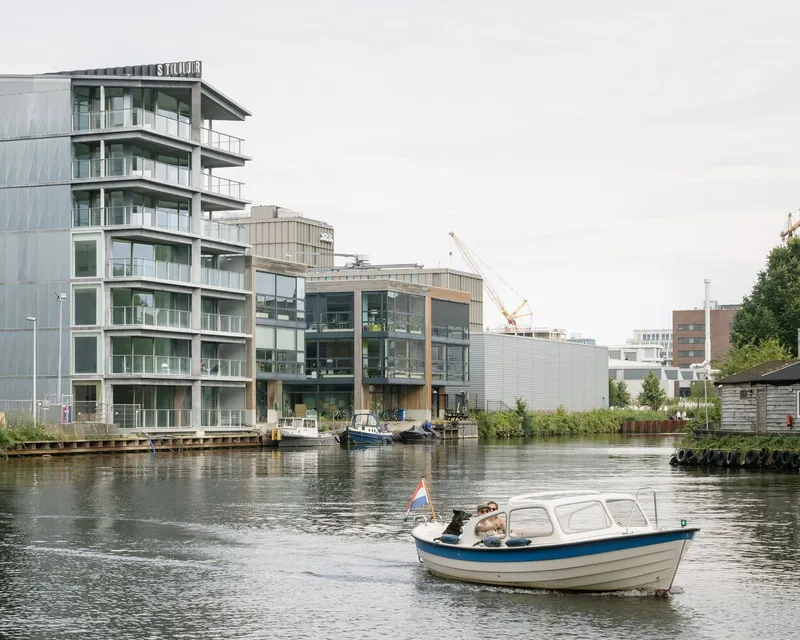
Located along the Tolhuiskanaal in Amsterdam North, the Nautical Residential Beacon by Civic Architects is a standout example of contemporary residential architecture seamlessly blending with its industrial harbor context. Situated in Buiksloterham, an evolving neighborhood known for its transformation from a working wharf into a vibrant mixed-use district, the building forms a key part of Cityplot C, a masterplan combining self-build projects, social housing, and live-work units. Covering an area of 1,915 m², the 2024 project includes seven 110 m² apartments and three 185 m² multi-generational homes/penthouses, designed to accommodate flexible, evolving lifestyles.

Distinctive Architecture and Nautical Identity
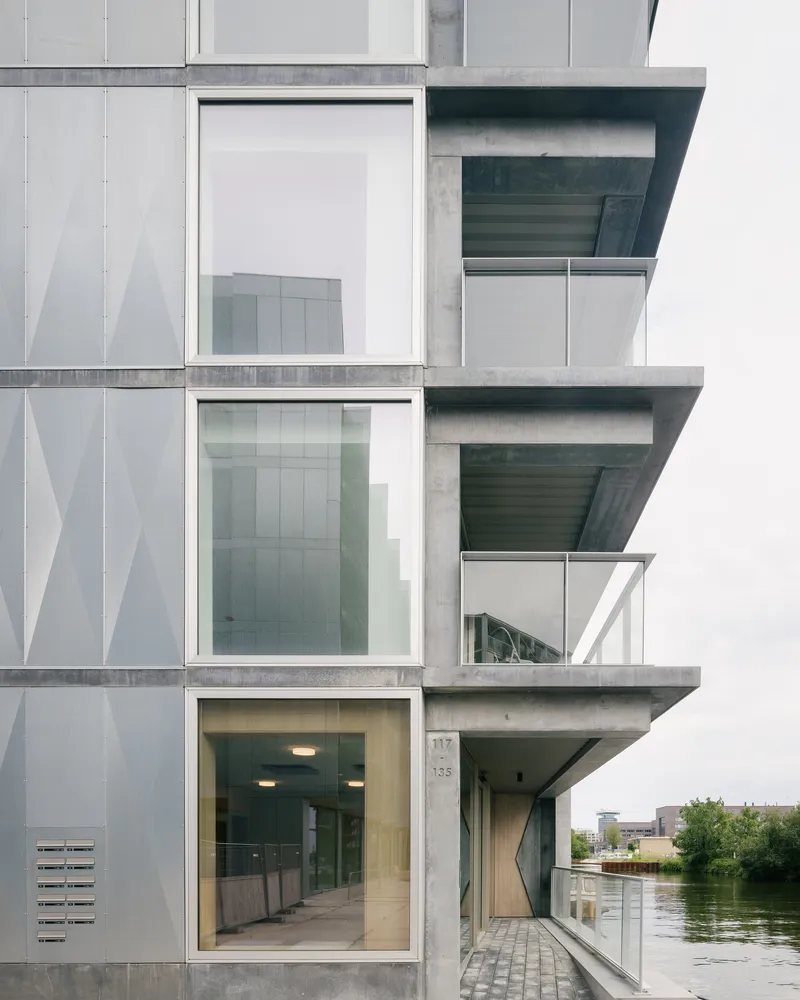
Perched at a bend in the canal, the building acts as a visual landmark for residents and visitors alike. The structure’s diagonally angled façades and corner living spaces maximize panoramic views of Overhoeks and the IJ River. Its acoustically responsive design minimizes noise from the waterfront without relying on bulky soundproof loggias, creating quiet, sunlit terraces facing southwest.
The building’s robust form and materiality reflect its industrial and nautical heritage, with steel panels used across closed façades and a sculptural roof emphasizing its beacon-like presence. The roof features a striking collaboration with Paris-based studio Matters, using folded cladding to reveal nautical words such as BAK, STUUR, NOORD, and ZUID, marking directions and enhancing the building’s maritime identity.
Flexible, Sun-Oriented Living Spaces
Every apartment is designed with sunlight orientation and adaptability in mind. Bedrooms face east, while living rooms and balconies benefit from afternoon and evening sun. Smaller 110 m² units offer a 7.5-meter base width, allowing for flexible room arrangements, while larger 185 m² homes provide opportunities for “kangaroo” spaces, offices, or studios with separate entrances. These layouts support evolving family structures and lifestyle needs.


Sustainable and Contextual Design
Sustainability is central to the Nautical Residential Beacon. A green vegetated roof retains rainwater, while the building integrates with the neighborhood’s circular water system. South-facing façades avoid overheating by limiting windows, and balcony canopies on east and west sides reduce summer heat gain. The design is further complemented by solar panels, promoting energy efficiency while responding to seasonal environmental conditions.
By merging residential flexibility, sustainable design, and nautical-inspired architecture, the Nautical Residential Beacon establishes itself as a landmark of modern urban living, connecting Amsterdam’s industrial past with its forward-looking, vibrant present.
All Photographs are works of Stijn Bollaert


Popular Articles
Popular articles from the community


Tsunami Convergenics: Turning Catastrophic Ocean Forces into Underwater Housing Infrastructure
A speculative underwater settlement off the coast of Onagawa, Japan, treats tsunamis and typhoons as energy sources rather than threats.
Faces of the Soviet Avant-Garde: Turning Moscow's Street Names into an Open-Air Museum
A network of sculptural installations across a Moscow residential district transforms forgotten architect names into spatial encounters with cultural memor

Singing Woman: An Opera House That Performs Before the Curtain Rises
Ovidiu Cristian Pavel's conceptual opera house translates Estonia's choral identity into a sculpted waterfront landmark facing the Baltic Sea.

Manzana Morphosis: Stretching Barcelona's Grid into a Living Landscape for 2050
A radical reworking of the Eixample manzana turns density into a tool for generous public space, vertical ecology, and environmental performance.

Similar Reads
You might also enjoy these articles


Hodi-Mandai Geram
Project Function: Preservation and revitalization of the Intangible heritage and socio-spatial identity of the Hodi by Housing, Cultural Memory Center, Sacred Grove, landscape, local tourism economy


Olio Towers: A Mid-Rise for Performers That Fuses Housing, Rehearsal, and Stage
Located blocks from Houston's Theater District, this modular tower stacks living units around a central performance atrium.

Oasis: Modular Green Housing Carved into Dhaka's Urban Fabric
A shortlisted Plugin Housing entry reclaims unauthorized settlements in Dhaka with stepped concrete volumes, green roofs, and ventilation-driven design.

Black Hole: A Floating Megastructure for the Post-Physical Era
Emiliano Mazzarotto envisions a spherical, self-scaling arena where e-sports, digital hotels, and holographic stadiums replace traditional public space.

Explore Residential Building Competitions
Discover active competitions in this discipline

Challenge to design mud housing for contemporary communities

Challenge to reimagine the Iron Throne

Photograph architecture without architects

Illustrate the lost glory of Angkor Wat - Render Challenge
Comments (0)
Please login or sign up to add comments
No comments yet. Be the first to comment!