
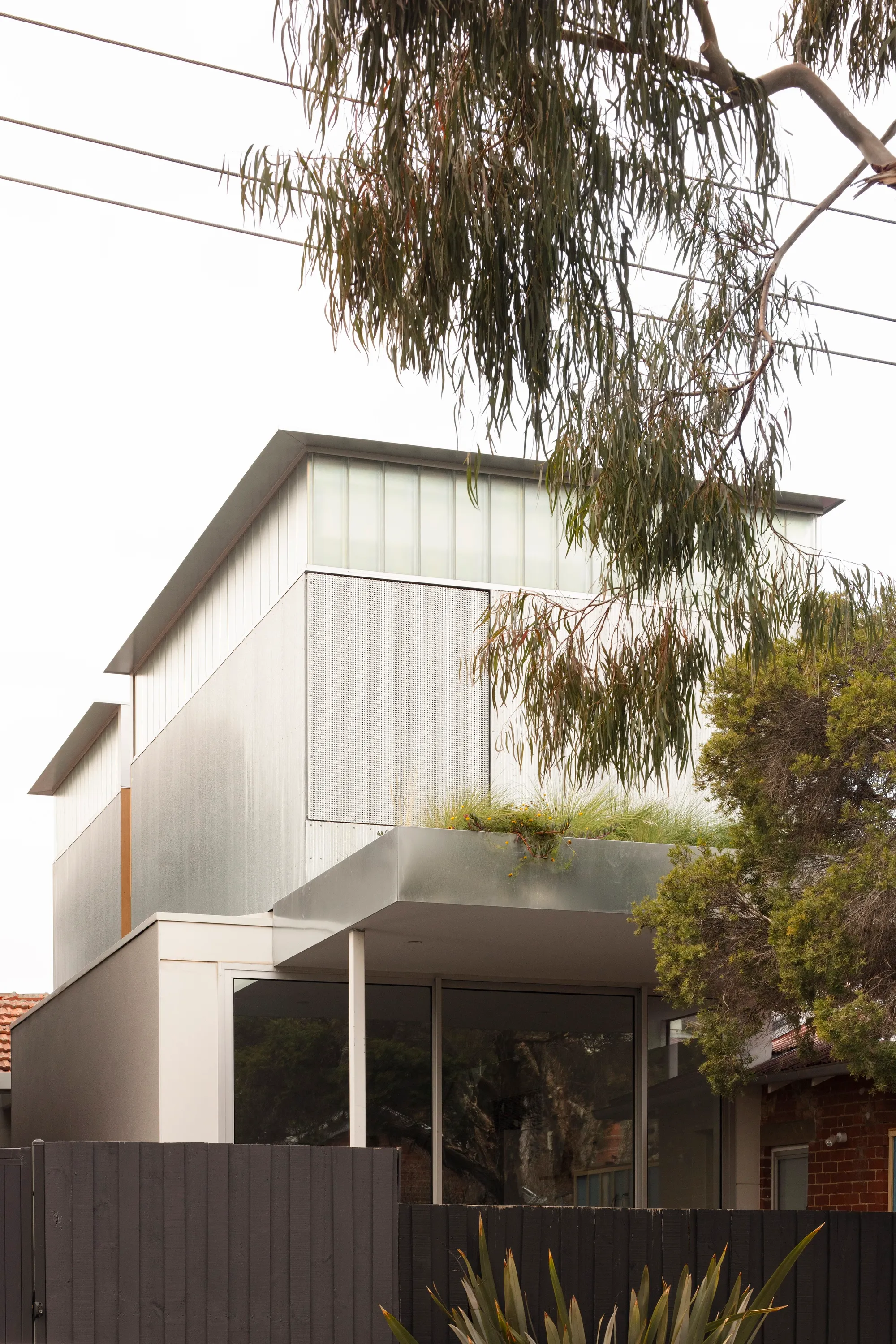
Office MI-JI Lifts Bedrooms and a Garden Above a Saint Kilda East Bungalow
A steel-framed upper pavilion clad in corrugated metal floats two bedrooms, a bathroom, and a rooftop garden over an existing Melbourne house.


The suburban bungalow is one of Melbourne's most plentiful and most constrained building types. Single storey, tight lot, heritage overlay. When a family needs more rooms the options are predictable: push out the back, dig down, or add a formulaic box on top. Office MI-JI chose the third path but treated it as something closer to a separate building, a lightweight pavilion that uses the existing steel structure of the ground floor to cantilever bedrooms, a bathroom, and an accessible planted terrace above the original roofline.
What makes the project genuinely interesting is the material discipline. The upper volume is clad entirely in vertical corrugated metal, the same profile used for fences and sheds across every Melbourne suburb. Rather than hiding this lineage, the architects lean into it: the addition reads as an honest industrial graft, not a luxury extension pretending to be weightless. The result is a house that gained 166 square metres of program without gaining pretension.
Street Presence and the Metal Pavilion
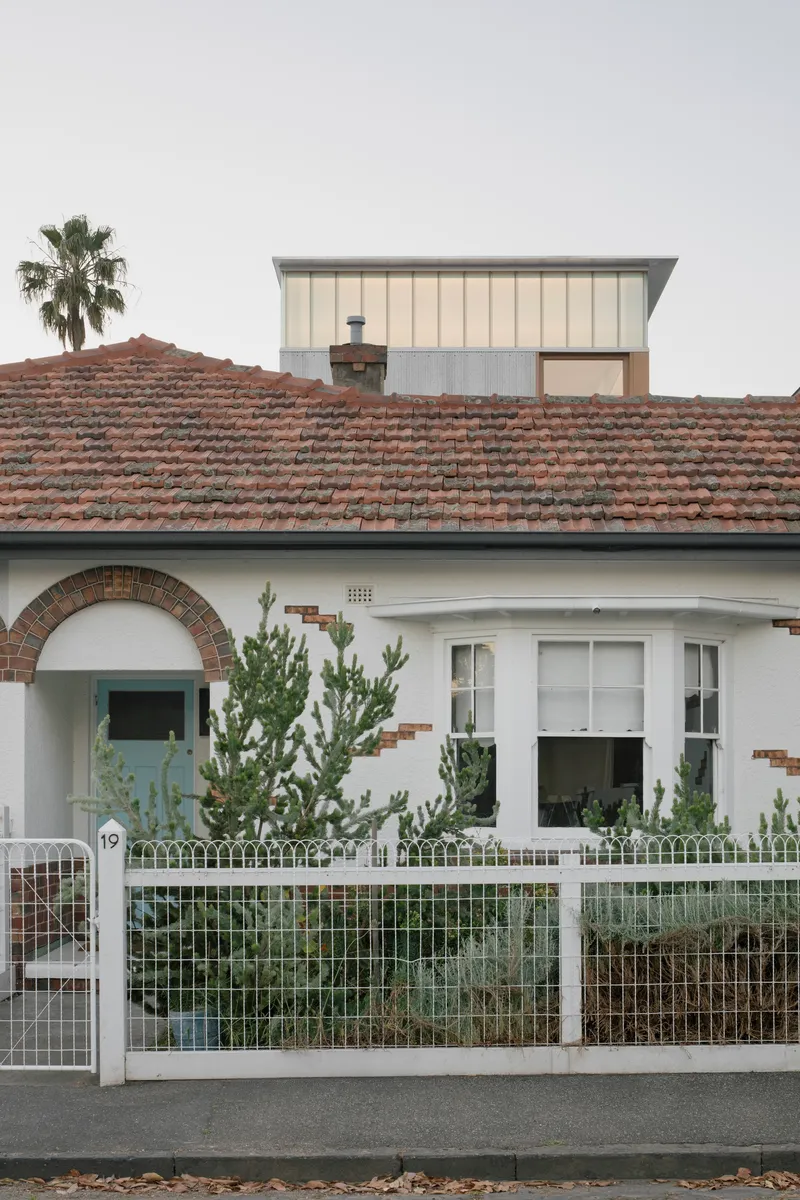


From the street, the original white rendered bungalow with its terracotta tile roof remains legible as the primary form. The addition rises behind it, gabled and clad in pale metal sheeting, its proportions deliberately taller and narrower than the house below. The gap between old and new is filled by the cantilevered terrace, which softens the transition with planting. It is a composition that respects the existing domestic scale while signaling that something has changed.
The corrugated metal fence at ground level ties the new work to the suburban vocabulary of the street. Palm trees, overhead wires, and a modest setback keep the project from announcing itself too loudly. It is a polite neighbor, which in a heritage-conscious inner suburb like Saint Kilda East counts for a lot.
The Cantilevered Terrace as Garden

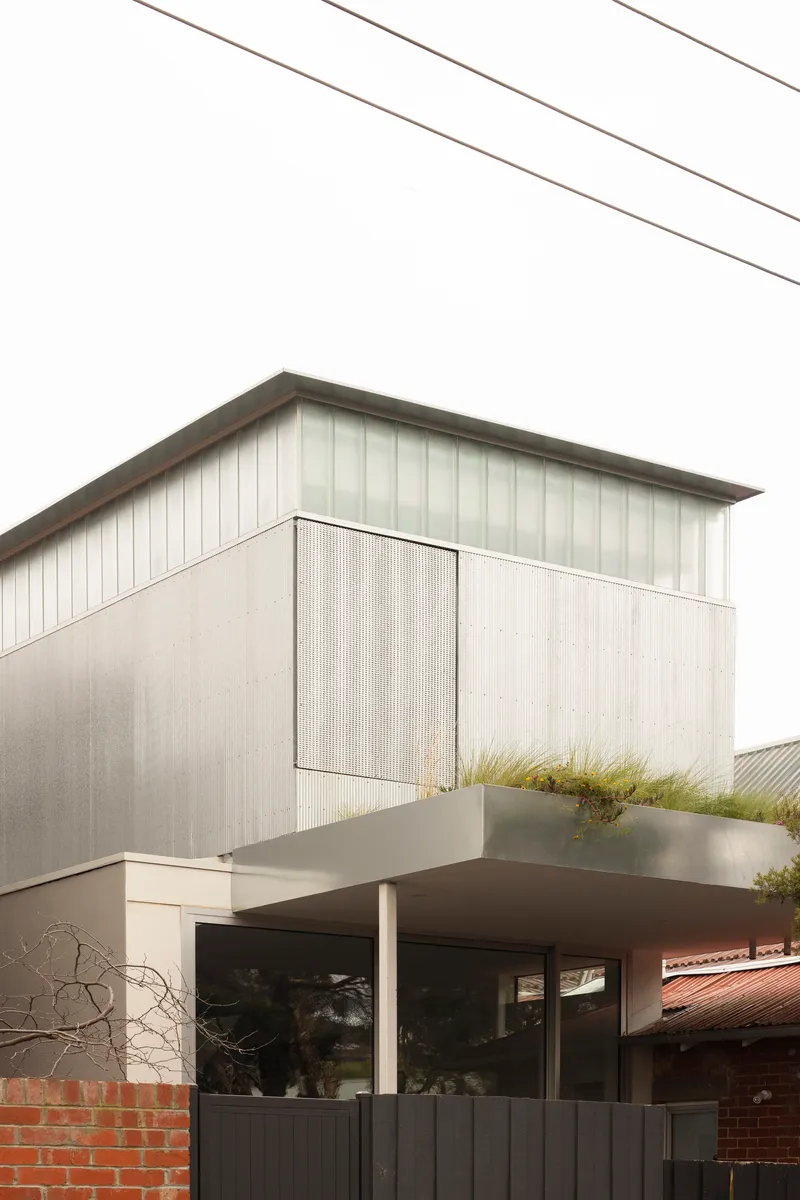
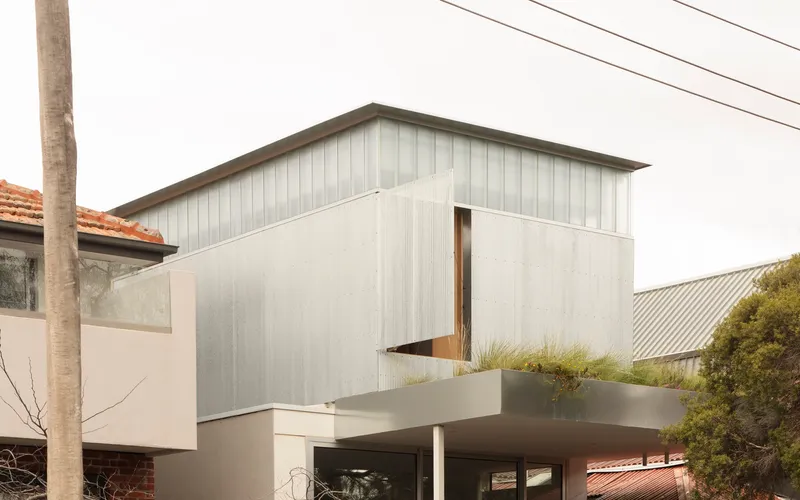
The planted terrace that wraps the upper volume is the project's most generous gesture. Rather than surrendering this area to a simple balcony, Office MI-JI treated it as a sky garden, a band of vegetation that mediates between the metal cladding and the canopy of a large willow tree. The planting beds sit beneath the overhang of the upper floor, receiving filtered light and creating a threshold between indoors and the open air.
Structurally, this terrace relies on the cantilever enabled by the existing steel frame below. There is no separate support; the garden simply extends from the floor plate. It is a compact move that yields an outsized payoff: privacy, greenery, and an outdoor room that does not eat into the backyard.
Bedrooms Carved from Light
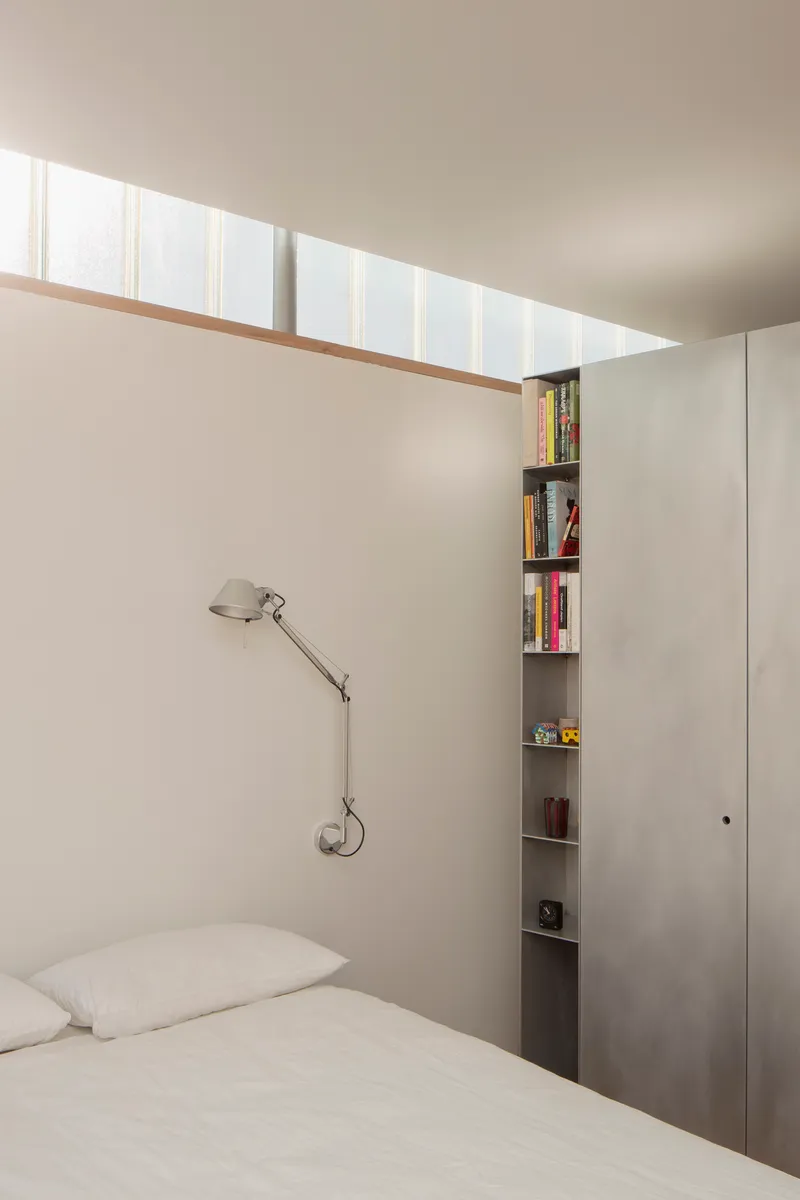
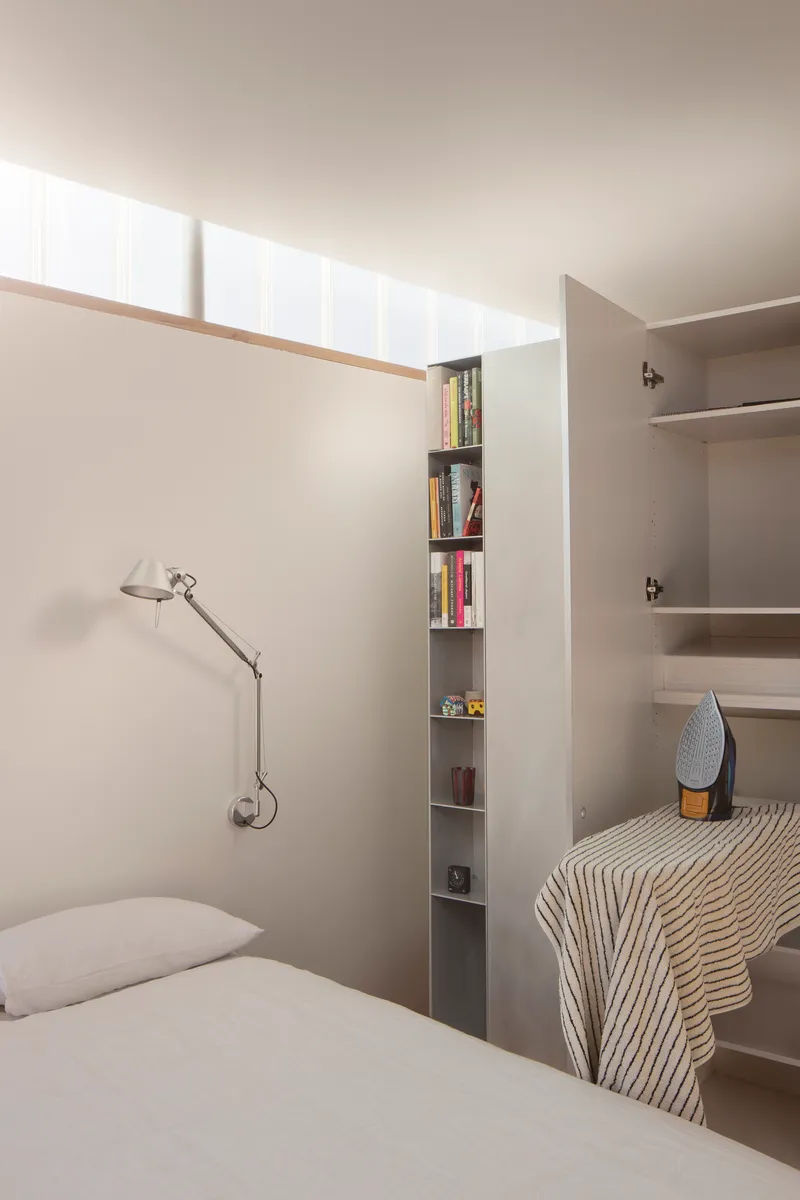

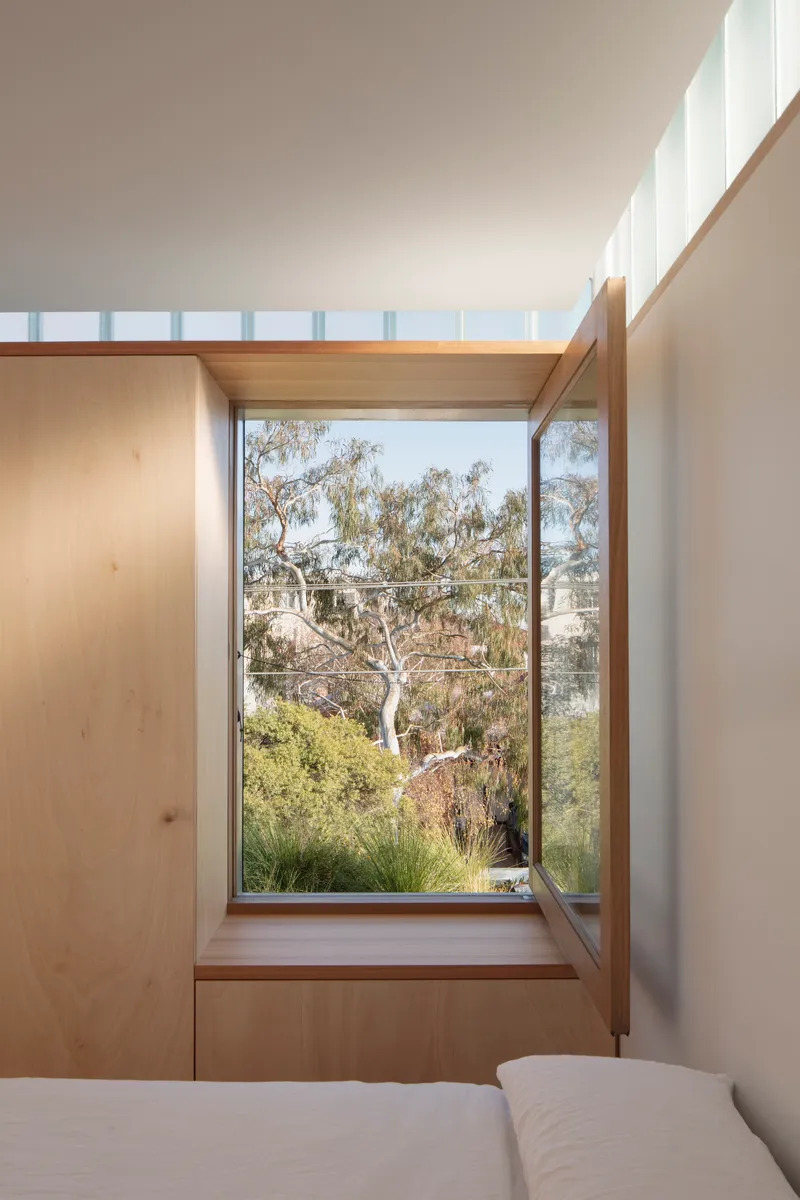
The upper level bedrooms rely on clerestory windows rather than large openings at eye level. This is partly a privacy strategy (neighbors are close) and partly a lighting strategy. By placing glazing high on the wall and running it as a continuous band, the architects wash the ceiling and upper walls with even daylight while keeping the lower portion of each room quiet and enclosed.
Built-in plywood cabinetry and narrow vertical bookshelves line the walls, turning storage into texture. The palette is restrained: warm timber, white plaster, the occasional articulated wall lamp. The rooms feel compact but not cramped, because the clerestory trick lifts the perceived ceiling height well above the actual dimension.
Plywood Interiors and Handmade Detailing


Throughout the addition, plywood is the default material for joinery, shelving, and wall lining. It is used honestly: edges are exposed, curves are router-cut rather than steam-bent, and panels are fixed with visible screws. The effect is warm without being precious. A study nook with a built-in desk and slatted screen above demonstrates how carefully the architects calibrated storage, display, and ventilation into a single wall assembly.
Galvanized metal door frames and steel mesh balustrades punctuate the timber surfaces, recalling the corrugated cladding outside and reinforcing the idea that this is an industrial addition grafted onto a domestic body. Nothing here is trying to be seamless. The joints are celebrated.
Circulation and the Skylight Moment

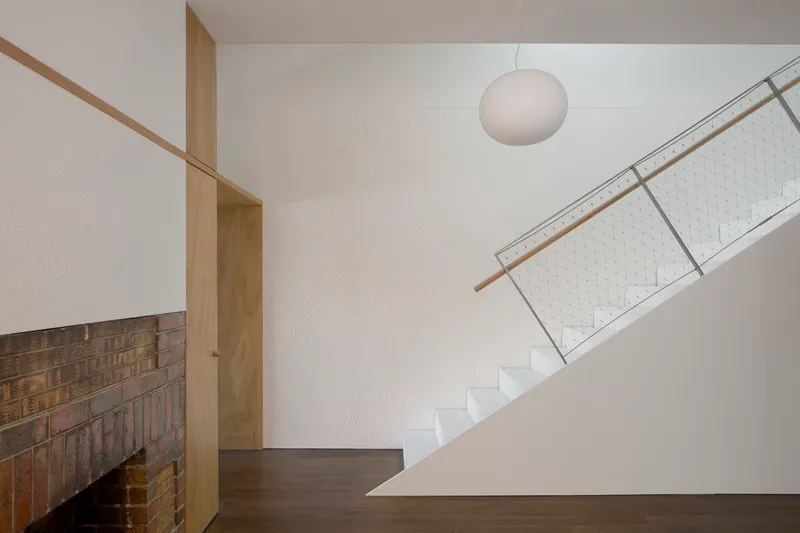
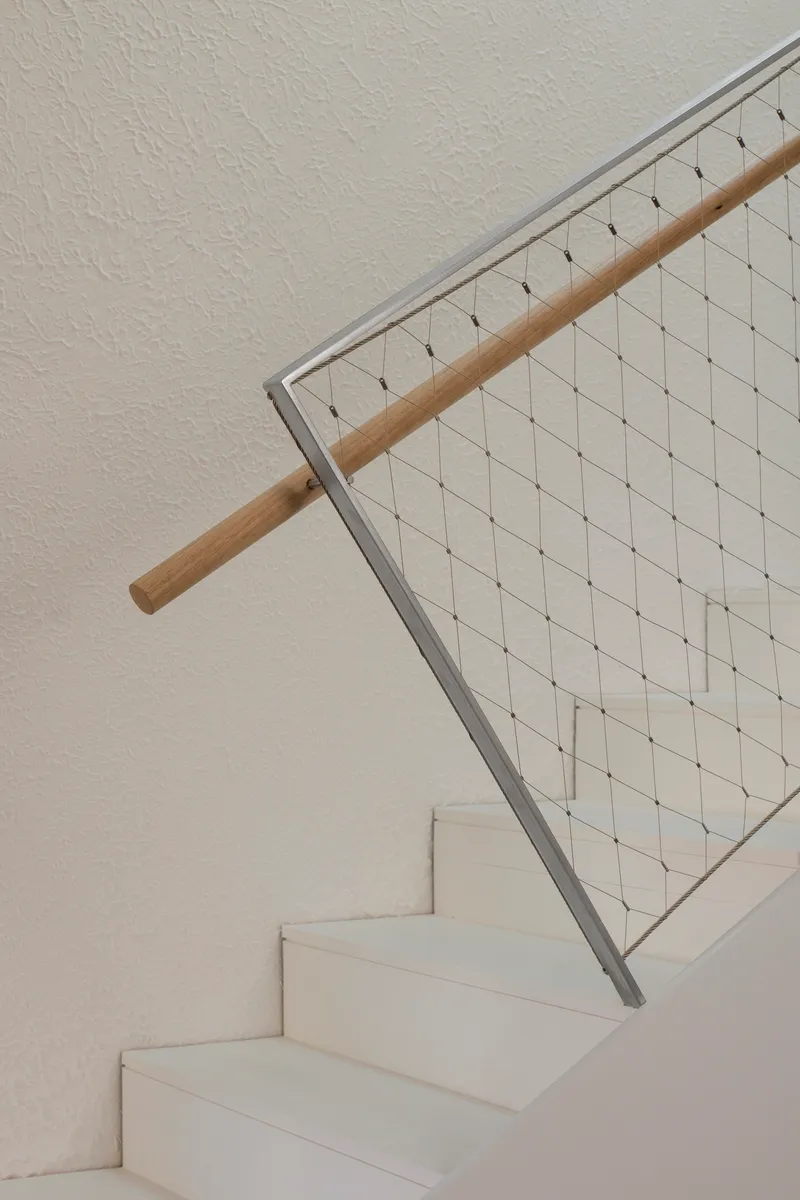
The staircase connecting old and new is the one truly dramatic interior moment. A textured brick wall flanks the ascent, and a wire mesh balustrade keeps the stair open to the adjacent hallway. At the top, a circular skylight pours light down through textured plaster walls, marking the transition from existing ground floor to new upper level.
This skylight is small but perfectly placed. It turns an otherwise utilitarian corridor into a sequence: you climb through the heavy masonry of the original house, pass through a compressed doorway, and arrive beneath a cone of light that orients you within the new volume. It is the hinge of the entire project.
Bathrooms and Curved Surfaces
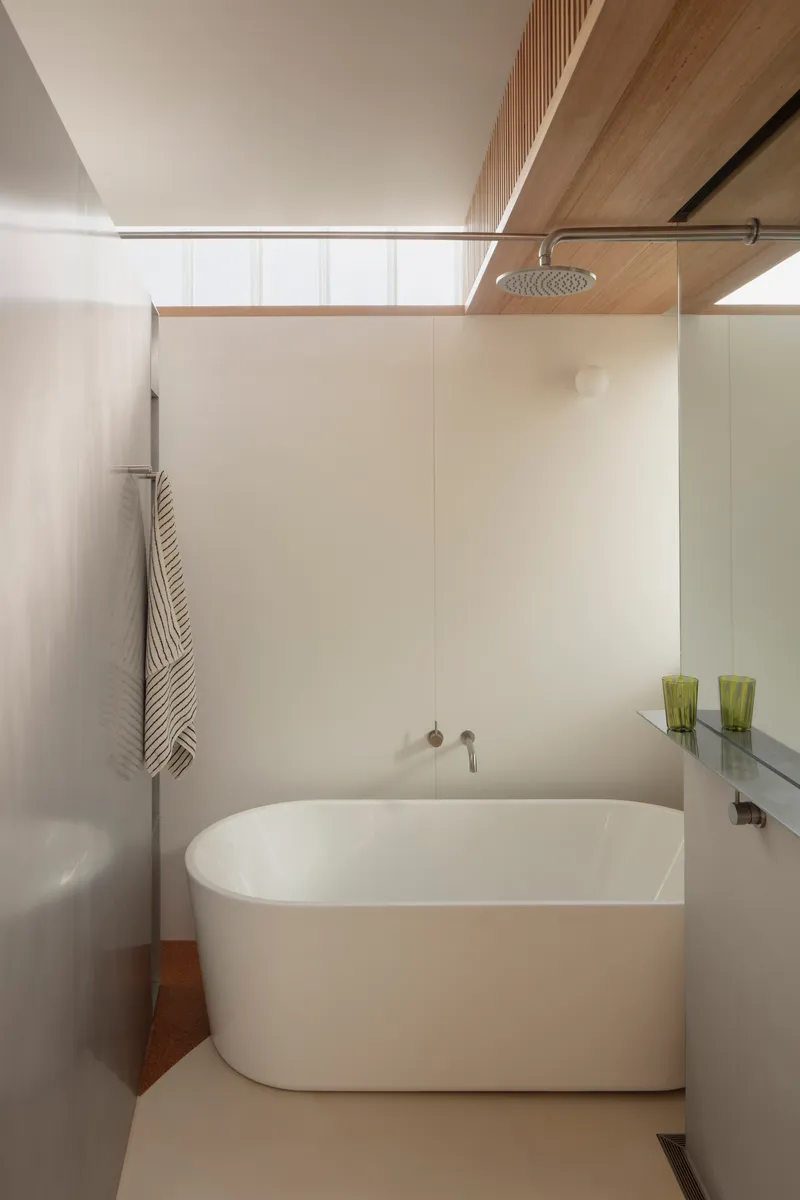
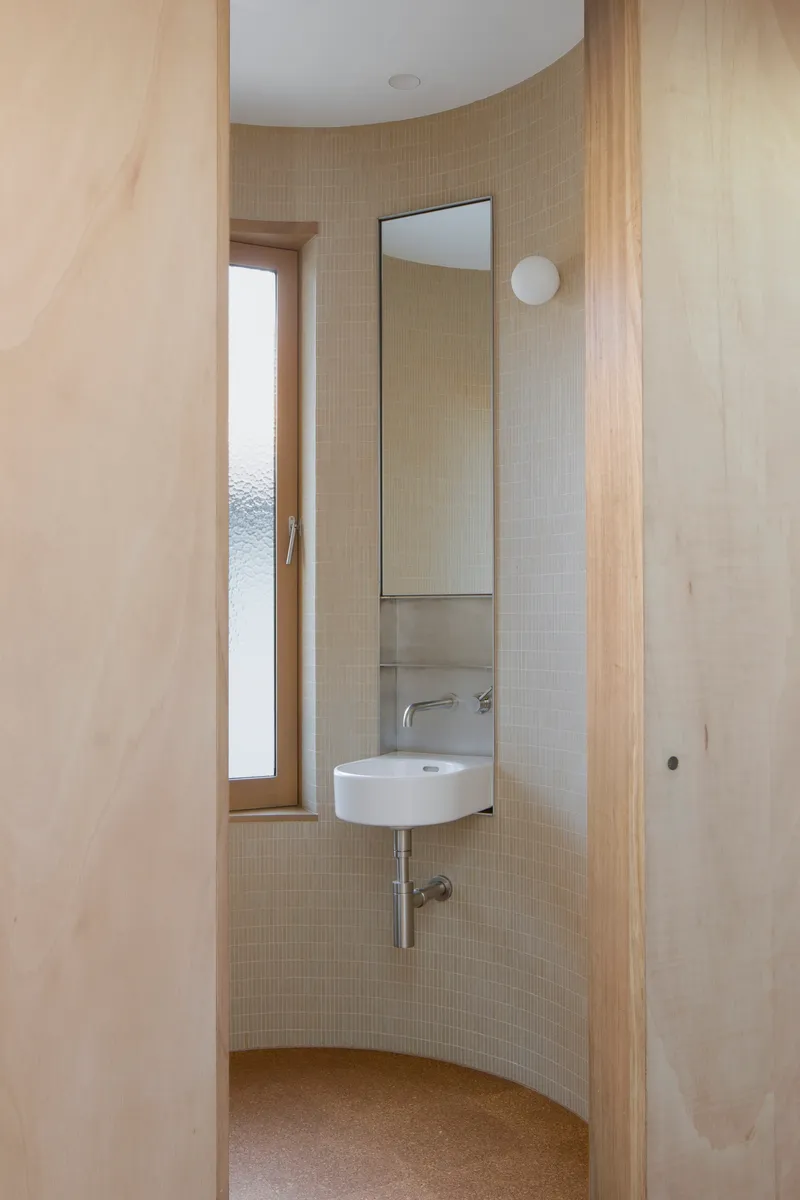

The bathrooms introduce curves that the rest of the addition avoids. A freestanding oval tub sits beneath a timber-lined soffit with high glazing above, turning a bath into a moment of deliberate luxury. Nearby, a powder room clad in pale mosaic tiles wraps its walls into a continuous curve, softening what might otherwise be a claustrophobic space.
Curved plywood panels on the bathroom walls and a translucent glass door at center show the architects willing to invest complexity where it matters most: the rooms you stand in undressed. The contrast with the orthogonal bedrooms is intentional. Soft where you need softness, angular where you need storage.
Living with the Existing House
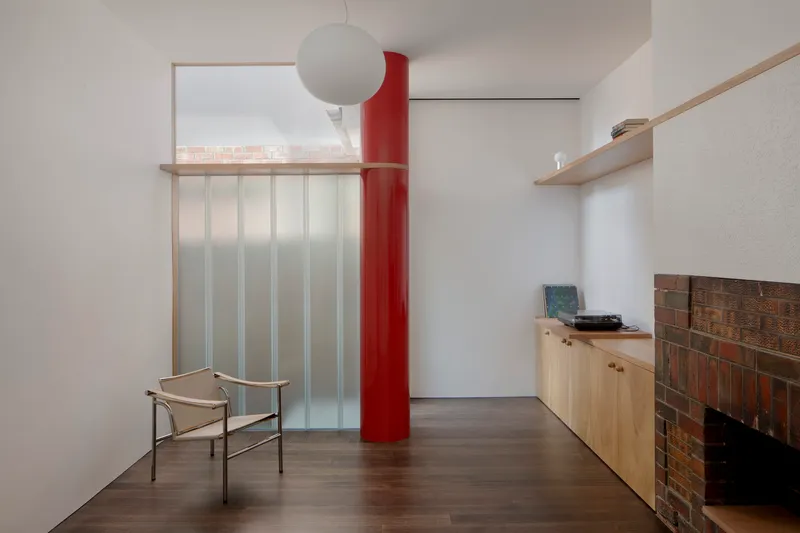
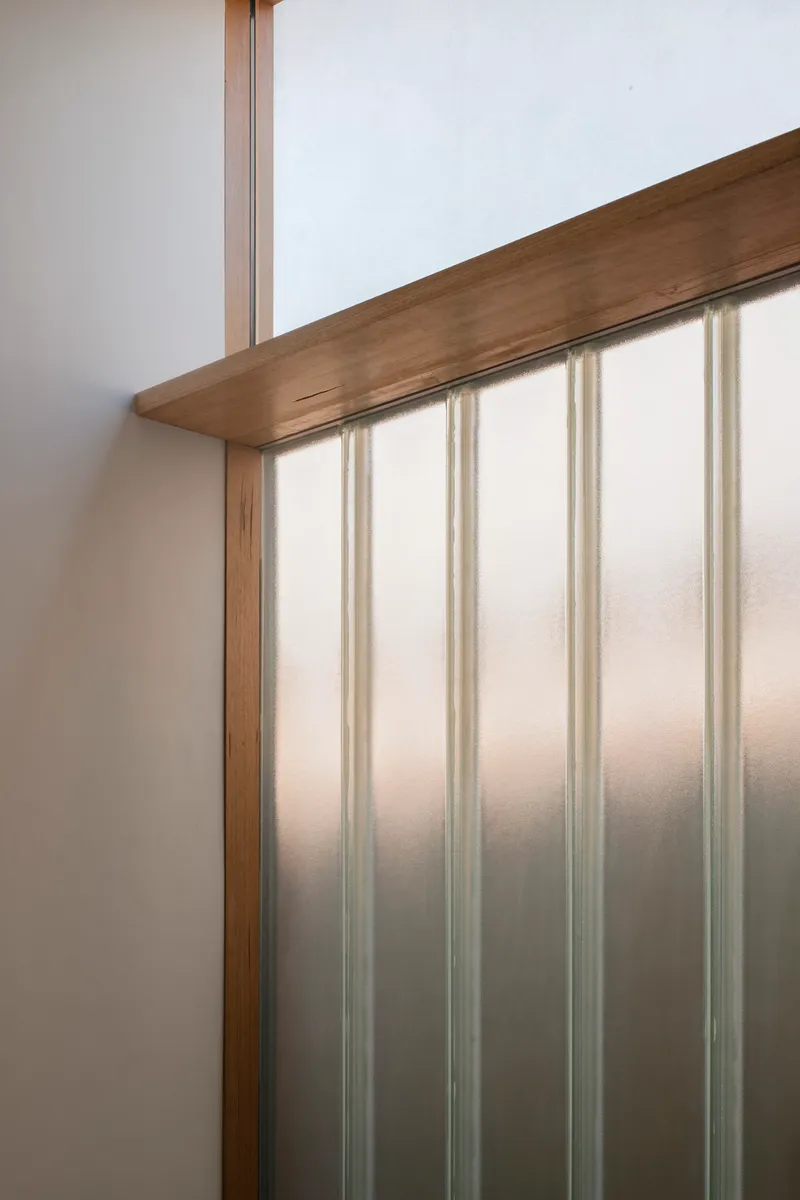
At ground level, the original house retains its brick fireplace and a red cylindrical column, structural remnants that the renovation chose to expose rather than conceal. Translucent sliding screens allow the living room to open or close to adjacent spaces, and a low cabinet anchors the room without dividing it. The polycarbonate panels reappear as wall infill upstairs, creating a material thread that links old and new.
A timber window seat framing eucalyptus trees and native grasses outside captures the suburban Melbourne landscape in miniature. It is a quiet detail, the kind of move that matters more in daily life than any facade gesture, and it suggests that Office MI-JI understood the brief beyond its square metres.
Plans and Drawings


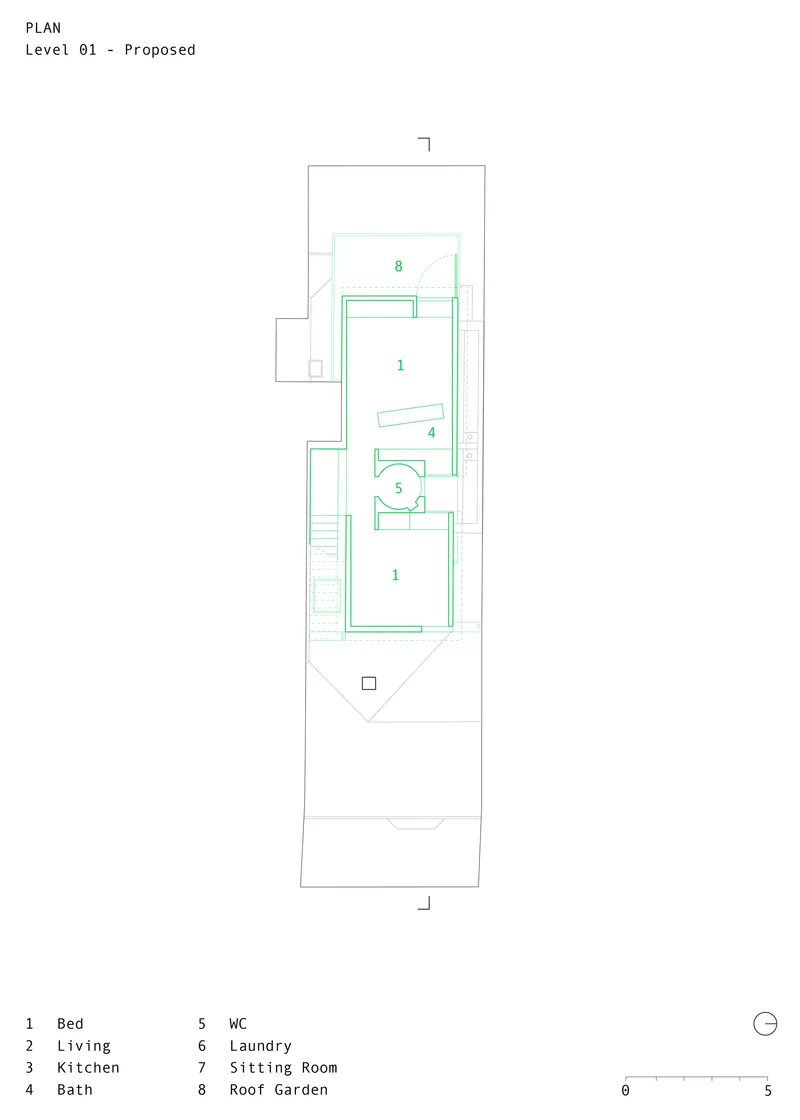

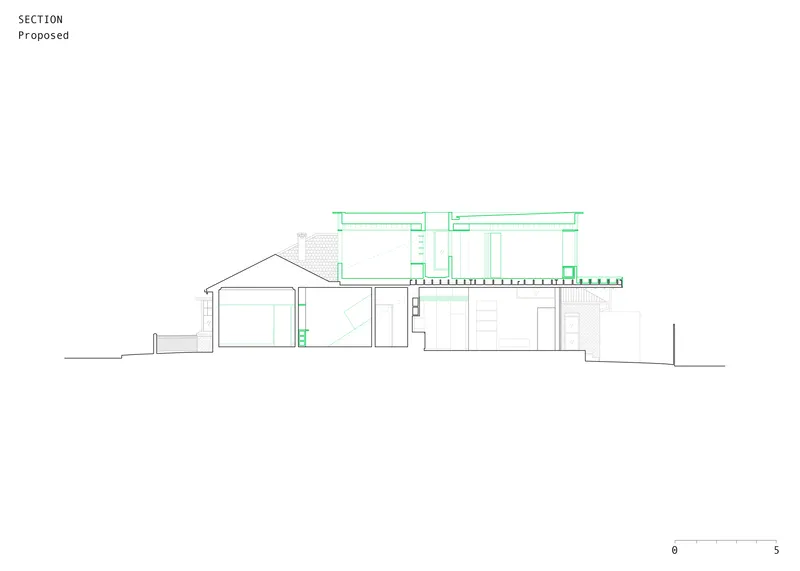
The demolition plan reveals how little of the existing ground floor was removed: primarily an interior partition and a portion of the rear wall to accommodate the new stair. The proposed ground plan shows the stair inserted precisely where it disrupts the fewest existing rooms. Upstairs, two bedrooms, a bathroom, and access to the roof garden are arranged along a single corridor, keeping circulation compact.
The sections are the most revealing drawings. They show the new upper volume sitting well above the ridge of the existing roof, separated by the planted terrace. The sloping adjacent rooflines of neighboring houses are drawn in, demonstrating that the addition fits within the local envelope without overshadowing. A timber deck at the rear extends the ground level outward, compensating for whatever footprint was lost to the stair.
Why This Project Matters
Melbourne's inner suburbs face a familiar tension: heritage character versus the genuine need for more space. Most upper-level additions treat the existing house as a problem to solve, burying its identity under a seamless contemporary shell. Office MI-JI's approach is more honest. The addition is visibly different, materially distinct, and structurally independent in its expression, even as it relies on the steel bones below. The corrugated metal cladding does not apologize for being industrial; it claims kinship with the fences, sheds, and water tanks that define the suburban vernacular.
The planted terrace is the idea worth exporting. On a tight lot where outdoor space is precious, lifting a garden to the first floor and making it the threshold between new and old is a strategy that works at nearly any scale. It softens the bulk of the addition, provides amenity that a standard balcony cannot match, and creates a middle ground between architecture and landscape. At 166 square metres, this is a small project with an argument larger than itself: that vertical additions to suburban houses can be generous, characterful, and unapologetic.
A Light Addition by Office MI-JI. Saint Kilda East, Australia. 166 m². Completed 2024. Photography by Ben Hosking.
About the Studio
Share Your Own Work on uni.xyz
If projects like this are the kind of work you want to make, uni.xyz is a place to publish your own, find collaborators, and enter design competitions.




Popular Articles
Popular articles from the community


Co-Life: Senior Housing Design That Reconnects Older Adults With the City
Co-Life reimagines senior housing design through healing gardens, shared streets, workshops, and a sustainable community across generations.

Riyadh For All: Intergenerational Urban Design for Active Aging in Rabat
Riyadh For All reimagines urban design in Rabat with intergenerational co-living, adaptive courtyards, and Moroccan cultural exchange today.

Hill & Cross Opera: Sculptural Opera House Architecture Shaped by Tallinn’s Landscape and Identity
Hill & Cross Opera reimagines opera house architecture in Tallinn through its sculptural hill, civic plaza, glass wave and a luminous cross.

Conexión: Biophilic Design Reimagines High-Rise Living in Hong Kong
Conexión reimagines high-rise living in Hong Kong through biophilic design, green facades, shared spaces, daylight, water and nature within.


Similar Reads
You might also enjoy these articles

Bao Huynh Watercolor Atelier: A Serene Art Retreat in Hội An
Bao Huynh Watercolor Atelier in Hội An blends multifunctional art spaces, sustainable design, local materials, and family-friendly living in a serene environment.

Atelier Macri Concept Store Interior Design by CASE-REAL
Atelier Macri store features a "ko" counter, walnut wood details, cork displays, blending retail, gallery, and seamless customer experiences.

Manuel Vargas Izquierdo Stadium and High-Performance Sports Center: Architectural Excellence in Jalpa de Méndez
The Manuel Vargas Izquierdo Stadium blends sustainable design, inclusive sports facilities, and cultural-inspired architecture, revitalizing Jalpa de Méndez’s public spaces.

KAKR Buluh Awar Hall: Revitalizing Community and Ecology Through Bamboo Architecture
Community built bamboo hall revitalizes Buluh Awar village, empowering youth, restoring ecology, celebrating vernacular craftsmanship through sustainable architecture and culture.




Comments (0)
Please login or sign up to add comments
No comments yet. Be the first to comment!