
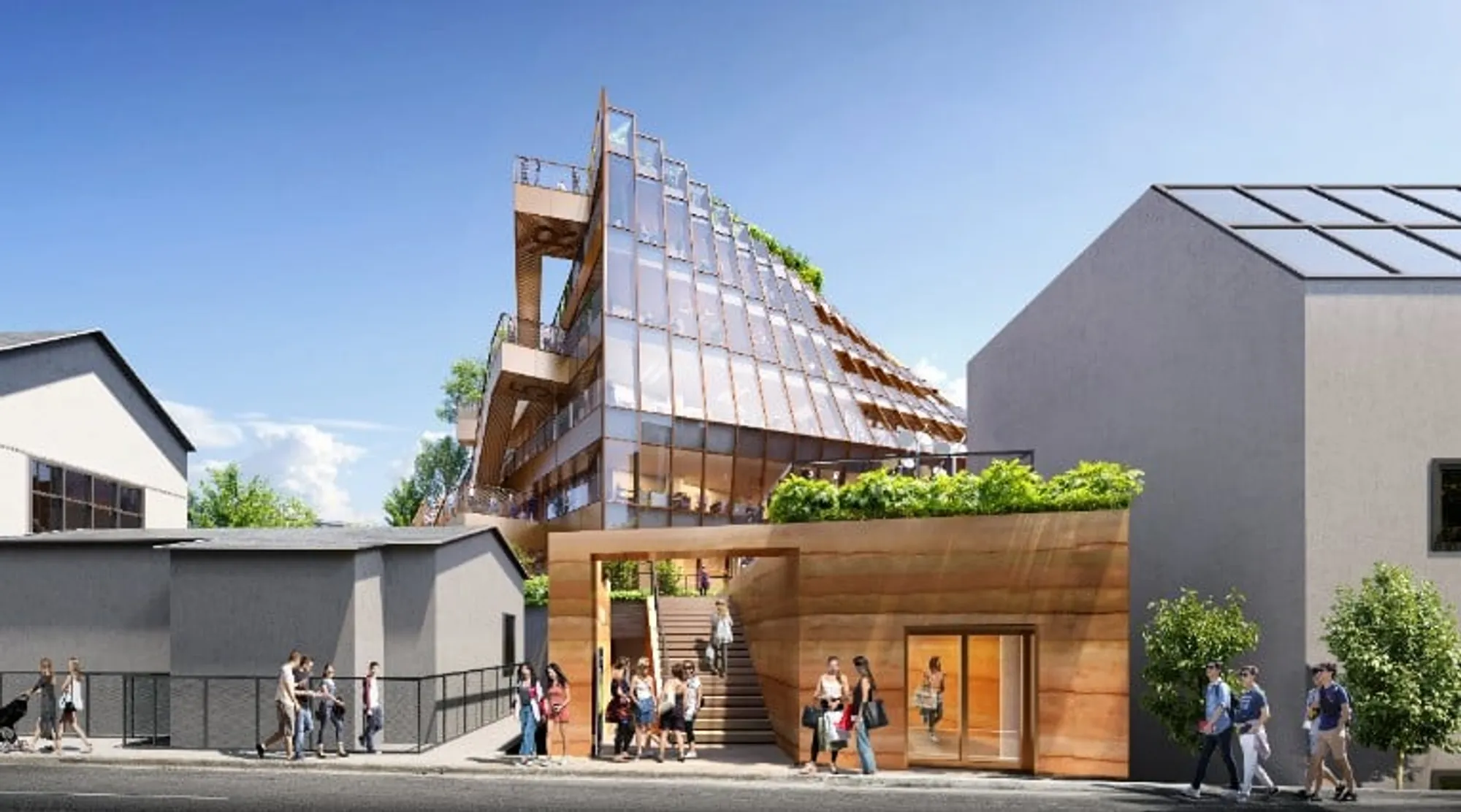
OMA Unveils Harajuku Quest in Tokyo, Construction Underway
Future of Sustainable Shopping: Stepped Centre with Glass Facade and Green Rooftop to be Completed in 2025

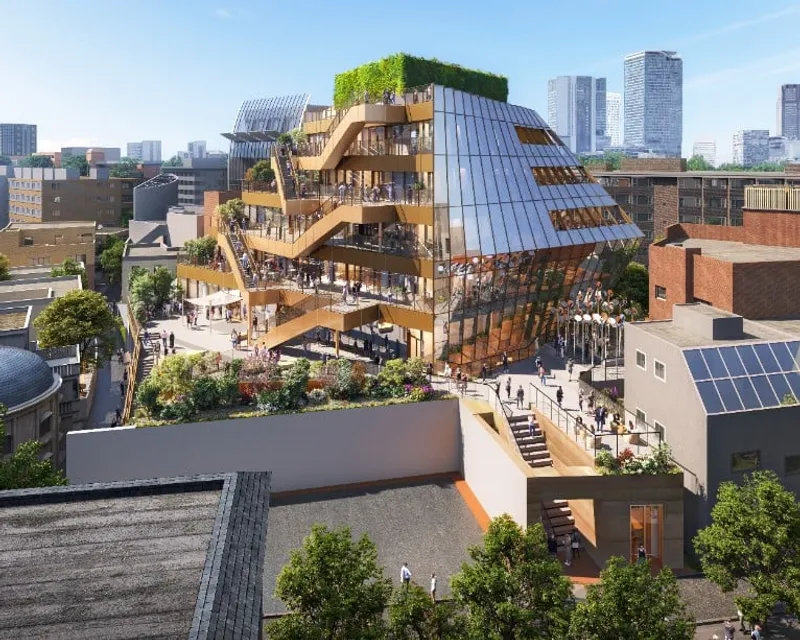
Construction is underway on Harajuku Quest, a renewed commercial and cultural hub in Harajuku, Tokyo. Designed by OMA New York and Shohei Shigematsu, the 84,000-square-foot complex is being built by NTT Urban Development Co., Ltd. and is set to be their first ground-up mixed-use building in Omotesando. The estimated completion date for the project is February 2025.
Harajuku Quest is in a prime location between Omotesando and Oku-Harajuku, close to popular destinations such as Yoyogi Park, Meiji Jingu, and Harajuku Station. The project is part of NTT's ongoing efforts to bring life and energy to the Harajuku area.
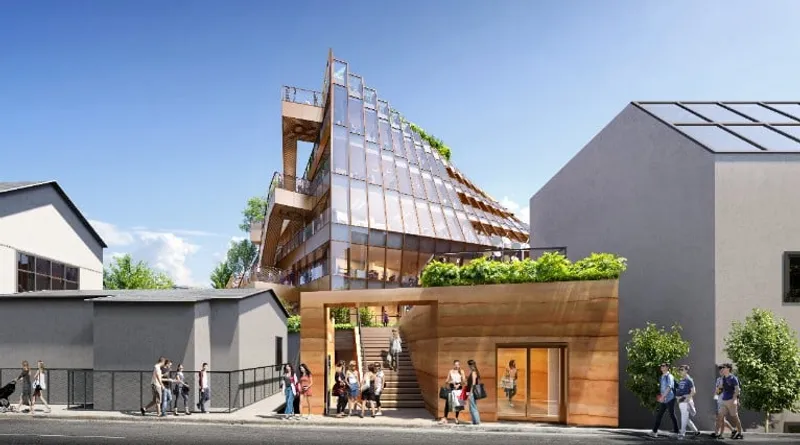
Building on the success of NTT's "With Harajuku" development, which opened in 2020, Harajuku Quest aims to create a new flow of people through a series of alleys, squares, and commercial zones, fostering informal encounters and exchanges. By connecting Omotesando and Oku-Harajuku for the first time, Harajuku Quest will draw people and activities from both areas and serve as a hub for commercial and cultural activities.
Omotesando is a unique street in a neighbourhood characterized by winding, non-straight roads. It stands out with its strong city feel, defined by its Zelkova trees, spacious sidewalks, and a series of well-known global brands' flagship stores. The increasing demand for eye-catching branding in retail architecture has led to the growth of building sizes along the street, with stores showcasing their distinct identities mainly along the central axis.
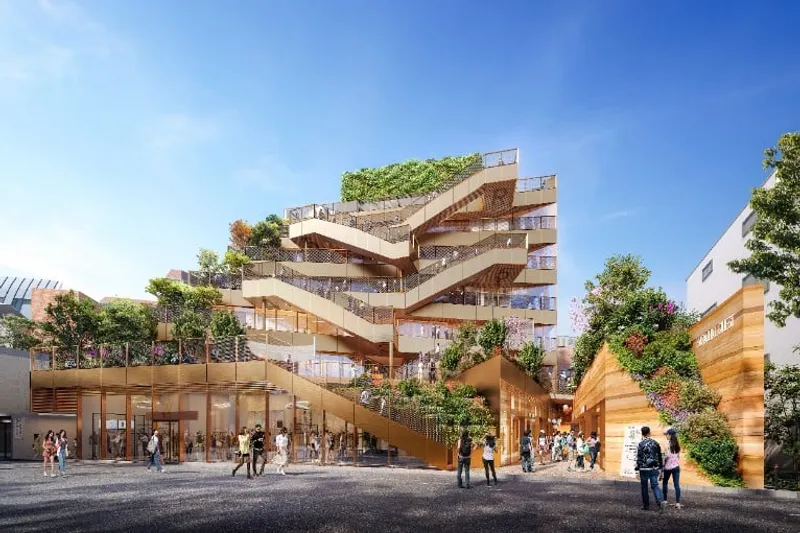
Just a short distance north of the bustling main street of Omotesando lies Oku-Harajuku, a charming and intimate neighbourhood characterized by its narrow, organic streets and small, human-scale buildings that house a variety of independent shops. Over the past few decades, this area has developed a unique and vibrant youth culture that has gained international recognition and has had a significant impact on global street-style fashion.
The design of the site's zoning envelope is shaped by two different manipulations to cater to the two contexts. The sculptural expression facing Omotesando is achieved through pinching and pulling, while the inhabitable façade toward Oku-Harajuku is achieved through stepping and fanning. The building has a monolithic and transparent face that rises towards Omotesando, with a setback at the top to allow light to enter and at the ground to create a pedestrian passage to Oku-Harajuku.
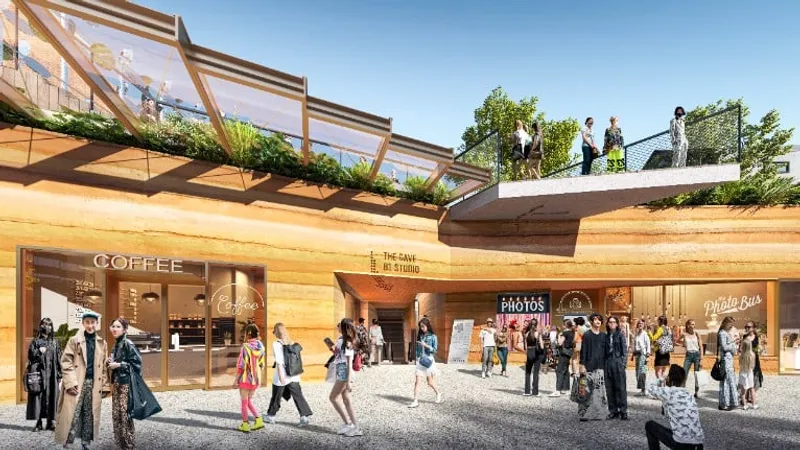
In contrast to the verticality, a series of human-scale terraces rise step by step, creating open spaces for various programs to spill out towards Harajuku. The second-level terrace has a public datum that is expanded to form a large plaza for cultural programs and gatherings, which extends the neighbourhood life into the site and the building activity beyond just retail.
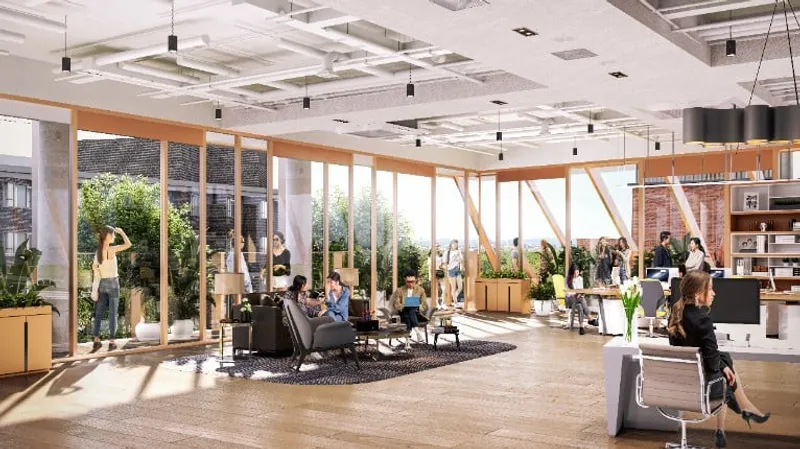
Shohei Shigematsu, OMA Partner, said, “The conjunction of Omotesando and Oku-Harajuku embodies a duality of urban context as well as Tokyo’s fashion and retail culture. It was essential for the new building to bridge the two areas and express two stories. Like two sides of the same coin, a single building conveys alternate personalities, connected by a new public corridor. Harajuku Quest acts as both a visual and programmatic convergence point of Omotesando and Oku-Harajuku—a gathering place where visitors can experience the activities and aura of global fashion and local cultural scene simultaneously.”
Courtesy of © OMA
Images: Copyright OMA and INPLACE



Popular Articles
Popular articles from the community


Play: Fragments of Their World
Familiar architecture becomes modular playground design, creating safe spaces where displaced children can learn, connect, imagine and play.

Lunar Spiral: Space Architecture Shaped by the Mathematics of the Universe
Lunar Spiral reimagines space architecture through Fibonacci geometry, lunar regolith, levitating habitats, and self-sustaining Moon living.

Co-Life: Senior Housing Design That Reconnects Older Adults With the City
Co-Life reimagines senior housing design through healing gardens, shared streets, workshops, and a sustainable community across generations.

The Earth Pod: 3D Printed Homes for Resilient Refugee Communities
The Earth Pod reimagines refugee housing through 3D printed homes made from clay, combining resilience, self-sufficiency, and rapid shelter.

Similar Reads
You might also enjoy these articles
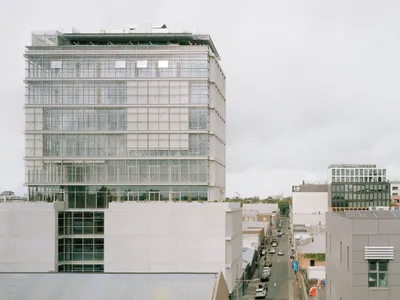
116 Rokeby Building, Collingwood
Sustainable Collingwood office building featuring double-skin façade, natural ventilation, rooftop amenities, and carbon-neutral design focused on wellbeing and longevity.
Contemporary Apartment Renovation in Spain: RV House by BIAN Opens Up to the Sea
A minimalist 1930s apartment in Santander is transformed into a flexible, sea-facing home through contemporary Spanish renovation.
3 Marías House: A Contemporary Mediterranean Courtyard Retreat by Bajet Giramé + Burckhardt
Mediterranean courtyard home blending traditional architecture with modern design, terracotta flooring, flexible interiors, sustainable climate strategies, and garden integration.
NZ10 Apartment by auba studio: Adaptive Reuse in Palma de Mallorca
Adaptive reuse apartment transforms bakery into light-filled home with patios, privacy layers, and wood interiors enhancing urban living experience.


Explore Construction Technology Competitions
Discover active competitions in this discipline




Challenge to reimagine the Iron Throne


Photograph architecture without architects


Illustrate the lost glory of Angkor Wat - Render Challenge


Design challenge to reuse E-waste
Comments (0)
Please login or sign up to add comments
No comments yet. Be the first to comment!