

On Form Studio Fuses a Listening Bar, Bakery, and Cultural Platform in Rome's Pigneto
Frissón layers vinyl, bread, and conversation into a 220 square meter hybrid space shaped by concrete, mosaic tile, and warm timber.


Rome's Pigneto neighborhood has long operated as a counterweight to the city's monumental center, a district where independent culture thrives in storefronts and repurposed ground floors. Frissón, designed by On Form Studio principals Michele Marincola, Ivan Spadaccini, Giovanni Inglese, and Andrea Signorotto, plants itself firmly in that lineage. At 220 square meters, the space is compact, but the program is deliberately overstuffed: a listening bar, a bakery, and a cultural platform all compressed under one roof. The bet is that these activities don't compete for attention but amplify each other, creating an ecosystem where the sound of a record needle and the smell of fresh bread coexist without friction.
What makes Frissón worth examining is not its multifunctionality, which is common enough in urban hospitality, but how the interior architecture gives each function a distinct spatial character without ever fragmenting the plan. There are no hard programmatic borders. Instead, material shifts, changes in light temperature, and recessed alcoves signal transitions between zones. The result reads less like a bar with a bakery bolted on and more like a single continuous room that subtly reorganizes itself as you move through it.
The Bar as Centerpiece


The bar counter is the project's gravitational center, and On Form Studio treats it accordingly. Its face is clad in small white square mosaic tiles that catch and scatter overhead light, giving it a visual weight that pulls you toward it from any position in the room. The counter surface itself is terrazzo, cool and hard, a deliberate contrast to the warm timber cabinetry and backlit shelving behind. Beer taps, glassware, and bottle displays are organized with a barista's precision, the kind of arrangement that signals genuine hospitality rather than decorative staging.
Suspended fixtures, including a blue pendant that reads almost as a sculptural object, reinforce the bar zone's identity. The lighting here is more focused and theatrical than in the dining areas, creating a natural gathering point even when the space is sparsely populated. It is a classic move, making the bar the stage, but the material specificity elevates it.
Arched Alcoves and Intimate Seating


Frissón's most spatially generous gesture is its use of arched openings and recessed alcoves. These are not period details or Roman nostalgia. They are practical tools for creating intimacy within a relatively small footprint. A timber service counter sits behind one such arch, framed by built-in shelving and warm recessed lighting that makes the threshold feel like a portal between front-of-house and something quieter, more domestic.
The booth seating pushes this logic further. Square tables tucked beneath arched niches, lit by vertical orange tube lights and washed in colored reflections, produce pockets of privacy without any walls. One booth captures sunset light through glass partitions, turning a simple table into a momentary event. Red chairs and small paintings lend a looseness to these corners that keeps the space from feeling overly designed. It walks the line between curated and lived-in.
The Listening Room

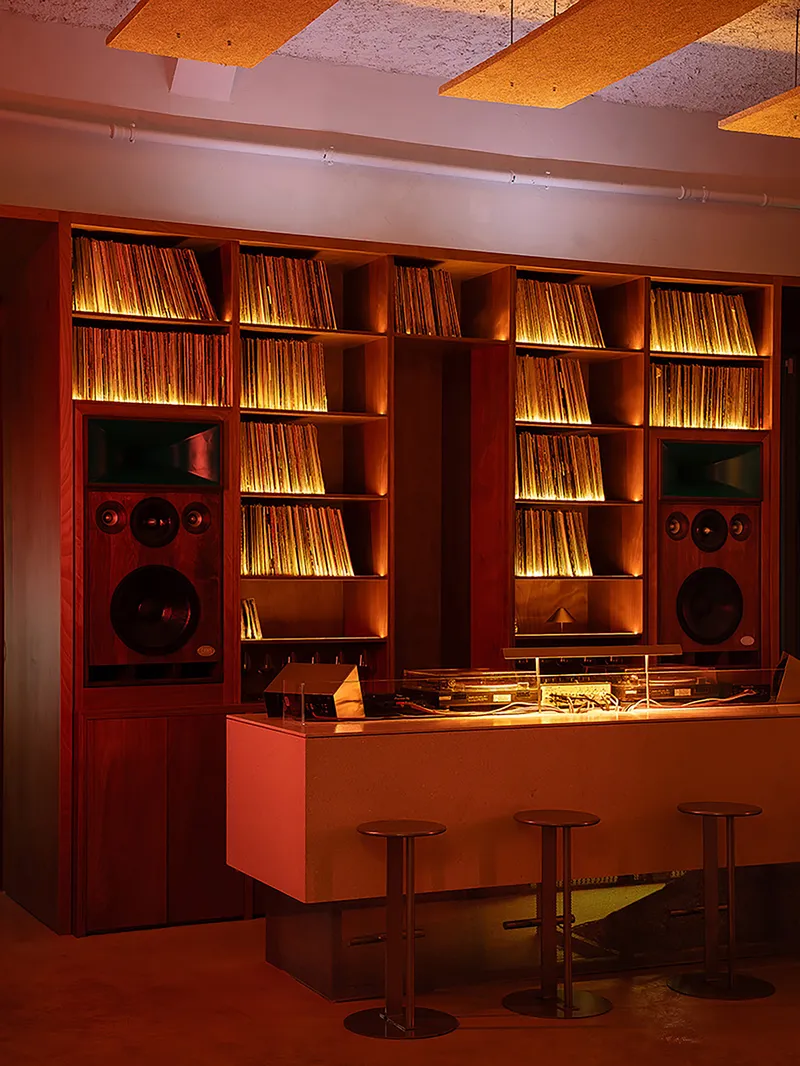
The listening bar concept, imported from Tokyo's kissaten tradition, demands specific spatial conditions: controlled acoustics, dedicated storage for vinyl, and a social arrangement where music is not background noise but the shared activity. On Form Studio addresses all three. Custom timber shelving holds the record collection alongside integrated speakers and audio equipment, treating the gear as furniture rather than hiding it. The yellow-toned lighting in this zone is deliberately warmer and lower than the rest of the space, signaling a shift in tempo.
Overhead, acoustic ceiling panels absorb reverb and shape the sound field. This is the most technically considered zone in the project, and its visual restraint is appropriate. The architecture recedes so the music can occupy the foreground. It is a small room within a room, defined not by partition walls but by lighting, material, and ceiling treatment.
Texture and Chromatic Identity

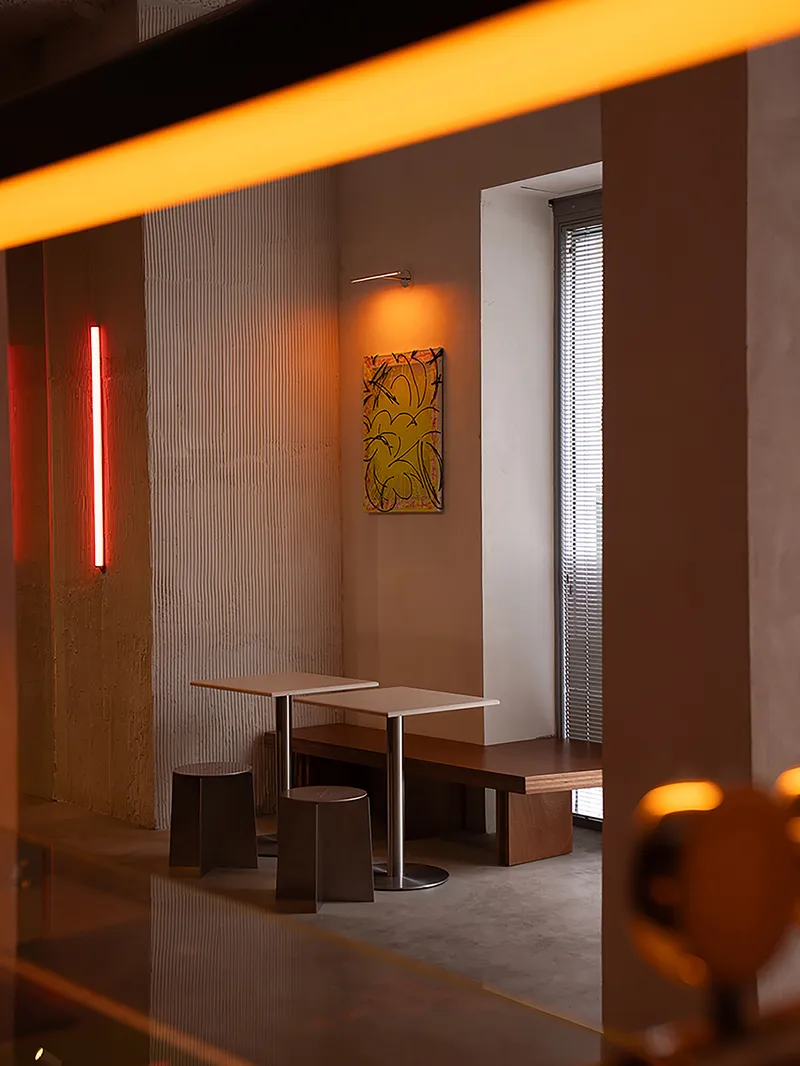
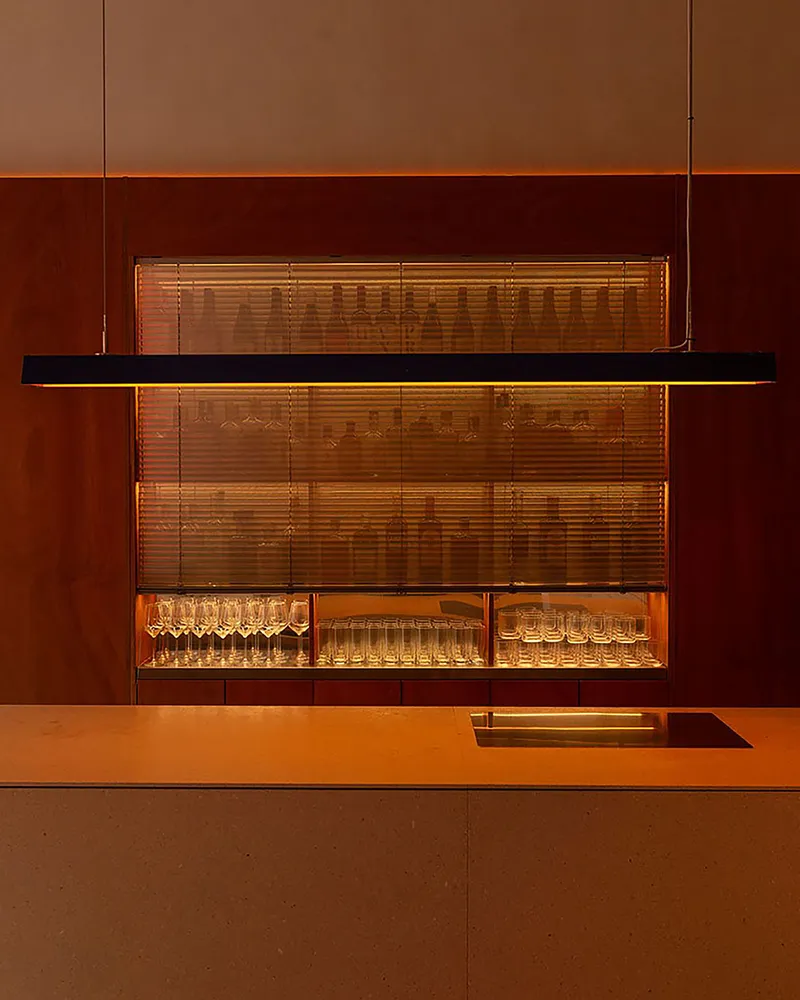
Frissón operates with a deliberately limited material palette: concrete, white mosaic tile, terrazzo, timber, and ribbed wall panels. What prevents this from reading as austere is On Form Studio's use of color accents, projected artwork, and lighting that shifts in hue across the space. A projected geometric artwork splashes color across the concrete dining area. Vertical orange tube lights glow against ribbed panels at dusk. A backlit display cabinet turns glassware into a still life. Each intervention is small, but cumulatively they produce a chromatic richness that a purely material-driven interior would lack.
The ribbed wall panels in the seating nooks deserve particular mention. Their texture introduces a haptic quality, a surface you want to touch, that contrasts with the slickness of the tile and the coolness of the terrazzo. Combined with filtered window light, these panels soften the space at its edges, making the perimeter seating feel protected and warm even when the center of the room is bright and active.
Plans and Drawings
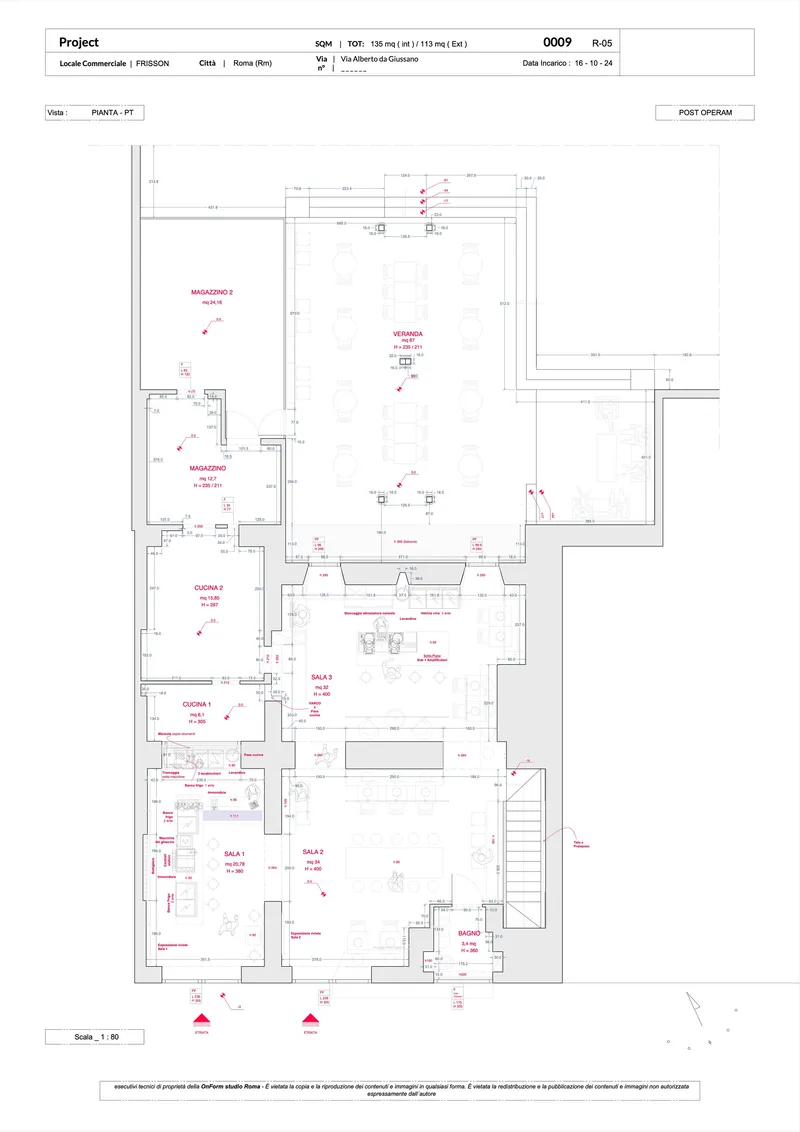
The floor plan reveals how On Form Studio organizes the program along a linear sequence, with back-of-house functions like the kitchen and storage areas tucked behind the public zones. Circulation is legible but not rigid: the plan allows for multiple paths through the space, reinforcing the hybrid character of the program. You can move from bar to listening room to dining nook without retracing your steps, a quality that keeps the 220 square meters feeling larger than they are.
Why This Project Matters
Frissón matters because it takes a program that could easily dissolve into trend, the listening bar with food, and gives it architectural discipline. On Form Studio does not rely on novelty or spectacle. The space works because every material decision, every lighting choice, and every spatial transition is calibrated to support three distinct activities without letting any one of them dominate. That is a harder problem than designing a restaurant or a bar alone, and the studio solves it with quiet confidence.
More broadly, the project demonstrates what interior architecture can accomplish at modest scale when the program is genuinely hybrid. Pigneto does not need another bar. It needs places that give people reasons to stay, to listen, to eat, and to encounter something unexpected on a Tuesday night. Frissón, in 220 square meters, makes a convincing case that architecture is the medium through which those overlapping ambitions become coherent.
Frissón Cultural Space by On Form Studio (Michele Marincola, Ivan Spadaccini, Giovanni Inglese, Andrea Signorotto). Roma, Italy. 220 m². Completed 2026. Photography by Giovanni Peyrone.
About the Studio
Share Your Own Work on uni.xyz
If projects like this are the kind of work you want to make, uni.xyz is a place to publish your own, find collaborators, and enter design competitions.


Popular Articles
Popular articles from the community

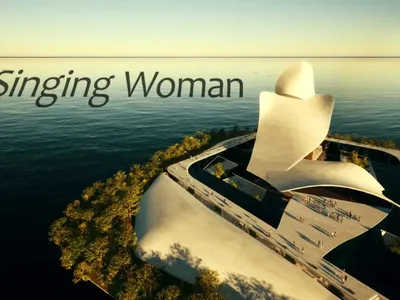
Singing Woman: An Opera House That Performs Before the Curtain Rises
Ovidiu Cristian Pavel's conceptual opera house translates Estonia's choral identity into a sculpted waterfront landmark facing the Baltic Sea.
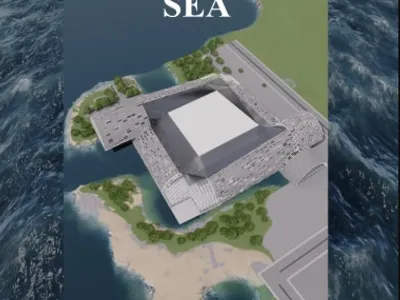
Opera on the Sea: Driftwood Logic Shapes a Timber Opera House on Estonia's Coast
Trevor Orgill's opera house translates the entangled drift of floating timber into a civic building where wood, water, and music converge.
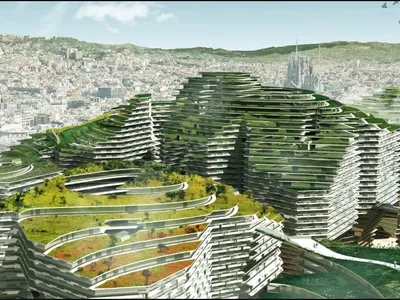
Manzana Morphosis: Stretching Barcelona's Grid into a Living Landscape for 2050
A radical reworking of the Eixample manzana turns density into a tool for generous public space, vertical ecology, and environmental performance.


David Ortega Stacks a Two-Story Mexico City Penthouse Around a Steel Stair and a Pergola-Shaded Roof Terrace
In Colonia Roma, a 300 m² penthouse uses oak joinery, a planted steel stair and a slatted roof pergola to make a new-build apartment feel like a house.

Similar Reads
You might also enjoy these articles

LAVA Architecten Gives Vocational Education a Sawtooth-Roofed Face on a Mechelen School Campus
In Mechelen, Belgium, a 2,053 m² STEM school on a 6×6 m grid turns workshops and classrooms into rooms that can be rearranged as teaching changes.

KEMA Studio Turns a Derelict Marvila Attic into a 60 m² Lighthouse Apartment Above Lisbon
In Lisbon's Marvila district, a rebuilt roof, four skylights and two plywood volumes turn an unlivable attic into a bright home facing the Tagus.

Pixel Gardens: One Repeated Module Stacked Into a Terraced Social Housing Tower for Famagusta
Salem Bader's shortlisted housing tower builds a vertical neighbourhood from one repeated module, offsetting units to carve terraces, light and air.
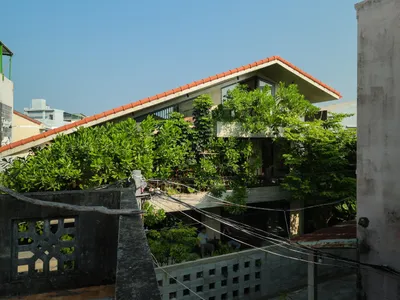
Bao Huynh Watercolor Atelier: A Serene Art Retreat in Hội An
Bao Huynh Watercolor Atelier in Hội An blends multifunctional art spaces, sustainable design, local materials, and family-friendly living in a serene environment.

Comments (0)
Please login or sign up to add comments
No comments yet. Be the first to comment!