
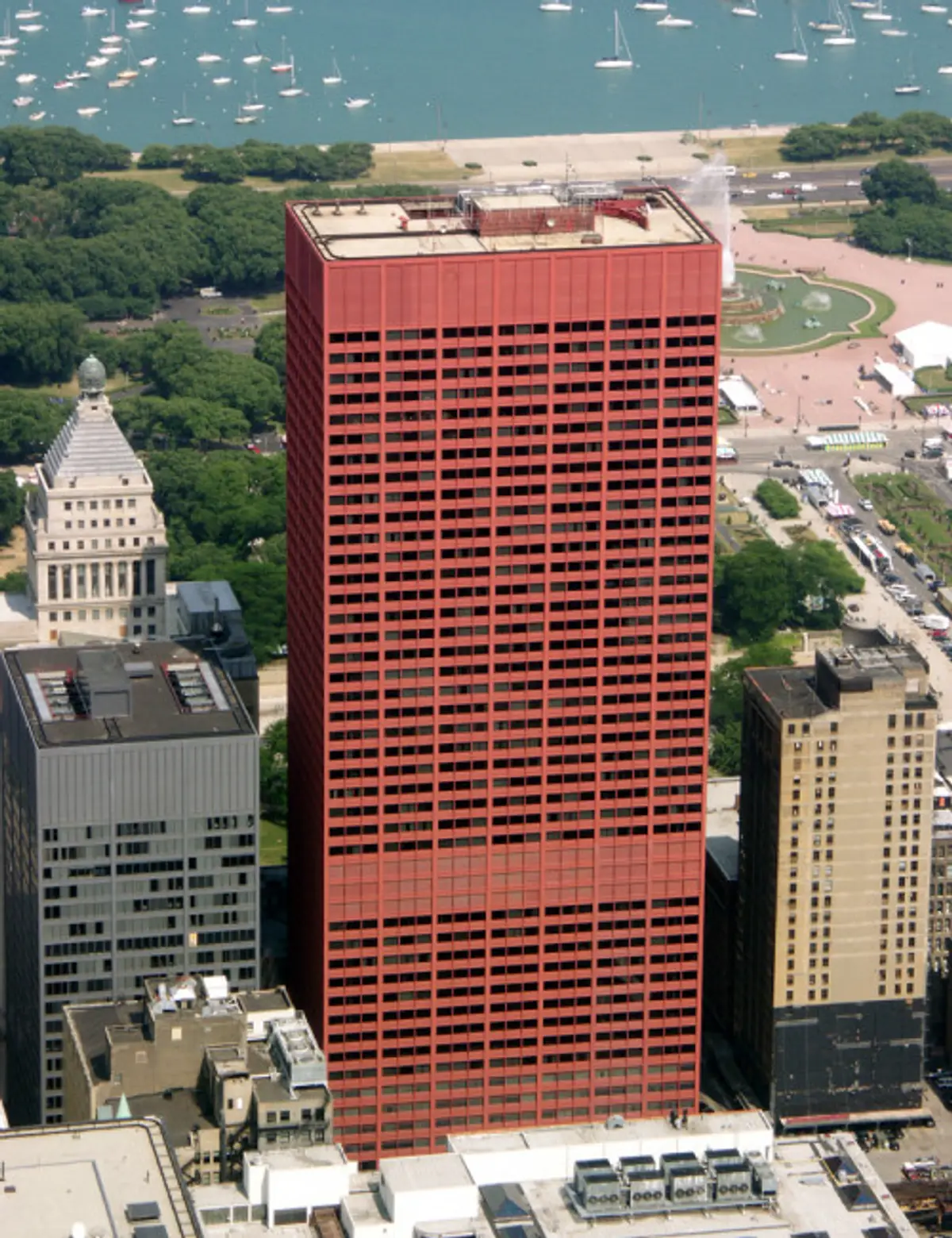
"On 'The Poet and The Architect': Forms of Marriage"
Poet Christine Stewart-Nuñez is the author of several poetry collections and a professor at the University of Manitoba.

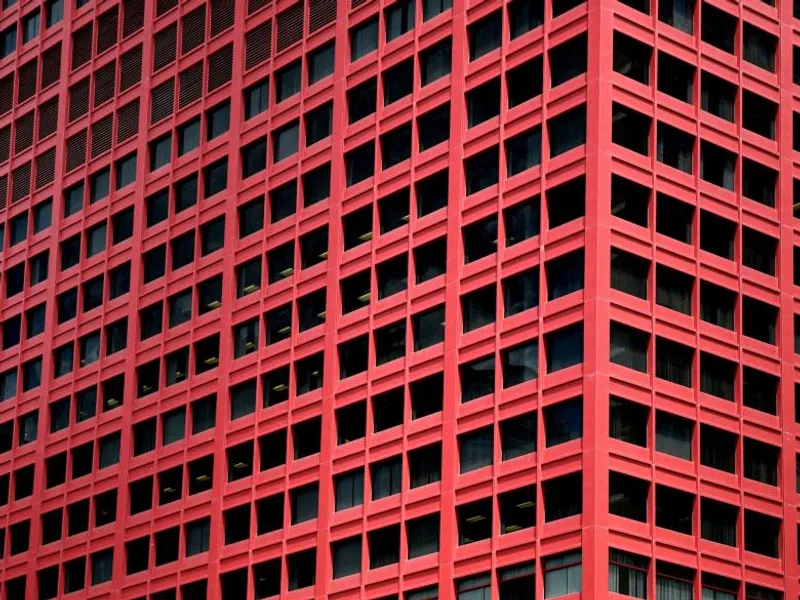
Poet Christine Stewart-Nuñez has authored numerous poetry collections and is currently a professor at the University of Manitoba. Her work focuses on exploring women’s lives and art practices, in addition to the body's relationship to public space. Madeline Beach Carey reviewed The Poet and the Architect, which was published last year by Terrapin Books.
I read Christine Stewart-Nuñez's 2021 book The Poet and the Architect just a few months after giving birth to my first child. In those early, hazy days of new motherhood, the harshness of the city and the built environment - the tiny elevators and crowded streets, the hostile architecture of the urban center - became suddenly, constantly apparent. The difference between public and private too felt suddenly vast and huge. I felt so vulnerable outside my apartment, so easily betrayed by buildings and sidewalks, so ill at ease with infrastructure.
In this collection, Stewart-Nuñez delves into the complexities of building both physical structures and family life. She seamlessly integrates the domestic and feminine into the built environment, creating a sense of alchemy. The poems in this book explore the various stages of marriage, from the initial attraction to the challenges of raising children together. At first glance, the book may seem like a love letter to the architect's husband mentioned in the title. However, Stewart-Nuñez's ambition as a poet allows her to offer a universal portrayal of both her husband as an individual and his profession as an architect. The book is divided into four parts, or "rings," with the poem "He Said, She Said" particularly standing out in the first ring.
He said algebra. She said alchemy.
He said lines, quadrilaterals, parallelograms, and dodecagons. She said curve.
[…]
He said grid, list, distance. She said bridal, fire, wild
From the beginning, the relationship in this book is depicted as consisting of two opposing yet complementary personalities, one cool and the other passionate. While this dichotomy is not unique, the author presents it in a fresh and engaging way. She also emphasizes the importance of interdependence and how individuals in a marriage, or a poet and an architect, rely on one another. In the second part of the book, "When You're Away, I Consider Form," the author reflects on this need for connection in a moment of longing, using a quote from John Hejduk to highlight the fundamental role of structure in both poetry and architecture.
I need villanelles of you pulling my breath like lines moving down
the page and the promise of rhyme ending my ear. I need a sestina
of touch, patterns of palm, stroke, skim, brush, and rub returning—
a cycle of sound and pressure I apprehend in my bones.
In the third section, the poet’s vision expands to the lost, the dying, the rest of the world, while still tracing all the ghosts in a marriage. In “Love and Fear in a Pandemic,” she writes:
Once, when pregnant with death, their heart stopped
within my womb, I realized I loved
someone I’d never meet. I draw on that
vibration as April deepens in this
rural place, folks still lifting their laughter
to the sky in large, loquacious groups.
Last night, my husband said if he takes sick
and succumbs, he’ll die thinking of me, and I
realized the power of loving through time.
Elsewhere, bodies pile up, hospitals are overwhelmed, and survivors grieve.
The poem "Elemental Lesson" comes towards the end of the collection and it represents the core message of the project: how language and architecture rely on each other to create a stable, daily kind of love that surrounds us in our everyday lives. The poem highlights how these two pillars are intertwined and how they work together to support us in our everyday lives.
When my husband said brutalist, I thought it oppressive and impenetrable because I lacked imagination. In Montréal, we biked by Habitat 67and the one-hundred forty-six block-stacked apartments emerged from the shadowless landscape—sky and cubes grey upon grey, concrete, and corner with rectangle windows wrapping the tops. He pointed out stairs, access points, and garden spots.
When he said brutalist and concrete, I thought severe and unevolved because mixing limestone, gravel, sand, and cement meant rough and simple, like sidewalks.
This book can be seen as a tribute to the careers that each member of the couple has chosen, exploring the ways in which our professional pursuits impact our personal lives and relationships. It also reflects the words of Italian writer Natalia Ginzburg in her essay "The Little Virtues," which emphasizes the importance of having a strong sense of purpose and pursuing it with passion in order to inspire the same love of life in our children. Through examining the vocations of each spouse, the author creates a nuanced and layered collection that celebrates the significance and beauty of even the seemingly ordinary aspects of life.
References (1)

Popular Articles
Popular articles from the community


graciastudio Turns a Viewless Tijuana Lot Inward Around a Courtyard of Concrete, Timber and Trees
In Tijuana, Jorge Gracia's GA2 House stacks a timber-clad private floor over exposed concrete and replaces a missing view with a planted interior patio.

FCC Arquitectura Expands a Portuguese Granite House with a Board-Marked Concrete Wing
In Portugal, JV House pairs a cleaned-up whitewashed and granite dwelling with a timber-shuttered concrete extension, courtyards and a garden pool.

David Ortega Stacks a Two-Story Mexico City Penthouse Around a Steel Stair and a Pergola-Shaded Roof Terrace
In Colonia Roma, a 300 m² penthouse uses oak joinery, a planted steel stair and a slatted roof pergola to make a new-build apartment feel like a house.


Aquadapt: An Underwater Habitat That Rewrites Its Rooms by the Hour
Curved modules ring the seabed while one shell shifts from breakfast room to cinema, farm and football pitch as residents' needs change.

Similar Reads
You might also enjoy these articles

Rede Arquitetos Turns Circulation into Civic Space at the Educar II SESC School in Fortaleza
In Fortaleza, Brazil, Educar II SESC-CE trades a signature form for mesh screens, yellow thresholds and courtyard walkways built for equatorial heat.
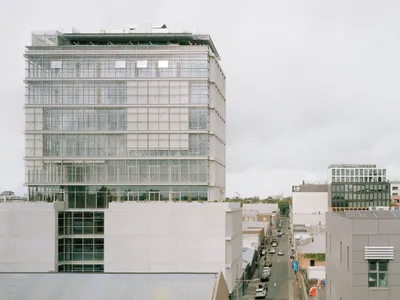
116 Rokeby Building, Collingwood
Sustainable Collingwood office building featuring double-skin façade, natural ventilation, rooftop amenities, and carbon-neutral design focused on wellbeing and longevity.
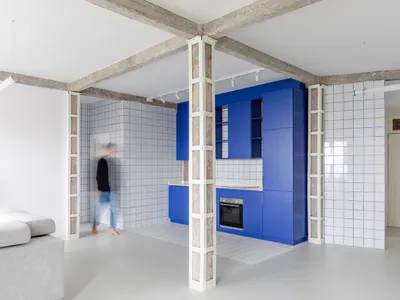
Contemporary Apartment Renovation in Spain: RV House by BIAN Opens Up to the Sea
A minimalist 1930s apartment in Santander is transformed into a flexible, sea-facing home through contemporary Spanish renovation.
3 Marías House: A Contemporary Mediterranean Courtyard Retreat by Bajet Giramé + Burckhardt
Mediterranean courtyard home blending traditional architecture with modern design, terracotta flooring, flexible interiors, sustainable climate strategies, and garden integration.

Explore Skyscraper Competitions
Discover active competitions in this discipline


Challenge to reimagine the Iron Throne

Photograph architecture without architects

Illustrate the lost glory of Angkor Wat - Render Challenge

Design challenge to reuse E-waste
Comments (0)
Please login or sign up to add comments
No comments yet. Be the first to comment!