
Onze House: Coastal Architecture in Alagoas, Brazil
UNA Barbara e Valentim designed a two-volume concrete and timber house on the Alagoas coast that recedes into its palm grove.

The south coast of Alagoas, in northeastern Brazil, is one of those landscapes that makes architecture look easy. Coconut palms, white sand, warm water, a breeze that never quite stops. The risk is that the building becomes a frame for the view and nothing more. Onze House, designed by UNA Barbara e Valentim, avoids that trap. It is a serious house disguised as a relaxed one.
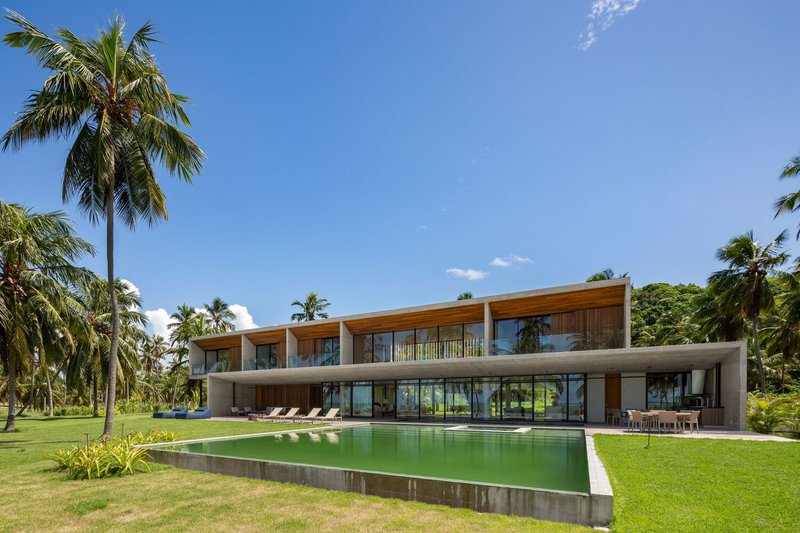
The programme is organised across two volumes: a horizontal concrete slab at ground level containing the social and service areas, and an elevated timber-screened box above it containing the bedrooms. Between them, a double-height void, an internal garden, and a pool terrace hold the composition together. The ocean is always present, but it is never the only thing.
Two Volumes in a Palm Grove
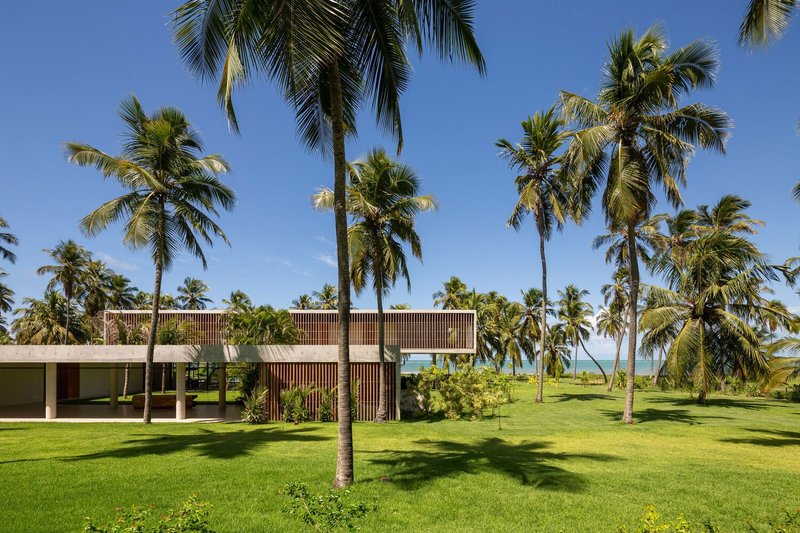
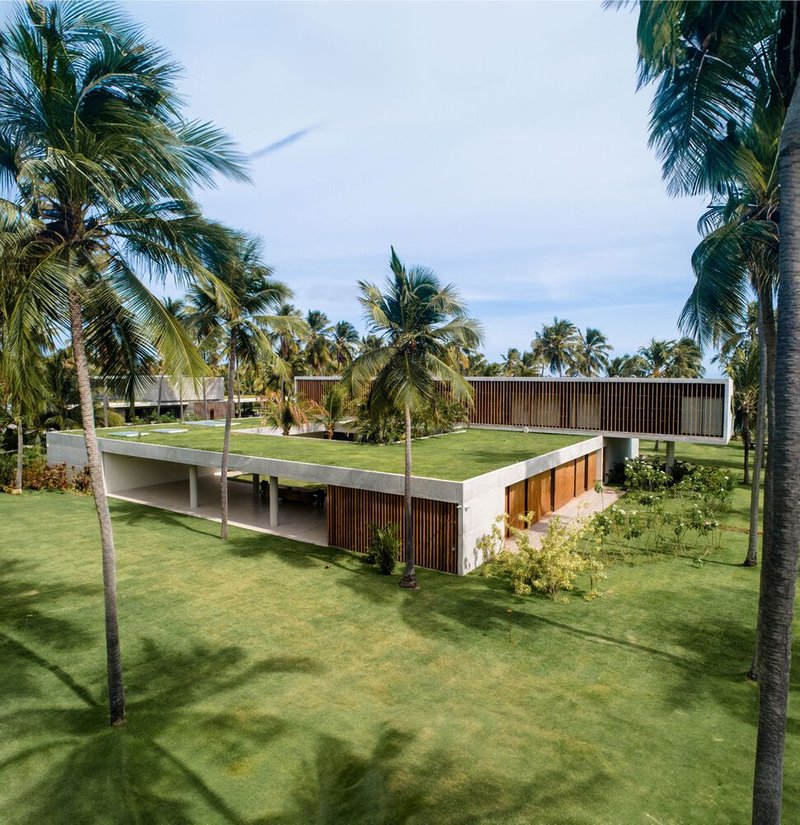
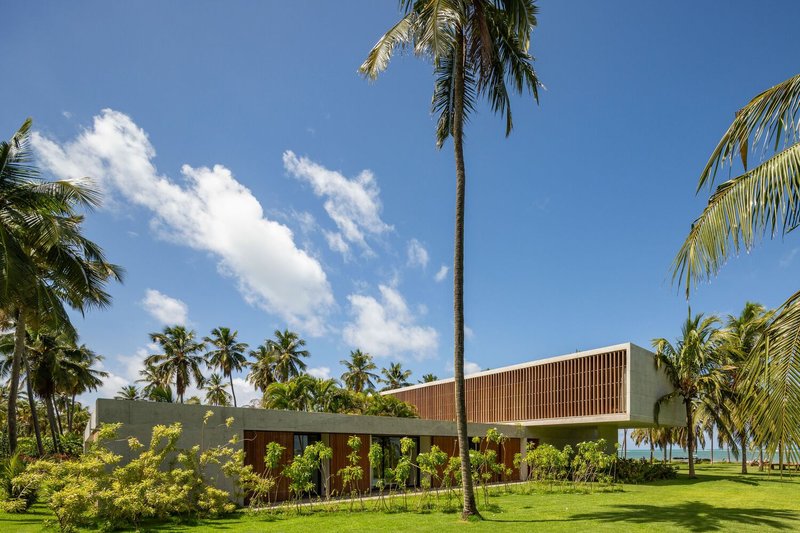
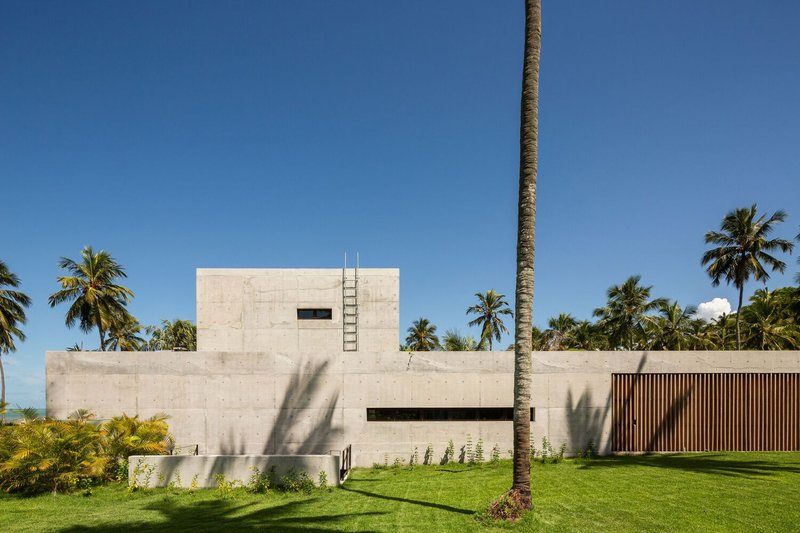
From a distance, the house almost disappears. The horizontal proportions keep it below the palm canopy. The green roofs merge with the lawn. The concrete is grey enough to read as shadow. Only the timber brise-soleil on the upper volume catches the light and signals that this is a building, not a clearing.
This is not false modesty. A beachfront house in Alagoas competes with a landscape that is more beautiful than any building can be. The architects understood that the smartest move is to recede.
Ground Floor: Garden, Pool, and Open Living
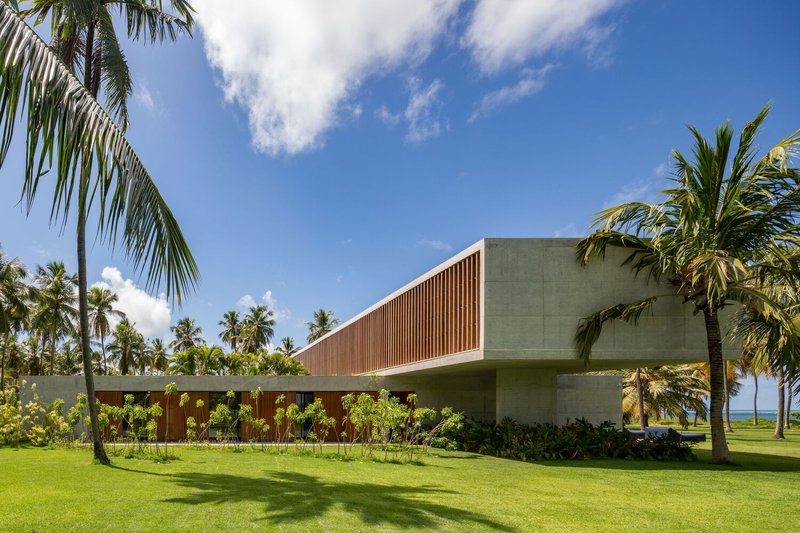
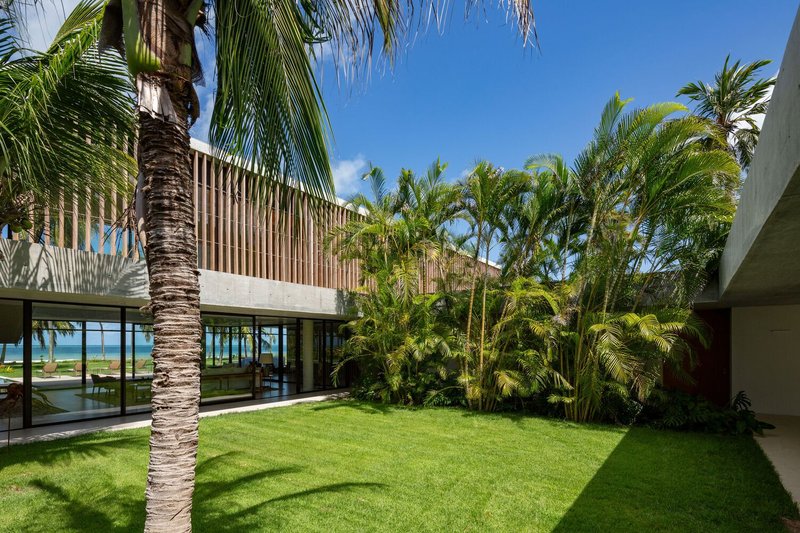
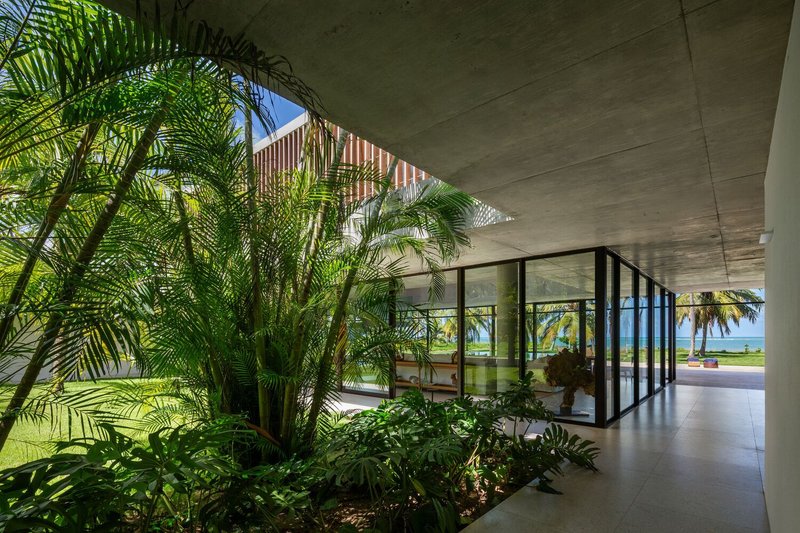
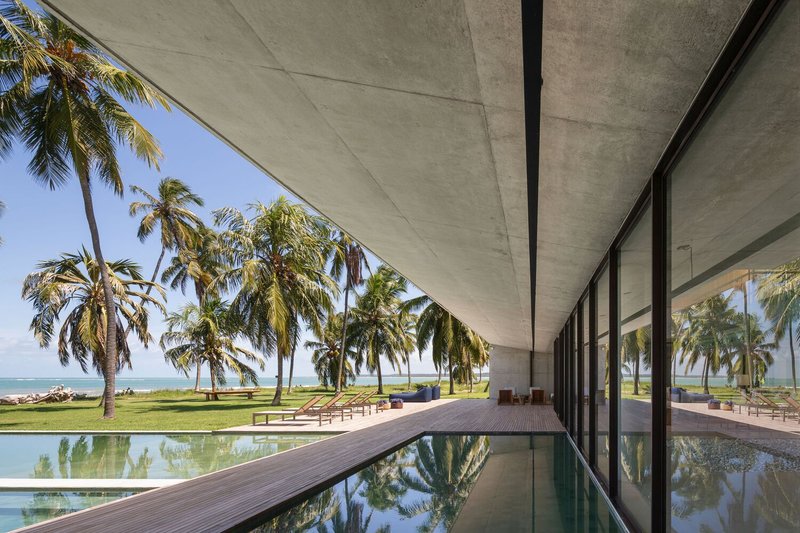
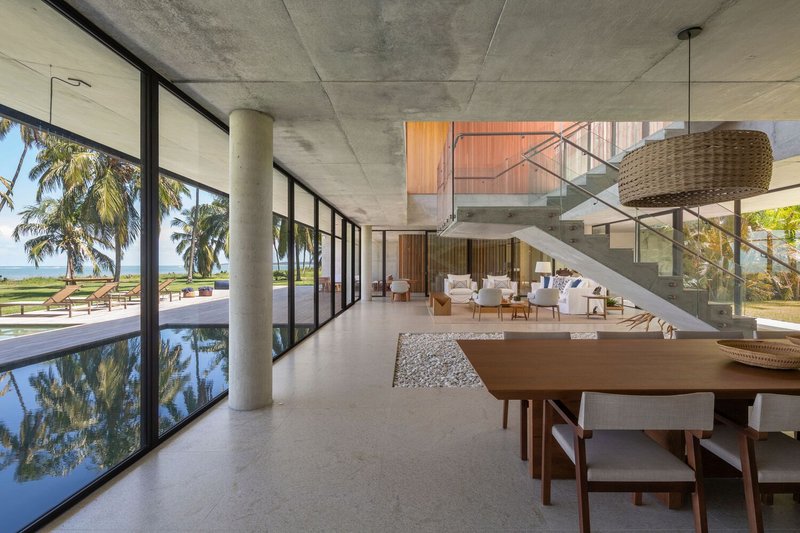
The ground floor is organised around an internal tropical garden that brings planting, light, and air into the centre of the plan. Circulation wraps around this garden so that every path through the house passes through greenery. The pool terrace extends from the living area directly toward the ocean, covered by a deep concrete soffit that provides shade without blocking the view.
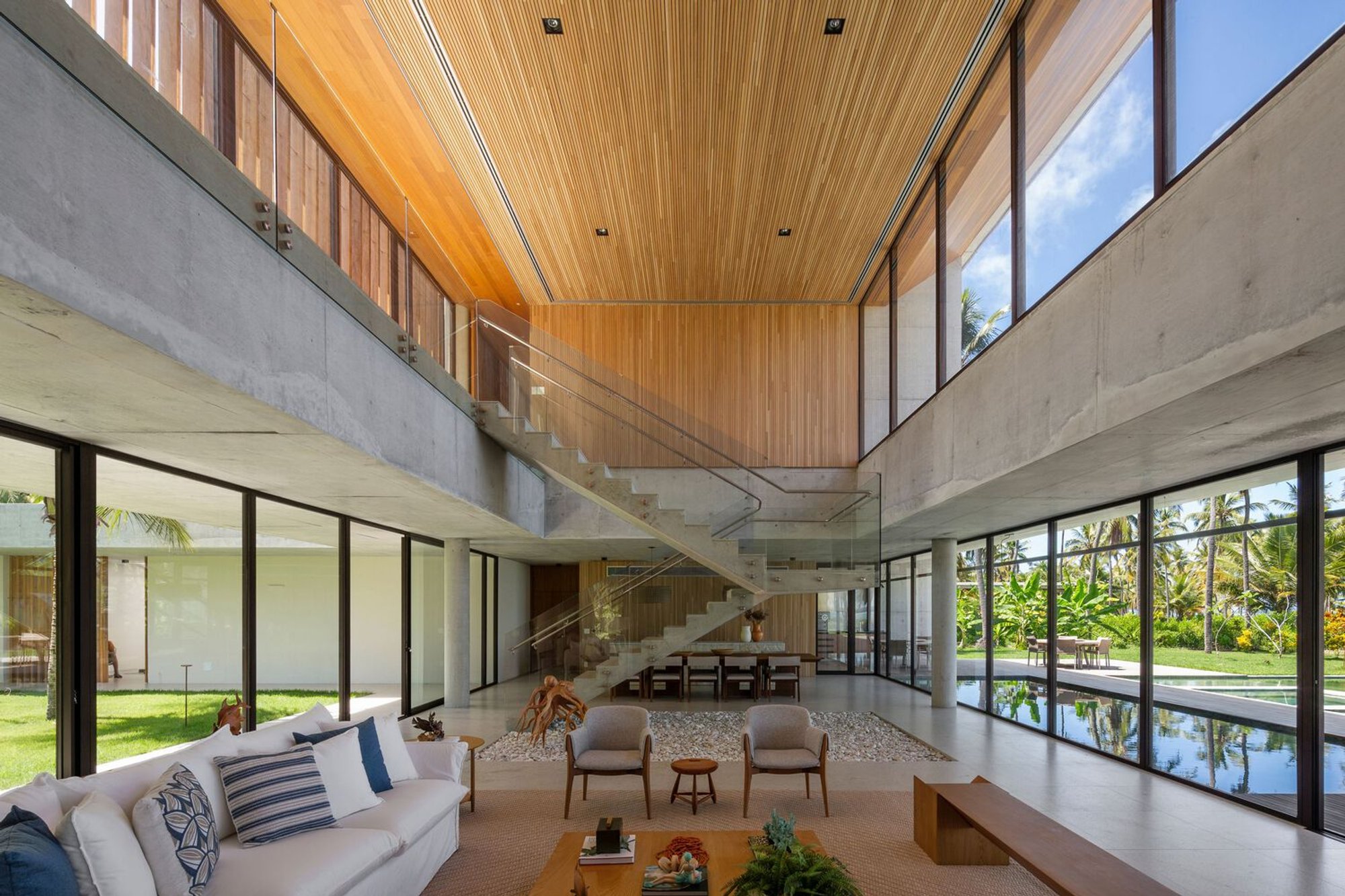
The living, dining, and kitchen spaces are open to each other and to the garden on both sides. Glass walls retract. The indoor-outdoor threshold dissolves. This is standard in Brazilian coastal architecture, but the proportions here are particularly well judged: the concrete overhang is deep enough to shade the interior at midday but open enough to let in the low afternoon sun.
The Double-Height Space
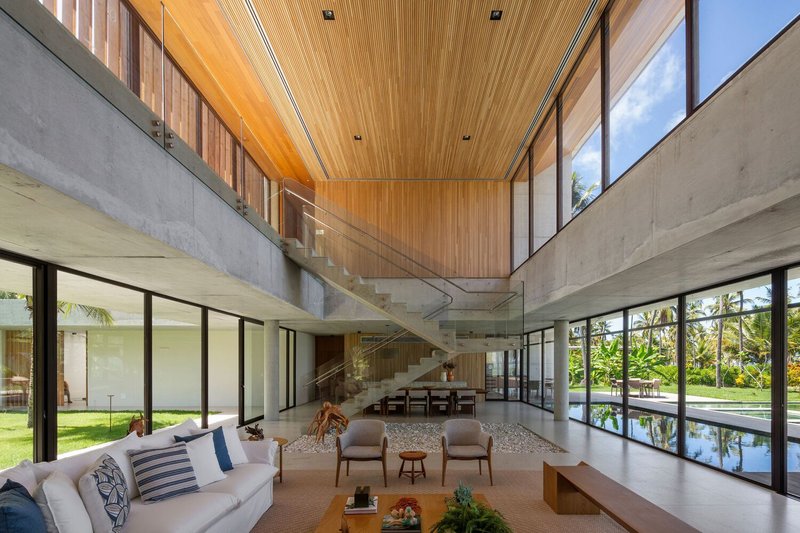
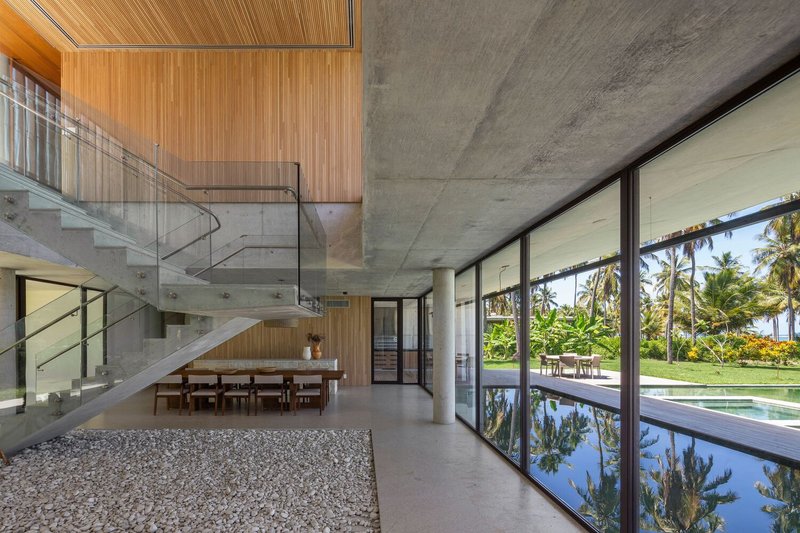
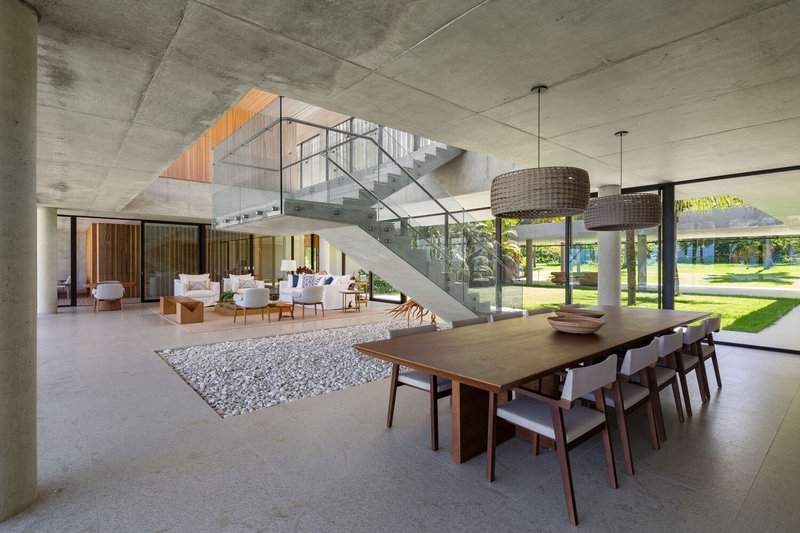
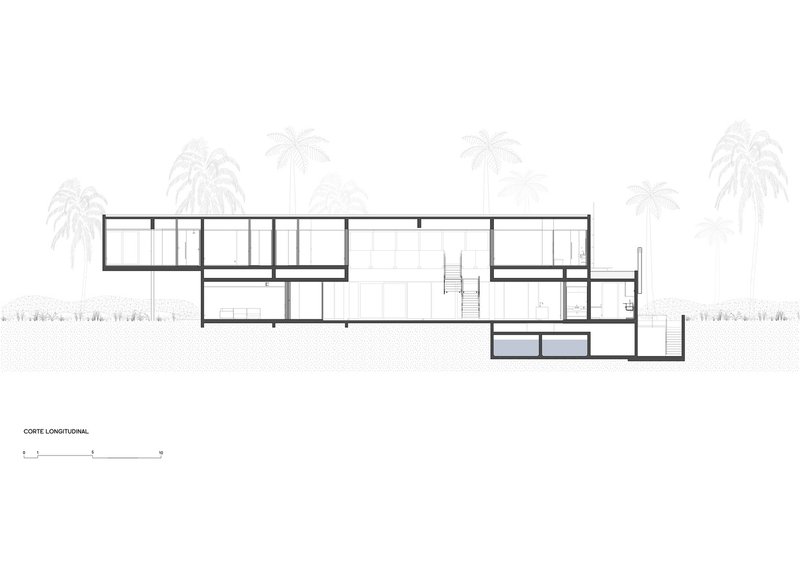
The stair connecting the two floors sits in a double-height concrete volume that is the spatial centre of the house. The timber ceiling of the upper floor is visible from below. The pool reflects through the glass wall. The pebble border between the polished floor and the stair base is a small landscape gesture that softens the hard geometry.
This room does more work than any other in the house. It connects floors, frames the view, distributes light, and creates the sense of volume that makes the house feel larger than its footprint. The woven pendant lamp and the loose furniture keep it from feeling monumental.
Upper Floor: Bedrooms and the Timber Screen
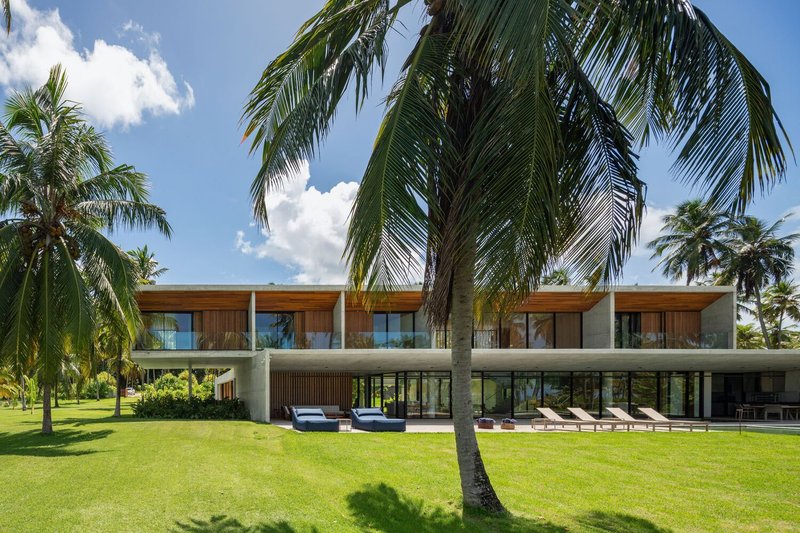
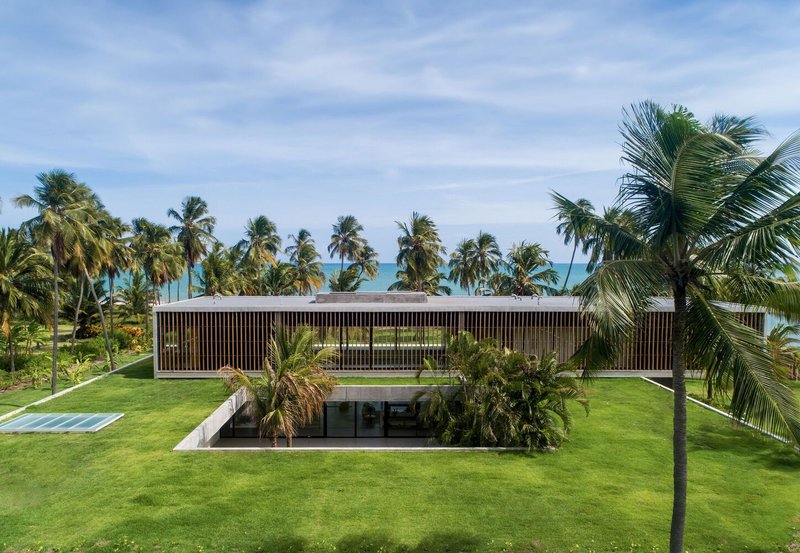
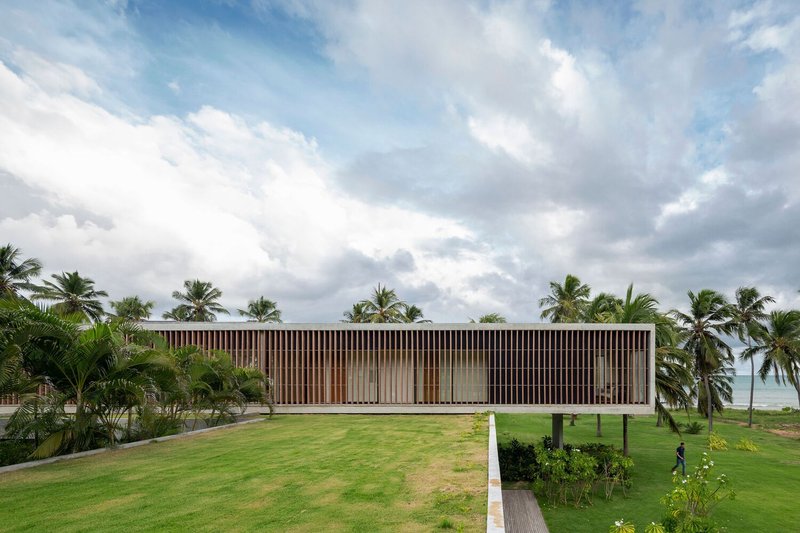
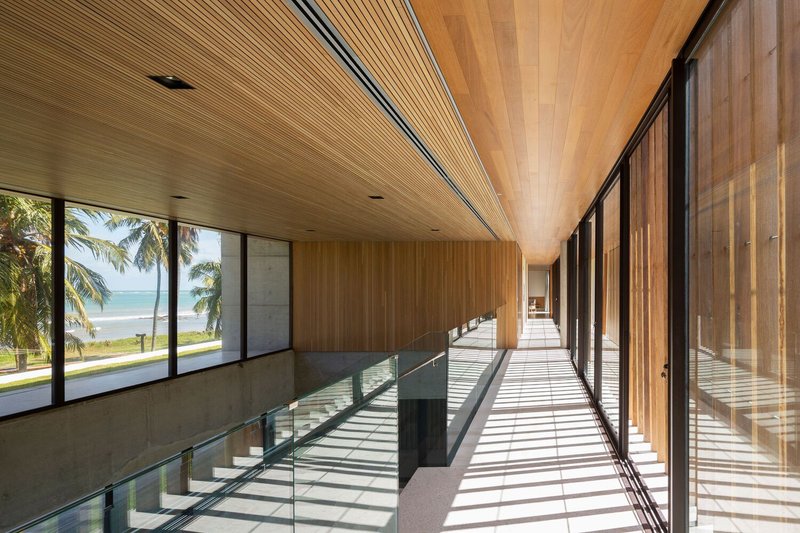
The upper volume is wrapped in a timber brise-soleil that filters direct sunlight and provides privacy without blocking ventilation. Behind the screen, bedrooms open to deep concrete balconies with unobstructed ocean views. The corridor runs along one edge, overlooking the double-height void below, with a timber-lined ceiling that lowers the scale.
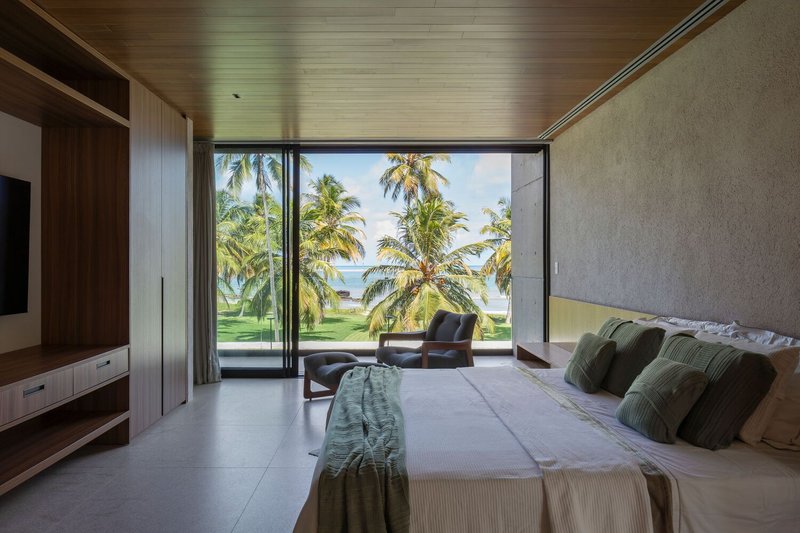
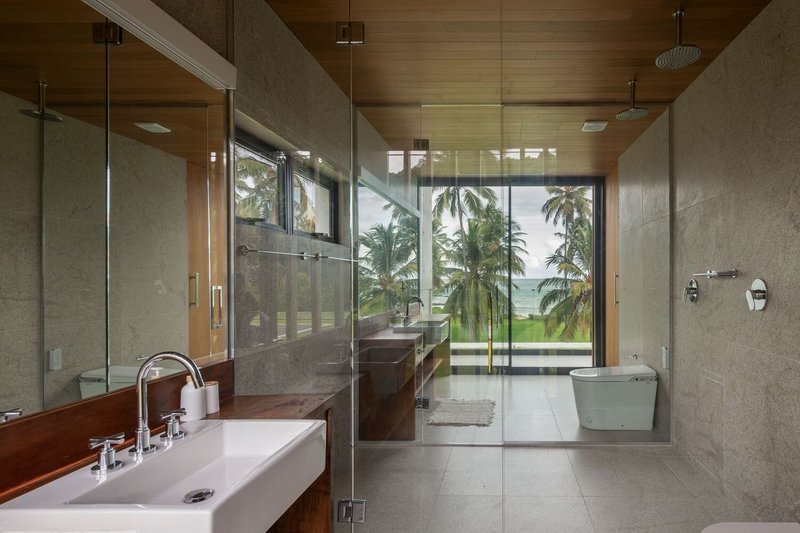
The master bedroom has a full-width sliding door to the balcony. The bathroom behind it frames palm trees through a floor-to-ceiling window at the shower. These are the moments where the architecture earns its setting: not by competing with the landscape, but by composing it.
Material Palette: Concrete, Timber, Stone
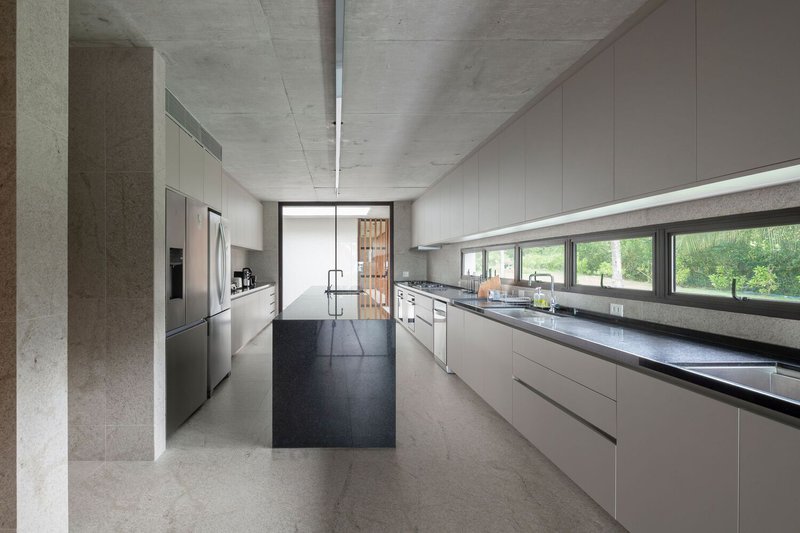
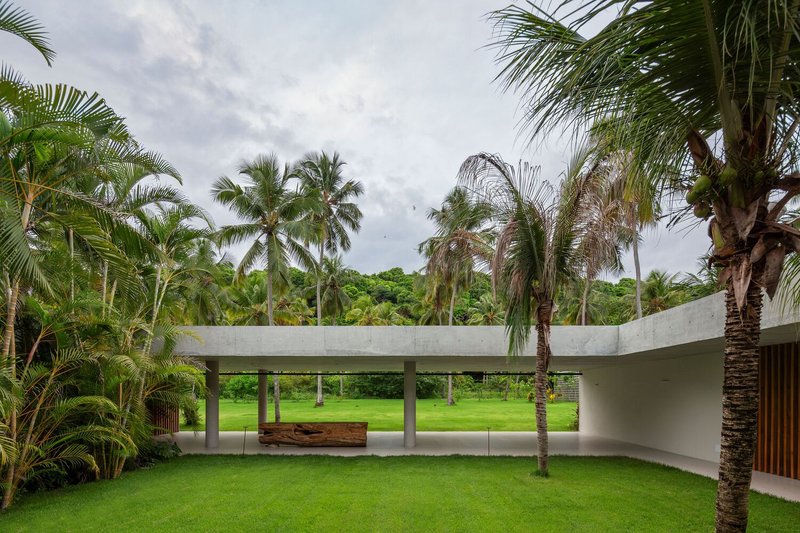
The material palette is narrow and regional. Exposed concrete for the structural frame and ground floor. Timber for the upper-floor screens, ceilings, and deck. Stone for the kitchen island and bathroom walls. The colours are grey, brown, and green: the same colours as the site. Nothing imported, nothing that will look dated in ten years.
The concrete is board-formed and left unfinished. The timber is oiled and will darken with age. The stone is local. These are not luxury finishes. They are durable, climate-appropriate materials that perform in salt air and tropical humidity without constant maintenance.
Green Roofs and Climate Strategy
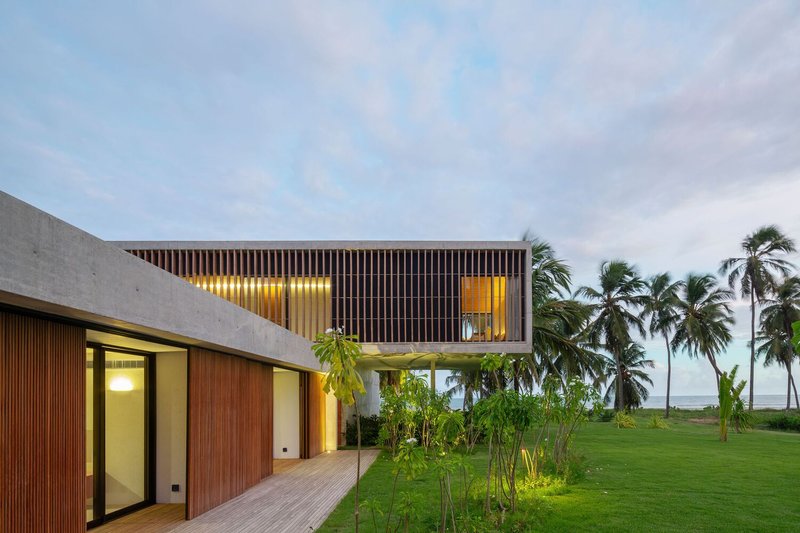
Both volumes carry green roofs. From above, the house reads as two planted rectangles in a palm grove. This is not just visual. The planted roofs reduce heat gain, absorb rainwater, and insulate the concrete slab below. In Alagoas, where midday temperatures are high and rain is intense, this is a practical strategy with a significant impact on comfort.
The deep verandas, the pool placement, the cross-ventilation through the timber screens, and the internal garden all contribute to a passive cooling strategy that reduces dependence on air conditioning. The house is designed for the climate, not against it.
Plans, Section, and Sketches
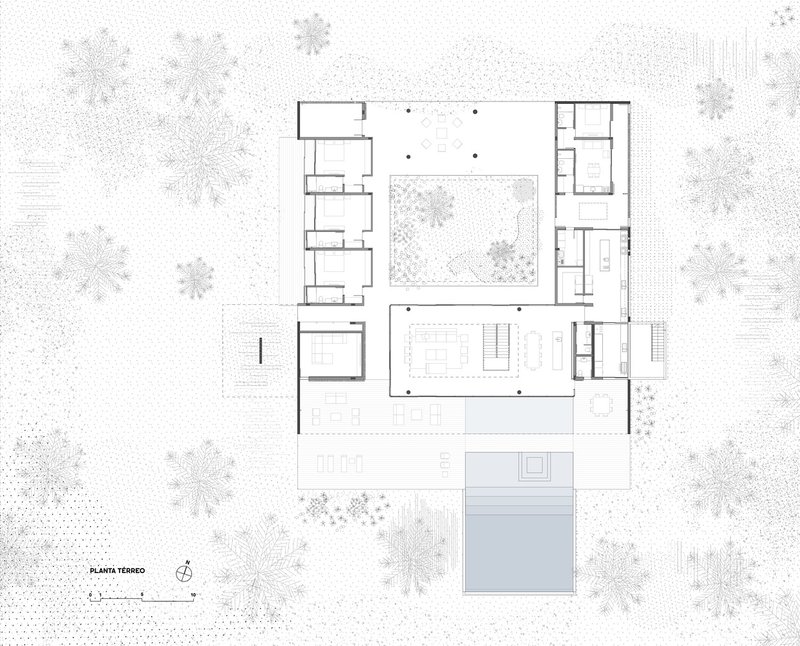
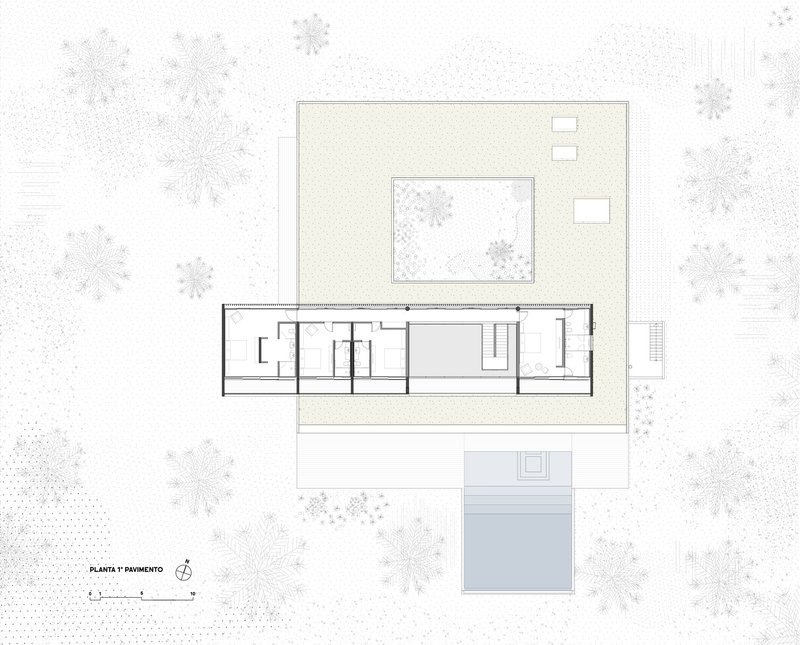
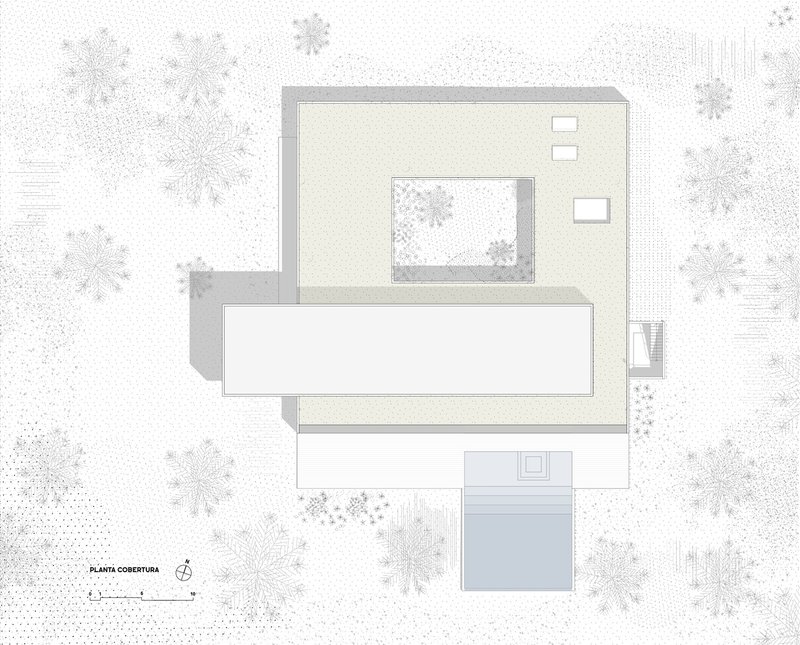
The plans show the two-volume organisation clearly. The ground floor wraps around the internal garden. The upper floor is a single bar cantilevered over the garden edge. The longitudinal section reveals the relationship between the double-height void, the pool, and the palm canopy.
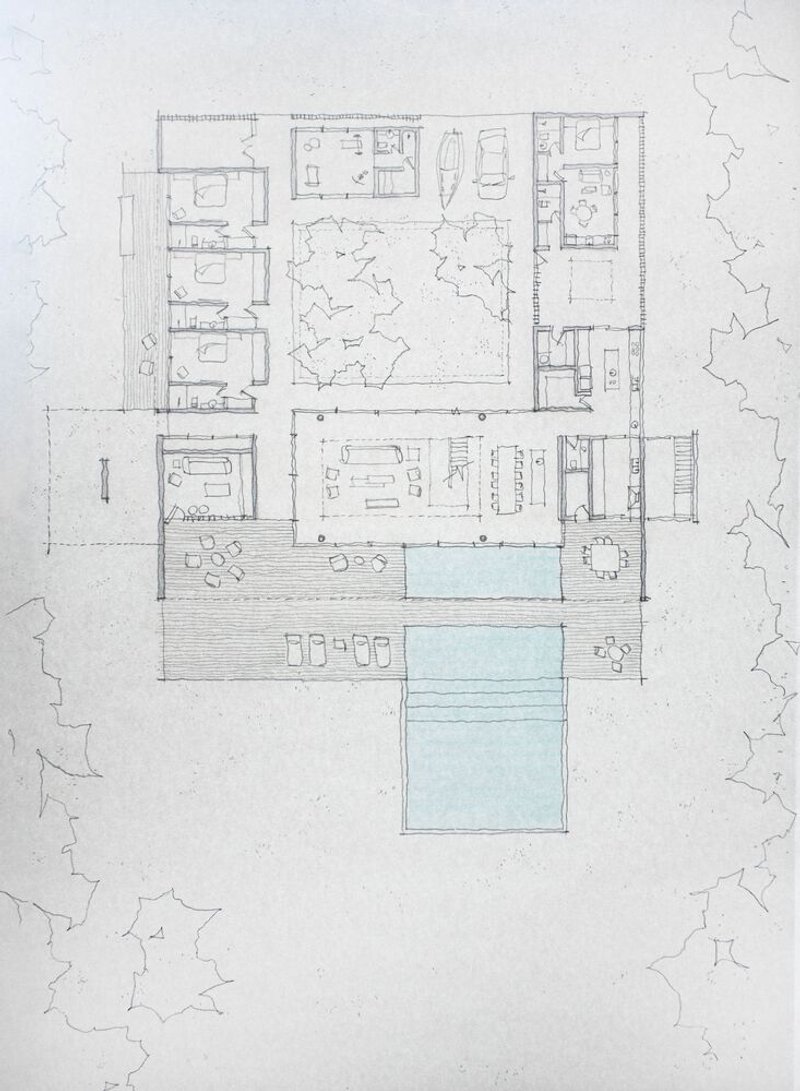
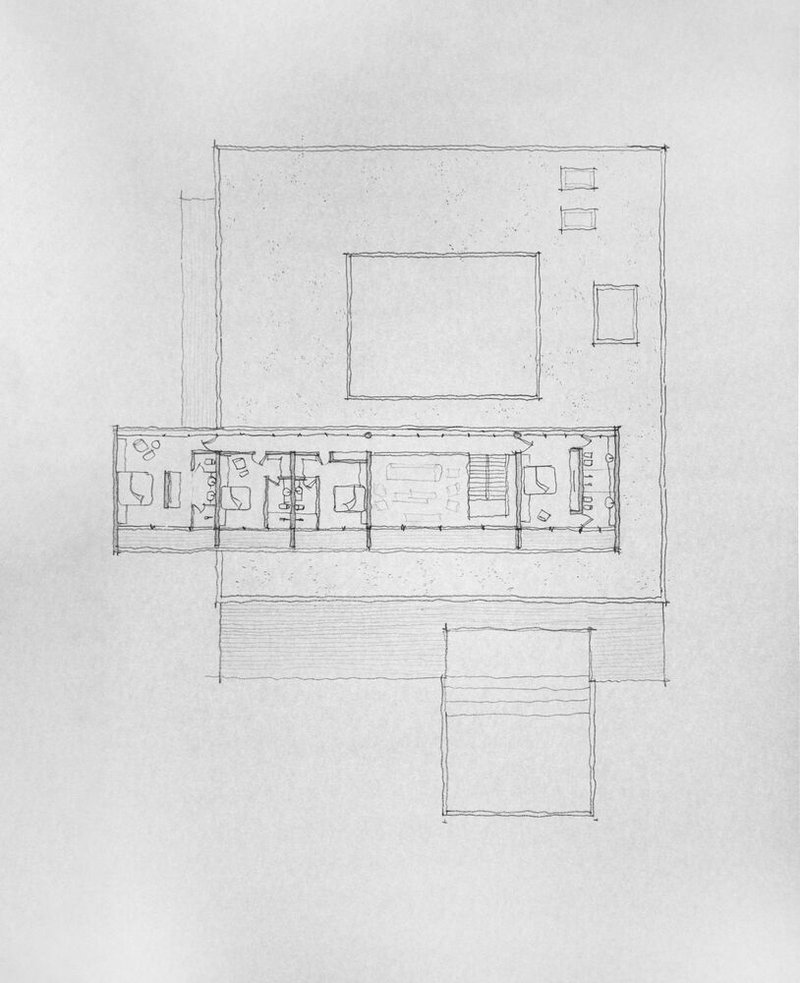
The hand-drawn plans and section, with watercolour palms and pool, show how the architects thought about the project before it became a building. They are worth looking at alongside the photographs.
Why This Project Matters
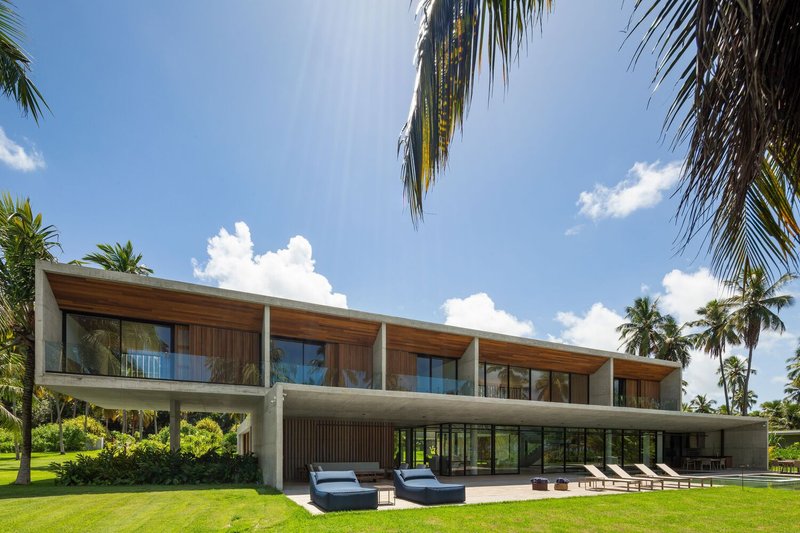
Brazilian coastal architecture has a long lineage, from the modernist beach houses of the 1950s to the contemporary work coming out of studios in São Paulo, Recife, and Salvador. Onze House belongs to that tradition and advances it. The two-volume strategy, the internal garden, the green roofs, and the timber screen are all familiar moves, but they are combined here with unusual precision and restraint.
If you are designing a house on any tropical coastline, this project is worth studying for how it handles shade, ventilation, privacy, and the relationship between building and landscape. The lesson is proportion. Get that right and the landscape does the rest.
About the Studio
Share Your Own Work on uni.xyz
If you are working on coastal, residential, or landscape-driven architecture, uni.xyz is a place to publish your projects and connect with a global design community.
Project credits: Onze House by UNA Barbara e Valentim. South coast of Alagoas, Brazil. Photographs: André Scarpa, Charles Vedral.



Popular Articles
Popular articles from the community

20 Most Popular Commercial Architecture Projects of 2025
From sustainable market concepts to heritage factories, the commercial buildings and proposals that drew the most attention on uni.xyz this year.

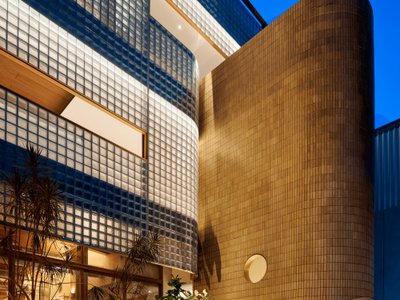
Gunawarman 35: Jakarta's Corner of Quiet Complexity
WOFF's mixed-use building in Jakarta pairs translucent glass block walls with a buff brick cylinder to hold coffee, wellness, and work under one roof.
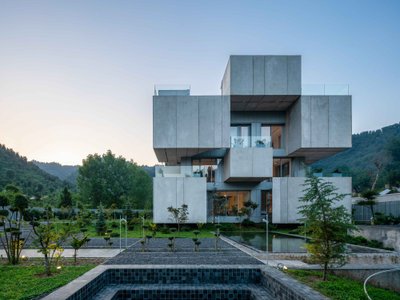
Bood Design Bureau Splits a Gilan Residence in Two to Let the Forest In
Double Side House negotiates privacy and openness through interlocking concrete volumes and planted courtyards in northern Iran's humid Caspian lowlands.

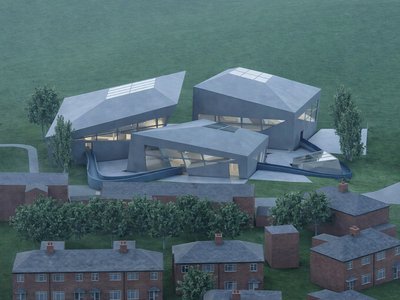
Filtering Space: A Gradual Spatial Experience
From urban intensity to spatial calm.

Similar Reads
You might also enjoy these articles
Filtering Space: A Gradual Spatial Experience
From urban intensity to spatial calm.


The Ken Roberts Memorial Delineation Competition (Krob)
As the most senior architectural drawing competition currently in operation anywhere in the world, it draws hundreds of entries each year, awarding the very best submissions in a series of medium-based categories.
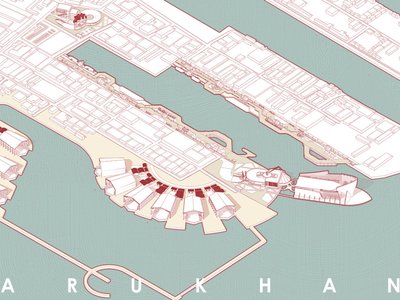
Waterfront Redevelopment and Urban Revitalization in Mumbai: Forging a New Dawn for Darukhana
A transformative waterfront redevelopment project reimagining Darukhana’s shipbreaking heritage into an inclusive urban future.

OUT-OF-MAP: A Call for Postcards on Feminist Narratives of Public Space
Rhizoma Design and Research Lab invites artists, designers, architects, researchers, and students to reflect on how feminist perspectives can reshape public space. Selected works will be exhibited in Barcelona, October 2026. Submissions open until 15 April 2026.


Explore Architecture Competitions
Discover active competitions in this discipline




The International Standard for Design Portfolios


The Global Benchmark for Architecture Dissertation Awards


The Global Benchmark for Graduation Excellence


Challenge to reimagine the Iron Throne
Comments (0)
Please login or sign up to add comments
No comments yet. Be the first to comment!