
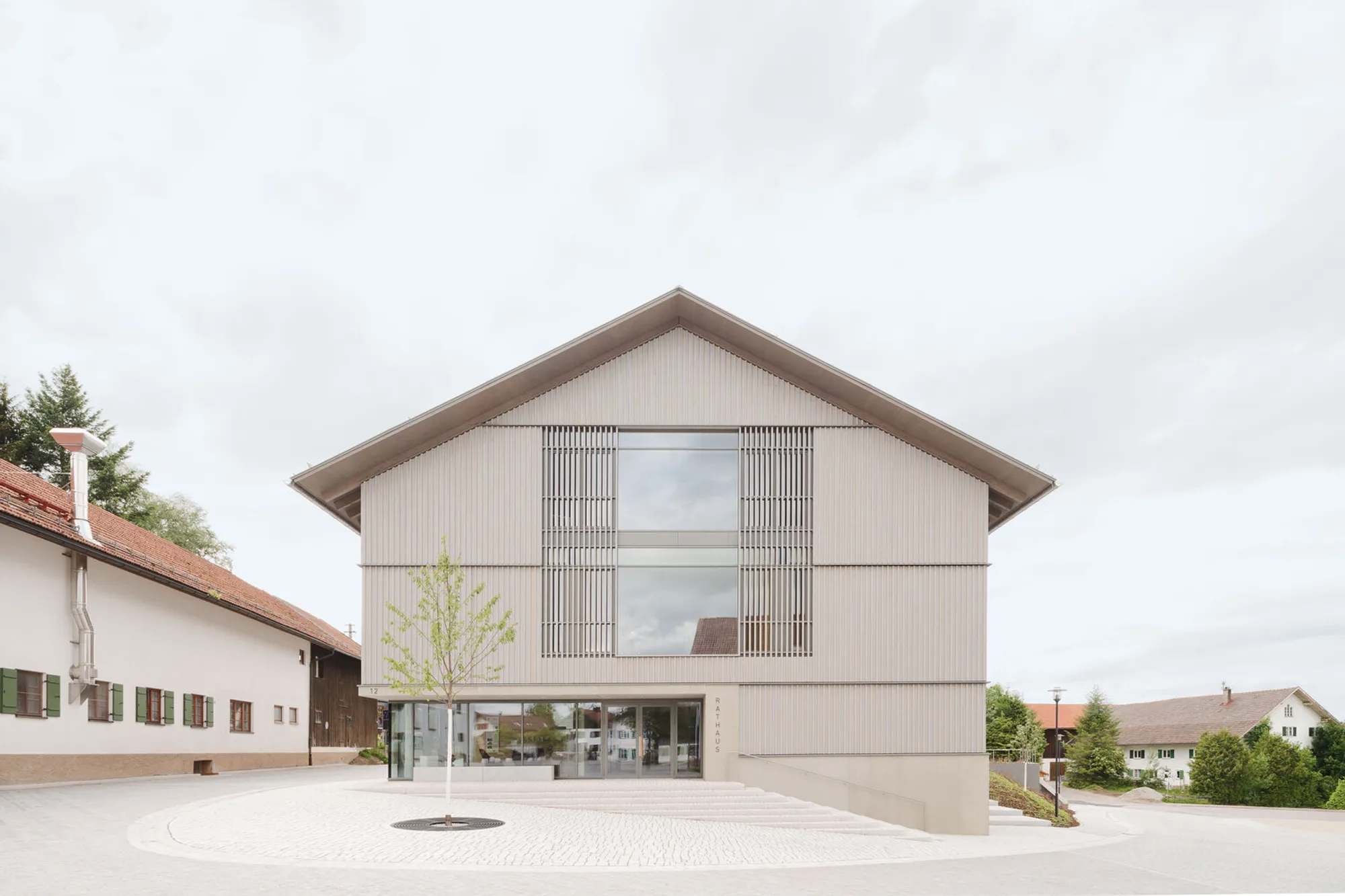
Oy-Mittelberg Town Hall by Muffler Architekten
Oy-Mittelberg Town Hall blends tradition and modernity with timber façade, sustainable design, and panoramic civic spaces reflecting community identity.


A Contemporary Town Hall Rooted in Tradition
The Oy-Mittelberg Town Hall, designed by Muffler Architekten PartG mbB, is a civic building in Germany that balances modern administrative functionality with traditional architectural identity. Completed in 2022, the project covers 2,640 m² and serves as a new cultural and civic landmark for the village community. With its careful use of materials, attention to sustainability, and integration into the urban fabric, the building redefines the role of a contemporary town hall.
Identity and Urban Integration
The design responds to the central question of how to integrate new public architecture into a village setting without creating contrast or mimicry. Positioned along St.-Anna-Square, the town hall closes the urban space while respecting the local character. Its gabled form and orientation to the historic context allow the building to sit harmoniously within its surroundings.
Rather than imposing a distinctly modern gesture, the project creates a house for a second glance—familiar yet new, subtle yet enduring. The building reflects craftsmanship, timeless detailing, and regional materiality, making its architectural age almost irrelevant.
Architectural Concept and Functionality
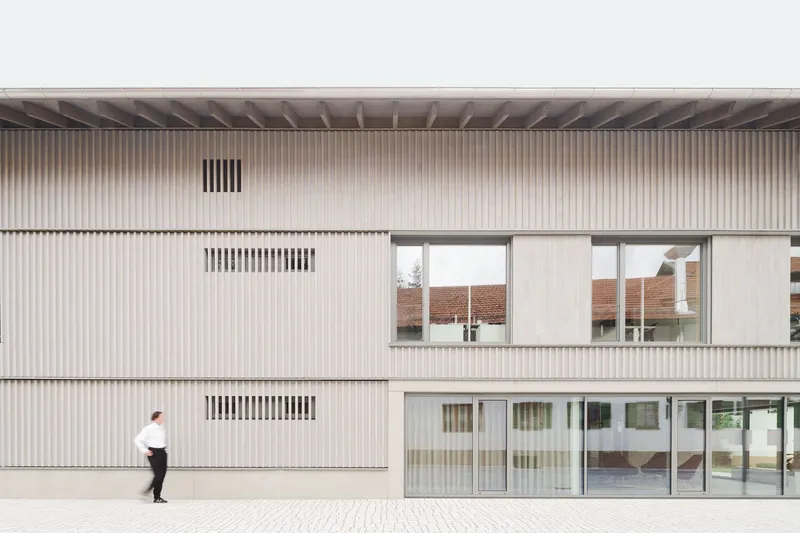
The town hall’s form is shaped by functional needs and contextual identity. Clad uniformly from roof to base, the building forms a homogeneous volume that mirrors the community’s cohesive spirit.
- Main entrance: Oriented toward St.-Anna-Square, set back and inviting, providing a transparent civic threshold.
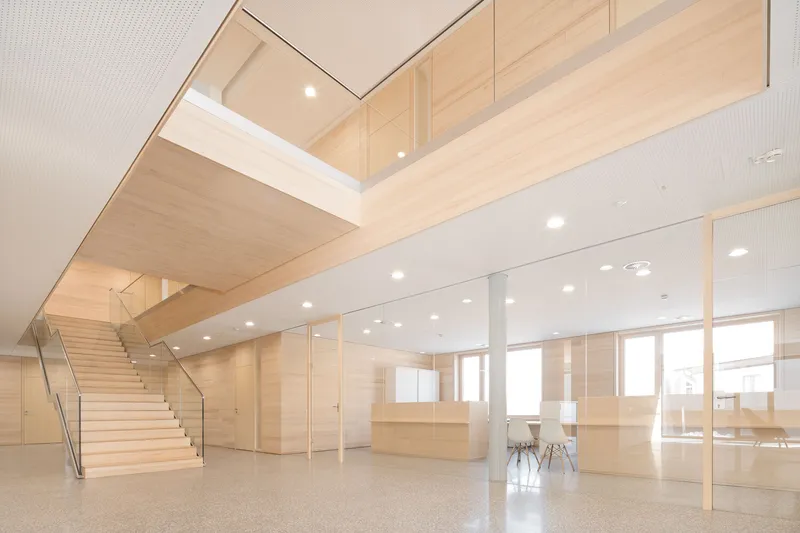
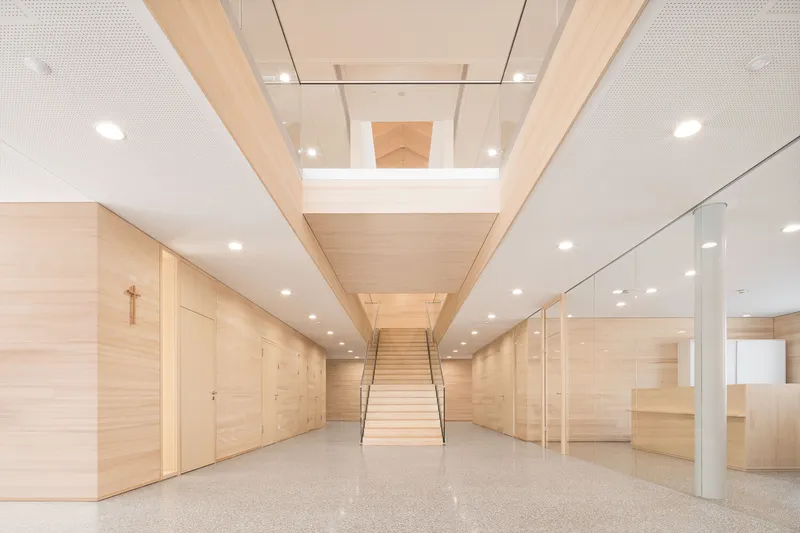
- Ground floor: Hosts the foyer and public functions, ensuring accessibility for citizens.
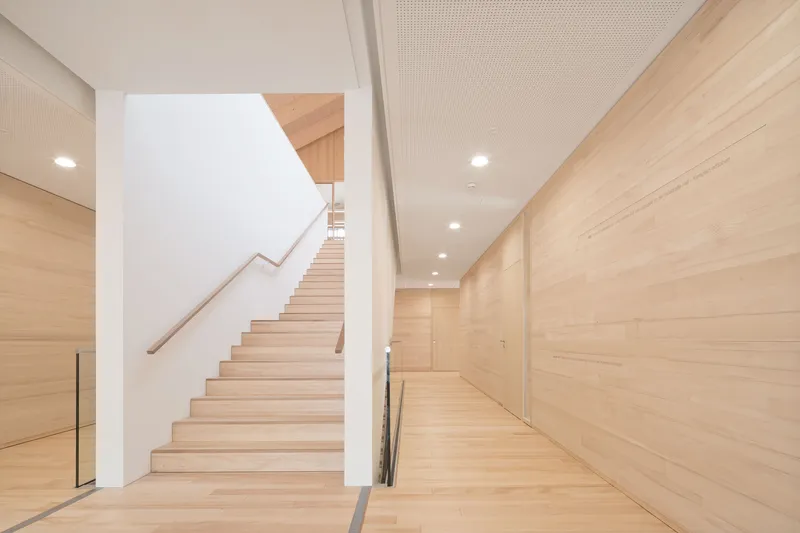
- Upper floors: Administrative offices connected by a clear linear staircase.
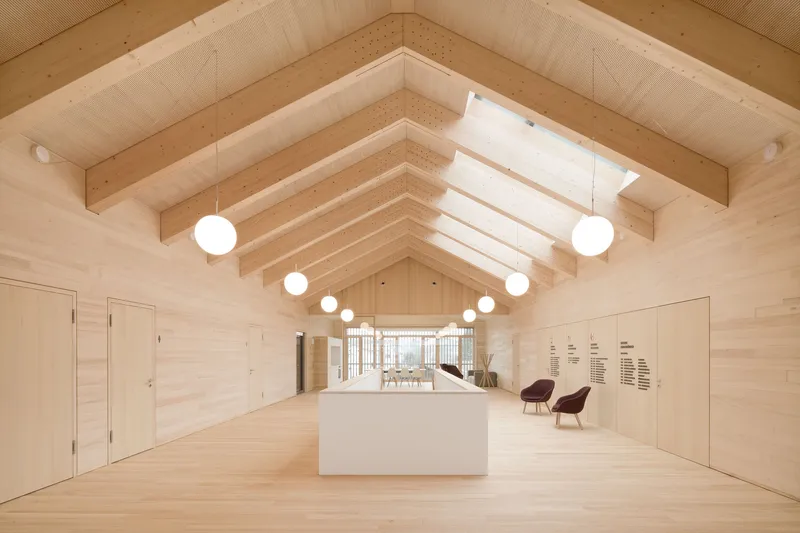
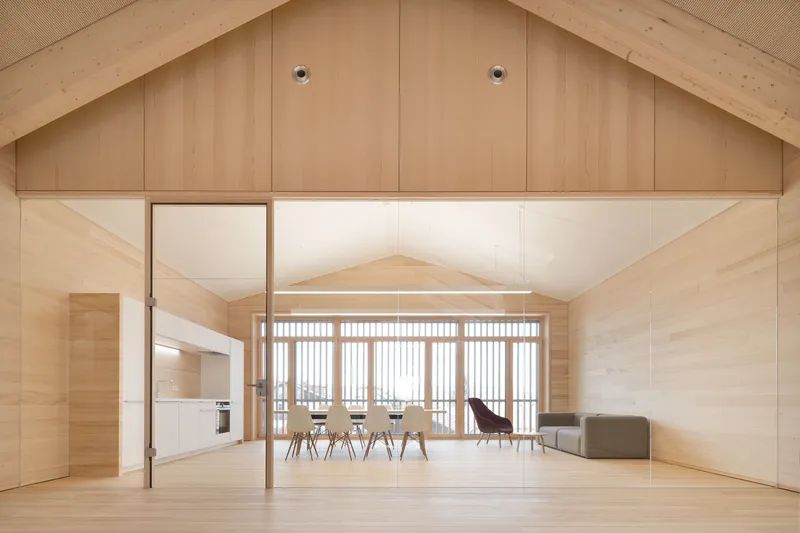
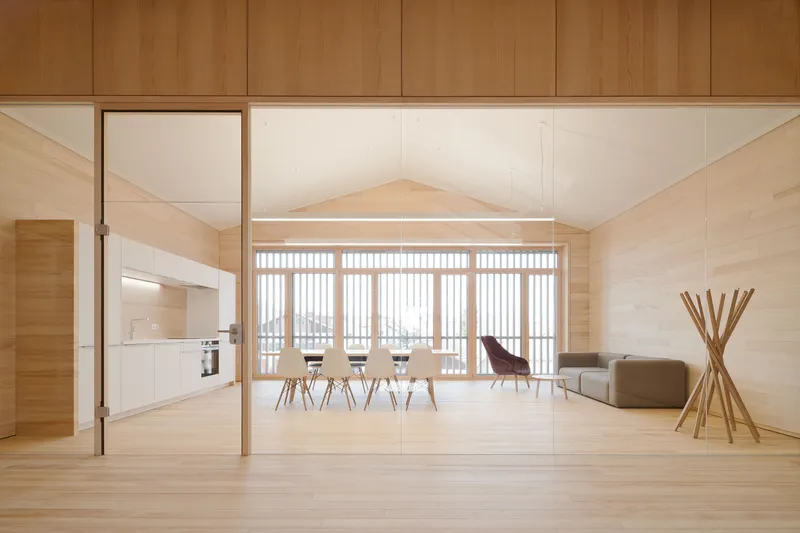
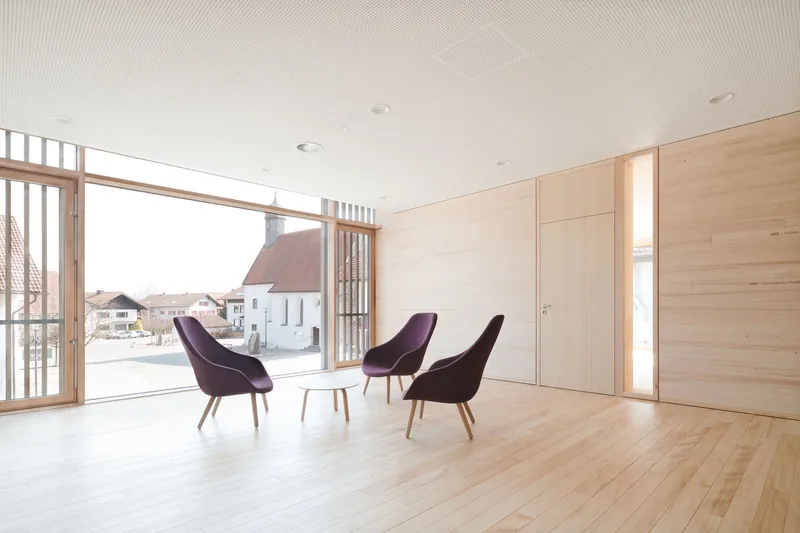
- Top floor: A meeting room offering panoramic views of the Alpine landscape, symbolizing openness and community connection.
The design blends functional clarity with architectural symbolism, positioning the town hall as both a workplace and a civic gathering space.
Construction and Materiality
The town hall combines durable concrete construction with sustainable timber structures:
- Ground and first floors: Reinforced concrete, protecting against rising dampness.
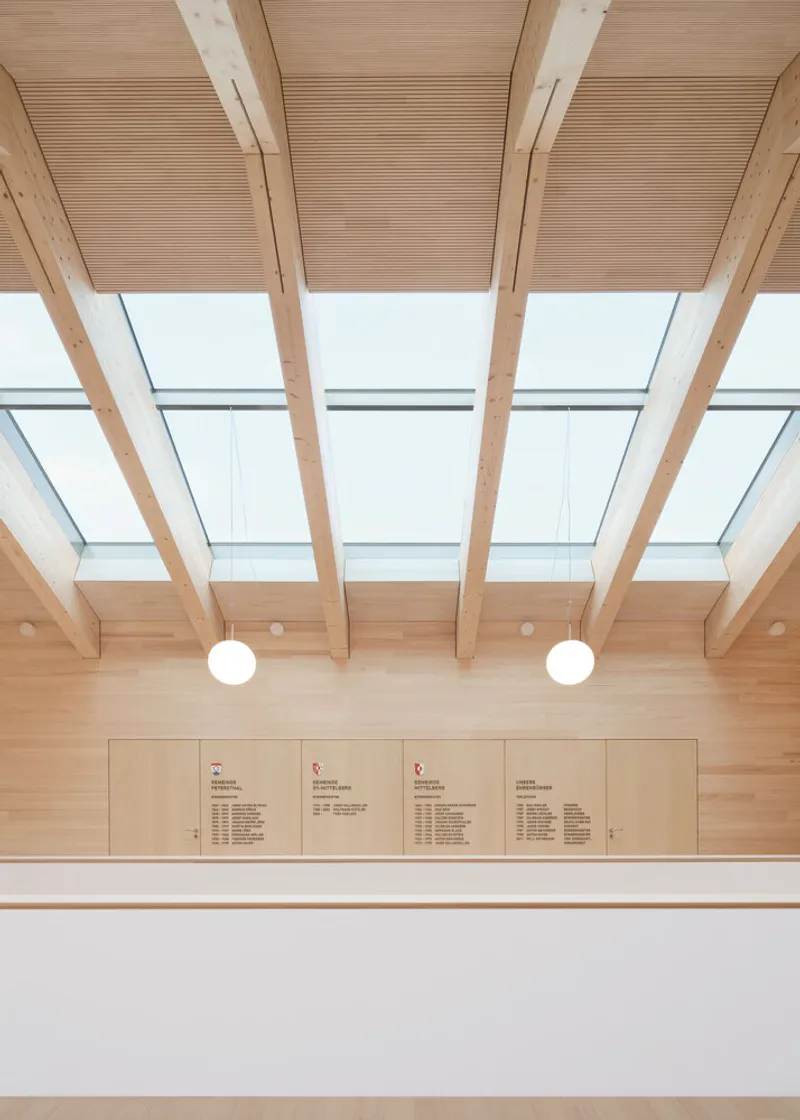
- Roof truss & walls: Timber structure with glulam beams for long spans.
- Façade: Rear-ventilated vertical timber cladding emphasizing simplicity and warmth.
- Roofing: Coated aluminum standing seam for durability.
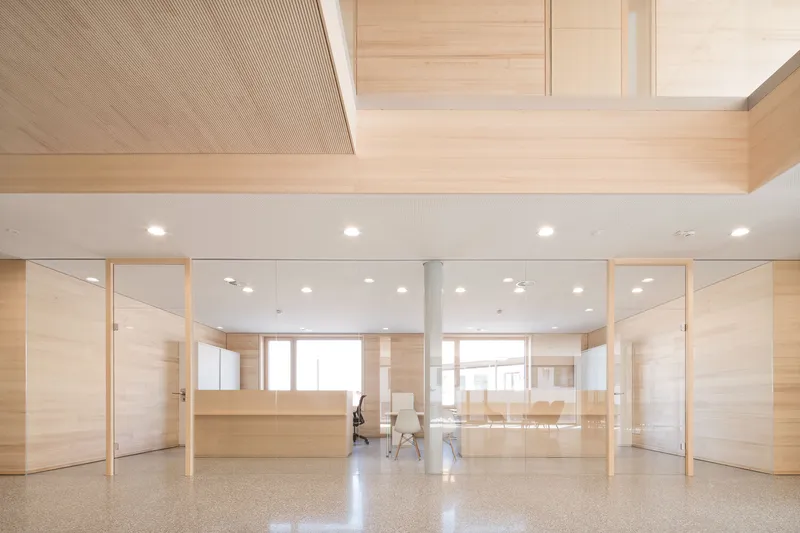
Inside, the material palette reflects a calm, natural atmosphere:
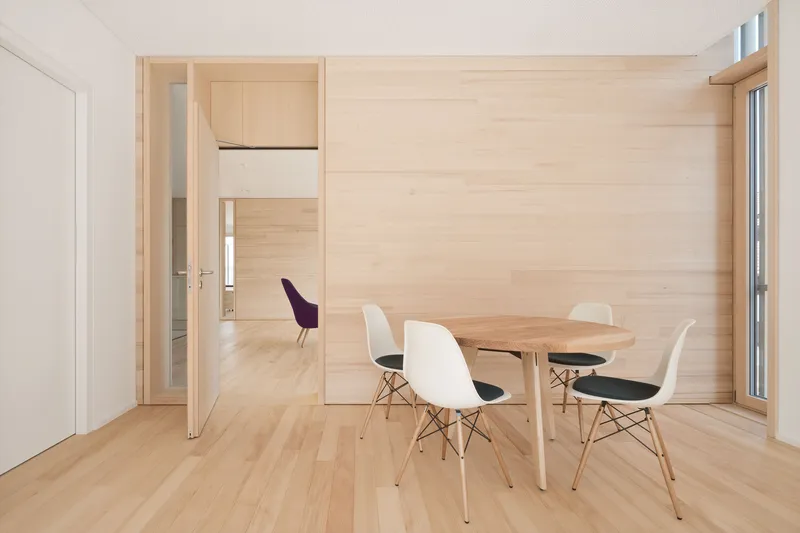
- Walls: Silver fir boards paired with white partitions and acoustic ceilings.
- Floors: Polished screed with regional stone aggregates in public zones; parquet elsewhere.
- Windows: Limited to necessary openings, ensuring energy efficiency and visual balance.
Sustainability and Life-Cycle Design
Sustainability was central to the project. The design carefully considers the entire life cycle of the building—from production to use and eventual deconstruction. Key strategies include:
- Use of ecologically sound, biologically safe materials.
- Selection of regional resources to reduce environmental impact.
- Interdisciplinary collaboration between architects, engineers, and landscape designers.
- Integration of optimized building services to minimize energy consumption.
This approach ensures that the Oy-Mittelberg Town Hall not only serves its current civic functions but also remains a sustainable and adaptable structure for future generations.
Landscape and Urban Space
The building’s outdoor spaces respond to the local topography along the main street. Haager Street widens into a public parking zone, while an underground garage is seamlessly embedded into the terrain. The surrounding landscape design by AH Landschaftsarchitekten enhances the building’s integration, reinforcing its role as a community-centered space.
The Oy-Mittelberg Town Hall stands as a model of contemporary civic architecture rooted in local tradition and sustainable design. It demonstrates how administrative buildings can be more than functional workplaces—they can embody community identity, craftsmanship, and ecological responsibility.
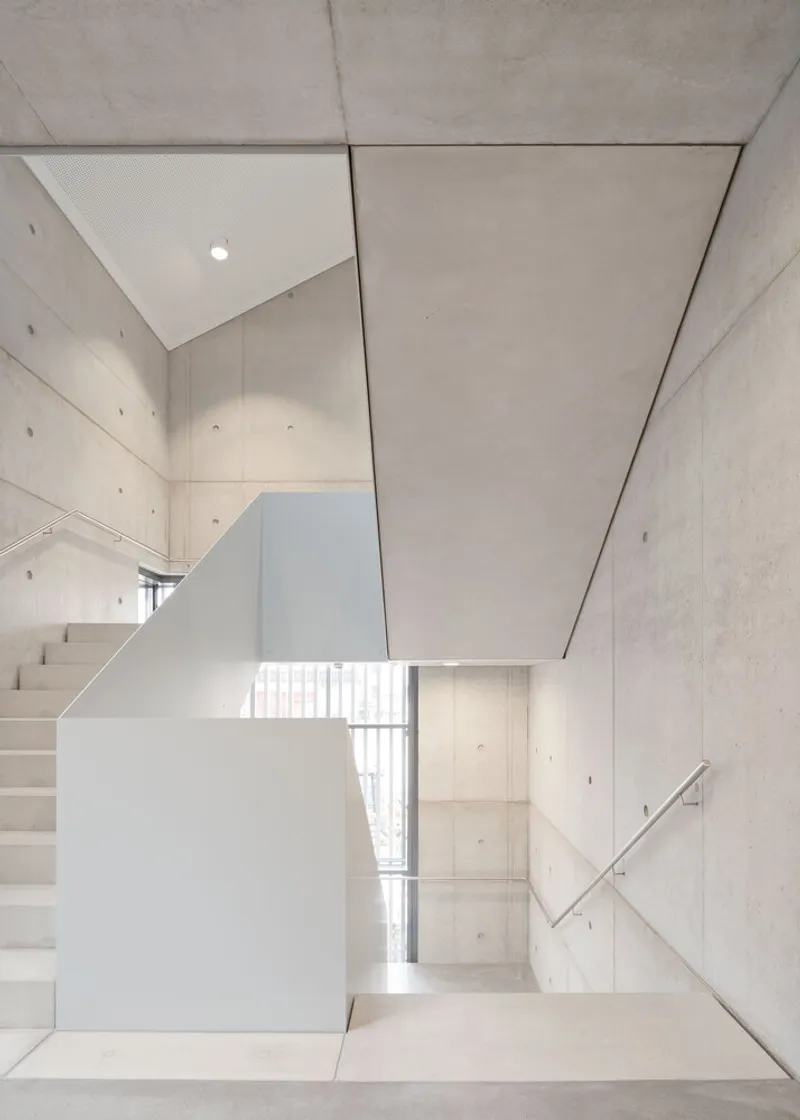
All Photographs are works of Brigida Gonzales




Popular Articles
Popular articles from the community

EW PARK: Sustainable Architecture Reimagines the Future of Urban Parking
EW PARK reimagines city parking as a modular wooden tower combining automation, solar energy, electric mobility, and adaptable urban design.

The Earth Pod: 3D Printed Homes for Resilient Refugee Communities
The Earth Pod reimagines refugee housing through 3D printed homes made from clay, combining resilience, self-sufficiency, and rapid shelter.

The Ocean Hive: Sustainable Architecture for a Self-Sufficient Civilization at Sea
The Ocean Hive imagines sustainable architecture at sea, where modular habitats, algae, wave power and ocean waste sustain a growing colony.
AL-JANNAH: Sustainable Architecture and Permaculture for Afghan Widows
AL-JANNAH uses sustainable architecture and permaculture to create resilient oasis of housing, learning, work and renewal for Afghan widows.


Similar Reads
You might also enjoy these articles


Hodi-Mandai Geram
Project Function: Preservation and revitalization of the Intangible heritage and socio-spatial identity of the Hodi by Housing, Cultural Memory Center, Sacred Grove, landscape, local tourism economy


Olio Towers: A Mid-Rise for Performers That Fuses Housing, Rehearsal, and Stage
Located blocks from Houston's Theater District, this modular tower stacks living units around a central performance atrium.

Oasis: Modular Green Housing Carved into Dhaka's Urban Fabric
A shortlisted Plugin Housing entry reclaims unauthorized settlements in Dhaka with stepped concrete volumes, green roofs, and ventilation-driven design.

Black Hole: A Floating Megastructure for the Post-Physical Era
Emiliano Mazzarotto envisions a spherical, self-scaling arena where e-sports, digital hotels, and holographic stadiums replace traditional public space.


Explore Urban Design Competitions
Discover active competitions in this discipline



Challenge to reimagine the Iron Throne


Photograph architecture without architects


Illustrate the lost glory of Angkor Wat - Render Challenge


Design challenge to reuse E-waste
Comments (0)
Please login or sign up to add comments
No comments yet. Be the first to comment!