
Yangnar Studio Tucks a 72 sqm Vacation Retreat into the Contours of Doi Luang's Hillside
In Chiang Dao, Thailand, three timber pavilions with Gurjan leaf roofs embrace the slope rather than fight it.


The hills around Doi Luang Chiang Dao in northern Thailand have their own established logic: olive trees root into red earth, Lisu communities build with bamboo and local timber, and water finds its own path down the slope. Yangnar Studio's Oyea House, completed in 2024, accepts all of that as given. Rather than imposing a single volume on the hillside, the project scatters three compact pavilions totaling just 72 square meters across the terrain, orienting each parallel to the contour lines so that virtually no regrading was required.
What makes Oyea House worth studying is not some grand sustainability manifesto but the sheer pragmatism of its construction logic. Soil excavated for a parking area was moved to the back of the site to create a stargazing platform and fire pit. Retaining walls are built from bamboo poles by Lisu craftsmen using techniques handed down through generations. Roofs are clad in Gurjan leaves, a material that reads as thatching from a distance but is a proven regional roofing system. Every decision was made on site, adjusted in real time, and the result feels less designed than discovered.
Reading the Slope
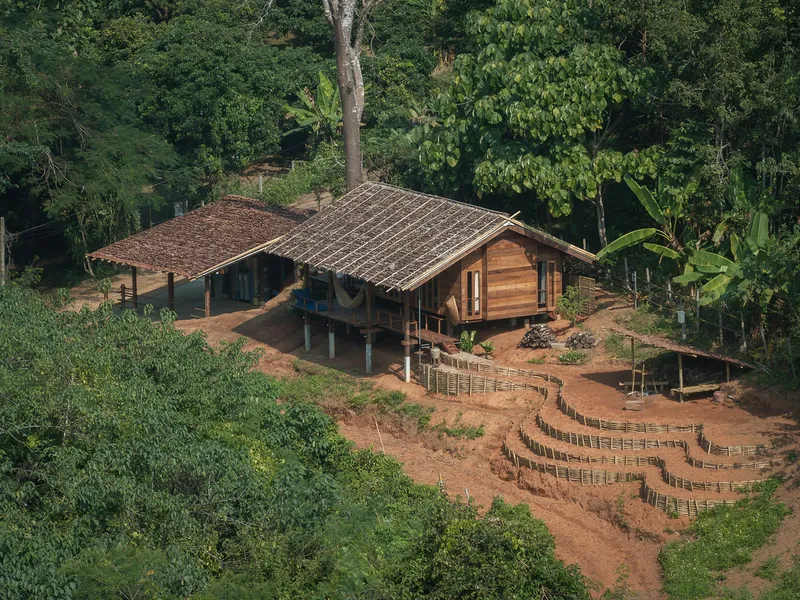
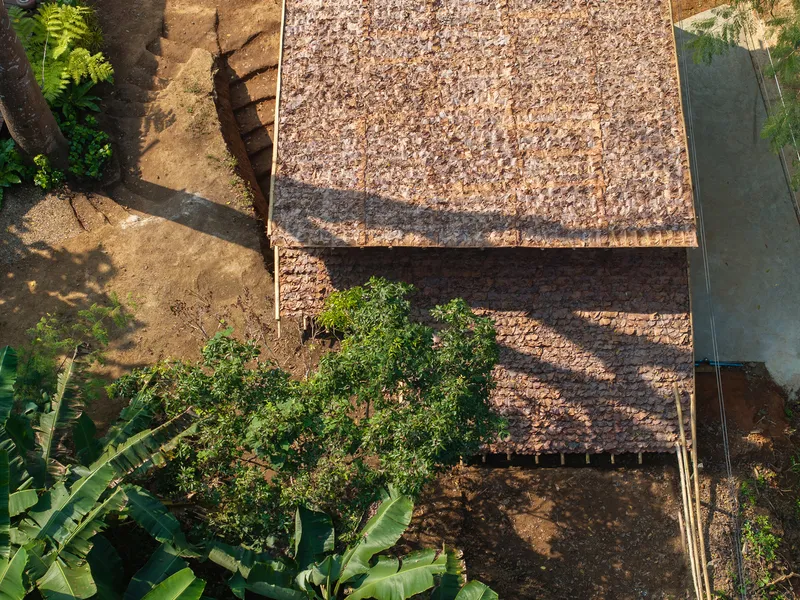
From the air, the strategy is legible at a glance. The pavilions sit on terraced platforms carved into the hill in shallow steps, leaving the surrounding forest canopy almost entirely intact. Red earth is exposed only where necessary: at the building pads, the access path, and the retaining walls. The cleared zones are minimal, and planting beds already in progress along the perimeter will further soften the boundary between construction and forest floor.
The approach path deliberately follows the original slope gradient. There is no shortcut up to the deck. The slow ascent forces you to register the shifting tree canopy overhead and the mountain peak emerging incrementally into view. By the time you step onto the main deck, the panorama of Doi Luang Chiang Dao feels earned rather than presented.
Bamboo Infrastructure and Lisu Craft


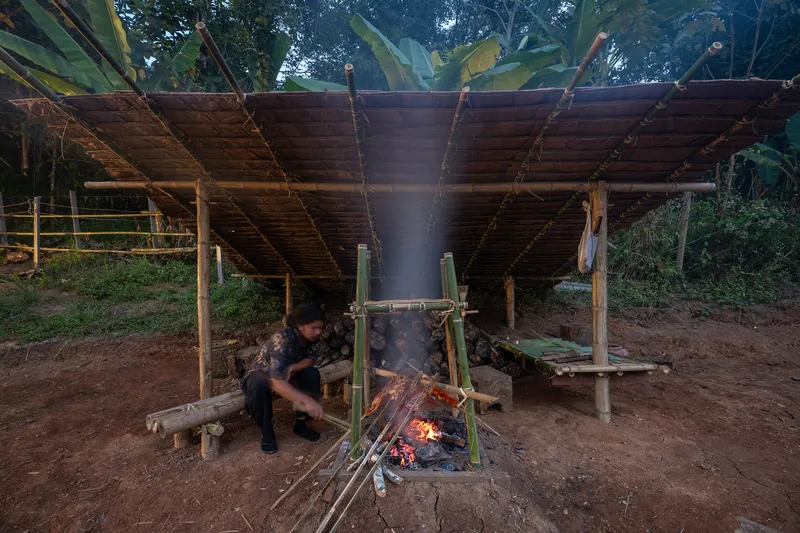
The terraced retaining walls are among the most telling details of the project. Constructed from horizontal bamboo poles lashed to vertical timber posts and driven into the red earth, they stabilize the stepped terrain while doubling as a visual grammar that ties the buildings to the ground. These walls were built by Lisu craftsmen, and the firewood shed, called a Pham, was managed and constructed entirely by the same team using their own accumulated building knowledge.
The open-sided cooking shelter is another product of that collaboration: a bamboo and timber structure with a thatched roof, a suspended bamboo grill, and an open fire. It is functional in the most direct sense, designed for use rather than display. There is no ironic quotation of vernacular form here. The form is the vernacular, deployed by the people who invented it.
The Deck as Living Room
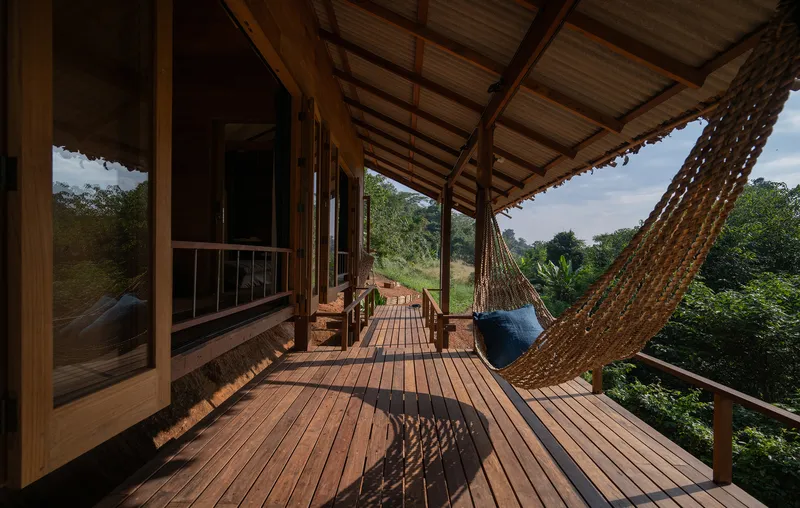
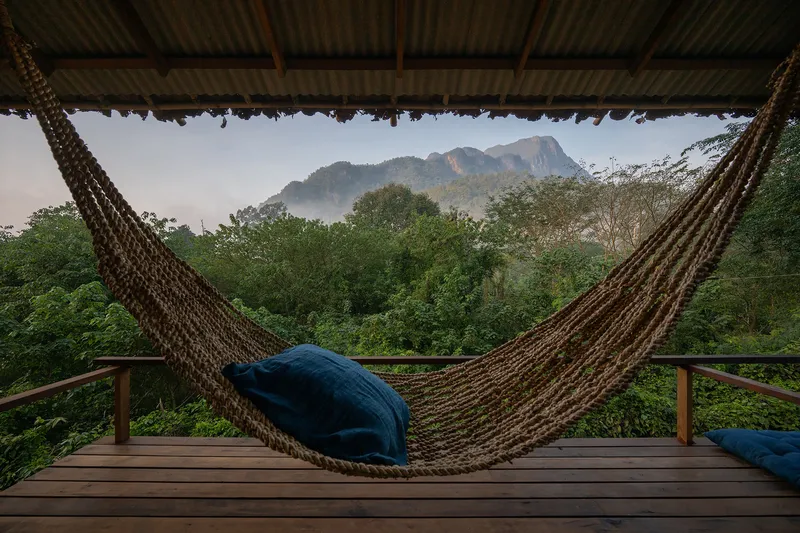
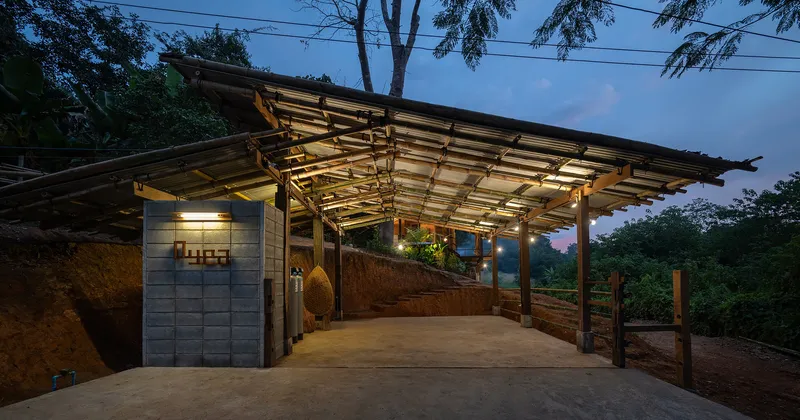
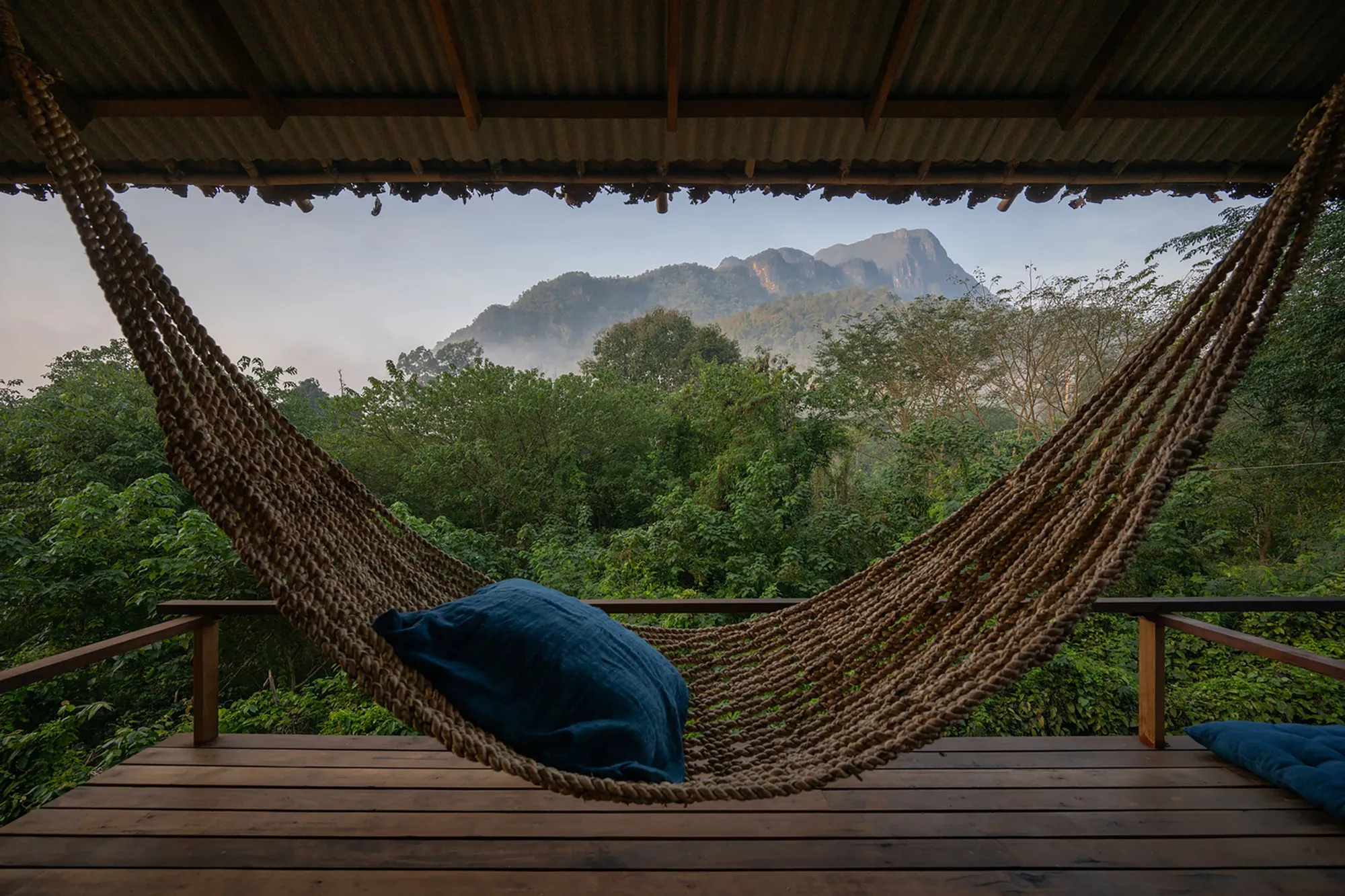
In a house this compact, the covered timber decks do most of the heavy lifting as inhabitable space. Rope hammocks hang from exposed rafters, framing the forested hillside and the distant peak through a simple rectangular aperture. The gesture is minimal: timber posts, a pitched roof, a hammock, a view. But the proportioning is careful. The roof overhang shields the deck from rain while keeping the horizon line unobstructed.
At dusk, a separate open-air terrace with translucent roof panels glows with a diffused warmth, extending the usable hours of the outdoor rooms well into the evening. For a vacation rental, these transitional spaces are the real product. The bedrooms are for sleeping. The decks are for living.
Interior Rooms: Timber, Concrete Block, and Daylight
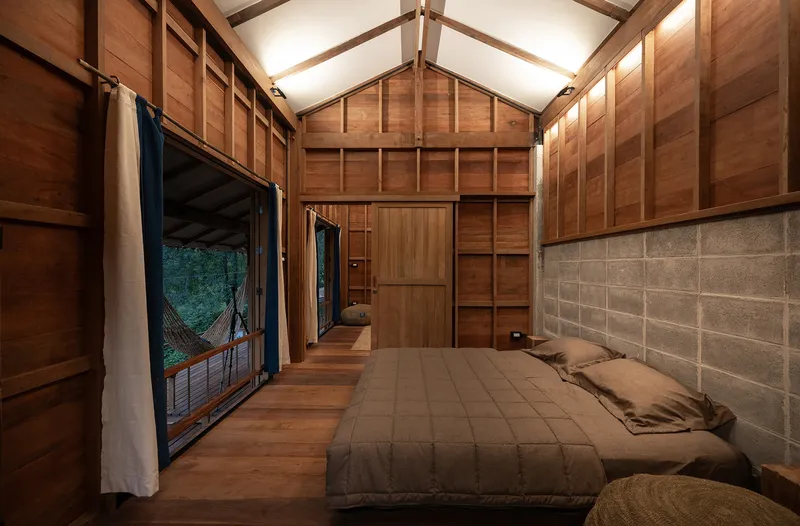

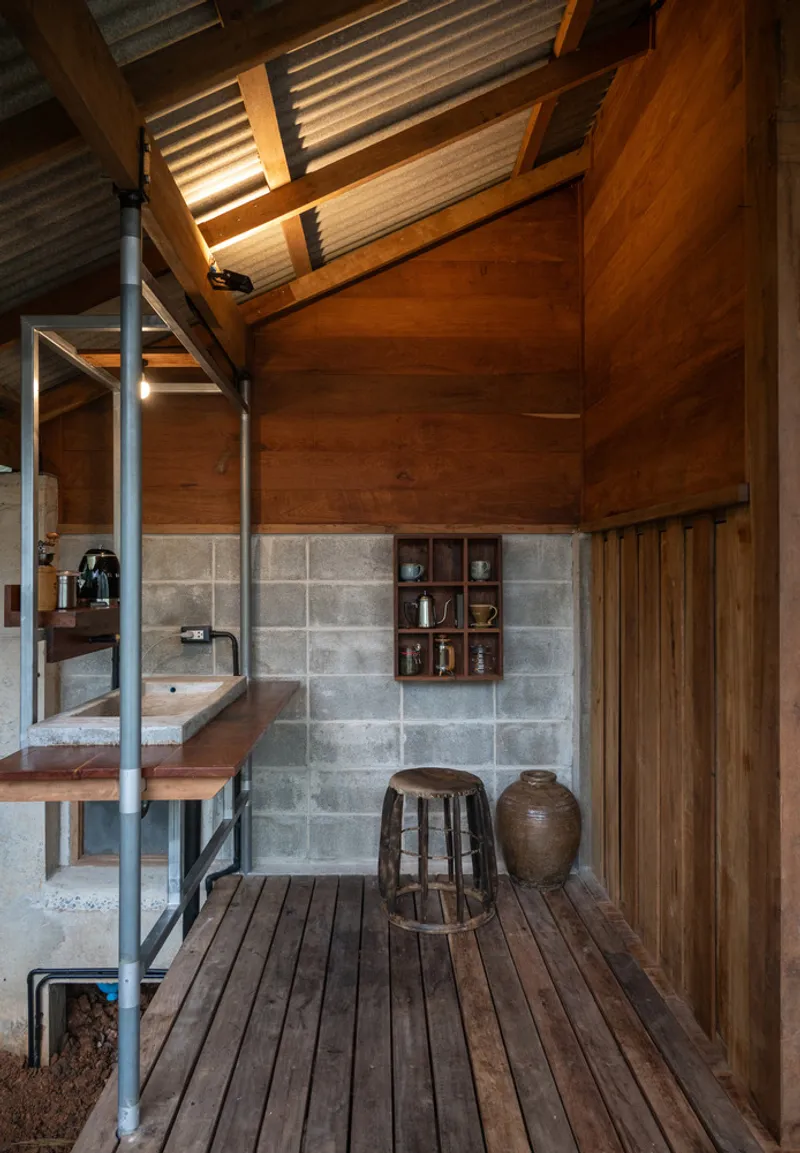
Inside, the material palette is restrained to two dominant surfaces: timber and grey concrete block. The sleeping rooms wrap entirely in wood paneling with exposed truss ceilings that make the 72 square meters feel taller than expected. Glazed doors open directly onto the deck, collapsing the boundary between interior and exterior. One sleeping alcove, lined in timber with backlit upper cabinets, functions almost like a built-in piece of furniture rather than a conventional room.
The kitchenette pairs a concrete block wall with timber cabinetry under a clerestory window, introducing just enough daylight to make the small space feel generous. These interiors are not trying to be luxurious. They are trying to be warm, dry, and well-lit, and they succeed on all three counts.
Honest Details
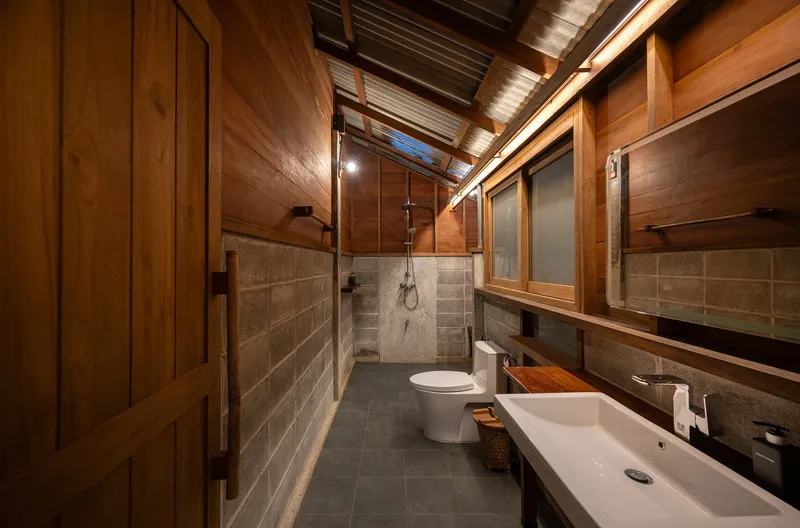


The bathroom is an unexpected highlight. Concrete block walls meet a timber ceiling and a wall-mounted timber basin, with a clerestory window pulling in soft light from above. There is no tile, no marble, no attempt to disguise the structural materials as something finer. The honesty is refreshing, and it works because every joint and surface is executed with care.
Outside, an open-air bathtub sits beside one of the pavilions, nestled among tropical plants and framed by the timber gable above. A detail shot of the decking reveals an integrated bench and a small floor opening, likely for drainage or ventilation, that suggests the kind of problem-solving that happens on site rather than in a rendering. These are details you discover by using the building, not by photographing it.
The Pavilion as Object in Landscape
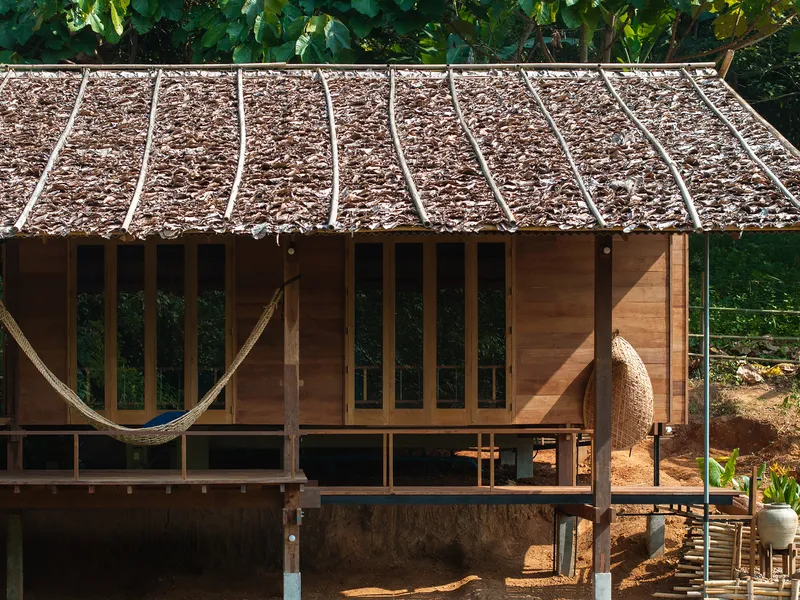
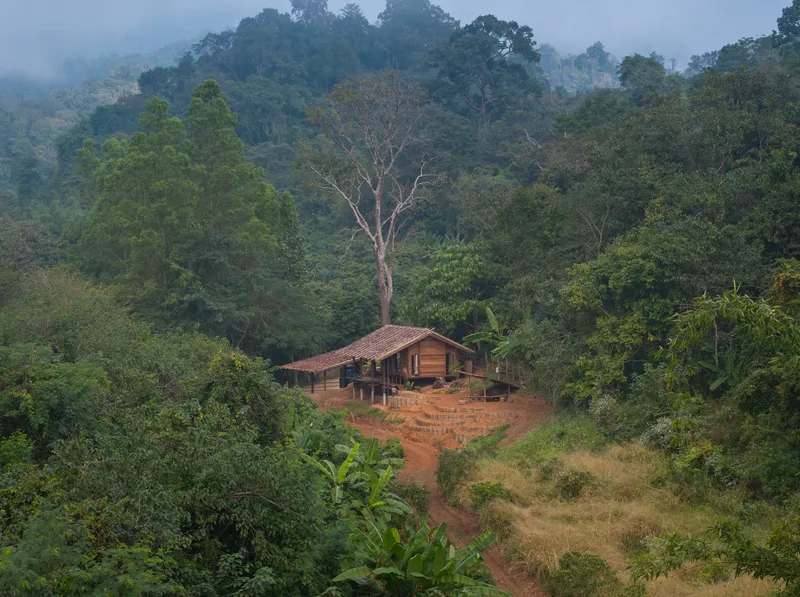
Seen from a distance in the morning mist, the pavilions read as modest agricultural structures. The thatched Gurjan leaf roofs and open wooden slat walls dissolve any sense of architectural pretension. The buildings are small enough to be absorbed by the forest canopy, and their muted tones blend with the surrounding foliage. Scale matters here: at 72 square meters across three units, the project never threatens to dominate the hillside.
Plans and Drawings

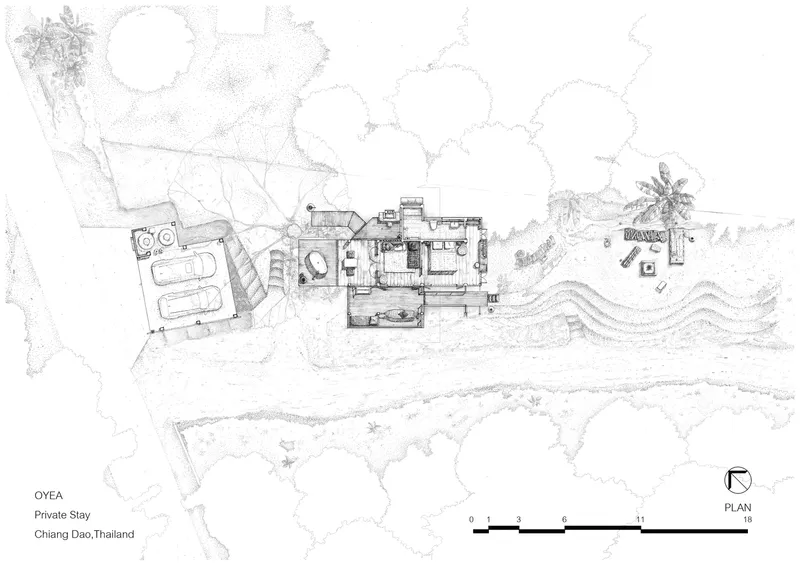


The site plan confirms what the aerial photographs suggest: the building footprints are compact insertions within a much larger field of topographic contours and vegetation. Bamboo wall details are annotated directly on the site drawing, collapsing the distinction between landscape strategy and construction technique. The floor plan reveals the three units arrayed along the slope, each with its own outdoor space, while the cross section shows how the pitched roofs tuck beneath the tree canopy on the descending terrain.
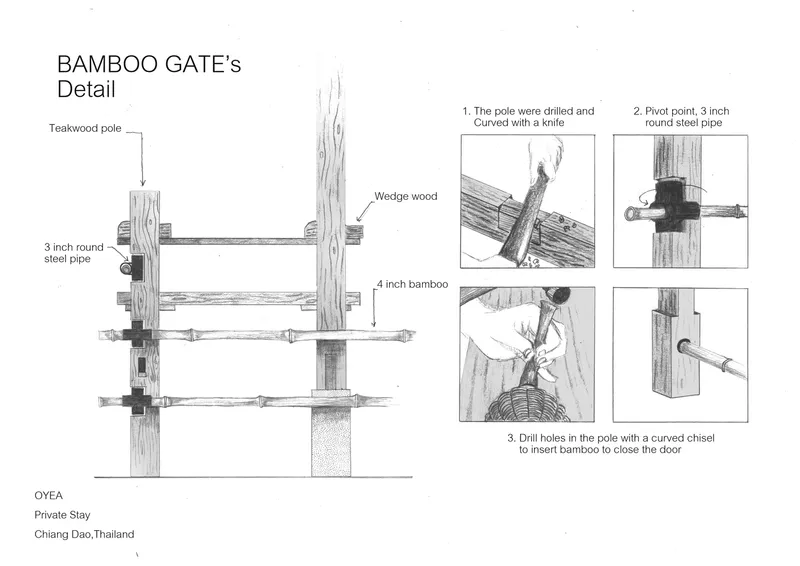
The construction detail drawings are the most instructive sheets in the set. One breaks down the bamboo shelter, retaining wall, and joinery into annotated components, while another documents the bamboo gate assembly with teakwood poles and steel pipe pivot points. These drawings are records of a hybrid construction system: indigenous bamboo techniques augmented with minimal steel connectors where durability demands it.
Why This Project Matters
Oyea House is a useful corrective to the idea that hillside architecture must involve heroic cantilevers or dramatic retaining walls. By aligning with the contour lines, terracing in shallow steps, and building in timber and bamboo at a modest scale, Yangnar Studio demonstrates that the most site-sensitive approach is often the most restrained. The involvement of Lisu craftsmen is not a marketing narrative; it is a construction strategy that produced better bamboo infrastructure than a conventional contractor would have delivered.
As a vacation rental in the hills of Chiang Dao, the project will be judged by its guests on the quality of its hammock views and the warmth of its fire pit. But for architects, the takeaway is more specific: working with local knowledge and local materials is not a concession to budget or nostalgia. It is a design method that produces buildings uniquely fitted to their terrain, buildings that could not exist anywhere else. That specificity is the most valuable thing architecture can offer a landscape.
Oyea House by Yangnar Studio, Doi Luang, Chiang Dao, Thailand. 72 square meters. Completed 2024. Photography by Rungkit Charoenwat.
About the Studio
Share Your Own Work on uni.xyz
If projects like this are the kind of work you want to make, uni.xyz is a place to publish your own, find collaborators, and enter design competitions.




Popular Articles
Popular articles from the community


Hill & Cross Opera: Sculptural Opera House Architecture Shaped by Tallinn’s Landscape and Identity
Hill & Cross Opera reimagines opera house architecture in Tallinn through its sculptural hill, civic plaza, glass wave and a luminous cross.

The Musturak Paradise: Senior Living Architecture for a Connected Future in Temara, Morocco
The Musturak Paradise reimagines senior living architecture in Temara via private homes, social spaces, culture, community, and shared care.

The Earth Pod: 3D Printed Homes for Resilient Refugee Communities
The Earth Pod reimagines refugee housing through 3D printed homes made from clay, combining resilience, self-sufficiency, and rapid shelter.

AL-JANNAH: Sustainable Architecture and Permaculture for Afghan Widows
AL-JANNAH uses sustainable architecture and permaculture to create resilient oasis of housing, learning, work and renewal for Afghan widows.


Similar Reads
You might also enjoy these articles

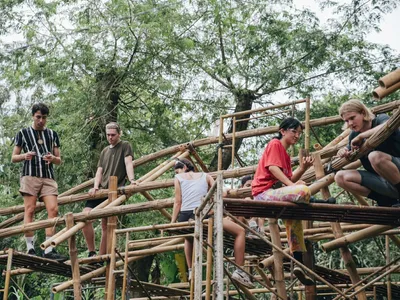
Bamboo Housing Challenge 2026: Design Affordable, Sustainable Homes Using Bamboo
An international design competition by Bamboo U and IBUKU inviting architects and designers to reimagine affordable housing using bamboo — with the winning design built full-scale in Bali.

Computational Design & Education: Beegraphy Design Awards Introduces 7th Category (Featuring Jiyun's Innovative Approach)
Dive into Beegraphy’s 7th Design Awards category, where computational design meets education to create immersive, interactive learning tools, inspired by Jiyun’s work.

From Parametric Lighting to Urban Furniture: Join the 2nd Workshop in Beegraphy’s Computational Design Series
Dive into Cutting-Edge Design Techniques and Practical Applications with Industry Experts

Last Call: Unleash Your Architectural Genius in SHAK's Kindergarten Design Competition
Urgent call for architects to join SHAK's kindergarten design competition before the looming deadline


Explore Architecture Competitions
Discover active competitions in this discipline



Challenge to reimagine the Iron Throne


Photograph architecture without architects


Illustrate the lost glory of Angkor Wat - Render Challenge


Design challenge to reuse E-waste
Comments (0)
Please login or sign up to add comments
No comments yet. Be the first to comment!