

PAN Bakery Milano by Studio Wok: A Subtle Fusion of Japanese Minimalism and Milanese Craft
PAN Bakery Milano blends Japanese minimalism with Milanese warmth, featuring natural materials, open façades, and serene, sculptural interiors.


A Neighborhood Bakery Infused with Japanese Design Philosophy
In the heart of Milan, PAN Bakery Milano, designed by Studio Wok, presents an architectural and cultural fusion—a seamless blend of Milanese warmth and Japanese minimalism. Conceptualized as a neighborhood staple, PAN is not just a bakery—it’s a kitchen and wine bar co-founded by Japanese chef Yoji Tokuyoshi and Alice Yamada. Their vision? To democratize Japanese culture and infuse it organically into everyday Milanese life.
Architecture That Connects Neighborhood and Culture
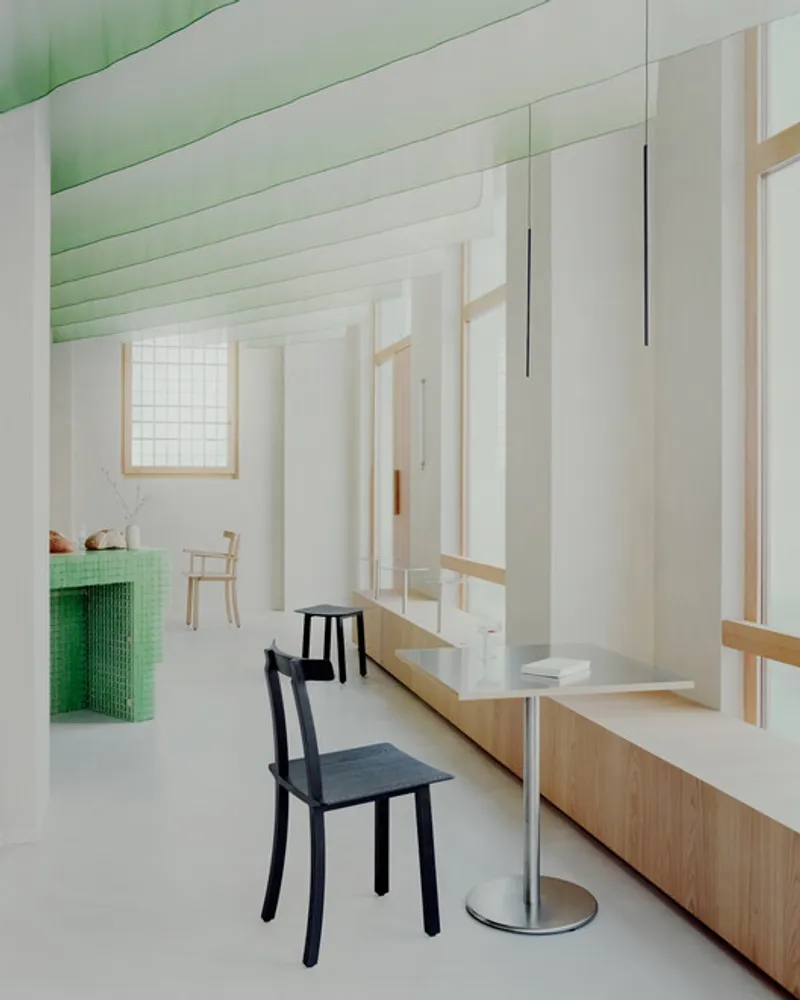
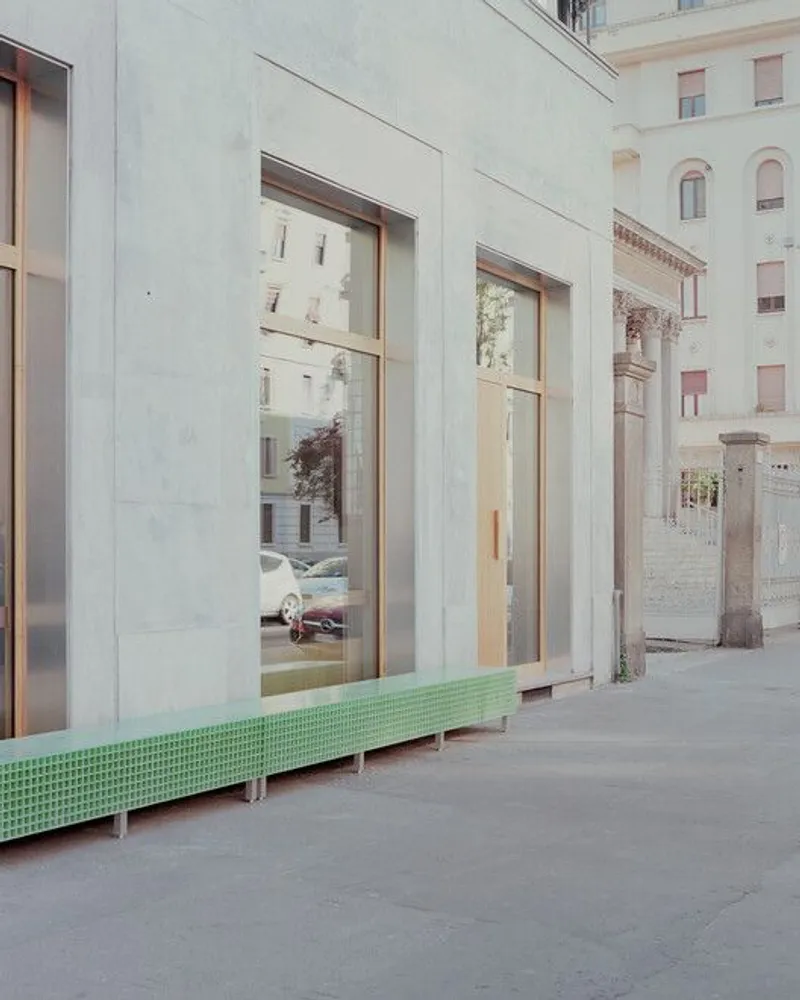
Studio Wok approached the project with a clear objective: to create a space that belongs to the neighborhood yet feels like a transportive experience. The façade is defined by chestnut wood-framed windows, subtly accented with galvanized sheet jambs. These large openings form a "threshold space"—a soft transition between indoor intimacy and urban bustle.
From the street, the interiors are fully visible, encouraging a connection with passersby. The use of natural materials and refined craftsmanship celebrates both Japanese design purity and Milan’s artisanal legacy.
Two Souls in One Space: Bakery & Bar
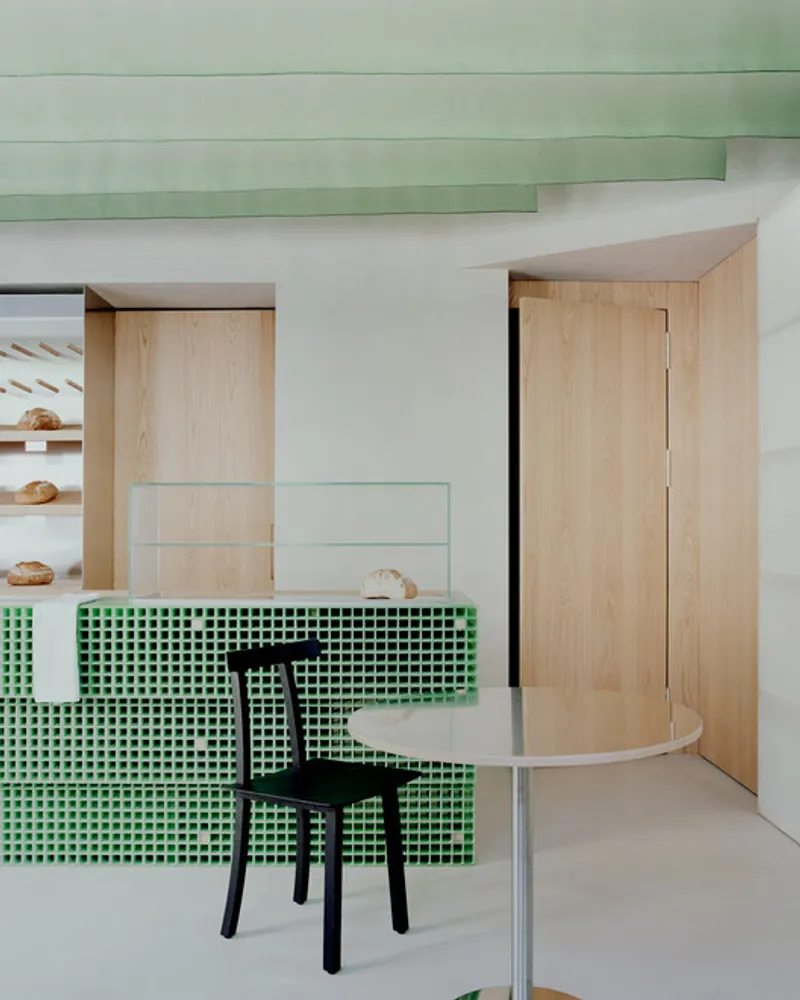
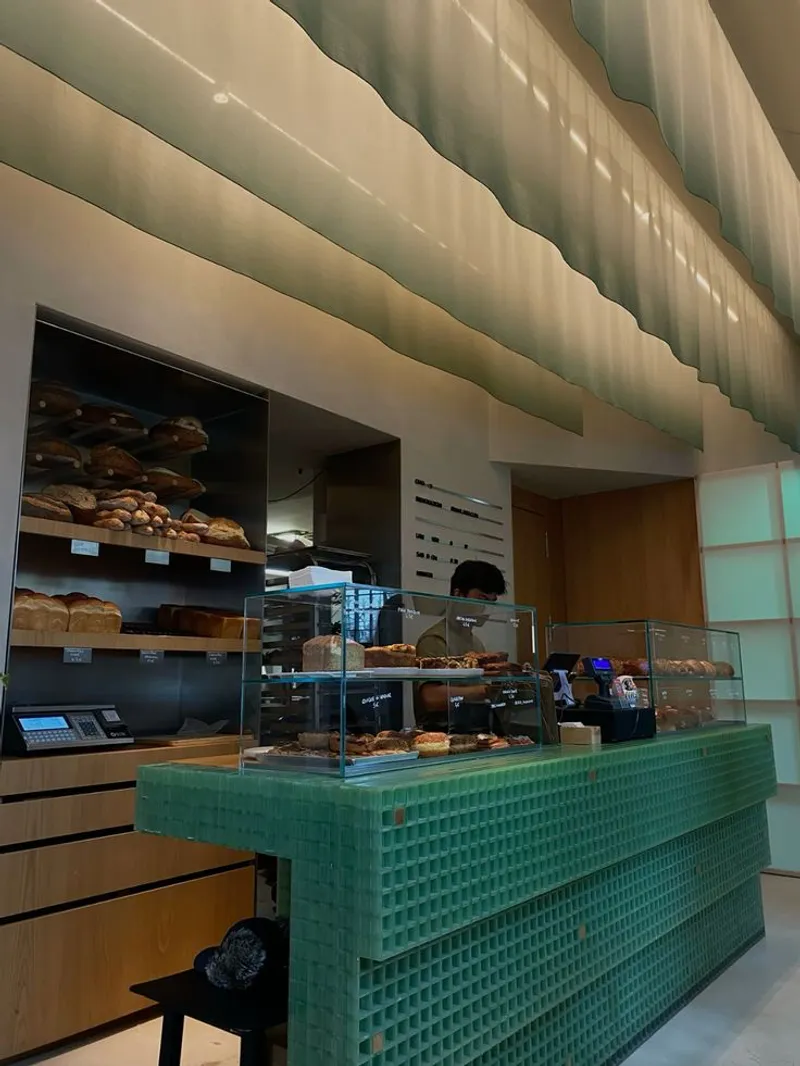
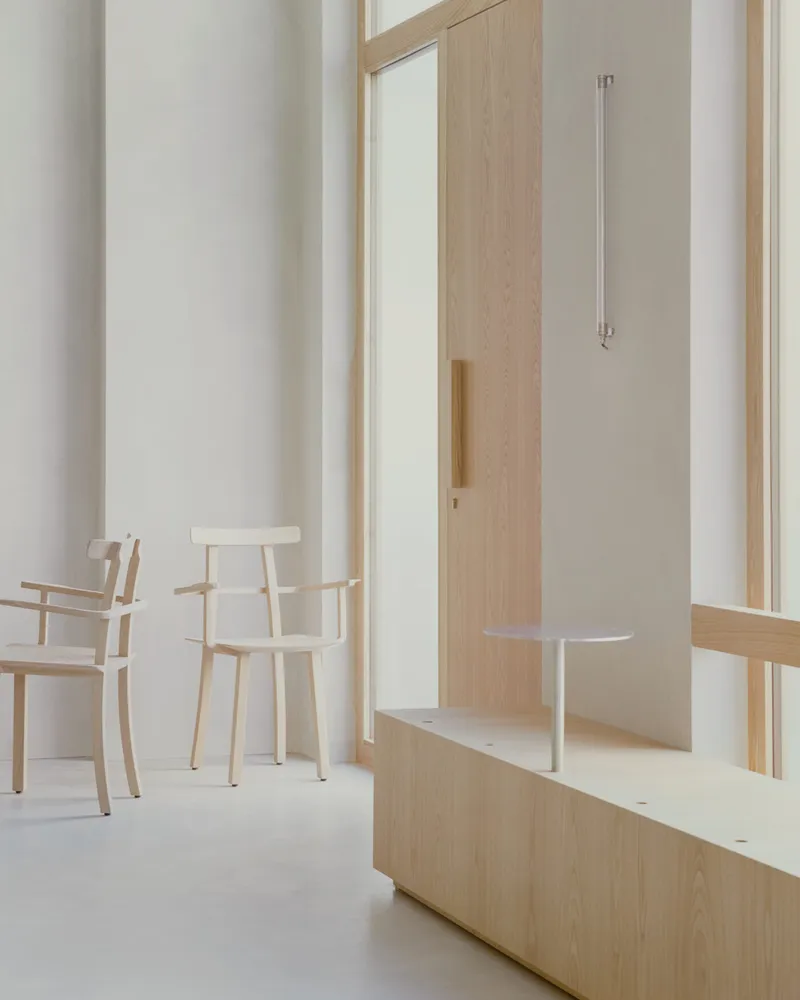
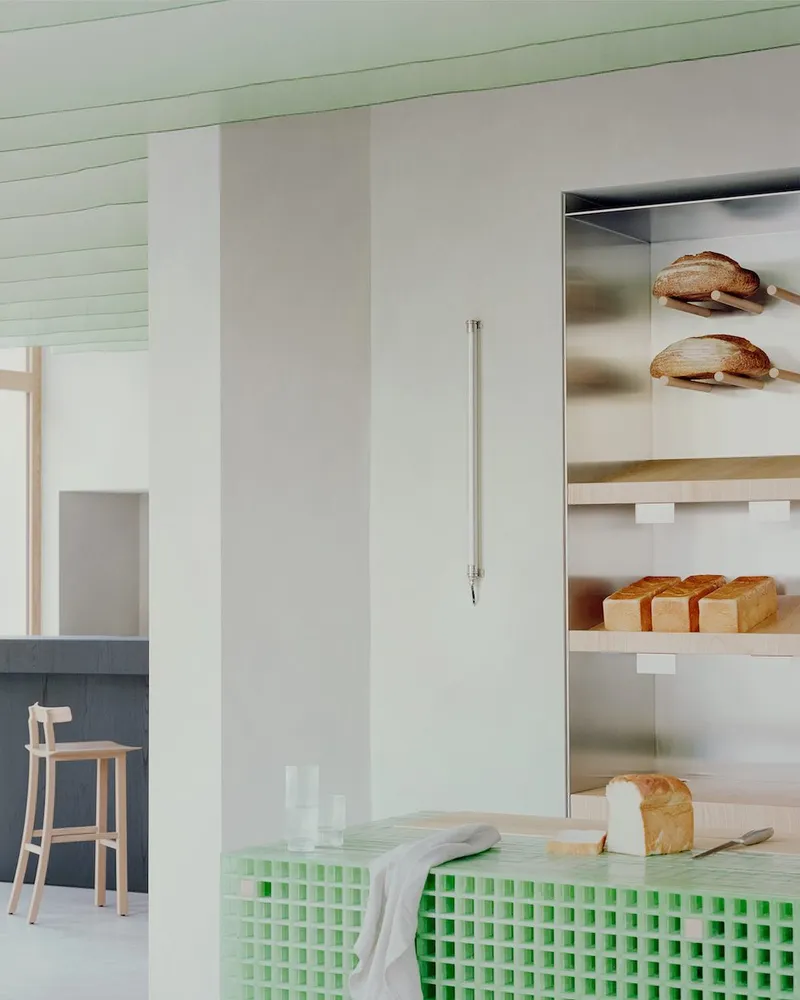
The interiors unfold in a muted palette, allowing select architectural elements to stand out. The space is organized around two focal counters: the bread station and the bar. While distinctly separate in function, the two merge fluidly within the same room. A long wooden bench, aligned with the window, visually connects both areas—encouraging social interaction, casual dining, and quiet reflection.
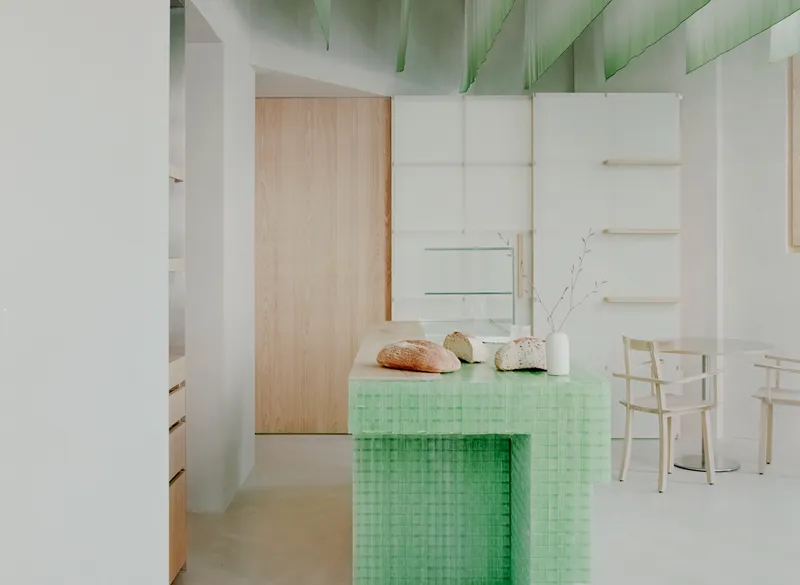
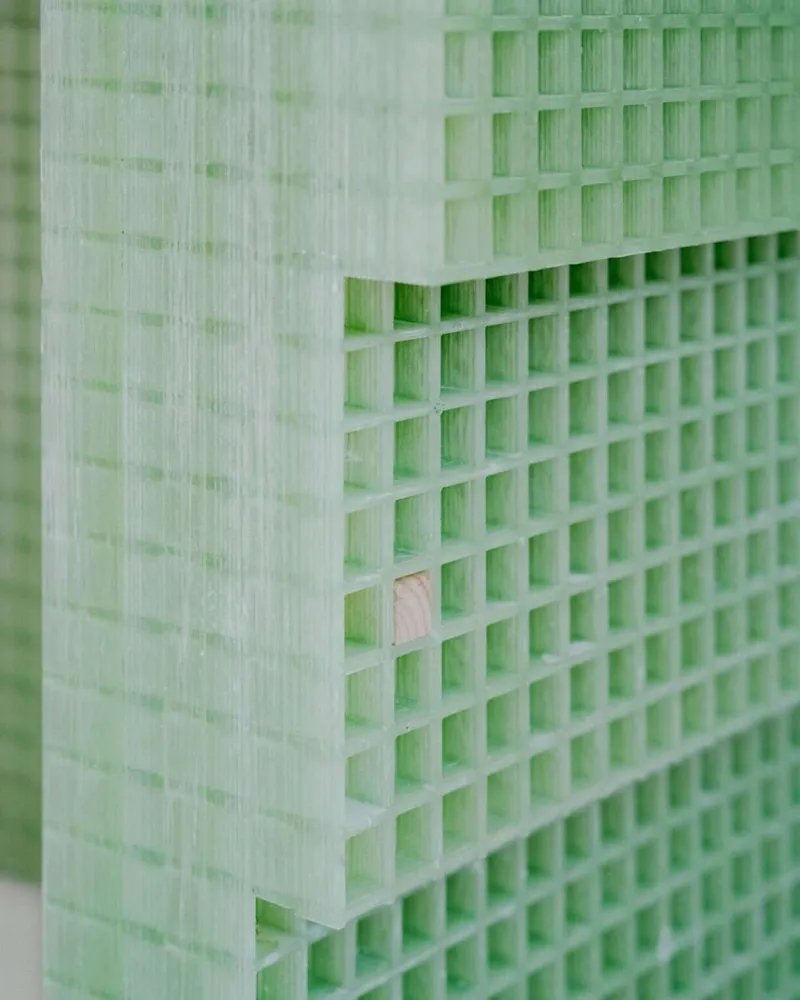
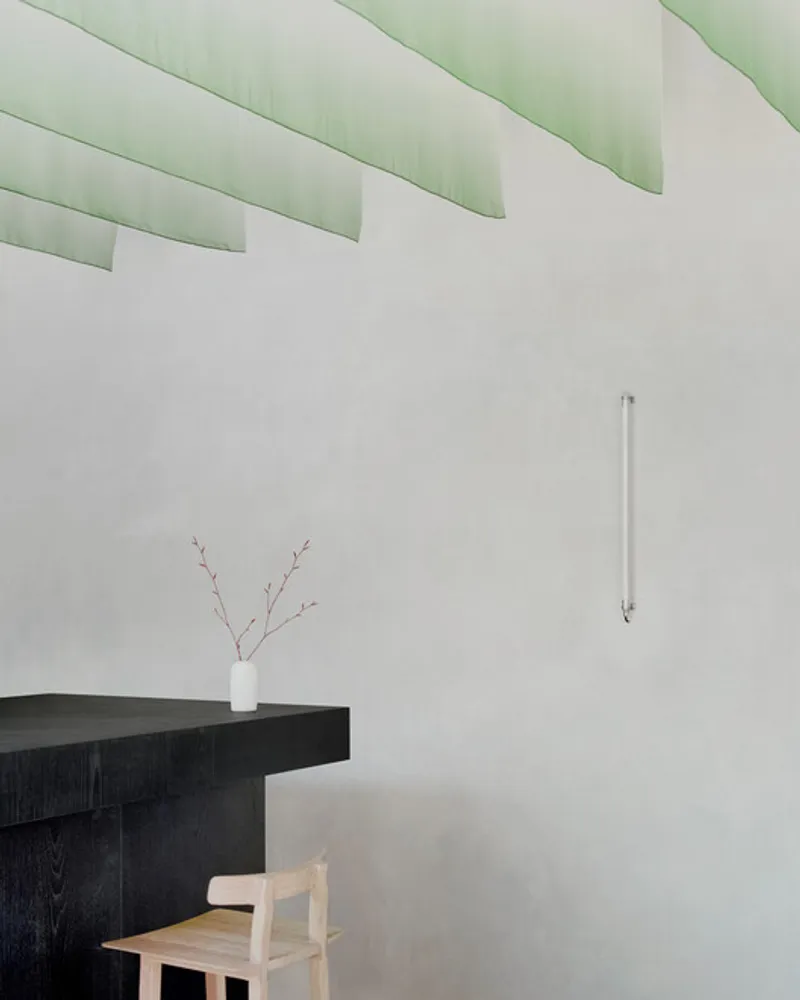
The bread counter, crafted from green fiberglass grid panels, acts as both a visual anchor and a tactile focal point. This semi-transparent structure plays with natural light, echoing the soft green hues of traditional noren curtains and the hanging ceiling drapes, which lend a dreamy, suspended dimension to the space.
Sculptural Details and Material Narratives
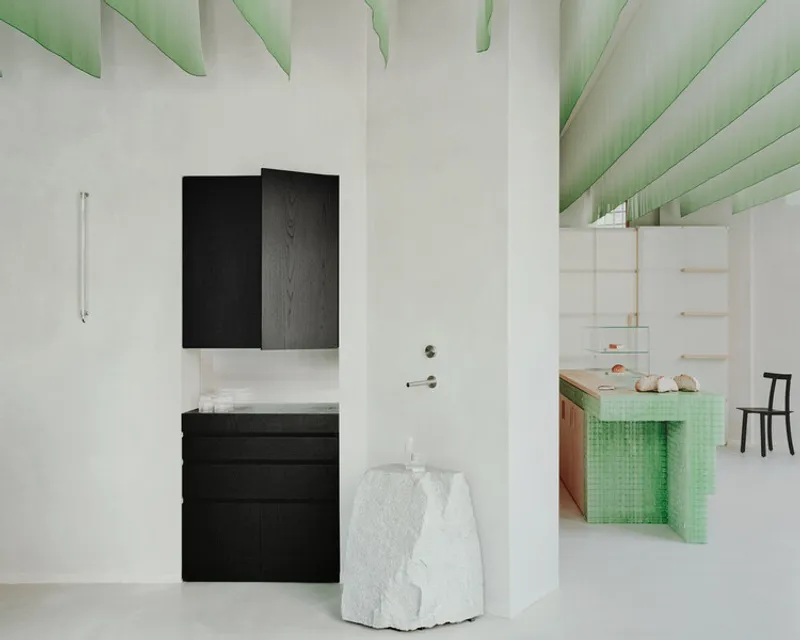
At the far end of the bakery, a custom sliding wall with translucent pressed cellulose panels creates a semi-private ante-bathroom area. The sink itself is a monolithic block of Moltrasio stone, emerging like a sculpture from a green-toned cocoon—turning a utilitarian corner into a ritualistic experience.
On the opposite side, the bar counter—made of black-stained chestnut and stainless steel—exudes sobriety and contrast. Nearby, a split natural stone boulder evokes the Japanese principle of wabi-sabi, celebrating imperfection and stillness.
A Layered Cultural Experience
Just as the food served in PAN is inspired by but not limited to Japanese cuisine, the interior architecture references Japanese culture in subtle, non-literal ways. There is no mimicry or overt symbolism; instead, Studio Wok layered the space with quality craftsmanship, natural materials, and minimalist elegance that invites interpretation rather than dictation.
The result is a refined, warm, and contextually sensitive hospitality space—one that’s not only functional but also deeply human, inviting a lingering presence.
All the photographs are works of Simone Bossi


Popular Articles
Popular articles from the community


Manzana Morphosis: Stretching Barcelona's Grid into a Living Landscape for 2050
A radical reworking of the Eixample manzana turns density into a tool for generous public space, vertical ecology, and environmental performance.


graciastudio Turns a Viewless Tijuana Lot Inward Around a Courtyard of Concrete, Timber and Trees
In Tijuana, Jorge Gracia's GA2 House stacks a timber-clad private floor over exposed concrete and replaces a missing view with a planted interior patio.

FCC Arquitectura Expands a Portuguese Granite House with a Board-Marked Concrete Wing
In Portugal, JV House pairs a cleaned-up whitewashed and granite dwelling with a timber-shuttered concrete extension, courtyards and a garden pool.

Aquadapt: An Underwater Habitat That Rewrites Its Rooms by the Hour
Curved modules ring the seabed while one shell shifts from breakfast room to cinema, farm and football pitch as residents' needs change.

Similar Reads
You might also enjoy these articles


Hodi-Mandai Geram
Project Function: Preservation and revitalization of the Intangible heritage and socio-spatial identity of the Hodi by Housing, Cultural Memory Center, Sacred Grove, landscape, local tourism economy


Olio Towers: A Mid-Rise for Performers That Fuses Housing, Rehearsal, and Stage
Located blocks from Houston's Theater District, this modular tower stacks living units around a central performance atrium.

Oasis: Modular Green Housing Carved into Dhaka's Urban Fabric
A shortlisted Plugin Housing entry reclaims unauthorized settlements in Dhaka with stepped concrete volumes, green roofs, and ventilation-driven design.

Black Hole: A Floating Megastructure for the Post-Physical Era
Emiliano Mazzarotto envisions a spherical, self-scaling arena where e-sports, digital hotels, and holographic stadiums replace traditional public space.

Explore Hospitality Building Competitions
Discover active competitions in this discipline

Challenge to reimagine the Iron Throne

Photograph architecture without architects

Illustrate the lost glory of Angkor Wat - Render Challenge

Design challenge to reuse E-waste
Comments (0)
Please login or sign up to add comments
No comments yet. Be the first to comment!