
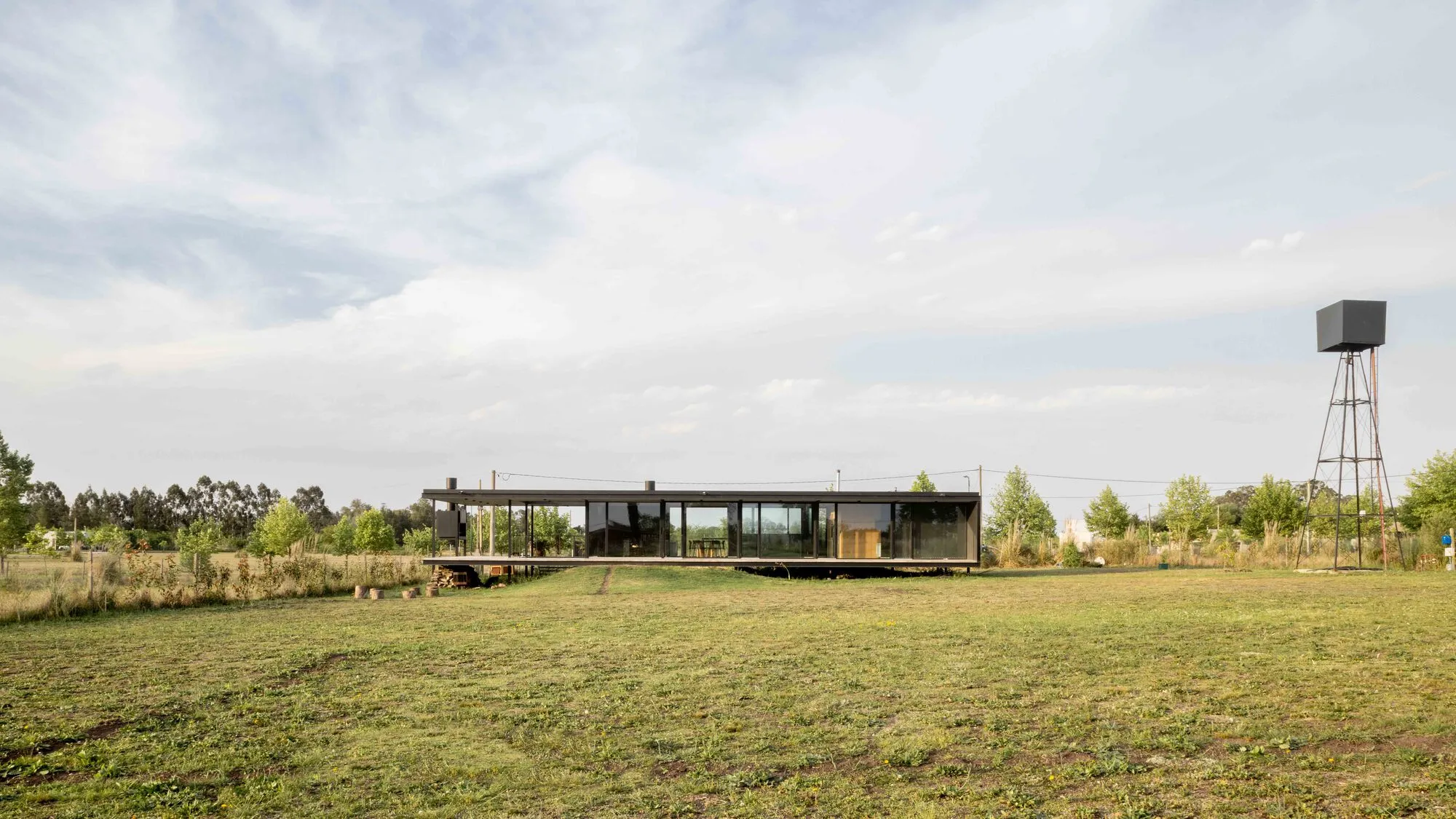
Parada Cantilo Suspends a Corrugated Steel Cabin Above the Sloping Grasslands of City Bell
A 76-square-meter modular pavilion on stilts preserves the natural topography of an Argentine gated community near La Plata.

There is a particular tension in placing a home on a steeply sloped site within an open, windswept landscape and then deciding not to touch the ground at all. La Cañada II House, designed by Parada Cantilo Estudio with lead architect Gonzalo Pérsico, takes that tension as its starting point. Raised on steel stilts above the natural grade of a gated neighborhood in City Bell, near La Plata, the 76-square-meter house refuses to level the earth it sits on. Instead, it floats: a long, dark, wagon-shaped volume that reads as equal parts industrial shed and minimalist glass pavilion.
What makes the project genuinely interesting is the rigorous economy behind it. The entire house is generated from a single structural module derived from standard material dimensions and the necessities of daily life. Welded steel pipes serve triple duty as skeleton, formwork for the concrete floor and ceiling slabs, and frames for the openings. The result is a house that looks effortless but is, in fact, built from an obsessively tight system. At just 76 square meters on a single level, it proves that constraint and comfort are not opposites.
Touching the Ground Lightly
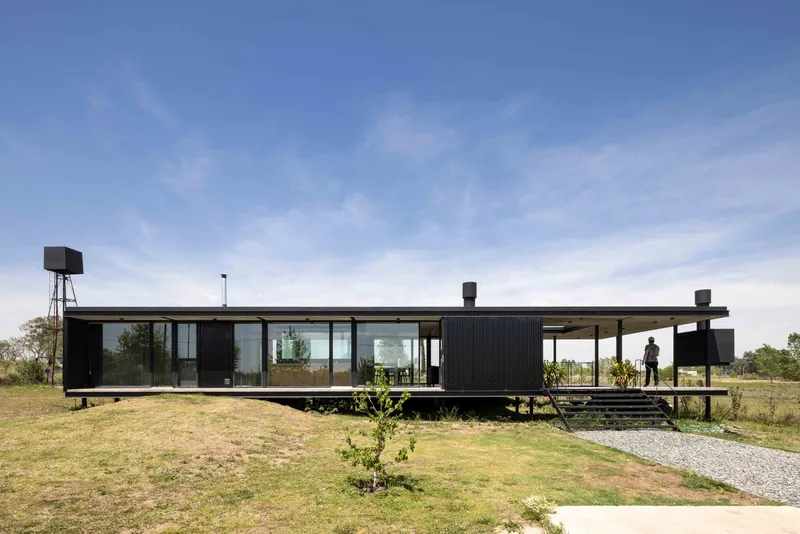
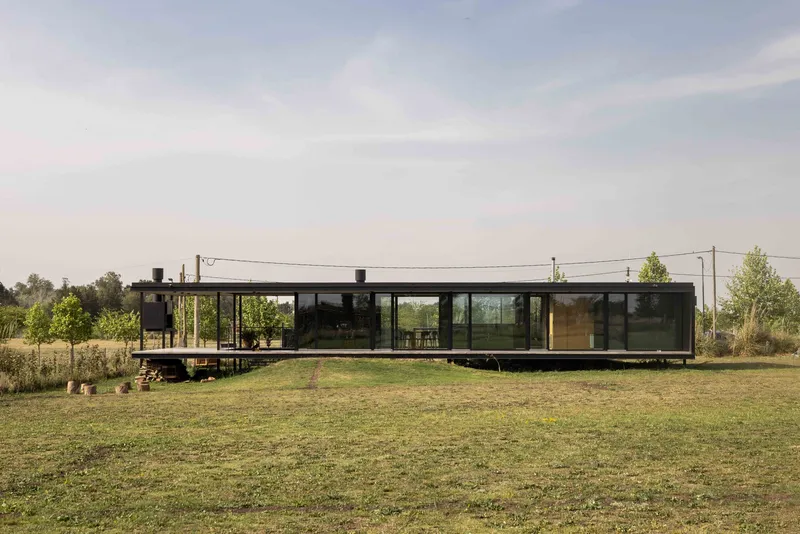
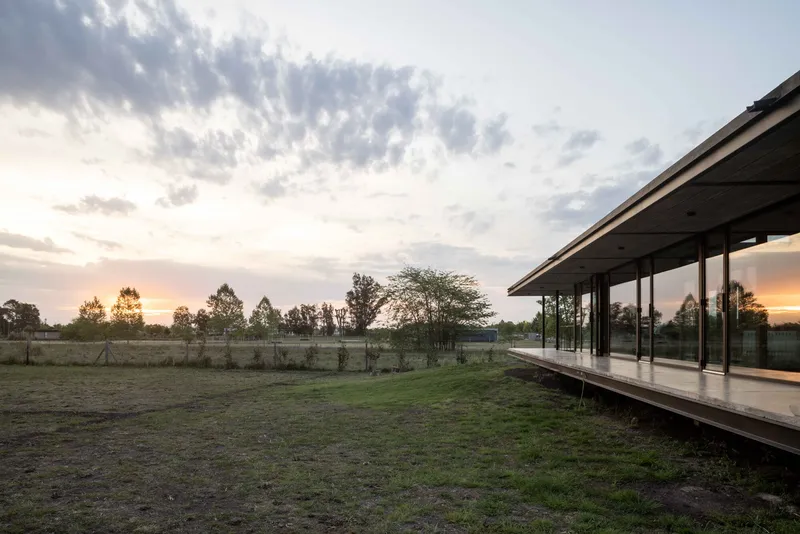
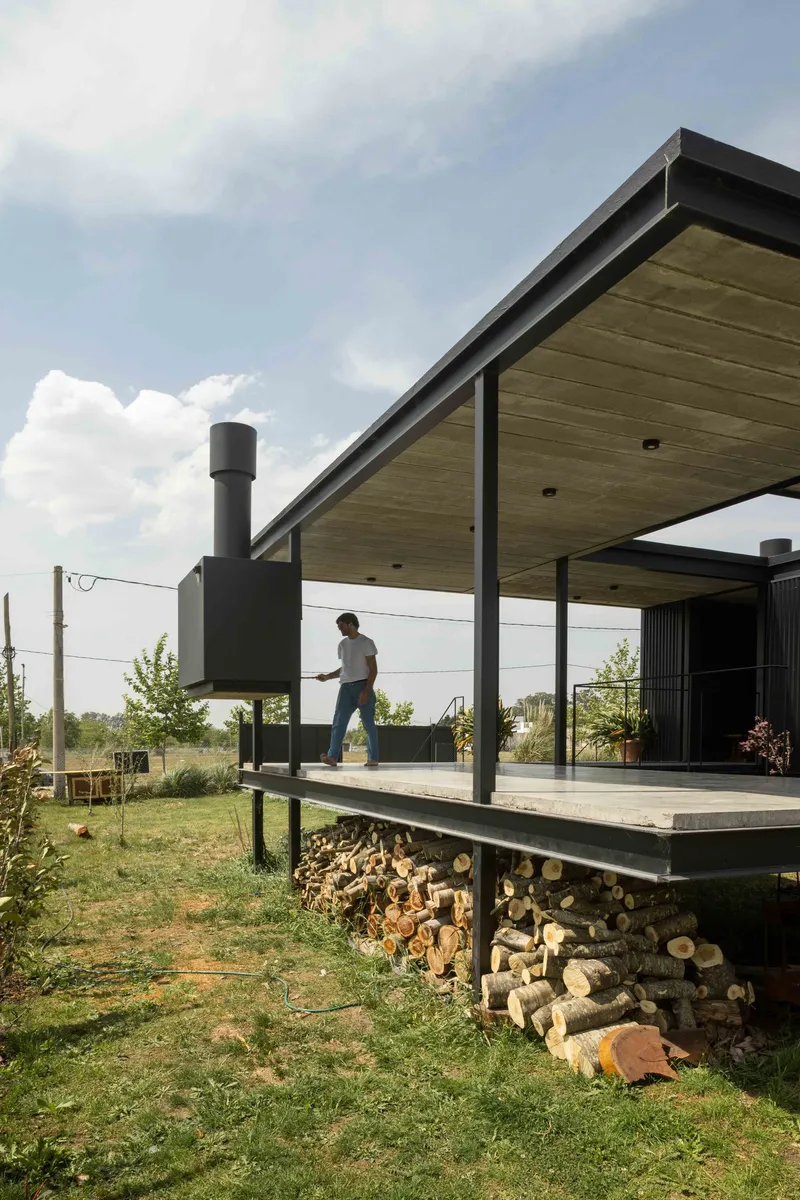
The site slopes toward a stream, and the decision to elevate the entire volume on steel columns is both pragmatic and ecological. By suspending the house, the architects preserve natural drainage patterns and avoid the costly, disruptive process of grading the land. Horizontal concrete planes running the length of the building accentuate the site's slope rather than fighting it. From a distance, the dark linear form hovers above the grassland like a piece of infrastructure that wandered away from a railway.
The elevation also establishes a clear separation between the domestic interior and the sprawling, largely treeless landscape around it. You approach the house from below, climbing steel stairs to reach a threshold that reframes the open pampas as a panoramic backdrop rather than a condition to endure.
Arrival and the Steel Staircase
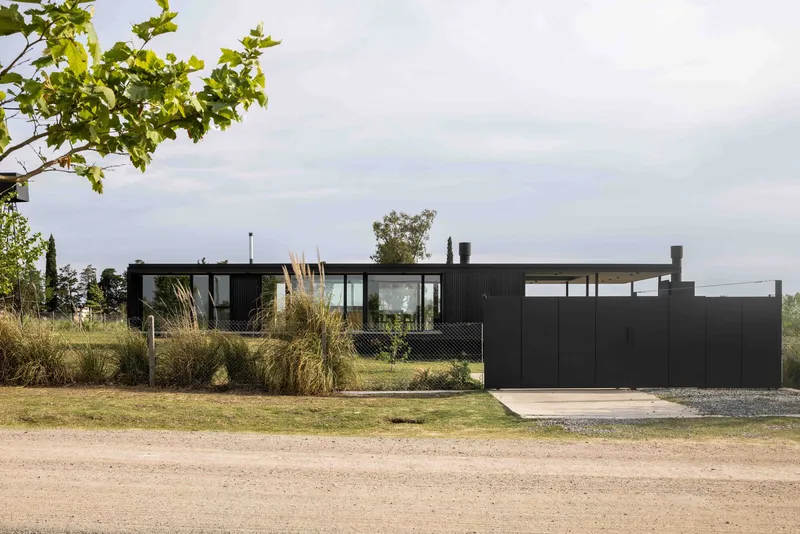

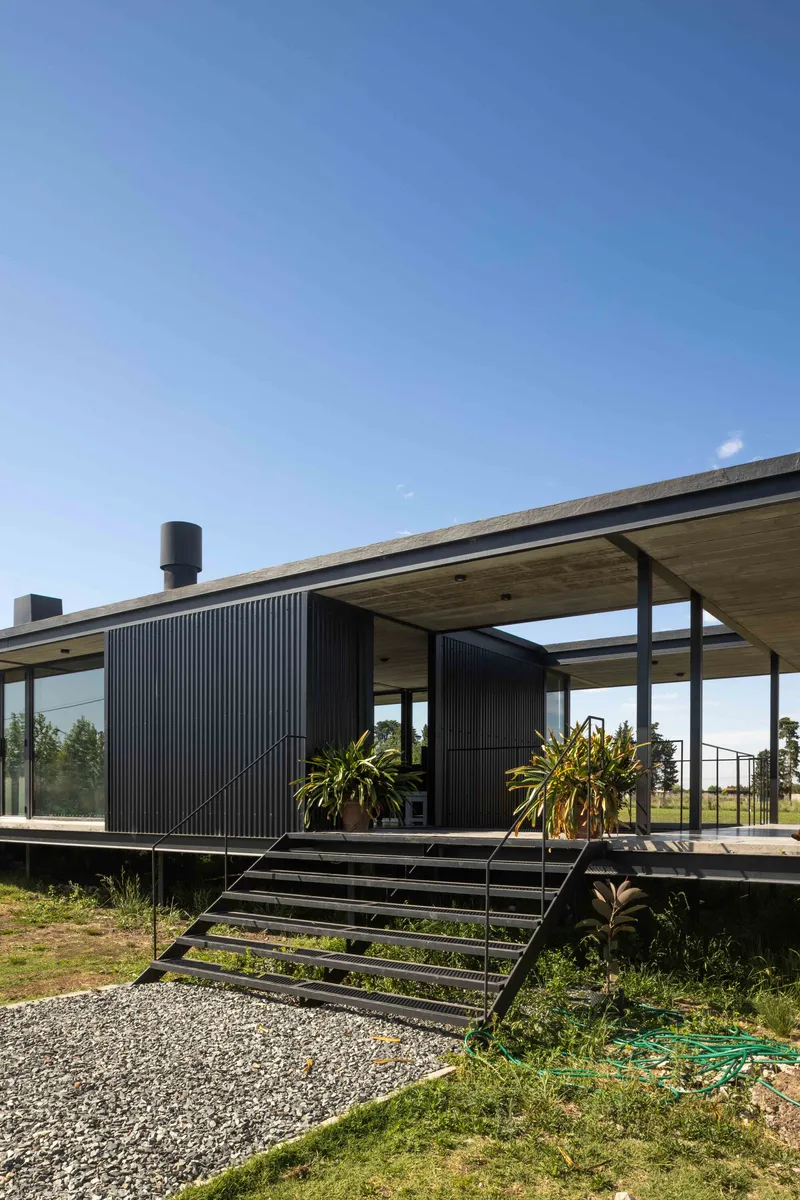
Entry is deliberate. A gate flanked by ornamental grasses leads to the base of a steel staircase with glass railings, ascending into the corrugated metal volume above. The moment of climbing transforms the experience from ground-level landscape to elevated shelter. At the top, a timber-ceilinged deck beneath corrugated cladding acts as a decompression zone before the interior proper. Potted palms and a few warm materials soften the otherwise industrial palette.
The detailing of the stair and the entry sequence reveals how much the architects care about transitions. Nothing about this house is a sudden event. You move from open field, to planted threshold, to vertical ascent, to covered deck, to glass-walled interior. Each step calibrates the relationship between exposure and enclosure.
Two Voids Organizing the Plan
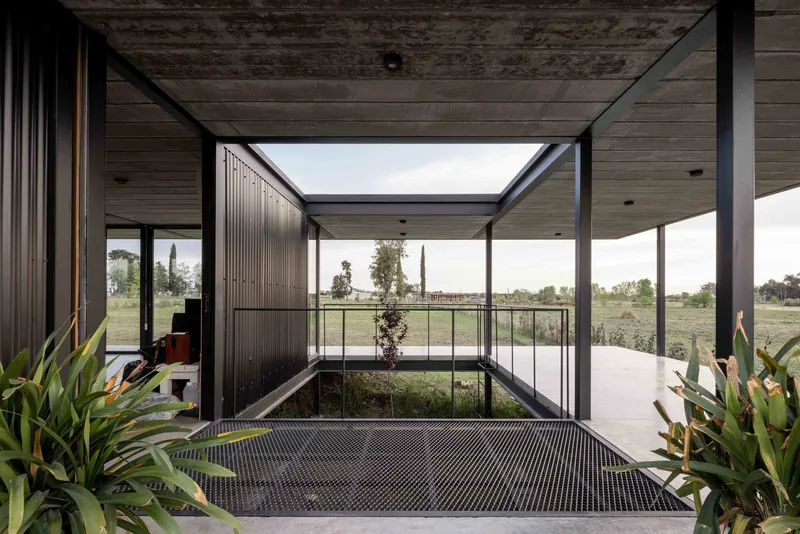
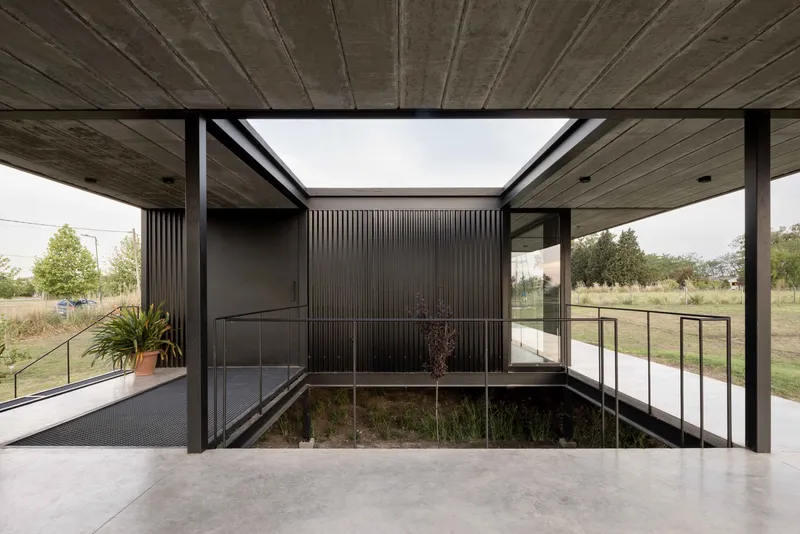

The plan is longitudinal, essentially a single-loaded bar with two square voids punched through the concrete plate. One void creates an interior courtyard tied to the entrance and a semi-covered area facing west. The other serves the building's service assembly. Seen from above, these twin openings read as surgical excisions in the white roof plane, bringing light and air into what could otherwise be a relentlessly linear tube.
The western courtyard is the more expressive of the two. Framed by timber soffits and corrugated metal walls, it holds a planted bed below and draws the exterior landscape up into the body of the house. Green cover in this transitional space blocks direct summer sun while allowing winter light to penetrate. It is a passive climate strategy disguised as a pleasant garden moment.
The Interior as a Warm Counterpoint

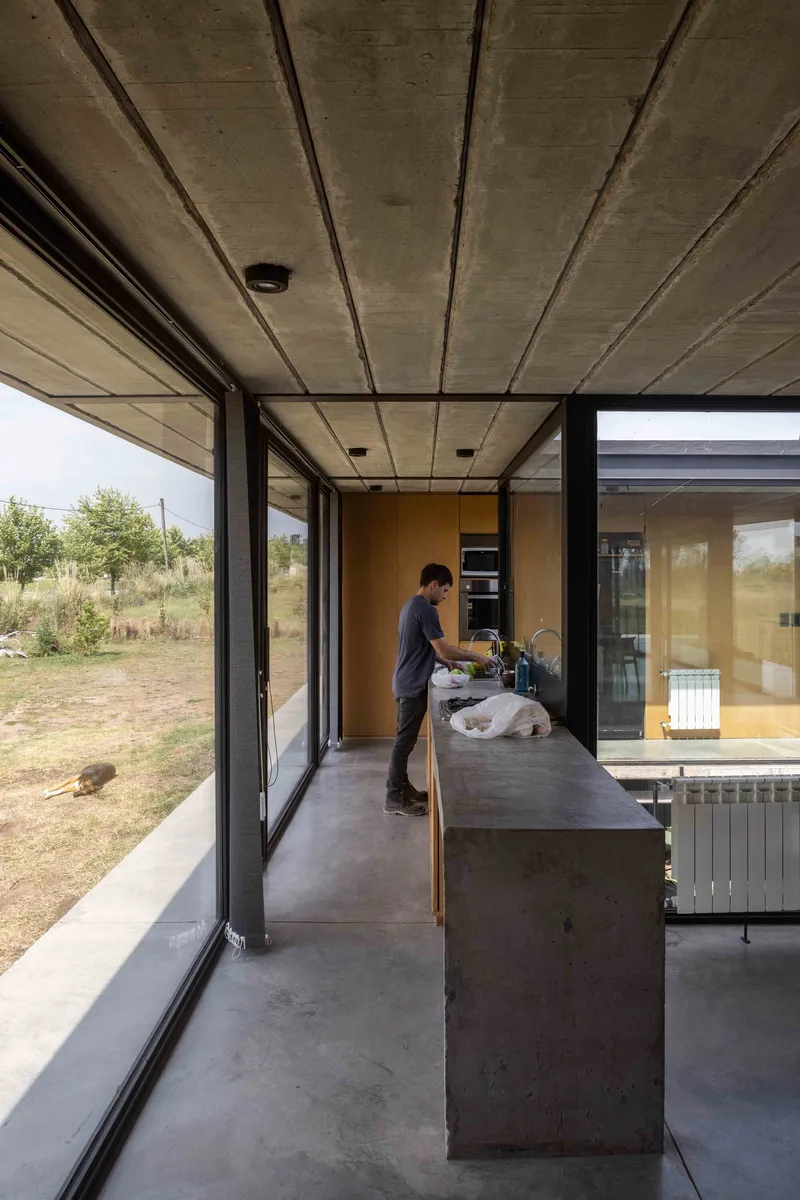
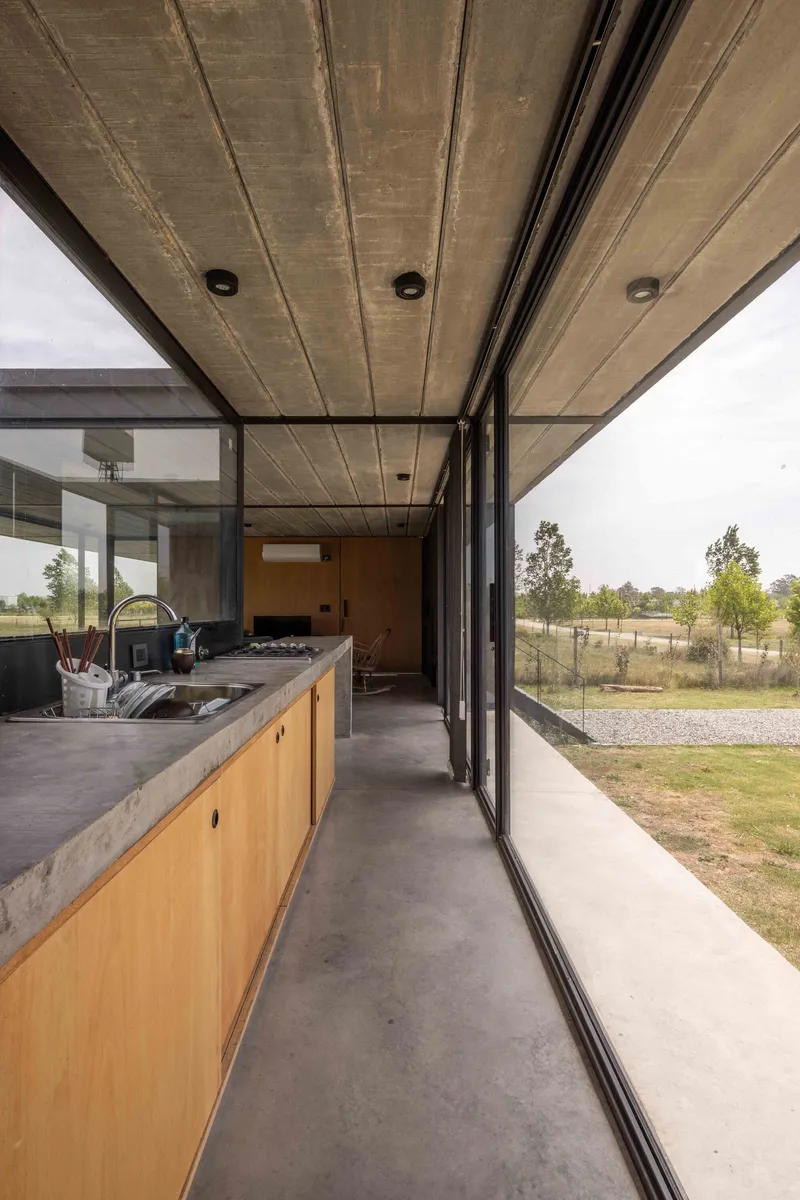
Step inside and the corrugated industrial shell gives way to a domestic warmth that feels genuinely inhabited. Timber ceilings run the length of the living and dining zones, contrasting with polished concrete floors and exposed concrete soffit panels overhead. The kitchen, anchored by a concrete island, is generous despite the house's modest footprint. Sliding glass walls dissolve the boundary between interior corridor and landscape, so even cooking feels like an act performed in the open air.
The material palette is deliberately restrained: concrete for horizontal surfaces, wood for warmth, steel for structure, glass for transparency. Nothing competes. The timber cabinetry in the kitchen corridor is functional without being decorative, and the concrete island doubles as a gathering point. Two occupants cooking here look comfortable, not cramped, which is the real test of any compact plan.
Living Between Inside and Outside
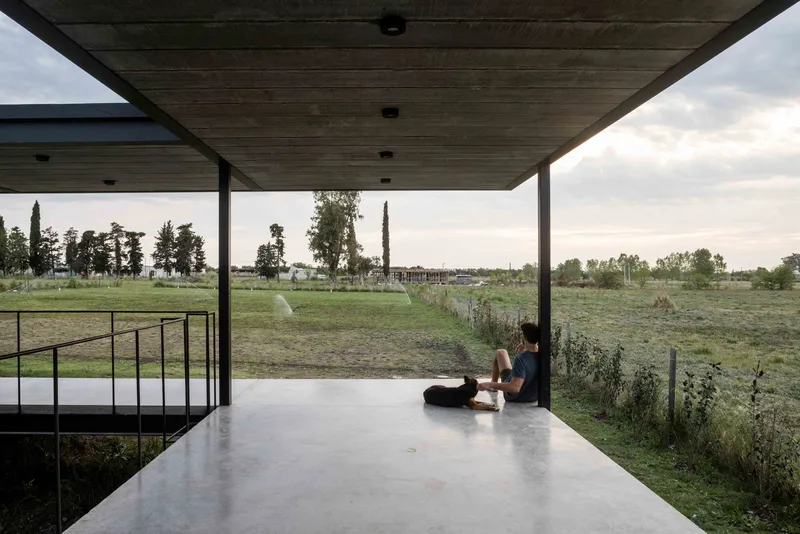
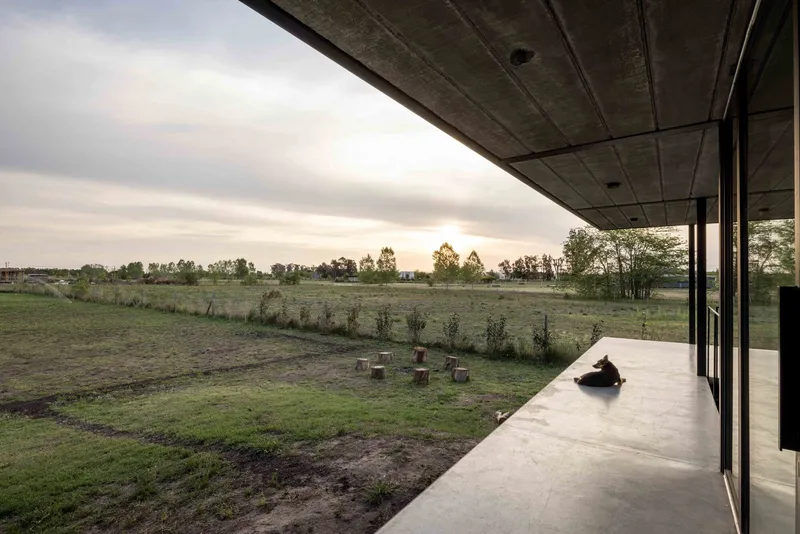
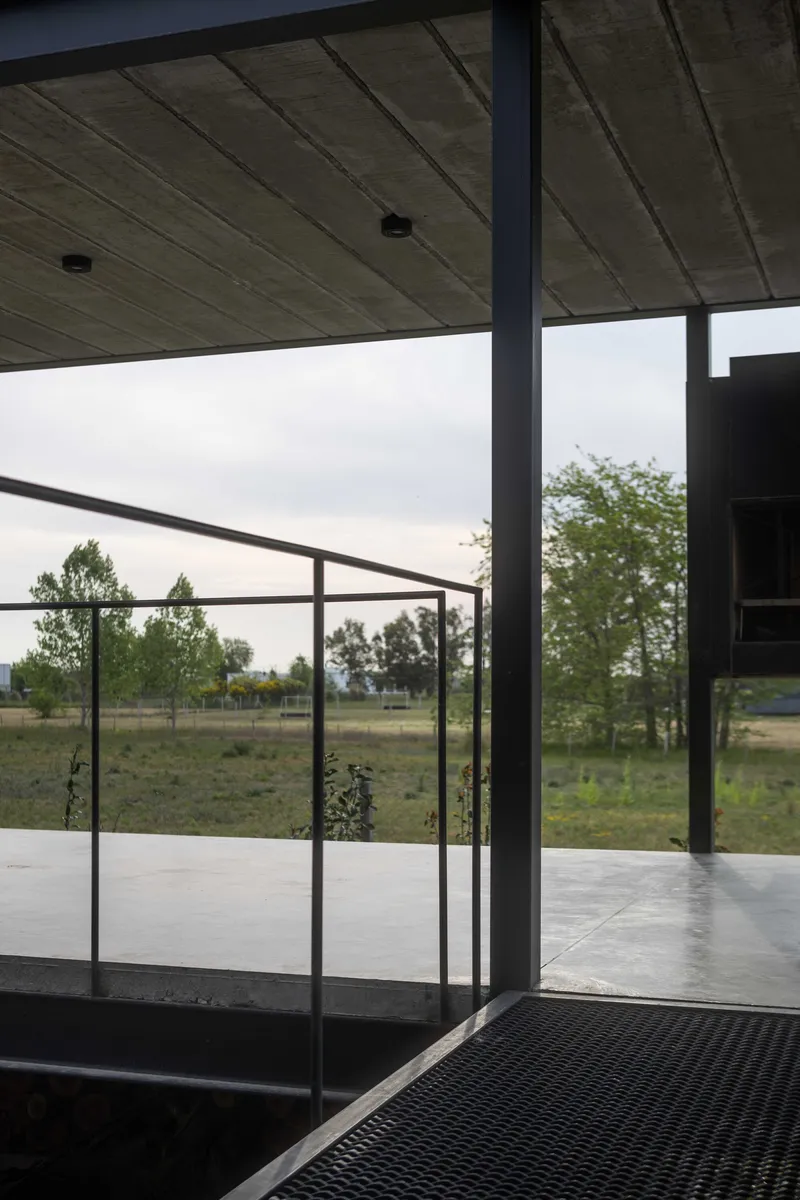
The covered terraces are arguably the most important rooms in the house. Oriented to capture sunset views to the west, they extend the living space into the landscape without giving up the comfort of a roof overhead. The gallery, with its timber ceiling and polished concrete floor, is where the house becomes most itself: a sheltered observation platform for watching weather move across the Argentine plains. A dog resting on the terrace at dusk, two figures seated at the edge of the slab, these images communicate the relaxed domesticity the architects intended.
Bedrooms, by contrast, are oriented to receive morning sunshine, ensuring a clear diurnal rhythm. The envelope responds to cardinal direction: privacy and wind protection where needed, maximum transparency where the landscape rewards it. The house does not treat all four sides equally, and it is better for it.
Structure as System


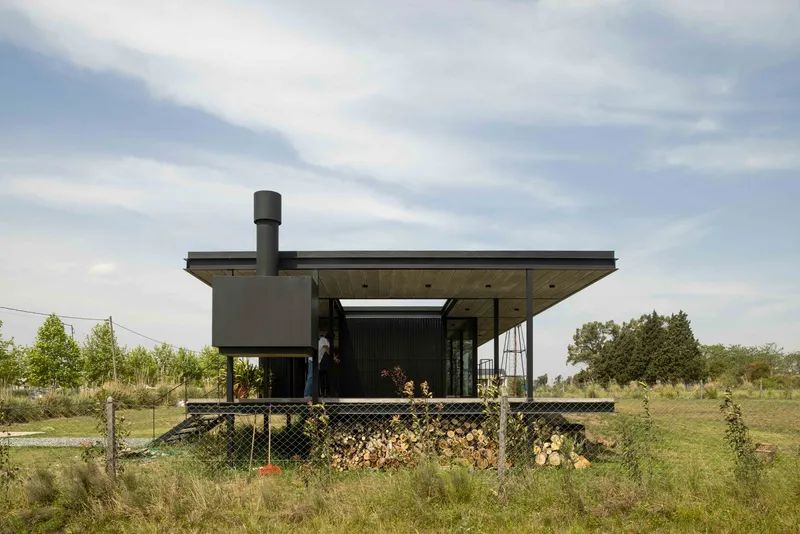
The welded steel frame is not just structure; it is the logic of the entire project. Repeated elements marching in one direction, linked transversally, create a rhythm that governs room width, opening size, and material cuts. The same steel pipes used to form the skeleton also served as formwork for the concrete slabs and as frames for glass and metal panels. This kind of material resourcefulness is rare in residential architecture, where budgets tend to generate redundancy rather than efficiency.
Calling it a "hybrid systematic cabin of industrial nature" may sound like jargon, but it accurately describes what Parada Cantilo has achieved: a house that borrows its intelligence from industrial construction without sacrificing domestic comfort. The module-based system allowed for quick, efficient development, a real advantage on a remote site far from urban supply chains.
Aerial Readings
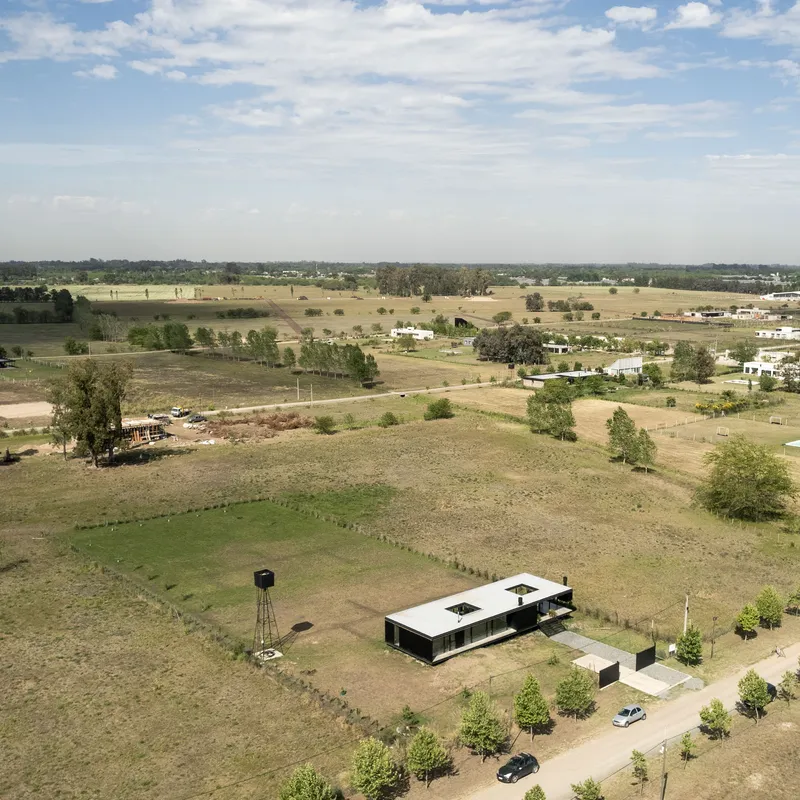
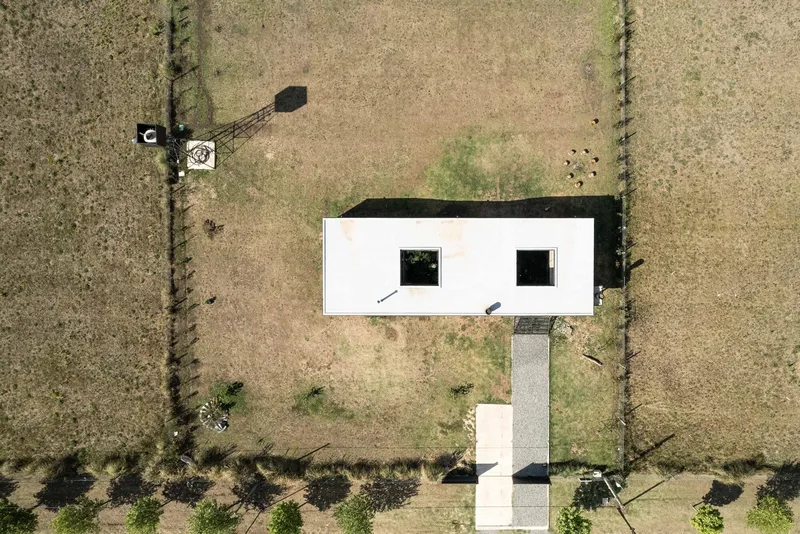
From the air, the house reveals its organizational clarity most completely. The white rectangular roof with its two square courtyards sits among young trees and a metal water tower that acts as a kind of industrial totem on the site. The corrugated roofing, the clean edges, the symmetry of the two voids: all of it reads as a diagram made real. Below the raised platform, stacked firewood hints at the practical, hands-on life the house supports. The covered deck at one end shelters a passage where a figure walks under cloudy skies, perfectly scaled against the long horizontal volume.
Plans and Drawings
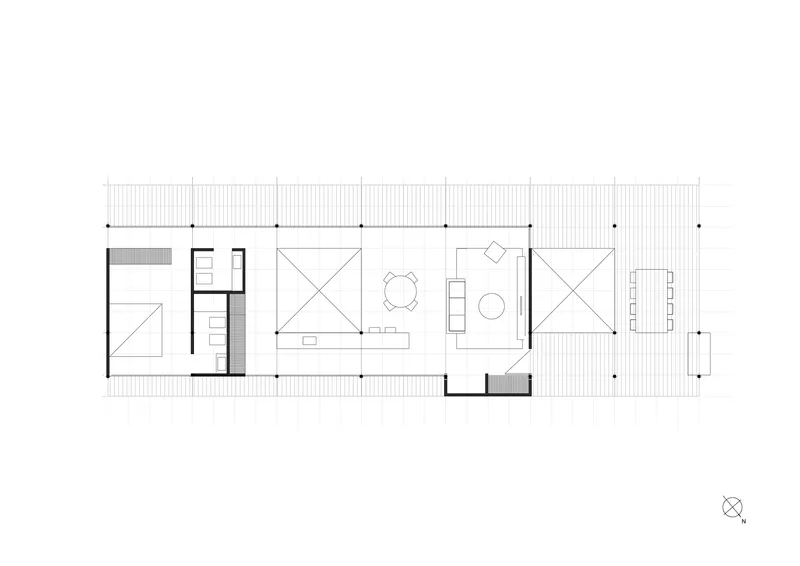
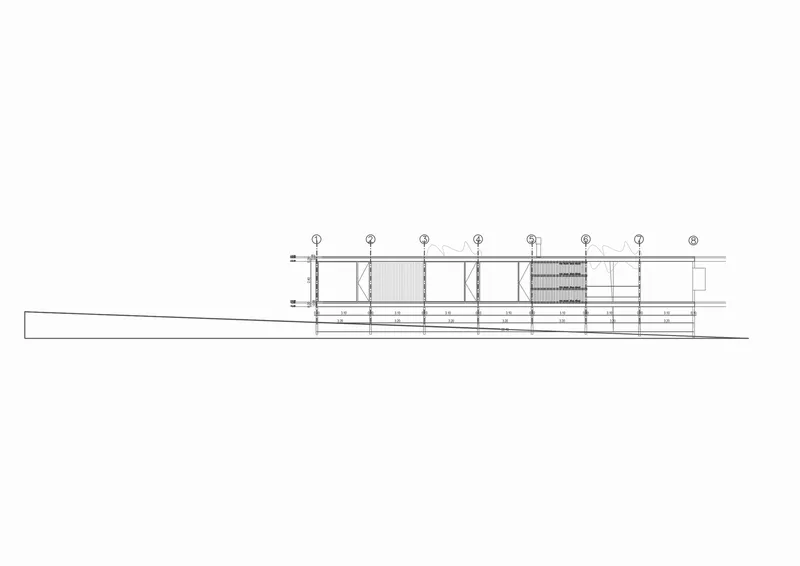
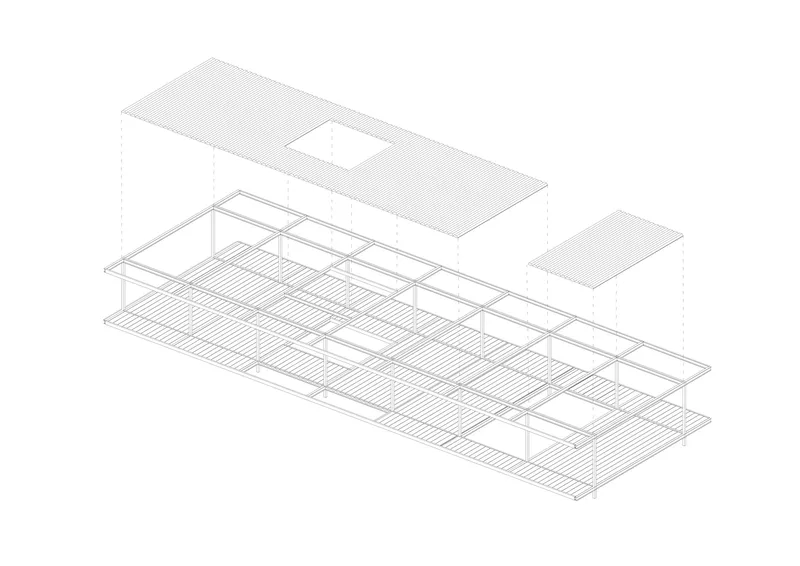

The floor plan confirms the wagon-car logic: a linear sequence of rooms with two double-height voids and an extended deck. The elevation drawing is more revealing, showing how the steel columns lift the volume above the sloped terrain while timber cladding and corrugated metal wrap the upper shell. An exploded axonometric separates the timber roof structure, framing, and decking layers from the two primary volumes below, making the layered construction legible. The isometric wall detail, with labeled cladding panels and structural frame components, is the kind of honest documentation that lets you understand exactly how this building was put together, panel by panel, pipe by pipe.
Why This Project Matters
La Cañada II House is a compelling argument for the modular cabin as a serious architectural proposition. In a context where suburban homes in gated communities often default to conventional masonry boxes dropped onto flattened lots, Parada Cantilo has produced something sharper: a house that respects its topography, minimizes its footprint, and derives its entire formal logic from the dimensions of standard steel and concrete. The result is a home that is specific to its landscape without being sentimental about it.
More broadly, the project demonstrates that rigorous systematization does not have to produce cold or repetitive architecture. The voids, the terraces, the carefully oriented bedrooms and galleries, these are the moves of architects who understand that a system is only as good as the life it enables. At 76 square meters, the house is proof that generosity is a matter of intelligence, not area.
La Cañada II House by Parada Cantilo Estudio, lead architect Gonzalo Pérsico. City Bell, Argentina. 76 m². Completed 2021. Photography by Luis Barandiarán.
About the Studio
Share Your Own Work on uni.xyz
If projects like this are the kind of work you want to make, uni.xyz is a place to publish your own, find collaborators, and enter design competitions.




Popular Articles
Popular articles from the community

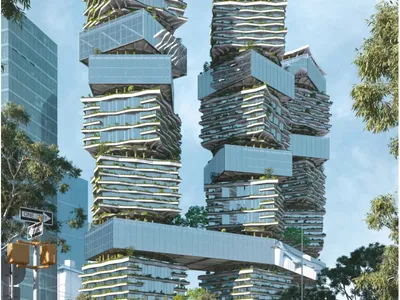
Hierarchy Towers: Sustainable Architecture for Vertical Co-Living in Singapore
Hierarchy Towers reimagines sustainable architecture through co-living, shared workplaces, green terraces, and new public life in Singapore.

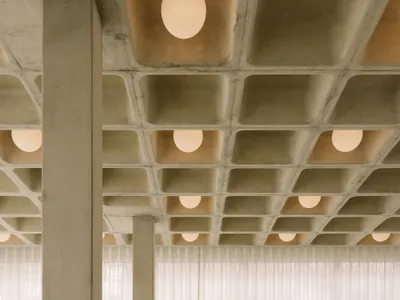
RHO Converts a Berlin Spree-Side Industrial Courtyard into Enkime's 1,000 m² Agency Headquarters
A social media agency's new home in Charlottenburg trades glossy branding for concrete waffle ceilings, glazed tile, and sheer curtains.
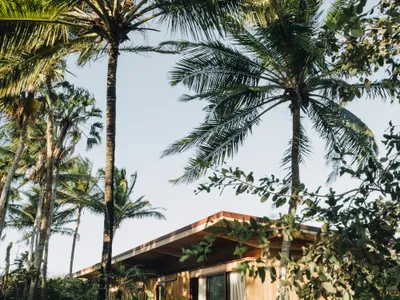
UNA Barbara e Valentim Plants Four CLT Bungalows in a Fragile Ceará Landscape
Prefabricated eucalyptus timber cabins touch down lightly on the sandy, biodiverse coast of Barroquinha, Brazil.
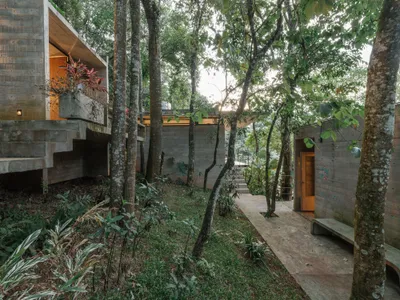
Terra e Tuma Scatters Four Concrete Pavilions Through the Atlantic Forest in Mairiporã
A fragmented compound of music studio, art studio, chapel, and living quarters preserves every tree on a steep forested hillside near São Paulo.


Similar Reads
You might also enjoy these articles
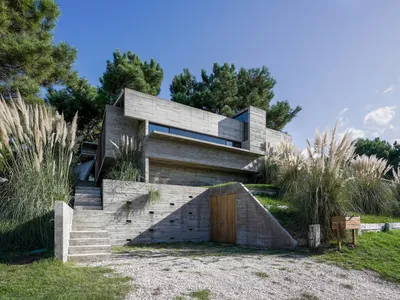
Loma House by Besonias Almeida Arquitectos: Modern Coastal Living in Costa Esmeralda
Loma House by Besonias Almeida Arquitectos is a modern coastal home in Costa Esmeralda, blending exposed concrete, wood, and natural dunes.
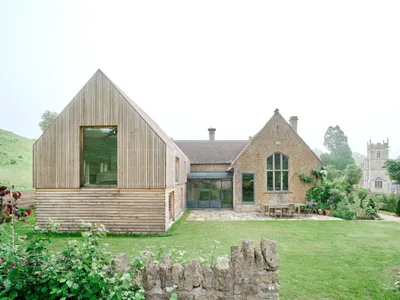
“Pitcombe’s Old School House Renovation by Bindloss Dawes: Blending Heritage and Contemporary Design”
Bindloss Dawes transformed Pitcombe’s 19th-century Somerset schoolhouse with a sustainable timber extension, blending historic charm, contemporary design, and panoramic countryside views.
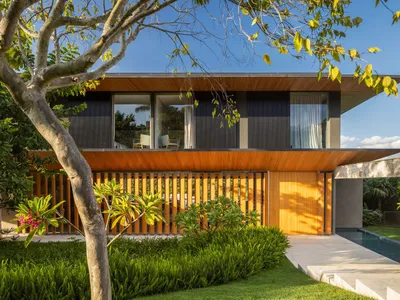
F3 Residence by Belluzzo Martinhão Arquitetos: Contemporary Luxury in São Paulo’s Countryside
F3 Residence in São Paulo blends contemporary design, natural materials, multigenerational living, hillside integration, expansive glass, infinity pool, and seamless indoor-outdoor flow.
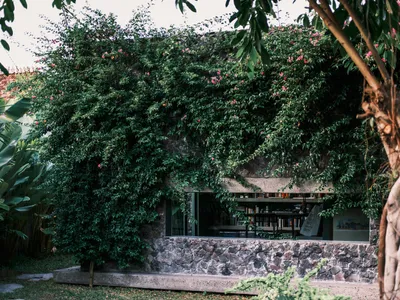
Private Villa in Ubud by BAMM ARCHITECTS: Contemporary Design Amidst Bali’s Jungle
Private Villa in Ubud blends contemporary design with tropical landscape, featuring open-air pavilion, stone and wood materials, suspended master bedroom, and jungle pool views.


Explore Installations Competitions
Discover active competitions in this discipline




The Global Benchmark for Architecture Dissertation Awards


Challenge to design a portable theatre


Challenge to design a portable music platform


Challenge to design an open learning module for the elderly
Comments (0)
Please login or sign up to add comments
No comments yet. Be the first to comment!