

Peace Pavilion: A Memorial Architecture of Reflection and Collective Healing in Senegal
A contemplative memorial architecture in Senegal where light, water, and geometry guide visitors through reflection, memory, and peace.


In the evolving discourse of memorial architecture, spaces are no longer static monuments but immersive environments that engage emotion, memory, and collective consciousness. The Peace Pavilion, located in Sedhiou, Senegal, Africa, exemplifies this shift through a spatial narrative rooted in contemplation, compassion, and awareness. Designed by Cherine H, this Jury Commendation entry in Public Architecture '20 redefines how architecture can embody peace through experiential design.
At its core, the project positions architecture as a mediator between past conflict and future reconciliation. Rather than imposing symbolism, the pavilion constructs a journey. Visitors are not merely observers but participants moving through a carefully choreographed sequence of spatial conditions that evoke introspection and emotional engagement.
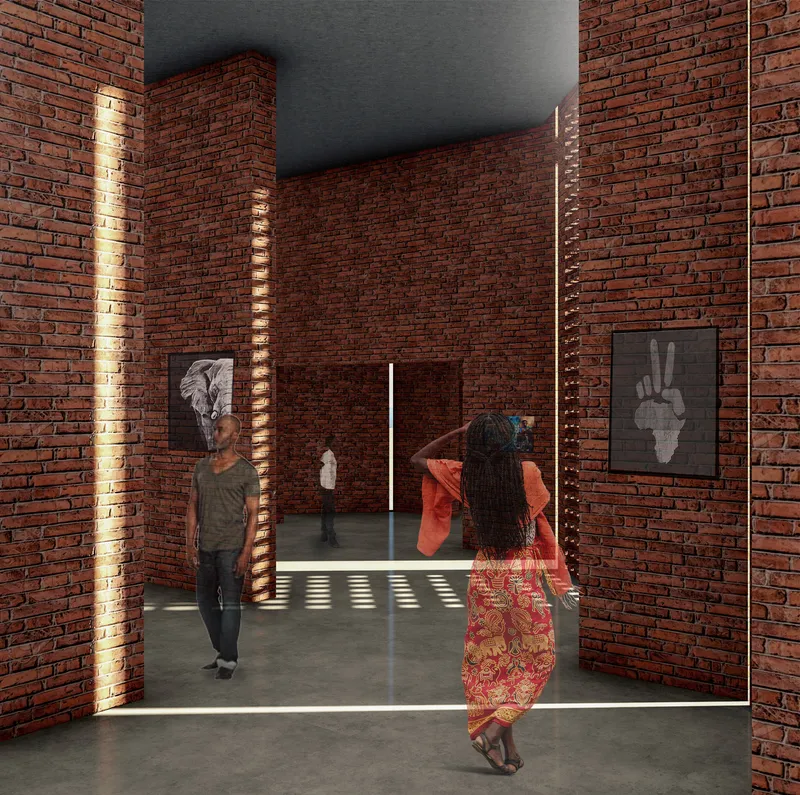
The architectural language is deliberately restrained. A composition of linear clay brick walls forms a symmetrical and grounded structure, anchoring the building within its local context. The use of brick is not incidental. It resonates with regional construction practices, embedding the pavilion within the cultural and material identity of Senegal. This material continuity reinforces the notion that peace must emerge from within the community rather than being externally imposed.
The design process begins with a simple site intervention. A defined plot is carved out, followed by volume extrusion that establishes a central mass. This mass is then articulated through a series of cuts and voids, generating a sequence of corridors and enclosed spaces. The resulting geometry is both minimal and powerful, guiding movement without overwhelming the visitor.
A central sky court becomes the spatial and emotional anchor of the pavilion. This open-to-sky void introduces natural light as a primary design element. Light enters through narrow vertical slits and inclined walls, creating a dynamic interplay of illumination and shadow throughout the day. These shifting light conditions are not merely aesthetic. They reinforce the passage of time, encouraging visitors to pause and reflect.
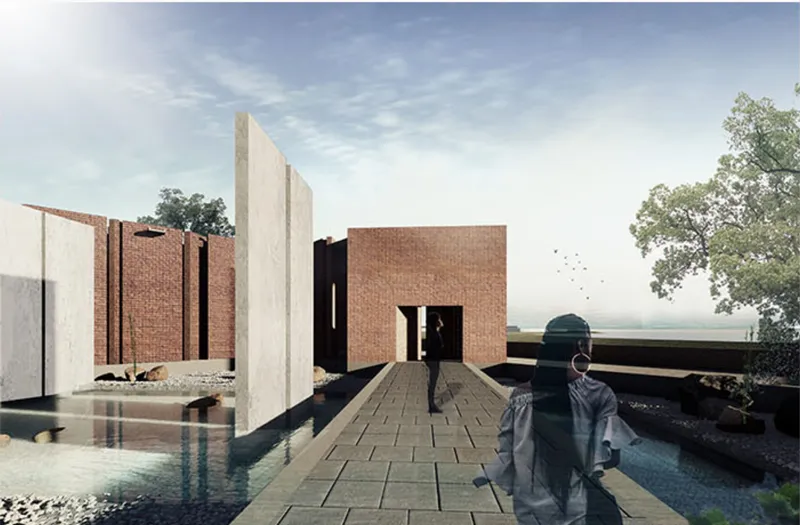
Water plays an equally significant role in shaping the experience. The reflective water court at the center introduces stillness and introspection. As visitors approach this space, the ambient sound softens, replaced by subtle water movements. The surface reflections blur the boundaries between architecture and sky, creating a meditative environment that invites contemplation.
Programmatically, the pavilion is structured as a sequence of emotional states. The entry plaza prepares visitors for the transition from the external world. Exhibition spaces introduce narratives of conflict and memory. Study areas encourage intellectual engagement, while spaces of contemplation and devotion provide moments of silence. The progression culminates in the water court, symbolizing reflection and reconciliation.
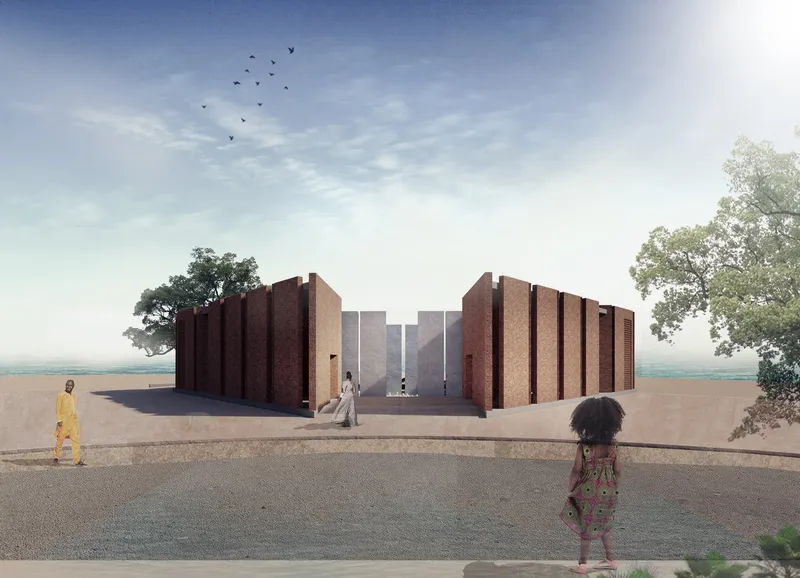

The integration of environmental strategies further strengthens the project’s intent. Inclined walls and strategic openings facilitate natural ventilation, while rainwater harvesting systems collect and channel water into the central court. This ecological responsiveness aligns with the broader theme of harmony, not only among people but also between architecture and nature.
Circulation within the pavilion is intentionally linear yet flexible. The perimeter corridors frame the central void, allowing visitors to navigate at their own pace. This spatial ambiguity ensures that each individual experience remains personal and non-prescriptive.
Visually, the pavilion presents a monolithic exterior with subtle articulation. Vertical recesses in the brick facade create rhythm and depth, while maintaining a sense of solidity and protection. In contrast, the interior unfolds as a sequence of intimate and open spaces, reinforcing the duality between enclosure and exposure.
The project’s strength lies in its ability to translate abstract values into tangible spatial experiences. Memory is embedded in the journey, compassion in the materiality, and peace in the atmosphere of stillness. The architecture does not dictate meaning but provides a framework within which meaning can emerge.
In the context of contemporary memorial architecture, the Peace Pavilion stands as a compelling example of how design can move beyond representation toward experience. It demonstrates that architecture, when approached with sensitivity and clarity, can become a catalyst for healing and dialogue.
By situating itself within the landscape of Sedhiou and drawing from its cultural and environmental context, the pavilion achieves both specificity and universality. It speaks to local realities while addressing global concerns of conflict, memory, and reconciliation.
Ultimately, the Peace Pavilion is not just a building. It is a spatial narrative that unfolds through movement, light, and silence. It invites visitors to confront the past, engage with the present, and envision a more compassionate future.



Popular Articles
Popular articles from the community


Singing Woman: Contemporary Architecture Inspired by Estonia’s Voice and the Sea
Singing Woman turns Estonia’s song culture into flowing opera house architecture, blending public life, landscape, sea, and national memory.

Opera on the Sea: Driftwood Logic Shapes a Timber Opera House on Estonia's Coast
Trevor Orgill's opera house translates the entangled drift of floating timber into a civic building where wood, water, and music converge.

Cloaked Colonization: A Mobile Underwater Habitat That Moves Like a Fish
Micah Abaya's shortlisted EHC Pacific entry reimagines ocean settlement as a dispersed network of self-sustaining architectural organisms.

Manzana Morphosis: Stretching Barcelona's Grid into a Living Landscape for 2050
A radical reworking of the Eixample manzana turns density into a tool for generous public space, vertical ecology, and environmental performance.

Similar Reads
You might also enjoy these articles

Eco Chapel: A Green Architecture Pavilion Designed in Symbiosis with the Forest
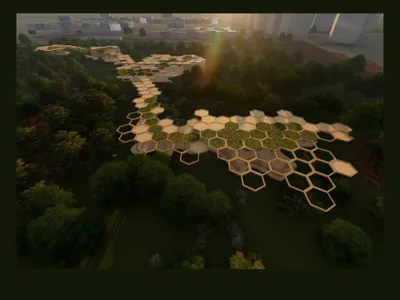
Eco Chapel uses green architecture to weave prayer, learning and reuse into a forest pavilion shaped by modular hexagonal canopies for life.
Kaffeebühnen: Coffee Shop Architecture Designed as a Civic Stage Between Vienna’s City and Park
Kaffeebühnen turns coffee shop architecture into a civic stage, linking Vienna’s park edge, urban life, warm timber yards, and coffee craft.
Healing Façade: Sustainable Architecture for Reforestation, Community, and Sacred Ecology in Ethiopia
Healing Façade reimagines sustainable architecture as a living wall that restores soil, catches water and renews Ethiopia's forest churches.


Urban Forest: A Vertical Ecosystem for 5,000 Workers in Singapore's Changi Business Park
Radially stacked pods and layered green decks turn a 7-acre plot into 47 acres of ecological workspace projected for 2040.

Explore Public Architecture Competitions
Discover active competitions in this discipline

Challenge to design a portable theatre

Challenge to design a portable music platform

Challenge to design an open learning module for the elderly

Challenge to reimagine the Iron Throne
Comments (0)
Please login or sign up to add comments
No comments yet. Be the first to comment!