
Perpetual Chapel: A Community-Centered Sacred Space in Zapopan, Mexico
Perpetual Chapel in Zapopan, Mexico, by Fino Lozano, is a community-built, serene sacred space with brick vaults, wood accents, and perpetual prayer.


Situated north of Guadalajara in Nuevo Vergel, the Perpetual Chapel by Fino Lozano is a 3,229-square-foot architectural gem completed in 2021. This chapel is not just a place of worship, it is a community-centered space built collaboratively by the neighborhood’s residents, reflecting the architect’s commitment to inclusive, participatory design.
Community Participation and Architectural Philosophy
Breaking from Fino Lozano’s typical focus on residential projects, the Perpetual Chapel emphasizes public engagement and spiritual continuity. Inspired by Francis Kéré’s 2022 Pritzker Prize philosophy, “Everyone deserves quality, everyone deserves luxury, and everyone deserves consolation”: this project embodies a sense of shared ownership, connection, and pride among its builders and parishioners.
Spatial Organization and Sacred Design
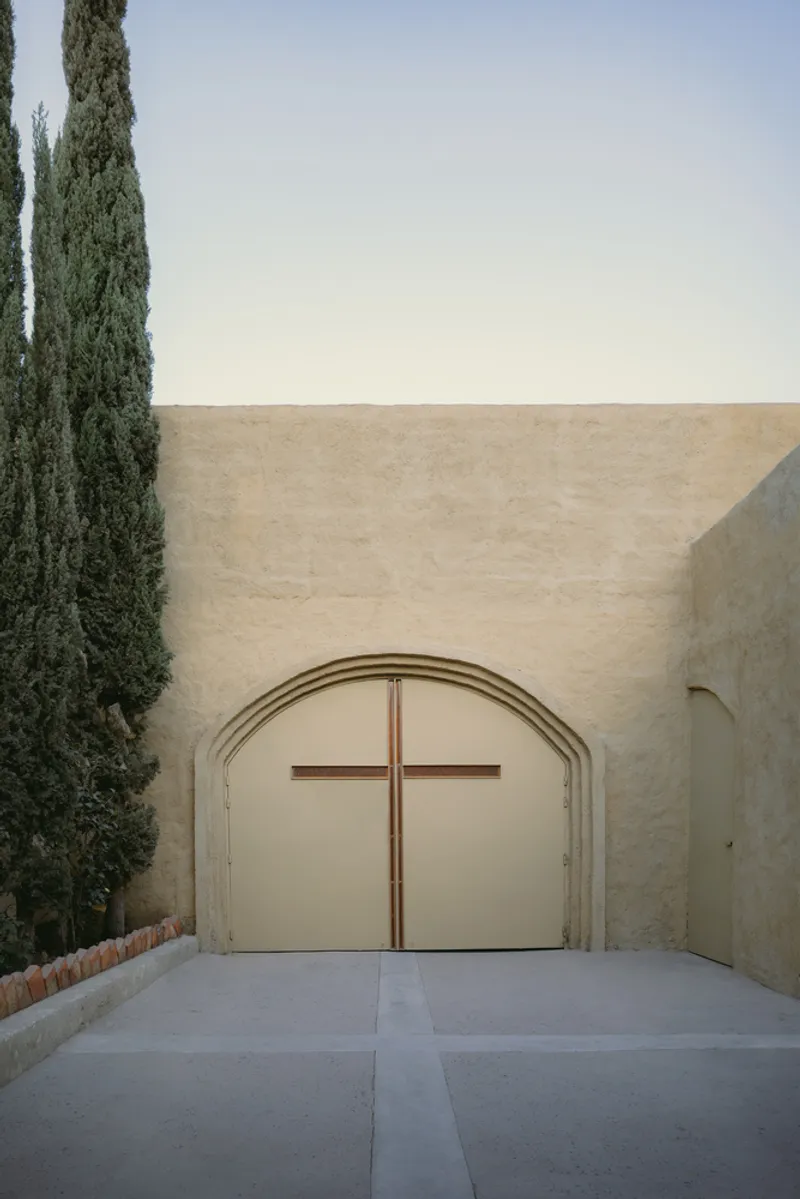
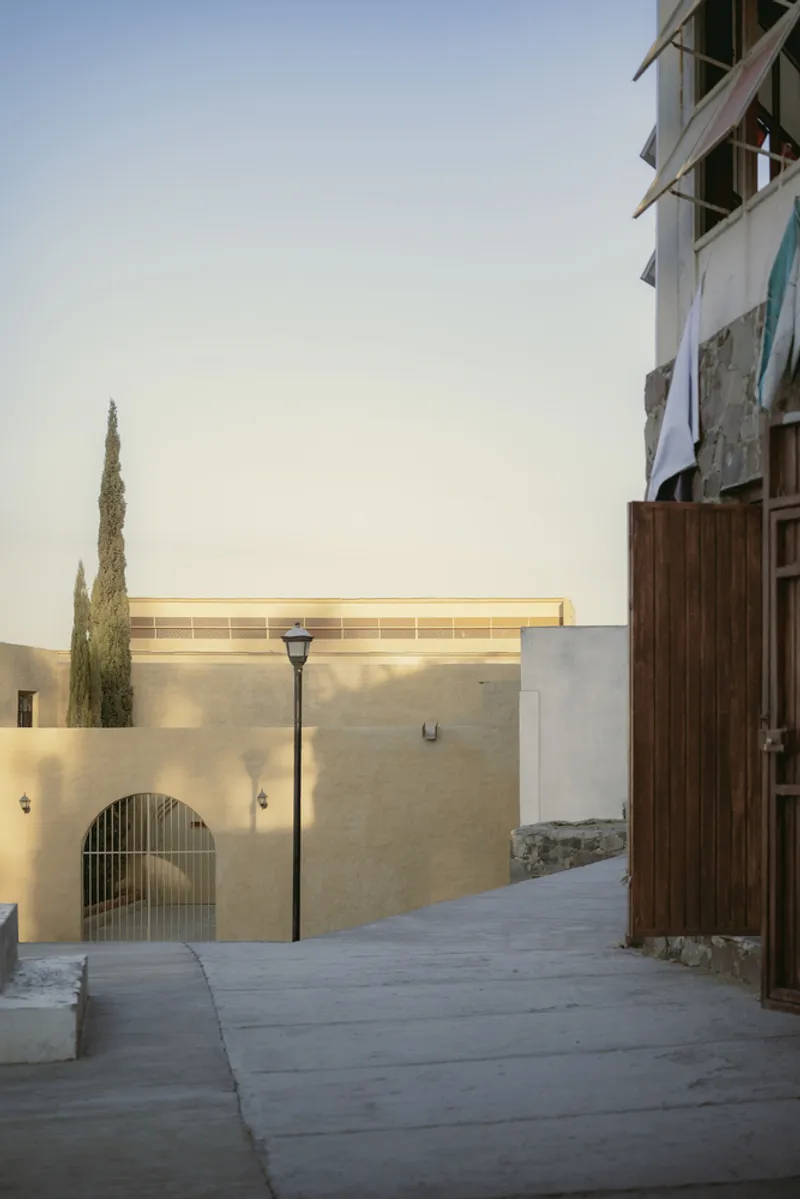
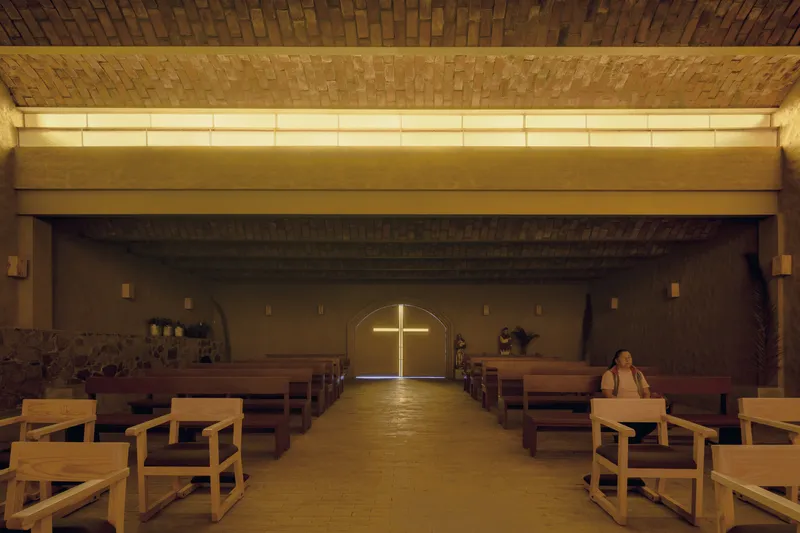
The chapel is organized into two sequential spaces. Visitors first encounter a modest open atrium serving as a transitional area and housing practical facilities like lavatories. A line of cypress trees guides the eye toward the second space: the sacred chapel itself. Entry is marked by a solid metal gate with a minimalist amber glass cross. Neutral, monochrome walls create a unified, calming atmosphere, establishing a seamless transition from exterior to interior.
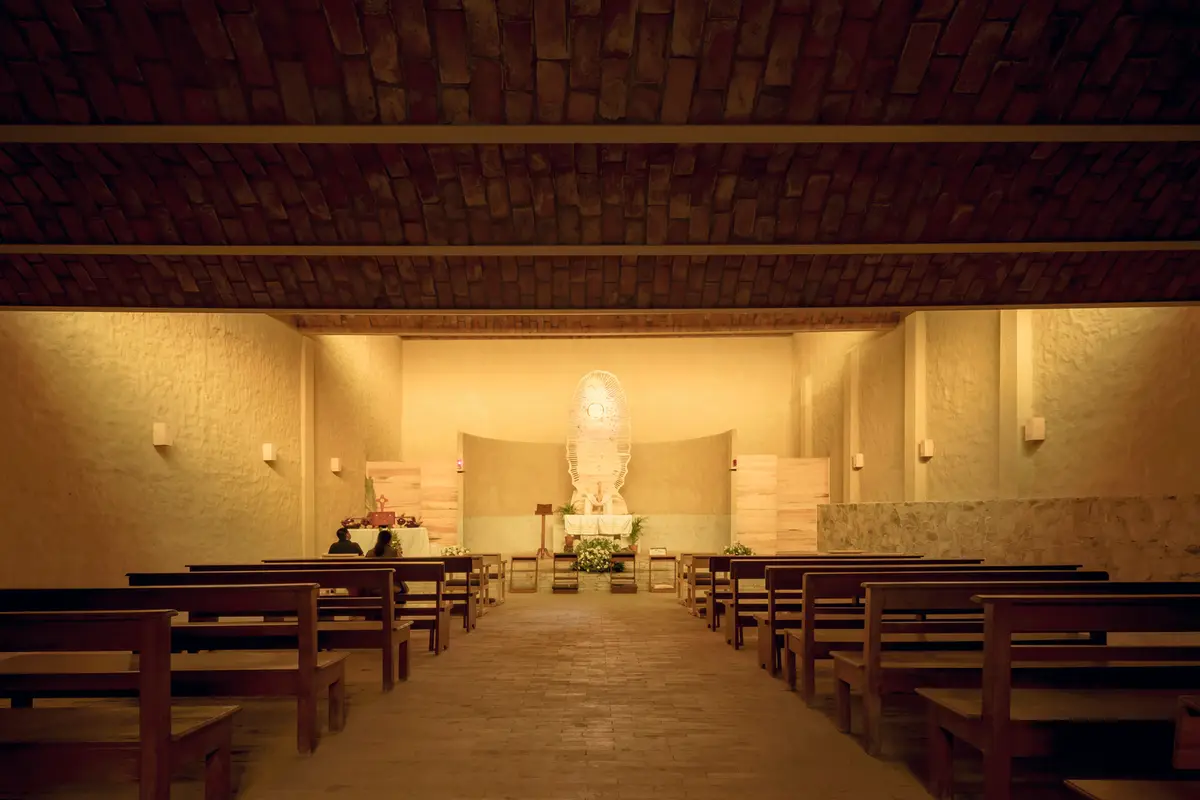
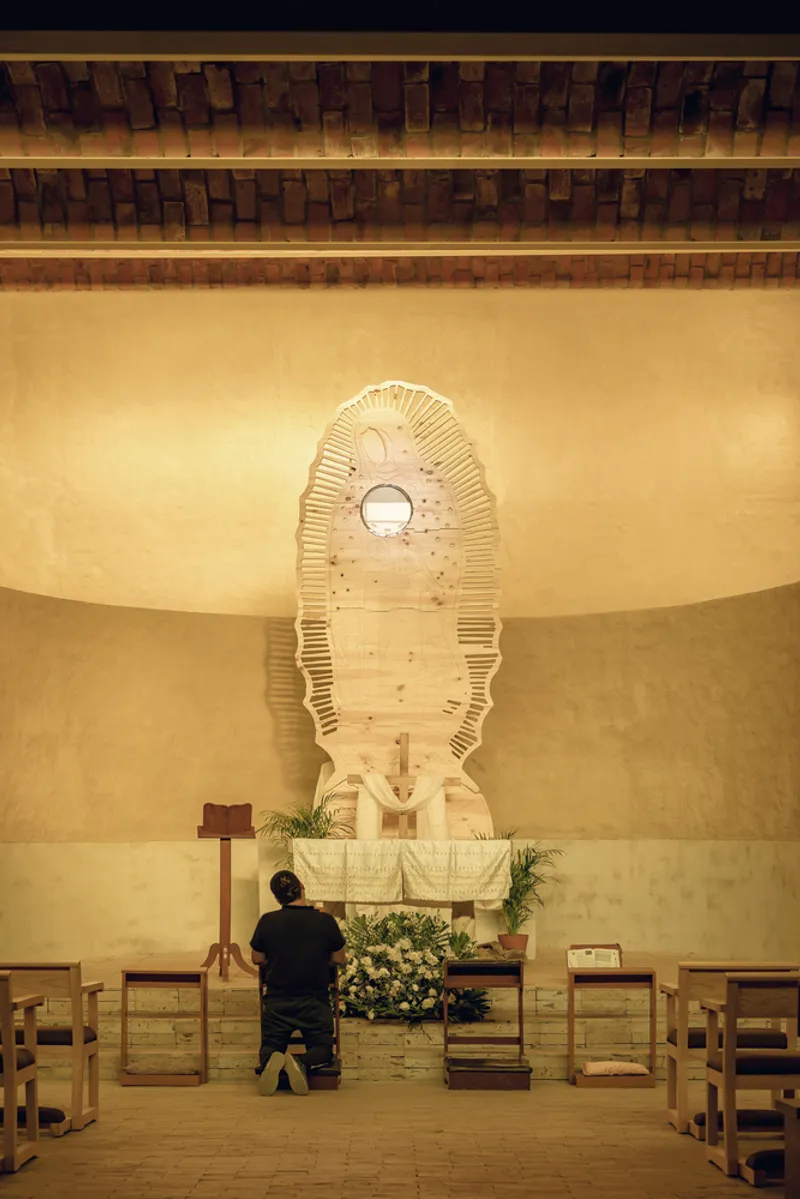
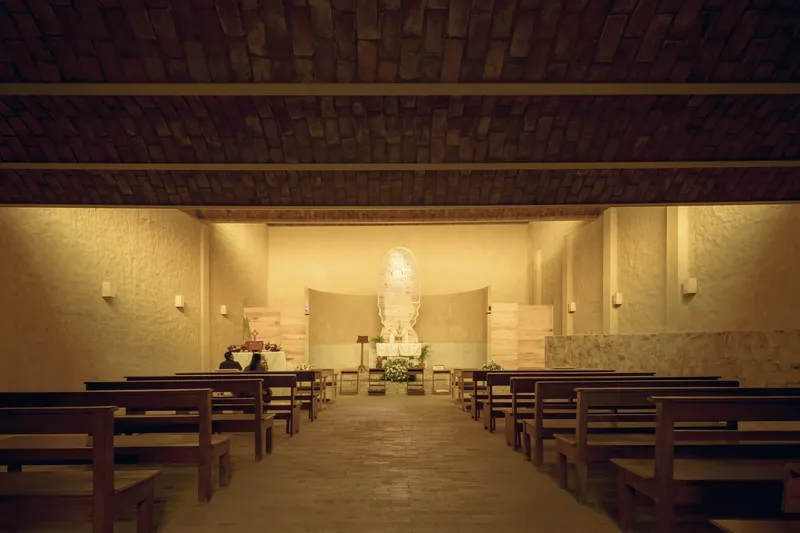
Inside, the chapel’s single story features three distinct ceiling heights, rising toward the altar. A stepped roof directs filtered natural light through amber lanterns, focusing attention on the altar where a wooden monstrance shaped like the Virgin of Guadalupe continuously displays the consecrated host. This interaction of light, material, and form creates a meditative and contemplative environment.
Materials, Craftsmanship, and Atmosphere
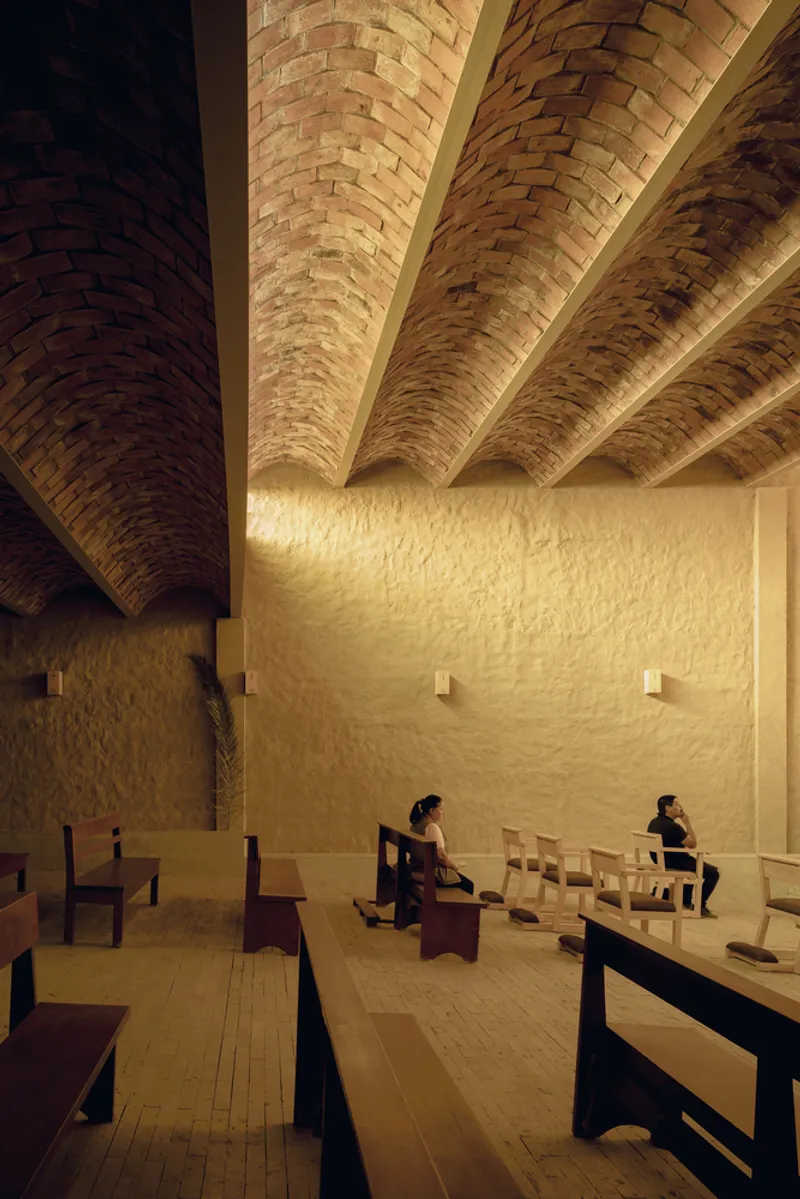
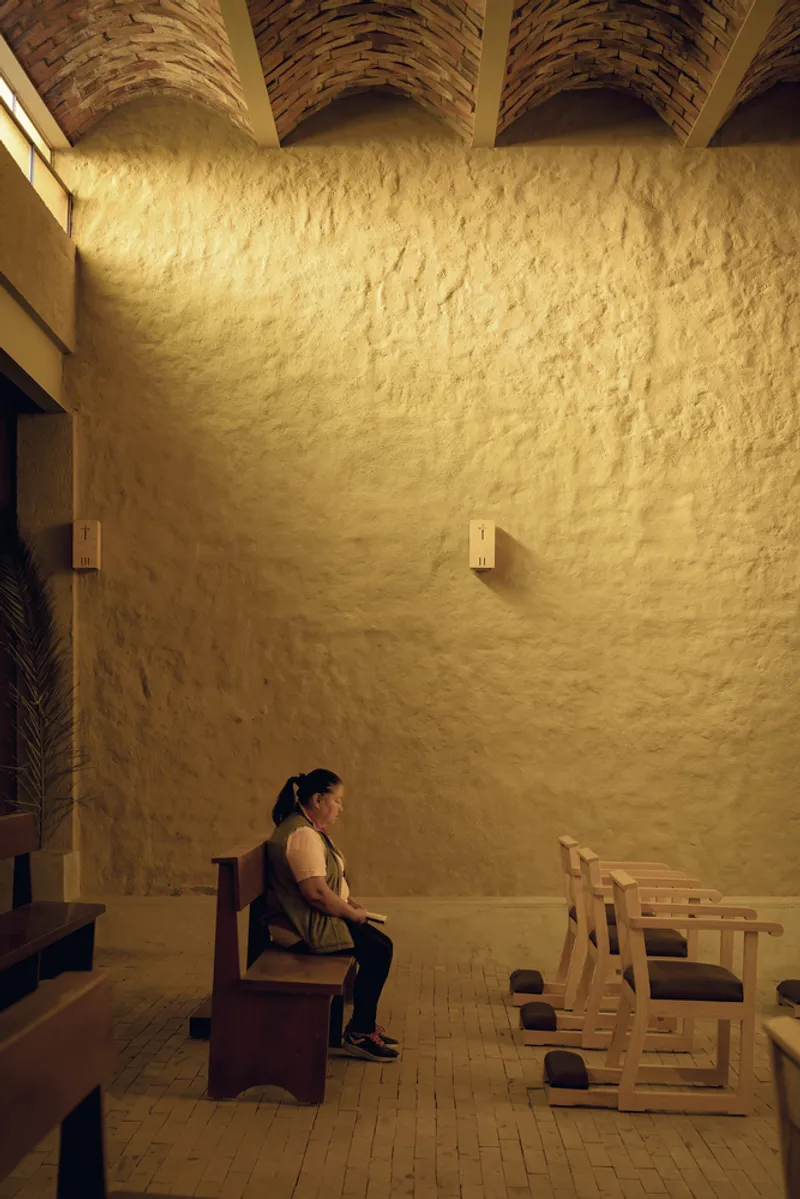
The chapel’s ceiling is constructed with traditional Catalan vaults in exposed brick, harmonizing with wooden benches and screens that echo the vaults’ rhythm. Combined with plastered walls, brick, and wood elements, the interior exudes warmth, calm, and tactile richness. The materiality reflects both craftsmanship and the sacred purpose of the space, connecting visitors to tradition and spiritual practice.
Supporting Perpetual Prayer
The Perpetual Chapel is designed for continuous use, with parishioners taking turns in prayer day and night. Behind the altar, a half-height curved wall functions as an apse, separating the main chapel from rooms designated for night vigils. This ensures the chapel remains a living, active space, reinforcing its role as a perpetual site of devotion.
Legacy of Shared Creation
The chapel’s construction by the local community fosters deep identification with the building, creating a space that is not only architecturally significant but also emotionally and spiritually meaningful. As Francis Kéré notes, when communities build their own spaces, they gain a profound connection to the architecture, a principle clearly embodied in the Perpetual Chapel.
The Perpetual Chapel exemplifies community-driven sacred architecture, blending tradition, craftsmanship, and spiritual purpose into a serene and inclusive environment. It serves as a model for participatory design, offering a space where communities gather, reflect, and maintain cultural and spiritual practices.
All photographs are works of
César Béjar


Popular Articles
Popular articles from the community


Aquadapt: An Underwater Habitat That Rewrites Its Rooms by the Hour
Curved modules ring the seabed while one shell shifts from breakfast room to cinema, farm and football pitch as residents' needs change.

Opera on the Sea: Driftwood Logic Shapes a Timber Opera House on Estonia's Coast
Trevor Orgill's opera house translates the entangled drift of floating timber into a civic building where wood, water, and music converge.


ETEH Reworks the Shared Spaces of São Domingos School in Brazil Around Timber, Color and Hanging Plants
At São Domingos School in Brazil, 436 m² of hall, refectory and library are recast with timber joinery, a yellow and blue code and trailing greenery.

Singing Woman: An Opera House That Performs Before the Curtain Rises
Ovidiu Cristian Pavel's conceptual opera house translates Estonia's choral identity into a sculpted waterfront landmark facing the Baltic Sea.

Similar Reads
You might also enjoy these articles

Bamboo Housing Challenge 2026: Design Affordable, Sustainable Homes Using Bamboo
An international design competition by Bamboo U and IBUKU inviting architects and designers to reimagine affordable housing using bamboo — with the winning design built full-scale in Bali.

Computational Design & Education: Beegraphy Design Awards Introduces 7th Category (Featuring Jiyun's Innovative Approach)
Dive into Beegraphy’s 7th Design Awards category, where computational design meets education to create immersive, interactive learning tools, inspired by Jiyun’s work.

From Parametric Lighting to Urban Furniture: Join the 2nd Workshop in Beegraphy’s Computational Design Series
Dive into Cutting-Edge Design Techniques and Practical Applications with Industry Experts

Last Call: Unleash Your Architectural Genius in SHAK's Kindergarten Design Competition
Urgent call for architects to join SHAK's kindergarten design competition before the looming deadline

Explore Chapel Competitions
Discover active competitions in this discipline

Challenge to reimagine the Iron Throne

Photograph architecture without architects

Illustrate the lost glory of Angkor Wat - Render Challenge

Design challenge to reuse E-waste
Comments (0)
Please login or sign up to add comments
No comments yet. Be the first to comment!