
Plaka House by Local Local
A refined renovation of a historic Plaka townhouse, blending Athenian material tradition, light-filled interiors, and contemporary domestic life beneath the Acropolis.


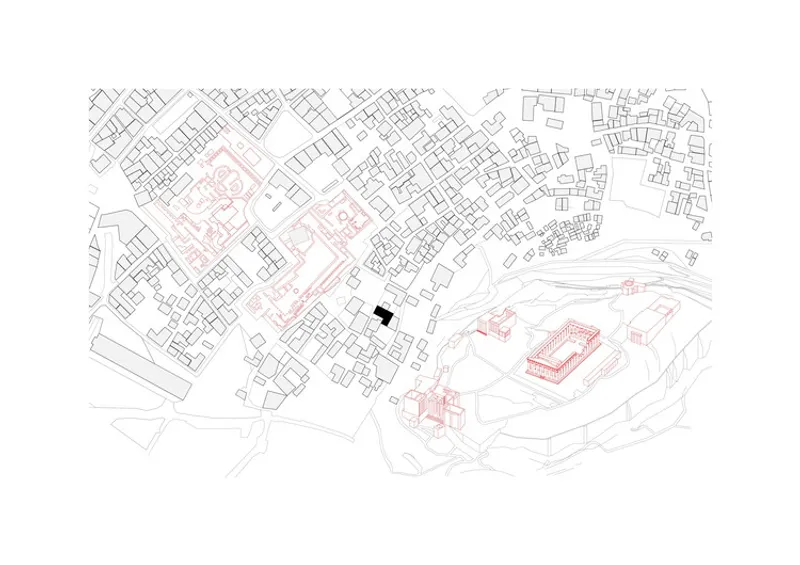
Tucked into a narrow stone-paved alley in Plaka, one of Athens’ oldest and most evocative neighbourhoods, Plaka House is a carefully calibrated renovation of a listed neoclassical townhouse dating back to the early 1800s. Designed by Local Local, the 350-square-metre residence sits beneath the Acropolis, surrounded by an extraordinary palimpsest of architectural history: 19th-century neoclassical façades, Ottoman-era balconies, and fragments of Byzantine and Roman structures layered into the urban fabric.
Completed over six months, the project exemplifies Local Local’s site-sensitive design philosophy. Rather than imposing a dominant stylistic language, the studio approached the renovation as an act of listening: allowing the building’s history, proportions, and material cues to guide each intervention. The result is a bright, contemporary family home that remains deeply anchored in its cultural and architectural context.
Reconnecting a Historic House to Its Setting
The townhouse had undergone a previous renovation in the 1990s, leaving it structurally sound but stylistically misaligned with both its heritage and surroundings. Glossy marbles, heavy wood finishes, and an overly ornate interior aesthetic obscured the building’s original character and weighed down its spaces. For Local Local, this presented an opportunity not for radical transformation, but for thoughtful recalibration.
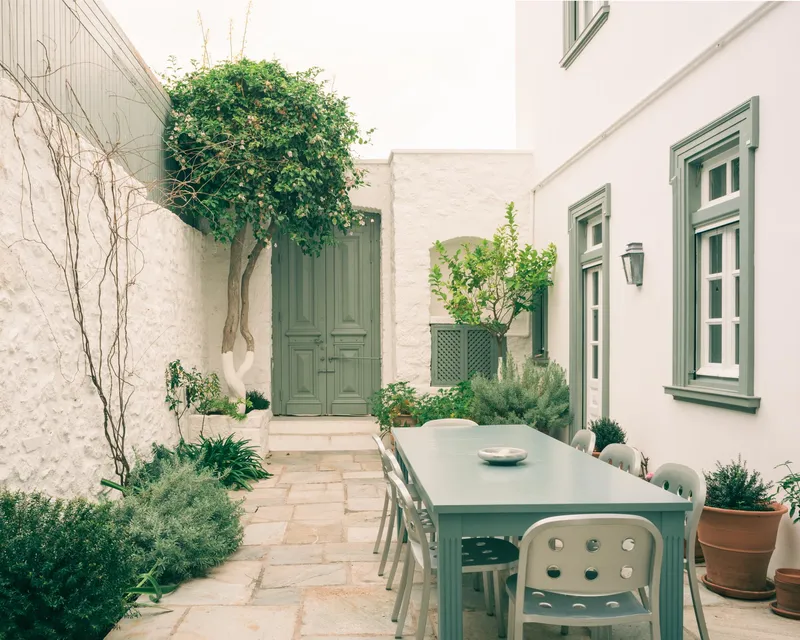
Working within the constraints of preservation regulations, the architects sought to strip back excess and re-establish a dialogue between the house and the city around it. The goal was to introduce calm, lightness, and cohesion while respecting the integrity of the listed structure, an approach that favours precision over spectacle.
Spatial Organisation and Domestic Life
The house unfolds across two levels. The ground floor accommodates communal functions, including the kitchen, living room, family room, office, and a central courtyard that anchors daily life. Upstairs, private spaces are arranged more discreetly, with bedrooms, a guest room, and staff quarters forming a quieter domestic realm.
A rooftop terrace crowns the house, offering sweeping views across the rooftops of Athens toward the Acropolis. This elevated vantage point reinforces the building’s relationship to the city, reminding occupants that the house is not an isolated retreat but part of a living, historical continuum.
Light as a Design Driver
Natural light was one of the project’s central challenges. As with many historic Athenian townhouses, the building’s thick stone walls and limited window openings, originally designed for climate control, restricted daylight penetration. Rather than enlarging openings, which would have compromised the building’s heritage fabric, Local Local opted for a more subtle strategy.
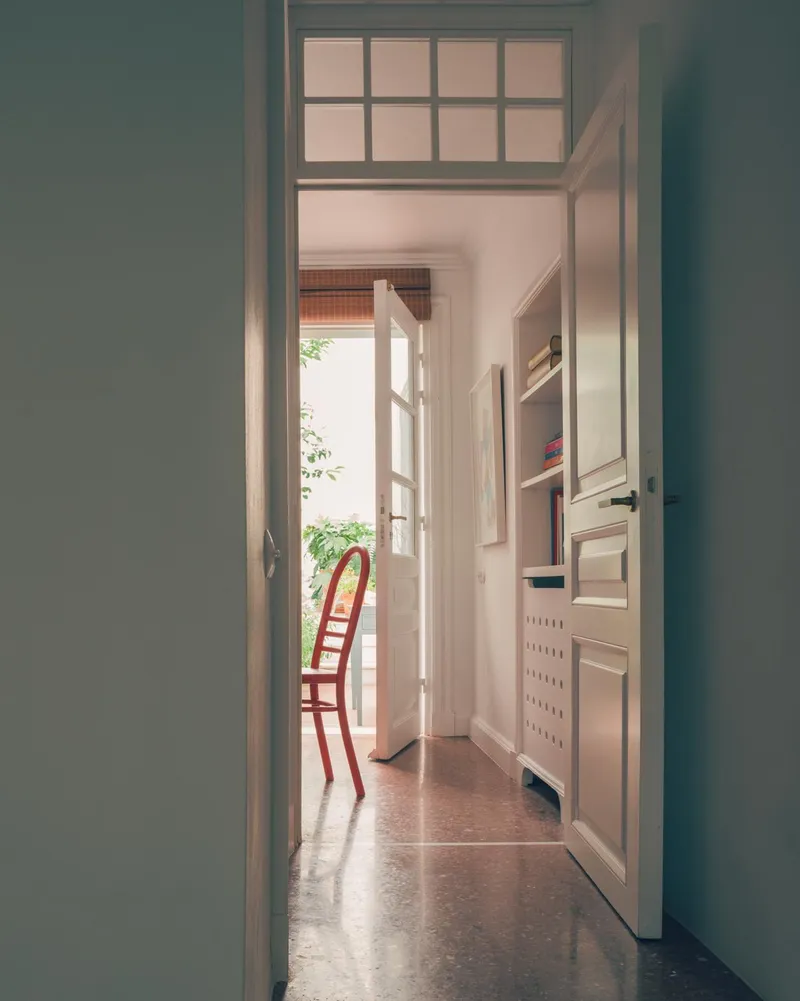
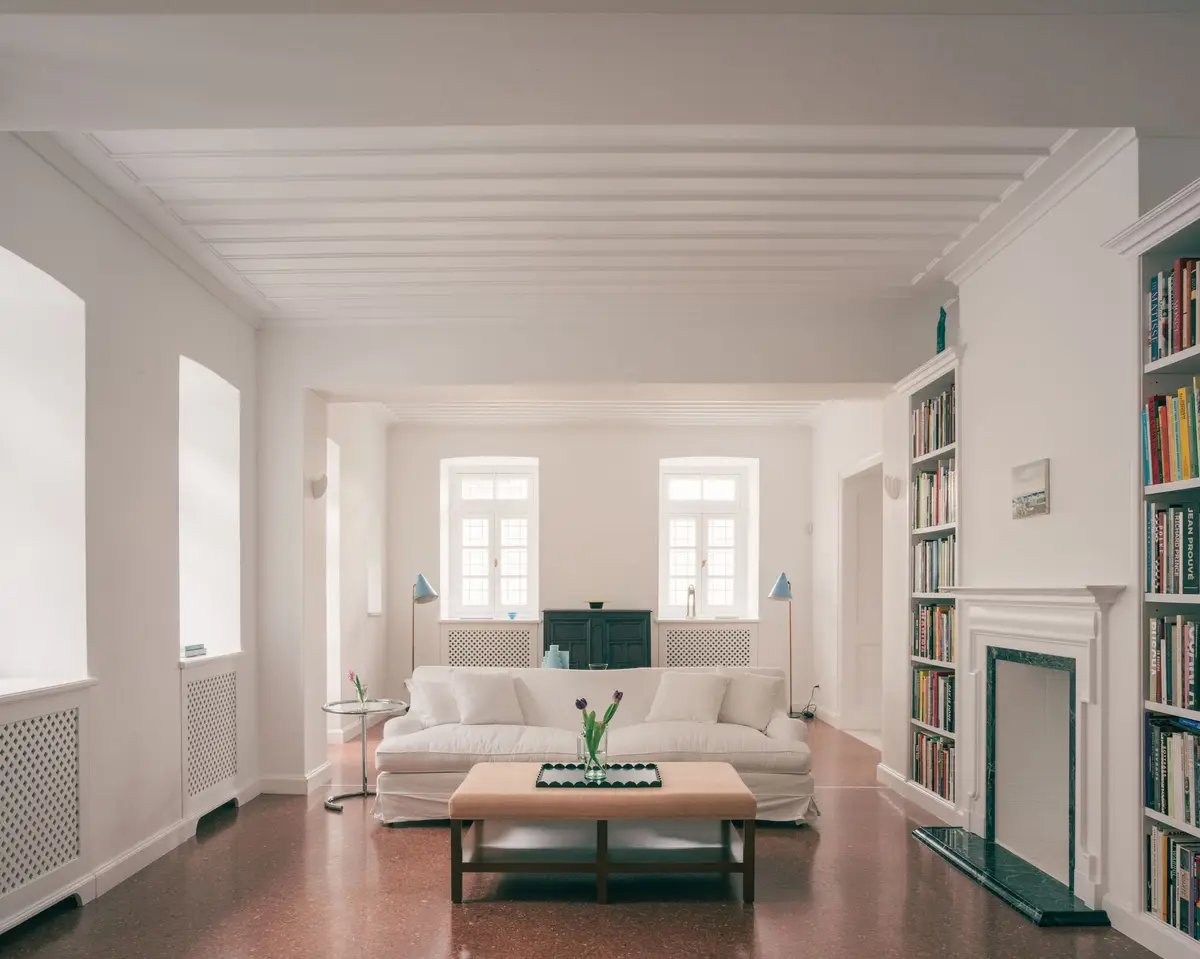
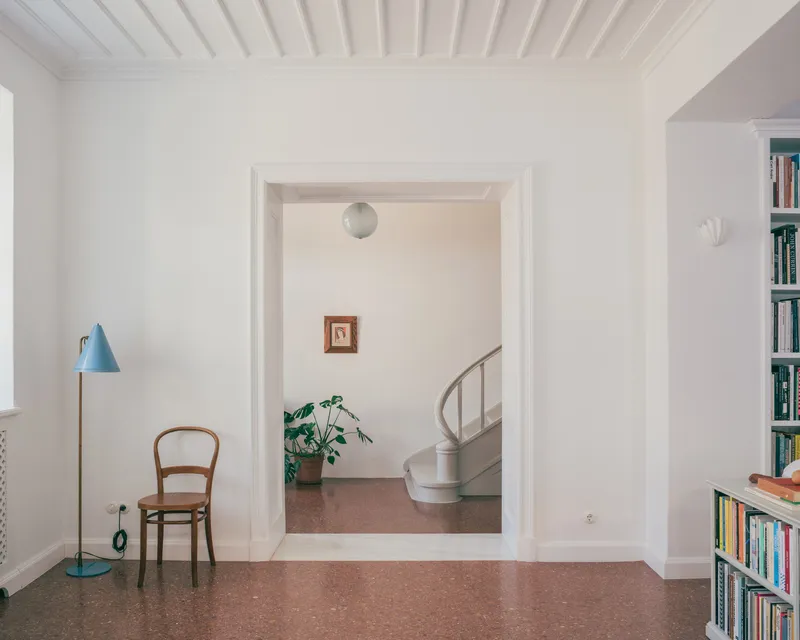
An almost entirely white, monochromatic palette was applied across walls, ceilings, and joinery, amplifying the available light and creating a sense of spatial continuity. This restrained backdrop allows light to bounce gently through the interiors, softening transitions between rooms and enhancing the home’s overall brightness.
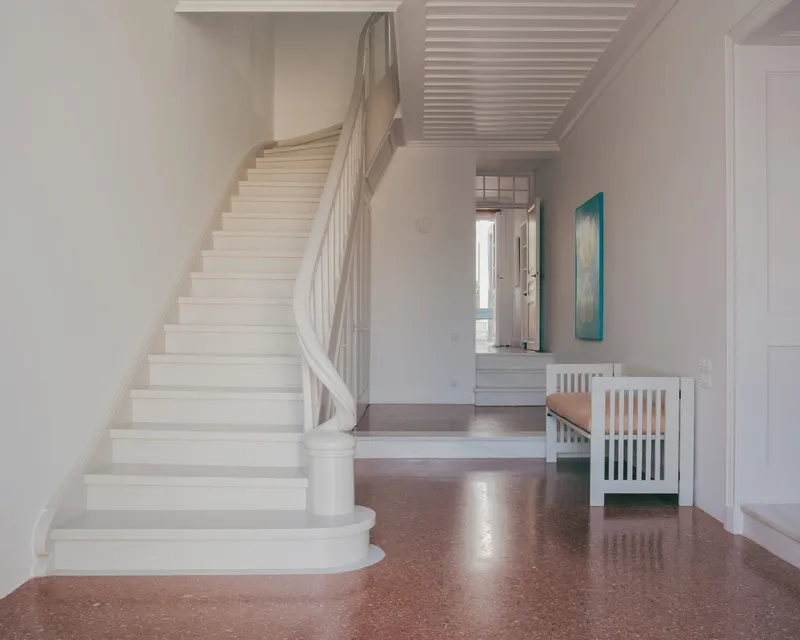
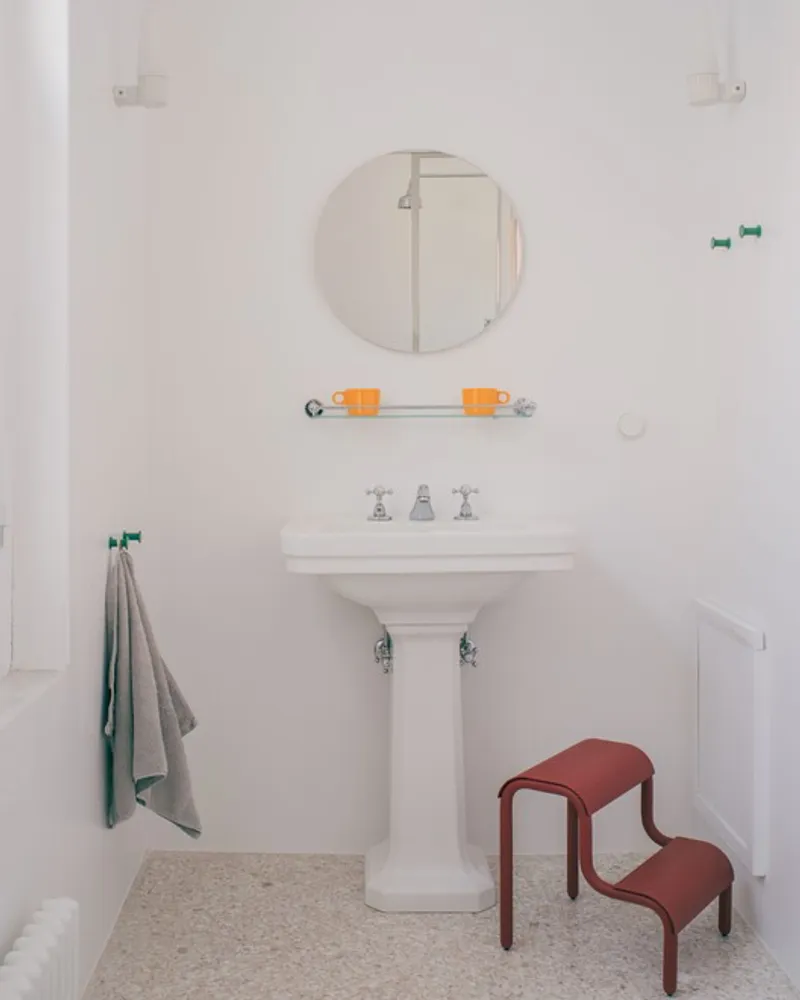
The courtyard plays a crucial role in this strategy. By pruning overgrown trees and repainting the surrounding walls, the architects transformed it into a luminous extension of the interior living spaces. It now acts as a light well and social nucleus, blurring the boundary between inside and out.
Materiality Rooted in Athenian Tradition
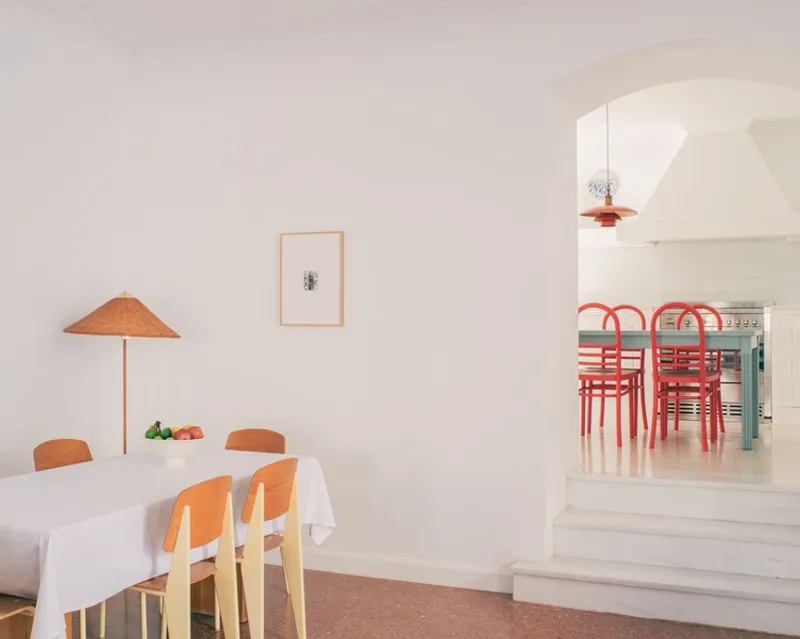
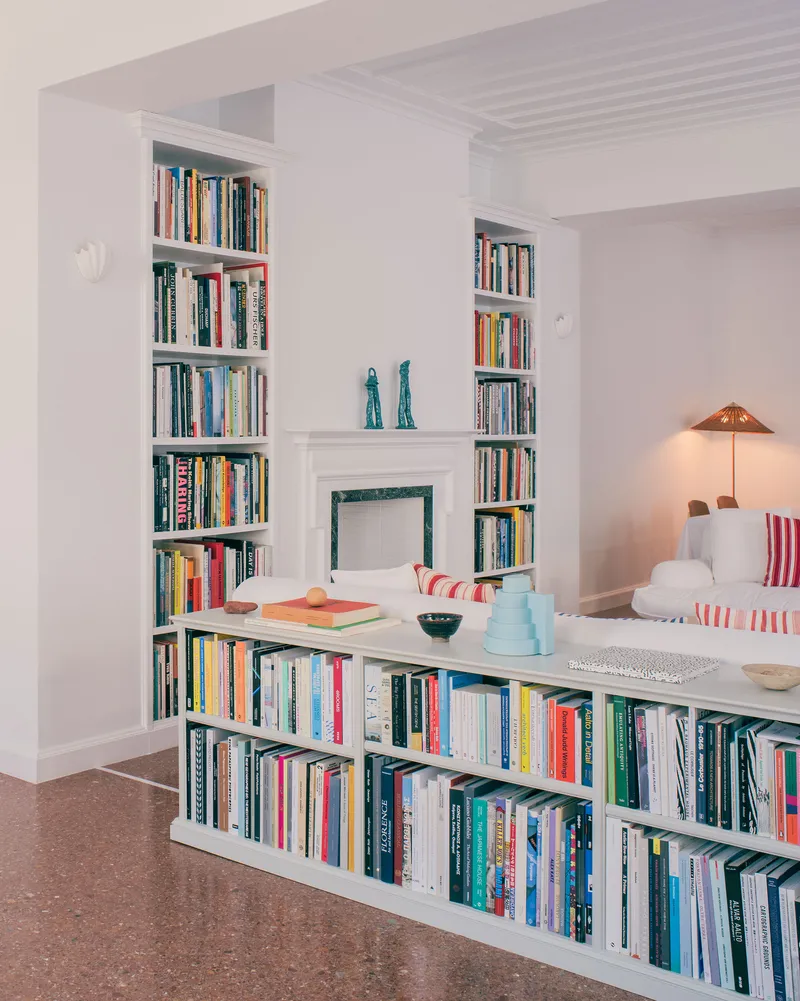
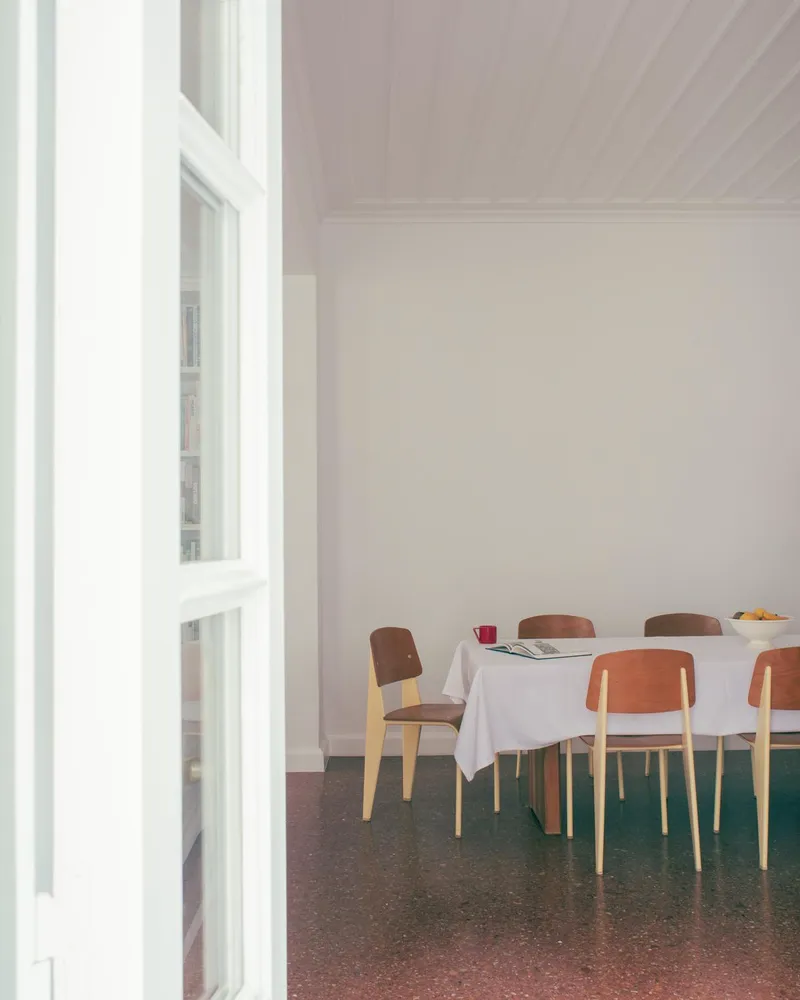
Material choices throughout Plaka House balance contemporary clarity with local reference. On the ground floor, all flooring was resurfaced in terrazzo, a material deeply embedded in Athenian domestic architecture. In the living room, a bold red terrazzo introduces warmth and visual depth, offering a counterpoint to the otherwise muted palette. In the kitchen and bathrooms, a softer grey terrazzo reflects light and enhances the sense of openness in more compact spaces.
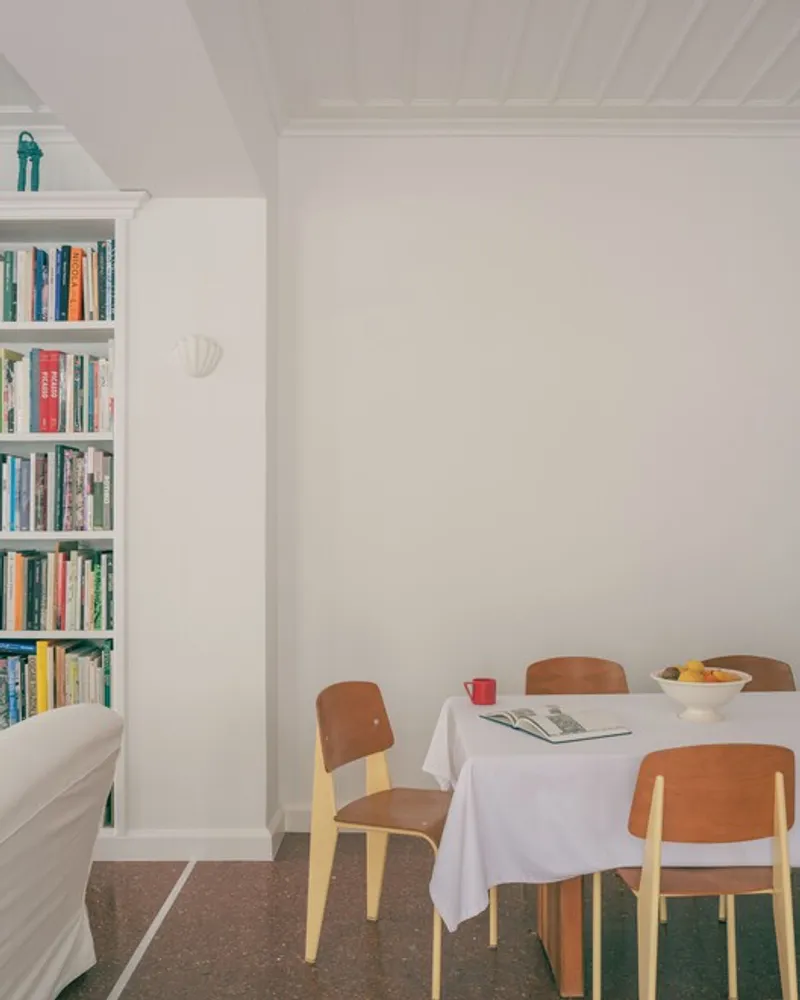
Upstairs, terrazzo gives way to light grey solid oak flooring, unifying the private rooms with a calm, contemporary expression while maintaining material continuity across the level.
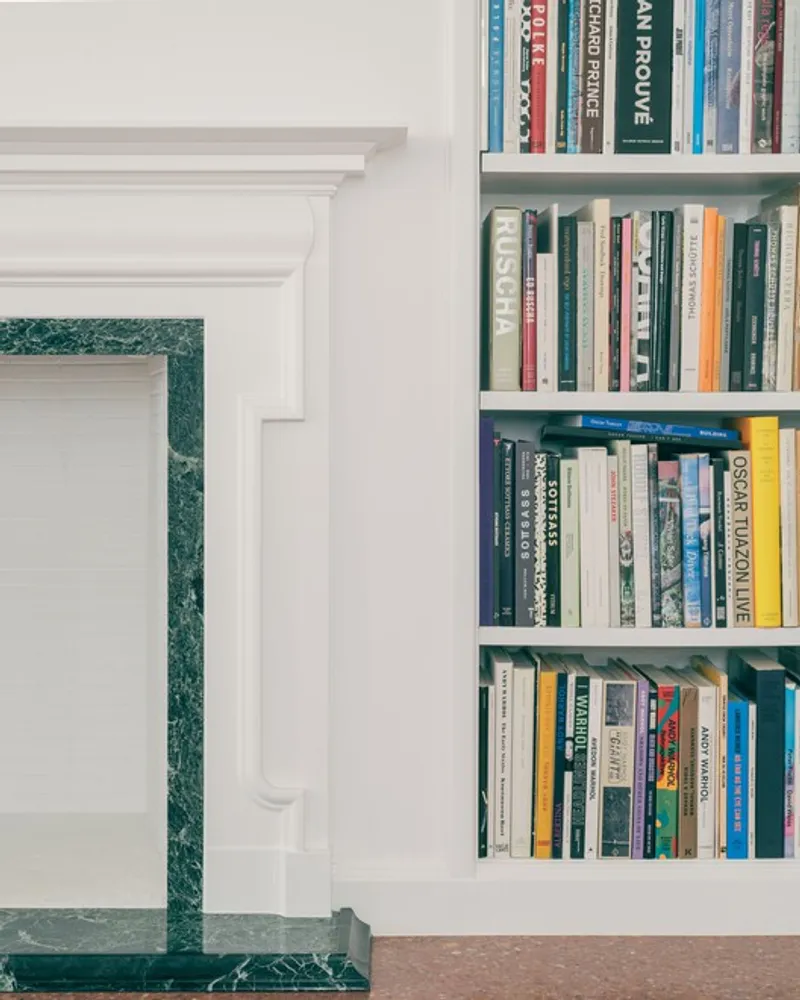
The fireplace in the living room was reconstructed using green marble sourced from the island of Tinos, reintroducing a tactile focal point that nods to traditional Greek craftsmanship. Acting as a modern hearth, it adds both gravity and character to the space without overpowering it.
Craft, Detail, and Local Artisanship
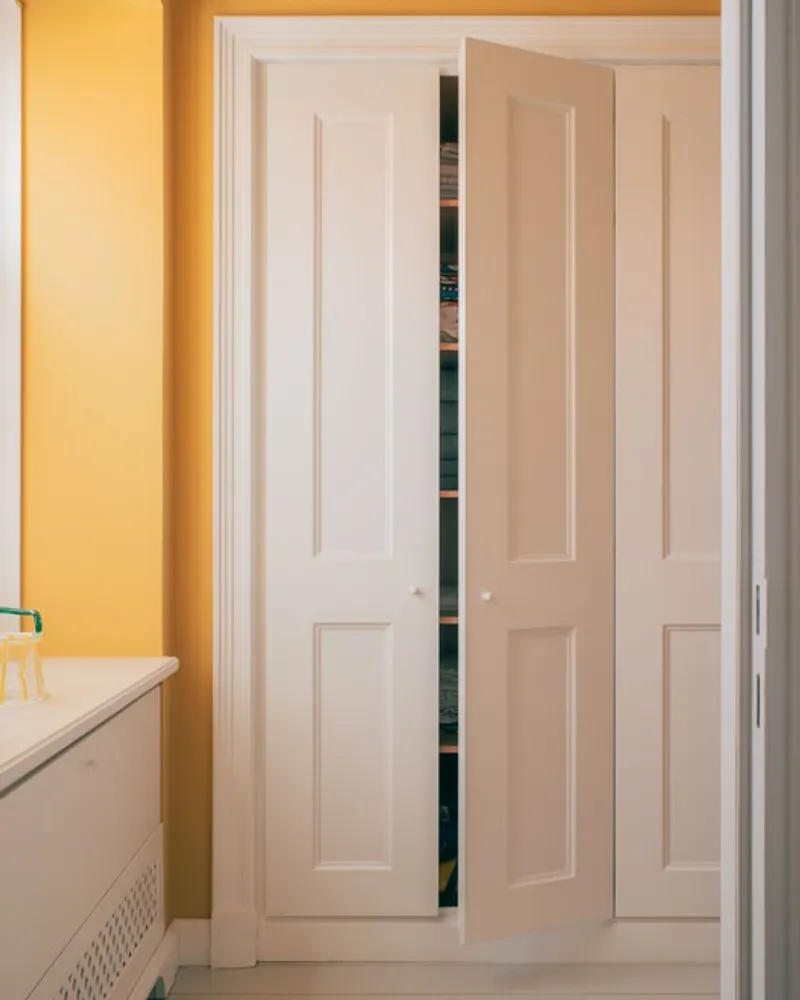
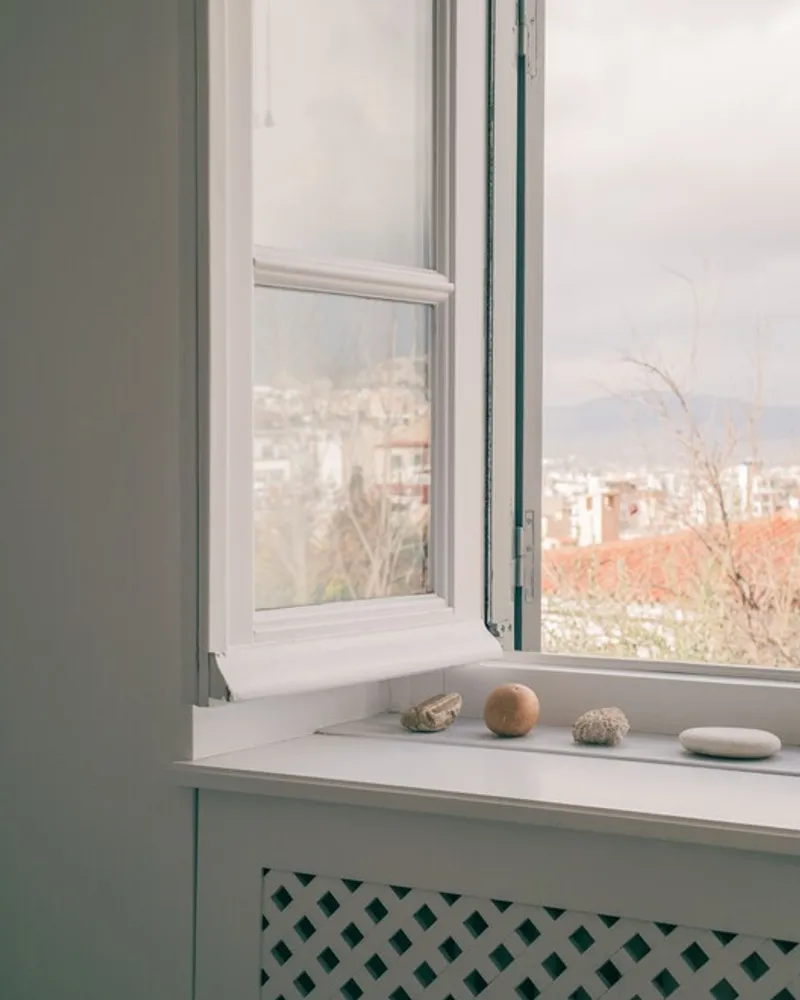
A defining feature of the renovation is its attention to detail and commitment to local craftsmanship. A local carpenter produced bespoke bookshelves, radiator covers, skirting boards, and custom joinery throughout the house. These elements subtly reference classical proportions and motifs while being adapted to modern domestic needs.
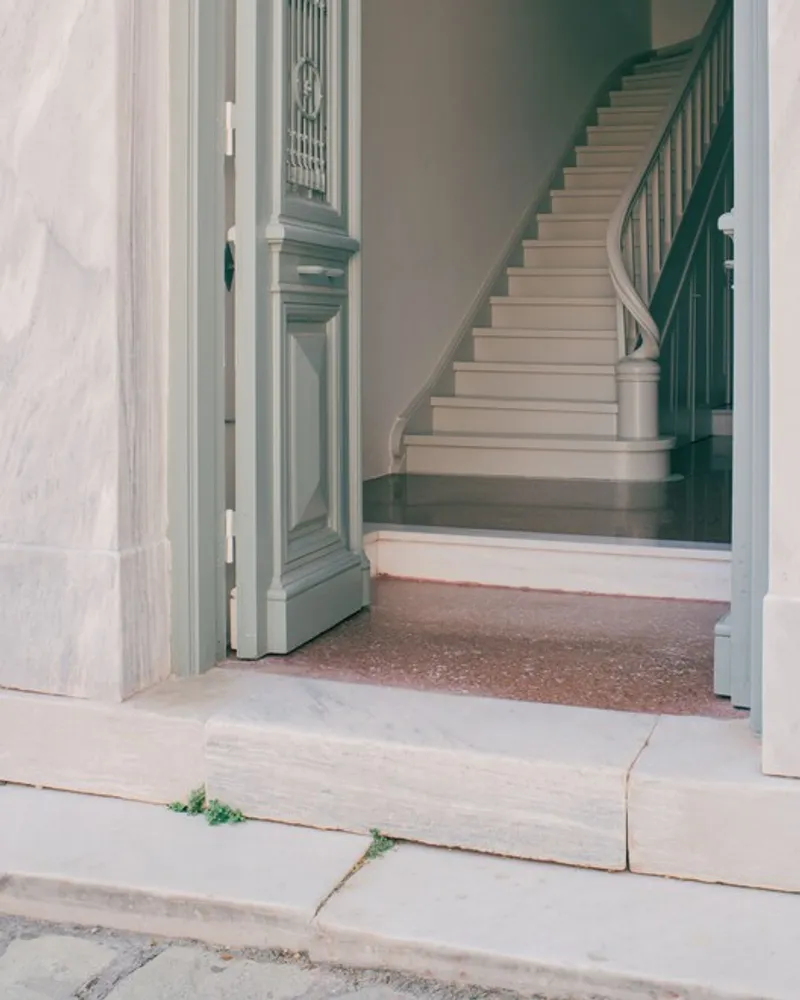
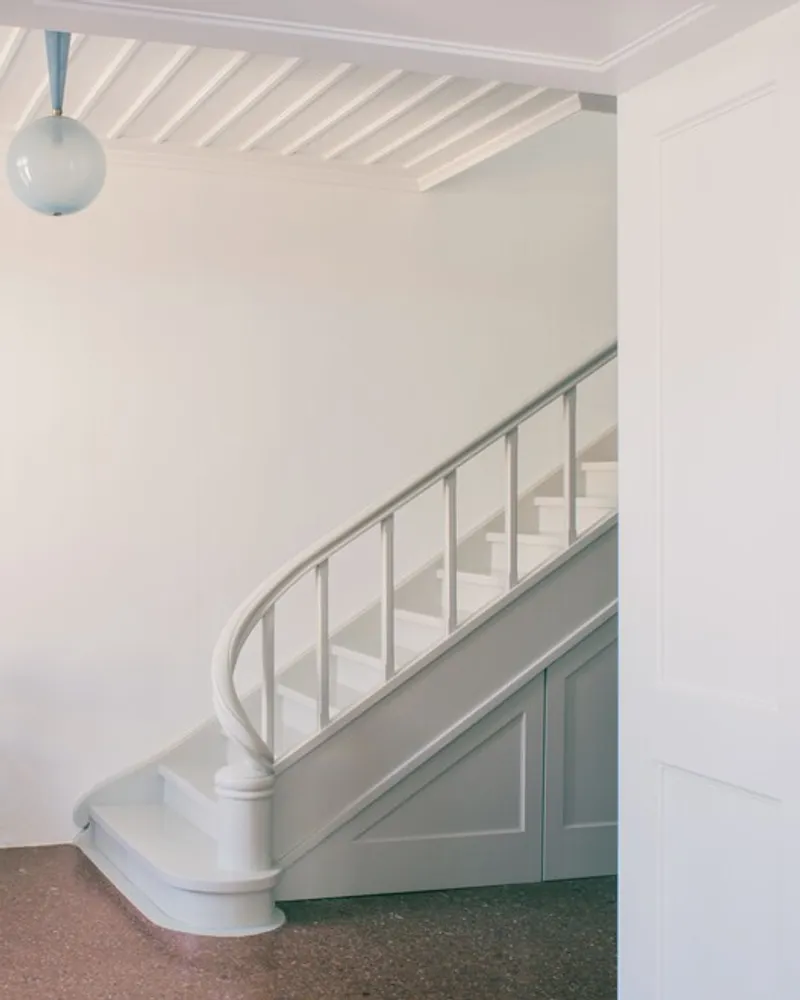
The original dark wooden staircase, once visually heavy, was repainted in a soft grey to lighten the vertical circulation. Custom storage was seamlessly integrated beneath the stairs, demonstrating the studio’s careful use of every available inch within the historic envelope.
In the kitchen, Local Local retained much of the existing layout, choosing instead to reinterpret it through colour, texture, and detailing. Cornices and cupboard curtains introduce a domestic softness, while furniture selections, including a custom-designed green table and bold red chairs by the studio, add moments of personality and playfulness.
Preservation Through Adaptation
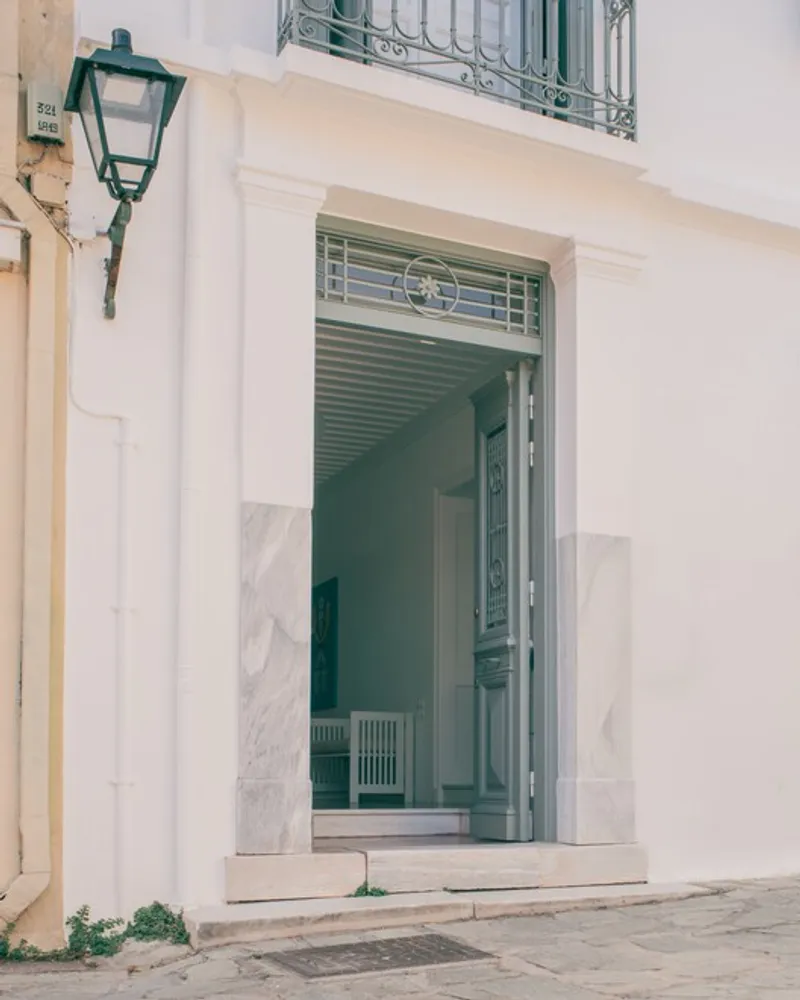
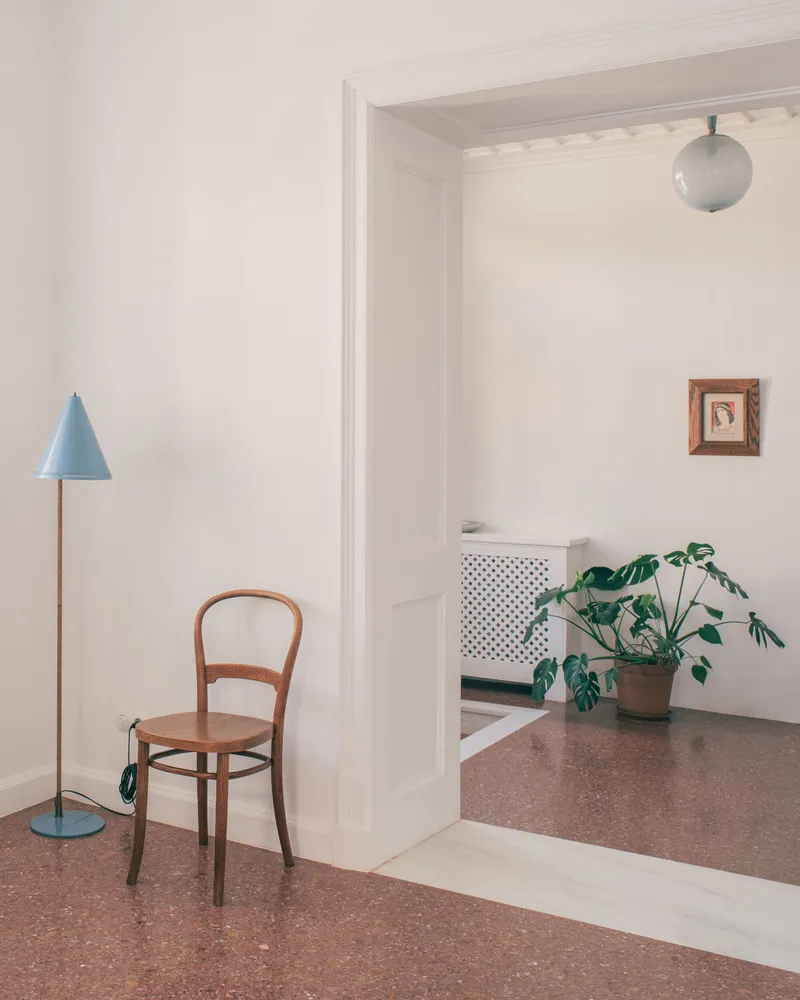
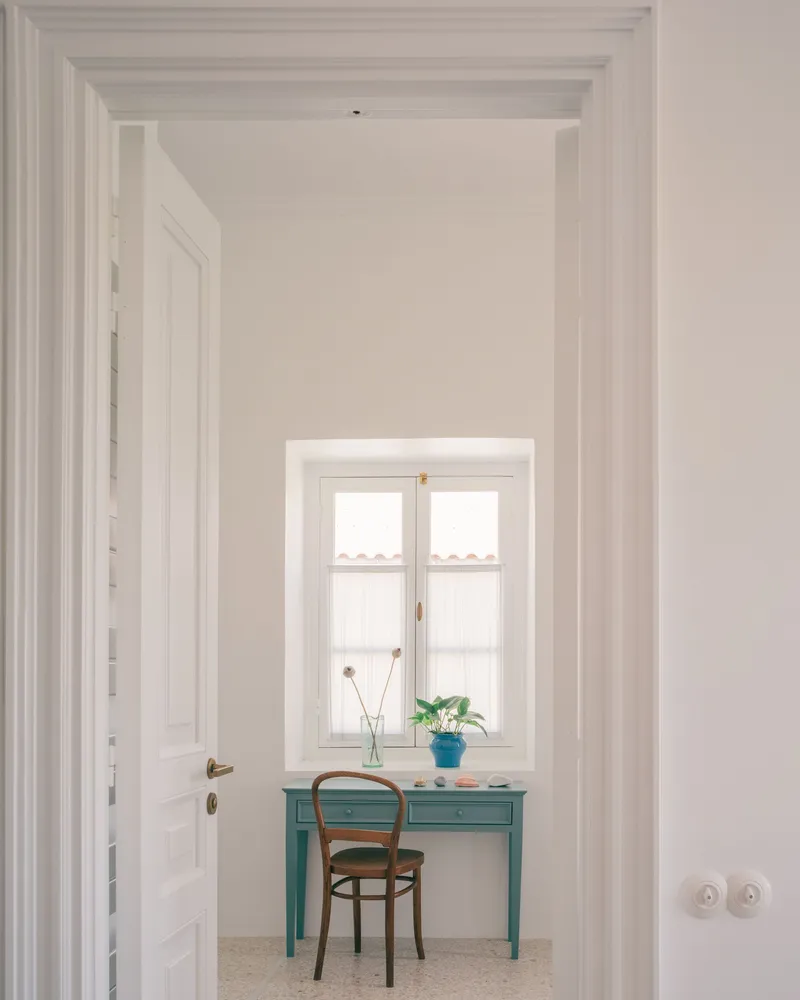
Throughout the house, original features were carefully preserved and refined rather than replaced. Wrought-iron exterior elements, wooden panelled doors, and marble jambs were retained and repainted in neutral tones, unifying the interior and exterior language while respecting the building’s historic fabric.
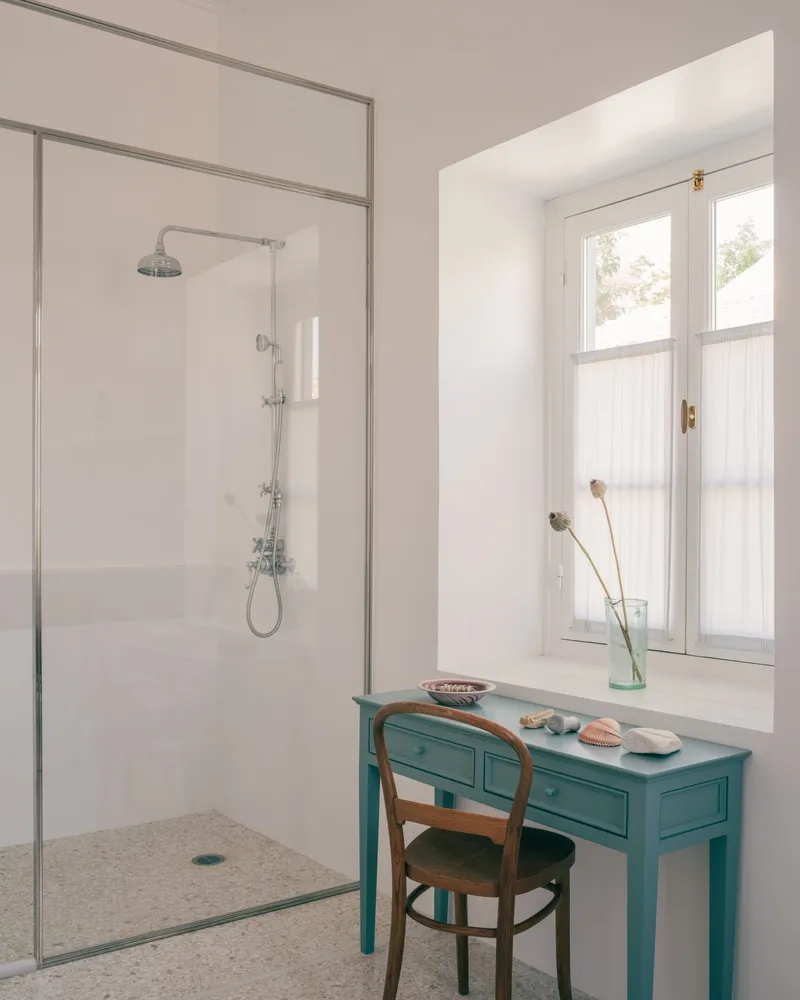
This approach underscores Local Local’s belief that preservation is not about freezing a building in time, but about allowing it to evolve thoughtfully. By restoring traditional elements and pairing them with locally inspired materials and contemporary detailing, the renovation subtly enhances liveability without erasing memory.
A Quiet Contemporary Intervention
Plaka House stands as an example of how contemporary architecture can operate gently within a historic context. It does not seek to announce itself through contrast or dramatic intervention. Instead, its strength lies in restraint: in the careful orchestration of light, material, and proportion to reveal what was already there.
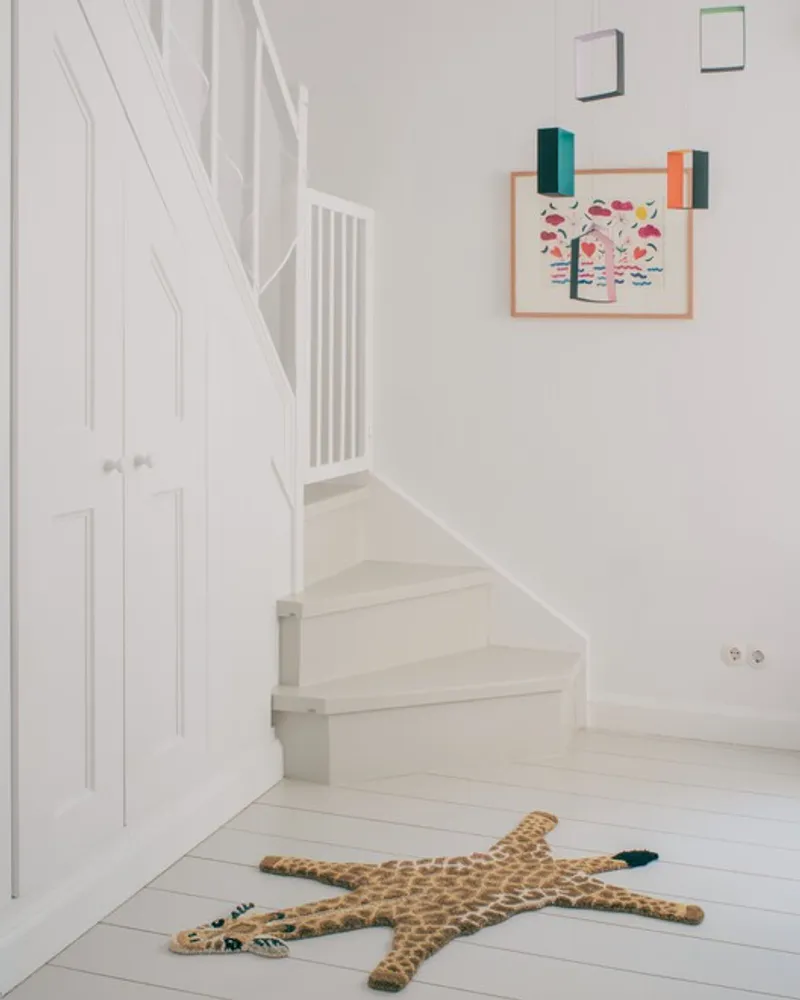
Through calibrated design decisions and a deep respect for place, Local Local has transformed an outdated interior into a serene family home that feels both timeless and distinctly Athenian. It is architecture as continuity rather than rupture, an approach particularly resonant in a neighbourhood where history is not an abstract concept, but a daily presence.
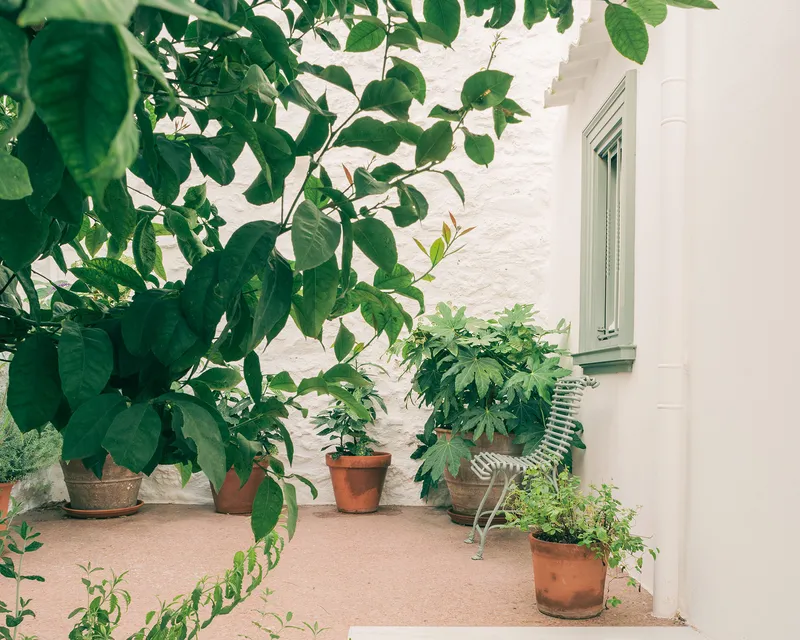
All the Photographs are works of Lorenzo Zandri


Popular Articles
Popular articles from the community


Co-Life: Senior Housing Design That Reconnects Older Adults With the City
Co-Life reimagines senior housing design through healing gardens, shared streets, workshops, and a sustainable community across generations.

Hill & Cross Opera: Sculptural Opera House Architecture Shaped by Tallinn’s Landscape and Identity
Hill & Cross Opera reimagines opera house architecture in Tallinn through its sculptural hill, civic plaza, glass wave and a luminous cross.

Little Red Riding Hood: Architectural Design as a Journey Through Fear, Light, and Storytelling
Little Red Riding Hood reimagines the fairy tale through architectural design shaped by fear, light, scale, memory, uncertainty, and choice.

The Musturak Paradise: Senior Living Architecture for a Connected Future in Temara, Morocco
The Musturak Paradise reimagines senior living architecture in Temara via private homes, social spaces, culture, community, and shared care.

Similar Reads
You might also enjoy these articles


Hodi-Mandai Geram
Project Function: Preservation and revitalization of the Intangible heritage and socio-spatial identity of the Hodi by Housing, Cultural Memory Center, Sacred Grove, landscape, local tourism economy


Olio Towers: A Mid-Rise for Performers That Fuses Housing, Rehearsal, and Stage
Located blocks from Houston's Theater District, this modular tower stacks living units around a central performance atrium.

Oasis: Modular Green Housing Carved into Dhaka's Urban Fabric
A shortlisted Plugin Housing entry reclaims unauthorized settlements in Dhaka with stepped concrete volumes, green roofs, and ventilation-driven design.

Black Hole: A Floating Megastructure for the Post-Physical Era
Emiliano Mazzarotto envisions a spherical, self-scaling arena where e-sports, digital hotels, and holographic stadiums replace traditional public space.

Explore Attica Landscape Competitions
Discover active competitions in this discipline

Challenge to reimagine the Iron Throne

Photograph architecture without architects

Illustrate the lost glory of Angkor Wat - Render Challenge

Design challenge to reuse E-waste
Comments (0)
Please login or sign up to add comments
No comments yet. Be the first to comment!