

Play Body Exhibition by Os Espacialistas: A Sculptural Journey into the Feminine Form
Immersive exhibition by Os Espacialistas transforms Palácio Anjos into a sculptural female body journey exploring sensuality, color, and spatial narratives.


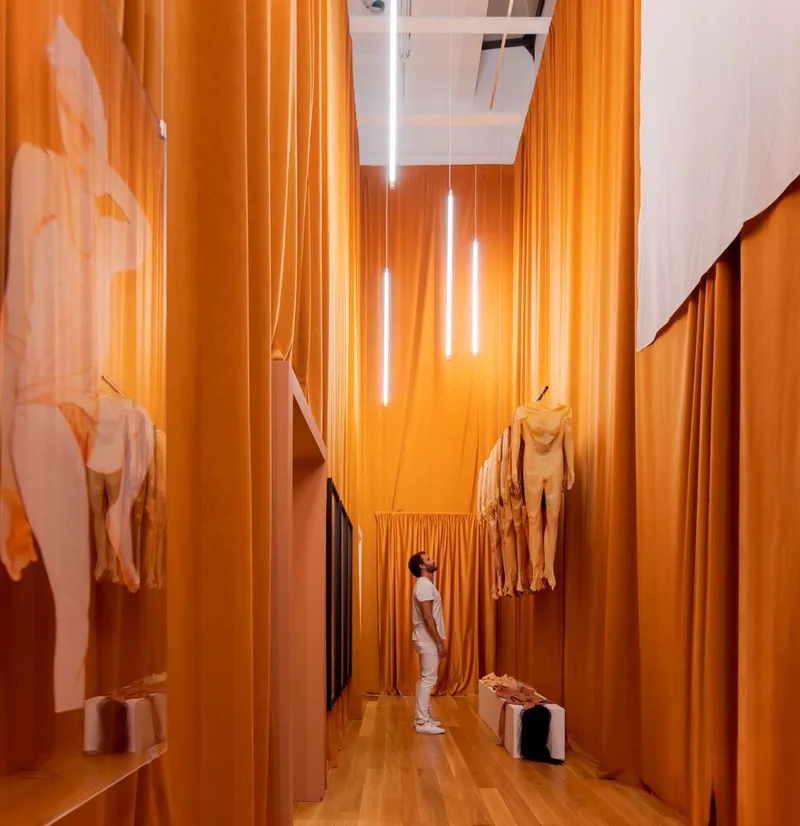
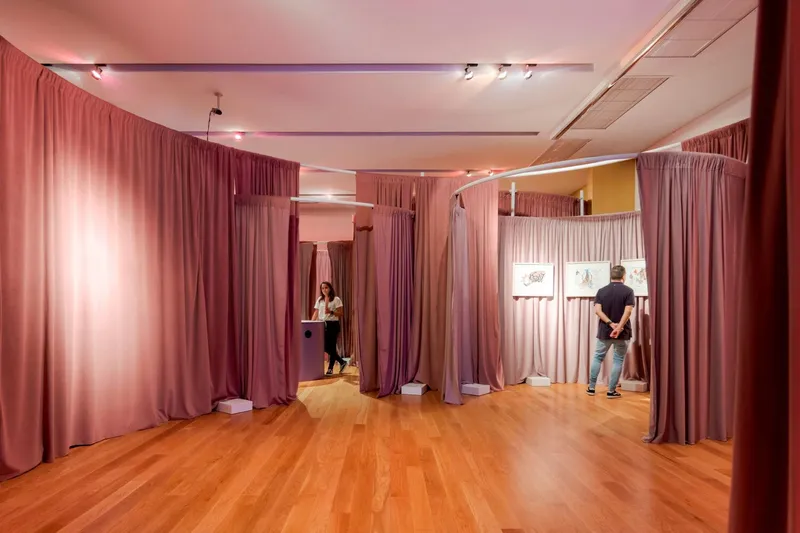
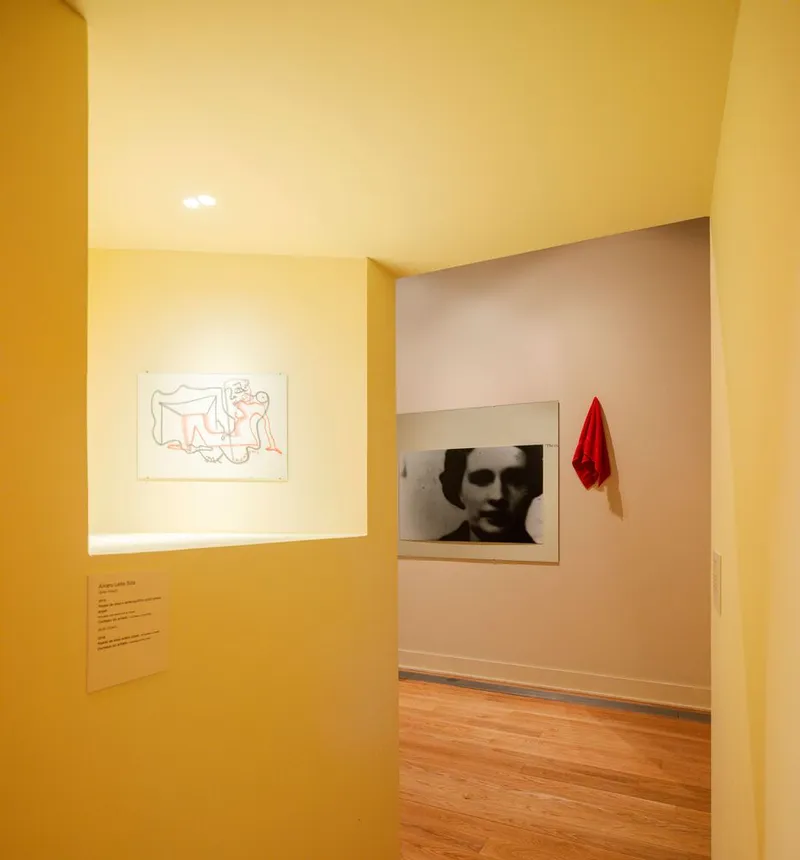
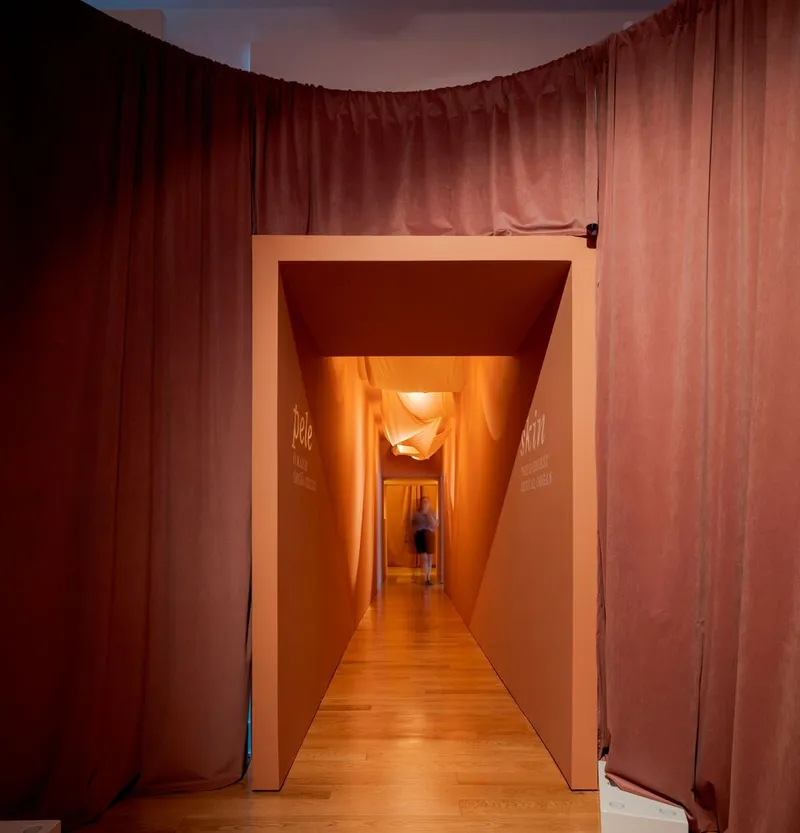
The Play Body Exhibition, designed by Os Espacialistas in 2022, is a temporary exhibition held at the historic Palácio Anjos in Algés, Portugal. Spanning 400 m², this immersive exhibition explores the poetics of the female body, blending architectural scenography, art, and sensuality in an evocative dialogue between the real and imaginary.
Conceptual Framework and Design Approach
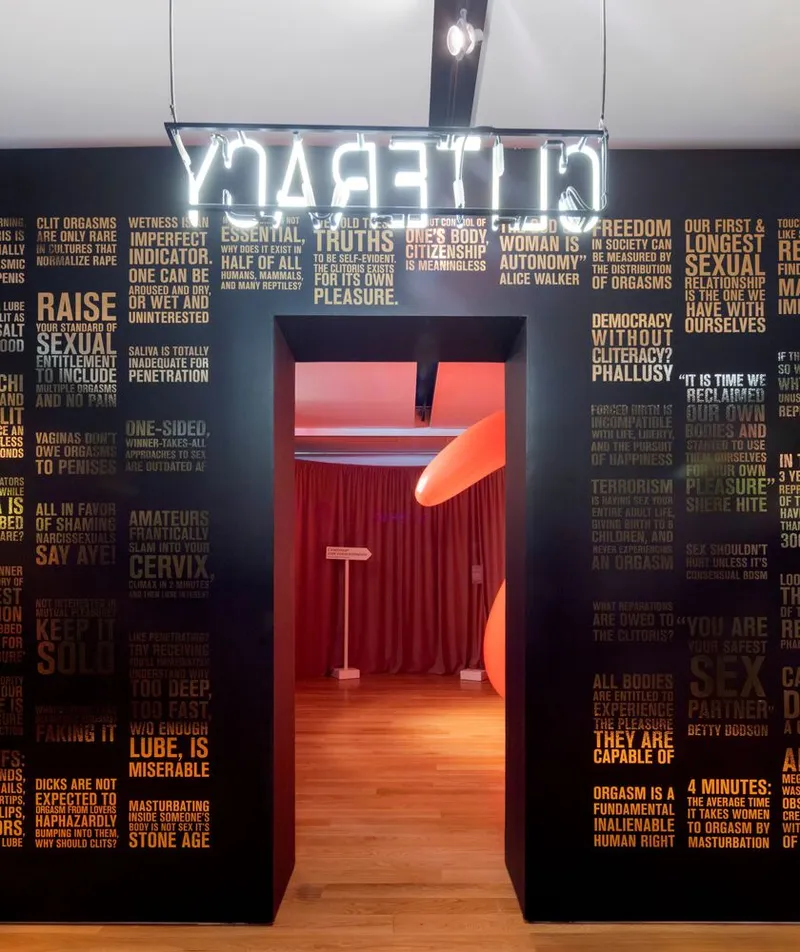
The curatorial vision for the exhibition, titled “Amor Veneris: A Travel to the Sexual Female Pleasure”, is manifested through a scenographic representation of the female body. Os Espacialistas transform conventional architectural elements into symbolic anatomical references, creating a spatial narrative that guides visitors through a journey of exploration and discovery.
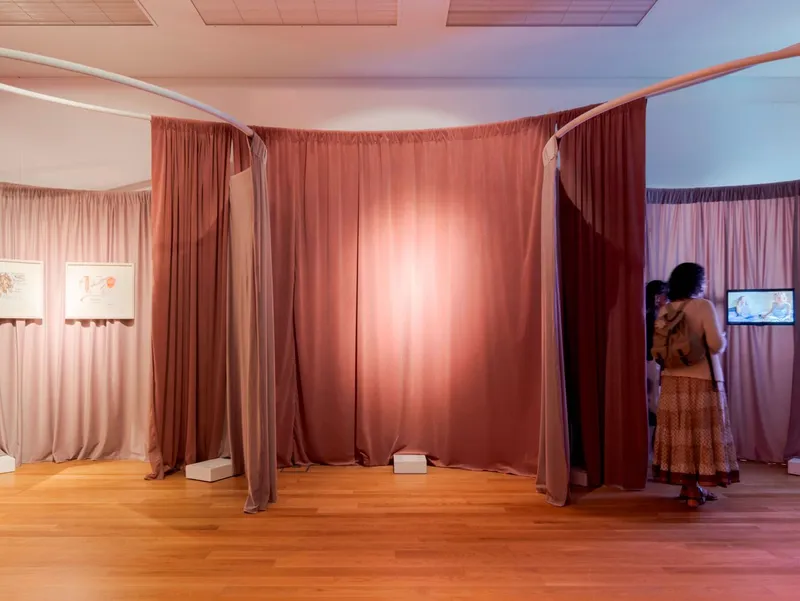
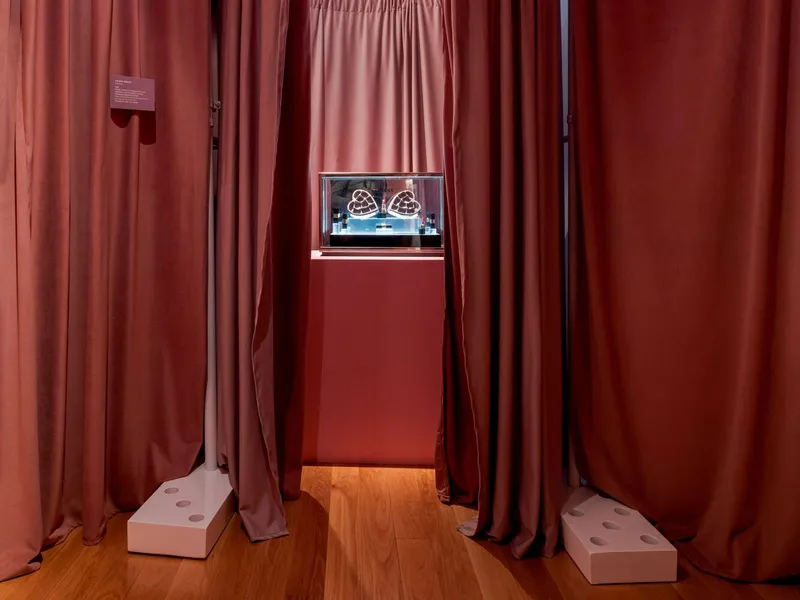
Raw modular structural systems are reimagined as sculptural forms: concrete foundations become delicate “domino feet,” referencing the human astragalus bone, while metal tubes morph into elegant female legs, reclining erotically beyond velvet curtains. This playful interplay of architecture and anatomy emphasizes a fusion of structure and sensuality, allowing the exhibition space itself to act as an intimate participant in the visitor experience.
Materiality, Color, and Sensory Experience
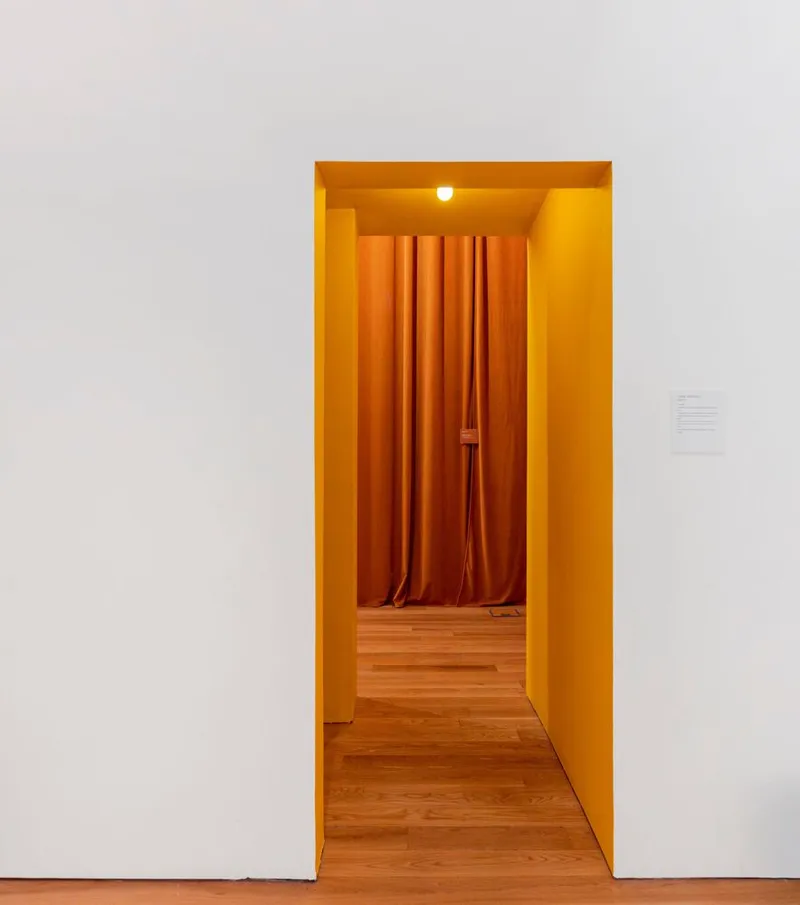
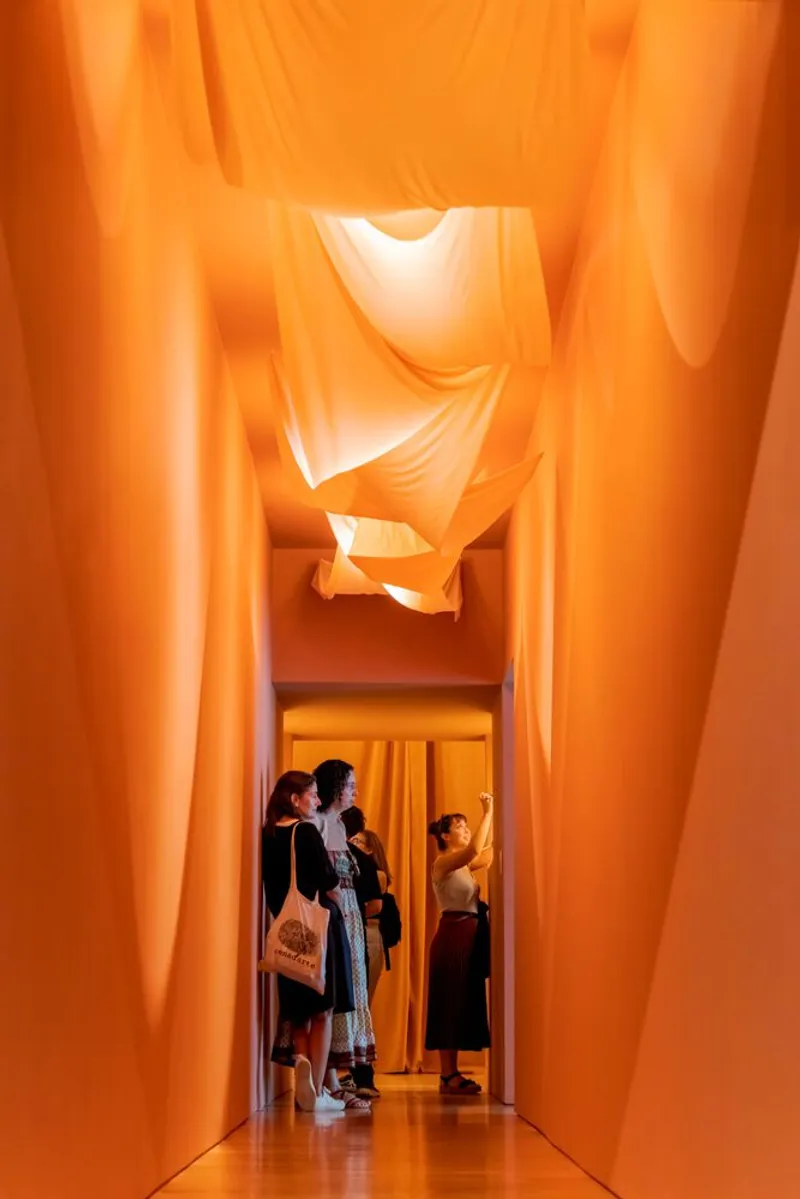
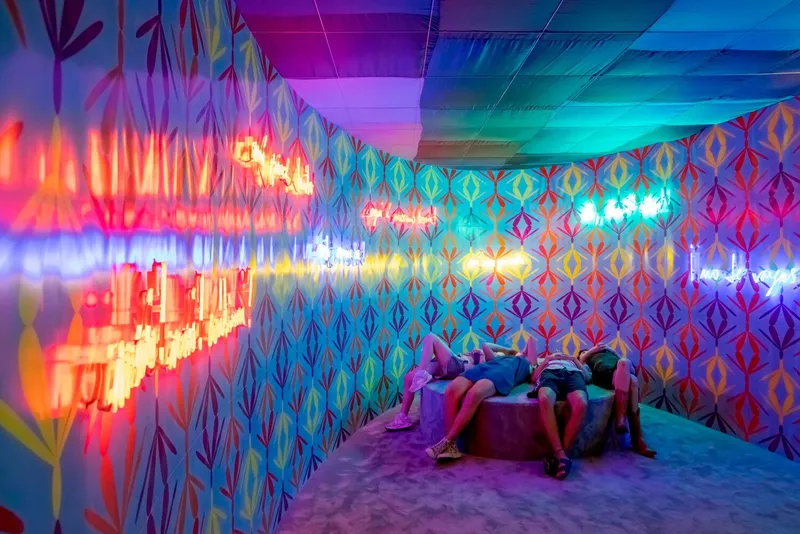
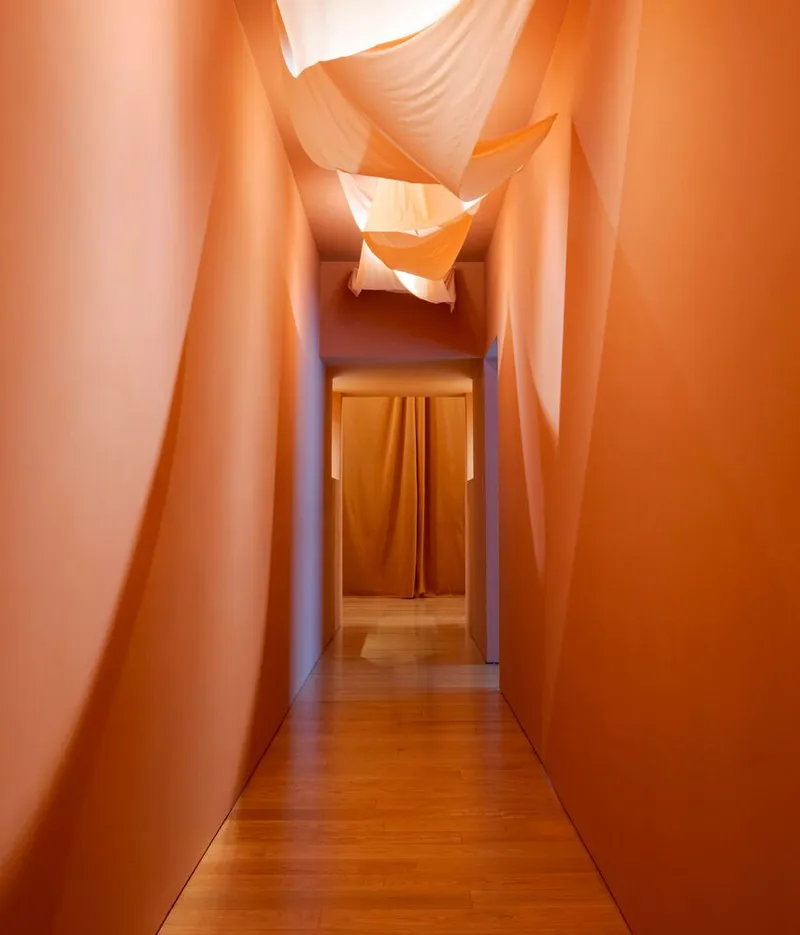
Material choices and color palettes are central to the exhibition’s immersive quality. Walls, fabrics, and surfaces are layered with textures and hues evocative of skin tones, cultural symbolism, and historical associations. From pearls and ivory to pinks, reds, and oranges, and extending to blues, greens, and violets, each scene reflects the chromatic spectrum of the female body.
Color, in this context, is treated as both cultural construct and sensory phenomenon. It bridges the material and immaterial, illuminating the architecture and creating a tactile, emotional environment that responds to the human presence.
Spatial Journey and Visitor Interaction
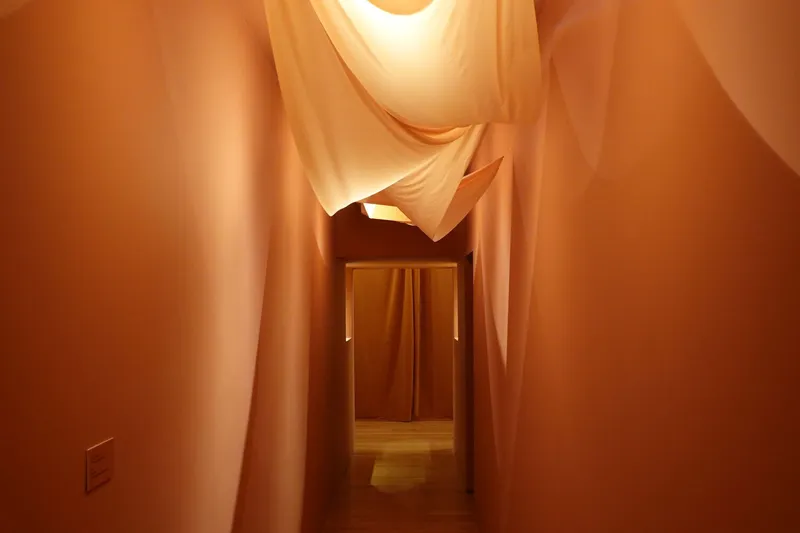
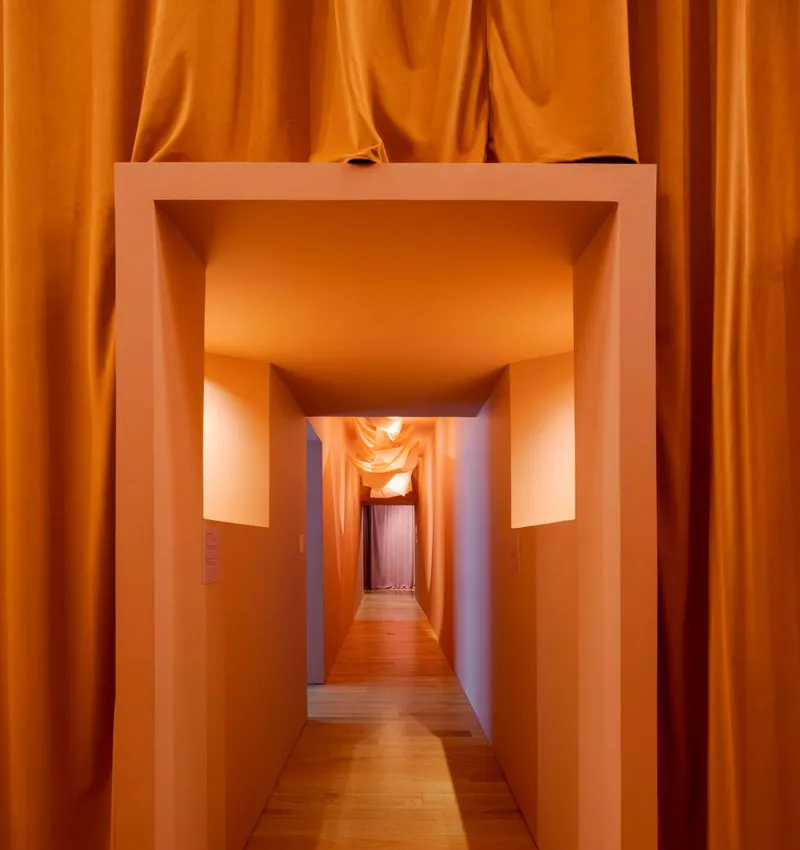
Visitors traverse the exhibition through a carefully orchestrated promenade, experiencing a sequence of rooms, textures, and modules that mirror human anatomy and psychological intimacy. Every corner, arch, and column is designed to evoke curiosity, contemplation, and engagement.
Os Espacialistas’ design elevates the exhibition from mere display to a performative space, where art, architecture, and the human body converge in a dialogue of movement, perception, and eroticism.
Architectural Scenography and Innovation
The exhibition demonstrates a sophisticated architectural narrative that combines historical palace structures with contemporary modular and sculptural techniques. The interplay of light, shadow, and reflective surfaces accentuates the bodily forms, enhancing the poetic essence of the work. This approach redefines the relationship between exhibition architecture and curatorial storytelling, positioning the body as both subject and space.
By transforming structural elements into playful, eroptic motifs, the exhibition challenges traditional museography and invites visitors to rethink spatial, cultural, and sensual norms.
Cultural Context and Artistic Expression
Set within the elegant halls of Palácio Anjos, the exhibition reflects a dialogue between historical architecture and contemporary feminism, exploring female pleasure through aesthetic, sensory, and symbolic dimensions. The design evokes both intimacy and theatricality, emphasizing movement, color, and bodily awareness throughout the journey.
Os Espacialistas' work demonstrates how architecture can embody narrative, emotion, and human experience, turning a temporary exhibition into a spatial and psychological exploration of femininity.




Popular Articles
Popular articles from the community


AL-JANNAH: Sustainable Architecture and Permaculture for Afghan Widows
AL-JANNAH uses sustainable architecture and permaculture to create resilient oasis of housing, learning, work and renewal for Afghan widows.

The Earth Pod: 3D Printed Homes for Resilient Refugee Communities
The Earth Pod reimagines refugee housing through 3D printed homes made from clay, combining resilience, self-sufficiency, and rapid shelter.

The Musturak Paradise: Senior Living Architecture for a Connected Future in Temara, Morocco
The Musturak Paradise reimagines senior living architecture in Temara via private homes, social spaces, culture, community, and shared care.

Co-life: Sustainable Architecture for Age-Friendly Community Living
Co-life reimagines sustainable architecture for seniors through courtyards, rammed earth, shared gardens, and spaces designed for belonging.

Similar Reads
You might also enjoy these articles

Bamboo Housing Challenge 2026: Design Affordable, Sustainable Homes Using Bamboo
An international design competition by Bamboo U and IBUKU inviting architects and designers to reimagine affordable housing using bamboo — with the winning design built full-scale in Bali.

Computational Design & Education: Beegraphy Design Awards Introduces 7th Category (Featuring Jiyun's Innovative Approach)
Dive into Beegraphy’s 7th Design Awards category, where computational design meets education to create immersive, interactive learning tools, inspired by Jiyun’s work.
From Parametric Lighting to Urban Furniture: Join the 2nd Workshop in Beegraphy’s Computational Design Series
Dive into Cutting-Edge Design Techniques and Practical Applications with Industry Experts

Last Call: Unleash Your Architectural Genius in SHAK's Kindergarten Design Competition
Urgent call for architects to join SHAK's kindergarten design competition before the looming deadline


Explore Architecture Competitions
Discover active competitions in this discipline



Challenge to reimagine the Iron Throne


Photograph architecture without architects


Illustrate the lost glory of Angkor Wat - Render Challenge


Design challenge to reuse E-waste
Comments (0)
Please login or sign up to add comments
No comments yet. Be the first to comment!