
POD-STELLAR Space Museum
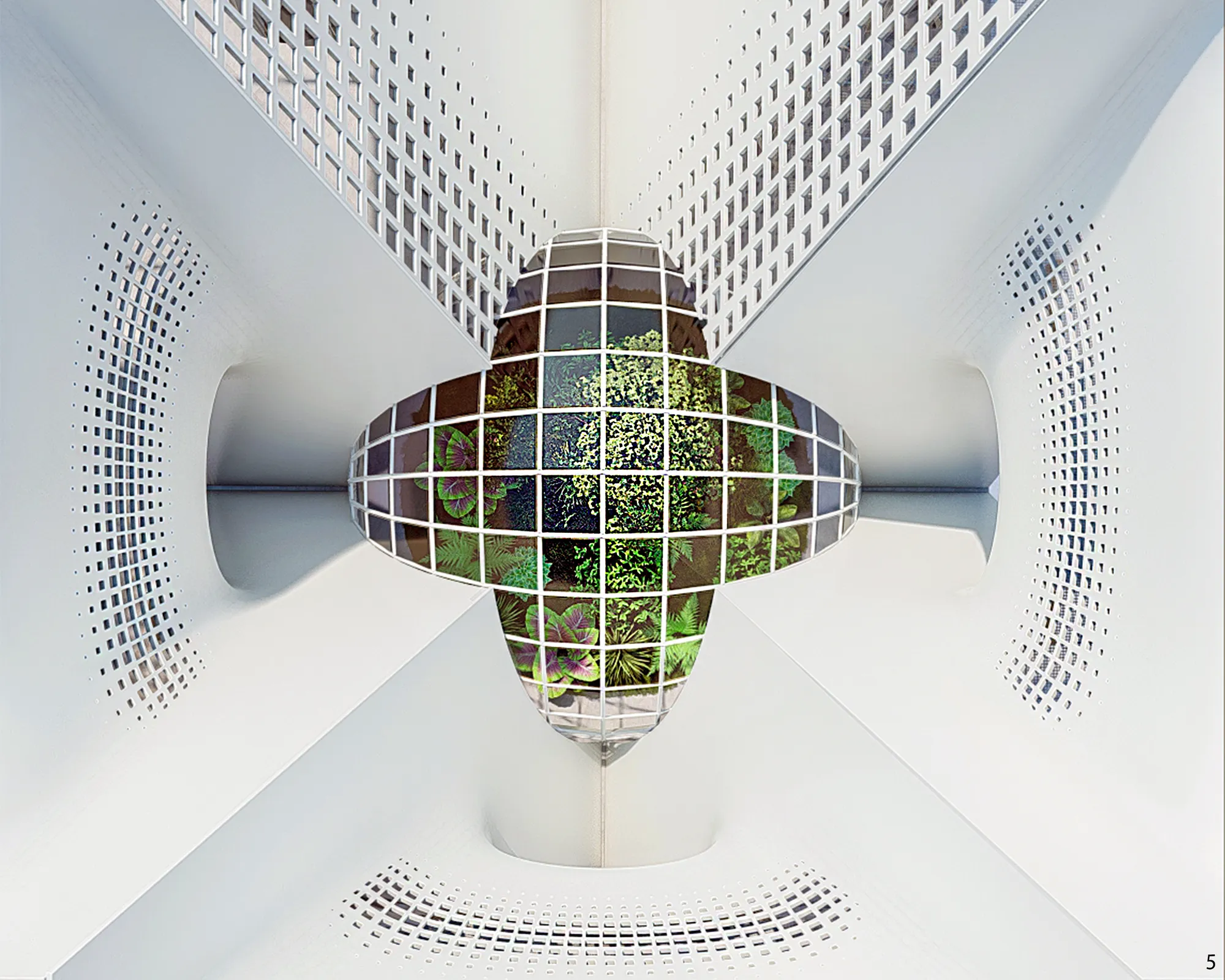
While one has been watching the heavens in awe for a millennia, space exploration and discovery only began in the mid-20th century. Yet our primitive findings still point at a universe more incredible than we ever thought. At one point in time, we as the human race will at one point venture and explore more than 100 billion stars in the galaxy that are yet to be explored. Of course, to do this one would need a vessel or ship to sustain human life to travel light years in space and colonize other planets. One must overcome radiation, isolation, gravity, and extreme environments while traveling away from our very own solar system. There were various attempts at first as to what a reasonable design concept would be specially for a design based outside of earth that would tackle these challenges. We initially had a few concepts like a central station that connected to smaller pods in a spiral like shape, we also played with the concept of glass dome as the main focus, to even a two tower idea. Overall we settled for a prefabricated pod-like structure that would be used to sustain human life on other planets with every commodity to serve as a vessel for human growth. Knowing the constraints of space travel, multiple pods would be used to house the necessities of human growth and development that the pods would combine into a multi-unit infrastructure station. These pods are adaptable to accommodate any planet placed on, while proving the necessities of self-sufficiency. One single pod would house everything needed to survive like food, water, and air. But, when several pods are put together, each pod takes an individual role for sustainability. A perfect example would be one pod to serve as sleeping quarters as to which another pod would be a kitchen to serve and store food for every person settled at that colony. These pods could also be used as generation pods, to where a 100 person crew would self-populate over generations to establish a dominant colony at a specific planet outpost. The design process took weeks and weeks to get the right facade pattern. After trials and errors, sleepless nights, the team managed to conquer the right parametric shell for the structure. The facade is an important element to the structure because of its purpose, both aesthetically and functionally. Aesthetically, the facade is filled with a squared parametric pattern to allow natural lighting (reducing carbon footprint) into the building by reducing artificial light and by saving energy. For the functionality of the facade, the parametric was patterned accordingly to the sun’s path, in this case, in the museum, the “curve attractors” that the squared facade followed were limited and aligned so the building would have natural lighting, but the rows would be limited to reduce the heat inside the rooms. Rooms like the dormitory or the restrooms will be fabricated to have little to no facade, just a plain wall to accommodate the events happening in those rooms. The parametric pattern was also limited by the debris or the “meteorites” the civilization would be encountering in outer space. In the outside shells of the structure the percentage of the solid wall coverings will be more than the percentage of the facade for these reasons. The walls that face each there when the pods are connected, would be designed differently from the walls as that are facing towards the outside, this will give them more natural lighting which will require more percentage to be filled with the facade. In the event of adding pods to the civilization, the façade will be accommodated to the new line up of the pods. The concept behind the design, site, and layout consists of a family orientated museum to show what it would be like to live and survive in outer space on another planet. As a group of four we initially came up with our own ideas and floor plans, then combined bits and pieces of each concept to merge into one functional structure. In agreement with the group we made several discussions on how to best bring about the goal we were trying to emphasize in our design. We knew we all wanted to incorporate sustainability into our design as well as add connectivity from one place to another through bridges. So in finalizing our decision we brought it all together in the pods which although singular allowed for all of our thoughts to be displayed in the interior as well as shown in the exterior. The site location being in the heart of Houston, TX and home of NASA was a suitable site, it gave us the opportunity to make a trip to the NASA museum to explore the vast examples given on space travel and exploration. What we found was Interactive exhibits and working props to show the museum’s guests what it is like to go into outer space. So, we introduced these ideas as a learning tool towards our design for all that would visit our museum. With this information in hand, every floor plan, room, and walkway we made within the pods is meant to symbolize what our design would really look like when placed in outer space. The dimensions and footprint of the museum represent the scale it would be if placed on a planet light years away from the human race on Earth. The magnitude of energy needed to travel in space is astronomical, so weight and size was taken into consideration when designing the sustainable pods. Prolonged space travel does take a severe toll on the human body. Microgravity impairs muscle and bone growth and high doses of radiation cause irreversible mutations. Every material for the pods was chosen by weight and density. Materials hard enough to withstand freezing temperatures but light enough to not hinder the weight like z grade material while traveling through space but also protecting the people living in the pods. Now, the museum’s pods on earth are composed of concrete and rebar with a reflective stainless steel as its façade. Triple stain glass wraps around the structure while specifically laced windows hide behind the façade. Half glass domes placed within the middle of the pods help as sky lights to not only green vegetation but natural lighting. The project would transform with the passing time by multiple added pods to the existing pre established erected structures as more eco friendly projects would be tested within the museum. The museum could be used by NASA as a summer camp for children that are wanting to be in the field of space exploration, engineering, and or farming. A new generation of scientists will make the exploration of space vastly capable to the point of traveling through space within months rather than years to visit planets beyond our solar system.


Popular Articles
Popular articles from the community


The Musturak Paradise: Senior Living Architecture for a Connected Future in Temara, Morocco
The Musturak Paradise reimagines senior living architecture in Temara via private homes, social spaces, culture, community, and shared care.

Co-Life: Senior Housing Design That Reconnects Older Adults With the City
Co-Life reimagines senior housing design through healing gardens, shared streets, workshops, and a sustainable community across generations.

Co-life: Sustainable Architecture for Age-Friendly Community Living
Co-life reimagines sustainable architecture for seniors through courtyards, rammed earth, shared gardens, and spaces designed for belonging.

The Ocean Hive: Sustainable Architecture for a Self-Sufficient Civilization at Sea
The Ocean Hive imagines sustainable architecture at sea, where modular habitats, algae, wave power and ocean waste sustain a growing colony.

Similar Reads
You might also enjoy these articles

Day and Night Park: A Time-Based Urban Newsstand in Beijing
A temporary urban newsstand in Beijing blending travel, light, and reading through poetic colors, compact form, and community-focused design.

Modernist Patio Renovation in El Masnou, Barcelona by Oliver Segura Arquitectura + Cebrià Arquitectura
Modernist patio renovation blending tradition and innovation with a movable pool, leveled floors, and Catalan materials in El Masnou.

Alto Residencial Coop: Cooperative Housing Development in Santiago de Compostela by Carbajo Barrios Arquitectos
A linear cooperative housing complex blending white volumes and perforated metal façades, enhancing community living, natural light, privacy, and urban integration.
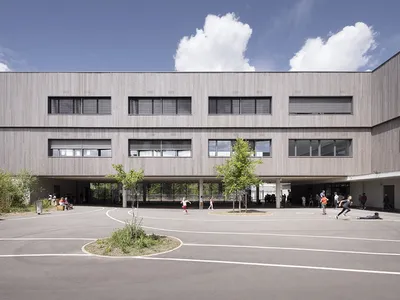
Vil Genis School by BPA ARCHITECTURE – Massy, France
Vil Genis School in Massy, France, features sustainable design, south-facing classrooms, community integration, accessible spaces, and modern educational architecture.

Comments (0)
Please login or sign up to add comments
No comments yet. Be the first to comment!