
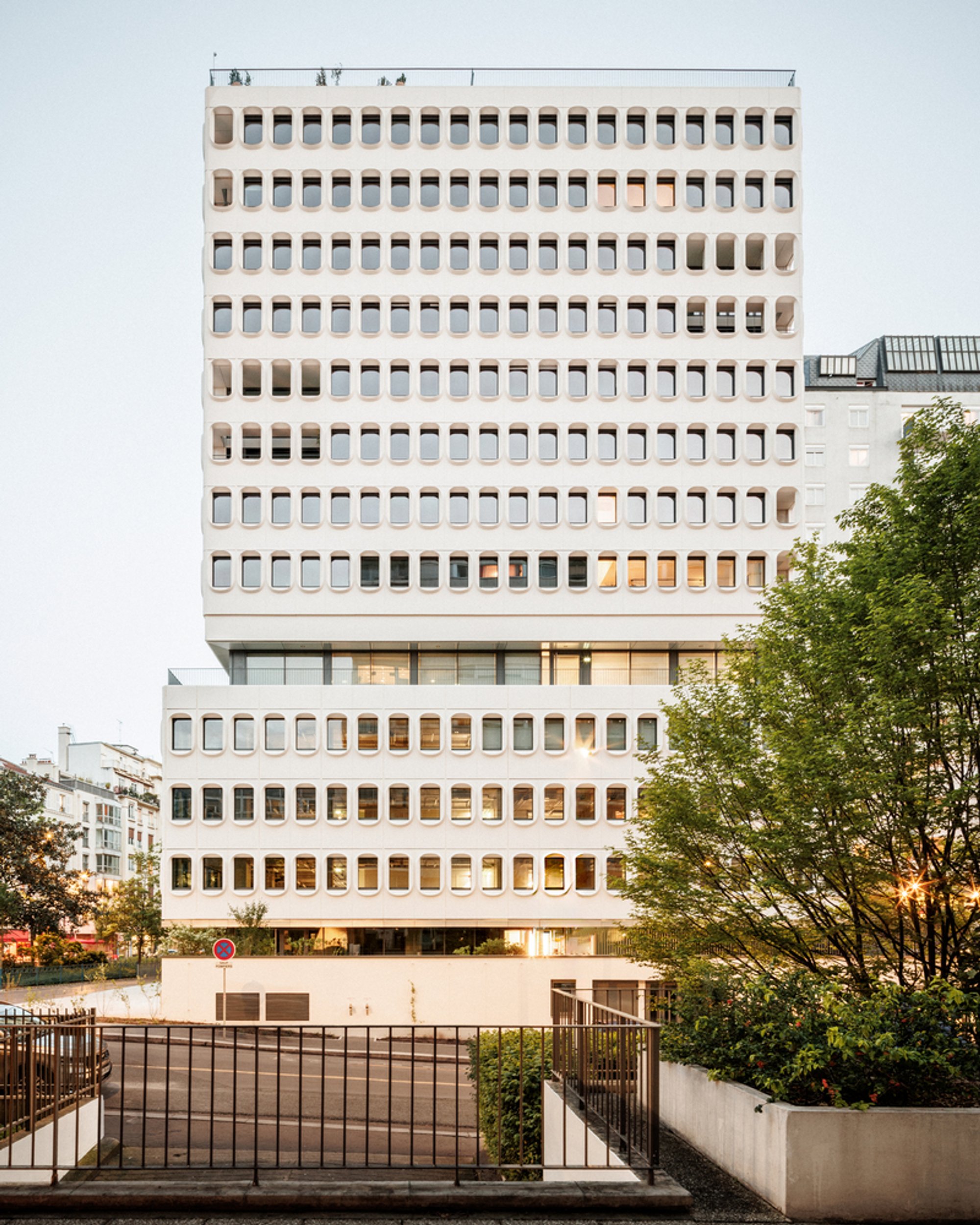
PONG Building Adaptive Reuse Project Revitalizes Mixed-Use Living in Paris
PONG Building transforms a 1970s Paris office into vibrant mixed-use spaces featuring coworking, coliving residences, public amenities, terraces, and urban greenery.

Located in the 15th arrondissement of Paris, the PONG Building is a remarkable example of adaptive reuse architecture and mixed-use urban regeneration. Designed by CALQ in collaboration with Bond Society, the project transforms a 1970s office building into a vibrant hub combining co-living residences, coworking offices, and community spaces.
Completed in 2024 with a total area of 7,950 square meters, the redevelopment reimagines the former headquarters of ADOMA, originally designed by architect Marcel Roux in the early 1970s. The renovation reflects contemporary urban lifestyles while preserving the original building’s architectural identity.
Adaptive Reuse of a 1970s Office Building
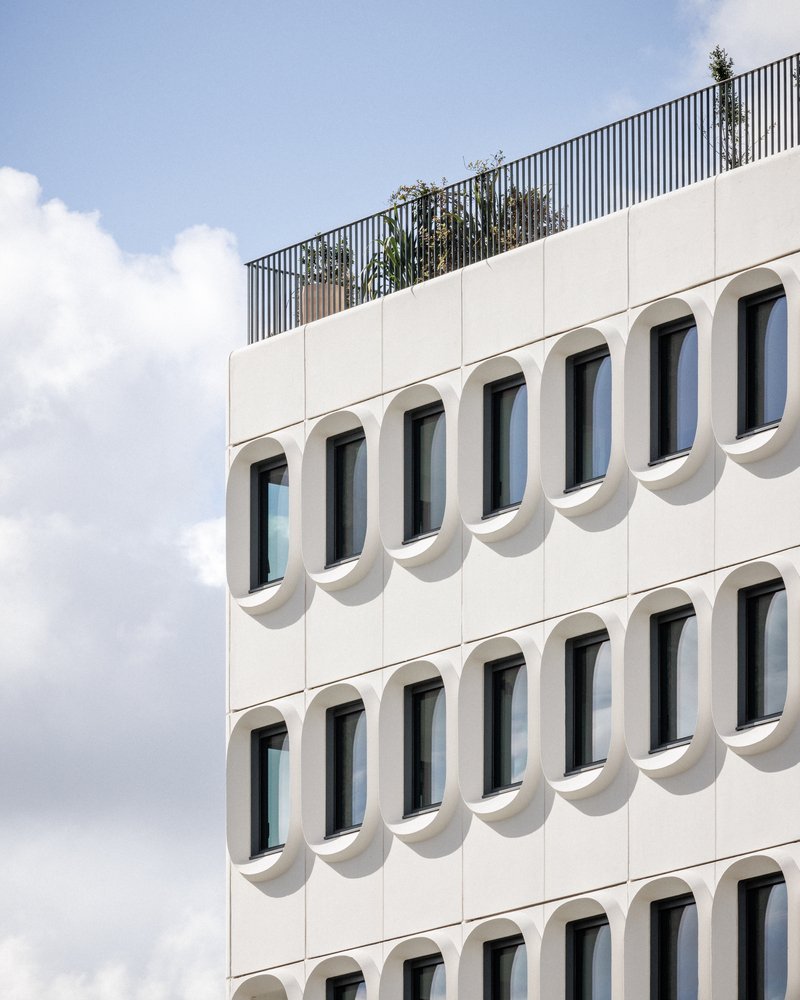
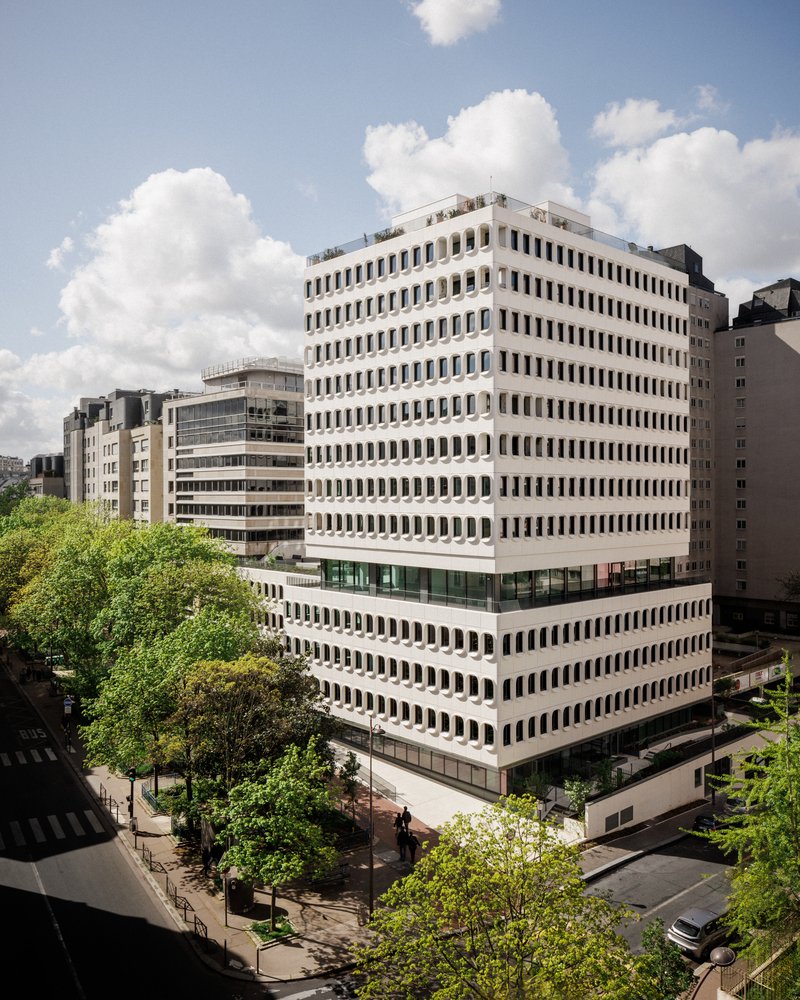
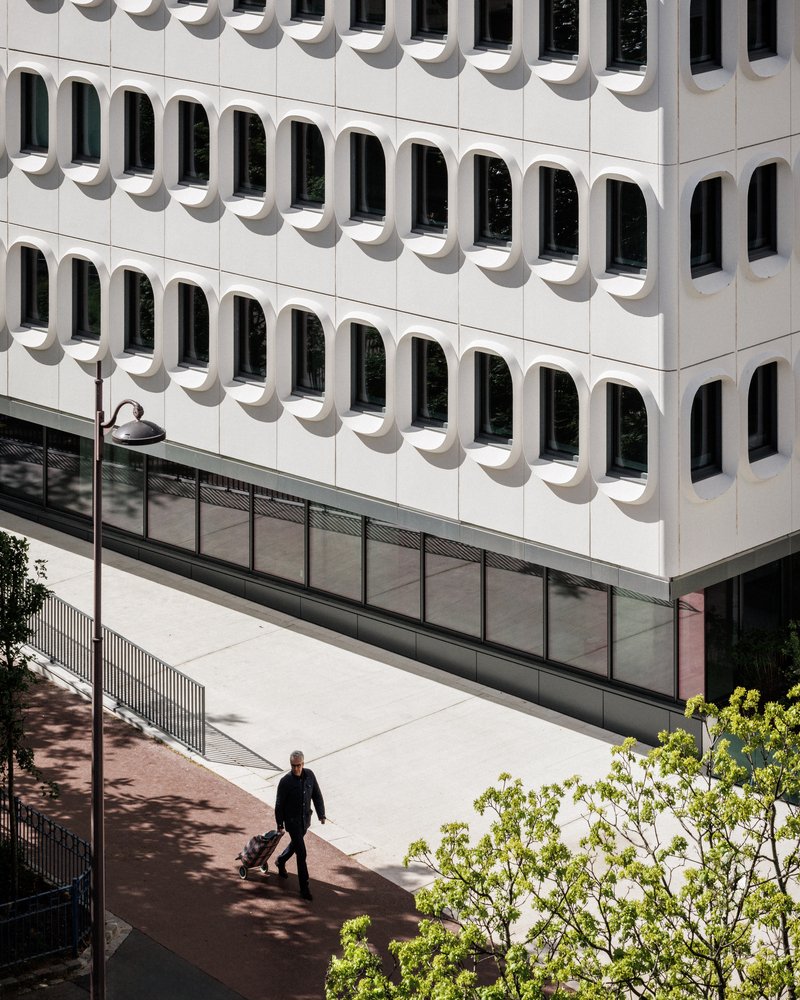
The original structure at 42 rue Cambronne was characterized by a clear modernist composition typical of the period. Its façade was defined by prefabricated concrete panels arranged in a systematic and legible pattern. Rather than erasing this identity, the new design strategy carefully preserves and enhances the building’s structural logic.
The architecture is organized into three superimposed volumes:
- A street-level base projecting slightly outward
- A horizontal bar volume
- A tower rising above the structure
These volumes are separated by recessed levels, including the ground floor and the G+4 level, which act as visual breaks in the building’s massing. By maintaining this layered composition, the architects allowed each function: work, living, and community, to find its natural place within the structure.
This approach demonstrates how modernist architecture can be revitalized through thoughtful transformation, rather than demolition.
A Mixed-Use Program Designed for Contemporary Urban Life
The PONG Building responds to the evolving demands of urban professionals by integrating multiple complementary functions within one building.
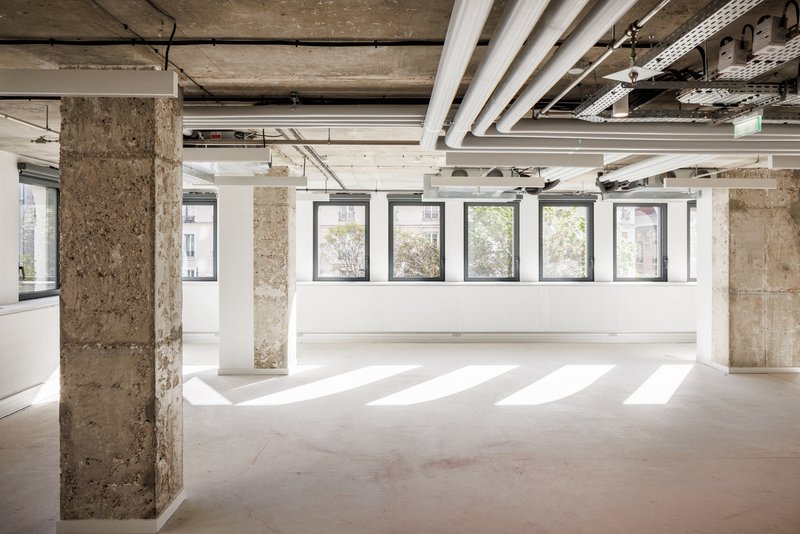
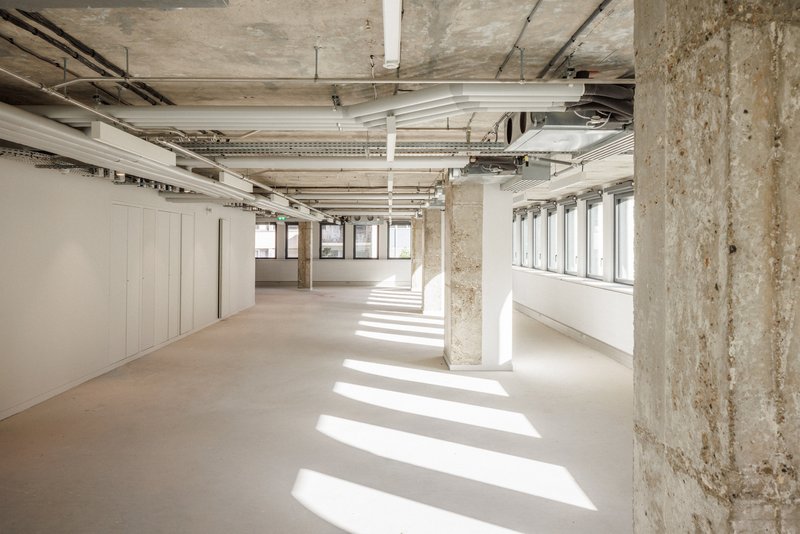
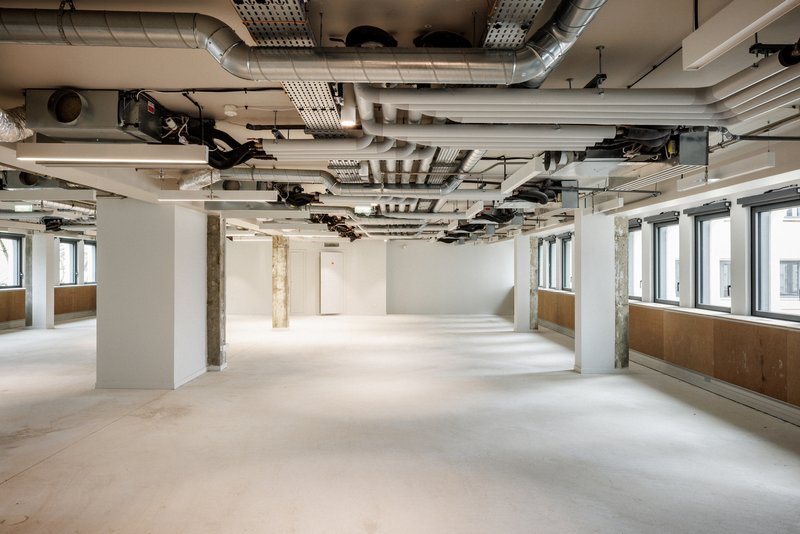
The horizontal volume accommodates flexible coworking offices, designed to support startups and innovative companies. These open-plan workspaces benefit from generous ceiling heights and adaptable layouts, enabling businesses to configure spaces according to their needs.
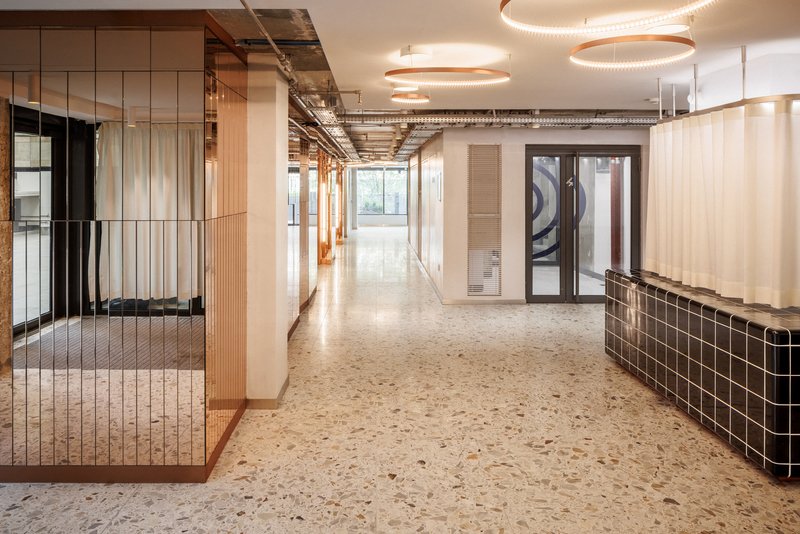
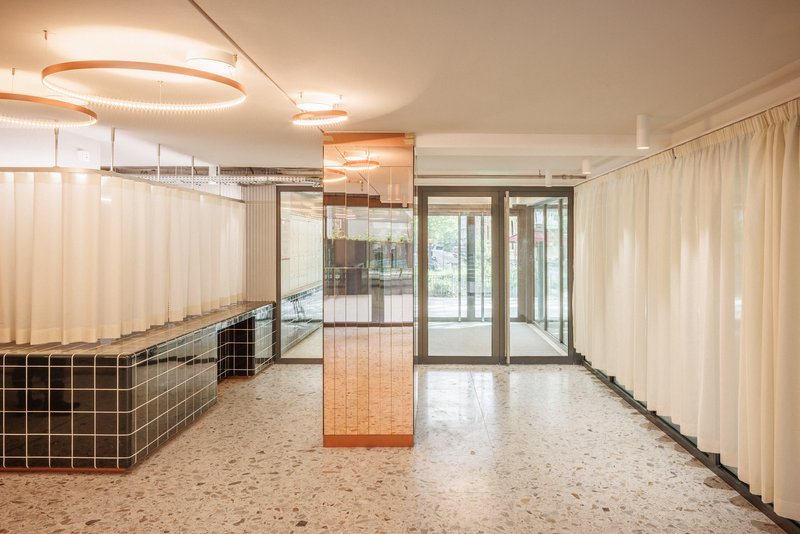
The ground floor plays an important urban role by creating a lively interface with the surrounding neighborhood. Transparent glazing opens the building to the street, inviting visitors into a welcoming environment that includes:
- A community center
- A public café
- Shared activity areas
Meanwhile, the basement levels have been converted into double-height activity spaces accessible to the public. These interventions strengthen the relationship between the building and the city, transforming a formerly closed office complex into an active urban destination.
Co-Living Residences for Young Professionals
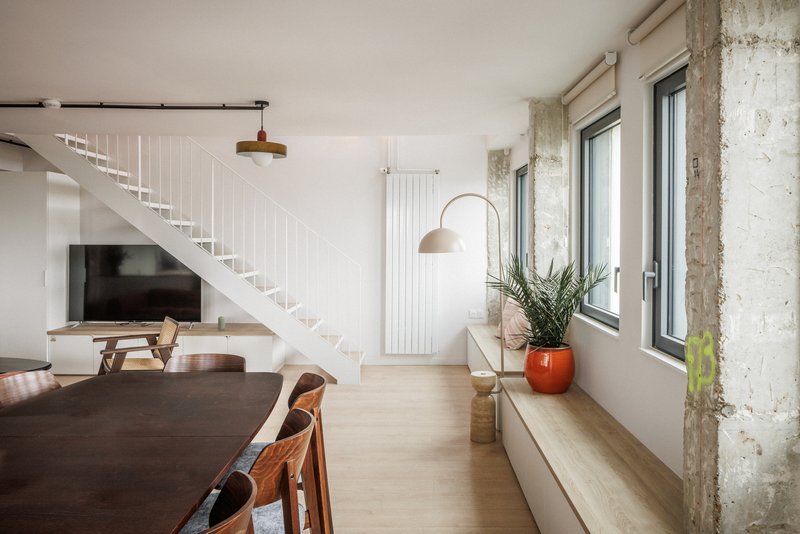
The upper levels of the tower, from G+5 to G+13, are dedicated to co-living apartments developed in partnership with the startup Colonies. These residential spaces are specifically designed for young professionals seeking community-oriented urban living.
Drawing on its expertise in shared living environments, Bond Society developed a concept based on layered levels of privacy, including:
- Shared spaces: lobbies, corridors, gym, laundry areas
- Semi-private areas: communal living rooms and kitchens
- Private spaces: individual bedrooms with personal amenities
This hierarchy encourages social interaction while still ensuring personal comfort and independence.
Innovative Apartment Layouts and Living Comfort
The residential floor plans are designed to reflect the dynamic lifestyle of modern tenants. Apartments are arranged around the building’s central core while maintaining the existing structural grid.
Several strategies ensure high living standards:
- Reinforced floor structures for stability
- High-performance acoustic partitions between rooms
- Spacious layouts that maximize natural light
One of the most distinctive residential features is the presence of eight duplex apartments, each containing 12 bedrooms ranging from 16 to 32 square meters.
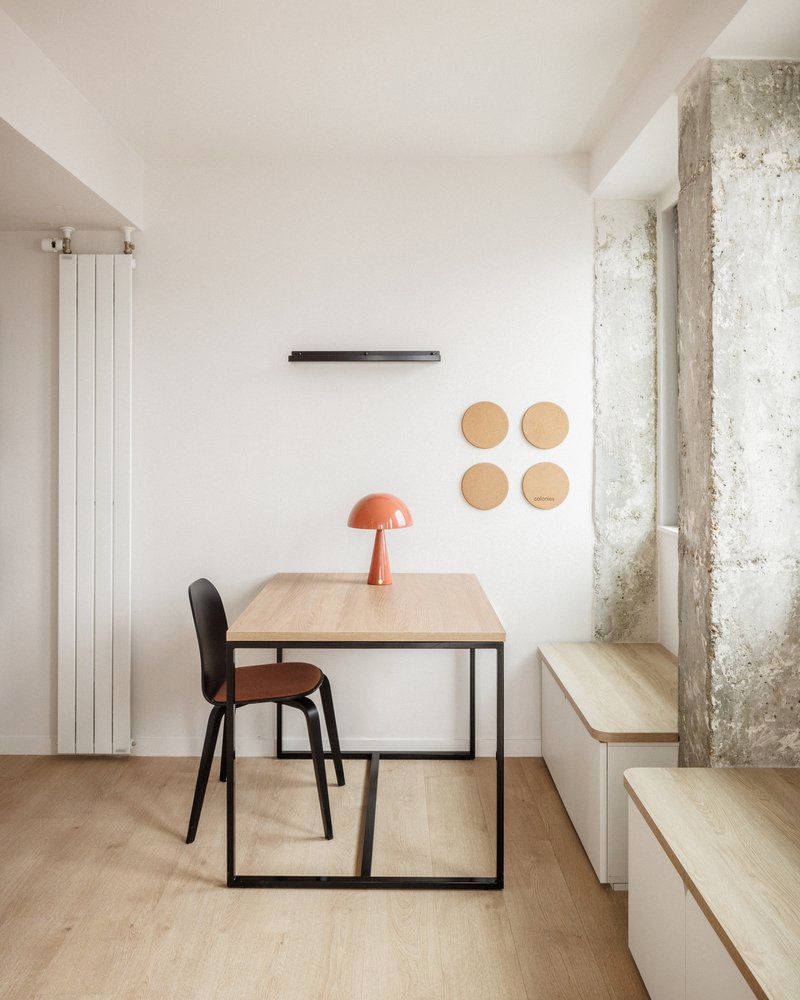
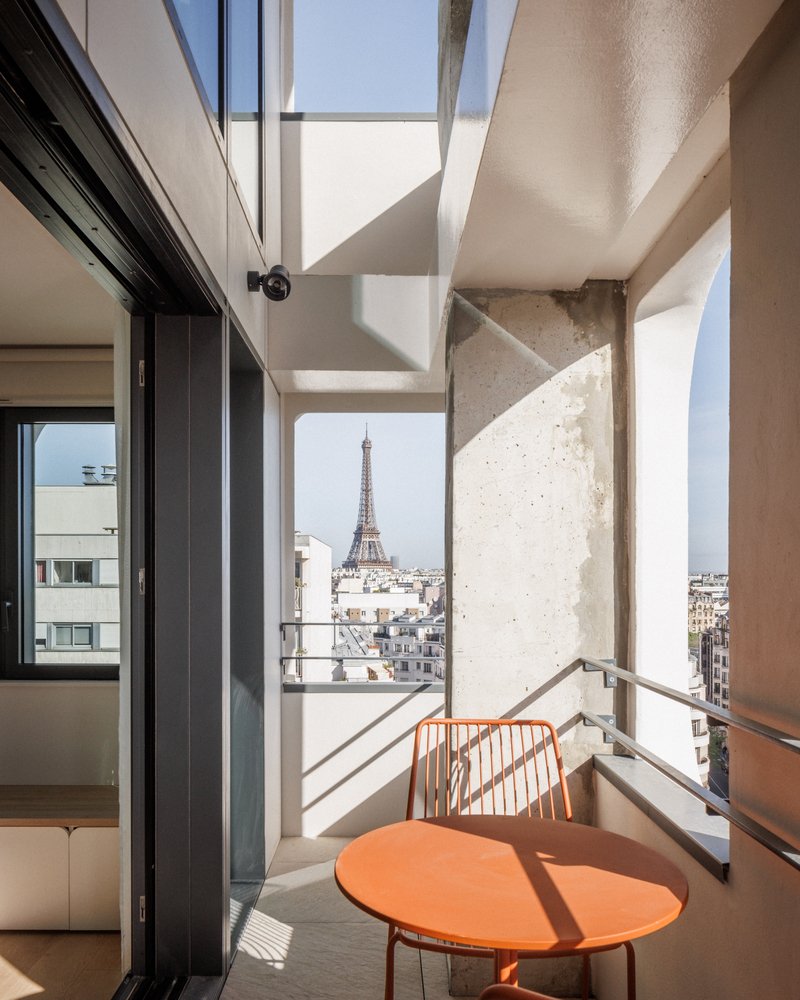
These units are organized around shared living spaces connected to double-height loggias, creating a strong sense of openness and spatial depth. Every bedroom includes its own private bathroom, while some rooms also feature compact kitchenettes, allowing residents to live independently when desired.
Custom furniture designed by Bond Society: including desks, seating, and integrated storage, gives the interiors a unique identity while optimizing functionality.
Additionally, intermediate housing units (30%) offer more affordable rental options while still providing access to the building’s services and amenities.
Coworking Spaces as a Hub for Innovation
The coworking floors act as an incubator for new technologies and entrepreneurial initiatives. The first three levels are delivered as open-plan spaces, allowing companies to customize layouts to suit collaborative working styles.
Architecturally, the G+4 level forms a recessed joint between the horizontal bar and the tower above. This design move defines the building’s silhouette while visually expressing the layered program inside.
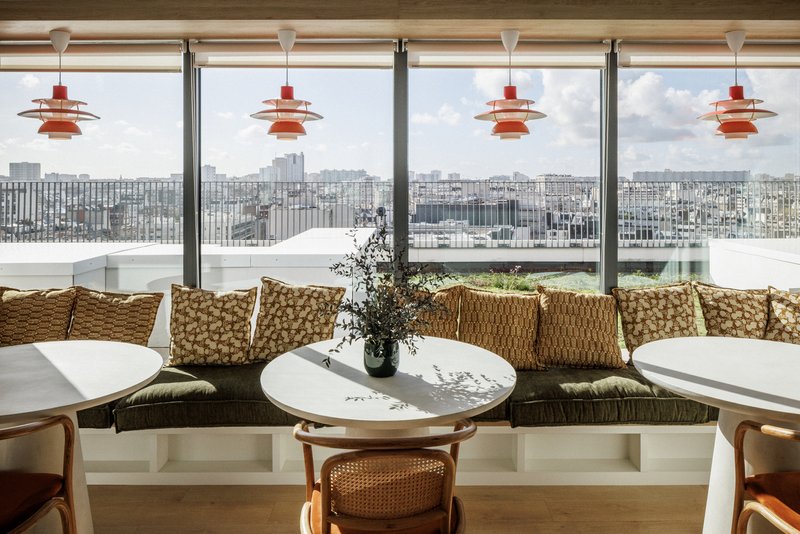
Large floor-to-ceiling windows line the façade, strengthening the connection between interior workspaces and the city beyond. This transparency reflects the project’s broader goal of fostering openness, collaboration, and innovation.
Outdoor Spaces and Urban Landscape Integration
A defining element of the PONG Building transformation is the integration of generous outdoor spaces and urban greenery.
At street level, a sloping forecourt bridges the elevation difference between the sidewalk and the raised ground floor. This gesture visually releases the building from its heavy base and creates a welcoming entrance plaza.
Large glazed openings enhance visibility of interior activities while maintaining a sense of lightness in the architecture.
Throughout the project, outdoor areas have been carefully distributed to serve different users:
- Ground-floor gardens accessible to visitors and occupants
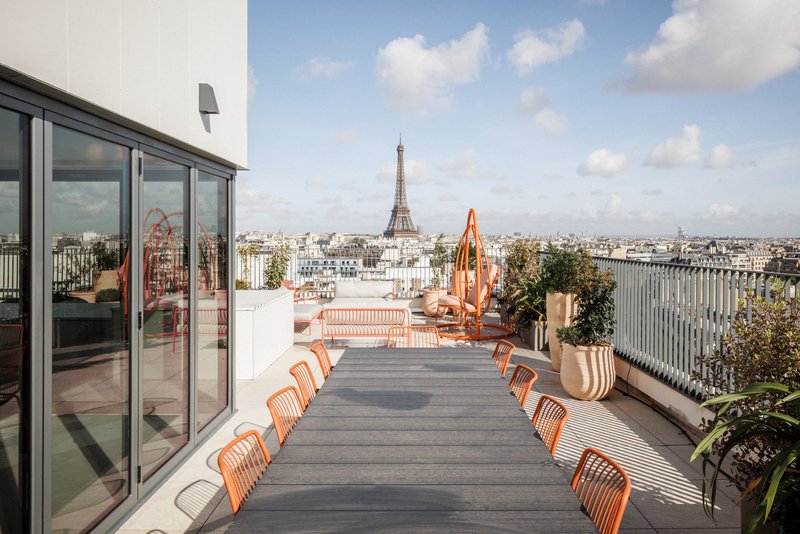
- A large office terrace on level G+4, encouraging informal work and collaboration outdoors
- A panoramic rooftop terrace on level G+13 for co-living residents
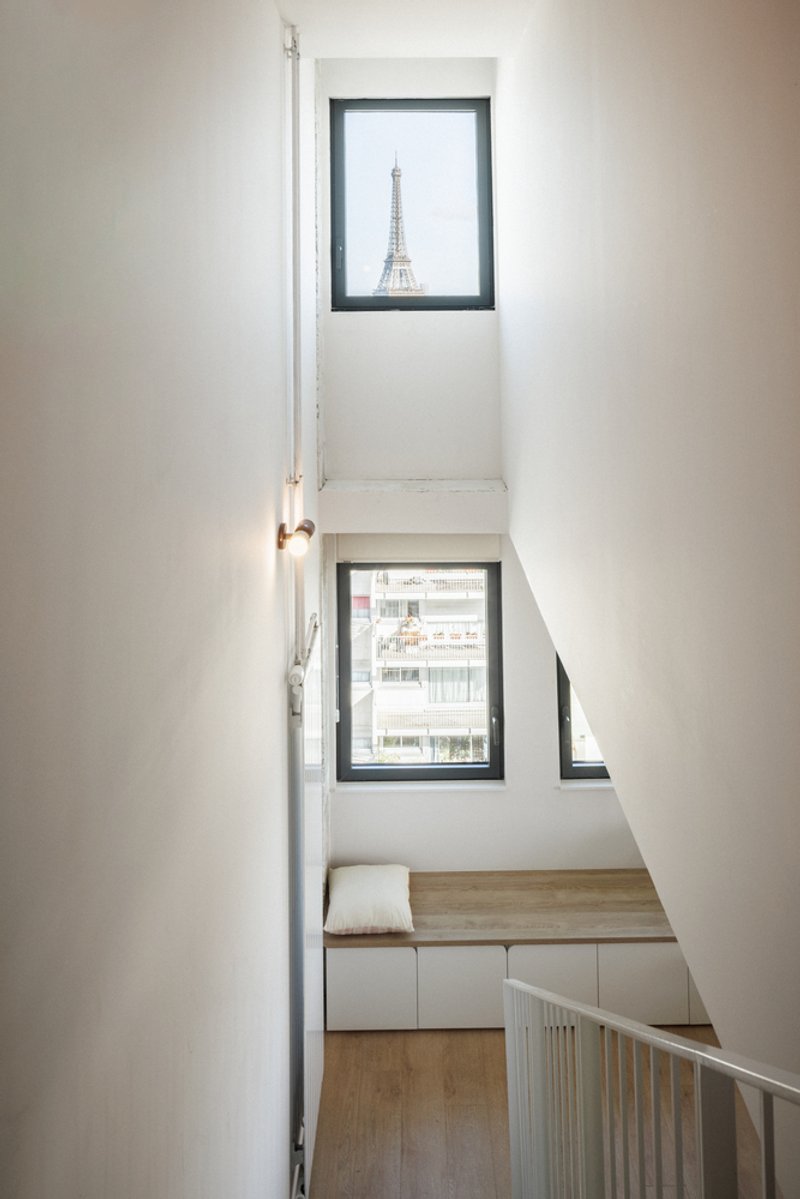
From the rooftop, tenants enjoy spectacular views across the Paris skyline, particularly over the surrounding district.
In addition, the building has been extensively landscaped, introducing approximately 2,000 square meters of vegetation. This transformation softens the previously mineral façade and contributes to urban biodiversity and improved environmental performance.
A New Model for Sustainable Urban Transformation
The PONG Building demonstrates how existing office buildings can be successfully adapted to meet the demands of contemporary city life. By combining co-living housing, coworking spaces, and community amenities, the project creates a dynamic environment that encourages interaction between residents, workers, and the wider neighborhood.
Rather than replacing the original structure, the architects preserved its essential architectural character while introducing modern spatial strategies, outdoor environments, and sustainable urban design principles.
Today, the PONG Building stands as a forward-thinking example of mixed-use redevelopment, adaptive reuse architecture, and collaborative urban living in Paris.



Popular Articles
Popular articles from the community

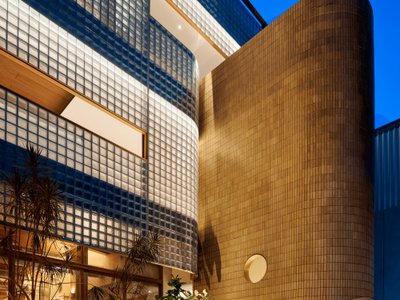
Gunawarman 35: Jakarta's Corner of Quiet Complexity
WOFF's mixed-use building in Jakarta pairs translucent glass block walls with a buff brick cylinder to hold coffee, wellness, and work under one roof.
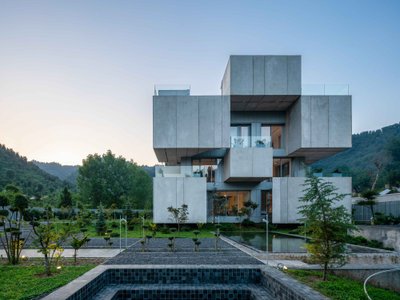
Bood Design Bureau Splits a Gilan Residence in Two to Let the Forest In
Double Side House negotiates privacy and openness through interlocking concrete volumes and planted courtyards in northern Iran's humid Caspian lowlands.

Filtering Space: A Gradual Spatial Experience
From urban intensity to spatial calm.
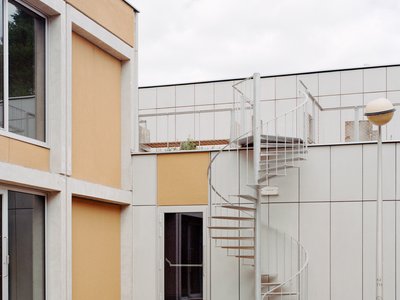
MAKER architecten Rewire a 1972 Brutalist Dormitory on the VUB Campus as a Living Lab
A modular renovation strategy in Belgium breathes new life into Willy Van Der Meeren's modernist student housing without erasing its concrete bones.


Similar Reads
You might also enjoy these articles
ATELIER BRÜCKNER Grows a Garden of Knowledge for Uzbekistan's Expo 2025 Pavilion in Osaka
A triangular timber canopy and blue-tiled courtyards translate Uzbek craft traditions into a 1,272-square-meter landscape of learning.
Bood Design Bureau Splits a Gilan Residence in Two to Let the Forest In
Double Side House negotiates privacy and openness through interlocking concrete volumes and planted courtyards in northern Iran's humid Caspian lowlands.
suatudio Splits a Multigenerational Home into Interlocking Concrete Volumes in West Java
Rumah Tahu House in Sumedang, Indonesia adapts to sloping terrain with split levels, timber decks, and deep overhangs for two generations.
MAKER architecten Rewire a 1972 Brutalist Dormitory on the VUB Campus as a Living Lab
A modular renovation strategy in Belgium breathes new life into Willy Van Der Meeren's modernist student housing without erasing its concrete bones.

Explore Office Building Competitions
Discover active competitions in this discipline




The International Standard for Design Portfolios


The Global Benchmark for Architecture Dissertation Awards


The Global Benchmark for Graduation Excellence


Challenge to reimagine the Iron Throne
Comments (0)
Please login or sign up to add comments
No comments yet. Be the first to comment!