

Pyrolysis Convergence
Rethinking Energy Conversion

Climate Change continues to become an ever-growing threat, and there is an imperative need for innovation and new technologies to lower our collective carbon footprint around the globe. Humanity must find new ways to harness the stored energy within our natural environment, without compromising our eco-system. Deep within the Pacific Ocean, thousands of Hydrothermal vents release millions of tons of Methane into the atmosphere every year, contributing to global greenhouse emissions. Methane is 80 times more harmful than CO2, making it one of the most dangerous greenhouse gases to be produced naturally or unnaturally. What if we could capture these naturally occurring gases and transform them into something renewable and eco-friendly? The Mariana Trench, about 100 miles south of the Island of Guam, is a Hydrothermal vent hotspot within the Pacific Ocean with an untapped potential for Pyrolysis Convergence. With modern breakthroughs in energy conversion, thermocatalytic decomposition (TCD), allows the opportunity to capture methane gas and convert it into clean renewable Hydrogen Fuel. Through pressure and heat, the methane molecule can be converted into pure hydrogen molecules. Even though, this process may seem new, the organisms surrounding these Hydrothermal vents have been capturing and converting methane gas into energy long before humans existed. Methanotrophic bacteria, a type of bacteria that consumes methane, surprisingly hasn’t been researched enough to see if there is a practical application in other environments. These could potentially make an impact on other regions that produce massive amounts of methane like landfills and agriculture. This is where our part comes in, designing a zero emissions, non-invasive, submersible that can capture these harmful gasses and convert them into a new type of energy source.
We decided to locate our site in the Mariana Trench, for its proximity to hydrothermal vents, but also because of the nearby island of Guam, which houses a large Naval base. To make incremental changes in emissions, we decided to use this new technology to combat one of the leading polluters in the world, the U.S. military. The United States military contributes roughly 51 million metric tons of CO2 into the atmosphere annually. Our team decided we wanted to find a way to help eliminate this massive polluter by offering an alternative energy source, hydrogen fuel.
The form of the hub consists of three main parts, the inflated spaces, the fins, and the protective skin.
The inflated spaces were constructed based on the programming given by the project brief and branch into one another. The fins were constructed by using a hydrodynamics analysis model to better understand how the current could flow around and the form. Finally, the skin was implemented to help protect the submersible from strong pressures and extreme ocean temperatures.
The deployables in this project were designed in a way to imitate a trash bag, yes a trash bag. During early research into the site, we found that different forms of pollution have made their way down into the Mariana Trench, even a trash bag. Having our deployable be stretchable and malleable, would help in the capturing of methane gas. Where they are able to expand and contract, depending on the size and shape of the hydrothermal vent. As these deployables fill up with methane, they inflate with the more methane they consume. Once they have reached their limit, they then connect to the main hub, where they dispense the methane gas into the conversion chamber.
On the main hub, the researchers can extract, the Methanotrophic bacteria from the collected gas for research. The methane collected from the deployables is then sent to the conversion chamber where through the TCD process the harmful greenhouse gas, methane, is now transformed into one of the cleanest renewable energy resources. This is then stored on the main hub where it can be transported to the Naval base on the island of Guam. Within the main hub the researchers, are able to experiment with the different methanotrophic bacteria in the main lab located above their living quarters. This gives the researchers easy access to the lab, along with giving them a buffer from their research. Two of the researcher's main goal is to focus on methane capture and the other two are focused on how these methane-eating bacteria, could one day save the world.

Popular Articles
Popular articles from the community

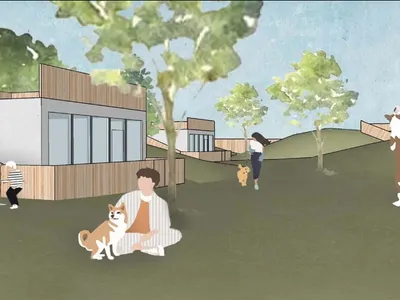
Temporary Home for Dogs: A Reversed Zoo Rethinks Animal Shelter Architecture
In Bucharest, a sinuous corridor and freed landscape flip the logic of containment, designing a shelter that works to make itself unnecessary.
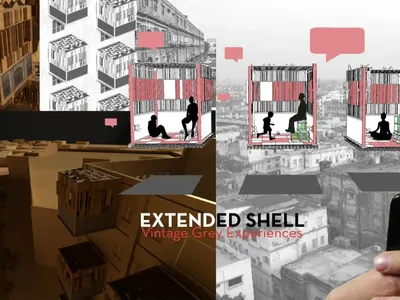
Extended Shell: Retrofitting Kolkata's Balconies as Living Urban Thresholds
A modular retrofit system recovers the social and environmental intelligence of Kolkata's historic verandas for contemporary Park Street residents.
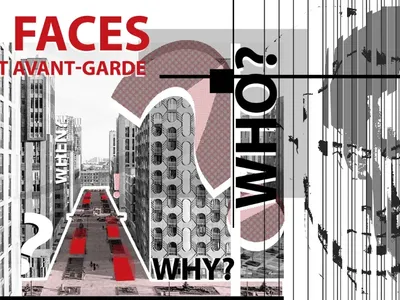
Faces of the Soviet Avant-Garde: Turning Moscow's Street Names into an Open-Air Museum
A network of sculptural installations across a Moscow residential district transforms forgotten architect names into spatial encounters with cultural memor

Opera on the Sea: Driftwood Logic Shapes a Timber Opera House on Estonia's Coast
Trevor Orgill's opera house translates the entangled drift of floating timber into a civic building where wood, water, and music converge.

Similar Reads
You might also enjoy these articles

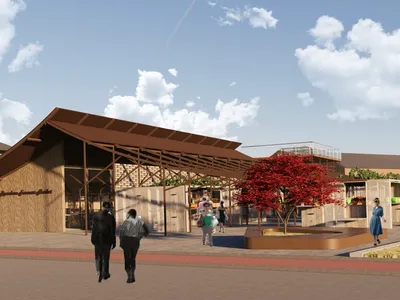
The Rhythm of Seasons
A Farmers' Market Connecting Nature and the City

More Than a Building-Designing a Living System
More Than a Building-Designing a Living System
Base Beyond
DESERT COMPOUND ARID: TOURISM OF ABSENCE AND ABUNDANCE


Comments (0)
Please login or sign up to add comments
No comments yet. Be the first to comment!