
Quebrada Honda House by Abarca Palma Arquitectos: A Multi-Level Timber Retreat Embracing Frutillar's Lakeside Landscape
Multi-level timber house in Frutillar, Chile, integrates with hillside topography, maximizing lake views, sunlight, and thermal efficiency.


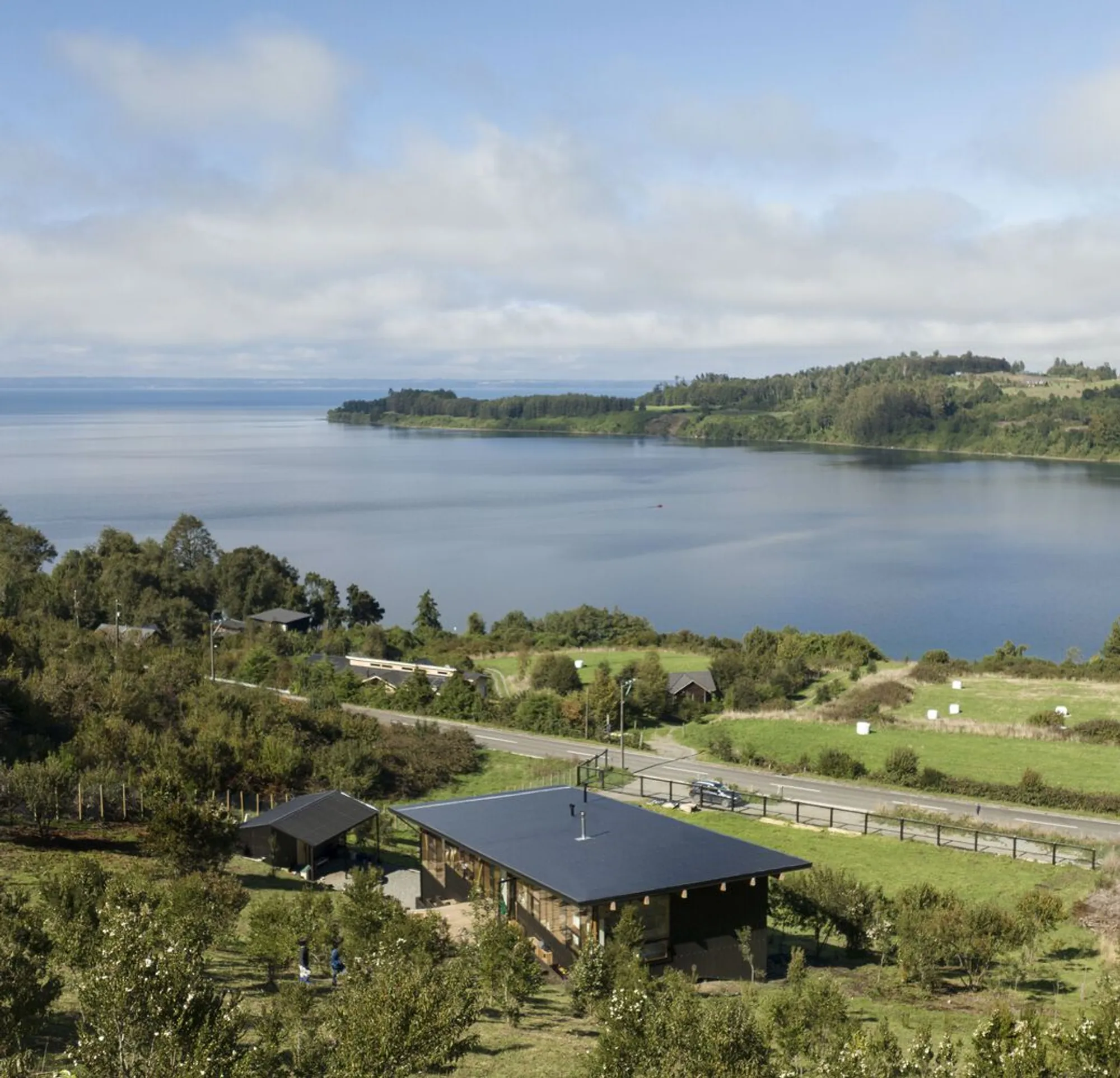
Nestled on the southern hillside of Domeyko Bay in Frutillar, Chile, the Quebrada Honda House by Abarca Palma Arquitectos and Cristóbal Noguera is a striking example of topography-driven residential design. Oriented towards sweeping views of Lake Llanquihue, the 180 m² house responds directly to its terrain and environmental context through a descending, multi-level layout that enhances solar gain, privacy, and spatial flow.

Topography-Inspired Architecture
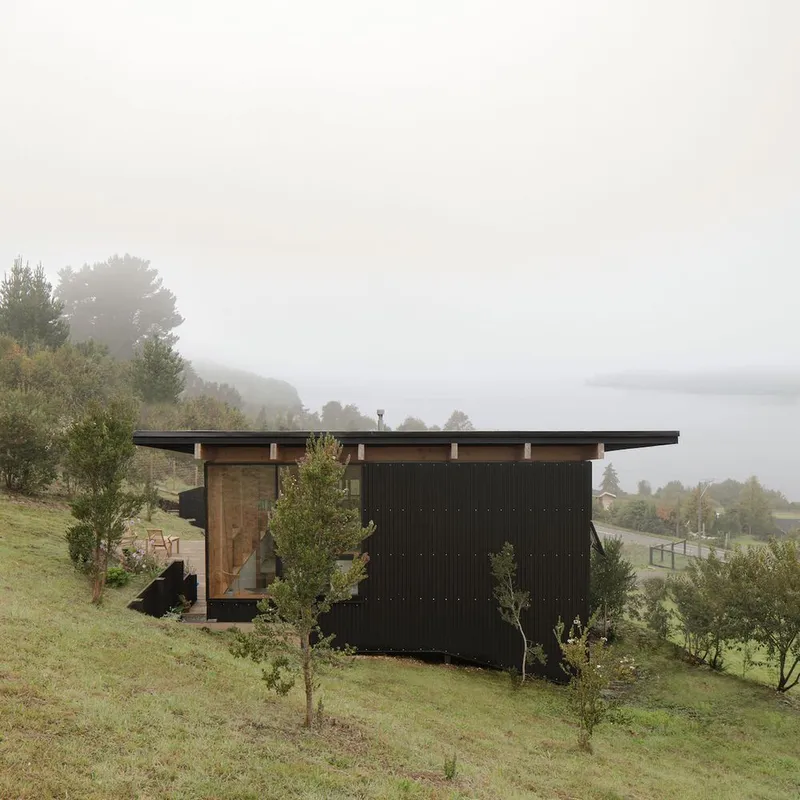
The architectural strategy hinges on a staggered volumetric arrangement, allowing the house to follow the sloped terrain naturally. Organized over four distinct levels, the design flows from the private to the public, enhancing both comfort and livability. Each half-level is carefully programmed: the first level houses the master bedroom, the second includes children’s bedrooms and a study, while the third opens to the living, dining, and kitchen areas, all facing the lake with expansive glazing. The fourth level contains parking, storage, and the main entrance, tucked efficiently into the hillside.


Light, Orientation, and Structure
To maximize northern sunlight—a critical consideration in the Southern Hemisphere—the home's cascading structure aligns its most transparent façades to the north, east, and west, featuring large windows framed in exposed timber. The southern façade, facing away from the sun and toward prevailing winds, is punctuated with selective openings, minimizing heat loss while framing curated views.

Material Palette and Construction Logic
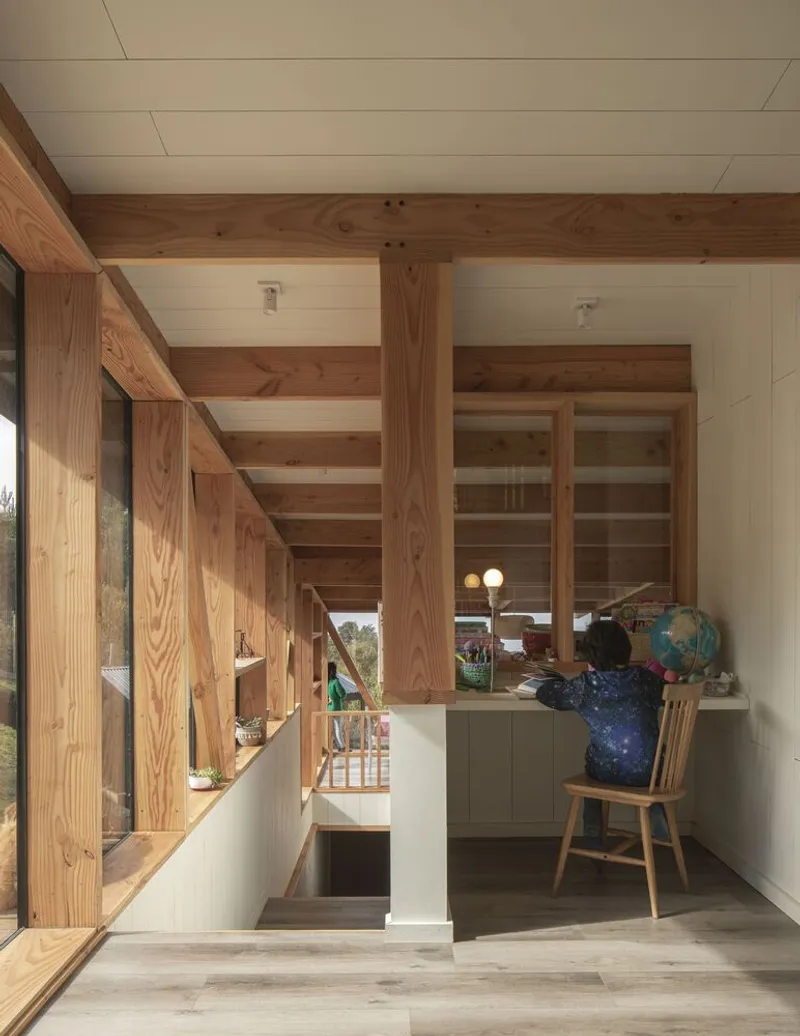
The structural system is a hybrid, combining 160mm SIP (Structural Insulated Panel) construction for walls, floors, and roof—ensuring thermal efficiency—with a skeleton of steel and exposed timber beams. The foundation includes reinforced concrete retaining walls, supporting elevated platforms that delicately touch the ground through isolated footings.
Externally, the house is clad in corrugated zinc panels, offering a monolithic, weather-resistant envelope. In contrast, the interior aesthetic is warm and natural, mixing whitewashed finishes with exposed timber frames, beams, and handrails to evoke a sense of crafted modernity.


Spatial Experience
Internally, the experience is unified by a side stairwell that guides movement through the levels, maintaining visual continuity and a seamless connection to the lake. The descending spaces feel both interconnected and distinct, enabling a balance of communal gathering and personal retreat. The house serves as both a family sanctuary and an architectural response to the powerful landscape of Chile’s southern lake region.




Popular Articles
Popular articles from the community


Co-life: Sustainable Architecture for Age-Friendly Community Living
Co-life reimagines sustainable architecture for seniors through courtyards, rammed earth, shared gardens, and spaces designed for belonging.
AL-JANNAH: Sustainable Architecture and Permaculture for Afghan Widows
AL-JANNAH uses sustainable architecture and permaculture to create resilient oasis of housing, learning, work and renewal for Afghan widows.
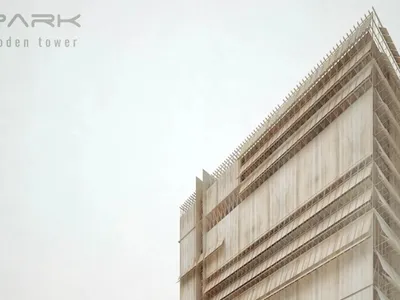
EW PARK: Sustainable Architecture Reimagines the Future of Urban Parking
EW PARK reimagines city parking as a modular wooden tower combining automation, solar energy, electric mobility, and adaptable urban design.

Conexión: Biophilic Design Reimagines High-Rise Living in Hong Kong
Conexión reimagines high-rise living in Hong Kong through biophilic design, green facades, shared spaces, daylight, water and nature within.


Similar Reads
You might also enjoy these articles


Hodi-Mandai Geram
Project Function: Preservation and revitalization of the Intangible heritage and socio-spatial identity of the Hodi by Housing, Cultural Memory Center, Sacred Grove, landscape, local tourism economy


Olio Towers: A Mid-Rise for Performers That Fuses Housing, Rehearsal, and Stage
Located blocks from Houston's Theater District, this modular tower stacks living units around a central performance atrium.

Oasis: Modular Green Housing Carved into Dhaka's Urban Fabric
A shortlisted Plugin Housing entry reclaims unauthorized settlements in Dhaka with stepped concrete volumes, green roofs, and ventilation-driven design.

Black Hole: A Floating Megastructure for the Post-Physical Era
Emiliano Mazzarotto envisions a spherical, self-scaling arena where e-sports, digital hotels, and holographic stadiums replace traditional public space.


Explore Architecture Competitions
Discover active competitions in this discipline



Challenge to reimagine the Iron Throne


Photograph architecture without architects


Illustrate the lost glory of Angkor Wat - Render Challenge


Design challenge to reuse E-waste
Comments (0)
Please login or sign up to add comments
No comments yet. Be the first to comment!