
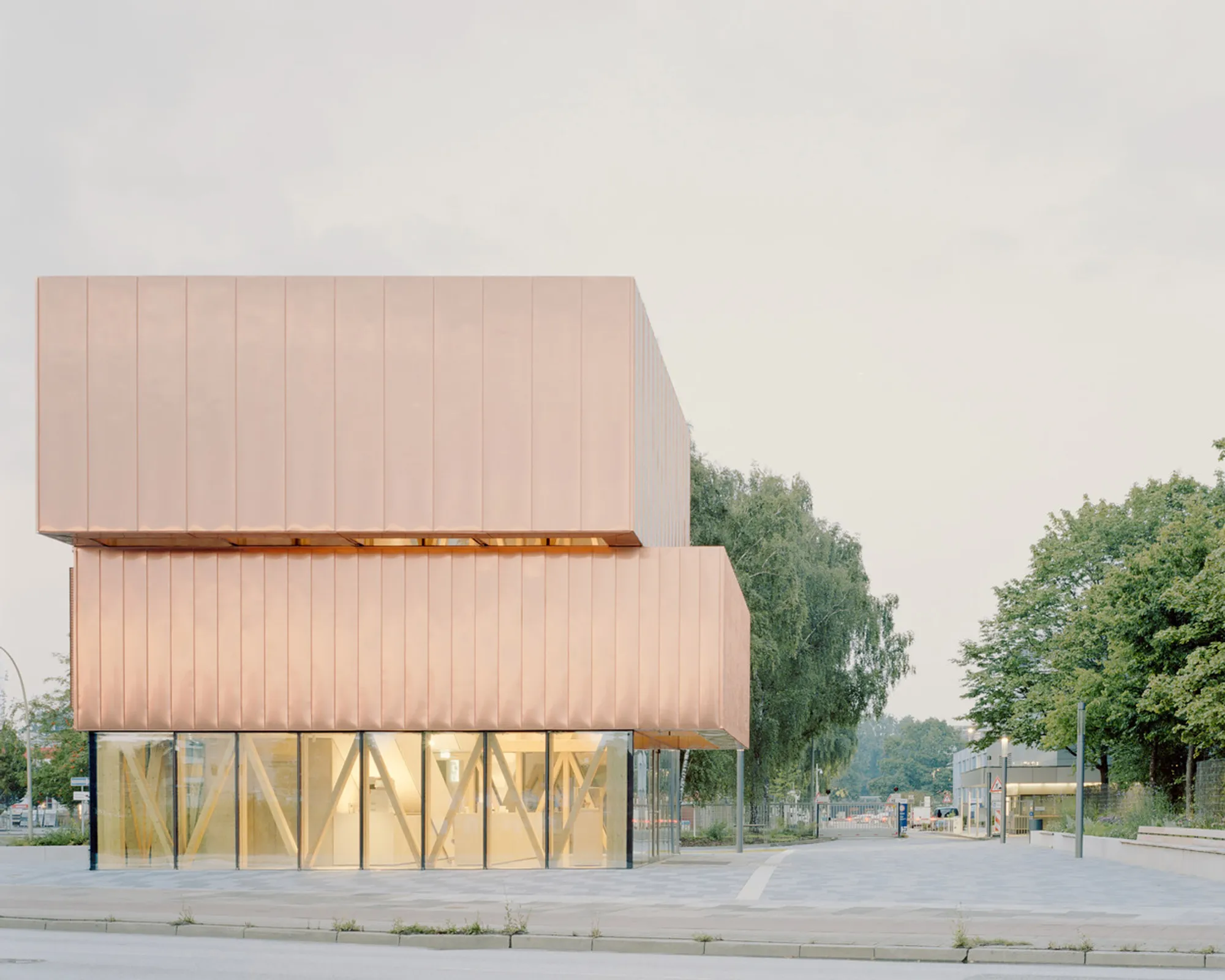
Reception Pavilion by Busch & Takasaki Architekten and gmp Architects – Hamburg, Germany
The Reception Pavilion in Hamburg features a vertical, minimalist design by Busch & Takasaki Architekten and gmp Architects, emphasizing sustainability and visibility.


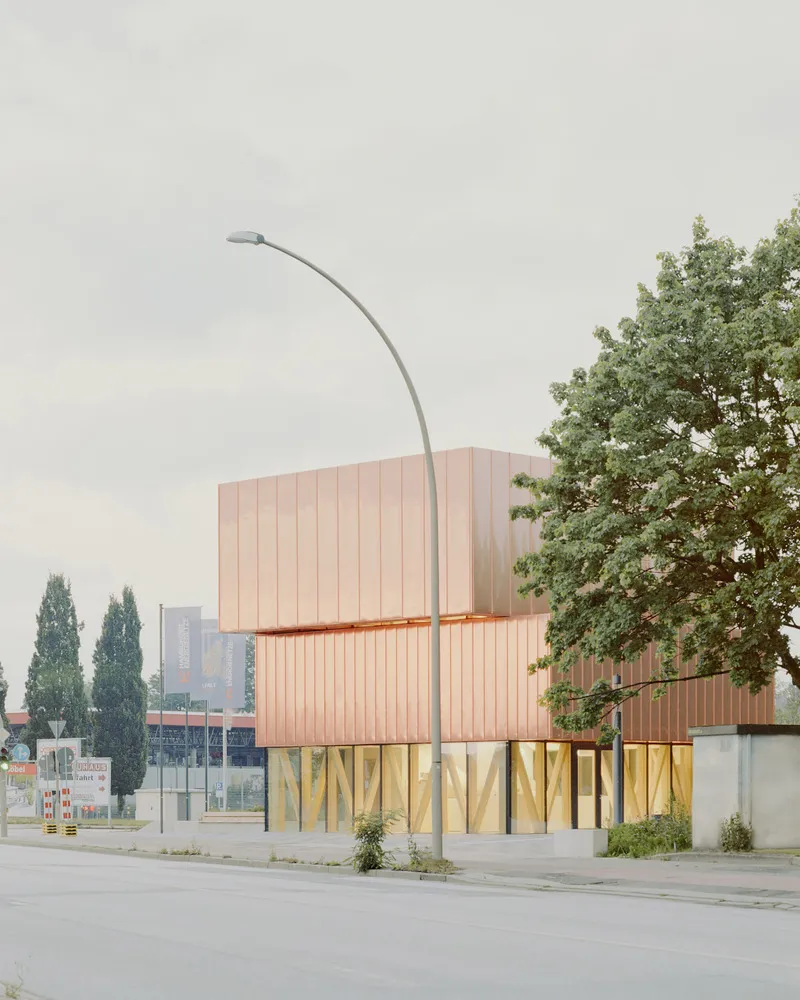
The Reception Pavilion by Busch & Takasaki Architekten in collaboration with gmp Architects is a striking addition to Hamburg’s urban landscape. Strategically located along the fast-paced Bramfelder Chaussee, the pavilion marks the entrance to an operations yard with a design that balances visibility, elegance, and functionality. Its vertical form creates a sculptural presence that is both highly visible from a distance and easy to identify, making it a practical landmark for visitors and employees alike.
Architectural Concept
The pavilion’s design embodies simplicity and subtlety, achieving a powerful visual impact without overwhelming its surroundings. The vertical structure functions as a wayfinding element, guiding visitors seamlessly to the entrance while complementing the dynamic streetscape. The architects’ approach prioritizes clarity of form, creating a structure that stands out through proportion, materiality, and minimalist detailing rather than elaborate ornamentation.

Sustainability and Materiality
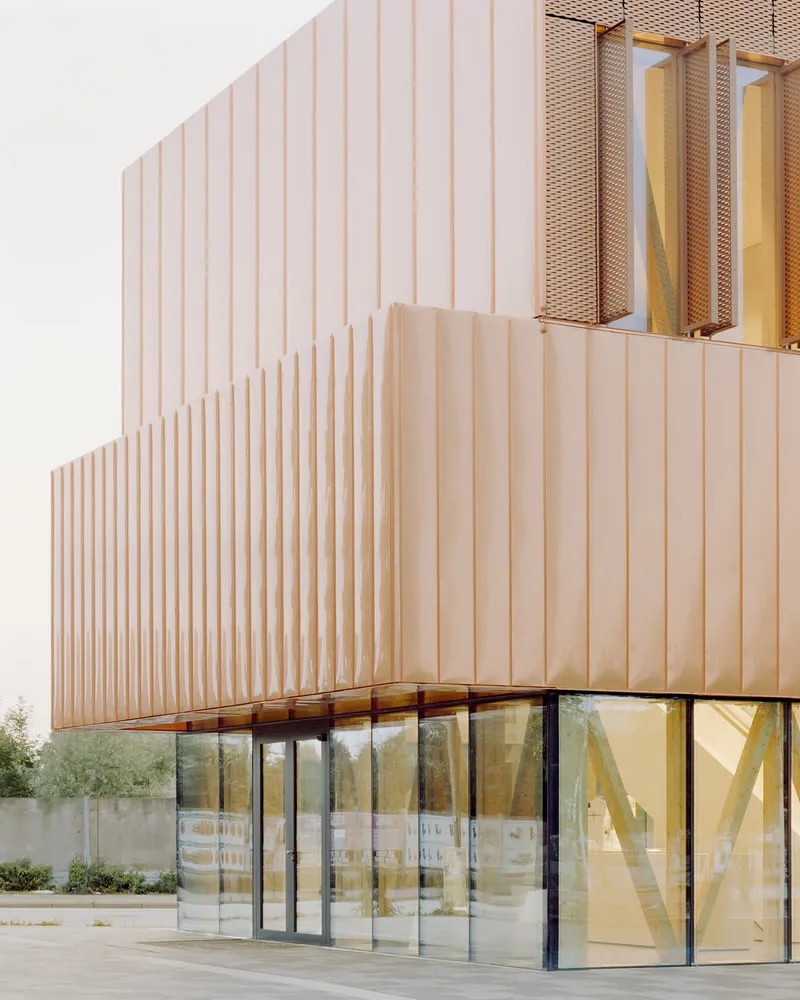
A rigorous sustainability concept underpins the pavilion’s design. The architects focused on resource-efficient construction, carefully selecting materials that optimize both the structural integrity and aesthetic appearance of the building. The envelope and framework utilize sustainable, low-impact materials, reflecting an environmentally conscious approach that aligns with contemporary architectural practices. This emphasis on sustainability ensures that the pavilion is not only functional and visually appealing but also responsible in its environmental footprint.

Spatial Experience
The interior of the pavilion mirrors its exterior simplicity, providing a welcoming reception area that is both functional and aesthetically coherent. Natural light interacts with the material palette to create a warm, inviting atmosphere, while the clean lines and open plan enhance circulation and visibility. Every aspect of the design emphasizes a balance between form, function, and sustainability, resulting in a pavilion that is simultaneously iconic and considerate of its urban context.
Design Highlights
- Vertical sculptural form visible from Bramfelder Chaussee.
- Sustainably sourced materials in both structure and envelope.
- Resource-efficient construction emphasizing minimal environmental impact.
- Functional and welcoming reception space for operations yard visitors.
- Minimalist, elegant architectural language that complements the urban streetscape.

All photographs are works of
Bryn Donkersloot




Popular Articles
Popular articles from the community


Hill & Cross Opera: Sculptural Opera House Architecture Shaped by Tallinn’s Landscape and Identity
Hill & Cross Opera reimagines opera house architecture in Tallinn through its sculptural hill, civic plaza, glass wave and a luminous cross.
EW PARK: Sustainable Architecture Reimagines the Future of Urban Parking
EW PARK reimagines city parking as a modular wooden tower combining automation, solar energy, electric mobility, and adaptable urban design.

Riyadh For All: Intergenerational Urban Design for Active Aging in Rabat
Riyadh For All reimagines urban design in Rabat with intergenerational co-living, adaptive courtyards, and Moroccan cultural exchange today.

The Ocean Hive: Sustainable Architecture for a Self-Sufficient Civilization at Sea
The Ocean Hive imagines sustainable architecture at sea, where modular habitats, algae, wave power and ocean waste sustain a growing colony.


Similar Reads
You might also enjoy these articles


Hodi-Mandai Geram
Project Function: Preservation and revitalization of the Intangible heritage and socio-spatial identity of the Hodi by Housing, Cultural Memory Center, Sacred Grove, landscape, local tourism economy


Olio Towers: A Mid-Rise for Performers That Fuses Housing, Rehearsal, and Stage
Located blocks from Houston's Theater District, this modular tower stacks living units around a central performance atrium.

Oasis: Modular Green Housing Carved into Dhaka's Urban Fabric
A shortlisted Plugin Housing entry reclaims unauthorized settlements in Dhaka with stepped concrete volumes, green roofs, and ventilation-driven design.

Black Hole: A Floating Megastructure for the Post-Physical Era
Emiliano Mazzarotto envisions a spherical, self-scaling arena where e-sports, digital hotels, and holographic stadiums replace traditional public space.

Explore Cultural Architecture Competitions
Discover active competitions in this discipline



Challenge to reimagine the Iron Throne


Photograph architecture without architects


Illustrate the lost glory of Angkor Wat - Render Challenge


Bring back Drive In's
Comments (0)
Please login or sign up to add comments
No comments yet. Be the first to comment!