

Reimagining relics: Re-exploring the lighthouse to create an iconic regional monument in Svalbard.
‘Fire Tower’ - Sports Architecture design competition - Result story


In ancient times, before clearly marked ports, a fire on the hilltop guided seafarers. Eventually, they built a platform to raise the visibility of this fire. This led to the birth of lighthouses.
In antiquity, they served as gateways to ports that made them cultural landmarks. The Pharos, one of the first guiding lights located in Alexandria, Egypt stood 100 meters high. It served as an iconic monument and helped signal mariners. The word “Pharos” even became an etymological origin of the word "lighthouse" in Greek.
The use of oil and coal to light the lamp in the lighthouse remained effective till the 1820s.
All changed when the French physicist Augustin Fresnel invented a new lens that could reflect refracted light. He installed this creation in the Phare de Cordouan, a lighthouse situated in France. With further evolution in Fresnel's system, it created ways for millions of sea-farers.
Thousands of lighthouses started showing up with trans-Atlantic commerce over sea routes, each having its own unique signature. The structures of this typology ranged from solid masonry to a transparent hyperboloid framework. Withstanding centuries of harsh waves, 17th-18th century lighthouses have also seen their keepers withstand insanity and isolation.
Since then, the evolution of lighthouse architecture has come a long way in materials, design, and engineering. Although apart from technical changes the overall typology remains the same. Can we in any way re-explore this typology?
As navigational Buoys, LORAN and global positioning act as alternatives to lighthouses, the iconic quality, and importance around lighthouses remain a relic of the past.
Can we bring the lighthouse typology back to life? How can we do so in today’s context?
Lighthouses are iconic buildings with design constraints. Remote, clear, and built to fight extreme environments, they function on land as well as the sea. Whether the lighthouse stands inside a rock or grows up to an iconic height over the edge of a cliff, its primary function has always been to show the way. Even today old lighthouses remain an accurate model of wayfinding and help ships cross the sea. In heavy storms or starless nights, lighthouses' familiar signals have given hope to millions of seafarers, their extreme typologies define their character.
To celebrate its functions and structural quality, can we build a lighthouse that not only is resilient to its surroundings but also is a flag bearer of the typology itself?
Brief: The challenge here was to conceive a contemporary lighthouse. It must be built in a way that tackles the climatic condition of the region and serves as a monument of that region.
Some of the Best competition projects are as follows:
Winning Project: Vertical Aurora
By: Ekin Meşe
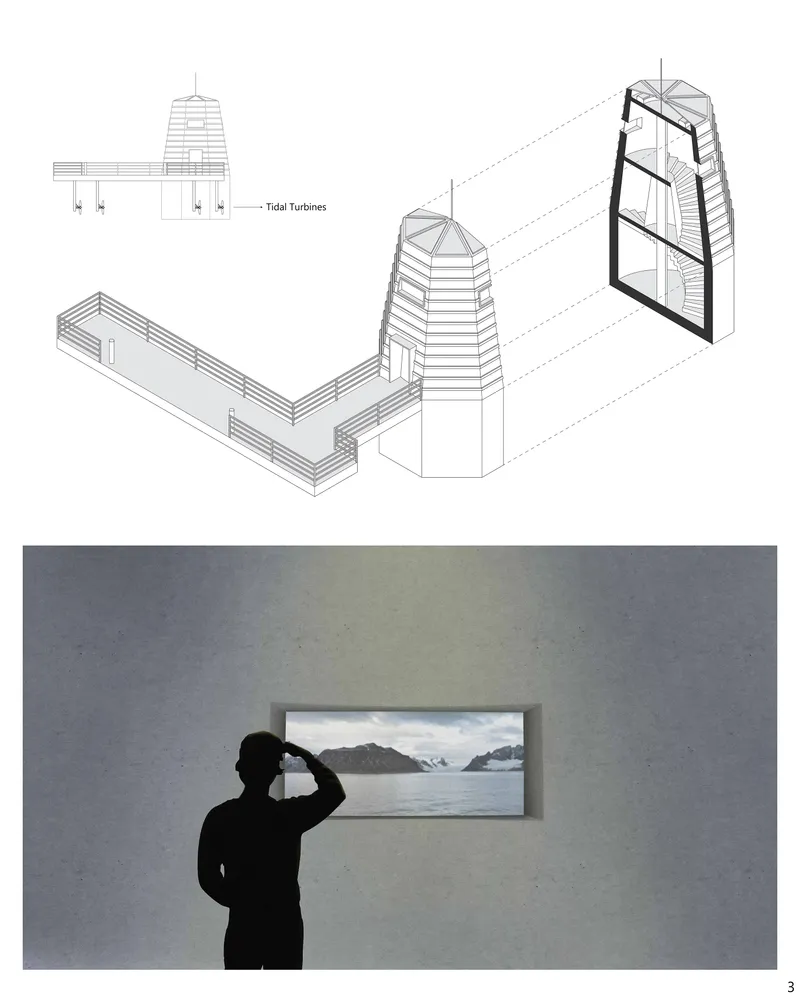
Fig: 1 Axonometric / Elevation / Interior
Description: Visual Manifesto of a Contemporary Lighthouse. The main function of a lighthouse is to make sailors in the way. There used to be coals and fires, and even fresnel’s system that reflects light so that sailors can find their way. In short words, it is a visual radar. However, in today's world, People use radar transponders (GPS), which makes the initials methods completely useless.
-----------------------
Editor’s Choice: FIRE ICICLE
By: Delia Rapsigan, Claudiu Zidărescu & Teodora Escu
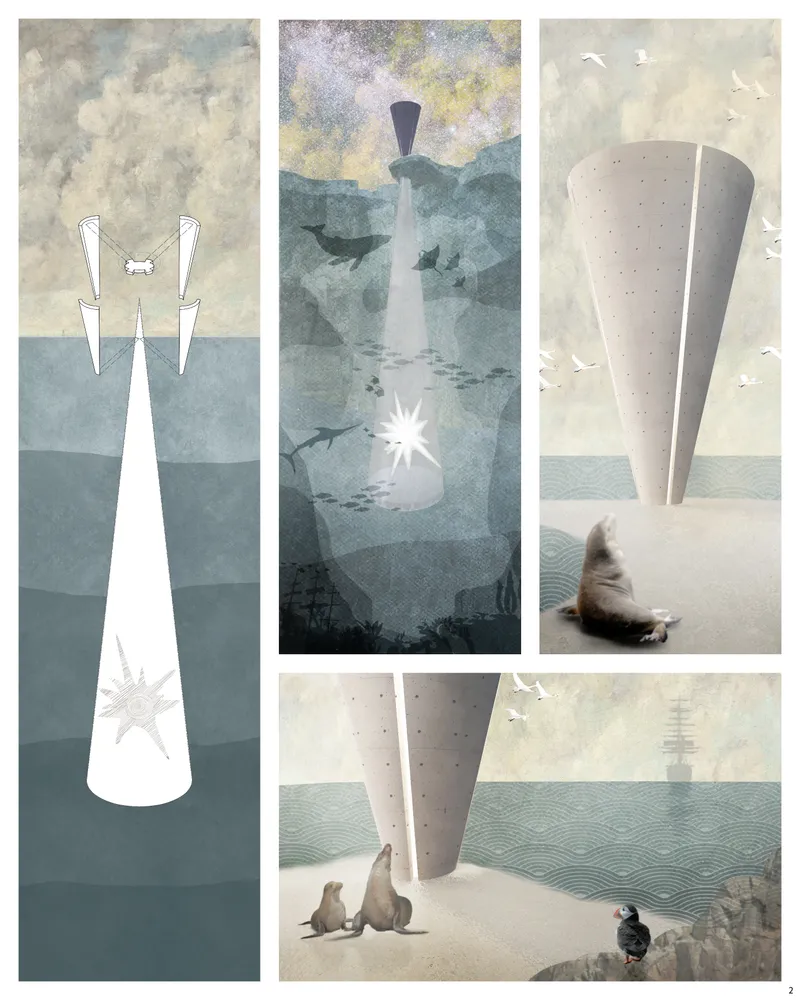
Fig: 2 Concept section; Site plan & View briefs
Description: What if we have a light source deep under the sea level and guide it up, to light the world above the water? Our intent was to not only light up the way for sailors but also to light up the depth, a place that has never met the eye of the sun before.
-----------------
Editor’s Choice: Gungnir's Point
By: John Ombrog

Fig: 3 Day Section view
Description: A re-imagined lighthouse in Svalbard. Gungnir’s point revitalizes the lighthouse typology by juxtaposing the old world functionality of the typology paired with new world iconography. While lighthouses have become obsolete due to modern technology, the iconography of the lighthouse will forever remain.

Follow us on social media: Facebook | Instagram | LinkedIn | Twitter | Youtube
References (3)


Popular Articles
Popular articles from the community


Cloaked Colonization: A Mobile Underwater Habitat That Moves Like a Fish
Micah Abaya's shortlisted EHC Pacific entry reimagines ocean settlement as a dispersed network of self-sustaining architectural organisms.

Singing Woman: An Opera House That Performs Before the Curtain Rises
Ovidiu Cristian Pavel's conceptual opera house translates Estonia's choral identity into a sculpted waterfront landmark facing the Baltic Sea.

Extended Shell: Retrofitting Kolkata's Balconies as Living Urban Thresholds
A modular retrofit system recovers the social and environmental intelligence of Kolkata's historic verandas for contemporary Park Street residents.

Faces of the Soviet Avant-Garde: Turning Moscow's Street Names into an Open-Air Museum
A network of sculptural installations across a Moscow residential district transforms forgotten architect names into spatial encounters with cultural memor

Similar Reads
You might also enjoy these articles

Play: Fragments of Their World: Remembered Architecture Rebuilt as a Modular Playground for Refugee Camps
Tom Gardner abstracts domes, arches and towers from the homelands of displaced families into a kit of child-scaled play parts for camp settlements.
REBIRTH: A Circular Settlement Where Afghan Widows and Their Children Rebuild Life Together
A shortlisted Resile entry turns the circle into a protective ring of timber and brick, gathering homes, classrooms and gardens around a shared landscape.
The Main Dream: A Recycled Plastic Kit That Lets Refugee Children Build Their Own Playground
Thirty-centimetre interlocking cubes that connect on three axes turn play into construction, letting children author the spaces they occupy.

Lunar Spiral: A Fibonacci-Driven Moon Settlement Rising from Shackleton Crater
Golden-spiral geometry organises buried infrastructure and orbiting habitable spheres into a lunar base designed to grow as life on the Moon expands.

Explore Sports Architecture Competitions
Discover active competitions in this discipline

Challenge to design a barrier free sports center

Challenge to design an outdoor ice-rink and park
Comments (0)
Please login or sign up to add comments
No comments yet. Be the first to comment!