
Renovation of Somekh Building by SHISUO Design Office: Preserving Heritage on the Bund, Shanghai
The Somekh Building renovation by SHISUO Design Office preserves Shanghai’s heritage, blending historic details with modern interventions for adaptive cultural reuse.


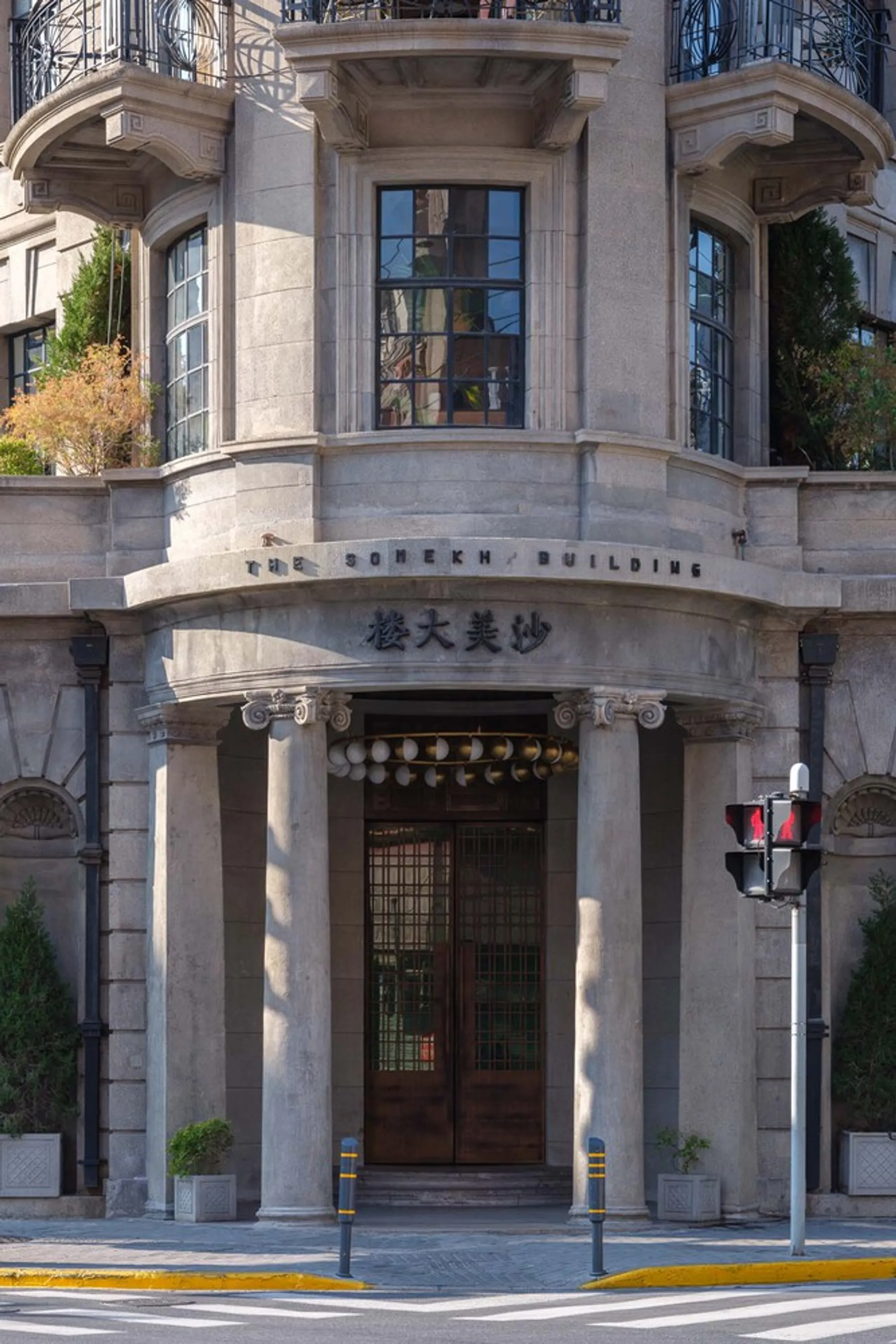
The Somekh Building, originally constructed in 1921, stands as one of the most iconic heritage landmarks in Shanghai’s historic Bund district. Designed by the renowned architectural practice Atkinson & Dallas Co. Ltd, the building embodies the cultural and architectural legacy of early 20th-century Shanghai. A century later, in 2021, SHISUO Design Office was commissioned to renovate the 650 m² structure, breathing new life into its historic fabric while ensuring its relevance for contemporary use. Completed in 2022, the renovation celebrates a delicate balance between restoration, adaptive reuse, and architectural innovation.
Historical Context and Significance
The Somekh Building is more than just a historic structure; it is a piece of Shanghai’s cultural memory. Located in the Bund’s heritage protection zone, the building reflects the city’s cosmopolitan character during its golden age of trade and development. Over time, however, urban growth and changing uses left the building in need of sensitive restoration. SHISUO’s challenge was to repair and reinterpret the architecture without erasing its layered history, creating a space that connects past, present, and future.
Design Scope and Strategy
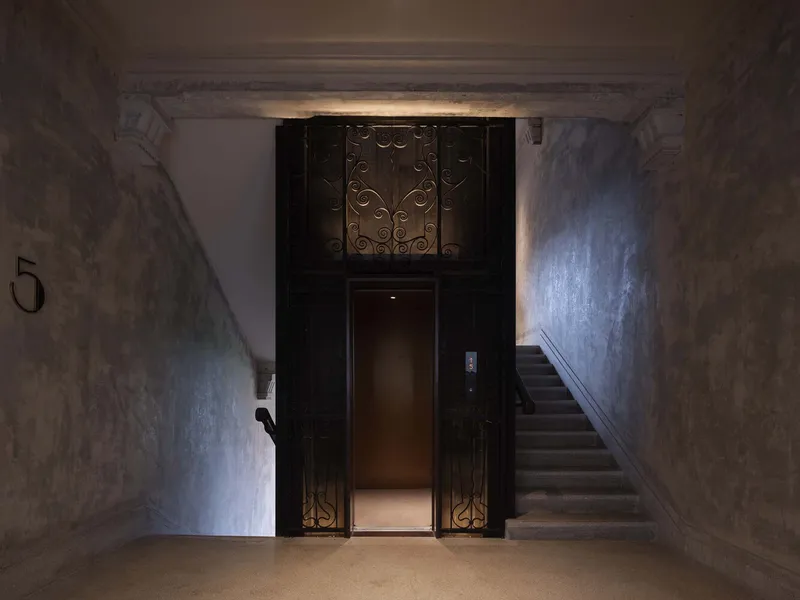
The renovation covers the entrance foyer, a first-floor exhibition hall, a second-floor event space, the third-floor atrium, and the circulation elements that link these spaces, including the spiral staircase and lift lobby. SHISUO’s approach was guided by three principles:
- Historical authenticity: researching original drawings, materials, and architectural features.
- Functional adaptation: creating usable, modernized spaces for exhibitions, events, and hospitality.
- Contextual harmony: ensuring new interventions blend seamlessly with the Bund’s architectural fabric.
Entrance and Ground Floor Transformation
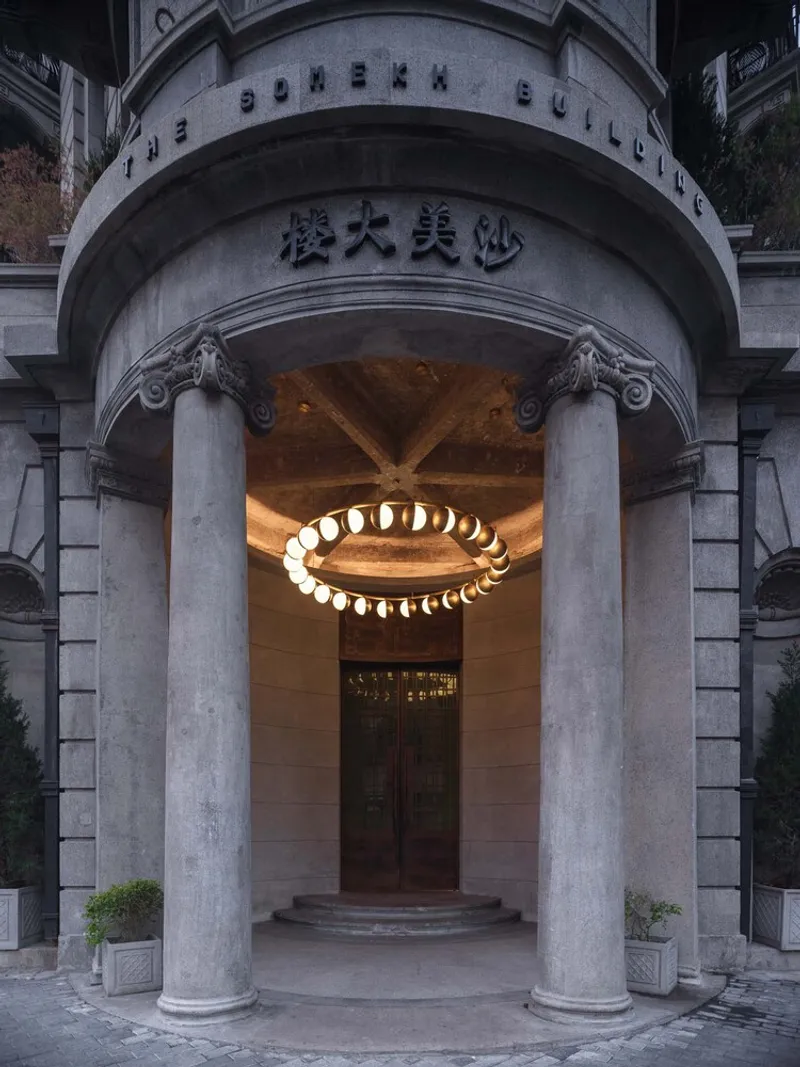
The entrance foyer sets the tone for the entire renovation. Severely damaged flooring was repaired, and a new aggregate concrete wall enclosure defines a sheltered corner space that opens toward the city. The entrance door, inspired by Bund’s Art Deco heritage, was reimagined with a contemporary touch, merging tradition with modernity.
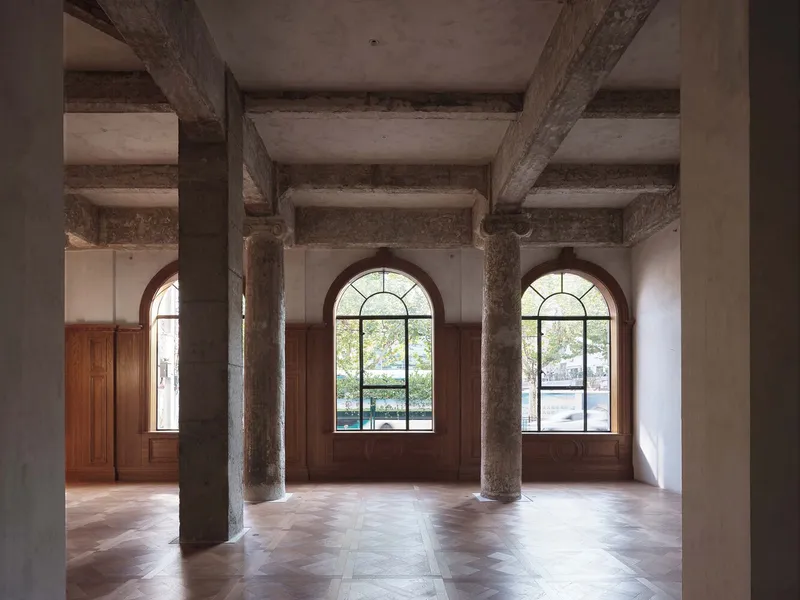
Inside, exposed star-shaped concrete beams highlight the building’s raw structural character, while a newly installed brass chandelier adds warmth and elegance. This interplay between rough and refined materials evokes both memory and modernity, making the foyer a symbolic threshold between eras.
Exhibition and Event Spaces
The first-floor exhibition hall preserves and restores original details wherever possible. The teak datum was reconstructed using archival references, and the classical-style column caps were carefully repaired. The exposed textures of the original columns were intentionally retained, showcasing the marks of time.
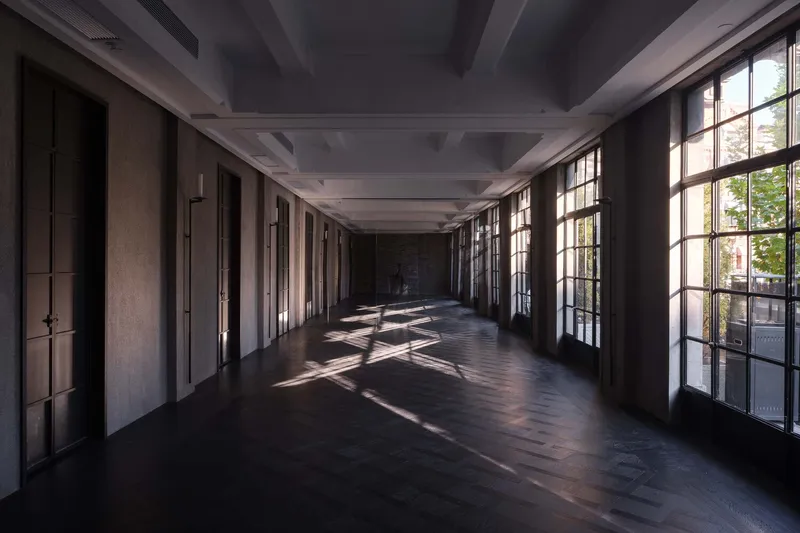
A brass spiral staircase connects the exhibition hall to the second-floor lounge, with an open ceiling design that frames natural light and views of the sky. On the second floor, three rooms were demolished and transformed into a multifunctional event space. Here, SHISUO used the language of beam structures to bring order to a previously chaotic setting of pipes and equipment, turning it into a ceremonial environment for gatherings and performances.
The Atrium and Spiritual Core
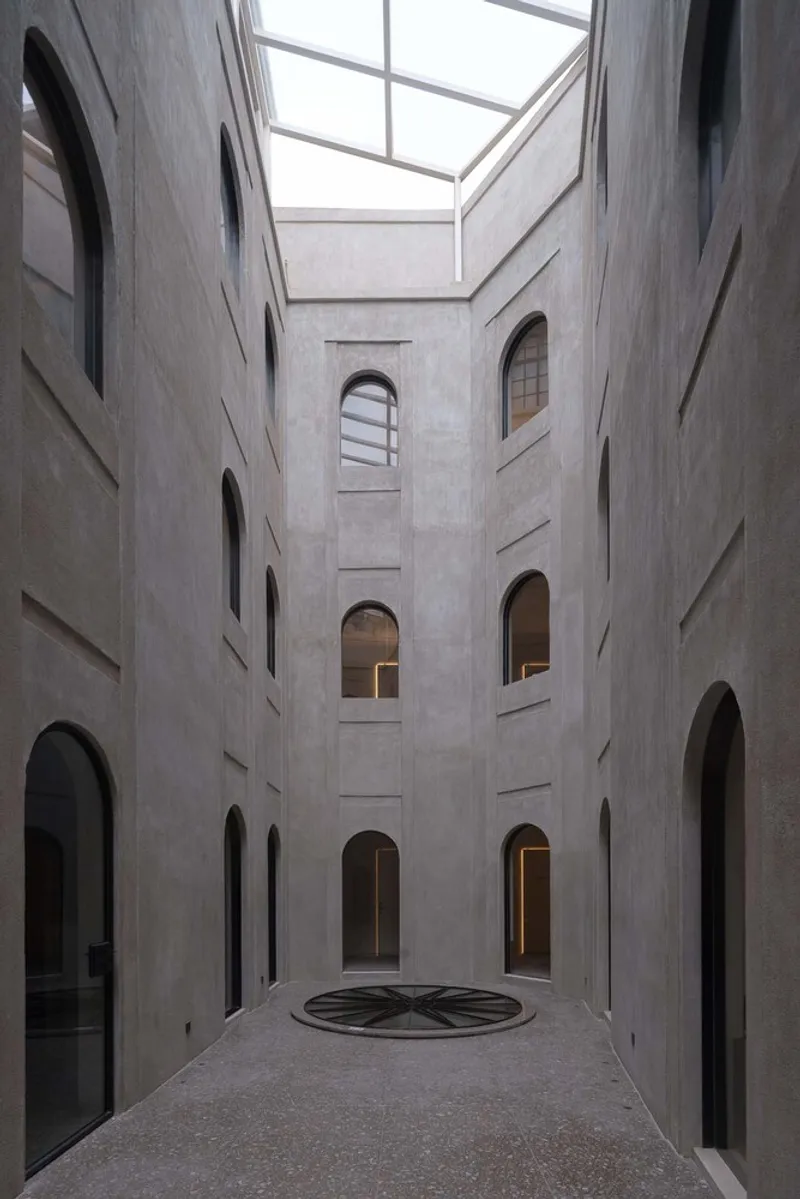
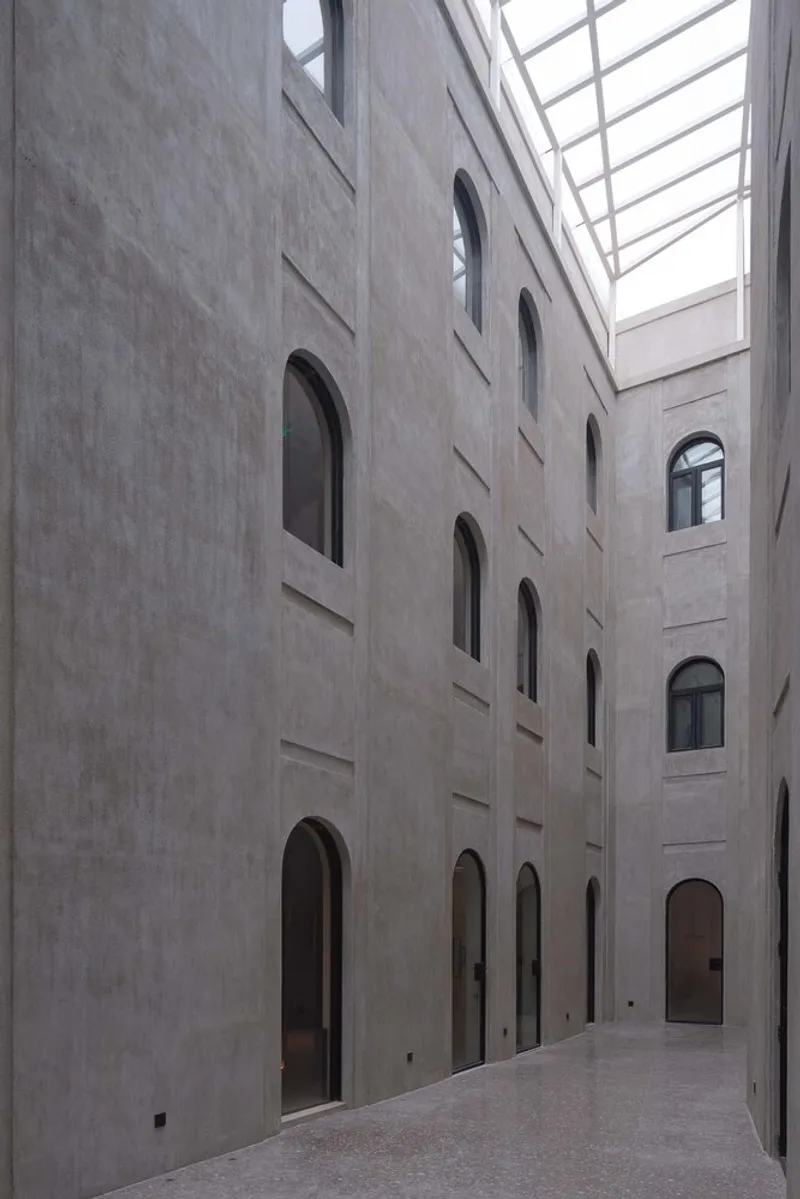
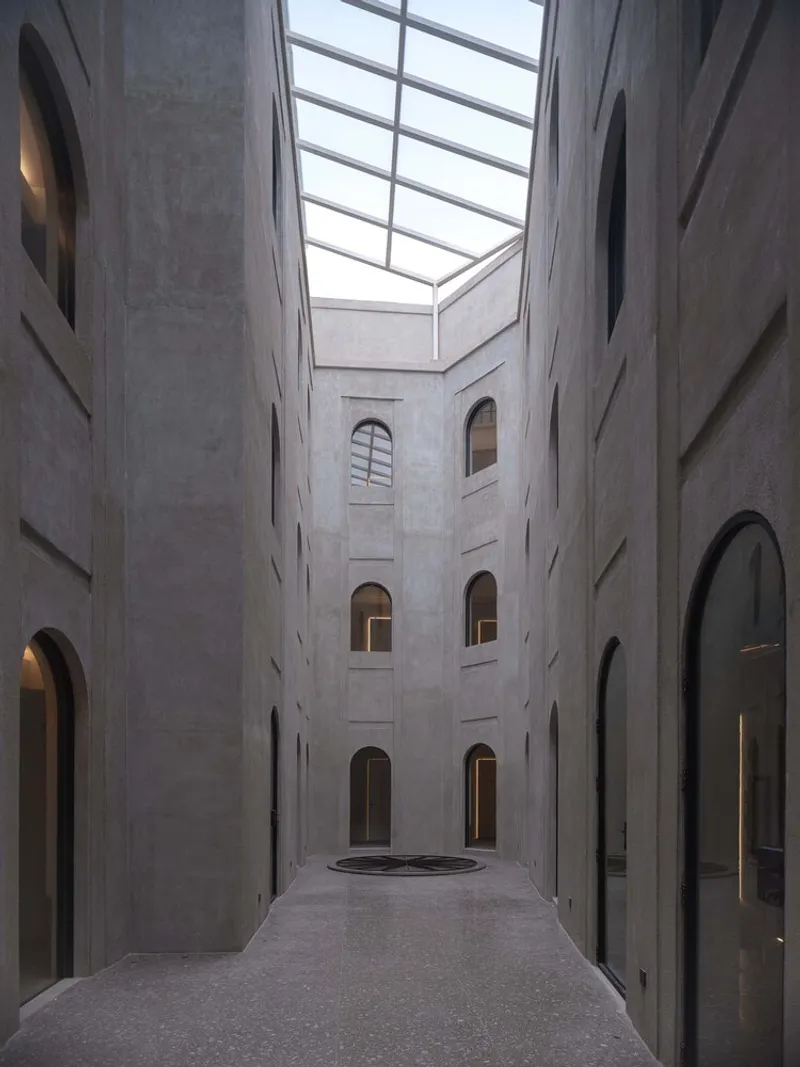
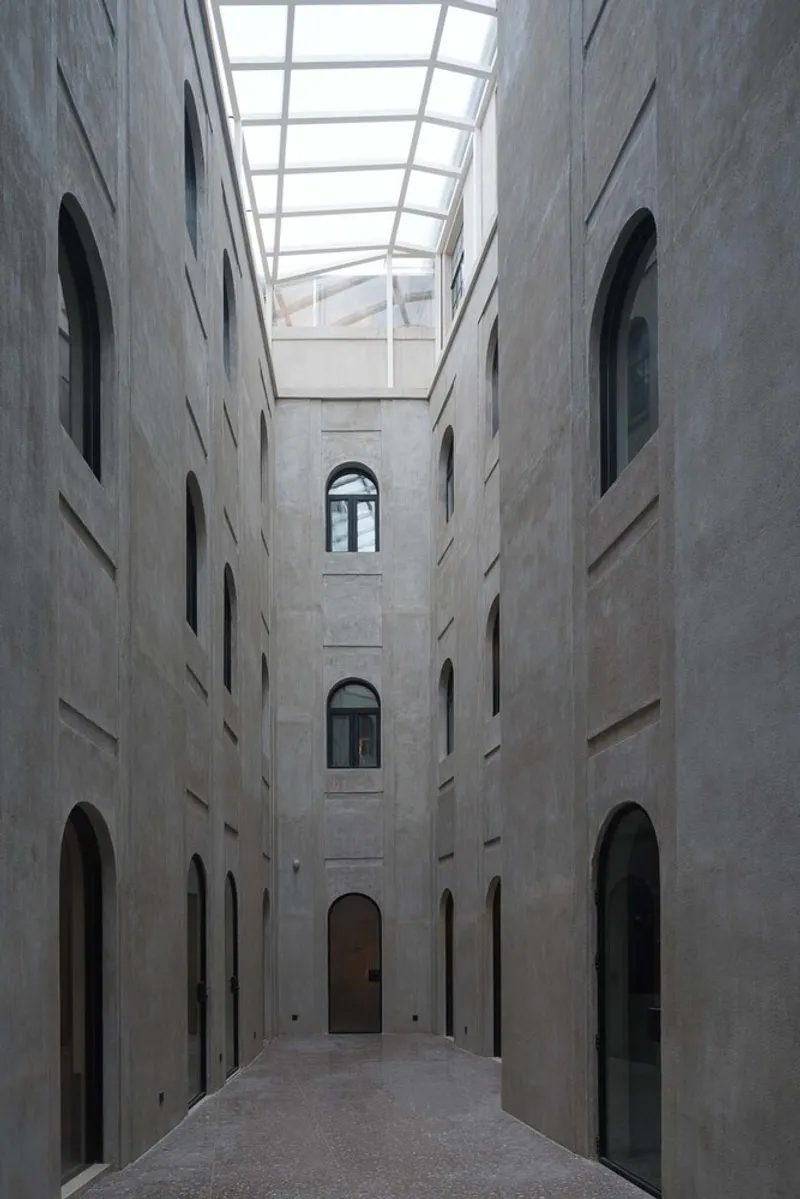
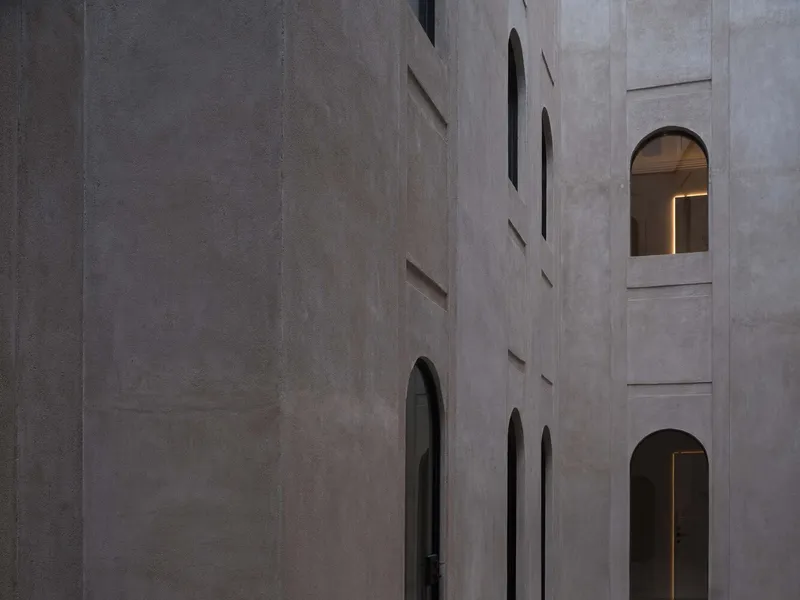
The third-floor atrium and dark room represent the building’s most symbolic and spiritual spaces. The atrium is marked by restored pilasters and plaster finishes, with arched windows echoing the building’s façade. These design moves establish a strong visual identity while maintaining continuity between interior and exterior.
In contrast, the dark room is wrapped in black metal, creating a mysterious and contemplative corner. By juxtaposing light and dark, openness and enclosure, SHISUO amplifies the building’s experiential depth and symbolic meaning.
Rediscovering the Unbuilt Dome
A highlight of the renovation is SHISUO’s discovery of an unrealized glass dome from Tonghe & Co.’s original 1920s drawings. To honor this lost design, architects created an “octopus window”, inspired by the unbuilt dome, opening the floor to connect the spiral staircase, second-floor lounge, and upper atrium. This intervention not only revives a forgotten architectural idea but also builds a dialogue between past visions and present realizations, offering visitors a memorable journey through time.
Philosophy of Preservation and Renewal
For SHISUO Design Office, the renovation of the Somekh Building is not about mere replication or superficial repair. Instead, it embraces a philosophy of balance—between preservation and renewal, repair and deconstruction, history and modernity. By blending authentic restoration with sensitive new interventions, the design respects historical integrity while creating fresh cultural value.
The result is an architecture that allows visitors to experience the traces of history while engaging with contemporary design, making the Somekh Building once again a living part of Shanghai’s urban fabric.
Project Details
- Project Name: Renovation of Somekh Building
- Architects: SHISUO Design Office
- Location: The Bund, Shanghai, China
- Area: 650 m²
- Year of Completion: 2022
- Photography: Runzi Zhu
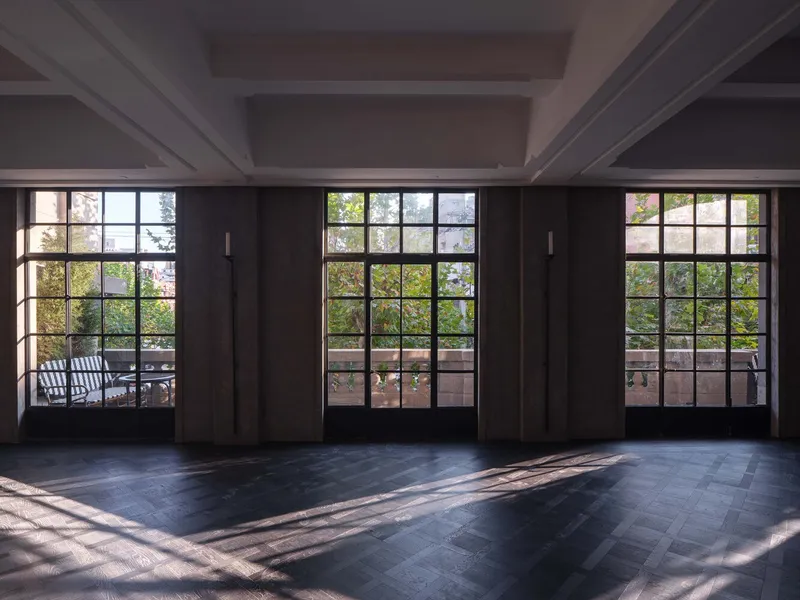
The renovation of the Somekh Building is a testament to Shanghai’s evolving architectural identity. By preserving heritage while introducing carefully considered new elements, SHISUO Design Office ensures the building continues to serve as both a historical landmark and a contemporary cultural space. It demonstrates how adaptive reuse and heritage conservation can coexist, offering a model for the sustainable future of urban heritage architecture.
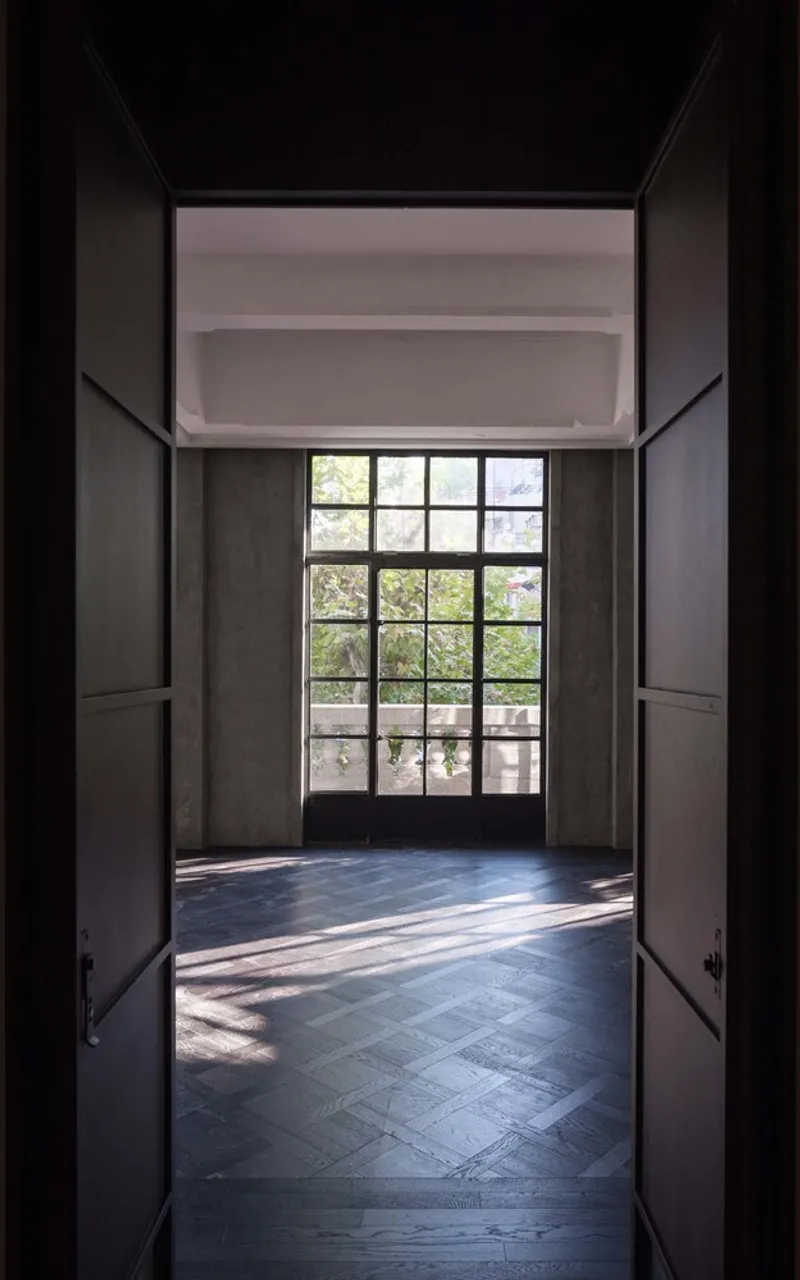
All photographs are works of Runzi Zhu



Popular Articles
Popular articles from the community


The Earth Pod: 3D Printed Homes for Resilient Refugee Communities
The Earth Pod reimagines refugee housing through 3D printed homes made from clay, combining resilience, self-sufficiency, and rapid shelter.

The Musturak Paradise: Senior Living Architecture for a Connected Future in Temara, Morocco
The Musturak Paradise reimagines senior living architecture in Temara via private homes, social spaces, culture, community, and shared care.

Hill & Cross Opera: Sculptural Opera House Architecture Shaped by Tallinn’s Landscape and Identity
Hill & Cross Opera reimagines opera house architecture in Tallinn through its sculptural hill, civic plaza, glass wave and a luminous cross.

Co-life: Sustainable Architecture for Age-Friendly Community Living
Co-life reimagines sustainable architecture for seniors through courtyards, rammed earth, shared gardens, and spaces designed for belonging.

Similar Reads
You might also enjoy these articles


Hodi-Mandai Geram
Project Function: Preservation and revitalization of the Intangible heritage and socio-spatial identity of the Hodi by Housing, Cultural Memory Center, Sacred Grove, landscape, local tourism economy


Olio Towers: A Mid-Rise for Performers That Fuses Housing, Rehearsal, and Stage
Located blocks from Houston's Theater District, this modular tower stacks living units around a central performance atrium.

Oasis: Modular Green Housing Carved into Dhaka's Urban Fabric
A shortlisted Plugin Housing entry reclaims unauthorized settlements in Dhaka with stepped concrete volumes, green roofs, and ventilation-driven design.

Black Hole: A Floating Megastructure for the Post-Physical Era
Emiliano Mazzarotto envisions a spherical, self-scaling arena where e-sports, digital hotels, and holographic stadiums replace traditional public space.
Explore Iconic Building Competitions
Discover active competitions in this discipline



Challenge to reimagine the Iron Throne


Photograph architecture without architects


Illustrate the lost glory of Angkor Wat - Render Challenge

Bring back Drive In's
Comments (0)
Please login or sign up to add comments
No comments yet. Be the first to comment!